

When comparing Vitrelle glass vs porcelain, most buyers assume they’re choosing between a durable utility option and an elegant formal one.
The reality is more technical, and the differences between these two materials go far deeper than looks.
Vitrelle is not ordinary glass, and porcelain is not a single uniform material. This guide compares both across every factor that matters for a real buying decision: durability, safety, weight, heat resistance, aesthetics, and long-term cost.
By the end, you’ll know exactly which material suits your household or whether owning both makes the most sense.
Written by Sarah Emirone | Reviewed by James Daniels, B.Sc, Inorganic Chemist & Materials Researcher | Updated September 2026 | See How We Test | Filed under: Brand & Product Comparisons
What Is Vitrelle Glass?
Vitrelle glass is not simply tempered glass — it is a patented three-layer laminated structure that gives it properties no single-layer glass can replicate. For a deeper look at the full product range, see our complete guide to Vitrelle glass dinnerware.
The three-layer laminated structure that makes Vitrelle different from regular glass
Vitrelle is a proprietary glass composite consisting of three layers bonded under high heat and pressure: a central opaque core sandwiched between two clear outer glass layers.
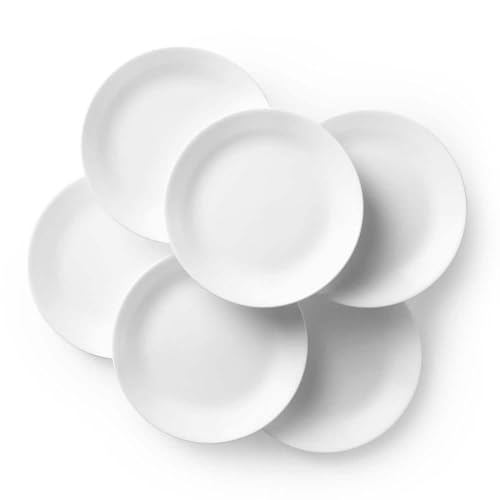


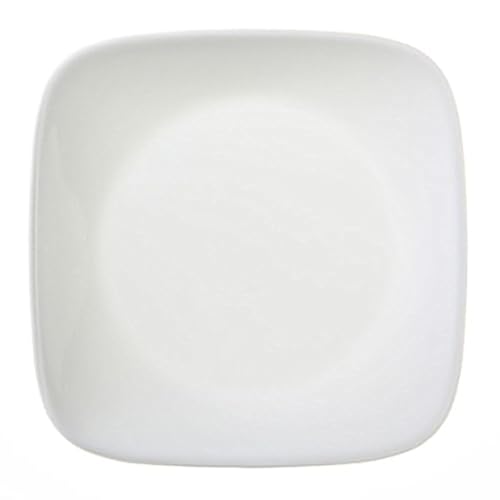
This thermal lamination creates internal compressive stress that makes the finished material significantly stronger than any individual layer alone.
Because Vitrelle has no glaze, no pigment suspended in a chemical matrix, and no porous clay body, the surface is completely chemically inert. Nothing can leach from the plate into food regardless of temperature, acidity, or contact time.
How the tempering and lamination process creates chip and break resistance
The layered structure distributes impact forces across the entire plate rather than concentrating stress at a single point.
When an ordinary glass plate takes a knock, energy concentrates at the impact site and propagates as a crack. In Vitrelle, the lamination interrupts that propagation.
The result is a plate that absorbs bumps and drops that would chip or crack porcelain without showing any damage, a performance advantage documented across decades of household use.
What Is Porcelain Dinnerware?
Porcelain is a high-fired ceramic material that spans a range from everyday restaurant-grade plates to heirloom fine china. What all porcelain shares is a clay blend fired at extreme temperatures, creating a dense, vitrified (glass-like) surface.
Kaolin clay, feldspar, and high-fire vitrification: how porcelain is made
Porcelain is made primarily from kaolin clay combined with feldspar, quartz, and ball clay, fired at 1,200–1,400°C (2,200–2,550°F). That firing vitrifies the particles into a hard, dense material.


The glaze applied to most porcelain dinnerware adds a glass-like coating, but it is also where the primary food safety variables lie, specifically, what the glaze contains.
The difference between standard porcelain, fine china, and bone china
| Type | Composition | Firing temp | Translucency | Typical weight | Common use |
|---|---|---|---|---|---|
| Standard porcelain | Kaolin + feldspar + quartz | 1,200–1,300°C | Slight | Heavier | Everyday/restaurant |
| Fine china | Refined kaolin blend | 1,300–1,400°C | Moderate | Medium | Everyday/ entertaining |
| Bone china | Kaolin + 30–45% bone ash | 1,200–1,250°C | High | Lighter | Formal/gifting |
For a breakdown of all dinnerware material categories, see our full comparison of all dinnerware materials, including stoneware and bone china.
Vitrelle Glass vs Porcelain: Head-to-Head Comparison
Across most practical attributes, Vitrelle and porcelain separate clearly, with one leading in durability, safety, and ease of care; the other leads in aesthetics, oven temperature range, and stovetop versatility.
Master comparison table: all key attributes side by side
| Attribute | Vitrelle Glass | Standard Porcelain |
|---|---|---|
| Construction | 3-layer laminated tempered glass | High-fired kaolin ceramic with glaze |
| Chip resistance | Excellent | Moderate — edges chip under impact |
| Break resistance | High (break-resistant, not unbreakable) | Moderate |
| Weight (10″ plate) | ~200–220g | ~350–450g |
| Microwave safe | Yes | Yes (unless metallic trim) |
| Dishwasher safe | Yes — daily, no restriction | Usually yes; metallic/decorated trim: hand-wash |
| Oven safe (max temp) | 350°F (176°C) | 400–500°F+ depending on brand |
| Stovetop / open flame | No | Some porcelain: yes |
| Lead/cadmium risk | None — non-porous, no glaze | Low for modern certified brands; higher for vintage |
| Surface degradation | Minimal; no crazing | Crazing possible with repeated thermal cycling |
| Design variety | Moderate — prints on opaque white base | Very wide — colors, patterns, metallic, sculptural |
| Price (entry 12-piece set) | ~$30–60 | ~$60–200+ |
| Longevity (daily use) | 20–30+ years reported | Variable; chips accumulate within 5–15 years |
Durability: chip resistance, break resistance, and edge integrity over time
Vitrelle’s layered construction gives it a consistent edge in durability for daily household use.
- Vitrelle edges maintain smooth integrity even after years of stacking and dishwasher cycling, because the compressed surface resists the micro-chipping that roughens porcelain rims over time.
- Porcelain edges are the most vulnerable point — a single knock against a counter or another plate can chip the rim, which is where most failures begin.
- Once porcelain is chipped, the site exposes the porous clay body beneath the glaze, which can harbor bacteria and is uncomfortable against the lips.
- Vitrelle plates are actually thinner than most porcelain plates of equivalent diameter — the durability comes from the lamination structure, not added thickness.
- Neither material is unbreakable — both will fracture under a direct impact or drop onto tile or stone; the difference is in how they fail and how often.
Weight: why the difference matters for daily handling and accessibility
A standard 10-inch Vitrelle dinner plate weighs approximately 200–220 grams. A comparable porcelain plate weighs 350–450 grams, roughly 60–100% heavier. This is not merely a convenience factor; it has meaningful accessibility implications.
| Plate type | Approximate weight (10″ dinner plate) |
|---|---|
| Vitrelle (Corelle) | 200–220g |
| Fine china | 280–320g |
| Standard porcelain | 350–450g |
The weight advantage matters most for: seniors with reduced grip strength or arthritis; households where children serve their own plates; and camp, dormitory, or RV settings where total carry weight matters.
A set of six Vitrelle dinner plates weighs roughly the equivalent of three porcelain plates; that difference accumulates quickly in daily use.
Heat resistance: oven, microwave, and dishwasher limits for each material
| Application | Vitrelle Glass | Porcelain |
|---|---|---|
| Microwave | Safe | Safe (avoid metallic trim) |
| Dishwasher | Safe — daily use | Safe for most; hand-wash for decorated/metallic trim |
| Conventional oven | 350°F (176°C) max | 400–500°F+ (varies by brand) |
| Broiler | Not safe | Most: not recommended |
| Stovetop / open flame | Not safe | Some porcelain: safe — check spec |
| Freezer to microwave | Safe — thermal shock resistant | Use caution — rapid changes can cause crazing |
Porcelain’s higher oven temperature tolerance is a genuine advantage for cooks who serve directly from oven to table above 350°F. Vitrelle’s 350°F limit covers reheating, casserole serving, and warming, but not roasting or high-heat baking.
Aesthetics and design range: transparency, opacity, pattern variety, and formality
Vitrelle is opaque white with slight translucency; it does not read as ceramic, and it does not come in the color range or sculptural forms that porcelain does.
Patterns are printed onto the white glass surface, which limits decorative depth compared to hand-painted or under-glaze porcelain. Vitrelle suits modern, minimal, and casual table settings naturally; it reads as practical rather than formal.
Porcelain’s aesthetic range is genuinely broader. Metallic trim, hand-decorated finishes, and rich color options give individual pieces a crafted, heirloom quality that Vitrelle cannot replicate.
For formal entertaining or a wedding registry, porcelain presents with a visual substance that the comparison unambiguously favors.
Price and total cost of ownership: upfront cost vs. replacement over time
| Cost factor | Vitrelle | Porcelain |
|---|---|---|
| Entry 12-piece set | ~$30–60 | ~$60–200+ |
| Estimated lifespan (daily use) | 20–30+ years | 5–15 years (chip-dependent) |
| Estimated annual cost | ~$1.50–3.00/year | ~$5–15/year |
The total cost of ownership calculation typically favors Vitrelle significantly for households that use dinnerware daily.
Corelle Brands reports that many families use the same Vitrelle sets for 20–30 years without replacing pieces due to breakage, a longevity claim that porcelain sets in active daily use rarely match.
Safety Comparison: Lead, Cadmium, and Chemical Leaching
Vitrelle glass carries zero leaching risk from the plate material itself. This is a structural fact, not a degree of safety. Porcelain safety is achievable but requires verification at the point of purchase.
Why Vitrelle’s non-porous structure eliminates leaching risk entirely
Vitrelle has no glaze and no porous clay body. The plate material is inert, silica-based glass with no pathway by which any substance can enter food.
Modern Corelle Vitrelle undergoes routine third-party testing confirming lead levels below 0.1 ppm — well under the FDA limit of 3 ppm for dinnerware — and effectively zero cadmium.
For a complete ranking of materials by safety testing, see our guide to the safest dinnerware materials ranked by toxicology testing.
Porcelain and glaze safety: what “lead-free certified” actually means, and the vintage risk
Modern certified porcelain from reputable brands is safe — but the safety guarantee lives in the glaze formulation, not the clay body, and it requires verification. For guidance on what to look for, see our resource on how to choose safe, lead-free, certified porcelain.
- Look for explicit “lead-free and cadmium-free” certification — not just “food safe,” which is a lower standard.
- Approximately 60% of failed FDA dinnerware tests come from unregulated overseas manufacturers, according to independent consumer testing reviews.
- Vintage or hand-painted porcelain made before the 1990s carries a meaningfully higher risk of lead or cadmium in decorative glazes.
- Vintage Corelle with decorative patterns — particularly pre-2005 pieces — has been flagged by consumer safety researchers as potentially containing lead in exterior pattern pigments, even though the Vitrelle glass body is inert.
- Crazed or chipped porcelain glaze should be removed from food service immediately, as damaged glaze can begin to leach even from previously certified pieces.
Porcelain Crazing and Long-Term Surface Integrity
Crazing is a common and underappreciated form of long-term porcelain degradation that Vitrelle does not experience, and its hygiene implications are significant.
What crazing is, why it happens, and why it matters for hygiene
Crazing is a network of fine hairline cracks that develops in a ceramic glaze over time, caused by a mismatch between the thermal expansion rates of the glaze and the clay body beneath it.
Repeated heating and cooling cycles — dishwasher, microwave, oven use — gradually stress the glaze until microscopic fractures appear.
Those fine cracks create channels that harbor bacteria, absorb odors, and accumulate staining that resists cleaning. Acidic or pigmented foods — tomato sauce, turmeric, coffee — penetrate crazing grooves and become permanent.
A crazed plate that passes visual inspection may still retain residue in fractures invisible to the naked eye.
Does Vitrelle develop the same surface degradation over time?
Vitrelle does not craze. The laminated glass structure has no glaze layer and no differential thermal expansion between the body and a coating; there is nothing to crack.
Consumer reports consistently note that Vitrelle plates used daily for 20 or more years show no surface crazing, maintain their original smoothness, and do not develop the staining patterns that accumulate in crazed porcelain.
When Vitrelle Breaks vs When Porcelain Breaks: The Safety Pattern Difference
Both materials can break, but they break in fundamentally different ways, and that difference has real safety consequences in a household setting.
Tempered glass breakage pattern: small pebbles vs. large shards
When Vitrelle reaches its breaking point, it fractures in the characteristic pattern of all thermally tempered glass.
The internal compressive stress created during tempering causes the glass to fracture uniformly into many small, relatively blunt fragments — resembling coarse gravel — rather than large angular shards.
This is the engineering reason why tempered glass is required by safety codes in commercial kitchens and architectural applications: uniform internal stress produces a uniform, small fracture pattern.
The same mechanism that makes tempered car windows safe in an accident operates at the dinner plate scale.
Porcelain breakage: chip trajectory and shard risk in family kitchens
- A dropped porcelain plate on a hard floor typically produces a small number of large, irregular fragments with sharp, angled edges — a genuine cut hazard that requires careful cleanup.
- Edge chips — the most common porcelain failure mode — send small, hard ceramic fragments that can be difficult to locate and pose a swallowing hazard if they land in food.
- A direct impact crack in porcelain may not be immediately visible, creating a structurally weakened piece that fails suddenly during dishwasher cycling or when picked up hot.
- Porcelain shard edges are among the sharpest cutting surfaces produced by common household breakage — sharper than tempered glass fragments and harder to fully clean from tile grout, rugs, or between appliances.
Which Should You Choose? A Scenario-Based Decision Guide
The right material is determined by how you actually use your kitchen. Match your household to the criteria below.
Choose Vitrelle if your situation matches these criteria
- Your household includes young children who handle plates independently and drop things regularly.
- You or another household member has reduced hand strength, arthritis, or any condition that makes heavier dishes difficult to manage safely.
- You want to load dishes into the dishwasher daily without any care restrictions or pattern-degradation concerns.
- Food safety and non-toxic certification are a priority, and you want confirmed, third-party-tested lead-free dinnerware without verifying each glaze.
- You live in a rented home, dorm, or RV where replacements are inconvenient, and you need dinnerware that survives frequent moving.
- You are equipping a household on a defined budget and want 20+ years of daily use from a single purchase.
Choose porcelain if your situation matches these criteria
- Formal entertaining and table presentation matter to you — you want dinnerware with visual weight, decorative richness, and aesthetic substance.
- You cook dishes requiring oven temperatures above 350°F and want to serve directly from the oven to the table without transferring vessels.
- You hand-wash dishes regularly and are willing to apply the care that decorated or trimmed porcelain requires.
- You are purchasing a gift set or building a registry and want individual pieces with heirloom appeal and a crafted finish.
- You need stovetop-compatible serving pieces and the higher heat tolerance that Vitrelle cannot provide.
Can you own both? How families mix Vitrelle for daily use and porcelain for entertaining
Many households find the most practical answer is both: a Vitrelle set for daily meals and a porcelain set reserved for hosting.
Because Vitrelle plates stack tightly and take up significantly less cabinet space than porcelain, storing two sets in a standard kitchen is entirely feasible.
The Vitrelle set absorbs the daily wear; the porcelain set stays in better condition because it is handled with more deliberate care and used less frequently.
Frequently Asked Questions About Vitrelle Glass vs Porcelain
Is Vitrelle glass the same as regular tempered glass?
No, Vitrelle is a three-layer laminated composite in which two clear outer glass layers bond to a central opaque core under high heat and pressure, and the finished assembly is thermally tempered.
Regular tempered glass is a single-layer material heat-treated to increase strength. The lamination in Vitrelle provides impact distribution and chip resistance that single-layer tempered glass does not achieve.
Is Vitrelle glass safe for hot food and acidic foods?
Yes — Vitrelle’s non-porous, glaze-free glass surface is chemically inert and does not react with acidic foods or leach any substances within its rated temperature range.
Third-party testing confirms lead levels below 0.1 ppm (FDA limit is 3 ppm) and effectively zero cadmium. See our Vitrelle glass safety profile and FDA compliance page for the full data.
Can porcelain go in the dishwasher every day?
Plain white porcelain without metallic trim can typically handle daily dishwasher use.
Decorated pieces — especially those with gold or platinum banding, hand-applied decals, or delicate painted finishes — should be hand-washed to prevent glaze degradation and pattern wear. Always verify the manufacturer’s care instructions for your specific collection.
Is vintage Corelle Vitrelle safe to use?
Modern Corelle (manufactured after approximately 2005) is confirmed lead-free and cadmium-free.
Vintage Corelle with decorative exterior patterns — particularly pieces from the 1970s–1990s — has been flagged by consumer safety researchers as potentially containing lead in exterior decorative pigments, even though the Vitrelle glass body itself is inert.
Use plain white vintage Vitrelle for food contact; treat highly decorated vintage pieces as display items.
Does porcelain contain lead or cadmium?
Modern porcelain from certified reputable brands is formulated to be lead-free and cadmium-free.
The risk is concentrated in vintage pieces made before modern regulations, imported uncertified ceramics (approximately 60% of failed FDA dinnerware tests come from unregulated overseas sources), and brightly hand-painted pieces where pigment chemistry has not been third-party verified.
White, plainly glazed, modern porcelain from certified brands carries minimal risk.
Which material is better for households with young children?
Vitrelle is the stronger practical choice for three specific reasons: it is significantly lighter (200–220g vs 350–450g per plate), making it safer for children to handle independently; its chip-resistant edges don’t produce the sharp ceramic fragments that chipped porcelain generates; and when it does break, it fractures into small blunt pebbles rather than large cutting shards.
The non-porous surface also cannot harbor bacteria in chip sites the way exposed porcelain clay can.
Is Vitrelle glass oven-safe, and what temperature does it tolerate?
Vitrelle is oven-safe to 350°F (176°C) in a preheated conventional oven, which covers reheating, warming, and serving casseroles from the oven. It is not suitable for roasting, broiling, or baking above 350°F.
Do not place Vitrelle under a broiler or on a stovetop, and allow a cold Vitrelle dish to warm gradually rather than placing it directly into a very hot oven.
About the Author & Reviewer
Sarah Emirone, Author
Sarah researches and writes SafeKitchn’s dinnerware and kitchenware guides, with a focus on material safety, lead content, and manufacturer specifications. She cross-references product data sheets, safety certifications, and regulatory filings (including FDA and Prop 65 records) before publishing, and updates articles when new information becomes available.
James Daniels, Reviewer
James reviews SafeKitchn’s material safety content for scientific accuracy. He holds a B.Sc in inorganic chemistry and works as a materials researcher, with particular focus on the composition and safety behavior of glass, ceramic, and metal used in kitchenware.