

Is porcelain lead free? The answer is two-part, and getting it wrong in either direction creates real problems.
The clay body of porcelain is naturally lead free — kaolin, feldspar, and silica contain no lead. But the glaze applied over that clay body may contain lead, depending on when the piece was made, who made it, and what color it is.
Most people think either “modern porcelain is safe” or “all ceramics may have lead” — both answers miss the point.
The risk lives specifically in the glaze, and the regulatory term “food safe” does not mean what most people assume. This article explains the distinction, the actual FDA numbers, and what to do with the dishes you already own.
Written by Sarah Emirone | Reviewed by James Daniels, B.Sc, Inorganic Chemist & Materials Researcher | Updated September 2026 | See How We Test | Filed under: Material Safety & Lead Testing
The Key Distinction: Porcelain Clay Body vs Porcelain Glaze
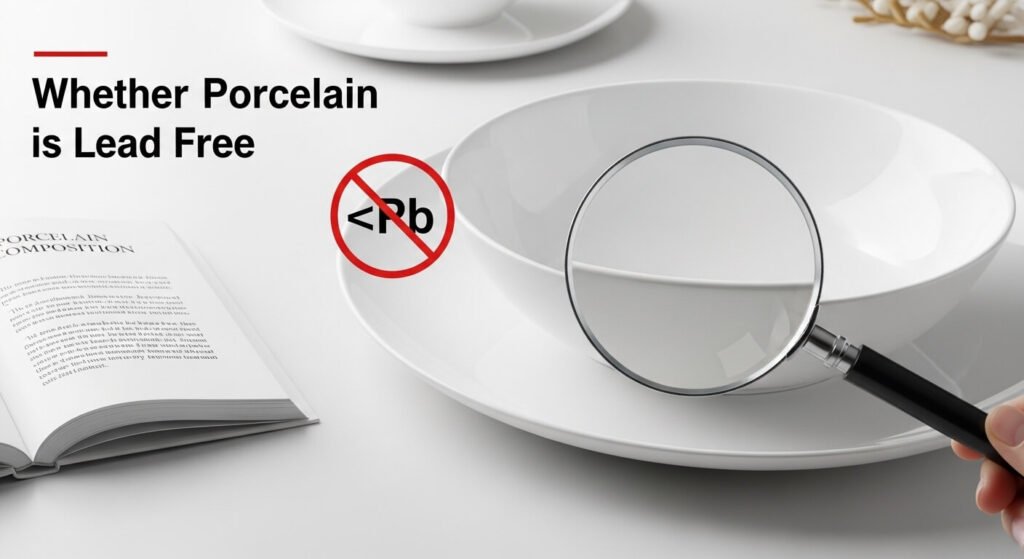
The most important thing to understand about porcelain and lead is that these are two separate materials — the clay body and the glaze — and they carry entirely different lead risk profiles.
Most safety concerns people have about porcelain are actually concerns about the glaze.
For a full comparison of dinnerware materials, see our guide to the safest dinnerware material.
Why the Clay Body of Porcelain Is Naturally Lead Free
Porcelain clay is made from kaolin (a white aluminium silicate clay), feldspar, and silica — none of which contain lead in their natural form.
When fired at high temperatures, typically above 1,200°C (2,192°F), these materials fuse into a dense, vitrified, non-porous body. At this level of firing, even trace mineral impurities that might have been present are effectively locked into the matrix.


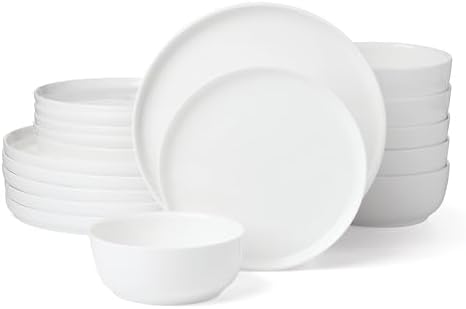
The resulting material is chemically stable, non-reactive with food, and presents no lead leaching risk on its own. The clay body of a porcelain dish has never been the source of lead contamination in documented food safety cases.
Why Lead Was Used in Porcelain Glazes and When Manufacturers Stopped
Lead was added to ceramic glazes for practical manufacturing reasons: it dramatically lowered the melting temperature of the glaze, made it flow smoothly over the clay body, and produced the high-gloss, vivid finish that consumers associated with quality.
Red, orange, and yellow glaze colors were particularly dependent on lead and cadmium compounds to achieve their brightness. Before the 1970s, there were no regulatory restrictions on lead in dinnerware glazes in the United States.
The FDA began setting limits in 1971 (CPG Sec. 545.450), and enforcement tightened through the following decades.
Most major manufacturers in regulated markets transitioned to lead-free glaze formulations by the 1990s — but the transition was not universal, and imported pieces from markets with less stringent oversight continued to use lead-based glazes well into the 2000s and, in some cases, continue today.
High-Fire vs Low-Fire Ceramics: Which Carries More Lead Risk
High-fire porcelain — fired above 1,200°C — presents significantly lower lead leaching risk than low-fire earthenware or decorative ceramics fired at 900–1,100°C.
At high firing temperatures, the glaze chemically bonds with the clay body and forms a stable, vitrified surface that locks metals in place rather than releasing them into contact with food.
Low-fire ceramics use glazes that melt at lower temperatures; these glazes form a less stable surface matrix, and any lead present is more susceptible to leaching — particularly when the dish contacts acidic food or liquid.
Hard-paste porcelain is among the highest-fire ceramics produced, which is one reason it is considered safer than earthenware or low-fire stoneware, even when both carry a “food safe” label.
“Food Safe” vs “Lead Free” — The Regulatory Distinction That Matters Most
A porcelain dish can be legally labelled “food safe” under FDA rules while still leaching up to 3.0 µg/mL of lead.
This is the single most important regulatory fact about porcelain dinnerware, and it is absent from most consumer-facing guidance.

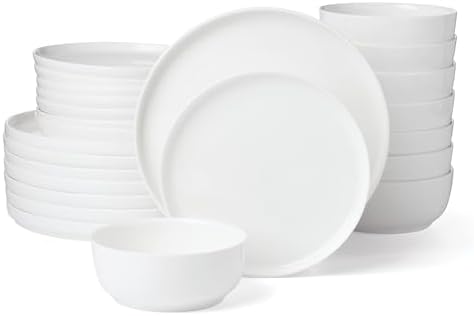

“Food safe” means the product meets the FDA’s action levels for leachable lead — it does not mean the dish contains zero lead or leaches zero lead. “Lead free” means no lead was added to the formulation at any stage.
These are two separate standards, and manufacturers choose which label to apply.
FDA Lead Leaching Limits for Porcelain Dinnerware: The Actual Numbers
The figures below come from the FDA Compliance Policy Guide for ceramic lead limits — here is what each threshold means in practice.
| Dinnerware Category | FDA Lead Action Level | What This Means |
|---|---|---|
| Flatware (plates, platters) | 3.0 µg/mL | A plate leaching up to 3.0 µg/mL of lead is legally “food safe” |
| Small hollowware (cups, mugs) | 0.5 µg/mL | Stricter limit because liquids contact the surface longer |
| Large hollowware (bowls) | 1.0 µg/mL | Mid-range limit reflecting medium contact duration |
| Pitchers and jugs | 0.5 µg/mL | Same strict limit as mugs due to prolonged liquid contact |
| Cadmium (flatware) | 0.5 µg/mL | Applies separately to cadmium-based pigments in glaze |
These are the thresholds above which the FDA may take regulatory action, they are not zero-lead guarantees.
A dish that tests at 2.9 µg/mL of leachable lead passes FDA compliance but is not lead free. Buyers who want zero leachable lead should look specifically for products documented as “lead free” with third-party test results showing 0.0 ppm, not just “food safe” labeling.
FDA vs California Prop 65: Two Different Standards for the Same Dish
California’s Proposition 65 applies a stricter and differently structured framework than federal FDA rules. Understanding the difference matters when evaluating product labels.
| Dimension | FDA CPG Sec. 545.450 | California Prop 65 |
|---|---|---|
| What it regulates | Lead leaching into food under simulated use | Lead exposure risk to consumers generally |
| Enforcement mechanism | FDA may take action above action levels | Manufacturers must warn consumers if risk exists |
| Lead limit (plates) | 3.0 µg/mL leachable lead | No single number; triggers warning at any meaningful exposure risk |
| Applies to | Products sold in the US nationally | Products sold in California specifically |
| What compliance means | Product tested below FDA action level | Product either below safe harbor level or carries Prop 65 warning |
| Third-party testing | Not required; manufacturer self-certifies | May be required to support no-warning claim |
A product labelled “Prop 65 compliant” has met California’s stricter consumer exposure framework — which is meaningfully stronger protection than federal FDA food safety compliance alone.
Vintage Porcelain vs Modern Porcelain: Different Lead Risk Profiles
Modern porcelain from reputable manufacturers in regulated markets is generally produced with lead-free glazes and tested to FDA or equivalent standards.
Vintage porcelain — particularly pieces made before the 1970s or produced in markets without regulatory oversight — carries a materially higher risk of lead-containing glaze. These are not equivalent risk categories, and treating them the same is the most common error people make when assessing their dishes.
Why Porcelain Made Before the 1970s Carries Higher Lead Risk
Before 1971, the FDA had no enforceable lead limits for dinnerware glazes in the United States. Manufacturers routinely used lead in glazes because it produced superior finishes at lower firing costs.
Independent XRF testing has found total lead levels exceeding 100,000 ppm (10%) in certain vintage Lenox china patterns, and some vintage Fiestaware from before 1986 is documented as containing lead in its signature colored glazes.
The EPA has specifically advised against eating from pre-1986 vintage Fiestaware.
The critical point is that you cannot determine lead content from the appearance of a vintage piece alone — plain white porcelain from England has been found with 80,000 ppm total lead in XRF testing, while brightly decorated modern pottery from Mexico has tested at 100 ppm.
Visual appearance is not a reliable indicator of lead content. If you inherited vintage porcelain and want to use it for food, professional testing is the only reliable path.
If you have inherited pieces, read our complete guide to using vintage and antique china safely.
Colored and Decorated Glazes: Where Lead Risk Is Highest
While color alone is not a definitive indicator, certain glaze characteristics correlate with higher historical lead use:
- Bright red, orange, and yellow glazes were historically the most lead-dependent colorways, requiring lead and cadmium compounds to achieve their intensity and stability during firing.
- Underglazes and overglaze decorations — particularly painted patterns applied after the main glaze firing — are at higher risk because these decorations are often fired at lower temperatures where lead is less fully sealed.
- Gold or metallic rim decorations on vintage pieces frequently used lead-containing compounds and can be an active leaching site, especially if the rim shows wear.
- Interior decorations (patterns inside the food-contact surface) present a higher direct food-contact risk than exterior-only decorations.
- Crackled or crazing glaze finishes — even if intentional — create micro-fissures that increase surface area exposed to food and accelerate leaching from any lead present.
- Plain white, undecorated modern porcelain from established brands in regulated markets carries the lowest observable risk among porcelain types, though testing remains the only definitive verification.
Bone China vs Hard-Paste Porcelain: Which Is Safer for Lead?
The safest broad category of porcelain for lead risk is hard-paste porcelain from modern regulated manufacturers, with bone china as a close and widely available alternative. The differences between porcelain types matter for lead risk in specific and practical ways.
Side-by-Side Safety Comparison: Bone China, Hard-Paste Porcelain, and Soft-Paste Porcelain
| Feature | Bone China | Hard-Paste Porcelain | Soft-Paste Porcelain |
|---|---|---|---|
| Clay composition | Bone ash, feldspar, kaolin | Kaolin, feldspar, silica | Kaolin, glass frit or similar |
| Firing temperature | 1,060–1,140°C | 1,200–1,400°C | 1,100–1,200°C |
| Lead in clay body | None | None | None |
| Lead risk source | Glaze only | Glaze only | Glaze only |
| Historical glaze lead use | Used pre-1990s; modern = lead free | Used pre-1970s; modern = lead free | Higher risk; more common in decorative pieces |
| Leaching risk (modern) | Very low when certified | Very low when certified | Moderate; depends heavily on manufacturer |
| FDA/Prop 65 compliance | Yes for major modern brands | Yes for major modern brands | Varies; requires verification |
Why Bone China Is Considered One of the Safest Porcelain Types
Bone china’s clay body — a blend of bone ash, feldspar, and kaolin — contains no lead. Modern bone china manufacturers transitioned to lead-free glaze formulations by the 1990s, and major brands now document zero-lead glaze formulations.
The combination of a lead-free body and a lead-free glaze makes certified modern bone china one of the lowest-risk ceramic options for food use.
The historical concern with bone china was its glaze, which required a very high refractive index for the characteristic high-gloss finish; early attempts at lead-free glazes for bone china struggled to replicate this quality.
By the mid-1990s, bismuth-based lead-free formulations solved this technical problem, and the industry largely completed the transition. For a deeper dive, see our full guide to bone china lead safety.
How to Test Your Porcelain Dishes for Lead
For step-by-step kit instructions, see our full guide on how to test dishes for lead at home and professionally.
There are three testing approaches available — home kits, XRF analysis, and laboratory leach testing — and each answers a different question.
Home Lead Test Kits: What They Can and Cannot Tell You
Home swab kits are useful for initial screening but have significant limitations that are rarely explained on the packaging:
- Home kits typically cost $10–30 and use a chemical swab that changes color if lead is present at detectable surface levels — they are a screening tool, not a definitive safety test.
- Swab kits test only the surface area where the swab directly contacts the glaze, so a spot test on one area may miss lead concentrated in the rim decoration or interior pattern.
- False negatives are a documented problem with home kits on older or heavily glazed ceramics, where lead may be present below the surface layer that the swab contacts.
- Home kits do not measure leaching — a positive swab result means lead is present on the surface, but a negative result does not confirm that the dish is safe from leaching under food-contact conditions.
- If a home kit returns a positive or inconclusive result, professional testing is the appropriate next step before continuing to use the dish for food.
Professional Testing: XRF Analysis vs Laboratory Leach Testing
The critical distinction between these two professional methods is what they each measure — and understanding this difference prevents a common and serious misinterpretation of results.
| Test Type | What It Measures | Destructive? | Approximate Cost | Best For | Key Limitation |
|---|---|---|---|---|---|
| XRF Analysis | Total lead content present in the material | No | Professional service fee | Screening vintage or unknown pieces | Does NOT measure how much lead leaches into food |
| Lab Leach Test | Lead migrating from glaze into acidic liquid | Often yes | $50–$200 per item | Definitive food safety determination | May destroy the piece; more expensive and time-consuming |
XRF (X-ray fluorescence) identifies elemental lead in the glaze material itself — the same technology used by museums and regulators. A dish can show high total lead on XRF but pass a leach test if the glaze is properly fired and sealed.
Conversely, a dish can show low XRF readings but leach problematically if its glaze is damaged, crazed, or of poor quality. Use XRF first as a screening tool; if XRF shows significant total lead content, proceed to leach testing before continuing to use the dish for food.
When You Should Not Rely on Home Testing Alone
Escalate to professional testing in the following situations:
- Your dish is vintage, antique, or of unknown manufacture date — the era before 1971 had no US regulatory limits on glaze lead content.
- A home kit test returns a positive or ambiguous result on any part of the dish.
- You are evaluating dishes for use by children under 12 — the CPSIA applies stricter total lead limits for products intended for children.
- The dish was imported from a market without strong regulatory oversight and you cannot obtain documented third-party test results from the manufacturer.
- The dish shows visible glaze crazing, chipping, or interior wear that increases surface area exposure to food contact.
- You plan to use the dish regularly for acidic foods or hot liquids — conditions that accelerate leaching from any compromised glaze.
How to Use Porcelain Safely and Reduce Lead Exposure Risk
Even certified lead-free modern porcelain benefits from sensible use practices. For older or uncertain pieces, these precautions meaningfully reduce exposure while you arrange testing or make replacement decisions.
Foods and Conditions That Accelerate Lead Leaching from Glazes
- Acidic foods and liquids — citrus juice, tomato-based sauces, vinegar, wine, and coffee accelerate lead leaching from any glaze that contains lead, because the mild acid dissolves the glass matrix at the glaze surface.
- Prolonged contact time — storing food or liquid in a porcelain dish overnight or for extended periods multiplies exposure compared to serving and immediately consuming.
- Repeated dishwasher cycles — high-temperature automatic dishwashing can gradually erode compromised glazes, increasing the surface area available for leaching with each wash cycle.
- Microwave heating of acidic foods — combining heat with acidic content in a dish of uncertain lead status increases the rate of any leaching that may occur.
- Chipped or crazed glaze surfaces — visible damage creates micro-surfaces that were previously sealed inside the glaze matrix; these now directly contact food with no protective barrier.
- Long soaking — filling a dish with water or liquid for extended periods is a leaching condition; avoid soaking dishes of uncertain lead status.
Practical Rules for Using Porcelain Safely Every Day
- Use only modern porcelain from established brands that provide documented third-party test results or explicit lead-free certification — not just “food safe” labeling.
- Retire vintage, antique, or heavily decorated pieces from food use until professionally tested; display-only use eliminates food contact risk entirely.
- Do not store leftover acidic foods (tomato sauce, citrus, wine) in porcelain dishes — transfer to glass or stainless steel containers for storage.
- Inspect all porcelain dishes before each use; retire any piece that shows chipping, crazing, or visible glaze wear from the food rotation.
- Handwash older or decorated pieces rather than machine washing, as dishwasher detergents and high heat accelerate glaze surface degradation over time.
- If you have children under 12, apply the stricter CPSIA standard: use only explicitly certified lead-free porcelain for children’s dishes, cups, and bowls.
How to Buy Lead-Free Porcelain: What Certifications and Labels to Look For
For a curated list before reading the criteria, see our guide to verified lead-free porcelain and ceramic dinnerware brands.
When buying new porcelain, the label matters — but only if you understand what each certification actually verifies.
“August 2025 FDA Warning: In August 2025, the FDA warned retailers and consumers not to sell or use certain imported cookware made from aluminum, brass, and some aluminum alloys because it may leach significant levels of lead into food.”
This enforcement action confirms that imported and mass-market dinnerware from certain origins continues to present serious lead risk, even in the current market.
When buying imported porcelain, documented third-party test results are not optional, they are the minimum standard for confidence.
What Certifications Actually Mean: FDA, Prop 65, ISO 6486, and Third-Party Testing
| Certification / Label | Issued By | What It Tests | What It Guarantees |
|---|---|---|---|
| FDA Food Safe | Self-certified (FDA CPG) | Leachable lead and cadmium under simulated use | Below FDA action levels — NOT zero lead |
| California Prop 65 Compliant | Self-certified or CA AG | Consumer exposure risk to listed chemicals | Below safe harbor or warning label attached |
| ISO 6486 / EN 1388 | Third-party lab | Lead and cadmium leaching under EU conditions | Meets EU leaching limits (stricter than FDA for some categories) |
| Germany LFGB | Third-party lab | Comprehensive food contact safety including leaching | High-standard EU compliance |
| Third-party tested, 0.0 ppm | Independent lab | Total lead and/or leach testing | Highest available consumer confidence — look for published reports |
| “Lead Free” label only | Manufacturer claim | No independent verification unless stated | Manufacturer asserts no lead added — verify with lab report |
Visual Warning Signs of Higher Lead Risk When Buying Porcelain
- Absence of any certification information on product pages or packaging is a red flag — reputable manufacturers document their testing; those who cannot provide it should not get the benefit of the doubt.
- Uneven, bubbling, or pitted glaze surfaces suggest insufficient firing temperature or time, meaning the glaze may not have fully sealed and any lead present is more accessible.
- Bright traditional colors — particularly red, orange, yellow, and certain greens — on the interior food-contact surface carry higher historical risk and require verification before use.
- Underpriced imported sets with no country-of-origin transparency or testing documentation warrant extra scrutiny, particularly following the FDA’s August 2025 enforcement action on exactly this product category.
- Decorative-only labeling (“not for food use,” “for decorative purposes only”) on a piece that looks like functional dinnerware means the glaze has not been certified for food contact and must not be used with food or drink.
- No manufacturer contact information or website where you can request test documentation is a practical barrier that prevents you from verifying safety claims — treat this as disqualifying for food-use pieces.
Frequently Asked Questions About Porcelain and Lead Safety
Is all porcelain lead free?
No — not all porcelain is lead free. The clay body of porcelain contains no lead, but the glaze applied to the clay body may contain lead depending on the manufacturer, era, and colorway.
Modern porcelain from established brands in regulated markets is generally produced with lead-free glazes, but vintage, imported, or mass-market pieces from unregulated markets may not be.
What does “food safe” mean for porcelain — does it mean lead free
No — “food safe” does not mean lead free under FDA rules. A porcelain plate that leaches up to 3.0 µg/mL of lead is still classified as food safe under FDA Compliance Policy Guide Sec. 545.450.
“Lead free” means no lead was added to the formulation. These are two separate standards, and a product can legally carry the “food safe” label while still containing and leaching trace lead.
Is vintage or antique porcelain safe to eat from?
Vintage porcelain — particularly pieces made before the 1970s — carries a materially higher lead risk than modern certified porcelain, because no US regulatory limits on glaze lead existed before 1971.
The only way to determine whether a specific vintage piece is safe is professional testing; visual inspection alone cannot detect lead. Until tested, treat vintage porcelain as display-only.
Is imported porcelain from China lead free?
Not necessarily — imported porcelain varies widely by manufacturer and market, and in August 2025 the FDA flagged 19 imported dinnerware products for dangerous lead leaching, many from ethnic market channels.
Reputable Chinese manufacturers producing for major export markets do comply with FDA and EU standards, but documentation of third-party testing is essential verification before use. Request test reports; do not rely on “food safe” claims alone.
Are white porcelain dishes safer than colored ones for lead?
White, undecorated porcelain from modern certified manufacturers carries lower lead risk than brightly colored or decorated pieces, because red, orange, and yellow glazes historically required lead and cadmium compounds to achieve their color.
However, white is not inherently safe — independent XRF testing has found extremely high lead levels in plain white vintage porcelain. Color is a risk indicator, not a guarantee.
Can a cracked or chipped porcelain dish leach more lead?
Yes, chipping and crazing (fine glaze cracks) increase the surface area of glaze material exposed to food contact, which accelerates leaching from any lead present in the glaze.
A dish that passed its original leach test may leach at higher levels after glaze damage. Any porcelain dish with visible chipping, crazing, or significant interior wear should be retired from food use.
What should I do if I think I have lead exposure from dishes?
If you suspect chronic lead exposure from dinnerware, contact a healthcare provider and request a blood lead level test — this is the only reliable measure of actual lead burden in the body.
Stop using the suspected dishes immediately and replace them with documented lead-free alternatives.
The CDC flags concern at blood lead levels of 3.5 µg/dL or higher in children; for adults, no level is considered without some risk according to the WHO.
About the Author & Reviewer
Sarah Emirone, Author
Sarah researches and writes SafeKitchn’s dinnerware and kitchenware guides, with a focus on material safety, lead content, and manufacturer specifications. She cross-references product data sheets, safety certifications, and regulatory filings (including FDA and Prop 65 records) before publishing, and updates articles when new information becomes available.
James Daniels, Reviewer
James reviews SafeKitchn’s material safety content for scientific accuracy. He holds a B.Sc in inorganic chemistry and works as a materials researcher, with particular focus on the composition and safety behavior of glass, ceramic, and metal used in kitchenware.