

If you own vintage dinnerware or have picked up handmade pottery from abroad, knowing how to test dishes for lead is more important than most people realize.
Lead in dishes isn’t a scare story; it’s a documented risk, particularly with older ceramics, antique china, and imported pieces made before modern food safety regulations existed.
Lead can leach into food and drinks directly from ceramic glazes, especially when dishes are chipped, worn, or exposed to acidic foods.
This guide walks you through every testing method available, what the results actually mean, and how to protect your household going forward.
Written by Sarah Emirone | Reviewed by James Daniels, B.Sc, Inorganic Chemist & Materials Researcher | Updated September 2026 | See How We Test | Filed under: Material Safety & Lead Testing
Why Lead May Be Present in Dishes
Lead in Ceramic Glazes
Ceramic glaze is the glass-like coating applied to pottery and dinnerware that gives it that smooth, often shiny finish. Historically, lead oxide was added to glazes because it lowered the melting point, produced a brilliant finish, and made colors appear more vibrant.
The problem is that lead-based glaze doesn’t always stay locked in place, especially under heat, wear, or exposure to acidic foods.
Older ceramics fired before modern regulations routinely contained significant lead concentrations in their glaze chemistry, making them a genuine food safety concern today.
Decorative Paint and Pigments
Beyond the glaze itself, decorative paint and pigments applied to dishes, particularly the hand-painted designs on traditional ceramics, are another common source of lead contamination.
Bright reds, yellows, and oranges in particular were historically achieved using lead-based pigments, which produce vivid colors that are difficult to replicate safely.
When these painted surfaces come into contact with food or acidic liquids, lead leaching becomes a real risk. Hand-painted ceramics from regions with less regulated manufacturing remain especially worth testing before use.
Older Manufacturing Standards
Before the U.S. FDA established formal lead limits for food contact materials and before California Proposition 65 introduced mandatory consumer warnings, the ceramics industry had much more latitude in what went into a glaze.
Manufacturing standards varied widely by country and era. Many dishes produced before the 1970s and 1980s — including popular American dinnerware brands — were made under standards that would not be acceptable today.
That’s why vintage dishware from any origin deserves careful evaluation rather than the assumption that age equals charm without risk.
Imported and Handmade Dinnerware Risks
Imported pottery and handmade ceramics present a specific challenge because they may have been produced in regions where lead regulations are less stringent or inconsistently enforced.
Traditional ceramics like Talavera pottery from Mexico and Spain, along with other folk art ceramic traditions, sometimes use glazes that contain lead compounds as part of their heritage craft process.
That doesn’t make them unsafe by default, but it does mean they warrant testing before you serve food on them.
The decorative use-only label exists precisely because some imported pottery is made without food-safe compliance in mind.
Why Lead in Dishes Is Dangerous
How Lead Exposure Happens
Lead in dishes doesn’t just sit harmlessly on the surface; it migrates. The process is called lead leaching, and it happens when food or liquid draws lead out of the ceramic glaze and into what you’re eating or drinking.
Acidic foods accelerate this significantly. Tomato-based dishes, citrus juices, vinegar-based dressings, and even coffee can pull lead out of a compromised glaze faster than plain water would.
Heat also plays a role — microwaving food in lead-containing dishes can increase leaching rates, which is one reason it’s always better to identify and eliminate risk before it accumulates.
Health Risks of Lead Consumption( Symptoms of Lead Poisoning from Dishes)
Lead poisoning from dishes typically doesn’t happen from a single meal; it builds up through repeated low-level exposure over time.
The World Health Organization has established that there is no safe level of lead exposure, particularly for children.
In adults, heavy metal exposure from contaminated dishware can contribute to high blood pressure, kidney damage, cognitive decline, and reproductive issues.
Symptoms of lead poisoning from dishes are often subtle at first: fatigue, headaches, irritability, and digestive issues, which is exactly why the source is so easily overlooked until the damage has accumulated.
Why Children Are More Vulnerable
Child lead exposure is treated as a separate and more urgent concern by public health agencies, and for good reason. Children absorb lead at a much higher rate than adults up to five times more efficiently through the digestive tract.
Their developing nervous systems are uniquely sensitive to lead’s neurological effects, and even low-level exposure has been linked to reduced IQ, attention problems, and behavioral issues.
Developmental toxicity from lead is irreversible, which makes prevention the only real solution. Dishes used by young children should be among the first to be tested and the first to be replaced if any doubt exists.
Long-Term Heavy Metal Exposure Concerns
What makes heavy metal exposure from dishes particularly insidious is bioaccumulation; lead doesn’t clear the body quickly. It deposits in bones and tissues and accumulates over years of repeated exposure.
By the time symptoms of lead poisoning become obvious, the body burden may already be significant. This long-term accumulation is why even dishes that test at low lead levels are worth replacing if they’re used daily.
Consistent daily use of even marginally lead-containing dinnerware adds up in ways that occasional use of the same dish simply would not.
Which Dishes Are Most Likely to Contain Lead?
Vintage Ceramic Dishes
Vintage ceramic dishes — particularly those produced before the 1980s — are the most commonly flagged category. This includes everyday dinner sets, casserole dishes, and mugs from mid-century American manufacturers that predate current FDA lead limits.
The brighter and more colorful the glaze on a vintage piece, the higher the probability it contains lead-based pigments.
Consumer advocate Tamara Rubin of Lead Safe Mama has documented dozens of vintage ceramic brands testing positive for lead through XRF testing, including some that were widely trusted household names in their time.
Antique China and Porcelain
Antique china and porcelain carry similar risks to other vintage dinnerware, with the added complexity that they’re often valued as heirlooms and harder to part with.
Fine china patterns featuring gold or platinum rim decoration may contain heavy metals in those decorative elements.
Older European porcelain and bone china produced before modern ceramic safety standards were established can test positive for lead, cadmium, or both.
If you’re using antique china regularly rather than displaying it, testing should be a priority — particularly for pieces with worn or crazed glaze surfaces.
Hand-Painted Pottery
Hand-painted ceramics carry an elevated risk specifically because of the pigments used in decoration. The richer and more saturated the color, especially reds, oranges, and yellows, the more likely that lead-based pigments were involved.
Artisan pottery from regions with limited regulatory oversight is particularly worth scrutinizing. This doesn’t mean all hand-painted pottery is dangerous, but it does mean you can’t assume safety based on aesthetics alone.
Handmade pottery safety is genuinely variable, and testing is the only way to know for certain what you’re working with.
Imported or Unregulated Dinnerware
Dinnerware imported from regions without strict food contact material regulations may not meet FDA lead limits, even if it looks perfectly finished and professional.
Imported ceramic risks are well-documented, and customs inspections don’t test every batch for heavy metal compliance.
If you’ve brought dishes back from international travel or purchased them from a market without FDA certification or any equivalent food safety labeling, testing them before regular use is a reasonable precaution, especially for pieces that will be used with acidic foods or by children.
Brightly Colored or Decorative Glazes
Brightly colored glazes — particularly vibrant reds, deep oranges, and saturated yellows — have historically relied on lead and cadmium compounds to achieve their intensity.
Even on dishes manufactured more recently, bold decorative glazes warrant a closer look if they don’t carry explicit lead-free certification.
Decorative dishware that’s never been sold with a food-safe designation should default to display-only use.
If a piece doesn’t carry food-contact certification from its manufacturer and features heavy surface decoration, that’s a reasonable signal to test before using it at the table.
How to Test Dishes for Lead at Home
Using Lead Test Swabs
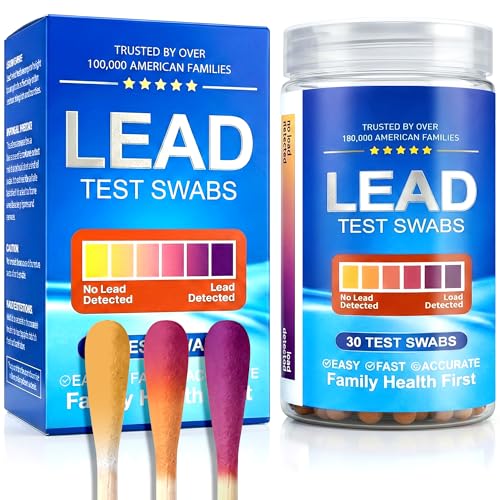
- 1️⃣ Easy Lead Testing at Home Quickly check surfaces around your home with simple test swabs designed for convenient DIY…
- 2️⃣ No Vinegar Needed Unlike many test kits that require vinegar or extra preparation, these swabs are designed for easy…
- 3️⃣ Visible Color Change The swab tip changes color when a reaction occurs, helping you easily see the result. Clear col…
Lead test swabs are the most accessible home testing method available.
They work through a chemical reaction the active ingredient in the swab reacts with lead on the surface and produces a visible color change, typically turning pink or red when lead is detected.

- 2-in-1 LEAD DETECTION: Safe Home provides the only LEAD COMBO-KIT on the market which includes 10 DIY surface swabs that…
- DIY LEAD SCREENING: Safe Home provides the only Do-It-Yourself Lead screening kit that uses ultra-sensitive ACS (America…
- OPTIONAL LEAD TESTING AT OUR CERTIFIED LAB: Contractors and discerning homeowners can also use our Lead Sample Submissio…
Products like 3M LeadCheck swabs are widely available at hardware stores and online, and they’re designed for surface testing on ceramics, paint, and other materials.
While they’re not laboratory-grade tools, they provide a fast and affordable first-pass screening that can flag obvious contamination quickly.
Step-by-Step Lead Testing Process for Dishes
Start by cleaning the dish thoroughly with warm water and allowing it to dry completely any residue can interfere with results.
Activate the swab according to the kit instructions, then firmly rub it across the areas of highest concern: the inner surface, the rim, and any painted or decorated sections.
For 3M LeadCheck specifically, a pink or red color reaction indicates the presence of lead. Wait the full reaction time specified in the instructions before reading results.
Test multiple areas of the same dish, as lead distribution in glazes can be uneven, and a single spot test may not capture the full picture.
Limitations of Home Lead Test Kits
Home lead test kits are a useful screening tool, but they have real limitations worth understanding. They test only the surface layer; they can’t detect lead that’s locked deeper within a glaze and hasn’t yet migrated to the surface.
False negatives are possible, meaning a dish can test negative on a swab while still containing lead that could leach under heat or acid exposure.
False positives can also occur with certain pigments that trigger the chemical indicator without actual lead being present. A negative swab result is encouraging but not a guarantee of food safety, particularly for antique ceramics or heavily decorated pieces.
Best Lead Test Kits for Dishes
For home screening, 3M LeadCheck swabs are the most widely recommended and EPA-recognized option. They’re reliable, easy to use, and available at most hardware stores.
Schneider Labs and ESCA Tech also produce consumer lead test kits that work on ceramic surfaces.

- SLGi Home Test Kits includes sampling tools, a prepaid return shipping label, instructions, and analysis.
- We perform Lead GFAA analysis by EPA Method 200.9 for (1) drinking water sample.
- Your results will be ready within (5) business days of your kit arriving at our lab.
For a step up in accuracy, professional XRF testing services offered through environmental consultants or consumer advocates like Lead Safe Mama provide far more detailed results.
If you want laboratory-grade confirmation, submitting samples to a certified laboratory for ICP-MS heavy metal testing gives you quantitative data that home kits simply can’t match.
Using a combination of a swab test for initial screening and XRF or lab analysis for confirmation is the most thorough approach.
How to Test for Lead in Vintage Dishes
Testing vintage dishes specifically requires a bit more care than testing modern dinnerware, because lead in older ceramics can be distributed unevenly across the glaze and pigment layers.
Start with a 3M LeadCheck swab on the interior food-contact surface, the rim, and any areas with bright decorative color — these are the spots where lead-based pigments are most likely to concentrate.
If the swab result is ambiguous or negative but your concern remains, pursue XRF testing for a non-destructive but comprehensive elemental analysis.
For antique china or heirloom pieces with significant value, a certified laboratory offering ICP-MS analysis gives you the most defensible and precise result.
Always test worn or crazed glaze areas first, as surface deterioration increases the likelihood of detectable lead migration.
How to Test Dishes for Lead With Vinegar
The vinegar leach test is an informal method that some consumers use to evaluate glaze stability in ceramic dishes.
Fill the suspected dish with plain white vinegar and let it sit undisturbed for 24 hours at room temperature.
If the vinegar develops a metallic taste, discoloration, or visible residue, that’s a signal the glaze is releasing materials into the liquid, which may include lead or other heavy metals.
However, this method does not confirm lead specifically and is not a substitute for a proper lead test kit or XRF testing. Think of it as a rough preliminary check, not a diagnosis.
A dish that passes the vinegar test can still contain lead that hasn’t leached under these specific conditions.
Related reading: A Comprehensive Guide on Testing Your Cookware for Lead and Heavy Metals
Professional Laboratory Lead Testing
XRF (X-Ray Fluorescence) Testing
XRF testing is the most reliable non-destructive method for detecting lead in dishware. An XRF analyzer fires X-rays at the surface and measures the fluorescent energy emitted by different elements — including lead — to produce a precise elemental analysis.
It can detect lead across multiple layers of a glaze, not just the surface, making it far more thorough than swab tests.
Consumer advocates like Tamara Rubin of Lead Safe Mama have used XRF testing extensively to document lead in vintage dishware brands, publishing results that have changed how many consumers think about their kitchen cabinets.
Laboratory Chemical Analysis
For the most precise quantitative results, laboratory chemical analysis using methods like ICP-MS — inductively coupled plasma mass spectrometry — provides detailed measurements of lead and other heavy metals at trace levels.
This involves physically dissolving a sample of the glaze material in acid and analyzing the resulting solution.
It’s more invasive than XRF testing since it requires removing material from the dish, but it produces the most accurate numbers.
Certified laboratories can measure lead concentrations against FDA lead limits and provide documented results useful for legal or regulatory purposes.
When Professional Testing Is Necessary
Professional testing is most warranted when dishes hold significant sentimental or monetary value — antique china sets or heirloom pottery that you want to continue using safely.
It’s also worth pursuing when home swab tests produce ambiguous results, or when you have a large collection of vintage dishware and want systematic answers rather than piece-by-piece screening.
If you’re a collector, restaurant owner, or parent of young children regularly using older ceramics, the cost of professional heavy metal testing is modest compared to the peace of mind and the health stakes involved.
Cost and Accuracy Comparison
Home lead test kits like 3M LeadCheck cost just a few dollars per swab and deliver results in minutes, making them ideal for initial screening.
XRF testing services through consumer advocates or environmental testing companies typically run from $30 to $100 per item, depending on the provider.
Laboratory ICP-MS analysis can range from $50 to $200 per sample at a certified laboratory. In terms of accuracy, home swabs are the least precise, XRF testing is highly reliable for surface and near-surface detection, and ICP-MS is the gold standard for quantitative measurement.
Are Lead Test Kits Accurate?
EPA-Recognized Lead Test Kits
The EPA has evaluated and recognized certain consumer lead test kits for use in identifying lead-based paint and surface contamination.
3M LeadCheck is among the EPA-recognized products, which means it has been validated against a defined performance standard for detecting lead above a certain threshold.
That recognition is meaningful; it confirms the kit performs reliably as a screening tool under the conditions it was designed for.
However, EPA recognition applies to specific applications and doesn’t mean the kit will catch every form or concentration of lead across all surface types.
Reliability of Consumer Swab Tests
Consumer swab tests are reliable screening tools within their design parameters, but they should be understood as a first filter rather than a final verdict.
They’re most effective at detecting lead in paint and on heavily contaminated surfaces. For ceramic glazes, where lead may be present at lower concentrations or distributed unevenly, their reliability varies.
Multiple swab tests on different areas of the same dish improve your confidence in the result. For high-stakes decisions about daily-use dinnerware, combining a swab test with XRF analysis gives you a much stronger basis for action.
Factors That Affect Accuracy
Several variables influence how accurately a home lead test kit performs on dishes. The condition of the glaze matters — crazed, chipped, or worn glaze surfaces expose more lead to the swab, making detection more likely.
Surface contamination from food residue or cleaning products can interfere with the chemical indicator and skew results. Temperature and humidity can also affect reaction sensitivity.
Following the kit instructions precisely — including the cleaning step, the rubbing technique, and the wait time — minimizes these variables and gives you the most reliable reading the kit can produce.
Why Negative Results May Not Guarantee Safety
A negative result on a lead test swab means the kit didn’t detect lead on that surface at that moment, but it doesn’t mean the dish is completely lead-free.
Lead that’s bound tightly within a glaze and hasn’t migrated to the surface may not react with the swab’s chemical indicator.
Over time, especially with repeated exposure to acidic foods, heat, or dishwasher wear, that same lead can begin to leach.
This is why negative results on vintage dishware or antique ceramics should be taken as reassuring but not definitive, particularly for dishes used daily by children.
What to Do If Dishes Test Positive for Lead
Stop Using the Dish for Food
If a dish tests positive for lead contamination, the most important immediate step is to remove it from food service entirely. Don’t continue using it while you decide what to do next; even occasional use adds to cumulative lead exposure.
This applies to serving dishes, mugs, bowls, and any other piece that contacts food or drinks. The risk isn’t worth the continued use of any single piece of dinnerware, no matter how attached you are to it or how infrequently you thought you were using it.
Avoid Microwaving or Heating
Heat significantly accelerates lead leaching from ceramic glazes. If you suspect a dish contains lead but haven’t yet confirmed it, stop microwaving or heating food in it immediately.
Microwaving dishes with lead-based glazes can cause the glaze to break down faster and release lead into food at elevated rates. This applies to oven use as well.
Until you’ve had the dish properly tested and confirmed safe, treat heat exposure as an unacceptable risk — particularly for dishes used to reheat children’s meals.
Safe Disposal or Display-Only Use
Dishes that test positive for lead don’t have to be discarded immediately if they hold personal or monetary value. Many collectors repurpose lead-positive ceramics as display-only pieces — kept on shelves or in cabinets rather than used at the table.
If you choose this path, mark them clearly so they can’t accidentally re-enter the kitchen rotation. For pieces with no sentimental value, responsible disposal is the cleaner choice.
Check local hazardous waste disposal guidelines before throwing lead-containing ceramics in standard recycling or trash.
Replacing Unsafe Dinnerware
Replacing lead-positive dishes gives you a straightforward path to a safer kitchen.
Modern food-safe dinnerware from reputable manufacturers is held to strict FDA lead limits and ceramic safety standards that simply didn’t exist when most vintage pieces were made.
Look for explicitly lead-free dinnerware from brands that provide safety certifications, not just marketing language, but documented compliance with food contact material regulations.
This is also an opportunity to upgrade to non-toxic dinnerware materials that eliminate the concern, like tempered glass, stainless steel, or certified modern porcelain.
How to Identify Safer Dinnerware
Lead-Free Labels and Certifications
Reliable lead-free dinnerware carries documentation that goes beyond a simple marketing claim.
Look for certification language that references compliance with FDA food contact standards, ASTM testing protocols, or California Proposition 65 requirements.
Proposition 65 is particularly meaningful because it requires businesses to warn consumers about known toxic chemical exposures, and manufacturers who can demonstrate their products don’t trigger those thresholds are genuinely demonstrating lead-free compliance.
A brand that publishes third-party test results is always more credible than one relying solely on its own claims.
FDA-Compliant Dinnerware
FDA-compliant dinnerware has been manufactured to meet the agency’s limits on lead migration from food contact surfaces.
The FDA sets specific thresholds for how much lead can leach from a ceramic surface into a standardized acidic solution, and products sold in the U.S. market are expected to meet these limits.
That said, FDA compliance doesn’t mean zero lead it means lead below the regulatory threshold. For households with young children or anyone seeking the lowest possible exposure, choosing explicitly lead-free certified products offers a higher standard than FDA compliance alone.
Choosing Modern Food-Safe Brands
Modern dinnerware from established brands produced in countries with strong consumer product safety regulations, including the United States, Japan, and EU member states, generally meets current food safety standards.
Brands like Corelle, which uses tempered glass rather than ceramic glaze, and modern porcelain lines from manufacturers who publish their safety testing data, offer dependable food-safe options.
When shopping for new dinnerware, the combination of a recognizable brand, a country of manufacture with strong safety oversight, and explicit lead-free certification gives you the strongest possible safety profile.
Safer Materials for Everyday Use
Some materials are inherently lower-risk than traditional glazed ceramics. Tempered glass, like that used in Corelle dishes, doesn’t require glaze and therefore eliminates the glaze-related lead risk.
Stainless steel dinnerware is another completely glaze-free option that’s also durable and hygienic. Modern porcelain produced under current FDA and EU ceramic safety standards is generally safe when purchased from established manufacturers.
Plain, undecorated white ceramics from reputable modern brands tend to carry less risk than heavily decorated or vintage pieces, since less pigment means fewer opportunities for lead to enter the glaze formula.
Lead-Free Dinnerware Alternatives
Corelle and Tempered Glass Dishes
Corelle dishes are made from Vitrelle — a triple-layer tempered glass material that doesn’t use ceramic glaze in the traditional sense. This construction essentially removes the glaze-lead risk from the equation.
Modern Corelle patterns are lead-free and FDA-compliant, making them one of the most straightforward safe dinnerware choices available.
Note that vintage Corelle with older decorative patterns has raised some concerns through XRF testing, so stick to current production pieces if lead-free status matters to you.
Stainless Steel Dinnerware
Stainless steel dinnerware is completely free of glaze and therefore carries no ceramic glaze lead risk whatsoever. It’s durable, non-reactive, and hygienic — qualities that have made it the default choice in professional food service environments for decades.
For families with young children or anyone who wants to eliminate heavy metal exposure from dinnerware entirely, stainless steel is the most straightforward solution.
It’s also dishwasher-safe, highly durable, and unlikely to crack, chip, or deteriorate in ways that increase contamination risk over time.
Certified Porcelain and Stoneware
Modern certified porcelain and stoneware from manufacturers operating under current FDA food contact standards and EU ceramic safety regulations offer a reliable lead-free option for those who prefer traditional ceramic dinnerware.
Look for brands that explicitly state lead-free and cadmium-free certification, ideally backed by third-party laboratory testing.
Plain white or minimally decorated modern porcelain from established manufacturers generally poses the lowest risk within the ceramic category, since fewer decorative pigments mean fewer opportunities for heavy metal contamination in the glaze formula.
BPA-Free and Non-Toxic Kitchenware
Beyond dishes specifically, non-toxic dinnerware extends to serving bowls, storage containers, and cookware that collectively influence your daily heavy metal and chemical exposure.
Glass, stainless steel, and certified food-safe ceramics are the core materials to prioritize. Avoid melamine dinnerware for hot foods, as it can release formaldehyde under heat.
BPA-free plastics are better than older plastic formulations but still worth using selectively. Building a kitchen around genuinely food-safe ceramics, glass, and steel gives you a strong foundation for reducing cumulative toxic exposure across all your daily cooking and eating habits.
Conclusion
Testing dishes for lead is one of the most practical steps any household can take toward genuinely safer everyday eating.
The risk is real, the tools to address it are accessible, and the alternatives from tempered glass to certified lead-free porcelain are better than ever.
Whether you start with a 3M LeadCheck swab on your vintage collection or send a prized antique china set for XRF analysis, the investment in testing pays off in certainty and peace of mind.
Key Safety Takeaways
Vintage and imported ceramics deserve extra scrutiny, not because they’re all dangerous, but because they predate the safety standards that modern food-safe dinnerware is built around.
Home lead test kits are a useful and affordable first step, but they have real limitations.
A negative swab result on antique china or hand-painted pottery is reassuring, not conclusive.
Heavy metal exposure accumulates silently over time, making early detection and replacement the smarter path compared to waiting for symptoms to appear.
Final Recommendation
Use certified lead-free dinnerware for daily meals, particularly for children. Replace any dish that tests positive, rather than repurposing it for food use.
For valuable antiques or heirlooms, invest in professional XRF or laboratory testing before deciding whether to display or retire them. Check for genuine food-safe certification — not just marketing language — when buying new dishes.
And if your current collection includes vintage, imported, or heavily decorated ceramics with no documented safety testing, that’s where to start.
About the Author & Reviewer
Sarah Emirone, Author
Sarah researches and writes SafeKitchn’s dinnerware and kitchenware guides, with a focus on material safety, lead content, and manufacturer specifications. She cross-references product data sheets, safety certifications, and regulatory filings (including FDA and Prop 65 records) before publishing, and updates articles when new information becomes available.
James Daniels, Reviewer
James reviews SafeKitchn’s material safety content for scientific accuracy. He holds a B.Sc in inorganic chemistry and works as a materials researcher, with particular focus on the composition and safety behavior of glass, ceramic, and metal used in kitchenware.