

You chose Corelle because you trusted its lightweight, durable, and a brand that’s been on American tables for decades.
Yet recent conversations about lead in dinnerware have left you quietly unsettled, staring at the plates you serve your family on every single day. You did everything right, and now you’re not sure what you’re actually eating off.
Throwing out your entire set in panic isn’t the answer: knowing exactly which Corelle patterns contain lead and which ones don’t is.
This post identifies the specific Corelle dishes that have lead, which vintage and decorated patterns tested positive, and what the findings actually mean for your family’s daily safety.
Here’s the uncomfortable truth: it was never about the brand, it was always about the pattern, and nobody told you which ones to avoid.
Written by Sarah Emirone | Reviewed by James Daniels, B.Sc, Inorganic Chemist & Materials Researcher | Updated September 2026 | See How We Test | Filed under: Material Safety & Lead Testing
Understanding Lead in Dinnerware
What Is Lead?
Lead is a naturally occurring heavy metal that has been used in industrial and consumer applications for centuries. It’s dense, malleable, and was historically valued for its durability and its ability to improve the adhesion and vibrancy of pigments.
The problem is that lead is also a toxic chemical — one that the CDC and World Health Organization have identified as having no safe level of exposure, particularly for children.
Once ingested or absorbed, lead accumulates in the body, primarily in bones, and can cause a wide range of health problems over time. Understanding this context matters when evaluating any claims about lead in consumer products like dinnerware.
Why Lead Was Used in Dishware
Historically, lead oxide was a practical choice for ceramic glazes and decorative pigments. It lowered the melting temperature of glazes, improved their smoothness, and helped pigments adhere more durably to surfaces.
Cadmium pigments were also widely used because they produced exceptionally bright reds, oranges, and yellows that were difficult to achieve with other materials.
Before modern manufacturing standards caught up with the science of toxicity, these materials were standard across the kitchenware industry — not just in Corelle, but across virtually all decorative dinnerware produced before the 1970s and 1980s.
Health Concerns Related to Lead Exposure
The health risks tied to lead exposure are well-documented. Chronic exposure — even at low levels — has been linked to neurological damage, cognitive impairment in children, kidney damage, and developmental delay in early childhood.
Children are disproportionately vulnerable because their developing nervous systems absorb lead more readily than adults. Lead poisoning doesn’t always produce obvious symptoms, which is what makes ongoing household exposure particularly concerning.
Blood lead level testing is the only reliable way to confirm exposure, and the CDC has made clear that elevated levels carry significant long-term health consequences.
Does Corelle Dinnerware Contain Lead?
Corelle’s Vitrelle Glass Material
Corelle dishes are made from Vitrelle glass — a triple-layer tempered glass material that Corning developed in the late 1960s. The glass itself is not ceramic, does not use traditional glaze formulations, and is not where lead concerns originate.
Vitrelle glass construction involves bonding three layers of glass under heat and pressure. There is no glaze over the glass body in the traditional ceramic sense, and the structural material of the dish — the white glass base — has not been identified as a source of lead content in any credible testing.
The safety questions are about what sits on top of the glass, not the glass itself.
Lead Concerns in Decorative Patterns
The lead conversation around Corelle centers almost entirely on decorative patterns, the printed or painted designs applied to the exterior of dishes.
Older Corelle sets used pigments and printing processes that, by today’s standards, would not pass FDA compliance review. These exterior paint layers could contain lead oxide and cadmium pigments, particularly in designs with bright colors — reds, yellows, oranges — that were characteristic of vintage production.
The concern is that when these decorative coatings wear, chip, or degrade, there’s potential for lead leaching or surface contamination that could reach food.
Difference Between Structural Material and Surface Decoration
This distinction is important and often gets lost in online discussions. The food contact surface of a Corelle plate — the interior white glass area where food actually sits — is not the same as the decorative exterior rim or printed pattern.
The non-food surface is the outer edge, where decorative rim designs are applied. In most standard Corelle use, your food isn’t sitting on the printed exterior.
The risk pathway is indirect: worn, chipped, or cracked decorative coatings can contaminate food through handling, especially if dishes are heavily degraded or used in ways that bring the exterior into prolonged food contact.
Which Corelle Dishes Have Lead?

Vintage Corelle dishes made before the mid-1980s are most commonly associated with lead concerns, specifically those with colorful decorative exterior patterns.
The patterns most frequently identified in independent testing and consumer discussions include:
• Butterfly Gold (yellow and brown floral, 1970s)
• Spring Blossom Green (green floral, 1970s)
• Woodland Brown (brown botanical, 1970s)
• Snowflake Blue (blue geometric, 1970s)
• Country Cottage Pattern (colorful floral border)
These patterns contain printed rim designs applied with pigments that may include lead oxide or cadmium compounds — materials commonly used in decorative printing before modern manufacturing standards took effect.
The glass body of these dishes is not the source. Modern Corelle collections produced under current FDA compliance standards do not carry the same concerns.
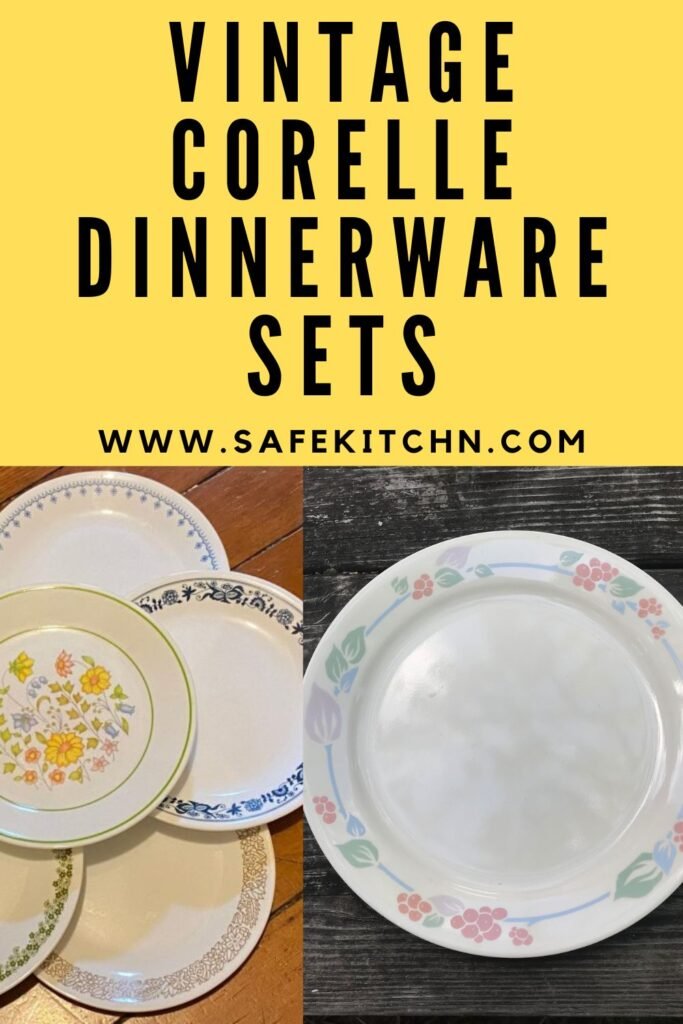
Note: If you’re looking for pictures of Corelle dishes that have lead to help identify patterns visually, collector communities like CorningWare 411 and Replacements Ltd maintain photo archives of vintage patterns with production dates but see our picture above quickly.
Lead in Corelle Dishes Fact Check
Let’s address the claims directly. Online discussions about lead in Corelle dishes range from well-researched consumer safety concerns to significant overstatements. Here’s what the evidence actually supports:
Claim: All Corelle dishes contain lead. False. The Vitrelle glass material itself is not a source of lead. Concerns apply to specific vintage patterns with decorative coatings — not to modern Corelle collections or to the structural glass body of any Corelle product.
Claim: Lead detected in a dish means it’s immediately dangerous. Incomplete. XRF testing can detect the presence of heavy metals on a surface without measuring how much — if any — migrates into food. Lead presence does not automatically equal lead exposure risk.
Food-contact surface testing and leaching analysis are different measurements.
Claim: Modern Corelle follows the same manufacturing standards as vintage sets. False. Manufacturing standards have changed substantially since the 1970s.
Modern Corelle products are produced under current FDA regulations, which impose strict limits on heavy metals in food-grade materials and food contact surfaces.
Are White Corelle Dishes Lead Free?
This is one of the most common questions consumers ask, and the answer is reassuring.
Plain white Corelle dish sets without decorative exterior patterns or colored rim designs do not carry the same concerns as vintage patterned collections.
The white glass body itself is not associated with lead content in any credible testing. The issues that have come up in consumer safety discussions trace back consistently to the exterior decorative pigments applied in older manufacturing eras, not to the glass material.
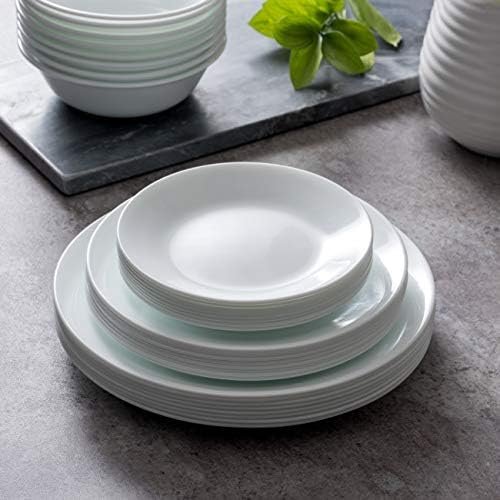
Plain white modern Corelle is widely considered a safe dinnerware option. It’s BPA-free, made from lead-free Vitrelle glass, and produced under current food safety regulations.
If you’re concerned about heavy metals in your dinnerware and want a straightforward answer, switching to or purchasing plain white contemporary Corelle eliminates the decorative coating variable.
The non-porous surface of Vitrelle glass doesn’t absorb food residue, resists staining, and doesn’t degrade in ways that raise food safety concerns under normal use conditions.
Which Corelle Dishes Are Lead and Cadmium-Free?
Modern Corelle collections manufactured under current consumer safety regulations are produced to meet FDA compliance standards for both lead-free and cadmium-free requirements. As a general guide:
Modern plain white collections — including the Winter Frost White, Livingware, and Chip 30 lines — are made from undecorated Vitrelle glass with no exterior pigment coatings. These are the safest options if eliminating any heavy metal concern is the priority.
Contemporary patterned collections — those produced in the 2000s and later — use modern manufacturing standards and updated pigment technologies that comply with current FDA and California Prop 65 disclosure requirements. These collections are designed to meet current safe dinnerware standards.
Vintage collections from the 1970s and early 1980s — including Butterfly Gold, Spring Blossom Green, Woodland Brown, and Snowflake Blue — are the sets most associated with lead and cadmium concerns.
These were produced under manufacturing standards that predate current heavy metal regulations.
If you’re unsure about a specific pattern, checking the backstamp on the bottom of your dishes can help identify the manufacturing era.
Older backstamps often indicate production before modern safety standards came into effect. For a deeper look at product safety history, you can also review
If you’re unsure about a specific pattern, checking the backstamp on the bottom of your dishes can help identify the manufacturing era. Older backstamps often indicate production before modern safety standards came into effect.
For a deeper look at product safety history, you can also review an in-depth review of Corelle recall information to understand which products have been flagged historically.
Which Corelle Dishes Are Most Commonly Discussed?
Vintage Corelle Patterns
The vintage Corelle patterns that appear most frequently in safety discussions are those produced during the 1970s — a period when decorative paint technology relied heavily on pigments containing lead and cadmium compounds.
Old Corelle patterns like Butterfly Gold and Spring Blossom Green were produced in very large quantities during this era and remain common in thrift stores, estate sales, and online marketplaces.
Their wide availability is part of why they keep coming up in safety discussions: many households still have these sets in active use.
Decorative Rim Designs
The printed rim is where most of the concern sits. These decorative rim designs wrap around the outer edge of the plate and often feature the most vibrant colors in a pattern’s design — yellows, reds, oranges — which were typically achieved using cadmium pigments or lead-containing compounds.
The interior of the plate, where food actually contacts the surface, is generally plain Vitrelle glass. The exterior paint layer on the rim is the variable element that has drawn consumer attention in heavy metal testing discussions.
Older Manufacturing Eras
The manufacturing era a dish comes from is the single most useful indicator of whether lead concerns are relevant. Dishes produced before approximately 1985 were made under a different regulatory environment.
The Consumer Product Safety Commission and the FDA have substantially tightened restrictions on heavy metals in dinnerware since that period.
Dishes made after the mid-1990s, and especially those made in the 2000s and beyond, reflect a very different set of manufacturing standards — one where lead and cadmium content in decorative coatings is tightly restricted.
Why Older Dinnerware May Raise Lead Concerns
Historical Manufacturing Standards
Consumer safety regulation, as we understand it today, didn’t fully take shape until the 1970s and 1980s. The Consumer Product Safety Commission was established in 1972, and FDA oversight of food contact materials evolved significantly over the following decades.
Dinnerware manufactured before these changes reflects an era when the presence of heavy metals in decorative coatings wasn’t regulated with the same rigor that exists now. That’s not a unique failing of any one brand — it’s a reflection of where the entire industry was.
Decorative Paint Technology in the Past Decades
Lead oxide was valued in ceramic pigments because it enhanced color brilliance and improved the durability of the finish.
Cadmium pigments produced colors — particularly reds and yellows — that simply couldn’t be replicated with safer alternatives available at the time. By the standards of mid-20th-century manufacturing, these were technically effective materials.
The problem wasn’t ignorance of lead toxicity so much as a lack of regulatory pressure to move away from it in consumer products. That pressure came later, in the form of updated FDA regulations and California Prop 65 disclosure requirements.
Changes in Consumer Safety Regulations
The regulatory environment for dinnerware safety has changed substantially over the past four decades. FDA limits on lead leaching from food contact surfaces have been progressively tightened.
California Prop 65 introduced additional disclosure requirements for products containing chemicals known to cause cancer or reproductive harm — including lead and cadmium.
These changes pushed manufacturers to reformulate decorative pigments and adopt safer alternatives. The result is that modern dinnerware, including modern Corelle, is produced under a significantly stricter consumer awareness and chemical regulation framework than products made in the 1960s and 1970s.
Are Modern Corelle Dishes Lead-Free?
Modern Manufacturing Standards
Corelle’s current manufacturing standards reflect FDA compliance requirements for heavy metals in food-grade materials.
Modern Corelle production does not use the same decorative pigment formulations that were standard in the 1970s.
The brand has updated its manufacturing processes in line with evolving consumer product safety requirements, and contemporary collections are designed to meet current lead-free and cadmium-free standards for dinnerware.
Food-Safety Testing and Regulations
Current FDA regulations set limits specifically on lead and cadmium migration from the food contact surface of dinnerware — the interior area where food sits.
Modern Corelle products are tested against these migration limits. The question isn’t just whether a material contains trace amounts of a heavy metal, but whether that material releases detectable quantities into food under normal use conditions.
Modern collections are designed to meet these standards, which is a meaningfully different bar than simply detecting presence with surface XRF analysis.
Safer Contemporary Collections
If you’re shopping for new Corelle and want to avoid any decorative coating variable, contemporary plain white collections are your clearest option.
For those who want pattern options, collections released in the 2010s and later use modern pigment technology that complies with current safety standards.
Checking that a set is explicitly marketed as meeting current FDA and consumer safety standards — or confirming it’s a recent production run — gives reasonable confidence that you’re buying safe dinnerware that reflects today’s manufacturing standards rather than those of fifty years ago.
Understanding Lead Testing in Dinnerware
XRF Testing Explained
XRF testing — X-ray fluorescence — is a non-destructive method for detecting the presence of heavy metals on a surface. It’s highly sensitive and can detect lead or cadmium present in decorative coatings even at low concentrations.
This is the method most commonly used in independent consumer safety testing of dishes. The important caveat: XRF testing measures presence, not leaching.
It tells you what’s in the surface coating, not how much of it — if any — migrates into food during normal use. This distinction is crucial for interpreting test results accurately.
Food-Contact Surface Testing
The FDA’s approach to dinnerware safety focuses specifically on food contact surface testing — measuring how much lead or cadmium actually migrates into food-simulating liquid from the interior surface of a dish under standardized conditions.
This migration testing is a much more practically relevant measure of safety than simple surface detection.
A dish can test positive for lead presence on its exterior decorative rim while having no detectable lead migration from its food contact interior — and those are very different safety situations.
Why Online Test Results May Differ
Consumer test results shared online often use home lead testing kits — swab tests like LeadCheck — or report XRF readings without distinguishing between exterior decoration and interior food contact surfaces.
These tests are useful for identifying the presence of heavy metals, but don’t replicate the FDA’s migration testing methodology.
Different testing methods, different surfaces tested, and different interpretations of results all contribute to the variability you see in online discussions.
Laboratory analysis performed by certified labs using standardized FDA methodology provides the most reliable safety assessment.
Difference Between Lead Presence and Lead Exposure
Encapsulated Decorative Elements
In many vintage dishes, the decorative pattern is applied as an exterior coating that is then fired at high temperature. This process can partially encapsulate the pigments, reducing — though not eliminating — the potential for surface transfer.
The degree to which decoration is encapsulated versus exposed at the surface varies by manufacturing process and the age and condition of the dish.
A well-preserved vintage dish with an intact exterior coating presents a different risk profile than one with worn, chipped, or scratched decoration.
Leaching vs Material Detection
Lead leaching is the process by which lead migrates from a surface into food or liquid. This is the mechanism by which lead in dinnerware could actually harm someone.
Material detection; identifying that lead exists somewhere in the composition of a dish is a separate finding.
The presence of lead in an exterior decorative coat that never contacts food directly, that is structurally intact, and that hasn’t been shown to migrate into food at measurable levels, is a different situation from confirmed lead leaching into food.
Both are worth knowing about, but they carry different practical implications.
Wear and Surface Damage Risks
Where the risk picture does shift is with surface wear. Decorative rim wear, scratching from abrasive cleaning, dishwasher aging, and physical chips or cracks can all degrade the decorative coating over time potentially exposing underlying pigment layers or creating pathways for contamination that wouldn’t exist in an intact dish.
This is why condition matters so much when evaluating vintage dishes. A vintage plate in pristine condition is a different conversation than one with heavy scratching, faded pattern, and chipped edges.
How to Identify Older Corelle Dishes
Recognizing Vintage Patterns
The visual signatures of vintage Corelle are fairly recognizable once you know what to look for. Butterfly Gold features a yellow and brown botanical design.
Spring Blossom Green uses a small green floral motif across a white background. Woodland Brown is a larger brown botanical pattern. Snowflake Blue has a blue geometric design. C
ountry Cottage Pattern features colorful floral borders. These old Corelle patterns were produced primarily during the 1970s and into the early 1980s, and they remain widely available through thrift stores and online resale platforms.
Checking Back Stamps and Markings
The backstamp on the underside of a Corelle dish is a useful identification tool. Older dishes typically feature different backstamp styles than contemporary production, and some include country of origin markings — ‘Made in USA’ was common on early Corelle production.
Collector communities have documented backstamp evolution across decades, which makes it possible to date a dish fairly accurately based on its marking. If you’re uncertain about a set’s age, checking the backstamp against these reference guides is a reasonable first step.
Signs of Aging and Wear
Physical signs of dishware aging include pattern fading, decorative rim wear, surface scratching, and — in more severe cases — chips or cracks in the glass body.
Any of these signs on a vintage-patterned Corelle dish is worth taking seriously. Worn decoration on older dishes increases the likelihood that pigment is accessible at the surface, which is where direct contamination risk is highest.
Dishes showing significant surface deterioration should either be retired from food use or tested before continued use.
Should You Stop Using Vintage Corelle?
Personal Risk Assessment
Whether to continue using vintage Corelle depends on a few factors: the specific pattern, the condition of the dishes, who uses them, and how they’re used.
A household with young children should apply more caution than one with adults only — child safety concerns around lead are significantly higher given the developmental risks of even low-level chronic exposure.
For adults using well-preserved vintage dishes occasionally, the risk calculation is different.
This is ultimately a household risk assessment decision, and it benefits from being made with accurate information rather than either panic or dismissal.
Avoiding Damaged Dishes
The clearest guidance is to avoid using any vintage dinnerware that shows significant decorative rim wear, scratching, chipping, or cracking. Damaged dishes represent a higher potential for contamination than intact ones, regardless of testing results on undamaged examples.
If a dish has worn to the point where the pattern is noticeably faded, or the surface feels rough or uneven, it’s reasonable to remove it from active food use. This applies to any vintage dinnerware with decorative coatings, not just Corelle.
Using Vintage Dishes for Display Only
For vintage Corelle enthusiasts who value the aesthetic of older patterns or who have inherited sets with sentimental value, display use is a practical middle ground.
Dishes used for display rather than food service don’t carry the food safety risk associated with lead leaching or food contact surface contamination.
Collector communities have embraced this approach for decades, treating vintage patterns as decorative objects rather than functional kitchenware.
Are Corelle Dishes Safe to Eat Off Of?
For most households, yes — with the important distinction between modern and vintage collections.
Modern Corelle, particularly plain white undecorated sets and contemporary patterned collections manufactured under current FDA compliance standards, is considered safe dinnerware for everyday food use.
The Vitrelle glass body is non-porous, doesn’t absorb food residue, and isn’t associated with heavy metal concerns in any credible testing.
The more complex answer applies to vintage patterned Corelle. Dishes in good condition, with intact decoration and no visible wear, present a lower risk than those showing significant surface deterioration.
However, households with young children may want to err toward replacing heavily patterned vintage sets with modern alternatives, given the stakes involved with lead exposure at developmental ages.
The bottom line: modern Corelle is safe. Vintage Corelle in good condition is low risk for most adults. Vintage Corelle that is chipped, heavily worn, or heavily used in households with children warrants more serious consideration.
The bottom line: modern Corelle is safe. Vintage Corelle in good condition is low risk for most adults. Vintage Corelle that is chipped, heavily worn, or heavily used in households with children warrants more serious consideration.
For a complete background on the brand and its product lines across eras, check out a complete guide of the Corelle dinnerware brand.
Safer Alternatives and Best Practices
Choosing Modern Corelle Collections
If the vintage pattern lead question is prompting you to reconsider your dishes, the straightforward answer is to move to a contemporary Corelle collection.
Modern Corelle meets current manufacturing standards, uses updated pigment technology, and doesn’t carry the same decorative coating concerns as vintage sets.
Plain white collections are the most clear-cut option — no decorative exterior means no exterior pigment variable at all.
Replacing Severely Worn Dishes
Any dish, Corelle or otherwise, that shows significant surface wear, chipping, or degradation of decorative coatings is worth replacing.
This is a general best practice for dinnerware safety, not specific to Corelle. The cost of replacing worn dishes is modest compared to the peace of mind that comes from knowing your food contact surfaces are intact and uncompromised.
This replacement recommendation applies regardless of the original brand or material.
Avoiding High Wear on Decorative Surfaces
Extending the life of decorative coatings on any patterned dinnerware — vintage or modern — comes down to care practices. Avoid abrasive cleaning methods like steel wool or harsh scouring pads on decorated surfaces.
Use gentle dishwasher cycles rather than high-heat settings. Don’t stack dishes in ways that cause the bottom of one plate to grind against the decorated rim of another. These habits reduce dishware aging and preserve the integrity of surface coatings over time.
Common Misunderstandings About Lead in Corelle
“All Corelle Dishes Have Lead”
This is the most common overstatement in online discussions. It conflates vintage patterned Corelle with the entire brand across all eras.
Modern Corelle products are produced under current consumer safety regulations and don’t carry the same concerns as sets manufactured in the 1970s.
The distinction between manufacturing eras matters significantly, and treating all Corelle as equivalent ignores fifty years of regulatory evolution and manufacturing changes.
“Lead Detection Means Unsafe Use”
XRF detection of lead in an exterior decorative coating is not the same as confirmed unsafe food use. As discussed, the relevant safety question is whether lead migrates into food from the food contact surface, and that requires a different testing methodology.
A dish with a lead-containing exterior rim that has never been shown to leach detectable lead into food is a different safety situation from a dish with confirmed food contact surface migration.
Treating surface detection as proof of unsafe use overstates what the test actually measures.
“Modern Corelle Is the Same as Vintage Corelle”
Manufacturing has changed substantially. Modern Corelle uses different pigment technology, follows different manufacturing standards, and is produced under a regulatory environment that simply didn’t exist in the 1970s.
The brand name is the same; the production processes and material standards are not. Anyone researching Corelle safety needs to account for which era of production they’re actually evaluating; the answer is meaningfully different depending on when the dishes were made.
How Consumer Safety Standards Changed Over Time
Evolution of FDA Regulations
FDA regulations governing heavy metals in dinnerware have been progressively tightened since the 1970s.
Current FDA limits on lead and cadmium migration from food contact surfaces are strict compared to what was required — or required at all — during the era when vintage Corelle patterns were produced.
These evolving limits have pushed manufacturers to reformulate their products and adopt safer materials across the industry.
Changes in Manufacturing Technology
Beyond regulation, manufacturing technology has advanced to provide alternatives to heavy metal-based pigments. Modern ceramic pigments and printing technologies can produce vivid, durable decorative coatings without relying on lead oxide or cadmium compounds.
These safer alternatives weren’t available — or weren’t commercially practical — during the early production years of the vintage patterns that draw concern today.
Current manufacturing reflects both regulatory requirements and technological capabilities that simply didn’t exist fifty years ago.
Increased Consumer Awareness
Consumer awareness of heavy metals in household products has grown substantially, driven by public health research, advocacy organizations, and accessible testing tools.
This consumer awareness has created market pressure on manufacturers to meet standards that go beyond minimum regulatory requirements.
California Prop 65 has been particularly influential in pushing brands to reformulate products and increase transparency — and that pressure benefits consumers nationwide, not just those in California.
Best Practices for Safe Dinnerware Use
Inspect Dishes Regularly
Make it a habit to look at your dishes — especially older or vintage sets — for signs of wear. Chips along the rim, visible scratching on decorative surfaces, and fading patterns are all indicators that a dish is showing its age in ways that may affect its safety profile.
Inspecting dishes during washing or storage takes seconds and can help catch deterioration before it becomes a more significant concern.
Avoid Using Damaged Vintage Dishes
Chipped, cracked, or heavily scratched vintage dishes, particularly those with decorative exterior coatings, should be removed from food use.
The risk isn’t just lead exposure; physically damaged dishes can harbor bacteria in cracks, and the structural integrity of the glass itself may be compromised.
For damaged vintage Corelle with sentimental value, display use is a reasonable alternative to continued food service.
Replace Heavily Worn Dinnerware
If a set of dishes has been in daily use for decades and shows significant signs of surface wear and dishware aging, replacing them is reasonable even if you can’t confirm specific heavy metal content.
The practical lifespan of decorative dinnerware, particularly vintage sets with exterior pigment coatings, has a natural limit, and worn dishes present more variables than new ones.
Investing in a modern set eliminates those variables and gives you confidence that your everyday dinnerware meets current food safety standards.
Conclusion
The conversation around which Corelle dishes have lead is more complex than most online discussions suggest.
The core takeaway is this: lead concerns in Corelle attach primarily to vintage patterned sets manufactured before modern consumer safety standards took effect, not to the Vitrelle glass body, and not to contemporary Corelle collections.
The distinction between lead presence and lead leaching also matters: detecting heavy metals on an exterior decorative surface isn’t the same as confirmed food contamination.
Evaluate your dishes based on their age, condition, and who’s using them. If vintage sets are chipped, worn, or used daily by children, replacing them with modern alternatives is the sensible choice.
About the Author & Reviewer
Sarah Emirone, Author
Sarah researches and writes SafeKitchn’s dinnerware and kitchenware guides, with a focus on material safety, lead content, and manufacturer specifications. She cross-references product data sheets, safety certifications, and regulatory filings (including FDA and Prop 65 records) before publishing, and updates articles when new information becomes available.
James Daniels, Reviewer
James reviews SafeKitchn’s material safety content for scientific accuracy. He holds a B.Sc in inorganic chemistry and works as a materials researcher, with particular focus on the composition and safety behavior of glass, ceramic, and metal used in kitchenware.