

The Sistema vs Rubbermaid question sounds simple until you realize the two brands aren’t really competing for the same buyer.
Sistema makes affordable, lightweight containers built around portability and lunch use. Rubbermaid Brilliance makes premium plastic containers built around leak-proof meal prep.
The problem is that neither brand says this clearly, and the most important fact in this comparison (Sistema’s original Klip-It line is not leakproof with liquids) gets buried or skipped entirely.
This article covers both brands honestly: what they’re made of, what they actually do with liquids, what they cost per container, and which one belongs in your kitchen.
Written by Sarah Emirone | Reviewed by James Daniels, B.Sc, Inorganic Chemist & Materials Researcher | Updated September 2026 | See How We Test | Filed under: Brand & Product Comparisons
Sistema vs Rubbermaid: The 60-Second Overview
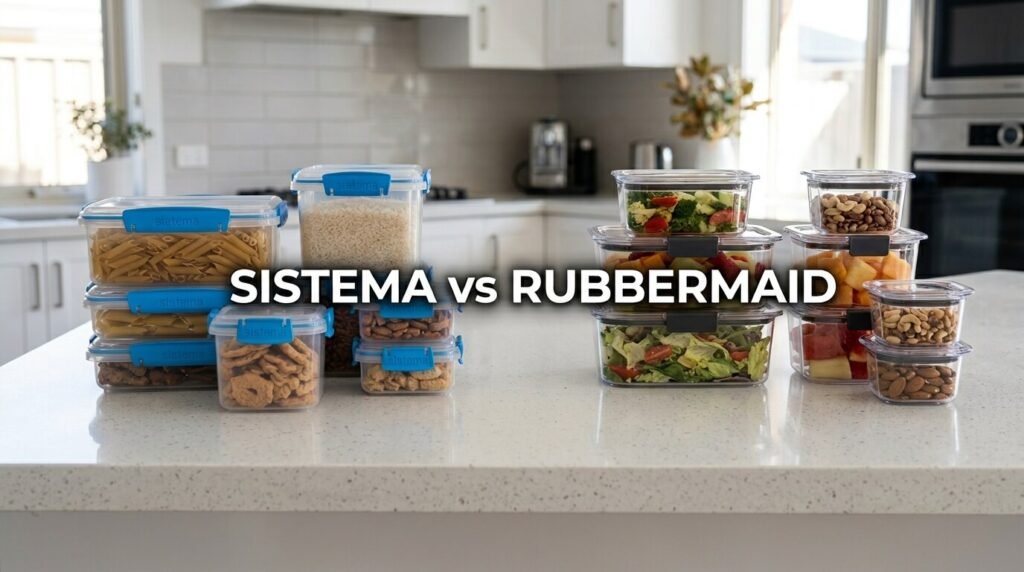
These two brands overlap on the surface; both are BPA-free, dishwasher-safe, freezer-safe, stackable plastic containers, but they differ in material quality, leak performance, and price. Here’s where each one actually lands.
Head-to-Head Comparison at a Glance
| Dimension | Sistema Klip-It PLUS | Rubbermaid Brilliance |
|---|---|---|
| Material | Polypropylene (PP, #5) | Tritan copolyester (#7) |
| Optical clarity | Slightly cloudy | Crystal-clear (glass-like) |
| Leakproof with liquids | Yes — with conditions (see below) | Yes — 100%, confirmed by testing |
| Microwave | Without a lid only | With lid on, latches open |
| Dishwasher | Top rack only | Top rack recommended for lids |
| Stain resistance | Moderate — stains from tomato and curry | High — resists tomato sauce staining |
| Approx. cost per container | $3–$6 | $7–$12 |
| Best for | Lunches, dry food, produce, kids’ use | Meal prep with sauces, fridge organization |
For a broader ranking including OXO, Pyrex, and glass options, see our best food storage containers tested.
Related: Is Rubbermaid made in the USA?
Brand Origins: New Zealand vs. the USA
Sistema is a New Zealand company, designing and manufacturing its containers at a factory in Auckland. Rubbermaid is an American brand, originally from Wooster, Ohio, and Rubbermaid Brilliance containers are manufactured in the USA.
Both are sold globally. Neither origin confers a safety advantage; both operate under FDA food contact standards for the U.S. market.
Are Sistema Containers Leakproof? (The Answer Depends on the Product Line)
The answer is not the same across all Sistema containers, and that’s the thing that trips buyers up. The original Klip-It line and the updated Klip-It PLUS behave differently with liquids, and no product page makes this distinction clear.
Sistema Klip-It (Original): Not Leakproof with Liquids
The original Sistema Klip-It failed independent liquid testing. YourBestDigs, which tested ten of the most popular food storage containers by submerging, freezing, microwaving, and machine-washing each one, found that Sistema containers “are not leakproof or airtight.”


Their conclusion: “If you’re toting something with liquid, expect to find it pooled in the bottom of your bag.” Amazon reviewers echo this — multiple buyers report water leaking immediately when they inverted a freshly filled Klip-It container.
What Klip-It IS good for:
- Dry foods: crackers, nuts, cut vegetables, grapes, sandwiches.
- Produce storage in the fridge where a small amount of liquid pooling isn’t a problem.
- Kids’ school lunches that don’t include soups, stews, or juicy fruits that will leak through the seal.
- Pantry organization of dry goods.
What it isn’t suited for:
- Transporting soups, stews, sauces, or anything liquid that needs to survive being shaken or inverted.
Sistema Klip-It PLUS: Leakproof — with Conditions
Sistema addressed the leaking problem with the Klip-It PLUS, which features an extended flexible seal and redesigned easy-locking clips.
The upgrade is real, but Sistema’s own product description includes a caveat in the fine print: the leakproof claim “excludes some utility lines and sizes above 3.5L.” If you’re buying a large 7L Klip-It PLUS, the leakproof guarantee doesn’t apply.
For the Klip-It PLUS to seal reliably:
- Both clips must be fully engaged — partial engagement leaves the seal incomplete.
- The container must be used below the 3.5L size threshold for the leakproof claim to hold.
- The blue silicone seal strip must be seated properly in the lid groove; if it’s dislodged (which can happen after washing), the seal fails.
- Don’t microwave with the lid on — steam builds up and can warp the seal or lid.
Rubbermaid Brilliance: 100% Leakproof, Confirmed by Testing
Rubbermaid Brilliance is 100% leakproof. YourBestDigs confirmed this in their submersion and inversion tests; no water escaped, no bubbles entered.
Some independent research reached the same conclusion: Brilliance passed both the leak test and the airtight submersion test without failure.




The mechanism behind it: Brilliance lids have a thick silicone gasket that sits inside the inner lip and literally floats on top of the container. When you press the lid down and lock the two side latches, air is expelled, and a vacuum seal forms.
The gasket is twice as thick as what YourBestDigs found in most competing containers, which is why the seal holds under pressure. The downside — the gasket cannot be removed from the lid for separate cleaning, which matters for long-term hygiene.
For a full review of the Brilliance line, including all sizes and the glass option, see our full Rubbermaid Brilliance and Premier review with test results.
Sistema vs Rubbermaid: What They’re Actually Made Of
Both brands are BPA-free. That’s where the similarity ends. The underlying plastic is different, and the difference explains the price gap, the clarity gap, and the stain resistance gap.
Sistema’s Polypropylene: The Safety Case for PP
Polypropylene (PP, recycling code #5): A widely produced thermoplastic polymer used in food containers, yogurt tubs, bottle caps, and medical packaging. It contains no bisphenols (BPA, BPS) and no phthalates.
PP has been used in food contact applications for decades and carries FDA food contact approval.
The tradeoff for PP’s lower cost is appearance and stain resistance. PP has a slightly translucent, faintly cloudy look — you can see through it, but not with the clarity of glass or Tritan.
It stains more readily than Tritan, particularly from tomato-based sauces and turmeric. PP is not the problem material in the plastics safety conversation; it consistently tests as one of the lower-risk plastic options in food contact applications.
Rubbermaid Brilliance’s Tritan: What Makes It Different (and More Expensive)
Tritan copolyester: A copolyester plastic developed and sold by Eastman Chemical Company under the trade name Tritan.
Rubbermaid Brilliance containers are made from Tritan, confirmed by independent materials testing documented at Weekly Pellet, where a sacrificed container was tested and identified as an Eastman copolyester.
Tritan is BPA-free and BPS-free, FDA-approved for food contact, and rated for temperatures between -40°C and 109°C. The glass-like clarity is its most visible property. Brilliance containers look almost identical to actual glass from a distance.
Tritan also resists staining and odor absorption significantly better than polypropylene.
Eastman faced legal challenges around claims that Tritan might show estrogenic activity in some testing conditions. They won that legal battle, but the question exists in the literature.
For most buyers, that consideration is far outweighed by the material’s practical performance advantages.
PP vs Tritan: Material Comparison Table
For a full breakdown of plastic types and their safety profiles, see our plastic food storage safety guide: BPA, Tritan, and polypropylene explained.
| Dimension | Polypropylene (Sistema) | Tritan Copolyester (Rubbermaid Brilliance) |
|---|---|---|
| Optical clarity | Slightly cloudy/translucent | Crystal-clear, glass-like |
| Stain resistance | Moderate — stains from tomato, curry | High — resists tomato staining per YourBestDigs testing |
| BPA/BPS status | Free of both | Free of both |
| Safety profile | Long track record; FDA-approved; no bisphenols | FDA-approved; some unresolved questions about EA in the literature; Eastman won a legal challenge |
| Heat resistance | ~100°C max | ~109°C max |
| Relative manufacturing cost | Lower — widely produced commodity plastic | Higher — specialty copolyester |
Position on material safety: neither is an unsafe choice for food storage. PP is cheaper and has a longer safety track record. Tritan costs more and performs better on clarity and stain resistance.
If you care more about price and don’t mind the cloudier look, Sistema’s PP is fine. If you want stain-free clarity that holds up over years of use, Tritan justifies the premium.
Stain Resistance, Odor, and Dishwasher Durability
Rubbermaid Brilliance wins this category. But the gap between the brands varies depending on what you’re storing.
The Tomato Sauce and Turmeric Test: Which Container Survives
YourBestDigs ran a stain test microwaving tomato-based sauce in each container, then dishwashing it. Brilliance came out with only a faint rosy tint in the beveled edges, noticeable up close but minor.
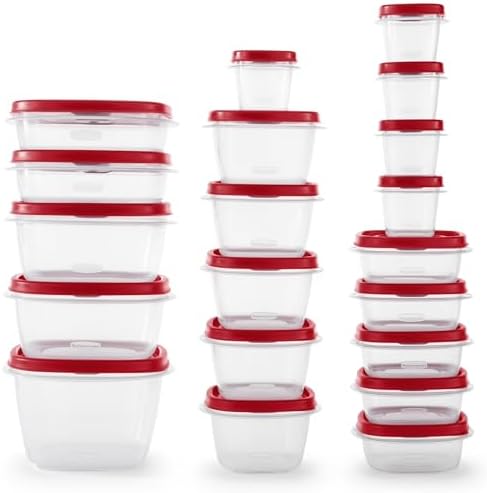
The Rubbermaid Easy Find Lids (the budget Rubbermaid line made from standard polypropylene) stained deeply and showed pitting after the same test. Sistema’s Klip-It containers fared similarly to the Easy Find Lids in staining, not to Brilliance.
Rubbermaid Brilliance even notes in its own care instructions that turmeric, not tomato sauce, is the one pigment that can stain the Tritan. Tomato sauces don’t stain it. That’s a meaningful performance difference for anyone who meal preps curries or pasta dishes regularly.
| Container | Tomato Sauce Stain | Odor After Dishwashing | Post-Test Condition |
|---|---|---|---|
| Rubbermaid Brilliance (Tritan) | Faint tint in beveled edges only | Minimal | No pitting or clouding |
| Sistema Klip-It (PP) | Visible staining | More pronounced | Some surface wear over time |
| Rubbermaid Easy Find Lids (PP) | Deep staining | Strong garlic odor retained | Pitting confirmed after one cycle |
Dishwasher Performance: Top Rack vs Full Cycle Differences
- Sistema Klip-It and Klip-It PLUS are top-rack dishwasher safe only — placing them on the bottom rack risks contact with the heating element, which melts PP at lower temperatures than Tritan.
- Rubbermaid Brilliance containers are also recommended for the top rack — specifically for the lids — but Tritan’s higher heat resistance means the containers themselves hold up better against temperature variation.
- YourBestDigs ran Brilliance through a heavy-duty dishwasher cycle and found no signs of pitting, scratching, or clouding; the containers looked new after the test.
- Sistema’s blue clips and seal can show wear after repeated high-heat dishwasher cycles — the clips become stiffer and the seal less flexible over time.
Microwave Safety: The Lid Rule That Catches People Off Guard
Both brands are microwave-safe, but the lid rules are opposite, and getting this wrong with Sistema creates a genuine safety hazard.
Sistema: Microwave Without the Lid
Sistema containers go in the microwave without the lid. Always. The Sistema Klip-It PLUS product page explicitly warns: “CAUTION: Remove lid when in microwave to avoid dangerous steam build up.”
The clips create a sealed environment heat steam inside, and the lid can warp, crack, or pop off unexpectedly. When microwaving, remove the lid completely and cover with a paper towel if you want to prevent splattering.
Rubbermaid Brilliance: Microwave With the Lid On (Latches Open)
Rubbermaid Brilliance goes in the microwave with the lid on, but with the latches open. The built-in vents under the latches allow steam to escape while the lid still covers the food and prevents splattering.
The Brilliance care instructions specify a maximum food temperature of 165°F when the plastic lid is in place. Don’t lock the latches during microwaving; open them before putting the container in.
This difference matters practically. If you’re reheating soup at work, Brilliance lets you microwave with minimal mess and no separate cover. With Sistema, you need to remove the lid entirely and manage the splatter separately.
Price Comparison: What You’re Paying Per Container
Sistema is cheaper per container. The price gap is real and consistent across product lines.
Cost Per Container: Sistema vs Rubbermaid Brilliance vs Rubbermaid Easy Find Lids
| Product Line | Typical Set Price | Pieces | Approx. Cost Per Container |
|---|---|---|---|
| Sistema Klip-It PLUS (3-pack, 1L) | ~$18–$22 | 3 containers + 3 lids | ~$6–$7 per set |
| Sistema Klip-It (variety set, 34-piece) | ~$35–$45 | 34 pieces | ~$1–$2.50 per piece |
| Rubbermaid Brilliance (10-piece set) | ~$30–$40 | 5 containers + 5 lids | ~$6–$8 per container |
| Rubbermaid Brilliance (24-piece set) | ~$50–$65 | 12 containers + 12 lids | ~$4–$5.50 per container |
| Rubbermaid Easy Find Lids (24-piece) | ~$18–$25 | 24 pieces | ~$0.75–$1 per piece |
Is the Price Difference Worth It?
For meal prep with liquids: yes, Brilliance is worth the premium. A container that leaks means lost food, stained bags, and wasted prep time — and the Klip-It original doesn’t reliably prevent that.
For dry food storage and packed lunches without liquid components: no, the price difference isn’t justified. Sistema performs the same job at a lower cost.
The Rubbermaid Easy Find Lids deserve a note here; they’re the cheapest Rubbermaid option, but they stained and showed pitting in independent testing. Between budget Sistema and budget Rubbermaid, Sistema is the better buy.
The premium comparison is Klip-It PLUS vs Brilliance, and Brilliance wins on leak performance and stain resistance.
Which One Should You Buy? A Use-Case Decision Framework
If you’re shopping for meal prep with liquid-heavy meals, see our best food storage containers for meal prep with liquid-heavy meals.
Buy Sistema If…
- You’re packing dry lunches, sandwiches, crackers, cut vegetables, and fruit that doesn’t produce juice.
- Budget is the main factor, and you need several containers without spending much.
- You want lightweight containers that travel well in a backpack or tote bag.
- You need bento-style dividers for separated lunch components — Sistema’s bento lines have no Rubbermaid equivalent.
- You’re buying for a child who might lose or break containers regularly; replacing a $6 Sistema hurts less than replacing a $10 Brilliance.
For a broader comparison of school lunch containers, including insulated options, see our best lunch containers for kids, including leakproof and bento options.
Buy Rubbermaid Brilliance If…
- You meal prep soups, stews, pasta dishes, or anything with a sauce that needs to travel without leaking.
- You want to microwave food in the container with the lid on — no separate cover needed.
- You care about seeing exactly what’s in each container without opening it — Tritan clarity is genuinely glass-like.
- You store tomato-heavy or heavily spiced foods regularly and want containers that stay looking clean.
- You want one lid system that works across multiple container sizes — Brilliance lids are interchangeable within the line.
The One Situation Where Neither Brand Wins
If you need oven-safe containers, need to store acidic foods like tomato sauce for extended periods, or want to avoid plastic entirely, neither Sistema nor Rubbermaid Brilliance is the right answer. Glass is.
YourBestDigs rated the OXO Good Grips Smart Seal as the top glass food storage container after independent testing — borosilicate glass base, removable silicone gasket, leakproof and airtight, freezer-to-oven capable.
Both brands are worth owning for different things. If your kitchen needs both lunch containers and meal prep containers, there’s no reason you can’t have Sistema for the dry stuff and Brilliance for the soups.
Frequently Asked Questions: Sistema vs Rubbermaid
Are Sistema Klip-It containers leakproof?
The original Klip-It line is not leakproof with liquids — YourBestDigs confirmed this in independent testing, finding water leaking during transport simulation.
The Klip-It PLUS is an improvement with a redesigned seal, but the leakproof claim excludes containers over 3.5L and requires both clips to be fully engaged.
Is Rubbermaid Brilliance actually leakproof?
Yes, the thick silicone gasket and two-latch locking system create a vacuum seal that holds under submersion and inversion in both test protocols.
Is Sistema BPA-free?
Yes. Sistema containers are made from polypropylene (recycling code #5), which is BPA-free and phthalate-free. The company also confirms this on packaging and product listings.
Which is better for meal prep: Sistema or Rubbermaid?
Rubbermaid Brilliance is better for meal prep involving sauces, soups, or stews — it’s 100% leakproof with liquids, microwave-safe with the lid on, and stain-resistant enough to handle tomato-based dishes.
Sistema works well for dry meal prep components but doesn’t reliably contain liquids in the original Klip-It line.
Can you microwave Sistema containers with the lid on?
No. Sistema’s instructions explicitly warn against microwaving with the lid on due to dangerous steam build-up. Remove the lid entirely before microwaving and cover with a paper towel if needed to prevent splattering.
Do Sistema containers stain easily?
More easily than Rubbermaid Brilliance, yes. Sistema uses polypropylene, which is more porous than Tritan and shows staining from tomato sauces and turmeric.
Brilliance’s Tritan resists tomato sauce staining; turmeric is the one exception, Rubbermaid notes in its own care instructions.
Is Sistema or Rubbermaid better for children’s school lunches?
Sistema is better for school lunches, lighter weight, more affordable to replace if lost or broken, and available in bento-style divider configurations that Rubbermaid doesn’t offer.
Just avoid packing liquids in the original Klip-It; use Klip-It PLUS for anything that could pool.
How long does Rubbermaid Brilliance last compared to Sistema?
Brilliance lasts longer under repeated dishwasher use. YourBestDigs found no pitting, scratching, or clouding after heavy-duty cycles, while standard polypropylene containers (including Sistema) show surface wear over time.
The non-removable gasket on Brilliance lids is the one long-term durability concern, as it can harbor residue if not cleaned carefully.
What is the difference between Sistema Klip-It and Klip-It PLUS?
The Klip-It PLUS has a redesigned, extended, flexible seal and updated clips intended to deliver a leakproof result that the original Klip-It does not.
The PLUS also includes a nestable base design for compact storage when empty. The leakproof improvement is real but applies only to containers under 3.5L with proper clip engagement.
About the Author & Reviewer
Sarah Emirone, Author
Sarah researches and writes SafeKitchn’s dinnerware and kitchenware guides, with a focus on material safety, lead content, and manufacturer specifications. She cross-references product data sheets, safety certifications, and regulatory filings (including FDA and Prop 65 records) before publishing, and updates articles when new information becomes available.
James Daniels, Reviewer
James reviews SafeKitchn’s material safety content for scientific accuracy. He holds a B.Sc in inorganic chemistry and works as a materials researcher, with particular focus on the composition and safety behavior of glass, ceramic, and metal used in kitchenware.