

Libbey vs Anchor Hocking usually gets answered with brand reputation: Anchor Hocking is the sturdy American workhorse, Libbey is the design-forward one with more color options.
That’s true as far as it goes, but it skips the part that actually matters for a 2026 buying decision: who owns these companies now, what their commercial glass is actually tempered with, and a shared safety history neither brand advertises.
Here’s the comparison with that context included.
Written by Sarah Emirone | Reviewed by James Daniels, B.Sc, Inorganic Chemist & Materials Researcher | Updated September 2026 | See How We Test | Filed under: Buying, Care & Product Guides
Libbey and Anchor Hocking, Company by Company
Anchor Hocking dates back to 1905 in Lancaster, Ohio; Libbey goes back to 1818 in Toledo, Ohio, making it more than 80 years older.
Both still operate under those names today, but neither is the independent, single-owner company its marketing implies.
Founding, Headquarters, and Manufacturing Locations
| Company | Founded | Headquarters | Manufacturing Footprint |
|---|---|---|---|
| Anchor Hocking | 1905 | Lancaster, Ohio | Lancaster, OH; Corning and Elmira, NY; Byhalia, MS |
| Libbey | 1818 | Toledo, Ohio | U.S., Mexico, Portugal, China, Netherlands |
Who Owns Each Company Today
Anchor Hocking is owned by Centre Lane Partners through a holding company called Anchor Hocking Holdings, and that ownership stretches further than most people realize.
In 2024, Centre Lane also acquired Corelle Brands, the parent company of Pyrex — putting Anchor Hocking and Pyrex under the same owner for the first time.
The consequences showed up fast: in April 2025, Anchor Hocking closed the 132-year-old Pyrex factory in Charleroi, Pennsylvania, and moved that production to Lancaster, Ohio, despite legal opposition from the state of Pennsylvania and objections from Senators Bob Casey Jr. and John Fetterman.
Anchor Hocking has since announced up to $70 million in U.S. investment, including a new furnace at the Lancaster plant expected online in the first half of 2026.
Libbey’s ownership story is different but just as far from the “family business” image.
The company filed Chapter 11 bankruptcy in June 2020, citing pandemic-driven collapse in restaurant demand, and emerged that November as a private company controlled by its former lenders, not by the Libbey family, which hasn’t run the company in generations.
What These Brands Are Actually Made Of
Both brands make glassware from soda-lime glass, not the borosilicate glass associated with old-school Pyrex, and that single fact explains a lot about how each brand’s products behave under heat.
Soda-Lime Glass and Tempering, Explained
Soda-lime glass is the standard formula for most everyday glassware: silica, sodium carbonate, and calcium oxide, melted and formed at lower temperatures than borosilicate glass requires.


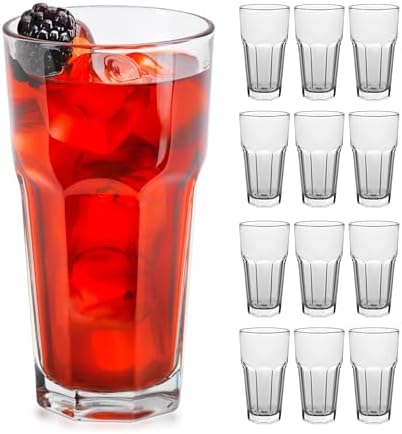
It conducts heat well, which is useful for a chilled drinking glass, but it expands and contracts more than borosilicate does, making it more prone to cracking from sudden temperature swings, going straight from a freezer into a hot oven, for instance.
Tempering strengthens the finished piece through controlled heating and rapid cooling, which puts the glass surface under compression and makes it resist impact better than untreated (annealed) glass.
Both Anchor Hocking and Libbey temper most of their everyday glassware, but the specifics of how they differ matter more in a commercial kitchen than a home one.
For the difference between soda-lime and borosilicate glass in more depth, the short version is that soda-lime prioritizes affordability and clarity, while borosilicate prioritizes thermal shock resistance.
Is Libbey or Anchor Hocking Glass Lead-Free?
Both brands’ ( Libbey and Anchor Hocking) current glassware is lead-free; this isn’t a case where one wins, and one loses.
Modern soda-lime glass formulas from both companies don’t use lead oxide, unlike the leaded crystal made by other manufacturers for decorative stemware.
The caveat applies to vintage pieces rather than current production: older glassware, decorated dinnerware, or painted mugs from either brand’s history could carry different formulations, and the only reliable way to confirm lead content on an older piece is lab testing like XRF analysis, not a home swab kit.
For how to check whether glassware is lead-free, current-production Libbey and Anchor Hocking pieces purchased new don’t require that step.
Which Brand Is More Durable?
Anchor Hocking’s glassware runs heavier and thicker on average, which makes it more resistant to chipping in daily use;
Libbey’s commercial line uses a more targeted tempering process that changes how the glass fails under stress. Neither claim tells the whole story alone.
| Durability Factor | Anchor Hocking | Libbey |
|---|---|---|
| Typical wall thickness | Heavier, thicker glass overall | Lighter, more varied by product line |
| Commercial tempering | Full-piece standard tempering | DuraTuff rim tempering on foodservice lines |
| Break pattern (commercial glass) | Standard shatter pattern | Larger, less hazardous pieces near the rim |
| Known safety incident | Named in 2011, the CPSC scrutiny | Named in 2011 CPSC scrutiny, plus a specific bowl recall |
Weight and Wall Thickness
Pick up an Anchor Hocking tumbler next to a Libbey one of similar size, and the Anchor Hocking piece usually feels noticeably heavier.
That extra glass mass measurably reduces chipping and cracking from everyday knocks against a countertop or another glass in the sink.
It’s also the reason Anchor Hocking gets recommended more often for households with kids or anyone rough on dishware, while Libbey’s lighter construction shows up more in stemware and specialty glassware, where weight affects the drinking experience.
Commercial-Grade Tempering: DuraTuff vs. Standard Tempering
Libbey’s foodservice glassware line uses a named process called DuraTuff, and it’s not the same as standard tempering.
Rather than heat-treating the entire piece uniformly, DuraTuff applies a thermal after-process specifically to the rim and top portion of the glass, increasing resistance to both mechanical and thermal shock in that high-stress zone.
The practical difference shows up when the glass actually breaks: standard tempered glass shatters into small, uniform pieces, while DuraTuff-treated glass tends to break into larger fragments near the rim, which foodservice suppliers specifically market as reducing cleanup time and injury risk in a bar or restaurant setting.
Anchor Hocking’s commercial glassware is typically tempered as a full piece rather than through this rim-specific process.
Neither approach is objectively better across every use case, but a bar buying glasses by the case should know the distinction exists before assuming “tempered” means the same thing on every spec sheet.
For best restaurant-grade glassware for bars and kitchens, this tempering difference is worth checking against the specific product line, not just the brand name.
The 2011 Shattering-Glass Recalls Both Brands Share
Both brands were named in a 2011 Consumer Reports investigation into glass bakeware and bowls shattering unexpectedly, and neither brand’s current marketing mentions it.
Consumer Reports documented more than 300 reports of Anchor Hocking glassware and Pyrex bakeware shattering, with roughly 60 of those incidents involving cut or burn injuries.
Libbey went further: the company recalled defective glass bowls sold primarily to commercial foodservice establishments between August 2010 and September 2011, after reports that the bowls shattered unexpectedly, with about 100 of the affected bowls also reaching consumers in the U.S. and Canada.
Neither incident should be read as an ongoing risk with current products; both companies have manufactured and sold glassware successfully for well over a decade, but it’s documented history that a fair comparison shouldn’t skip.
Which Brand Wins for Each Product Category
Anchor Hocking wins on bakeware and oven-to-table dishes; Libbey wins on drinking glasses and bar-specific glassware. Mixing bowls and general kitchen glassware are close enough that either brand performs well.
| Category | Winner | Why |
|---|---|---|
| Drinking glasses/barware | Libbey | Broader design range, DuraTuff commercial tempering, strong restaurant/bar presence |
| Bakeware / oven-to-table | Anchor Hocking | Thicker construction, better thermal-shock handling in freezer-to-oven transitions |
| Mixing bowls / food storage | Close — either brand | Both offer nesting sets, tempered construction, and dishwasher-safe standard lines |
Drinking Glasses and Barware
Libbey has the stronger claim here, mostly because of where its glassware actually gets used.
The brand’s presence in bars and restaurants isn’t incidental; its Restaurant Basics line, with DuraTuff rim tempering, is built specifically for high-turnover commercial use, and Libbey offers a wider color range for retail buyers too, including cobalt blue and smoke tones that Anchor Hocking’s mostly clear-glass catalog doesn’t match.
Bakeware and Oven-to-Table Dishes
Anchor Hocking wins this category clearly. Its tempered glass baking dishes handle freezer-to-oven transitions with less thermal shock risk than thinner glassware, and the brand has built its reputation specifically around durable, ovenproof bakeware since its earliest decades.
For a full comparison of Pyrex vs. Anchor Hocking bakeware, relevant now that both brands share an owner, the two lines increasingly overlap in manufacturing, even if they’re still sold under separate names.
Mixing Bowls and Food Storage
Neither brand has a decisive edge in mixing bowls or glass food storage.
Both offer nesting sets in tempered soda-lime glass, both are dishwasher and microwave-safe on their standard lines, and both are widely available at similar price points.
If you already own drinking glasses or bakeware from one brand, matching the mixing bowls makes more practical sense than switching brands for a marginal difference.
How to Identify Which Brand Made Your Glass
Check the bottom of the piece first; both brands stamp a maker’s mark into the glass base, and the two logos look nothing alike once you know what to look for.
Reading the Maker’s Mark on the Bottom
- Flip the glass over and look for a raised or embossed mark on the underside, usually near the center.
- An anchor symbol with an “H” through the center indicates Anchor Hocking; the mark has stayed consistent since the 1937 merger that created the brand.
- A script “L” or an oval logo with “Libbey” spelled out indicates Libbey, though older pieces sometimes carry simpler, unmarked bases.
- If the mark is worn smooth or the piece is unmarked entirely, compare the glass color, pattern, and weight against known catalog images before assuming either brand, since unmarked mid-century glass sometimes came from smaller regional makers.
What the Markings Mean for Vintage Value
A clear, legible maker’s mark generally adds more to resale value than the brand name alone, since it confirms authenticity to collectors who’ve seen counterfeits and reproductions circulate for both brands’ popular vintage patterns.
Anchor Hocking’s mid-century patterns, like Fire-King jadeite, tend to command higher prices than equivalent Libbey pieces from the same era, largely due to stronger collector demand rather than any material difference.
For how to date vintage Anchor Hocking glassware, or Libbey glass marks, patterns, and mold details usually narrow down a production decade more precisely than the maker’s mark alone.
Buying for a restaurant or bar and need to compare specific product lines? Check whether the glassware you’re sourcing is rim-tempered (DuraTuff) or fully tempered before ordering by the case, as it changes how the glass fails, not just how long it lasts.
For home use, match the brand to the category: Anchor Hocking for bakeware, Libbey for drinking glasses, and either for everyday mixing bowls.
Frequently Asked Questions
Is Libbey or Anchor Hocking better quality?
Neither wins outright. Anchor Hocking’s thicker glass resists chipping better in daily use, while Libbey’s DuraTuff-tempered commercial line handles bar and restaurant use better.
The right answer depends on whether you’re buying bakeware, drinkware, or general kitchen glass.
Is Anchor Hocking glass lead-free?
Yes, current-production Anchor Hocking glassware is lead-free soda-lime glass. Older or decorated vintage pieces should be tested individually rather than assumed safe based on the brand name.
Who owns Anchor Hocking now?
Anchor Hocking Holdings is owned by private equity firm Centre Lane Partners. Centre Lane also owns Corelle Brands, the parent company of Pyrex, since a 2024 acquisition.
Is Libbey still in business?
Yes. Libbey filed Chapter 11 bankruptcy in June 2020 and emerged as a private company that November, controlled by its former lenders, and continues operating manufacturing plants across the U.S., Mexico, Portugal, China, and the Netherlands.
Is Anchor Hocking glassware made in the USA?
Most of it, yes, Anchor Hocking manufactures primarily at plants in Lancaster, Ohio; Corning and Elmira, New York; and Byhalia, Mississippi. The company has committed up to $70 million toward expanding its U.S. production capacity.
Why did Anchor Hocking close the Pyrex factory?
Anchor Hocking closed the 132-year-old Charleroi, Pennsylvania, Pyrex plant in April 2025 to consolidate production into its Lancaster, Ohio, facility, following Centre Lane Partners’ 2024 acquisition of Pyrex’s parent company.
The move faced legal opposition from Pennsylvania and two U.S. senators, but proceeded regardless.
Does Libbey or Anchor Hocking break more easily?
Anchor Hocking’s thicker glass generally resists chipping better in everyday drops and knocks. Libbey’s commercial DuraTuff glass is engineered to break into larger, less hazardous pieces rather than avoid breaking altogether, which is a different design goal for a different setting.
What glassware do restaurants use, Libbey or Anchor Hocking?
Libbey has the stronger foodservice presence, particularly through its Restaurant Basics line with rim-tempered DuraTuff glass built for bars and high-turnover kitchens.
Anchor Hocking is also used commercially, especially for bakeware and mixing bowls.
Is Anchor Hocking the same as Pyrex?
Not the same brand, but they’ve shared an owner since 2024, when Centre Lane Partners acquired Pyrex’s parent company, Corelle Brands.
Anchor Hocking now manufactures some Pyrex products following the 2025 closure of Pyrex’s original Charleroi, Pennsylvania, plant.
About the Author & Reviewer
Sarah Emirone, Author
Sarah researches and writes SafeKitchn’s dinnerware and kitchenware guides, with a focus on material safety, lead content, and manufacturer specifications. She cross-references product data sheets, safety certifications, and regulatory filings (including FDA and Prop 65 records) before publishing, and updates articles when new information becomes available.
James Daniels, Reviewer
James reviews SafeKitchn’s material safety content for scientific accuracy. He holds a B.Sc in inorganic chemistry and works as a materials researcher, with particular focus on the composition and safety behavior of glass, ceramic, and metal used in kitchenware.