

IKEA says yes. Every product it has made since 2010 has been manufactured without lead. But if you’ve come across an independent test showing 86 parts per million on a Thailand-made IKEA plate, you’re probably wondering which answer is actually true.
Both are because “lead-free” and “lead-safe” mean different things, and most articles about this topic never explain which one they’re using.
This article breaks down IKEA’s official policy, what independent XRF testing has found by collection, and exactly what the numbers mean for daily use.
Written by Sarah Emirone | Reviewed by James Daniels, B.Sc, Inorganic Chemist & Materials Researcher | Updated September 2026 | See How We Test | Filed under: Material Safety & Lead Testing
IKEA’s official lead-free policy
Since 2010, IKEA has manufactured all of its products without intentionally adding lead. That applies to dinnerware too.
The commitment is documented on IKEA’s US customer service page and is backed by the company’s Restricted Substance List (RSL) — an internal chemical policy that, in several areas, sets stricter limits than the regulations that legally require it to.
What IKEA’s 2010 lead-free manufacturing commitment means
IKEA’s position is specific: lead is not added at any stage of production. This covers raw materials, glazes, coatings, and decorative elements.
The RSL was not created in response to a dinnerware scare; it grew out of a longer history of chemical policy work, including the company’s response to earlier product issues.
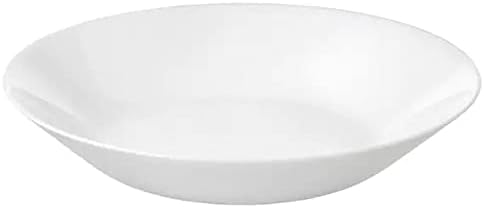


A note on IKEA’s formaldehyde history: In 1992, journalists at German magazine Stern found elevated formaldehyde levels in the lacquer on IKEA’s BILLY bookcase, a furniture issue involving particleboard and wood coatings, not dinnerware.
IKEA halted production immediately and resolved it. That episode, and a similar one in Denmark in 1980, pushed IKEA to develop one of the more thorough chemical restriction frameworks in mass-market retail.
None of it touches ceramic or glass dinnerware.
What IKEA’s Restricted Substance List says about lead and cadmium limits
IKEA’s RSL sets internal maximums that apply before a product leaves any supplier factory. Here’s how those limits compare to the external regulations IKEA also has to meet:
| Standard | Lead limit | Cadmium limit | Test method | Applies to |
|---|---|---|---|---|
| IKEA RSL | 0.2 mg/kg (sweat extraction) | 0.1 mg/kg | Internal + accredited lab testing | All IKEA products globally |
| FDA (US) | 0.5 ppm migration (flatware); 2.0 ppm (cups/mugs) | 0.25–0.5 ppm migration | Leaching test (acetic acid) | Food-contact ceramics sold in the US |
| EU EC 1935/2004 | 0.8 mg/dm² (flatware); 4.0 mg/dm² (cookware) | 0.07 mg/dm² | Migration testing | Food-contact materials in EU markets |
| California Prop 65 | 0.5 µg/day exposure threshold | 4.1 µg/day | Leaching test | Products sold in California |
IKEA’s internal RSL limit for lead is stricter than what triggers a Prop 65 warning. That’s the table no competitor article has built, but it’s the one that actually answers whether you can trust the label.
Lead-free vs lead-safe: the critical distinction most buyers miss
These are not the same thing, and the difference matters more than almost any article on this topic acknowledges.
What “lead-free” legally means in ceramics manufacturing
Lead-free means no lead was intentionally added during manufacturing, not in the clay body, not in the glaze, not in any decorative element. It is a manufacturing claim, not a test result.
A piece can be lead-free by this definition and still return a detectable XRF reading because trace lead exists naturally in raw clay and mineral pigments at levels that are genuinely hard to eliminate.
What “lead-safe” means and the regulatory migration thresholds (FDA, EU)
Lead-safe means any lead present in the piece does not migrate into food above the regulatory thresholds set by bodies like the FDA and EU. Migration — not presence — is what determines food safety risk.
The FDA’s migration limits for flatware are 0.5 ppm; for cups and mugs, 2.0 ppm. EU limits under EC 1935/2004 are even tighter for cadmium. A plate can test positive for trace lead under XRF and still migrate zero detectable lead into food under proper test conditions.
| Standard | Measurement type | What it tests |
|---|---|---|
| XRF screening | Total elemental content (ppm in material) | Presence in the ceramic body/glaze |
| FDA migration test | Lead released into food simulant (acetic acid) | Leaching potential under eating conditions |
| Prop 65 threshold | Daily exposure via consumption | Cumulative human exposure risk |
Why are trace XRF readings below 90 ppm not the same as unsafe
Tamara Rubin of Lead Safe Mama, who runs an independent XRF testing program, has tested multiple IKEA ceramic pieces and found readings of 62 ppm and 86 ppm on Thailand-manufactured stoneware.
Her verdict: lead-safe, not lead-free. Both readings sit well below the 90 ppm threshold she uses for everyday dishware. More relevantly, they are in the range where zero migration into food is expected under normal use conditions.
She has noted that she would not hesitate to serve food on newer (post-2010) IKEA dishes. The pieces she flags as genuinely concerning typically run in the thousands of ppm — vintage pottery, imported handmade ceramics, old Fiestaware in certain colorways.
Is IKEA’s ceramic dinnerware lead-free? What independent testing shows
Independent XRF testing of IKEA dinnerware — primarily through Lead Safe Mama — shows a consistent pattern: most pieces are either fully lead-free or return trace readings below 90 ppm.
No cadmium has been detected on standard IKEA pieces tested to date.
Summary of XRF test findings on IKEA ceramic and stoneware pieces
| Collection | Material | XRF lead result | Classification | Safe for daily use? |
|---|---|---|---|---|
| IKEA 365+ | Feldspar porcelain | Non-detect (0 ppm) | Lead-free | Yes |
| OFTAST | Tempered glass | Non-detect (0 ppm) | Lead-free | Yes |
| FÄRGRIK | Stoneware | Not independently published | RSL-compliant | Yes (per IKEA standards) |
| DINERA | Stoneware | Not independently published | RSL-compliant | Yes (per IKEA standards) |
| Thailand-made ceramics (generic) | Stoneware | 62–86 ppm | Lead-safe | Yes |
| Pre-2010 IKEA pieces | Various | Unknown — test before use | Unverified | Test first |
Cadmium: non-detect on all tested pieces. Mercury and arsenic: non-detect on all tested pieces.
Does acidic food or microwaving lead to leaching from IKEA dishes?
For properly fired, post-2010 IKEA ceramics: no evidence of leaching under normal conditions.
Lead migration from ceramic glaze requires two things to occur together: significant lead content in the glaze and a compromised glaze surface (chips, crazing, acid erosion over time).
Mass-manufactured, high-fired stoneware like IKEA’s is less porous and more stable than handmade or earthenware pieces.
Acidic foods like tomato sauce and citrus do increase leaching risk in glazes that contain lead, but if the glaze contains none, there’s nothing to leach. If a piece is chipped or cracked, retire it regardless of brand.
IKEA dinnerware safety by collection: which line is best for your household?
Every modern IKEA dinnerware collection meets EU and FDA standards.
But the collections are not identical in material, glaze type, or available third-party verification, and those differences matter depending on how cautious you want to be.
IKEA 365+, OFTAST, FÄRGRIK, DINERA — safety profiles compared
| Collection | Material | Lead status | Cadmium status | Best for |
|---|---|---|---|---|
| IKEA 365+ | Feldspar porcelain | Lead-free (0 ppm, XRF verified) | Non-detect | Zero-tolerance households, daily family use |
| OFTAST | Tempered glass | Lead-free (0 ppm, XRF verified) | Non-detect | Kids’ dishes, anyone wanting absolute certainty |
| FÄRGRIK | Stoneware | RSL-compliant, not independently XRF-published | RSL-compliant | Every day use, budget households |
| DINERA | Stoneware | RSL-compliant, not independently XRF-published | RSL-compliant | Everyday use, muted aesthetic |
| GLADELIG | Reactive glaze stoneware | RSL-compliant; no “no lead added” label on product page | RSL-compliant | Style-focused buyers comfortable with RSL compliance |
See the full IKEA 365+ porcelain collection review for material specs and durability testing.
Is IKEA GLADELIG lead-free? What you need to know about reactive glaze stoneware
GLADELIG is one of IKEA’s more visually interesting collections. The plates have a handcrafted look, with color variation from piece to piece built into the reactive glaze process.
That look is generating a specific concern: reactive glaze stoneware looks like artisan pottery, and artisan pottery is one of the higher-risk categories for lead in ceramics.
Reactive glaze is a glaze that shifts and varies in color as it interacts with heat during kiln firing. The variation is chemical different areas of the glaze surface reach different temperatures and oxidize differently.
It is an aesthetic technique, not a separate class of ceramic chemistry. GLADELIG is still mass-manufactured stoneware, fired in industrial kilns, and required to meet IKEA’s RSL and all applicable EU and FDA food-contact standards.
The legitimate concern is this: unlike IKEA 365+ and OFTAST, where product pages explicitly state “no lead or cadmium added,” — GLADELIG’s product listings do not carry that specific label. That absence isn’t evidence of lead.
It reflects how IKEA categorizes labeling across collections, not a gap in testing. But in a zero-tolerance household, the missing label matters.
Practical verdict: GLADELIG manufactured after 2010 meets IKEA’s RSL and all regulatory requirements. The blue and gray colorways use reactive glazes that are visually similar to pottery that has historically carried cadmium-based pigments, but IKEA’s testing process covers these.
For families with young children or pregnant women who want explicit documentation, IKEA 365+ or OFTAST gives you a clearer paper trail.
For everyone else, GLADELIG is a reasonable choice. If you have a specific piece and want certainty, a home XRF swab test (available for under $30) will settle it.
IKEA children’s dinnerware — is it safe for toddlers and babies?
IKEA’s children’s product line goes through additional testing under IKEA’s IWAY standards, which apply stricter requirements to anything marketed for children. Children’s ceramic and glass pieces are covered by the same RSL that applies to all dinnerware.
- Plastic children’s pieces (like KALAS) are BPA-free, phthalate-free, and food-grade — no ceramic lead concerns apply.
- Children’s ceramic or glass pieces meet the same RSL lead and cadmium standards as adult lines.
- Avoid secondhand IKEA children’s pieces from before 2010 — the pre-2010 chemical policy was less stringent.
- Chipped or crazed pieces should always be replaced, especially for children who may mouth dishes.
Are vintage or secondhand IKEA dishes safe from lead?
New IKEA dinnerware is covered by the 2010 policy. Secondhand pieces are a different question, and it’s one no other article on this topic answers directly.
Why do pre-2010 IKEA pieces carry a different risk than modern ones
IKEA’s lead-free manufacturing commitment started in 2010. Pieces produced before that date were not manufactured under the same RSL.
This matters on platforms like Facebook Marketplace, thrift stores, and eBay, where IKEA dinnerware sells constantly, often with no production date visible.
Pre-2010 pieces aren’t automatically unsafe, but they can’t be verified the same way.
Older stoneware and earthenware pieces with bright glaze colors (orange, red, yellow) carry a higher inherent risk because cadmium-based pigments were historically common in those colorways.
How to test secondhand dinnerware at home
- Check the base of the piece for a production stamp or country-of-origin marking. IKEA changed manufacturing partners over the decades — a stamp reading a factory known to predate 2010 is a flag.
- Look at the glaze surface under bright light. Fine crackling (crazing) or chips mean the surface is compromised — retire the piece regardless of test results.
- Check the colorway. Bright orange, red, or yellow glazes are higher cadmium-risk. Plain white, off-white, gray, and blue-toned pieces are lower risk.
- Use a home lead test swab (3M LeadCheck or D-Lead). These detect surface lead presence — a positive result means stop using it; a negative result lowers concern but is not a full XRF-level guarantee.
For a full testing protocol, see how to test any dish for lead at home.
How IKEA compares to other lead-free dinnerware brands
Among the best lead-free dinnerware brands at the mass-market price point, IKEA holds up well, particularly the 365+ and OFTAST lines, which have XRF-verified zero lead readings.
The honest comparison requires being specific about which IKEA collection you’re measuring against which competitor.
IKEA vs Corelle: safety and value compared
See the full Corelle vs IKEA dishes compared breakdown for detailed specs. The summary version:
| Factor | IKEA 365+ | IKEA OFTAST | Corelle |
|---|---|---|---|
| Material | Feldspar porcelain | Tempered glass | Vitrelle glass (3-layer laminate) |
| Lead status | Lead-free (XRF verified) | Lead-free (XRF verified) | Lead-free (brand confirmed) |
| Cadmium status | Non-detect | Non-detect | Non-detect |
| Prop 65 compliance | Yes | Yes | Yes |
| Price range | $ | $ | $–$$ |
| Best for | Classic ceramic feel, budget | Maximum chemical certainty | Lightweight, chip-resistant daily use |
Both brands produce genuinely safe dinnerware by every relevant standard.
Corelle has a longer and more documented track record of explicit lead-free labeling. IKEA 365+ and OFTAST match it on safety; Corelle tends to win on chip resistance.
IKEA vs Fiesta, Fable, and other certified lead-free options
- Fiesta (modern): Lead- and cadmium-free since 1986. Leachable lead is less than 0.002 ppm — 250 times below the FDA maximum. Premium price, made in the US, long safety documentation trail. Best for buyers who want maximum documented assurance.
- Fable (Portugal): Porcelain, lead-free and cadmium-free certified, made in Portugal. Mid-range price. Minimalist aesthetic similar to IKEA 365+ but with more explicit labeling. Good alternative for households that want both aesthetics and clear documentation.
- Our Place: Prop 65-certified lead- and cadmium-free stoneware. Higher price point. Worth it if you’re already buying the Always Pan ecosystem.
- IKEA 365+ and OFTAST: Match all of the above on safety. Costs significantly less. The trade-off is less brand-level marketing around safety documentation — the safety is there, it’s just not plastered on the packaging.
Frequently asked questions about IKEA dinnerware and lead safety
Does IKEA dinnerware contain lead?
Modern IKEA dinnerware (manufactured after 2010) does not have lead intentionally added. Independent XRF testing has found trace readings of 62–86 ppm on some Thailand-made stoneware pieces — below the 90 ppm lead-safe threshold — and zero detectable lead on 365+ porcelain and OFTAST tempered glass.
What does “lead-free” mean for IKEA dishes?
It means no lead was added during manufacturing — in the clay, glaze, or decoration. It does not guarantee zero trace lead from raw materials, but it does mean any trace present is not from intentional use and is unlikely to migrate into food.
Is IKEA dinnerware safe for babies and young children?
Yes, for post-2010 pieces in good condition. IKEA’s children’s product line goes through additional IWAY testing. For maximum certainty with very young children, OFTAST tempered glass or IKEA 365+ porcelain has XRF-verified zero lead readings.
Has IKEA ever recalled dinnerware for lead or cadmium?
No. IKEA has issued dinnerware recalls — most notably the HEROISK and TALRIKA PLA-material pieces for brittleness — but none for lead or cadmium content.
The MALM dresser recall (tip-over hazard) and GLIVARP glass table recall (shattering) are unrelated furniture issues.
Can lead leach from IKEA dishes if I microwave them?
Not from post-2010 IKEA ceramic or glass pieces in good condition. Lead migration requires significant lead content in the glaze and a compromised surface. Retire any piece that is chipped or crazed, regardless of brand, before microwaving.
Are IKEA dishes Prop 65 compliant?
Yes. All new IKEA dinnerware meets California Proposition 65 requirements. IKEA’s internal RSL limit for lead (0.2 mg/kg sweat extraction) is actually stricter than the threshold that triggers a Prop 65 warning.
Is IKEA stoneware (FÄRGRIK, DINERA) lead and cadmium-free?
Both collections are manufactured under IKEA’s RSL and meet EU and FDA food-contact standards for lead and cadmium.
Independent XRF results for these specific collections have not been published, but IKEA’s compliance framework covers them. If you want a third-party-verified result, 365+ and OFTAST have published XRF data.
Are secondhand or vintage IKEA dishes lead-safe?
Only post-2010 pieces can be verified under IKEA’s current policy. Pre-2010 pieces should be tested before regular use, particularly any with bright orange, red, or yellow glazes, or any showing surface crazing.
How does IKEA test its dinnerware for heavy metals?
IKEA tests at its own labs in Älmhult (Sweden) and Shanghai (China), plus independent accredited third-party labs. Testing covers migration (leaching into food simulants) and total elemental content, against both internal RSL limits and the applicable legal standards for each market.
Is IKEA GLADELIG lead-free? Is reactive glaze safe?
GLADELIG meets IKEA’s RSL and EU/FDA standards. Its reactive glaze is a firing technique, not a different chemical process — the glaze still goes through IKEA’s standard testing.
The product page does not carry an explicit “no lead or cadmium added” label the way some other IKEA lines do, so buyers who want documented zero-lead assurance should choose 365+ or OFTAST instead.
IKEA had a formaldehyde scandal — does that mean its dishes aren’t safe?
The 1980 and 1992 formaldehyde incidents involved furniture particleboard and lacquer, not dinnerware. Ceramic and glass dinnerware has no formaldehyde-related risk.
Those incidents pushed IKEA to build a stricter chemical policy — the same RSL that now governs its dinnerware safety.
About the Author & Reviewer
Sarah Emirone, Author
Sarah researches and writes SafeKitchn’s dinnerware and kitchenware guides, with a focus on material safety, lead content, and manufacturer specifications. She cross-references product data sheets, safety certifications, and regulatory filings (including FDA and Prop 65 records) before publishing, and updates articles when new information becomes available.
James Daniels, Reviewer
James reviews SafeKitchn’s material safety content for scientific accuracy. He holds a B.Sc in inorganic chemistry and works as a materials researcher, with particular focus on the composition and safety behavior of glass, ceramic, and metal used in kitchenware.