

Most people searching IKEA 365 dishes want one of two things: they’re deciding whether to buy the 18-piece set, or they chipped a bowl and want to know if a replacement will match what they already own.
Both questions lead back to the same starting point: what these dishes are actually made of and what that material does under daily use.
This article covers the material, the safety data, the full size lineup, why chipping happens, and how the 365+ line compares to FÄRGKLAR and GLADELIG so you can buy once and move on.
Written by Sarah Emirone | Reviewed by James Daniels, B.Sc, Inorganic Chemist & Materials Researcher | Updated September 2026 | See How We Test | Filed under: Buying, Care & Product Guides
What Is IKEA 365+ Dinnerware Made Of?
IKEA 365+ dishes are made from feldspar porcelain, not stoneware, not earthenware, not bone china.
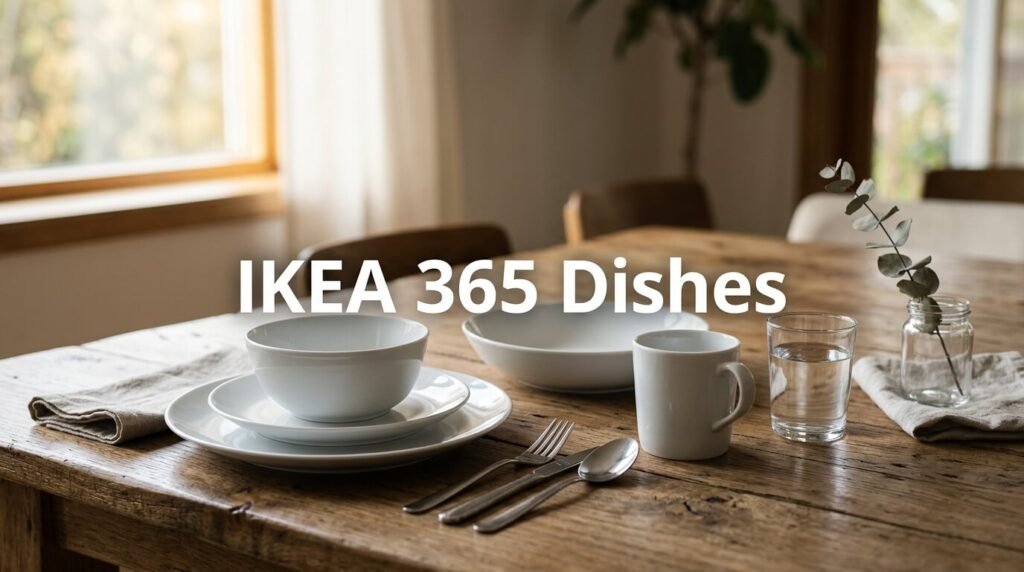
That single material distinction explains most of what people notice about these plates: they’re lighter than they look, they resist chips better than standard ceramics, and they hold their white color year after year without yellowing.
Feldspar porcelain vs stoneware vs earthenware: what the difference actually means
When comparing feldspar porcelain vs stoneware dinnerware, the differences break down across four factors that matter at the kitchen table:
| Property | Feldspar porcelain (IKEA 365+) | Stoneware (GLADELIG) | Earthenware (STRIMMIG) |
|---|---|---|---|
| Material composition | Clay + feldspar + quartz, high-temp fired | Dense clay body, high firing temp | Porous clay, lower firing temp |
| Weight | Light to medium | Medium to heavy | Light to medium |
| Impact resistance | High — thinner walls, same strength | Moderate — thickness compensates | Low — chips at edges easily |
| Cutlery marks | Resists well | Shows metal marking over time | Shows marking quickly |
| Dishwasher durability | High | High | Moderate |
| Color retention | Stays bright white | Varies by reactive glaze | Can fade or craze |
Feldspar is the key ingredient. It’s a mineral added to ceramics alongside clay and quartz that increases density during firing.
The result is a material that’s harder per unit of thickness than either stoneware or earthenware, which is why IKEA can make 365+ plates thinner than stoneware options like GLADELIG without reducing durability.
Why IKEA chose feldspar porcelain for everyday dishes
The name “365+” is the pitch: dishes you can use every single day without worrying about them. Feldspar porcelain earns that better than stoneware does; it handles the two things daily kitchens actually do to plates (dishwasher heat cycles and stacking impact) with less visible wear.
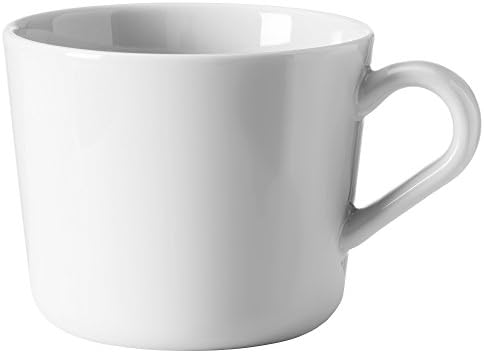


Stoneware looks better on a styled table. The reactive glazes on GLADELIG and matte finishes on FÄRGKLAR have more visual personality than a plain white 365+ plate. But stoneware is softer, picks up cutlery marks faster, and matte surfaces stain with acidic foods.
For a kitchen that runs the dishwasher every night, feldspar porcelain is the more practical choice.
Are IKEA 365+ Dishes Safe? Lead, Cadmium, and Material Testing
IKEA 365+ dishes contain no added lead, cadmium, BPA, or plasticizers. That’s IKEA’s official statement, published across their global product documentation. The 365+ line complies with EU and FDA food-contact safety regulations.
What IKEA says about lead and cadmium in the 365+ line
IKEA states explicitly that no lead, cadmium, plasticizers, or BPA appear in the 365+ formulation in either the porcelain body or the glaze. For most buyers, that settles it. Some people want third-party data rather than brand claims. That data exists.
XRF independent test results for IKEA 365+ porcelain
Consumer safety researcher Tamara Rubin tested an IKEA 365+ porcelain bowl using an XRF instrument (Niton XL5 Plus, 1.5 sigma). Her results:
| Location tested | Element | Reading | FDA threshold | Verdict |
|---|---|---|---|---|
| Food surface (interior) | Lead (Pb) | Non-detect | 90 ppm | Lead-free |
| Food surface (interior) | Arsenic (As) | Non-detect | — | Arsenic-free |
| Food surface (interior) | Cadmium (Cd) | Non-detect | — | Cadmium-free |
| Logo stamp (underside) | Lead (Pb) | 30 ± 13 ppm | 90 ppm | Lead-safe |
| Logo stamp (underside) | Chromium (Cr) | 217 ± 61 ppm | — | Noted |
The food surface — where food actually sits — tested non-detect for lead. The logo stamp on the underside showed 30 ppm lead, below the FDA’s 90 ppm threshold and classified as lead-safe by all current regulatory standards.
For a broader look at lead content in IKEA plates across other series, white undecorated porcelain consistently tests cleaner than colored or decorated glazed pieces.
IKEA 365+ Dishes: Full Size and Piece Breakdown
The 365+ line is sold as an 18-piece set and as individual open-stock pieces. The open-stock model is the detail most competitor articles skip — and it matters most to anyone buying a replacement bowl two years after the original purchase.
What the 18-piece set includes and what each piece costs separately
The standard set ($59.99) works out to $3.33 per piece. Individual prices matter when you’re topping up an existing set rather than starting fresh.
| Piece | Size | Individual price (approx.) | In 18-piece set? |
|---|---|---|---|
| Dinner plate | 11″ | ~$5.99 | Yes (6 included) |
| Side plate | 8″ | ~$3.99 | Yes (6 included) |
| Bowl (angled sides) | 6¾” | ~$3.99 | Yes (6 included) |
| Bowl (rounded sides) | 6″ | ~$3.99 | No — sold separately |
| Bowl (angled sides, large) | 9″ | ~$7.99 | No — sold separately |
| Serving plate | 15 × 8¾” | ~$9.99 | No — sold separately |
| Baking dish (large) | 15 × 10¼” | ~$14.99 | No — different sub-series |
Prices reflect US IKEA at time of research. The 18-piece set gives you six of the 11″ plate, 8″ plate, and 6¾” angled bowl. The larger 9″ bowl and the rounded-sides bowl are separate SKUs, a detail that trips up buyers who assume the set covers every bowl size.
Open stock: which pieces you can buy individually as replacements
Every piece in the table above is available as a single-item purchase, the series’ main structural advantage over dinnerware lines that only sell complete sets.
- The 11″ dinner plate and 6¾” angled bowl carry the highest individual review counts, which suggests they’re the most frequently replaced pieces in the lineup.
- The large 9″ bowl is not in the standard 18-piece set and must be purchased separately — something buyers discover after expecting a proper soup or ramen bowl in the set.
- The baking dish sub-series shares the 365+ name but is a different category: oven-rated feldspar porcelain with handles, built for roasting and baking, not daily table service.
Are IKEA 365+ Dishes Microwave, Dishwasher, and Oven Safe?
Yes to all three, but each has a different spec. The oven-safe rating applies to the baking dish, not the standard plates and bowls.
Temperature limits and care instructions for all three use cases
| Use | Safe? | Temperature limit | Notes |
|---|---|---|---|
| Microwave | Yes | No stated limit (plates/bowls) | Avoid sudden temperature swings |
| Dishwasher | Yes | Standard cycles | Overcrowding causes rim-to-rim chips |
| Oven | Yes — baking dish only | Up to 536°F (280°C) | Standard plates not rated for oven |
| Freezer to microwave | Caution | — | Allow to reach room temp first |
| Direct stovetop | No | — | Not rated for flame or electric coil |
The plates and bowls are microwave and dishwasher safe without restriction. The oven-safe rating is specific to the 365+ baking dish. Running a standard 11″ plate in the oven is not covered by the product spec.
What the 365+ baking dish adds (and how it differs from the plates)
The baking dish shares the feldspar porcelain material but is built for a different job. It has thick handles for oven transport, deeper walls for roasting or lasagna, and smaller sizes that nest inside larger ones without adding storage height.
Rated to 536°F, it covers most home oven use. One note from IKEA’s care instructions: don’t move a cold dish directly into a preheated oven. Thermal shock risk is low with feldspar porcelain, but not zero with any ceramic.
Why Do IKEA 365+ Dishes Chip — and Is That Normal for Porcelain?
Feldspar porcelain chips less than stoneware at comparable thickness, but it does chip. Chipping in porcelain is almost always a handling issue, not a material defect.
The real causes of chipping in feldspar porcelain dishes
- Rim-to-rim stacking contact is the most common cause. Plates stacked directly on each other wear at the rim edge with every removal. IKEA’s 365+ rim profile reduces this, but doesn’t eliminate it.
- Hard impact on stone or tile will chip any porcelain. A plate dropped from counter height onto tile is unlikely to survive with the rim intact.
- Thermal shock from moving a cold dish to a hot microwave creates internal stress. Feldspar porcelain handles normal temperature cycles well, but sudden extremes stress any ceramic.
- Dishwasher overcrowding where plates touch during the wash cycle creates micro-chips at the rim that worsen with each cycle.
Using plate separators and limiting stacks to six high reduces chipping over time. For more on how to store plates to prevent chipping, vertical plate racks consistently outperform flat stacking for long-term rim preservation.
What the quality-change complaints are actually about
Multiple IKEA product page reviews report that 365+ dishes bought in different years look different. One reviewer described newer plates as “grey, thinner, and with lines not straight” compared to their original set.
Another found replacements felt “like white glass” rather than porcelain. These aren’t isolated; they’re a documented pattern.
This is a real phenomenon in ceramic manufacturing. Porcelain appearance, whiteness, edge sharpness, and surface texture vary between production batches based on clay sourcing, firing temperature, and glaze formulation.
The material specification (feldspar porcelain) hasn’t changed. The aesthetic output of that specification does shift across production runs.
IKEA doesn’t disclose which factory produced a given batch or when formulations change, so there’s no reliable way to guarantee a visual match without seeing pieces in person.
The practical move: buy a few extra pieces at the time of original purchase. A spare bowl at $3.99 now costs far less than the frustration of a visible mismatch later.
IKEA 365+ vs FÄRGKLAR vs GLADELIG: Which Set Should You Buy?
The right choice comes down to one thing: whether you want neutral and minimal or warm and textured. These three series target different kitchen aesthetics, and each has a material tradeoff worth knowing before spending $60.
Material, weight, scratch resistance, and price compared across three series
The IKEA FÄRGKLAR dinnerware set is porcelain with matte or glossy color finishes; GLADELIG is stoneware with a reactive handcrafted glaze.
| Feature | IKEA 365+ | FÄRGKLAR | GLADELIG |
|---|---|---|---|
| Material | Feldspar porcelain | Porcelain (matte/glossy) | Stoneware |
| Color options | White only | Multiple colors | Gray, dark gray |
| Weight | Light | Light to medium | Medium to heavy |
| Cutlery mark resistance | High | Moderate (matte shows marks) | Lower — stoneware scratches |
| Dishwasher safe | Yes | Yes | Yes |
| Microwave safe | Yes | Yes | Yes |
| 18-piece set price | $59.99 | $39.99 | Sold individually |
| Best for | Minimalist, high-volume daily use | Color, modern mix-and-match | Artisan or rustic aesthetic |
FÄRGKLAR is the better pick if you want color. It costs $20 less than 365+, won a Good Housekeeping Kitchen Award for strength and design, and comes in matte and glossy options.
The tradeoff is matte surfaces show cutlery marks faster. GLADELIG is heavier and higher maintenance but looks more expensive than its price suggests.
Which IKEA series is right for your situation
- You want plates you never have to think about: IKEA 365+ — white, dishwasher-proof, available open-stock, and the easiest to replace one piece at a time.
- You want color without switching brands: FÄRGKLAR — same porcelain-class durability, far more visual range, and $20 cheaper for the full set.
- You want something that looks handmade on the table: GLADELIG — stoneware with reactive glaze that photographs well, but accept that cutlery marks will appear over time.
- You’re setting up outdoor dining or need unbreakable plates: IKEA outdoor dinnerware — the GRILLTIDER stainless steel series is the right category for outdoor use, not any of the ceramic lines.
The IKEA 365+ 18-piece set and all individual open-stock pieces are available at IKEA stores and online at ikea.com. If you’re adding to an existing set, buying in-store lets you compare the current production batch against your existing pieces before committing.
Frequently Asked Questions
What is IKEA 365+ dinnerware made of?
IKEA 365+ dishes are made from feldspar porcelain — a ceramic material that combines feldspar, clay, and quartz fired at high temperature.
This makes the material harder per unit of thickness than stoneware or earthenware. It is not the same as bone china, which contains calcium phosphate.
Is IKEA 365+ the same as IKEA VÄRDERA?
No. VÄRDERA is a separate IKEA dinnerware line with squared dish profiles; 365+ has rounded shapes. Both use feldspar porcelain, but the edge profiles, dimensions, and styling are distinct enough that pieces from one series won’t visually match the other on the same table.
About the Author & Reviewer
Sarah Emirone, Author
Sarah researches and writes SafeKitchn’s dinnerware and kitchenware guides, with a focus on material safety, lead content, and manufacturer specifications. She cross-references product data sheets, safety certifications, and regulatory filings (including FDA and Prop 65 records) before publishing, and updates articles when new information becomes available.
James Daniels, Reviewer
James reviews SafeKitchn’s material safety content for scientific accuracy. He holds a B.Sc in inorganic chemistry and works as a materials researcher, with particular focus on the composition and safety behavior of glass, ceramic, and metal used in kitchenware.