

Search for heated plates for the elderly, and you’ll get two completely different products mixed into one list.
Some are electric warmers with heating elements that pre-warm plates before food goes on them.
Others are keep-warm plates, dishes with hot water reservoirs, or insulated cores that hold food at a temperature while someone eats slowly. They solve different problems. An electric warmer fixes a cold plate before serving.
A keep-warm plate prevents food from going cold during a 30-minute meal. Confusing the two means buying the wrong product.
Written by Sarah Emirone | Reviewed by James Daniels, B.Sc, Inorganic Chemist & Materials Researcher | Updated September 2026 | See How We Test | Filed under: Accessible & Adaptive Dining
Two different products, one confusing category
The product you need depends on which problem you’re solving, and most listings don’t separate the two clearly enough to tell.
Electric plate warmers: devices that pre-heat plates before food is served
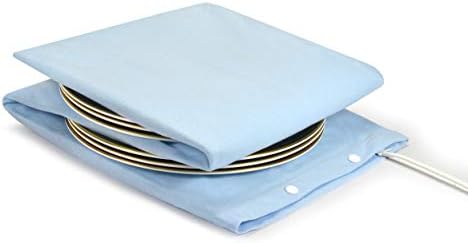
An electric plate warmer is a kitchen device, not a piece of tableware. It’s a heated base or cabinet that warms empty plates before food is plated, the way a restaurant kitchen pre-heats dishes before service.
The Navaris electric plate warmer, for example, handles up to 10 plates and warms them in around 10 minutes. These devices stay plugged in at the counter and don’t travel to the table; they don’t keep food warm once it’s served.
This is the right tool when the actual problem is a cold plate undercutting hot food the moment it’s served, particularly when cooking for several people, and plates sit waiting before the meal is ready.
Keep-warm plates: plates designed to maintain food temperature during the meal
A keep-warm plate is the dish itself, not a separate appliance, and it does its job at the table while someone eats.
These work through one of two mechanisms: a hot water reservoir built into a double-walled base, filled with boiling water before serving, or a heat-retentive core pre-warmed in the microwave that releases heat slowly into the food above it.


Either way, the plate stays at the table for the entire meal, working against the food cooling down while the person eats at their own pace.
This is the right tool for what most caregivers are actually searching for: an elderly parent, a Parkinson’s patient, or anyone who takes 30 to 45 minutes to finish a meal and ends up eating the second half cold.
How long does each type actually keep food warm?
Heat retention times vary significantly by product type, and the numbers matter more than vague marketing claims.
Heat retention times by plate type: minutes of warmth compared across five options
| Product type | Named example | Heat retention | How it works | Works without power |
|---|---|---|---|---|
| Hot water reservoir plate | Ornamin Keep Warm Plate | 25–35 minutes | Double-walled base filled with boiling water before serving | Yes |
| Heat-retentive core plate | HotSmart Gourmet Plate | 30+ minutes | Stefan-Boltzmann thermal core, preheated 1 minute in microwave at 1200W | Yes (once preheated) |
| Double-wall insulated plate | Generic insulated dinnerware | 15–20 minutes | An air gap between the inner and outer walls slows heat loss | Yes |
| Electric warming pad/mat | Various | Continuous while plugged in | An active heating element requires constant power | No |
| Wax pellet system (care home) | Marquis insulated ware | 60–90 minutes | Heated wax pellet base + insulated dome, used for meal delivery | No (requires pellet heating station) |
Among cordless options, hot water reservoir plates and heat-retentive core plates land in a similar range — 25 to 35 minutes. Wax pellet systems hold longer, but they’re a care-home logistics tool for transporting meals, not something you’d buy for home use.
Why the first 10 minutes matter most — and what happens to food temperature on a cold ceramic plate
A standard ceramic plate actively works against you before the meal even starts. Food served at around 160°F (71°C) can drop below 100°F within 10 to 15 minutes on a room-temperature plate. The cold ceramic pulls heat out from the moment it’s served.
For someone eating at a normal pace, barely noticeable. For someone slowed by Parkinson’s tremors, post-stroke coordination difficulty, or dementia-related distraction, the food is already cold before they’re halfway through.
A 25-minute reservoir plate covers most of a slow eater’s meal. A standard plate covers none of it.
Safety: what caregivers need to know before buying
Not every warming product is appropriate for unsupervised elderly use, and this is the part most buying guides skip entirely.
Burn risk from heated surfaces: what the elderly-specific temperature guidance says
Older adults face a higher burn risk from heated surfaces because of slower reaction times, not because their skin is more sensitive.
Michigan’s Bureau of Health Care Services sets a maximum acceptable heated surface temperature of 60°C (140°F) for 60-second contact specifically because someone who can’t pull their hand away quickly needs a lower ceiling to avoid a burn.
Electric warming products don’t always meet that standard. Consumer Reports tested food warming mats and found one Chefman model running more than 100°F hotter than its claimed maximum, well past safe for sustained skin contact.
HotSmart’s own product listing for its heat-retentive plate carries a direct warning: “not recommended for very small children or sick, unattended people with mobility problems.” That caveat gets left out of every comparison article that recommends it.
Which plate types are safe for unsupervised use — and which require a caregiver present
- Hot water reservoir plates are safe for unsupervised use — the outer shell stays cool to the touch by design, since the heat is sealed inside a double-walled cavity.
- Heat-retentive core plates need a supervision check during the first few uses — the food-contact surface gets genuinely hot after microwaving; users with reduced sensation should be observed before being left alone with it.
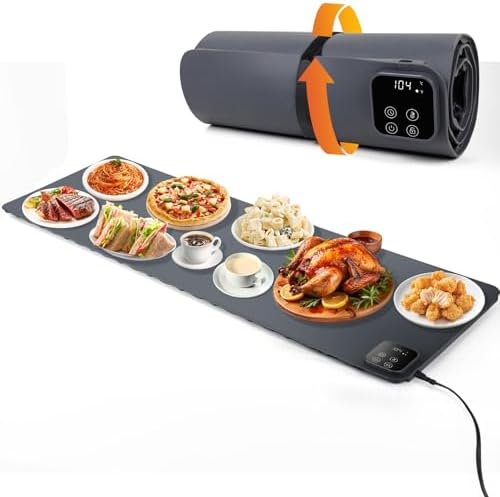
- Electric warming pads and trays are for kitchen use, not table use — designed for caregivers to pre-warm plates, not for unsupervised table use, and the cord itself is a trip hazard.
- Wax pellet systems require trained handling — care facility equipment operated by staff, not something an elderly person manages alone.
Choosing by condition: Parkinson’s, dementia, stroke, and slow eating
The right plate type depends on the specific reason someone eats slowly, and the conditions don’t all point to the same solution.
Condition-to-plate-type matching guide: five conditions and the right solution for each
| Condition | Why do meals take longer | Best plate type | Why | Supervision needed |
|---|---|---|---|---|
| Parkinson’s disease/tremor | Involuntary movement slows eating | HotSmart-style heat-retentive plate or reservoir plate with cool rim | Cool rim reduces burn risk during involuntary contact | Initial use only |
| Dementia / Alzheimer’s | Distraction extends mealtimes | Hot water reservoir plate, standard appearance | Looks like normal tableware, avoiding confusion | Supervised |
| Post-stroke recovery | Rebuilding motor coordination | Hot water reservoir plate, non-slip base | Stable base supports one-handed or weak-grip use | Supervised, especially early on |
| General slow eating (age-related) | Slower natural pace | Either reservoir or heat-retentive core plate | Both work well; choose based on routine fit | Independent use fine |
| Living alone, unsupervised | No caregiver present | Hot water reservoir plate only | Cool shell makes it the only type genuinely safe alone | Independent use, by design |
The dignity factor: why plates that look like normal tableware get used more
A plate that looks like a medical device gets left in the cupboard, no matter how well it works.
The HotSmart Gourmet Plate and Ornamin Keep Warm Plate both pass this test, with no visible mechanism, no obvious tubing, and nothing flagging the user as needing assistance.
For dementia patients, an unfamiliar-looking object at the table can cause genuine distress, which makes a normal-looking plate a functional requirement, not an aesthetic preference.
For independent but proud elderly adults, the same logic applies for a different reason: nobody wants to be the only one at the table eating off special equipment.
What to look for in a heated plate for elderly adults
Beyond the core mechanism, a handful of physical features determine whether a warming plate actually gets used day to day.
Essential features: non-slip base, cool rim, easy fill, no trailing cord
For non-slip plates for elderly adults, a stable base matters across every adaptive plate category.
- Non-slip base — essential for anyone with tremors or reduced grip strength, since the plate needs to stay put when pushed against during scooping.
- Cool rim — the outer edge should stay safe to touch even when the food surface or reservoir is hot.
- Easy-fill mechanism — for reservoir plates, the stopper should be simple to open and reseal, with a clearly marked fill opening to prevent burns during filling.
- No trailing cord at the table — corded electric warming products create a trip hazard; reservoir or heat-retentive plates avoid this entirely.
Dishwasher safety and care home cleaning requirements
- Melamine reservoir plates are typically dishwasher safe but not microwave safe — the body and water cavity handle dishwasher cleaning, but melamine itself shouldn’t go in a microwave.
- Heat-retentive core plates are usually both dishwasher and microwave safe — the HotSmart design is built around microwave preheating, so it’s engineered for both.
- Care homes washing at high-temperature commercial cycles should confirm the manufacturer’s maximum rating before bulk purchasing, since some materials degrade faster under institutional washing.
- Reservoir plates marked “not microwaveable” need filling from a kettle rather than the plate itself — worth confirming before buying for a facility with a fixed routine.
Verified heated plates for elderly adults: specs and heat times at a glance
The products below are the most consistently recommended across caregiver communities and occupational therapy resources, with verified specifications.
Product reference table: name, type, heat time, material, dishwasher safe, price tier
| Product | Type | Heat retention | Material | Dishwasher safe | Microwave safe | Price tier |
|---|---|---|---|---|---|---|
| Ornamin Keep Warm Plate (25cm) | Hot water reservoir | 25–35 minutes | Melamine, BPA-free | Yes | No | Mid |
| HotSmart Gourmet Plate | Heat-retentive core | 30+ minutes | Ceramic | Yes | Yes (for preheating) | Mid |
| Essential Aids Stay-Warm Feeding Dish | Hot water reservoir, divided | 25–30 minutes | Plastic, BPA-free | Yes | No | Budget–mid |
| Navaris Electric Plate Warmer (10-plate) | Electric warmer (kitchen use) | Continuous while powered | Stainless steel cabinet | N/A (housing only) | N/A | Mid |
| Waterbridge Electric Plate Warmer | Electric warmer, cool-rim design | Continuous while powered | Stainless steel | N/A | N/A | Mid–premium |
| Generic double-wall insulated plate | Double-wall insulation | 15–20 minutes | Plastic or stainless | Yes | Varies | Budget |
For broader equipment beyond plates, the adaptive eating aids for elderly adults guide covers cutlery and cups alongside warming dinnerware.
Which plate to buy for six common situations
- An elderly parent eating independently, unsupervised — Ornamin Keep Warm Plate. No electricity, cool outer shell, non-slip base, discreet design.
- A Parkinson’s or tremor patient — HotSmart Gourmet Plate. Cool-rim design reduces burn risk during involuntary hand contact.
- Pre-warming multiple plates before a family meal — Waterbridge or Navaris electric plate warmer. Solves the cold-plate-before-serving problem at scale.
- A care home or hospital room visit — Ornamin Keep Warm Plate or any reservoir plate. No power needed, fully portable.
- A toddler eating alongside an elderly relative — the Stay-Warm Feeding Dish’s divided sections and suction base cover both needs at once.
- A dementia patient prone to confusion around unfamiliar objects — any reservoir or heat-retentive plate that looks like standard tableware; avoid visible mechanisms or cords.
VAT exemption and portability: what care home buyers and UK purchasers need to know
For lightweight mugs for elderly adults and other adaptive drinkware, similar VAT exemption rules apply — worth checking if buying multiple adaptive items at once.
UK VAT exemption on adaptive warming plates: who qualifies and how to claim
Adaptive tableware designed specifically for people with a long-term illness or disability qualifies for VAT exemption in the UK.
The Ornamin Keep Warm Plate, for instance, is sold with VAT exemption available at a 20% discount, typically applied through a simple declaration form at checkout rather than a formal application.
The buyer (the user or a family member purchasing on their behalf) completes a brief eligibility declaration at the point of sale, usually a tick-box rather than separate paperwork.
Portability for care home and hospital ward use: plates that work without power
- Reservoir plates travel well to care homes and hospital rooms — they need only boiling water, available in most facility kitchens, practical even with no outlet nearby.
- Heat-retentive core plates require microwave access — fine for a care home dining room, less practical for a hospital visit where preheating isn’t easy.
- Electric warmers are not portable in any meaningful sense — kitchen appliances meant to stay plugged in at one location.
- Wax pellet systems are facility infrastructure, not personal purchases — institutional meal delivery equipment, not something an individual buyer acquires.
Know which type you need? Shop keep-warm plates for slow eaters → — or see the full adaptive dinnerware guide for elderly adults for plates, bowls, and mugs that make mealtimes easier.
Frequently asked questions: heated plates for the elderly
What is the best heated plate for an elderly person who eats slowly?
The Ornamin Keep Warm Plate is the most consistently recommended option for independent use — no electricity, cool outer shell, non-slip base. For Parkinson’s or tremors specifically, the HotSmart Gourmet Plate’s cool-rim design is worth considering.
How long do keep-warm plates actually keep food hot?
Hot water reservoir plates like the Ornamin hold warmth for 25 to 35 minutes after filling with boiling water.
Heat-retentive core plates like the HotSmart Gourmet Plate maintain warmth for over 30 minutes after one minute of microwave preheating. Both cover most of a slow eater’s mealtime.
Are electric warming plates safe for elderly people to use unsupervised?
No — electric warming pads and plate warmers are designed for caregiver use in the kitchen, not unsupervised table use.
They require constant power, create a trip hazard, and lack the cool-touch surfaces, reservoir, or heat-retentive plates that safety features have.
What is the best plate to keep food warm without electricity?
A hot water reservoir plate, such as the Ornamin Keep Warm Plate. Fill the double-walled base with boiling water before serving, and it holds warmth for 25 to 35 minutes with no cord or power source required.
Which warming plate is recommended for someone with Parkinson’s disease?
The HotSmart Gourmet Plate, because its cool-rim design reduces burn risk during involuntary hand contact from tremors. The food surface reaches serving temperature while the outer edge stays safe to handle important for users whose hand movements aren’t fully predictable.
Are Ornamin keep warm plates dishwasher safe?
Yes, though it isn’t microwave safe the reservoir is filled with boiling water from a kettle rather than heated in the plate. The melamine construction handles regular dishwasher cycles without issue.
Can I claim VAT exemption when buying a warming plate for an elderly relative?
Yes, if the plate is for someone with a long-term illness or disability. Most UK retailers, including those selling the Ornamin Keep Warm Plate, apply the 20% exemption through a tick-box declaration at checkout — no formal paperwork required.
Are heated plates safe for dementia patients to use at the table?
Hot water reservoir plates are generally the safest choice, since the outer shell stays cool and the plate looks like ordinary tableware — reducing the confusion an unfamiliar object can cause.
Supervision is still recommended for the first few uses to confirm that the person handles it comfortably.
About the Author & Reviewer
Sarah Emirone, Author
Sarah researches and writes SafeKitchn’s dinnerware and kitchenware guides, with a focus on material safety, lead content, and manufacturer specifications. She cross-references product data sheets, safety certifications, and regulatory filings (including FDA and Prop 65 records) before publishing, and updates articles when new information becomes available.
James Daniels, Reviewer
James reviews SafeKitchn’s material safety content for scientific accuracy. He holds a B.Sc in inorganic chemistry and works as a materials researcher, with particular focus on the composition and safety behavior of glass, ceramic, and metal used in kitchenware.