

Eating is something most people do without a second thought. But for millions of individuals living with physical limitations, neurological conditions, or age-related challenges, mealtimes can be frustrating, exhausting, and even unsafe.
That is where adaptive dining comes in. Designed to support people who struggle with standard tableware, adaptive dining tools and techniques are transforming how people with disabilities, seniors, and those in rehabilitation engage with food.
More than just modified utensils, adaptive dining is about restoring dignity, independence, and confidence at the table.
This guide covers everything you need to know about adaptive dining products, who they help, and how to choose the right ones.
Written by Sarah Emirone | Reviewed by James Daniels, B.Sc, Inorganic Chemist & Materials Researcher | Updated September 2026 | See How We Test | Filed under: Accessible & Adaptive Dining
What Is Adaptive Dining?
Definition of Adaptive Dining
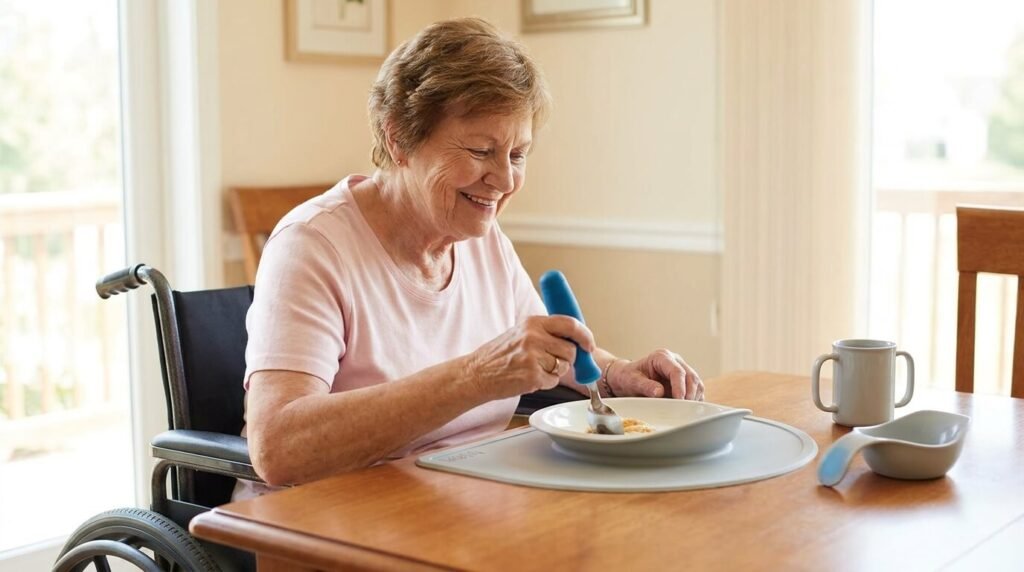
Adaptive dining refers to the use of specialized utensils, dishes, cups, and eating techniques designed to help individuals with physical, cognitive, or age-related challenges eat more safely and comfortably.
It falls under the broader category of assistive technology and accessible eating solutions. These tools are not one-size-fits-all; they are specifically engineered to address conditions like limited grip strength, hand tremors, reduced dexterity, and swallowing difficulties.
Adaptive dining bridges the gap between standard tableware and the real-world needs of people who require extra support at mealtimes.
Purpose of Adaptive Dining Equipment
The primary goal of adaptive dining equipment is to restore and maintain independent eating for individuals who might otherwise rely on a caregiver for every meal.
These tools improve safety by reducing spills and choking risks, and they minimize physical strain during eating. Beyond the practical benefits, adaptive dining equipment plays a meaningful psychological role.
Being able to feed yourself — without help — preserves a sense of dignity and autonomy that standard assistance simply cannot replicate.
Reducing caregiver dependency also benefits families and healthcare systems managing long-term support needs.
Who Benefits From Adaptive Dining?
Adaptive dining products support a wide and diverse population. Elderly adults dealing with weakened grip or arthritis benefit greatly from ergonomic handles and non-slip plates.
Stroke patients recovering lost motor function use angled utensils and plate guards during rehabilitation. People living with Parkinson’s disease rely on weighted utensils to counteract hand tremors.
Children with cerebral palsy or autism use pediatric adaptive tools tailored to their developmental needs.
Essentially, anyone whose daily living activities are affected by physical or cognitive limitations can benefit from thoughtfully designed adaptive dinnerware and disability dining tools.
Types of Adaptive Dining Products
Adaptive Utensils
Adaptive utensils are among the most widely used disability dining tools available. Weighted silverware utensils, like those from Liftware, add mass to counteract hand tremors, making it significantly easier for people with Parkinson’s disease or essential tremor to eat without spilling.
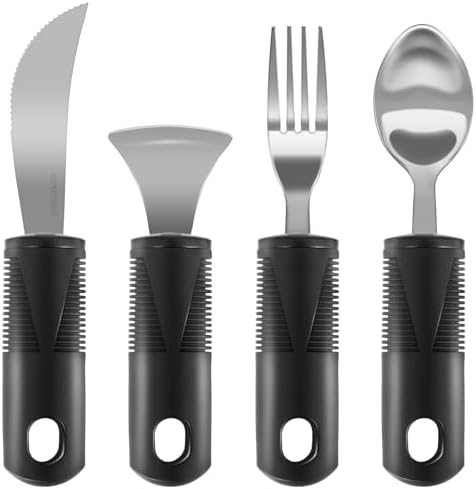
- [Versatile Adaptive Cutlery] HJGL Weighted Adaptive Utensils for people with arthritis, Parkinson’s disease, finger defo…
- [Excellent Ergonomic Design] These silverware are made of food grade stainless steel material and weighted textured hand…
- [Just the right amount of weight] After testing, we have determined the optimal weight of the weighted adaptive utensils…
Built-up handles are thickened grips, often foam or rubber, that improve grip assistance for people with arthritis or limited hand strength.
Angled spoons and forks are bent at specific angles to reduce the wrist rotation required to bring food to the mouth, a game-changer for stroke patients and those with limited shoulder mobility.
Adaptive Plates and Bowls
Adaptive dinnerware goes far beyond standard dishes. Scoop plates feature raised inner edges that allow users to push food against the side and scoop it onto a utensil using one hand.
Non-slip plates use suction bases or rubberized bottoms to stay firmly in place on the table, preventing the frustration of a dish sliding away mid-meal.

- What You Will Receive: the package includes 3 sets of handicap plates and bowls, including 3 pieces of plates and 3 piec…
- Quality Material: made of reliable plastic material, these spill proof plates for adults are sturdy and solid, will not …
- High Low Adaptive Design: these utensils for parkinsons patients are designed with high low edge, enables people to have…
Partitioned dishes divide food into separate sections, which helps individuals with cognitive disabilities or sensory sensitivities who prefer foods not to touch.
High-contrast plates also exist for users with visual impairments or dementia, improving food visibility at the table.
Adaptive Cups and Drinkware
Drinking is often just as challenging as eating for people with mobility limitations. Two-handled cups distribute grip across both hands, providing greater stability for users with tremors or weakness on one side.

- 2 Units of Independence 2-Handle Clear Mugs – Cup Includes 2 style lids.
- Crystal clear construction allows the contents to be seen at all times.
- Use with warm or cold liquid – Dishwasher and Microwave safe.
Spill-proof cups reduce the risk of accidental liquid spills, which is especially important in pediatric care and senior dining settings.
Nosey cups feature a cut-out section at the rim that allows users to drink without tilting their head back, essential for individuals with neck injuries or limited cervical mobility. Dysphagia cups regulate liquid flow for those with swallowing disorders.
Non-Slip Dining Accessories
Non-slip accessories work alongside adaptive utensils and plates to create a more stable, controlled dining experience. Plate guards attach to the rim of a standard plate, giving users a surface to push food against when scooping.
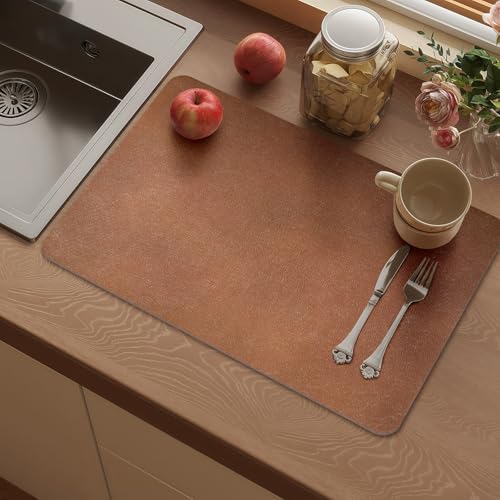
- [Unbeatable Value] Our placemats offer texture similar to faux leather, but with better cleanability and a lower price. …
- [Easy to clean] PVC surface with a stain-resistant coating: 100% waterproof, oil-proof, and impermeable—spills wipe away…
- [TPR backing non-slip] stays securely in place without slipping during use. At 3mm thick for premium feel, it’s heat-res…
Dycem mats are thin, high-friction mats placed under plates or bowls to prevent movement on smooth surfaces. Stabilizing trays secure multiple dining items in place, reducing the effort needed to manage a full meal setup.
These accessories are simple additions that make a meaningful difference, particularly for one-handed dining and individuals with tremor-related challenges.
How Adaptive Dining Helps People
Improving Independent Eating
Independent eating is one of the most important markers of functional independence. When someone can feed themselves without assistance, it signals preserved autonomy over a core daily living activity.
Adaptive dining tools make this possible for individuals who would otherwise depend entirely on caregiver support.
Occupational therapists frequently introduce adaptive utensils and accessible eating tools as part of broader rehabilitation goals, helping patients rebuild self-feeding skills following illness, injury, or progressive disease.
Supporting Limited Hand Mobility
Limited hand mobility is one of the most common barriers to independent eating. Whether caused by arthritis, stroke, neurological disorders, or injury, reduced grip strength and dexterity make standard utensils difficult or impossible to use effectively.
Ergonomic utensils from brands like OXO Good Grips and Sammons Preston are specifically designed to reduce hand strain, improve grip stability, and support users with varying degrees of hand weakness.
Built-up handles and universal cuffs offer additional options for individuals who cannot grasp a standard fork or spoon at all.
Reducing Spills and Frustration
Spills are more than inconvenient for many individuals with disabilities; they are a source of embarrassment, discouragement, and reduced willingness to eat independently.
Non-slip plates, spill-proof cups, and stabilizing accessories dramatically reduce the frequency of accidents during meals. Less time cleaning up means more time eating, and fewer frustrating moments means greater confidence at the table.
This shift in the mealtime experience encourages continued use of adaptive tools and supports longer-term feeding independence.
Encouraging Dignity and Confidence
There is an important emotional dimension to adaptive dining that goes beyond function. Eating is a social activity deeply tied to identity, culture, and well-being.
When adaptive dinnerware and disability dining tools allow someone to participate in a meal without constant assistance, it restores a sense of normalcy and self-worth.
Products that are well-designed and visually appealing — rather than purely clinical-looking — make a real difference in how users feel about using them. Dignity at the dinner table is not a luxury; it is a genuine quality-of-life factor.
Supporting Occupational Therapy Goals
Occupational therapy relies heavily on adaptive dining tools to help patients rebuild fine motor skills and self-feeding abilities during recovery.
Therapists assess each patient’s specific limitations and recommend appropriate adaptive utensils, plates, and cups based on their condition and rehabilitation stage.
These tools serve as both practical aids and therapeutic instruments supporting the gradual restoration of hand coordination, grip strength, and eating independence.
Many adaptive feeding therapy programs are built around consistent use of these products both in clinical settings and at home.
Adaptive Dining for Specific Conditions
Adaptive Dining for Arthritis
Arthritis affects millions of adults, causing joint pain, stiffness, and reduced grip strength that make standard utensils painful to use.
Arthritis utensils feature built-up, ergonomic handles that require minimal gripping force and reduce pressure on inflamed joints.
The Arthritis Foundation endorses products designed specifically to ease mealtime for those living with rheumatoid or osteoarthritis.
Lightweight adaptive utensils with soft, cushioned grips allow users to maintain dining independence even as joint pain fluctuates, without the strain that comes from gripping standard cutlery.
Adaptive Dining for Parkinson’s Disease
Parkinson’s disease dining aids focus primarily on managing hand tremors, which are among the most challenging symptoms affecting mealtime.
Weighted utensils counteract involuntary shaking by adding mass that helps stabilize the hand during movement. Liftware takes this further with smart adaptive utensils that use motion-sensing technology to actively compensate for tremors in real time.
Non-slip plates and two-handled cups round out a Parkinson ‘s-friendly table setup, giving users more control and reducing the anxiety that often accompanies meals when tremors are unpredictable.
Adaptive Dining After Stroke
Stroke recovery frequently affects motor control on one side of the body, making one-handed dining a practical reality for many patients.
Angled utensils reduce the wrist rotation needed to eat, compensating for limited shoulder and arm movement. Plate guards and scoop plates support one-handed food collection without requiring bilateral coordination.
Occupational therapy plays a central role in stroke rehabilitation dining, with therapists guiding patients through relearning self-feeding skills using appropriate adaptive tools.
Recovery timelines vary, but consistent use of the right dining aids significantly supports functional improvement.
Adaptive Dining for Elderly Adults
Elderly dining aids address the combined effects of aging, reduced grip strength, tremors, cognitive decline, and swallowing difficulties that make mealtimes increasingly challenging for older adults.
Senior dining products include everything from easy-grip utensils and non-slip plates to dysphagia cups and high-contrast adaptive dinnerware for those with dementia.
Aging-in-place solutions that incorporate adaptive dining tools allow seniors to maintain independence at home longer, reducing reliance on full-time care.
Elder care suppliers and occupational therapists often work together to match the right products to each individual’s needs.
Adaptive Dining for Children With Disabilities
Pediatric feeding aids support children with cerebral palsy, autism, developmental delays, and other conditions that affect self-feeding.
Autism-friendly dining tools are designed with sensory considerations in mind, minimizing textures, weights, and features that might cause sensory overload.
Pediatric occupational therapy frequently incorporates adaptive cups, scoop bowls, and suction bowls to help children develop self-feeding skills at their own pace.
The goal is always to build independence progressively, using tools that are appropriately sized, safe, and suited to each child’s specific motor and sensory profile.
Features to Look for in Adaptive Dining Products
Ergonomic Design
Ergonomic design is the foundation of effective adaptive dining equipment. Products should fit comfortably in the hand, require minimal grip force, and reduce strain on joints and muscles during use.
Look for contoured handles, balanced weight distribution, and shapes that naturally align with hand and wrist movement.
OXO Good Grips is widely recognized for applying human-centered design principles to adaptive kitchenware, producing tools that feel intuitive to use regardless of the user’s physical ability level.
Non-Slip and Stability Features
Stability is critical in adaptive dining. Plates, bowls, and cups that move around the table create frustration and increase spill risk. Look for suction bases, rubberized feet, or Dycem-compatible surfaces on dishes.
Utensils with non-slip grip zones prevent the tool from rotating or slipping during use.
These stability features are especially important for users with tremors, one-sided weakness, or limited hand coordination, where even small amounts of movement can disrupt an entire meal.
Lightweight vs Weighted Utensils
Choosing between lightweight and weighted utensils depends entirely on the user’s condition. Weighted utensils benefit individuals with tremors by adding stabilizing mass to the hand.
However, for users with significant muscle weakness or fatigue, such as those with multiple sclerosis or advanced arthritis, lightweight utensils reduce the effort required to lift and maneuver food.
There is no universal answer; an occupational therapist’s assessment is the most reliable guide for matching utensil weight to a specific individual’s needs and energy levels.
Dishwasher and Microwave Safety
Practical maintenance matters when selecting adaptive dining products. Dishwasher-safe items simplify cleaning for both users and caregivers, reducing the daily burden of hand-washing specialized equipment.
Microwave-safe dishes allow food to be reheated directly in the adaptive tableware, eliminating unnecessary transfers between containers.
Always check manufacturer guidelines; some built-up handle materials or grip coatings may degrade with repeated high-heat dishwasher cycles, so confirming ratings before purchase protects both the product and the user.
BPA-Free and Food-Safe Materials
Food safety is non-negotiable in adaptive dining products, especially for vulnerable populations, including children, elderly adults, and medically compromised individuals.
Look for BPA-free certification on plastic components and food-grade materials throughout. Stainless steel adaptive utensils are inherently food-safe and durable.
Silicone grips and rubber components should meet food contact standards. Reputable adaptive dining brands clearly label their products with material certifications, making it straightforward to confirm safety before introducing new tools into a care routine.
Best Materials for Adaptive Dining Equipment
Silicone and Rubber Grips
Silicone and rubber grips are the most common materials used for adaptive utensil handles.
They provide excellent non-slip grip assistance without requiring significant hand strength, are easy to clean, and are comfortable against sensitive or inflamed skin.
Silicone is heat-resistant and food-safe, making it a top choice for built-up handles and grip covers on forks, spoons, and knives.
Many arthritis utensils and elderly dining aids use silicone or thermoplastic rubber (TPR) as the primary grip material.
Stainless Steel Adaptive Utensils
Stainless steel is the preferred core material for weighted adaptive utensils due to its density, durability, and food safety. It provides the necessary mass for tremor stabilization without adding unwanted bulk in the handle area.
Stainless steel utensils are also rust-resistant, dishwasher-safe, and long-lasting, important qualities for products used daily in home care or clinical settings.
Brands like Sammons Preston produce stainless steel adaptive utensils designed specifically for rehabilitation and long-term independent eating support.
Plastic and BPA-Free Materials
BPA-free plastics are widely used in adaptive cups, plates, and bowls due to their lightweight nature and impact resistance.
For elderly dining aids and pediatric feeding aids alike, lightweight materials reduce the physical effort of lifting and maneuvering dishes.
Polypropylene and Tritan are common BPA-free plastic options that are microwave-safe and dishwasher-safe.
While plastic is less durable than stainless steel over the long term, its affordability and lightness make it a practical choice for many users and care settings.
Lightweight Melamine and Composite Dishes
Melamine and composite materials offer a balance between durability and lightweight construction in adaptive dinnerware.
These materials mimic the look and feel of ceramic without the weight or breakage risk, making them well-suited for settings where dropping is a concern, such as nursing homes or pediatric care environments.
Melamine dishes are not microwave-safe, so this is an important distinction to check. Composite materials vary by brand, so always confirm microwave and dishwasher compatibility before selecting them for daily adaptive dining use.
Adaptive Dining vs Standard Tableware
Accessibility Differences
Standard tableware is designed for average grip strength, full dexterity, and bilateral hand use. It offers no accommodation for tremors, limited range of motion, or cognitive challenges.
Adaptive dining products are engineered from the ground up to address these specific limitations. The difference is not cosmetic; it is functional.
Where a standard spoon requires a precise pinch grip and controlled wrist rotation, an adaptive spoon with a built-up handle and angled head can be used with an open palm and minimal wrist movement.
Comfort and Ease of Use
Adaptive dining tools are simply more comfortable for individuals with physical limitations.
Ergonomic handles reduce joint strain, wider grips accommodate swollen fingers, and balanced weight distribution minimizes fatigue during meals.
Standard tableware was not designed with these users in mind, and the discomfort of forcing ill-fitted tools into a daily routine quickly adds up.
For anyone with arthritis, tremors, or post-stroke weakness, switching to appropriate adaptive dinnerware often produces an immediate and noticeable improvement in mealtime comfort.
Safety and Spill Prevention
Safety is where adaptive dining most clearly outperforms standard tableware. Non-slip plates stay put. Spill-proof cups contain liquids. Plate guards keep food on the dish.
Weighted utensils reduce tremor-driven spills. None of these safety features exist in standard dining sets. For vulnerable individuals, especially those in elder care or rehabilitation, these differences are not minor conveniences.
Spills can lead to aspiration risks, skin irritation, and psychological distress. Adaptive tools actively reduce these risks in ways standard tableware simply cannot.
Caregiver Support Benefits
When adaptive dining tools allow an individual to eat more independently, caregivers benefit directly. Less time spent assisting at mealtimes frees caregivers for other responsibilities and reduces physical demands on them.
In professional care settings like nursing homes and rehabilitation clinics, this efficiency supports better overall care delivery.
Caregiver support is not just about reducing workload; it is also about allowing meaningful moments of independence for the person being cared for, which improves the dynamic and well-being of both parties.
How to Choose the Right Adaptive Dining Products
Assessing Mobility and Dexterity Needs
The starting point for any adaptive dining decision is a clear assessment of the user’s physical capabilities and limitations.
What grip strength do they have? Can they use both hands? Do they experience tremors, spasticity, or weakness on one side?
Answering these questions determines which product features are actually necessary versus which are unnecessary additions.
An honest functional assessment prevents the mistake of purchasing tools that are either insufficiently supportive or overcomplicated for the user’s actual needs.
Choosing Products for Seniors
For elderly adults, the priority is usually combining ease of use with everyday practicality. Lightweight construction matters because seniors often experience fatigue more quickly.
Ergonomic handles should accommodate arthritic fingers without requiring a tight grip. Non-slip plates and stabilizing mats reduce accident risk. Look for products that are dishwasher-safe to minimize maintenance demands.
Senior dining aids from reputable elder care suppliers typically come with clear guidance on appropriate use, making selection more straightforward for families and caregivers.
Selecting Adaptive Tools for Neurological Conditions
Neurological conditions like Parkinson’s disease, multiple sclerosis, and stroke introduce specific challenges that require targeted solutions. Parkinson’s dining aids center on tremor management through weighted utensils and stabilizing accessories.
Stroke recovery tools focus on one-handed dining support and range-of-motion accommodation.
For progressive conditions, it helps to think ahead and choose products that will remain useful as the condition evolves, rather than constantly replacing tools as needs change. Flexibility and adjustability in product design matter more here than in other contexts.
Balancing Independence and Safety
There is a genuine tension between encouraging independence and ensuring safety in adaptive dining. Tools that are too assistive can reduce motivation to develop or maintain self-feeding skills.
Insufficiently supportive tools create safety risks. The goal is to find the middle ground products that enable the user to do as much as possible on their own while providing enough structure to prevent injury or excessive frustration.
This balance shifts over time and requires ongoing reassessment, particularly for individuals in active rehabilitation.
Consulting Occupational Therapists
An occupational therapist is the most qualified professional to guide adaptive dining product selection.
They assess functional ability, understand the full range of available adaptive utensils and dinnerware, and can recommend specific products based on clinical experience.
Many therapists provide hands-on trials of adaptive tools during sessions, allowing users to test what works before committing to a purchase.
If access to an occupational therapist is limited, many rehabilitation suppliers and adaptive dining brands provide detailed guidance resources to support informed independent decision-making.
Cleaning and Maintaining Adaptive Dining Equipment
Proper Cleaning Practices
Most adaptive dining products should be cleaned after every use to maintain hygiene, especially in care settings where infection control matters. Mild dish soap and warm water are safe for almost all adaptive utensils, plates, and cups.
Avoid soaking items with foam or rubber components for extended periods, as prolonged water exposure can degrade these materials.
For items used by individuals with compromised immune systems, follow any additional sanitization guidance provided by the manufacturer or healthcare facility.
Dishwasher Safety
Many adaptive dining products are dishwasher-safe, but not all. Stainless steel utensils and BPA-free plastic dishes typically handle dishwasher cleaning well.
Built-up foam handles, rubber grip covers, and certain composite materials may degrade with repeated high-temperature cycles. Place smaller items in the top rack to reduce heat and water pressure exposure.
Always check the product label or manufacturer guidelines before machine-washing any adaptive dinnerware, as incorrect washing can shorten product lifespan and compromise safety features like non-slip coatings.
Preventing Wear and Damage
Adaptive dining tools last longer with simple preventive care. Avoid using abrasive sponges or scouring pads on non-slip surfaces, grip coatings, or decorative finishes.
Store adaptive utensils separately from standard cutlery to prevent metal-on-metal scratching. Suction bases on bowls and plates should be inspected regularly to ensure they are still functioning correctly.
Weighted utensil handles should be checked for loosening over time, particularly if they use a removable weighted component. Small maintenance habits extend the useful life of these often-costly products.
Replacing Worn Adaptive Products
Knowing when to replace adaptive dining equipment is as important as selecting the right products initially.
Non-slip surfaces that have lost their grip, cracked or degraded handles, suction bases that no longer hold, and worn nonstick or coating surfaces are all signs that replacement is needed.
Using damaged adaptive tools can reduce their effectiveness and, in some cases, create safety hazards.
Build a simple review habit into care routines — checking product condition every few months ensures that the equipment continues to perform as intended and supports ongoing dining independence.
Common Myths About Adaptive Dining
“Adaptive Dining Is Only for Elderly People”
This is one of the most persistent misconceptions. While elderly dining aids make up a significant portion of the adaptive dining market, these tools serve a much broader population.
Children with developmental disabilities, young adults recovering from stroke or injury, and people of any age living with conditions like multiple sclerosis or cerebral palsy all benefit from adaptive dining products.
Age is not the determining factor; the presence of a physical or cognitive challenge that affects mealtime is.
“Adaptive Utensils Look Medical and Unattractive”
Modern adaptive dining design has moved well beyond the clinical aesthetic of early rehabilitation tools.
Today, brands invest in attractive finishes, contemporary shapes, and thoughtful color options that make adaptive dinnerware look like a natural extension of any table setting.
Universal design principles have pushed manufacturers to create products that are both functional and visually appealing, so users are not constantly reminded by the appearance of their tools that they are different from others at the table.
“People Should Avoid Assistance Devices”
There is sometimes a cultural reluctance to adopt assistive technology or adaptive tools, driven by a perception that using them signals giving up.
In reality, using the right tools is a smart, practical choice that preserves ability rather than replacing it.
Adaptive utensils allow people to continue eating independently rather than transitioning to full assisted feeding.
Occupational therapists consistently emphasize that using appropriate adaptive tools supports rehabilitation outcomes — not undermines them.
“Standard Tableware Works the Same”
It does not — and the difference matters significantly for people with physical limitations. Standard tableware demands full dexterity, adequate grip strength, and coordinated bilateral movement.
For individuals who lack any one of those capabilities, standard dishes and utensils create daily failure experiences.
Accessible eating tools are not a luxury upgrade; they are purpose-built solutions that address real functional gaps that standard tableware was never designed to fill.
Conclusion
Adaptive dining is about much more than specialized equipment; it is about preserving the ability to participate in one of life’s most fundamental activities with safety, comfort, and dignity.
Whether someone is managing arthritis, recovering from a stroke, living with Parkinson’s disease, or supporting a child with a disability, the right adaptive dining tools make a real and measurable difference.
Independent eating is not a small thing. For the people who depend on these products every day, it represents freedom, confidence, and quality of life that standard tableware simply cannot provide.
Related: Plate warmers for slow eaters.
About the Author & Reviewer
Sarah Emirone, Author
Sarah researches and writes SafeKitchn’s dinnerware and kitchenware guides, with a focus on material safety, lead content, and manufacturer specifications. She cross-references product data sheets, safety certifications, and regulatory filings (including FDA and Prop 65 records) before publishing, and updates articles when new information becomes available.
James Daniels, Reviewer
James reviews SafeKitchn’s material safety content for scientific accuracy. He holds a B.Sc in inorganic chemistry and works as a materials researcher, with particular focus on the composition and safety behavior of glass, ceramic, and metal used in kitchenware.