

Between 1998 and 2007, emergency rooms in the United States treated over 12,000 people for injuries caused by glass bakeware shattering unexpectedly.
Most of those incidents involved heat resistant glassware that consumers believed was safe for exactly the use that broke it.
The problem wasn’t carelessness, it was misinformation. Brand names had changed their glass formula without telling buyers. Labels said “oven safe” without specifying at what temperature, or under what conditions.
This article explains the science behind heat resistant glass, compares every major type, exposes the Pyrex controversy that still affects millions of kitchens, and gives you a clear reference for choosing and using glass cookware safely.
Written by Sarah Emirone | Reviewed by James Daniels, B.Sc, Inorganic Chemist & Materials Researcher | Updated September 2026 | See How We Test | Filed under: Buying, Care & Product Guides
What Makes Glass “Heat Resistant”? The Science of Thermal Shock
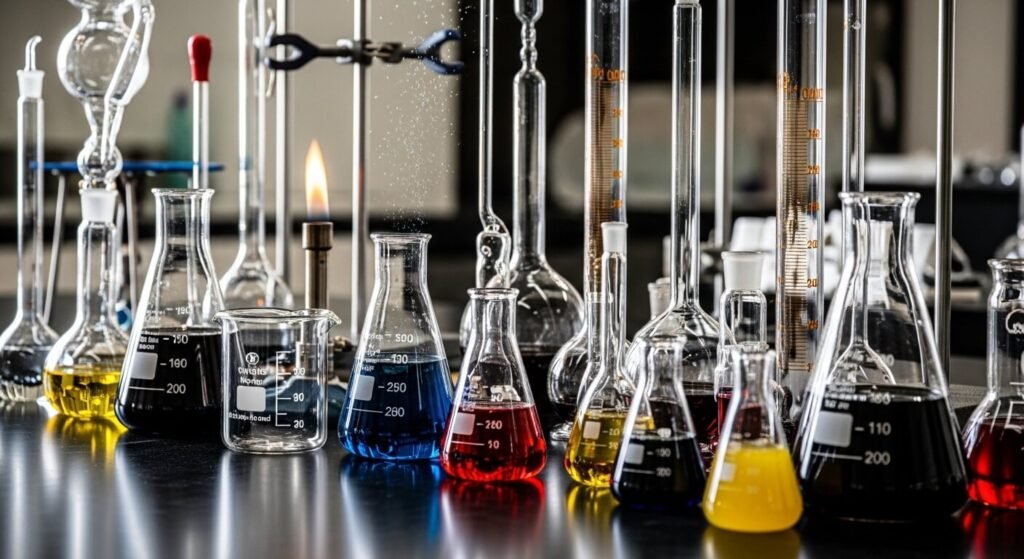
Heat resistant glass isn’t just regular glass that’s been made thicker. The ability to withstand heat and more importantly, changes in heat — comes from the glass’s chemical composition and how much it expands or contracts when temperatures shift.
How Glass Reacts to Temperature Changes
When you heat any solid material, its molecules move faster and the material expands. When you cool it, it contracts. Most materials handle this gradually.
Glass, however, is a poor conductor of heat, which means one part of a glass object can be hot while another part is still cold. That uneven expansion creates internal stress.
When that stress exceeds what the glass can hold, it fractures — sometimes explosively. This is thermal shock: the fracture caused by a rapid or uneven temperature change, not by the temperature itself.
A glass dish that survives 450°F in a steady oven can still shatter when placed on a cold, wet countertop immediately after.
Coefficient of Thermal Expansion (CTE): The Number That Matters
Coefficient of Thermal Expansion (CTE) is the measurement that determines how much a material expands per degree of temperature change. It is expressed in units of 10⁻⁶/°C (parts per million per degree Celsius).
- Lower CTE = less expansion = less internal stress = better thermal shock resistance.
- Standard soda-lime glass has a CTE of approximately 9.0 × 10⁻⁶/°C.
- Borosilicate glass has a CTE of approximately 3.3 × 10⁻⁶/°C — roughly one-third of soda-lime glass.
- Fused quartz has a CTE of approximately 0.55 × 10⁻⁶/°C.
This single number explains most of the differences between glass types covered in this article. The lower it is, the more temperature stress the glass can absorb without fracturing.
What “Oven Safe” Actually Means on a Label
“Oven safe” is a marketing description, not a regulated standard. When you see it on glassware, here is what it does and does not guarantee:
- It indicates a maximum temperature threshold, typically between 350°F (177°C) and 500°F (260°C) depending on the brand and glass type — but this limit is not always printed on the label.
- It does not guarantee thermal shock resistance. A dish rated oven safe to 425°F can still shatter if moved from a freezer to a hot oven, because the temperature differential exceeds the glass’s tolerance.
- It does not specify glass type. Both borosilicate and tempered soda-lime glass are sold as “oven safe,” but they behave very differently under rapid temperature change.
- “Microwave safe” and “oven safe” are not the same rating — verify both on the product label if you intend to use the dish in both appliances.
Types of Heat Resistant Glass: A Full Breakdown
The four primary glass types used in heat resistant applications each have different chemical compositions, temperature ceilings, and ideal use cases.
Understanding how thermal shock causes glass to shatter makes these distinctions easier to apply practically.
Borosilicate Glass:
Borosilicate glass is manufactured by adding boron trioxide (typically 12–15% by weight) to the standard silica-and-soda mix.
That addition dramatically lowers the CTE to around 3.3 × 10⁻⁶/°C, giving the glass exceptional thermal shock resistance — it can handle temperature differentials of 330°F (165°C) or more without fracturing.

- SERVING MADE SIMPLE: With these oven-to-table-to fridge-microwave dishes, you can serve directly in the baking pan witho…
- TIGHT FITTING LID: Keeps moisture and heat contained so you can slow-cook your food at a lower temperature. Cover double…
- HEAT AND COLD SAFE WITH A HIGH THERMAL SHOCK RESISTANCE: Pop your casserole in the oven, stick it in the fridge to cool …
Borosilicate is also chemically inert: it does not react with food, does not leach chemicals, and is confirmed lead-free and BPA-free.
It was the original material used in Pyrex from 1915 through the mid-20th century, and it remains the standard for all laboratory glassware, medical equipment, and premium kitchen brands.
Its main drawback is cost borosilicate requires higher manufacturing temperatures than soda-lime glass, making it more expensive to produce.
Tempered Soda-Lime Glass: Stronger, but Not the Same
Tempered glass is not a different material — it is standard soda-lime glass that has been heat-treated.
The glass is heated to around 600°C and then rapidly cooled with high-pressure air, a process called quenching. This puts the outer surfaces into compression and the interior into tension, making the glass three to five times stronger against impact than untreated annealed glass.

- INCLUDES: This glass bakeware set contains (3) basic loaf dishes. Perfect for baking all manner of dishes
- DURABLE: This tempered glass bakeware set is microwave, pre-heated oven, refrigerator, freezer, and dishwasher safe; lid…
- SAFE: Anchor Hocking baking glass is healthier than metal and plastic. It will not warp, stain, retain smells, or leach …
When it does break, it fractures into small, blunt pieces rather than sharp shards, which reduces injury risk. What tempering does not do is improve thermal shock resistance significantly.
The underlying CTE remains high (around 9.0 × 10⁻⁶/°C). Tempered soda-lime glass handles everyday heat wellsteady oven temperatures up to roughly 425°F but it is far more vulnerable to rapid temperature changes than borosilicate.
Most current U.S. kitchen glassware, including Anchor Hocking and the North American Pyrex line, is made from tempered soda-lime glass.
Glass-Ceramic: Highest Kitchen Heat Tolerance
Glass-ceramics are manufactured glass that has been partially crystallised through a controlled heat treatment process, producing a material that is neither fully glass nor fully ceramic.
The result is near-zero thermal expansion — some formulations have a CTE approaching 0 — which gives them the highest thermal shock resistance of any kitchen-grade material.

- Visions Cookware’s see-through design allows for easily monitoring foods while they cook instead of constantly removing …
- Extremely resilient to temperature changes; can be used on stovetop or in the oven, fridge or freezer
- Healthier cooking, non-prous glass ceramic won’t absorb food odors or flavors
Pyroceram, developed by Corning in the 1950s, is the most well-known glass-ceramic composition.
Products made from glass-ceramic (such as the original Visions cookware line and high-end stovetop-safe cookware) can move directly from freezer to stovetop without risk of cracking.
Glass-ceramics are also used in cooktop surfaces and fireplace windows where sustained high temperatures are required.
Quartz Glass: Extreme Heat, Specialist Applications
Fused quartz (also called fused silica) is made from nearly pure silicon dioxide and has a CTE of approximately 0.55 × 10⁻⁶/°C — the lowest of any common glass type.
It can withstand continuous temperatures up to 1050°C and brief exposure to over 1600°C. This level of performance far exceeds anything needed in a kitchen and comes at significant cost.
- Hand Made
- Enhanced Surface Texture
- Superior Performance
Fused quartz is the standard material for high-precision laboratory equipment, semiconductor manufacturing, UV optics, and industrial furnace windows.
For most kitchen and general laboratory applications, borosilicate glass provides adequate performance at a fraction of the cost.
Borosilicate vs Tempered Glass: Side-by-Side Comparison
This is the most searched comparison in the heat resistant glassware category, and the answer matters most when you’re deciding what to buy for kitchen use.
Temperature Limits, Thermal Shock Resistance, and Impact Strength
| Property | Borosilicate Glass | Tempered Soda-Lime Glass |
|---|---|---|
| CTE (thermal expansion) | ~3.3 × 10⁻⁶/°C | ~9.0 × 10⁻⁶/°C |
| Max continuous oven temp | Up to 500°F (260°C) | Up to 425°F (218°C) |
| Thermal shock resistance | High — handles rapid changes of 330°F+ | Moderate — vulnerable to rapid temperature swings |
| Impact resistance | Moderate | High (3–5× stronger than annealed glass) |
| Break pattern | Sharp shards | Small, blunt fragments (safer) |
| Chemical inertness | Excellent — non-reactive with food | Good — non-porous, non-reactive |
| BPA / lead free | Yes | Yes |
| Stovetop safe | Some formulations (check label) | No |
| Freezer-to-oven safety | Yes, within manufacturer limits | Not recommended |
| Typical cost | Higher | Lower |
| Common brands | Simax, OXO, Borosil, European PYREX | Anchor Hocking, Pyrex (North America), Corelle |
Which Glass Type to Choose for Your Use Case
- You bake casseroles, pies, or roasts in a preheated oven — either type works safely; tempered soda-lime is adequate if you follow temperature limits and avoid cold-to-hot transitions.
- You move dishes from refrigerator or freezer directly to a hot oven — choose borosilicate; tempered soda-lime is at meaningful risk of fracture under this specific condition.
- You store, reheat, and transport food in the same container — borosilicate is the safer and more versatile choice for multi-use containers.
- You use glass on a stovetop or over an open flame — only glass-ceramic or specifically labelled borosilicate formulations are safe; tempered glass is not rated for direct flame contact.
- You need laboratory or scientific glassware — use borosilicate lab-grade glass (Schott DURAN, Pyrex Lab, Kimax); standard kitchen borosilicate is not manufactured to the same tolerance standards.
- Your priority is impact resistance — tempered soda-lime glass is more resistant to drops and knocks; if you have children or a high-traffic kitchen, this tradeoff may matter more than thermal shock performance.
The Pyrex Formula Controversy: Why Your US Pyrex Is Not What You Think
Most people assume that a brand name like Pyrex guarantees a specific type of glass. It does not and understanding why has direct safety implications for anyone using Pyrex products purchased in North America.
What Changed in 1998 and Why It Still Matters
In 1998, Corning — the original developer of Pyrex — sold its consumer products division to World Kitchen LLC. World Kitchen then transitioned North American Pyrex production from borosilicate glass to tempered soda-lime glass.
The stated reasons were manufacturing cost and impact resistance: soda-lime glass is cheaper to produce and more resistant to dropping. The thermal shock performance, however, dropped significantly.
Scientists with the American Ceramic Society subsequently published a study titled “Shattering Glassware Cookware” and concluded: “Soda lime silicate cookware is borderline. It does not appear to be adequate for all household cooking.” World Kitchen sued the publisher of that research in U.S. federal court, seeking to have the paper suppressed.
The lawsuit was ultimately unsuccessful. Today, the North American Pyrex line remains soda-lime glass. For the full history of the Pyrex formula change, including the legal proceedings, the chemistry comparison is well documented and the public record is clear.
PYREX (Europe) vs pyrex (North America): How to Tell the Difference
The logo casing is the fastest way to identify which glass formula you’re holding — and no other source currently explains this as a practical consumer test.
- PYREX (all uppercase) is produced by Arc International for the European market and is made from borosilicate glass. It retains the original thermal shock resistance the brand was built on.
- pyrex (lowercase) or mixed-case “Pyrex” is sold in North America, South America, and parts of Asia by Instant Brands (formerly World Kitchen). It is made from tempered soda-lime glass.
- Where to find the logo: look on the bottom of the dish, pressed or printed into the glass, not on the paper label (which can be removed or replaced).
- Neither version is 100% immune to thermal shock — even borosilicate has limits. Both versions require you to avoid extreme rapid temperature changes.
- If you bought your Pyrex in the UK, France, or continental Europe, it is almost certainly borosilicate. If you bought it in the US, Canada, or Australia, it is almost certainly soda-lime.
- Vintage US Pyrex (pre-1950s) was originally borosilicate; pieces switched to soda-lime progressively from the late 1940s onward — not, as commonly stated, only after the 1998 brand sale.
CPSC Injury Data: How Widespread Is the Problem?
The Consumer Product Safety Commission recorded over 12,000 emergency room visits related to glass bakeware injuries between 1998 and 2007.
Consumer Reports independently tested both glass types in laboratory conditions and found that soda-lime bakeware was significantly more likely to fracture under thermal stress conditions representative of normal kitchen use.
The injuries most commonly resulted from glass shattering while in or immediately after removal from the oven precisely the scenario where thermal shock risk is highest.
This is not a fringe safety concern. It is a documented public health data point tied directly to the material change described above.
Temperature Limits at a Glance: Reference Guide by Glass Type
Maximum Safe Temperatures for Kitchen, Lab, and Industrial Glass
| Glass Type | Max Continuous Temp (°C) | Max Continuous Temp (°F) | Thermal Shock Resistance | CTE (× 10⁻⁶/°C) | Primary Application |
|---|---|---|---|---|---|
| Standard annealed (soda-lime) | 150°C | 302°F | Very low | ~9.0 | Windows, drinking glasses, non-heat applications |
| Tempered soda-lime (kitchen) | 218–232°C | 425–450°F | Low–moderate | ~9.0 | Bakeware, oven dishes, lids |
| Borosilicate — kitchen grade | 232–260°C | 450–500°F | High | ~3.3 | Bakeware, storage containers, measuring cups |
| Borosilicate — lab grade (DURAN) | 500°C | 932°F | Very high | ~3.3 | Beakers, flasks, lab equipment |
| Glass-ceramic (Pyroceram) | 700°C+ | 1292°F+ | Extremely high | ~0.05 | Stovetop cookware, cooktop surfaces, fireplace glass |
| Fused quartz / silica | 1050°C (continuous) | 1922°F | Extremely high | ~0.55 | Industrial furnaces, semiconductors, UV optics |
Note: “oven safe” consumer labels typically specify an operational maximum 50–100°F below the glass’s theoretical thermal limit, as a safety margin for uneven heating conditions.
Brand-Specific Temperature Ratings (Pyrex, Anchor Hocking, OXO, Simax)
| Brand | Glass Type | Max Oven Temp | Stovetop Safe | Freezer-to-Oven Safe |
|---|---|---|---|---|
| Pyrex (North America) | Tempered soda-lime | 425°F (218°C) | No | Not recommended |
| PYREX (Europe / Arc International) | Borosilicate | 500°F (260°C) | No | Yes, within limits |
| Anchor Hocking | Tempered soda-lime | 425°F (218°C) | No | Not recommended |
| OXO Good Grips Glass | Borosilicate | 450°F (232°C) | No | Yes |
| Simax | Borosilicate | 500°F (260°C) | Some products | Yes |
| Borosil (India) | Borosilicate | 500°F (260°C) | Some products | Yes |
| Schott DURAN (lab) | Borosilicate lab-grade | 500°C (932°F) | Yes (lab use) | Yes |
| Pyrex Lab / Kimax | Borosilicate lab-grade | 500°C (932°F) | Yes (lab use) | Yes |
Best Brands of Heat Resistant Glassware: Kitchen Edition
The best borosilicate glass cookware sets share three characteristics: they explicitly state “borosilicate” on the product page (not just “heat resistant glass”), they publish an oven-safe temperature of 450°F or higher, and they provide clear care instructions covering oven, microwave, freezer, and dishwasher compatibility.
Top Borosilicate Brands (Simax, OXO, Borosil, Luigi Bormioli)
- Simax (Czech Republic) is one of the most respected borosilicate manufacturers globally, producing both laboratory and kitchen-grade glass to the same material standard. Their bakeware and storage lines are widely available in Europe and online internationally.
- OXO Good Grips explicitly uses borosilicate for its glass bakeware and food storage containers, with consistent labelling of glass type and temperature ratings — a transparency standard most U.S. brands do not match.
- Borosil (India) is the dominant borosilicate glassware brand across South Asia, producing everything from bakeware to bottles and lab equipment from the same borosilicate composition.
- Luigi Bormioli and Bormioli Rocco (Italy) produce borosilicate drinkware and storage glass with strong European safety standards and clear material disclosure.
Best Tempered Glass Brands for Everyday Kitchen Use
- Anchor Hocking produces tempered soda-lime glass bakeware that is well-made within its category — reliable for steady oven use up to 425°F when thermal shock conditions are avoided.
- Pyrex (North America) remains widely available and performs adequately for standard baking tasks; the material limitation matters most when dishes are moved between temperature extremes.
- Corelle (dinnerware, not bakeware) uses a triple-layer glass-ceramic laminate with different performance characteristics than standard tempered glass — it is highly impact resistant but not rated for oven use.
Laboratory Glassware Brands (Pyrex Lab vs Kimax vs Schott DURAN)
For a full breakdown of specifications and procurement standards, see the complete guide to laboratory glassware types and materials.
- Schott DURAN (Germany) is the global reference standard for laboratory borosilicate glass, used in pharmaceutical manufacturing, research, and precision scientific applications worldwide.
- Pyrex Lab (produced by Corning for laboratory use, distinct from the consumer brand) and Kimax (Kimble Chase) are the two dominant North American lab glass brands, both manufactured from borosilicate to ASTM and ISO standards.
- Important distinction: laboratory borosilicate glass is not the same product as kitchen borosilicate glass. Lab glass is manufactured to tighter dimensional tolerances and chemical purity standards; it is not designed for food contact and should not be repurposed as kitchen cookware.
How to Use Heat Resistant Glassware Safely: Rules That Prevent Shattering
Glass food storage containers safe for oven and freezer are only safe when used correctly. The glass type sets the ceiling; how you handle the dish determines whether you reach it safely.
8 Rules for Oven, Microwave, and Stovetop Use
- Always preheat the oven before inserting glass — placing glass in an oven that is still heating up exposes it to uneven radiant heat from the elements, increasing fracture risk.
- Never place a cold or room-temperature glass dish onto a cold oven rack and then turn the oven to broil — broil cycles heat extremely rapidly and create intense localised radiant heat that far exceeds what most kitchen glass tolerates.
- Add a small amount of liquid to glass baking dishes before placing them in the oven — dry glass heats unevenly; liquid distributes heat and reduces hot-spot concentration, particularly important with tempered soda-lime glass.
- Do not move glass from freezer directly to a hot oven — this applies to both glass types, but is especially dangerous with tempered soda-lime; allow frozen dishes to reach room temperature before exposing them to oven heat.
- Place hot glass only on a dry surface — a cold, wet counter creates an instant localised temperature shock on the bottom of the dish; use a dry towel, trivet, or wooden board.
- Do not use glass bakeware on a stovetop burner or under a direct grill/broiler element unless the product is explicitly labelled for that use (typically only glass-ceramic).
- Check glass for chips or cracks before every use — structural damage concentrates stress at the point of weakness; a chipped dish should be discarded, not used cautiously.
- Follow the manufacturer’s stated temperature limit, not a generalised “glass is oven safe” assumption — limits vary by brand, glass type, and dish thickness.
Warning Signs: When to Stop Using a Glass Dish
- Any visible chip, crack, or nick — even hairline cracks are stress concentration points that make thermal fracture far more likely during the next heat cycle.
- Scratches deep enough to catch a fingernail — deep scratches weaken the structural integrity of the glass; light surface marks are cosmetic but deep grooves are a discard signal.
- White haze or cloudiness that doesn’t wash off — indicates glass corrosion from repeated dishwasher cycling with harsh detergents; structurally weakened glass may look intact but has degraded thermal tolerance.
- Any previous instance of the dish cracking and being “repaired” or “glued” — heat will immediately defeat any adhesive and release fragments.
- Dishes purchased with no material labelling — if you cannot verify whether a dish is borosilicate or soda-lime, treat it as soda-lime and observe the conservative temperature and handling rules.
Cleaning and Caring for Glass Cookware to Extend Its Life
- Let the dish cool to near room temperature before washing — plunging a hot dish into a sink of cold water is one of the most common causes of thermal fracture outside the oven.
- Avoid abrasive scrubbers — steel wool and abrasive pads create surface scratches that accumulate into structural weakness over time; use non-abrasive sponges or soaking.
- Dishwasher use is generally safe for both glass types, but frequent high-temperature dishwasher cycles with harsh detergent accelerate glass clouding and surface degradation — handwashing extends the useful life of quality pieces.
- Store glass cookware without stacking directly without protection — placing heavy items directly on glass increases the risk of impact chips; use cloth dividers or paper towels between stacked pieces.
- Inspect regularly — build a habit of checking for chips and cracks before every use, especially pieces used frequently.
Frequently Asked Questions About Heat Resistant Glassware
Is all glass oven-safe?
No. Only glass that has been specifically manufactured or treated for heat resistance is safe for oven use.
Standard annealed soda-lime glass — used in drinking glasses, mason jars, and most decorative glassware begins to fracture under thermal stress at temperatures as low as 150–200°C (302–392°F).
Always verify that the specific product carries an oven-safe rating from the manufacturer before using it in an oven.
Can I put cold glass directly into a hot oven?
This depends on the glass type and the temperature differential. Borosilicate glass can handle temperature differentials of 330°F (165°C) or more, so moving it from a refrigerator (around 38°F) to a 350°F oven is within tolerance.
Tempered soda-lime glass should not be moved directly from refrigerator to oven — allow it to reach room temperature first, as the differential is more likely to exceed its thermal shock threshold.
Is borosilicate glass BPA-free and non-toxic?
Yes. Borosilicate glass contains no BPA, no lead, and no phthalates — it is chemically inert and does not leach any substances into food or liquids under normal use conditions.
This is one of the reasons it has been the preferred material for laboratory glassware, baby bottles, and food storage products marketed as “toxin-free.”
The boron component is bonded into the glass matrix and does not migrate into food contact surfaces.
Why is European Pyrex considered safer than American Pyrex?
European PYREX (uppercase, produced by Arc International) is still made from borosilicate glass and retains the thermal shock resistance Pyrex was originally known for.
American pyrex (lowercase, produced by Instant Brands) switched to tempered soda-lime glass after 1998, which has significantly lower thermal shock resistance.
For oven-to-counter or freezer-to-oven transitions, the European formulation is measurably safer.
Can heat resistant glass go on a stovetop or open flame?
Most heat resistant glass cannot be used directly on a stovetop burner or open flame — this applies to both borosilicate and tempered soda-lime kitchen glass.
The exception is glass-ceramic formulations (such as Pyroceram-based cookware) which are specifically designed for direct heat contact.
Some borosilicate products are labelled stovetop safe for low-heat applications such as glass teapots or saucepans always verify the specific product’s label rather than assuming the material rating permits it.
What is the maximum temperature for borosilicate glass?
Kitchen-grade borosilicate glass is typically rated for continuous use up to 500°F (260°C) in consumer applications.
Laboratory-grade borosilicate (such as Schott DURAN) can withstand continuous temperatures up to 500°C (932°F).
Fused quartz exceeds both, tolerating continuous temperatures above 1000°C.
The kitchen-grade rating is a conservative operational limit; the theoretical softening point of borosilicate glass is around 820°C, but structural deformation begins well before that under load.
How do I identify whether my glass is borosilicate or soda-lime?
Check the logo or label on the base of the dish: PYREX in uppercase indicates European borosilicate; pyrex in lowercase or mixed case indicates North American soda-lime.
For non-Pyrex brands, look for explicit “borosilicate” labelling on the product page or packaging reputable manufacturers of borosilicate glass consistently advertise the material type.
If no material is specified and the brand is a generic or unverified source, treat the glass as soda-lime and apply the more conservative handling rules.
Is heat resistant glassware the same as laboratory glassware?
No, though they often share the same base material (borosilicate glass). Laboratory glassware is manufactured to tighter dimensional tolerances, higher chemical purity standards, and specific calibration requirements for scientific measurement.
Kitchen borosilicate glassware is optimised for food safety, aesthetics, and consumer durability.
Lab glass should not be repurposed as kitchen cookware, and kitchen glass should not be used as a substitute for precision laboratory equipment.
The thermal performance of both is similar; the intended application and manufacturing standards are different.
About the Author & Reviewer
Sarah Emirone, Author
Sarah researches and writes SafeKitchn’s dinnerware and kitchenware guides, with a focus on material safety, lead content, and manufacturer specifications. She cross-references product data sheets, safety certifications, and regulatory filings (including FDA and Prop 65 records) before publishing, and updates articles when new information becomes available.
James Daniels, Reviewer
James reviews SafeKitchn’s material safety content for scientific accuracy. He holds a B.Sc in inorganic chemistry and works as a materials researcher, with particular focus on the composition and safety behavior of glass, ceramic, and metal used in kitchenware.