

When you need glass that can handle rapid temperature changes without cracking or shattering, borosilicate glass is exactly the material you’re looking for.
It’s a specialized, heat-resistant glass made from silica and boron trioxide, and it turns up everywhere from laboratory beakers and scientific flasks to the baking dish you use every week.
Known for its thermal shock resistance, chemical stability, and long-lasting glass durability, it performs reliably where ordinary glass would fail.
Whether you’re a home cook, a professional scientist, or a health-conscious consumer who cares about what your food comes into contact with, this guide walks you through everything you need to know about borosilicate glass and why so many people choose it.
Written by Sarah Emirone | Reviewed by James Daniels, B.Sc, Inorganic Chemist & Materials Researcher | Updated September 2026 | See How We Test | Filed under: Buying, Care & Product Guides
What Is Borosilicate Glass?
Definition of Borosilicate Glass
Borosilicate glass is made primarily from silica and boron trioxide — two compounds that, when combined, produce a glass composition unlike anything ordinary glass can offer.
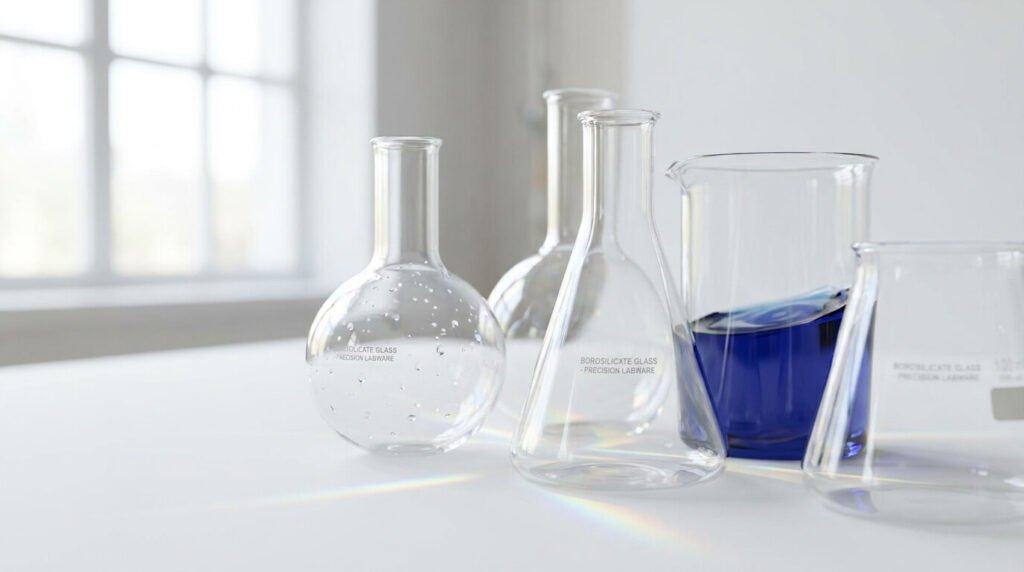
This unique mix is what gives it the ability to resist thermal shock, making it a reliable material in both kitchens and scientific settings.
Composition and Chemical Structure
The glass composition typically includes around 80% silica and 13% boron trioxide, along with smaller amounts of sodium oxide and alumina.
This specific ratio produces a very low thermal expansion coefficient, meaning the glass barely expands or contracts when heated, which is what prevents it from cracking under temperature stress.
How Borosilicate Glass Is Manufactured
Production starts with melting raw materials in a glass furnace at very high temperatures. The resulting molten glass is then shaped and put through a controlled cooling process called annealing.
This relieves internal stress in the glass, giving it the structural integrity it needs for demanding thermal and chemical environments.
For a detailed guide, read our article on: How is Borosilicate Glass Made?
Why Borosilicate Glass Is Different
Low Thermal Expansion
Borosilicate glass barely changes size when heated. This low thermal expansion significantly reduces internal stress during temperature changes, making it far more dimensionally stable than soda-lime glass, especially in environments where temperatures shift frequently.
High Heat Resistance
It withstands higher temperatures than regular glass without deforming or breaking. This heat resistance makes it a solid choice for oven-safe cookware, laboratory equipment, and industrial glass systems that require consistent performance under sustained heating conditions.
Improved Chemical Resistance
Borosilicate glass resists chemical corrosion from acids, alkalis, and harsh substances without degrading. That’s why it’s the standard material for laboratory glassware, including beakers, flasks, and condenser tubes, where contact with reactive chemicals is routine.
Properties of Borosilicate Glass
Thermal Shock Resistance
Borosilicate glass handles rapid temperature changes from cold to hot and back without cracking.
This practical feature makes it reliable for cooking, scientific work, and any situation that involves sudden or extreme temperature transitions in daily use.
Durability and Strength
Its mechanical strength outperforms ordinary glass, making it more resistant to cracking under heat stress.
The glass durability of borosilicate means it holds up through repeated heating and cooling cycles, giving it a longer and more dependable lifespan overall.
Transparency and Clarity
Borosilicate glass maintains excellent optical clarity. Light passes through it cleanly with minimal distortion, useful for microscope slides and optical glass applications in the lab, and equally helpful in the kitchen for measuring cups and food storage containers.
Non-Porous Surface
Its surface doesn’t absorb liquids, flavors, or odors. This makes it hygienic, easy to clean, and resistant to staining, whether you’re storing food, brewing coffee, or running laboratory experiments where contamination needs to be avoided.
Common Uses of Borosilicate Glass
Kitchenware and Cookware
Borosilicate glass shows up in baking dishes, food storage containers, measuring cups, and glass cookware. Pyrex built its reputation on it — producing oven-safe and microwave-safe kitchenware designed to handle the daily demands of cooking and baking reliably.
Drinkware
It appears in double-wall mugs, glass teapots, coffee carafes, and French press brewers. Its ability to hold hot liquids without transferring uncomfortable heat to the outer surface makes it a natural, practical choice for everyday drinkware.
Laboratory Equipment
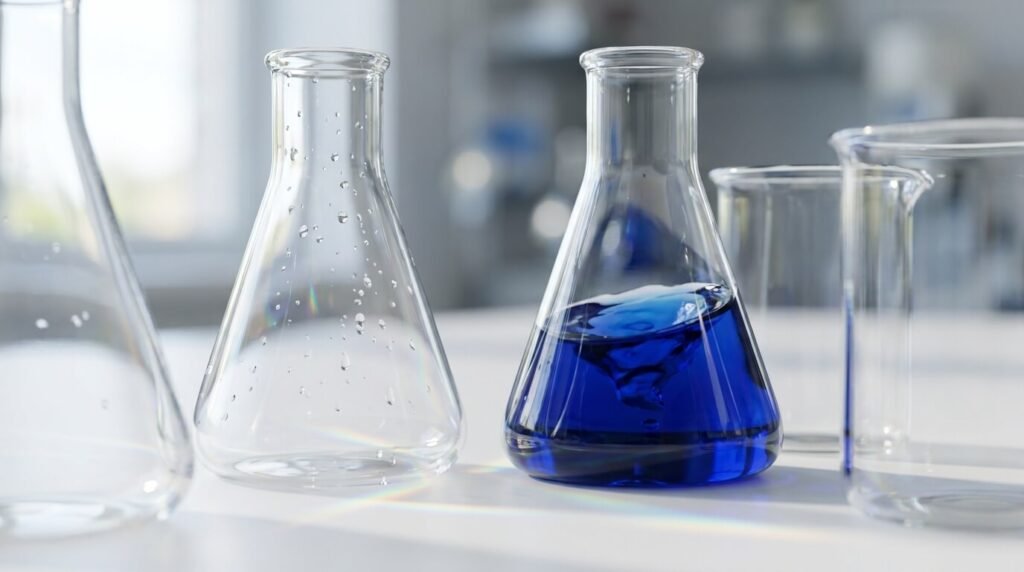
In laboratories, borosilicate glass is the standard. Beakers, flasks, test tubes, petri dishes, condenser tubes, and microscope slides are all typically made from it because of its chemical resistance, thermal stability, and ability to support precise scientific work.
Industrial Applications
Pharmaceutical glass — including vaccine vials — relies on borosilicate glass for its chemical inertness. It also appears in semiconductor manufacturing, industrial glass tubing, and high-temperature systems where specialty glass performance is genuinely non-negotiable.
Borosilicate Glass in Cookware
Oven-Safe Bakeware
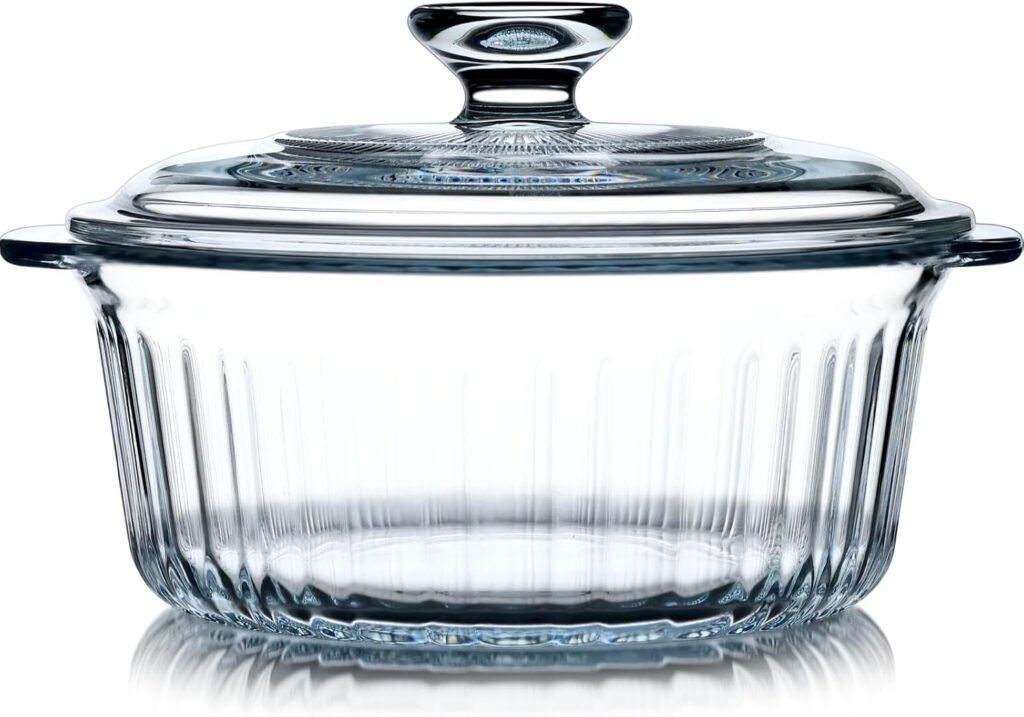
Borosilicate glass baking dishes are oven safe and won’t crack from the sudden heat when placed in a preheated oven. This makes them ideal for roasting, baking casseroles, and other oven-based tasks where reliable glass performance matters most.
Microwave-Safe Containers
These containers are microwave safe, making them practical for reheating food without concern about the glass cracking or releasing chemicals. It’s a convenient, food-safe material choice for people who move meals directly from the fridge to the microwave.
Refrigerator and Freezer Compatibility
Its low thermal expansion makes borosilicate glass freezer safe as well. It won’t crack during the transition from freezer temperatures to room temperature — something ordinary glass food storage containers simply can’t handle as reliably.
To learn more about this heat-resistant cookware glass, read our comparison on: Borosilicate glass vs Ceramic Cookware.
Borosilicate Glass vs Regular Glass
Borosilicate vs Soda-Lime Glass
Soda-lime glass is common in everyday products like window glass and basic drinkware. It’s cheaper to produce, but it expands significantly under heat, making it far more prone to cracking from temperature changes compared to borosilicate glass.
Durability Differences
Borosilicate glass clearly outperforms soda-lime glass in heat performance. Regular glass cracks under rapid temperature shifts, while borosilicate glass handles without issue. For heat durability, the performance gap between the two is practical and significant.
Cost and Manufacturing Differences
Borosilicate glass costs more to produce because of its complex glass composition and higher glass furnace temperature requirements. This manufacturing complexity is reflected directly in the retail price, making it a deliberate investment rather than a budget purchase.
Borosilicate Glass vs Tempered Glass
Heat Resistance Comparison
Tempered glass is strengthened through rapid heating and cooling, which improves its impact resistance. However, it doesn’t offer the same level of sustained heat resistance as borosilicate glass, which handles higher temperatures and more extreme thermal transitions reliably.
Breakage Characteristics
Tempered glass shatters into small, rounded pieces — a built-in safety feature. Borosilicate glass cracks into larger, sharper shards.
Understanding the dangers of borosilicate glass in this context is especially relevant when choosing glassware for homes with young children.
Everyday Kitchen Applications
For heat-intensive uses like baking dishes and teapots, borosilicate glass is the stronger choice. Tempered glass works better where impact resistance takes priority — such as cutting boards, certain tableware, and architectural glass applications.
Is Borosilicate Glass Safe?
Food-Safe Properties
Borosilicate glass is a recognized food-safe material. Its non-reactive surface doesn’t leach chemicals into food or drinks, even under high heat — making it a trusted choice for food storage containers, glass cookware, and everyday drinkware.
For a detailed safety clarity, read our guide on: Does borosilicate glass contain Lead?
BPA-Free and Chemical-Free Benefits
Unlike plastic containers, borosilicate glass is BPA-free. There are no bisphenol-A chemicals to worry about migrating into food, which makes it a popular switch for health-conscious households looking to replace plastic kitchenware with safer alternatives.
Safety Under High Temperatures
Borosilicate glass remains chemically stable during high-heat cooking. It doesn’t emit fumes or break down the way certain plastics do, making it safe for oven use, boiling liquids, and other demanding kitchen cooking applications.
Advantages of Borosilicate Glass
Resistance to Thermal Shock
Its thermal shock resistance is the standout advantage. Borosilicate glass moves between extreme temperatures without cracking, extending its lifespan well beyond ordinary glass and making it genuinely practical for everyday cooking, storage, and scientific use.
Non-Reactive Surface
Borosilicate glass doesn’t react with food, drinks, or chemicals. It won’t absorb flavors, odors, or stains over time — keeping containers clean and uncontaminated, which is especially valuable in both food storage and laboratory applications.
Lightweight Yet Durable Construction
Despite its strength, borosilicate glass is relatively lightweight. This makes it easy to handle daily, and the combination of manageable weight with reliable glass durability makes it practical across kitchen, laboratory, and industrial settings.
Long-Term Durability
It holds up well through repeated heating and cooling cycles without degrading. This product’s durability makes it cost-effective over time — even accounting for its higher upfront cost compared to standard glass options available on the market.
Limitations of Borosilicate Glass
Higher Cost Compared to Regular Glass
The specialized manufacturing process makes it significantly more expensive than soda-lime glass. Reviewing the disadvantages of borosilicate glass carefully helps you determine whether the performance benefits genuinely justify the extra cost for your specific needs and usage.
Impact Vulnerability
It still breaks when dropped on hard surfaces. Its impact resistance isn’t significantly better than regular glass — a real limitation worth keeping in mind, especially in homes with young children or high-traffic kitchen environments.
Availability Differences by Region
Borosilicate glass products aren’t always easy to find in every market. Availability varies by region, and products common in North America or Europe may take more effort to source elsewhere. Always check manufacturer specifications when sourcing specific items.
How to Identify Borosilicate Glass
Product Labeling and Packaging
Most genuine borosilicate products are labeled “borosilicate,” “heat-resistant glass,” or carry brand names like Pyrex or Duran Glass.
Check the packaging carefully; reputable manufacturers clearly state the glass type and heat-resistant properties right on the label.
Thickness and Design Characteristics
Borosilicate glass tends to feel lighter and look cleaner than lower-quality alternatives. Held to light, it shows excellent optical clarity with minimal distortion. That said, always confirm through product specifications rather than relying on visual appearance alone.
Manufacturer Specifications
Manufacturers like Schott AG, Corning Incorporated, and Duran provide detailed product specifications, including glass composition and ISO certification.
If a product claims to be borosilicate, that documentation should confirm its heat resistance ratings and food safety compliance.
Best Uses for Borosilicate Glass
Baking and Cooking
Borosilicate glass baking dishes are oven safe, easy to clean, and don’t affect food flavor. From casseroles to roasted vegetables, they’re a versatile, reliable choice for most home cooking and baking tasks throughout the week.
Hot and Cold Beverage Use
Double-wall borosilicate glass is ideal for tea, coffee, and specialty drinks. Glass teapots, coffee carafes, and French press brewers handle hot liquids safely and elegantly — keeping drinks at temperature while staying comfortable to hold.
Laboratory and Scientific Use
For laboratory work, borosilicate glass is the global standard. Its chemical resistance, transparency, and ability to handle temperature extremes make it essential for beakers, flasks, test tubes, and condenser tubes in research facilities everywhere.
How to Care for Borosilicate Glass
Proper Cleaning Techniques
Borosilicate glass is dishwasher safe, though handwashing is gentler on lids and seals. Use non-abrasive cleaners to preserve surface clarity. Its non-porous surface means food residue cleans off easily without leaving stains or lingering odors behind.
Avoiding Physical Impact Damage
Dropping borosilicate glass on tile or concrete is likely to break it. Handle it with care, store it safely away from edges, and avoid banging it against hard surfaces during washing or while placing it in storage.
Safe Temperature Transition Practices
Although it handles temperature changes well, very sudden transitions can still cause stress. Avoid placing a hot dish directly on a cold, wet surface — and let it cool slightly before moving it to the refrigerator or freezer.
Common Misunderstandings About Borosilicate Glass
“Borosilicate Glass Is Unbreakable”
This is a widespread misconception. Borosilicate glass is durable and heat-resistant, but not unbreakable. Drop it hard enough, and it will crack or shatter. Its strength lies in thermal performance, not in resistance to physical impact.
“All Heat-Resistant Glass Is Borosilicate”
Not all heat-resistant glass is borosilicate. Some products use tempered glass or glass ceramics, which behave very differently. Always check the glass composition label or manufacturer documentation before assuming a product is made from borosilicate glass.
“Borosilicate and Tempered Glass Are the Same”
These are two distinct materials with different manufacturing processes and properties. Borosilicate glass gets its strength from its chemical composition; tempered glass from heat treatment. They serve different purposes and are not interchangeable in any meaningful way.
Who Should Use Borosilicate Glass?
Home Cooks and Bakers
If you regularly bake or cook, upgrading to borosilicate glass bakeware is worthwhile. It’s oven safe, won’t leach chemicals into food, and holds up through repeated use — a practical, long-lasting choice for any home kitchen.
Coffee and Tea Enthusiasts
For coffee and tea lovers, borosilicate drinkware adds both function and elegance. Double-wall mugs, glass teapots, and French press brewers keep drinks at the right temperature while showing off the color and clarity of your brew.
Laboratories and Scientific Users
For laboratory scientists, borosilicate glass is essentially non-negotiable. Its chemical stability, resistance to acids and alkalis, and thermal performance make it the global standard for laboratory safety and precise scientific experimentation.
Health-Conscious Consumers
If reducing plastic use is a priority, borosilicate glass is one of the best alternatives. It’s BPA-free, non-reactive, non-porous, and fully food safe — a smart, sustainable choice for health-conscious consumers at home.
Final thoughts
Borosilicate glass has earned its strong reputation through consistent, reliable performance across many demanding applications.
Its thermal shock resistance, chemical stability, and long-lasting glass durability make it the trusted choice for cookware, drinkware, and laboratory equipment worldwide.
Unlike ordinary glass, it handles high-heat cooking, scientific experimentation, and everyday food storage without compromising safety or structural integrity.
Whether you’re shopping for oven-safe bakeware, a glass teapot, or precision laboratory glassware, understanding what borosilicate glass truly offers helps you make a smarter, more informed decision.
Evaluate your needs around temperature resistance, intended use, and long-term durability. The upfront cost is higher, but the performance and safety benefits make it well worth the investment.
Related: Can Borosilicate glass be repaired?
About the Author & Reviewer
Sarah Emirone, Author
Sarah researches and writes SafeKitchn’s dinnerware and kitchenware guides, with a focus on material safety, lead content, and manufacturer specifications. She cross-references product data sheets, safety certifications, and regulatory filings (including FDA and Prop 65 records) before publishing, and updates articles when new information becomes available.
James Daniels, Reviewer
James reviews SafeKitchn’s material safety content for scientific accuracy. He holds a B.Sc in inorganic chemistry and works as a materials researcher, with particular focus on the composition and safety behavior of glass, ceramic, and metal used in kitchenware.