

There is a clear shift happening in how families think about their kitchen products. More households are moving away from single-use plastics and heavy ceramic sets, looking for something lighter, safer, and easier on the planet.
Wheat straw dinnerware sits right at the center of that shift. Made from a natural agricultural byproduct blended with food-safe materials, it has quietly become one of the most practical and eco-conscious choices on the market today.
What makes it appealing is not just the sustainability angle. Parents love it for kids’ tables. Campers reach for it on outdoor trips. Students grab it for dorm rooms.
This guide walks you through everything that it is, how it is made, whether it is safe, how it compares to other materials, and how to get the most out of it. If you are thinking about switching, this is the best place to start.
Written by Sarah Emirone | Reviewed by James Daniels, B.Sc, Inorganic Chemist & Materials Researcher | Updated September 2026 | See How We Test | Filed under: Buying, Care & Product Guides
What Is Wheat Straw Dinnerware?
Definition of Wheat Straw Material
Wheat straw is the stalky byproduct left behind after wheat grains are harvested. For most of farming history, this crop residue was either burned or discarded, creating waste and contributing to air pollution.
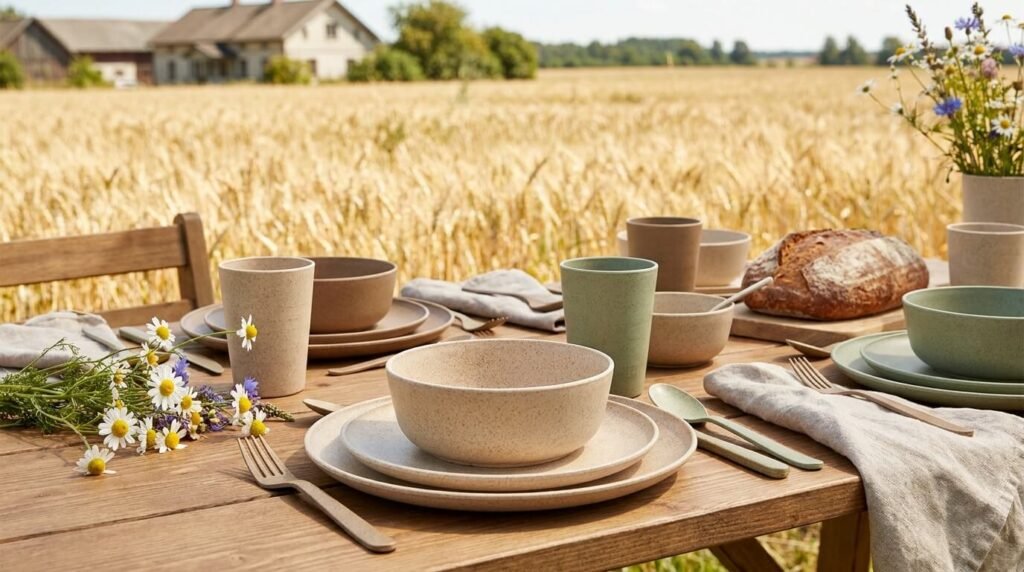
Manufacturers figured out how to put it to better use. The stalks are processed into wheat straw fiber, a natural fiber composite that can be blended with polymers to create durable, lightweight tableware.
This repurposing of an agricultural byproduct is at the heart of what makes wheat straw dinnerware a genuinely renewable material story, not just marketing.
How Wheat Straw Dinnerware Is Made
The production process starts by breaking down the dried wheat stalks and extracting usable plant fiber. That fiber is then cleaned, refined, and blended with food-safe polymers, typically polypropylene, to create a composite material.
This mixture is shaped through injection molding, where heat and pressure form it into plates, bowls, cups, and other dinnerware shapes.
The resulting product is a natural fiber composite that is harder than plain plastic, more flexible than ceramic, and considerably more eco-friendly than petroleum-based alternatives.
Sustainable manufacturing processes during this stage also aim to minimize waste generated at the factory level.
Common Wheat Straw Products
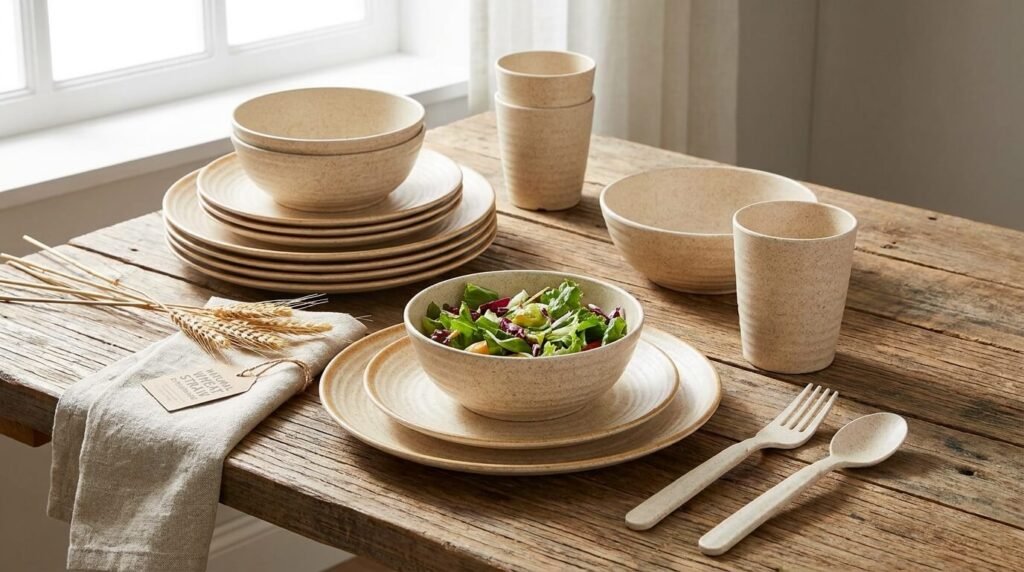
Wheat straw products come in a wide range of household dining formats. The most common items you will find include:
- Dinner plates and salad plates
- Deep bowls for soups, cereals, and snacks
- Cups and mugs for hot and cold beverages
- Wheat straw cutlery sets for travel and outdoor dining
- Kids’ dinnerware sets, including toddler plates and divided trays
Many brands sell these as full dining sets, making it easy to switch over all at once. Some also offer stackable dinnerware configurations designed for compact storage in small kitchens or RVs.
Related: Does Wheat Straw Dinnerware Stain?
Why Wheat Straw Dinnerware Is Popular
Eco-Friendly and Sustainable Appeal
The environmental argument for wheat straw dinnerware is strong. It is manufactured from crop residue that would otherwise go to waste, which means it actively supports biomass utilization and agricultural waste recycling.
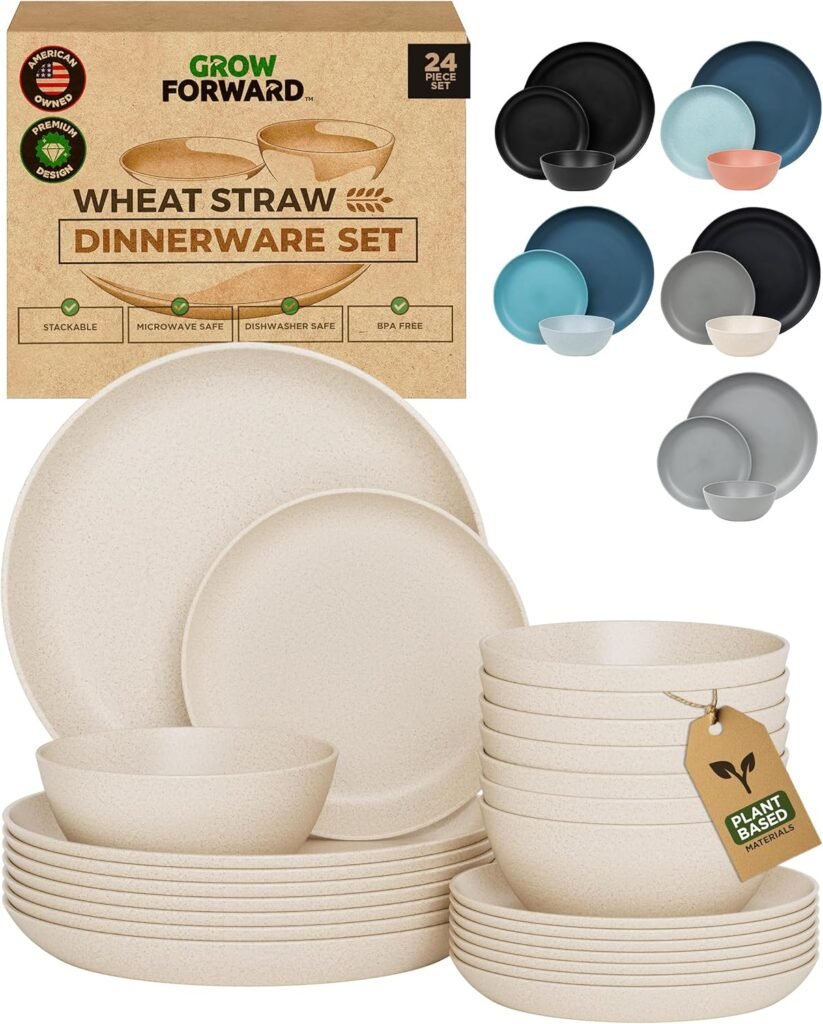
Unlike petroleum-based plastics, wheat straw composites are classified as plant-based tableware, incorporating renewable materials into every piece.
For households working toward a more zero-waste lifestyle or a reduced carbon footprint, replacing conventional plastic dishes with eco-friendly tableware is a meaningful, practical step.
Lightweight and Easy to Handle
One of the biggest practical advantages is how light these dishes are. Wheat straw dinnerware is significantly lighter than ceramic or glass, making it easy for children to carry, simple to pack for travel, and effortless to stack and store.
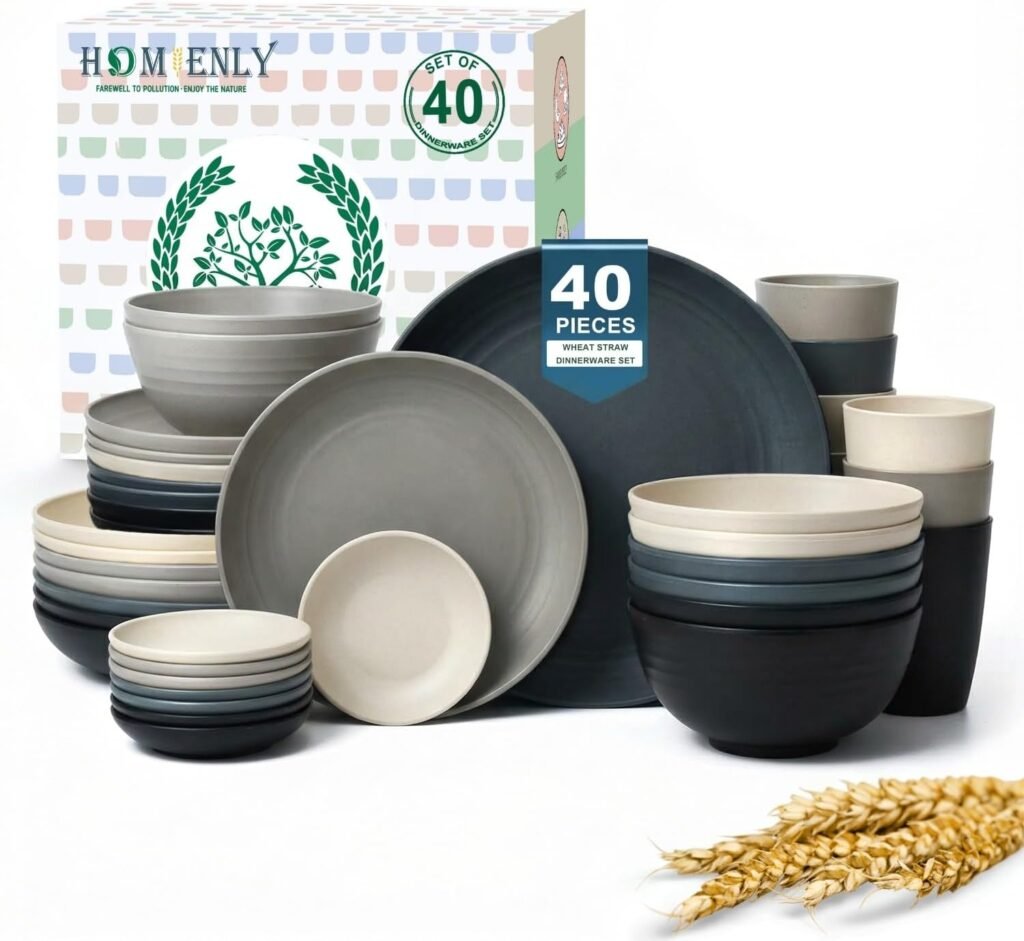
For outdoor dining situations or anyone managing a kitchen with limited counter space, that lightweight quality matters more than people initially expect.
Reusable Alternative to Disposable Plastic
Wheat straw dishes are designed to be reused hundreds of times, positioning them as a direct plastic alternative for households trying to cut down on disposable tableware.
Where single-use plastics create ongoing waste and cost, reusable dinnerware made from plant fiber composites stays in rotation for years.
For eco-conscious dining, reusability is the central value proposition: buy once, use consistently, and reduce reliance on throwaway products.
Family-Friendly and Kid-Friendly Design
Parents gravitate toward wheat straw dinnerware partly because it is shatter-resistant. Dropping a ceramic plate means broken pieces; dropping a wheat straw plate usually just means picking it up again.
That shatter-resistant quality makes it ideal for kids and toddlers who are still developing table manners.
Most products are also marketed as non-toxic tableware, BPA-free, and phthalate-free, which are important certifications for parents who care about child-safe tableware at every meal.
Affordable Everyday Tableware
Compared to premium ceramic sets or stainless steel alternatives, wheat straw dining sets are genuinely affordable.
Full sets often cost a fraction of what comparable ceramic or glass sets run, making green kitchenware accessible to a broader range of households, not just those with premium budgets.
That affordability, combined with the eco-friendly appeal, makes it one of the more practical modern dining trends in sustainable consumerism.
Is Wheat Straw Dinnerware Safe?
Yes. Wheat straw dinnerware is generally considered safe for food contact. Most products are BPA-free and manufactured using food-grade polypropylene blended with wheat straw fiber.
They meet FDA food contact standards and are certified non-toxic. However, always check individual product certifications, and avoid using damaged pieces, as worn surfaces may harbor bacteria.
BPA-Free and Food-Safe Properties
Reputable wheat straw brands are certified as BPA-free dinnerware and manufactured using food-grade material that complies with FDA food contact standards.
That means the material has been evaluated for safe interaction with food and beverages under normal use conditions.
Many products also carry LFGB certification, the European food-contact safety standard, which is considered one of the stricter benchmarks globally.
When buying, look for these certifications on the packaging; they are your clearest signal that a product has been properly tested.
Does Wheat Straw Dinnerware Contain Plastic?
This is one of the most common questions, and the honest answer is: yes, most wheat straw dinnerware contains plastic. Specifically, a polypropylene blend is used to bind the wheat straw fiber into a moldable, durable composite.
The proportion of wheat straw fiber typically ranges from 30 to 60 percent, with food-safe polypropylene making up the rest. This makes it a bioplastic rather than a fully plant-based product.
It is greener than conventional plastic, using less petroleum and incorporating renewable fiber, but it is not entirely plastic-free. Products marketed as completely plastic-free should be examined carefully.
Microwave and Dishwasher Safety
Most microwave-safe dishes in the wheat straw category are approved for short microwave intervals, typically one to three minutes at medium power.
They are not designed for prolonged high-heat microwave use. On the dishwasher side, wheat straw dinnerware generally withstands standard dishwasher cleaning cycles well, though manufacturers usually recommend the top rack and avoiding very hot drying settings.
Repeated exposure to high heat over time can cause some warping or fading, so following care instructions extends the product’s life significantly.
Heat Resistance and Temperature Limits
Wheat straw composites have moderate heat resistance. Most products comfortably handle food temperatures up to around 120°C (248°F), which covers typical warm meals without issue.
They are not designed for oven use, and boiling liquids poured directly into cups or bowls should be approached with some care. For everyday meals, from warm pasta to heated soups, heat resistance is generally not a problem.
Safety for Children and Toddlers
Child-safe tableware is one of the most popular use cases for wheat straw products. They are lightweight enough for small hands, shatter-resistant, so breakage is not a safety hazard, and manufactured without BPA or phthalates.
For toddler plates specifically, look for products that also skip melamine entirely. Some lower-quality alternatives still use melamine binders, which raises food safety concerns at elevated temperatures.
Sticking to certified BPA-free and food-grade products from established wheat straw brands eliminates most of those risks.
Are Wheat Straw Plates Banned in Europe?
Not exactly banned, but under scrutiny. The European Food Safety Authority (EFSA) raised concerns about certain bamboo and plant fiber composite tableware, including some wheat straw products that use melamine or formaldehyde-based binders.
Products using safe, food-grade polypropylene blends are still sold legally in Europe. Always verify LFGB certification before purchasing wheat straw dinnerware for use in the EU.
Are Wheat Straw Plates Microwave Safe?
Most wheat straw plates are microwave-safe for short intervals, typically 1 to 3 minutes at a time. They can handle moderate heat but are not designed for extended high-temperature use.
Avoid microwaving at maximum power for long periods. Always check the manufacturer’s label, as microwave safety varies depending on the specific polypropylene blend used in the product.
Can You Put Hot Food on Wheat Straw Plates?
Yes, you can serve hot food on wheat straw plates. They are designed to handle typical meal temperatures comfortably. However, they are not suited for extremely hot foods like boiling soups or oven-fresh dishes.
For very hot meals, allow food to cool slightly before serving. Wheat straw dinnerware generally tolerates temperatures up to around 120°C (248°F), depending on the product.
Wheat Straw Dinnerware vs Other Materials
Wheat Straw vs Plastic
Conventional plastic dishes are cheaper upfront but carry ongoing environmental costs. They are produced from petroleum, do not biodegrade meaningfully, and contribute to plastic pollution over time.
Wheat straw composites use less petroleum per unit, incorporate renewable fiber, and represent a cleaner lifecycle even if they are not fully biodegradable. For households prioritizing sustainable living, wheat straw is the stronger choice even if the initial cost is slightly higher.
Wheat Straw vs Bamboo Dinnerware
Bamboo dinnerware is perhaps the closest competitor to wheat straw in the eco-friendly tableware category. Both are plant-based tableware options using natural fiber composites.
The main difference lies in the binders used; some bamboo dinnerware uses melamine as a binder, which has raised regulatory questions in Europe.
Wheat straw products using polypropylene binders generally have a cleaner safety profile. In terms of weight and durability, they are fairly comparable.
Wheat Straw vs Melamine
Melamine tableware is common and durable, but it carries safety concerns, particularly around high heat. Melamine can leach formaldehyde at elevated temperatures, which is why it should not be microwaved.
Wheat straw dinnerware acts as a melamine alternative with broader microwave compatibility and a cleaner material profile. For families who rely on microwaving leftovers, the switch from melamine to wheat straw makes clear practical sense.
Wheat Straw vs Ceramic Dinnerware
Ceramic is premium, beautiful, and fully non-plastic, but it is heavy, breakable, and resource-intensive to produce.
Wheat straw cannot match ceramic for aesthetics or heat tolerance in the oven, but it wins on portability, shatter resistance, and eco-credentials from a raw material standpoint.
For casual everyday use, especially in homes with children or frequent outdoor dining, wheat straw is far more practical.
Which Material Is Best for Everyday Use?
For everyday family dining, wheat straw dinnerware offers a compelling balance of safety, sustainability, and practicality.
It is not the best choice for formal dinner parties or high-heat cooking, but for daily breakfast, lunch, and casual dinner use, especially for kids it performs as well as any reusable dinnerware option on the market.
For outdoor dining products and travel, it is arguably the best choice available.
Pros and Cons of Wheat Straw Dinnerware
Main Advantages
Here is what genuinely works well with wheat straw dishes:
- Lightweight: Easy for children, travelers, and outdoor dining situations
- Durable: Resists chipping and breakage better than ceramic or glass
- Eco-conscious: Made from agricultural byproducts and renewable materials
- Portable: Ideal for camping dinnerware, picnic tableware, and RV kitchenware
- Shatter-resistant: No broken pieces when dropped, making it safer for households with kids
- Affordable: Much cheaper than comparable ceramic or stainless steel sets
- BPA-free: Certified as non-toxic tableware suitable for children and adults
Cons of Wheat Straw Dinnerware
No product is perfect, and wheat straw dinnerware has real limitations worth knowing:
- Limited heat tolerance: Not suitable for oven use or prolonged microwave sessions at high power
- Contains blended plastic: The polypropylene component means it is not fully plastic-free or compostable in most household conditions
- Less premium appearance: It does not carry the aesthetic weight of porcelain or stoneware
- Potential fading: Colors may dull over time with repeated dishwasher exposure
- Variable quality: Not all brands maintain consistent food-safe certifications — research before buying
Best Uses for Wheat Straw Dinnerware
Everyday Family Meals
Wheat straw dinnerware handles daily household dining products needs with ease. Breakfast, lunch, dinner — it is practical, easy to clean, and durable enough to survive the wear of a busy family kitchen.
For households looking to reduce plastic reliance without investing in fragile ceramic, this is the straightforward everyday solution.
Kids and Toddler Dining
This is where wheat straw truly earns its reputation. Toddler plates made from wheat straw composites are shatter-resistant, light, and free from harmful chemicals.
Kids can drop them, carry them, and use them independently without safety concerns. Many brands also offer bright colors and fun designs specifically for children, making mealtime more engaging.
RV, Camping, and Outdoor Use
Camping dinnerware and RV kitchenware demand products that are lightweight, space-efficient, and tough. Wheat straw ticks all three.
It packs easily, does not add meaningful weight to a bag or storage unit, and holds up through outdoor conditions far better than ceramic or glass. For outdoor dining products, wheat straw is one of the most sensible material choices available.
Dorm Rooms and Small Kitchens
In limited spaces, stackable dinnerware that takes up minimal cabinet space is a genuine benefit. Wheat straw sets are compact, lightweight, and easy to wash by hand or in a shared dishwasher.
For students and apartment dwellers working with minimal kitchen space, a wheat straw dinner set offers everything needed without the bulk or breakage risk.
Picnics and Travel Dining
For picnic tableware and travel dining, wheat straw is nearly unbeatable. It is light enough to carry comfortably, tough enough to handle outdoor conditions, and does not require the careful handling that glass or ceramic demands.
Paired with wheat straw cutlery, it makes a complete, eco-friendly dining kit for any outdoor meal.
How Long Does Wheat Straw Dinnerware Last?
Durability Expectations
With proper care, wheat straw dinnerware typically lasts two to five years under regular household use.
That range depends on how frequently it is used, how it is cleaned, and whether it is exposed to conditions beyond its tolerances, like repeated high-heat microwave sessions or harsh dishwasher cycles.
Higher-quality products from established brands tend toward the longer end of that range.
Resistance to Breaking and Chipping
One of the clearest durability advantages is resistance to breaking and chipping. Unlike ceramic, wheat straw composites flex slightly under impact rather than shattering. Chips are rare, and full breaks are uncommon under normal use.
This makes it a durable dinnerware choice for households where dishes get stacked, tossed in bags, or handled roughly.
Effects of Repeated Microwave Use
Repeated microwave use is one of the main factors that shortens the lifespan of wheat straw dinnerware.
While most products handle short microwave intervals without issue, consistently microwaving at high power over time can cause warping, surface degradation, and color changes.
Keeping microwave sessions short and at medium power protects the material significantly.
Signs It Should Be Replaced
Watch for these signals that it is time to replace a piece: visible warping or deformation, deep scratches or cracks in the surface, persistent staining or odors that do not wash out, or any structural weakness that affects how the piece holds food or liquid.
A damaged surface on any food contact material is worth replacing promptly.
How to Choose the Best Wheat Straw Dinnerware
Checking BPA-Free Certifications
The first thing to confirm when buying is a BPA-free certification. This appears on product packaging and should be accompanied by food-grade material labeling. For households with children, also look for phthalate-free products certification.
These are baseline standards that any reputable brand will meet and clearly communicate.
Understanding Material Blends
Not all wheat straw dinnerware is blended the same way. Check whether the product uses food-safe polypropylene or melamine as its binder — polypropylene is the preferred option for microwave safety and overall chemical safety.
Products with higher wheat straw fiber content generally have a more natural look and slightly rougher texture; higher polypropylene blends tend to be smoother and more plastic-like.
Choosing Microwave-Safe Products
Look for explicit microwave-safe labeling on the product. Not all wheat straw composite dinnerware is microwave-safe, and the safety depends on the specific polypropylene blend and manufacturing process.
If microwaving is a regular part of how you use dishes, this is a non-negotiable feature to confirm before purchasing.
Evaluating Thickness and Durability
Thicker pieces generally perform better over time. When comparing products, heavier, more substantial pieces tend to resist warping and damage more effectively than thinner, lighter alternatives.
For kids’ dinnerware, especially, a slightly thicker construction adds meaningfully to longevity and safety.
Best Sizes and Set Configurations
Most households find that a full set of dinner plates, salad plates, bowls, and cups offers the best value. Look for sets where all pieces stack efficiently, since kitchen organization is a real benefit of well-designed wheat straw sets.
For families, sets that include toddler-sized pieces alongside adult sizes give the most flexible coverage.
Cleaning and Caring for Wheat Straw Dinnerware
Dishwasher Cleaning Tips
Most wheat straw dinnerware is dishwasher-safe tableware, but the best results come from placing pieces on the top rack and using a normal or gentle cycle.
Avoid high-temperature heated dry settings, as sustained heat exposure accelerates surface wear. If your dishwasher runs particularly hot, hand washing is the safer long-term option for preserving the finish.
Avoiding Heat Damage
Keep wheat straw dinnerware away from direct oven heat, stovetop use, and sustained high-temperature microwave cycles.
While the material handles moderate heat well, extreme temperatures compromise the composite structure over time. Serving hot food is fine; putting the plate directly in a 200°C oven is not.
Proper Storage Practices
Wheat straw dishes stack neatly, which makes storage straightforward. For compact kitchen organization, stack plates and bowls in order of size.
Avoid storing them in conditions of extreme heat — like inside a car on a hot day — which can cause warping even without direct food contact.
Preventing Stains and Odors
Tomato-based sauces, curries, and strongly pigmented foods can stain wheat straw surfaces over time, particularly lighter-colored products. Rinse dishes promptly after use and avoid letting staining foods sit for extended periods.
For odor prevention, an occasional soak in a mild baking soda solution works well without damaging the material.
Common Myths About Wheat Straw Dinnerware
“Wheat Straw Dinnerware Is Completely Plastic-Free”
This is one of the most widespread misconceptions. The reality is that most wheat straw composite products contain food-safe polypropylene, a plastic binder, which makes up a significant portion of the material.
Claiming these products are entirely plastic-free is a form of eco-friendly branding that does not hold up under scrutiny. Greenwashing in the sustainable kitchenware market is real, and this is one of its most common expressions.
These products are greener than conventional plastic — but they are not plastic-free.
“Eco-Friendly Dinnerware Is Fragile”
The opposite is actually true for wheat straw. Biodegradable tableware and eco-friendly products have a reputation for being flimsy, but wheat straw composites are engineered to be shatter-resistant and durable.
They outperform ceramic and glass on breakage resistance by a significant margin, which is exactly why they work so well for children and outdoor use.
“Wheat Straw Dishes Are Biodegradable Overnight”
Wheat straw dinnerware is not compostable tableware in the typical sense. Because of the polypropylene binder, these products will not break down in a home compost bin or decompose quickly in landfill conditions.
The biodegradable dinnerware label is misleading when applied to polypropylene-blended composites without qualification.
True biodegradability requires industrial composting conditions at a minimum, and even then, the polymer component complicates the process.
“Microwaving Wheat Straw Is Always Unsafe”
This myth goes too far in the other direction. Most wheat straw dinnerware certified as microwave-safe dishes handles short microwave intervals perfectly well.
The concern is valid for extended high-heat cycles and for products that are not explicitly microwave-certified, but blanket avoidance of microwave use is unnecessary for properly certified products.
Check the label, follow the time recommendations, and microwave use is generally fine.
Conclusion
Wheat straw dinnerware offers something genuinely practical in a market flooded with eco-claims. It converts agricultural waste into durable, safe, reusable household dining products, reducing reliance on conventional plastics without sacrificing everyday usability.
Understanding that most products contain a polypropylene blend is important, but it does not diminish the real environmental and practical benefits these dishes deliver when used and maintained correctly.
Key Buyer Takeaways
Lightweight, shatter-resistant, BPA-free, and genuinely affordable wheat straw dinnerware performs best in casual daily dining, family kitchens, kids’ settings, and outdoor or travel situations.
It is not designed to replace porcelain at a formal dinner table, but for everything else, it holds its own confidently as sustainable kitchenware.
Final Recommendation
If you are ready to switch, prioritize certified food-safe products with clear BPA-free and microwave-safe labeling from established wheat straw brands.
Use them within their recommended heat limits, care for them properly, and they will serve your household well for years. Sustainable dining does not have to mean compromise; wheat straw dinnerware proves that.
About the Author & Reviewer
Sarah Emirone, Author
Sarah researches and writes SafeKitchn’s dinnerware and kitchenware guides, with a focus on material safety, lead content, and manufacturer specifications. She cross-references product data sheets, safety certifications, and regulatory filings (including FDA and Prop 65 records) before publishing, and updates articles when new information becomes available.
James Daniels, Reviewer
James reviews SafeKitchn’s material safety content for scientific accuracy. He holds a B.Sc in inorganic chemistry and works as a materials researcher, with particular focus on the composition and safety behavior of glass, ceramic, and metal used in kitchenware.