

Search “do wheat straw plates stain,” and you’ll get two opposite answers. Some say call the material non-porous and stain-resistant.
Others, including various users complaint about tomato sauce, describe staining as permanent damage. Both can be true, because “wheat straw plates” isn’t one material.
It’s wheat fiber bound with either polypropylene (PP) resin or melamine-formaldehyde resin, and which one you own determines almost everything: how easily it stains, whether the stain comes out, and whether a stained plate is still safe to eat from.
This page sorts out which answer applies to your plate, with the binder type, the actual migration data behind the safety question, and the contradiction nobody else addresses.
Written by Sarah Emirone | Reviewed by James Daniels, B.Sc, Inorganic Chemist & Materials Researcher | Updated September 2026 | See How We Test | Filed under: Buying, Care & Product Guides
What Wheat Straw Plates Are Actually Made Of
Wheat straw plates are made from ground wheat stalk fiber mixed with a plastic binder, never 100% wheat straw on its own, since fiber alone won’t hold a shape under heat or repeated washing.


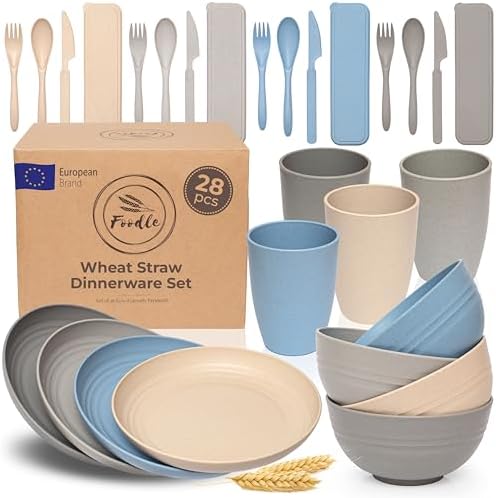

The binder is the part that matters, and the part that almost no product listing names directly.
PP-bound vs melamine-bound wheat straw — the difference that controls staining
| Property | PP-bound wheat straw | Melamine-bound wheat straw |
|---|---|---|
| Binder | Polypropylene (PP), plastic #5 | Melamine-formaldehyde resin |
| Surface texture | Smoother, less porous when well-sealed | More microscopic gaps where fiber meets resin |
| Staining tendency | Lower — close to standard food-safe plastic | Higher — pigments settle into resin gaps |
| Heat tolerance | Softens above roughly 248°F (120°C) | Higher heat tolerance, but degrades faster once scratched |
| Where it typically shows up | Most “unbreakable” Amazon and Walmart wheat straw sets | Common in cheaper imported sets, rarely labeled as such |
For a closer side-by-side on how these two binders compare beyond staining, see the wheat straw plates vs melamine comparison.
Why does this distinction barely appear on product packaging
Packaging rarely says “PP-bound” or “melamine-bound.” It says “eco-friendly,” “BPA-free,” and “natural fiber” — true statements that tell you nothing about which binder is doing the structural work.
A 2024 peer-reviewed migration study found that products marketed as wheat straw routinely turn out to be melamine-formaldehyde resin with wheat fiber added as a secondary ingredient, not the reverse. The fiber is real. It’s rarely the majority of what you’re eating off of.
Do Wheat Straw Plates Stain? Resolving the Online Contradiction
Wheat straw plates stain, and whether that stain is permanent comes down to which binder sits underneath the fiber, not bad luck. A PP-bound plate that gets a quick rinse after a curry dinner will likely come clean.
A melamine-bound plate left to sit with the same curry can carry that stain for good.
Why do some sources call wheat straw “non-porous,” and others call staining permanent
Sites describing wheat straw as non-porous and easy to wipe clean are usually describing PP-bound products, where the plastic resin forms a continuous surface that pigments can’t easily grip.
Buyers who reported “irreversible” tomato sauce damage were almost certainly holding a melamine-bound plate, where added wheat fiber creates small gaps in the resin structure, the same gaps a 2024 migration study measured directly.
Neither source is wrong. They’re describing two different products sold under the same marketing name.
What actually determines whether a stain is cosmetic or permanent
- Binder type — PP resists pigment absorption better than melamine-formaldehyde resin with wheat fiber mixed in.
- Contact time — a stain wiped within minutes behaves differently than one left to dry overnight, regardless of binder.
- Surface condition — a scratched or worn surface absorbs pigment faster than an unscratched one, on either binder type.
- Pigment strength — turmeric’s curcumin and tomato’s lycopene are strong, heat-stable pigments that bond more aggressively than something like plain broth or rice.
What Causes Wheat Straw Plates to Stain
Strongly pigmented, acidic, or oil-based foods cause most wheat straw staining — turmeric and tomato sauce show up in nearly every complaint thread, for reasons that have more to do with chemistry than bad cleaning habits.
The foods most likely to leave marks, and why
- Turmeric-based curries leave the most visible stains because curcumin, the spice’s yellow pigment, is fat-soluble and binds tightly to plastic surfaces on contact.
- Tomato-based sauces stain through a combination of acidity and lycopene pigment, which is why marinara and pizza sauce show up in more complaints than plain sliced tomatoes.
- Berry-based desserts and red wine reductions leave similar marks for the same pigment-binding reason, reported less often only because people eat them less frequently off flat plates.
- Oil-based dressings don’t stain in color but leave a film that traps other pigments on the next use, compounding the problem over time.
How curcumin and tomato pigments bond differently to PP vs melamine surfaces
Curcumin and lycopene are both lipophilic; they dissolve in fat, not water, which is exactly the property that lets them slip into the microscopic gaps in a melamine-bound surface and resist a plain water rinse.
On a PP-bound plate, that same pigment mostly sits on top of a smoother surface and lifts off with dish soap, because soap breaks the fat-pigment bond the same way it does on a frying pan. The chemistry is identical either way. The surface it’s reacting with is not.
Are Stained Wheat Straw Plates Still Safe to Use?
A stained wheat straw plate is usually still safe to use — the stain itself isn’t toxic. What matters is whether the surface holding that stain is also releasing more than it should into food, and that’s where binder type turns from a cosmetic question into a safety one.
What the peer-reviewed migration data actually shows
| Test detail | Result |
|---|---|
| Tableware tested | 46 bowls and cups purchased from retail and online markets |
| Control group | 4 glass or ceramic items |
| Compound measured | Melamine and cyanuric acid (CYA), a melamine derivative |
| CYA detection rate | 61.11% of wheat-straw-labeled samples |
| Average CYA concentration | 23.40 ng/mL in food simulant |
| Control group result | No comparable migration detected |
When a stained or scratched plate becomes a safety concern, not just a cosmetic one
A visible stain on its own doesn’t change migration risk — the UK’s Food Standards Agency has flagged something more specific: damage to the surface, not color, is what increases melamine and formaldehyde release.
A deep stain from prolonged contact with hot, acidic, pigmented food often sits on a surface that’s also scratched or degraded from that same exposure, which is why a badly stained plate deserves more scrutiny than a lightly marked one.
If you’re trying to gauge where a specific stain pattern crosses that line, the relevant comparison point is whether melamine dinnerware is safe, since the underlying resin chemistry is the same.
How to Remove Stains from Wheat Straw Plates
Most fresh stains on PP-bound wheat straw plates come out with a baking soda paste and a few minutes of patience. Older or melamine-bound stains often don’t, no matter how long you scrub.
Step-by-step removal method that works for both binder types
Before reaching for anything stronger, cleaning wheat straw dinnerware covers the daily wash routine that prevents most stains from setting in the first place.
- Rinse the plate immediately after eating, before the food has had time to dry onto the surface.
- Mix three parts baking soda with one part water into a thick paste.
- Apply the paste directly to the stain and let it sit for five minutes — no longer, since baking soda is mildly abrasive even when diluted.
- Work the paste in gently with a soft sponge in small circles, then rinse with warm water.
- Repeat once if the stain doesn’t fully lift. If a second round doesn’t work, the stain is likely set into a melamine-bound surface and won’t respond to further scrubbing.
What not to use, and why it makes staining worse
- Steel wool or abrasive scouring pads create micro-scratches that trap more pigment on the next use, making future staining worse rather than removing the current one.
- Chlorine bleach can react with melamine-formaldehyde resin and isn’t recommended by any major wheat straw manufacturer, even for tough stains.
- High-heat dishwasher cycles soften PP-bound surfaces slightly with repeated exposure, roughening the surface over time and increasing future staining.
- Undiluted vinegar left sitting for more than a few minutes can dull the surface finish on lower-quality binders, so dilute it and keep contact time short.
How to Tell If Your Wheat Straw Plates Will Stain Before You Buy
The label rarely says which binder you’re getting, but a few signals reliably point to lower staining risk before you buy.
Label language and certifications that signal lower staining risk
- Look for “melamine-free” stated explicitly, not just “BPA-free” — the two claims address different binders, and a product can be true on one while staying silent on the other.
- FDA or LFGB food-contact certification on a listing is a stronger signal than “eco-friendly” or “natural,” since those certifications require actual material testing.
- A higher price per plate, generally above $3 to $4 each from a named brand rather than an unbranded multi-pack, tends to correlate with better surface sealing in practice.
- Reviews mentioning “still wipes clean” after months of regular use are a better real-world signal than anything in the product description itself.
Wheat straw vs melamine vs plastic — staining comparison at a glance
| Material | Staining tendency | Why |
|---|---|---|
| PP-bound wheat straw | Low to moderate | Smoother resin surface resists pigment absorption |
| Melamine-bound wheat straw | Moderate to high | Microscopic gaps from the added fiber trap pigment |
| Standard melamine (no added fiber) | Low | Denser resin with fewer gaps than fiber-added versions |
| Standard PP plastic | Low | Same resin as PP-bound wheat straw, without fiber gaps |
If staining is the deciding factor, best wheat straw plates that don’t stain narrows this down to specific products that lean PP-bound and carry melamine-free labeling.
Already dealing with a stained plate? The removal steps above work best within the first day. Waiting longer — especially with turmeric or tomato sauce — makes the chemistry harder to reverse, regardless of which binder you own.
Frequently Asked Questions
Do wheat straw plates stain easily?
PP-bound wheat straw plates resist staining about as well as standard plastic. Melamine-bound versions, more common in cheaper imported sets, stain more easily because the added wheat fiber creates microscopic gaps in the resin.
Turmeric and tomato sauce cause the most noticeable marks on either type.
Are stains on wheat straw plates permanent?
Not always, it comes down to binder type and how long the stain sat before cleaning. Fresh stains on PP-bound plates usually lift with a baking soda paste.
Stains left to set on melamine-bound plates, especially from turmeric or tomato sauce, often don’t come out no matter how long you scrub.
What causes wheat straw plates to stain?
Strongly pigmented, fat-soluble compounds like curcumin in turmeric and lycopene in tomato sauce bind to the plate’s resin surface.
These pigments dissolve in fat rather than water, letting them settle into microscopic surface gaps that plain rinsing can’t reach. Acidic, oily, and brightly colored foods are the most common culprits.
How do you get stains out of wheat straw plates?
A paste of three parts baking soda to one part water, applied for five minutes and worked in with a soft sponge, removes most fresh stains. Rinsing the plate immediately after eating prevents most stains from setting in the first place.
Older or melamine-bound stains may not respond to this method at all.
Is wheat straw dinnerware non-porous?
PP-bound wheat straw comes close to non-porous, which is why some sources describe it that way.
Melamine-bound wheat straw is more porous at a microscopic level because added wheat fiber creates gaps in the resin structure, so “non-porous” isn’t an accurate description across the whole category.
Do wheat straw plates contain melamine?
Many do, even when the packaging doesn’t say so. A 2024 peer-reviewed migration study found melamine derivatives in 61.11% of wheat-straw-labeled tableware tested, at concentrations not found in a ceramic and glass control group.
“Melamine-free” labeling, where it exists, is the only reliable way to rule this out.
Can stained wheat straw plates still be used safely?
A stain on its own doesn’t change food safety, but a scratched or degraded surface that produced that stain might.
Regulatory guidance from the UK Food Standards Agency links increased melamine and formaldehyde release specifically to surface damage rather than discoloration.
A deep, set-in stain is more likely to sit on a damaged surface than a light one.
Does turmeric stain wheat straw plates permanently?
Often yes on melamine-bound plates, less often on PP-bound ones. Curcumin, turmeric’s pigment, bonds aggressively to plastic resin and resists plain water rinsing on both binder types.
Catching the stain within minutes and treating it with baking soda paste gives the best chance of full removal.
About the Author & Reviewer
Sarah Emirone, Author
Sarah researches and writes SafeKitchn’s dinnerware and kitchenware guides, with a focus on material safety, lead content, and manufacturer specifications. She cross-references product data sheets, safety certifications, and regulatory filings (including FDA and Prop 65 records) before publishing, and updates articles when new information becomes available.
James Daniels, Reviewer
James reviews SafeKitchn’s material safety content for scientific accuracy. He holds a B.Sc in inorganic chemistry and works as a materials researcher, with particular focus on the composition and safety behavior of glass, ceramic, and metal used in kitchenware.