

Are Bamboo Plates Safe? The answer depends entirely on which type of bamboo plate you have, and the two types are not interchangeable. Pure bamboo plates, cut from actual bamboo stalks, are safe.
Bamboo composite plates, the kind that dominate retail shelves and children’s tableware sections, are mostly melamine-formaldehyde resin plastic with bamboo filler mixed in.
A 2025 peer-reviewed study found melamine in 20 of 21 samples labeled as bamboo. The UK Food Standards Agency issued an advisory in July 2024 telling people to stop using them.
This article explains the difference, what the research shows, and how to identify which type you own.
Written by Sarah Emirone | Reviewed by James Daniels, B.Sc, Inorganic Chemist & Materials Researcher | Updated September 2026 | See How We Test | Filed under: Buying, Care & Product Guides
What Are Bamboo Plates Actually Made Of? The Two Types Explained
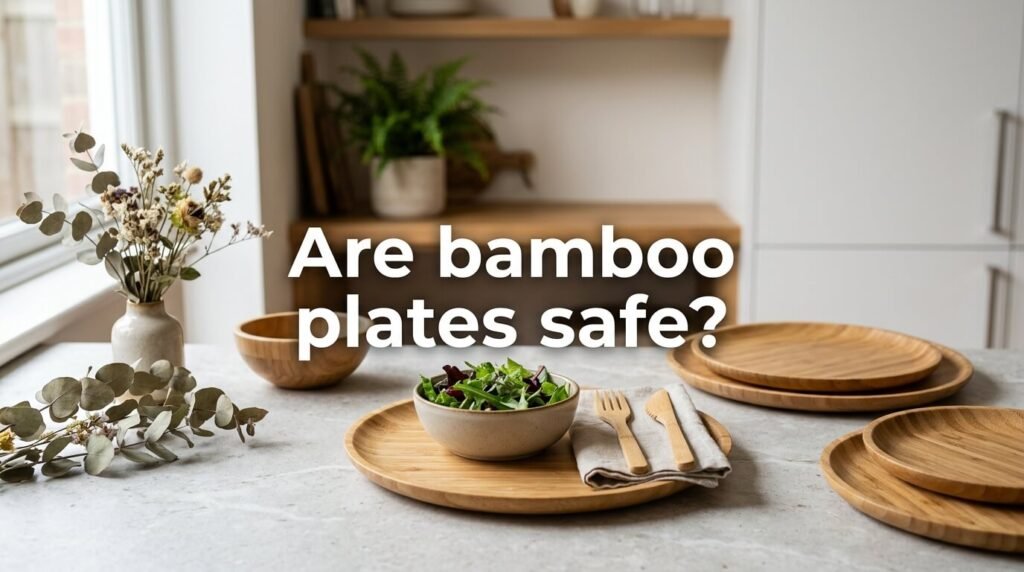
The market splits into two fundamentally different products that share a name but not much else. If you’re replacing plastic more broadly, see our guide to plastic-free dinnerware alternatives.
Pure / Solid Bamboo Plates: What They Are and What They’re Not
Pure bamboo plates are cut or pressed from solid bamboo stalks and finished with natural oil or food-safe lacquer — no synthetic resin binders.
- They contain no melamine, formaldehyde, or synthetic plastic binders, which makes them genuinely safe for food contact under normal serving conditions.
- They are not microwave-safe — bamboo contains water molecules in its cellular structure, and microwave heat causes cracking and warping.
- They require hand-washing only; dishwasher heat, prolonged moisture, and detergents degrade natural bamboo fibers quickly.
- They have a shorter usable lifespan than composite plates — typically months to a couple of years with regular use — and can absorb odors over time.
Bamboo Composite Plates: The Type That Dominates the Market — and Why It’s Complicated
These are not bamboo plates in any meaningful material sense. They’re made of melamine-formaldehyde resin, a thermoset plastic, with bamboo fiber mixed in as filler. The bamboo filler doesn’t make them natural. It makes the resin less stable.


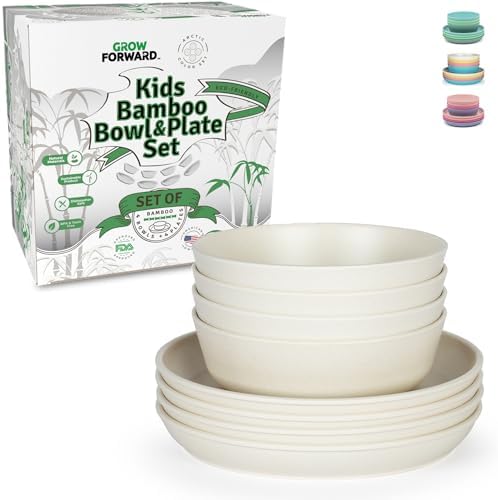

A 2024 study published in Foods (PMC, doi: 10.3390/foods13050667) found that melamine migration from bamboo composite tableware was significantly higher than from standard melamine plates, a median of 676.90 ng/mL versus 281.85 ng/mL (p<0.001).
Bamboo fiber disrupts the polymer matrix, accelerating degradation and increasing how much melamine escapes into food. For a full breakdown of those migration risks, see our melamine tableware safety guide.
Side-by-Side: Pure Bamboo vs Bamboo Composite — Key Differences at a Glance
| Feature | Pure Bamboo | Bamboo Composite |
|---|---|---|
| Main material | Bamboo stalks / natural fibers | Melamine-formaldehyde resin + bamboo filler |
| Contains melamine | No | Yes — primary structural material |
| Microwave safe | No | No |
| Dishwasher safe | No | Sometimes, but accelerates degradation |
| Safe for hot food | For serving, yes | Risk increases above 70°C |
| Safe for acidic food | Yes | Risk — acid accelerates migration |
| Biodegradable | Yes | No — melamine resin does not biodegrade |
| EU legal status | Permitted | Banned as food contact material since 2021 |
| Typical labeling | “Pure bamboo,” “solid bamboo” | “100% bamboo,” “natural,” “bamboo fiber,” “eco-friendly” |
What the Research and Regulators Actually Say About Bamboo Plate Safety
The regulatory verdict is consistent: composite bamboo plates are banned in the EU, flagged by the UK FSA, and under revised risk management in Canada.
The 2025 Study That Changed the Conversation: UCT Prague’s Findings
Researchers at the University of Chemistry and Technology Prague tested 33 bamboo and bio-based dishes purchased from British, Chinese, and Czech markets.
Their findings, published in Food Control (Vol. 174, 2025, DOI: 10.1016/j.foodcont.2025.111188), are specific: melamine was detected in 20 of 21 samples labeled as bamboo, and six products exceeded the EU’s specific migration limit of 2.5 mg/kg.
The test medium was 3% aqueous acetic acid — a standard simulant that approximates the acidity of tomato sauce, orange juice, and citrus dressings. Melamine was also found migrating into hot lemon tea and orange juice in real-use conditions.
Lead researcher Professor Jana Hajslova stated: “The ‘natural’ label can be dangerously misleading. Many of these products are essentially plastic dishes made from melamine-formaldehyde resin containing bamboo filler.”
EU Ban, UK FSA Advisory, and Operation Bamboo-zling: The Regulatory Timeline
If you have composite bamboo products you’re discontinuing, see our guide on how to dispose of bamboo composite tableware safely.
| Date | Authority | Action | Key Finding | Consumer Implication |
|---|---|---|---|---|
| 2021 | European Commission | Banned bamboo as an additive in plastic food contact materials under EU 10/2011 | Pre-emptive based on compliance failures | Composite bamboo tableware illegal to sell in EU |
| 2022–2024 | EU Commission / 21 Member States | Operation Bamboo-zling enforcement campaign | Formaldehyde at 25× legal limit; melamine at 3.5× legal limit | 30+ recall notices via EU Safety Gate (RAPEX) |
| July 2024 | UK Food Standards Agency | Advisory to stop using composite bamboo and wheat-straw tableware | Migration of formaldehyde and melamine “a potential concern to human health” | UK consumers told to stop using these products |
| February 2025 | Canadian Government | Revised risk management scope for melamine from food contact materials | Exposure reduction from tableware targeted | New limits on acceptable melamine exposure |
| 2025 | UCT Prague / Food Control | Peer-reviewed contamination study of 33 bamboo dishes | Melamine in 20/21 bamboo samples; 6 exceeded EU 2.5 mg/kg limit | “Natural” labeling confirmed unreliable as safety indicator |
When Are Bamboo Plates Dangerous? The Conditions That Increase Chemical Migration
Migration from composite bamboo isn’t constant — it escalates under specific conditions:
| Risk Level | Condition | Practical Example | Recommended Action |
|---|---|---|---|
| Low | Room temperature, non-acidic food | Crackers, bread, cold cuts | Minimal risk at this use case |
| Moderate | Warm food above 60°C OR mildly acidic food | Warm pasta, lightly dressed salad | Switch to ceramic or glass |
| High | Hot food above 70°C OR strongly acidic food | Hot soup, tomato sauce, citrus juice | Do not use composite bamboo |
| Very High | Microwave use OR worn plate OR heat + acidity combined | Reheating tomato pasta in microwave | Stop using this plate entirely |
Heat: Why Microwaving and Hot Food Accelerate Melamine Release
- Migration from melamine-formaldehyde composites increases exponentially above 70°C (158°F) — the threshold drawn from UCT Prague’s test parameters and standard EU food contact material testing protocols.
- Microwave use is unsafe for any composite bamboo product; the FDA warns against microwaving melamine-based products because internal temperatures during microwaving consistently exceed 70°C.
- Serving warm food between 40–60°C carries significantly lower risk than hot food or hot liquids — the migration difference at these temperatures is not marginal, it’s a step change.
- Repeated dishwasher cycling degrades the polymer matrix over time, so a plate that passes migration tests when new may exceed limits after months of regular dishwasher use.
For a full breakdown of heat-safe dinnerware materials, see our guide to microwave-safe dinnerware materials compared.
Acidic Foods: Tomato Sauce, Citrus, and Vinegar Dressings
The UCT Prague study used 3% acetic acid as its test medium because it simulates the acidity of orange juice (pH 3.5), tomato sauce (pH 3.5–4.5), and vinegar dressings — everyday foods, not edge cases.
Acid breaks down the melamine-formaldehyde polymer matrix at the molecular level. Don’t leave acidic foods on composite bamboo plates, especially when the food is also warm.
Wear and Repeated Use: How Older or Scratched Plates Behave Differently
The UCT Prague study ran three successive migration cycles on the same products and found migration increased with each one. A plate that passed at purchase may not pass after 18 months of regular use.
Replace composite bamboo plates if the surface is scratched, discolored, feels softer than when new, or shows any loss of finish.
Are Bamboo Plates Safe for Babies and Children?
Composite bamboo plates carry a higher risk for children than adults.
Children eat from the same plates far more frequently; their portions are disproportionately acidic (fruit purées, yogurt, citrus, tomato sauces); and the composite products marketed to children carry additional risks from decorative dyes and printed finishes.
Why Children’s Bamboo Products Are Disproportionately the Problem
- The UCT Prague study specifically noted that composite bamboo products “are usually intended for children” — printed with characters and bright patterns, sold at accessible price points ($10–$25) that feel responsible to parents moving away from plastic.
- Operation Bamboo-zling found these products widely sold via Amazon and AliExpress, with multiple RAPEX recall notices issued specifically for children’s tableware.
- The colorful decorative layer adds a third chemical concern beyond the base resin: the dyes and printing inks carry their own migration risks under heat and acidic foods.
- A 2024 study in Environmental Science & Technology found infants may have 10–20× more microplastic particles in their bodies than adults — eliminating avoidable chemical sources in children’s tableware matters more, not less, at that baseline.
What to Use Instead for Children: Safer Alternatives That Are Actually Non-Toxic
For a full ranked breakdown, see our guide to the safest non-toxic dinnerware for kids.
| Material | Safe for kids? | Microwave safe | Dishwasher safe | Breakable |
|---|---|---|---|---|
| Platinum-cured silicone (LFGB/FDA certified) | Yes — best for young children | Yes | Yes | No |
| Stainless steel | Yes | No | Yes | No |
| Pure/solid bamboo | Yes — no synthetic binders | No | No | No |
| Tempered glass | Yes — older children | Yes | Yes | Yes |
| Standard ceramic (lead-free glaze) | Yes | Yes | Yes | Yes |
| Composite bamboo | Not recommended | No | With caution | No |
How to Tell if Your Bamboo Plates Are Safe: A Step-by-Step Identification Guide
- Check the material description, not the product name. Look for “melamine,” “melamine-formaldehyde,” or “bamboo fiber” in the full listing or packaging. Any of those words means composite.
- Search the brand name + “melamine” online. Manufacturers must disclose resin content in food contact documentation — it often appears in compliance documents or Amazon Q&As, even when absent from the front packaging.
- Check weight and flex. Pure bamboo plates are heavier and stiffer. Composite plates have a slight flex and a plastic-like feel. Not definitive, but a useful first signal.
- Contact the manufacturer directly. Ask whether the product contains melamine-formaldehyde resin or synthetic binders, and ask for a migration test report. Manufacturers of genuine pure bamboo products can produce this. If a brand deflects, that’s an answer.
- Look for independent certification. An LFGB test report, FDA food contact compliance documentation, or a “melamine-free” claim backed by a named third-party lab (SGS, Bureau Veritas, Intertek) carries real weight. A logo on the packaging without a report behind it does not.
Reading the Label: What “100% Bamboo,” “Bamboo Fiber,” and “Bamboo Composite” Actually Mean
| Label Phrase | What It Actually Means | Confirms Safety? | What to Check |
|---|---|---|---|
| “100% bamboo” | May be pure, or a composite mislabeled. UCT Prague confirmed widespread mislabeling. | No | Ask for composition documentation |
| “Bamboo fiber” | Almost always composite with melamine-formaldehyde resin. “Fiber” = filler, not structure. | No | Treat as composite until proven otherwise |
| “Natural bamboo” | Marketing phrase. No regulatory definition. Applies to both types. | No | Meaningless as a safety indicator |
| “Melamine-free” | Meaningful only if backed by a named third-party lab test report. | Only with test report | Ask for the LFGB or SGS test report specifically |
| “Biodegradable / compostable” | False for composites — melamine resin does not biodegrade. | No — opposite of a safety signal | A plate surviving 100 dishwasher cycles unchanged is not biodegradable. That’s resin. |
Certifications That Actually Mean Something: FDA, LFGB, and Third-Party Testing
- LFGB certification (German/EU standard) includes sensory and migration testing and must be issued by an accredited lab — the most rigorous common option.
- FDA food contact compliance is the US baseline; manufacturers should provide documentation referencing 21 CFR with finished-product migration test results.
- A named third-party lab report (SGS, Bureau Veritas, Intertek) confirming melamine-free status tests the actual finished product — more meaningful than any logo alone.
- CE marking on tableware is a red flag. It does not apply to dinnerware. Any bamboo plate claiming it is mislabeled.
The research is consistent, and the regulatory direction is clear. If you have composite bamboo plates, stop using them for hot food, hot liquids, and acidic foods.
If you’re buying new, our guide to how to read bamboo plate certifications walks through FDA, LFGB, and third-party test reports so you know exactly what you’re looking at on packaging.
Frequently Asked Questions About Bamboo Plate Safety
Are bamboo plates safe to eat off?
Pure bamboo plates are safe for food contact. Composite bamboo plates, melamine-formaldehyde resin with bamboo filler, carry chemical migration risks that increase with heat and acidic foods.
Because composite products dominate the market and are widely mislabeled, verify which type you have before using them regularly.
Do all bamboo plates contain melamine?
No, pure bamboo plates contain none. But the UCT Prague Food Control study (2025) detected melamine in 20 of 21 bamboo-labeled samples from UK, Chinese, and Czech markets, which reflects how thoroughly composite products have displaced genuine bamboo at retail.
“Bamboo fiber” on a label almost always signals a melamine composite.
Are bamboo plates safe for babies?
Composite bamboo plates are not recommended for babies or young children. Children eat acidic foods frequently, use the same plates repeatedly, and the composite bamboo products sold for children carry additional risks from decorative finishes and dyes.
Platinum-cured silicone (LFGB or FDA certified) or stainless steel is safer for daily use.
Can you microwave bamboo plates?
No, neither type. Pure bamboo contains natural moisture that causes cracking under microwave heat.
Composite bamboo contains melamine-formaldehyde resin, and the FDA warns against microwaving melamine-based products because internal temperatures exceed the 70°C threshold where migration escalates sharply.
Reheat in a glass or ceramic, then transfer to the bamboo plate for serving.
Are bamboo plates dishwasher safe?
Pure bamboo plates are not dishwasher-safe; heat, prolonged moisture, and detergents degrade natural fibers.
Some composite plates are marketed as dishwasher-safe, but repeated cycles accelerate polymer degradation, meaning migration levels that passed at purchase may not pass after months of dishwasher use.
Are bamboo plates actually biodegradable?
Pure bamboo plates biodegrade. Composite bamboo plates, primarily melamine-formaldehyde resin, do not biodegrade and contaminate composting streams.
Operation Bamboo-zling (2022–2024) found these products were widely marketed with “biodegradable” and “compostable” claims that were factually false.
What did the UK FSA say about bamboo tableware?
In July 2024, the UK FSA issued an advisory recommending consumers stop using reusable tableware made from composite bamboo and wheat-straw materials.
The FSA’s Committee on Toxicity concluded that migration of formaldehyde and melamine from these products is “a potential concern to human health.”
How do I know if my bamboo plates contain melamine?
Check the full product description for “melamine,” “melamine-formaldehyde,” or “bamboo fiber.” If those don’t appear, search the brand name and “melamine” online, then contact the manufacturer and ask for a migration test report.
Manufacturers of pure bamboo products can provide this — if a brand can’t or won’t answer the composition question directly, that tells you something.
What is the safest material for children’s plates?
Platinum-cured silicone with LFGB or FDA certification is the safest option for young children — non-reactive, microwave-safe, dishwasher-safe, and unbreakable. Stainless steel is a strong second for older toddlers. Both are meaningfully safer than composite bamboo.
Are bamboo plates safe for serving tomato sauce or citrus?
Not if they’re composite. The UCT Prague study used 3% acetic acid, comparable to orange juice and lemon tea, as its test medium specifically because acidic food contact is the primary risk pathway.
The acid accelerates melamine-formaldehyde degradation and increases migration. Pure bamboo handles acidic foods safely, though it may absorb some color or odor over time.
About the Author & Reviewer
Sarah Emirone, Author
Sarah researches and writes SafeKitchn’s dinnerware and kitchenware guides, with a focus on material safety, lead content, and manufacturer specifications. She cross-references product data sheets, safety certifications, and regulatory filings (including FDA and Prop 65 records) before publishing, and updates articles when new information becomes available.
James Daniels, Reviewer
James reviews SafeKitchn’s material safety content for scientific accuracy. He holds a B.Sc in inorganic chemistry and works as a materials researcher, with particular focus on the composition and safety behavior of glass, ceramic, and metal used in kitchenware.