

More home cooks and families are actively searching for cookware not made in China, and that shift isn’t surprising.
Growing concerns around product quality, material transparency, and food safety standards have pushed buyers to look beyond the usual options.
Whether you’re drawn to American-made cookware for its domestic manufacturing credibility or to European cookware for its centuries-old craftsmanship, the alternatives are genuinely impressive.
This comprehensive guide covers the best brands, materials, and tips to help you make a confident, informed decision about the cookware sitting on your stove every single day.
Written by Sarah Emirone | Reviewed by James Daniels, B.Sc, Inorganic Chemist & Materials Researcher | Updated September 2026 | See How We Test | Filed under: Origin & Manufacturing
Why People Look for Cookware Not Made in China
Concerns About Product Quality
Many consumers have grown skeptical about inconsistent quality control in mass-produced goods, and cookware is no exception.
Reports of warping pans, flaking coatings, and poor heat distribution have pushed buyers toward brands with stricter manufacturing standards.
American-made cookware brands like All-Clad and Lodge, for instance, are built around consistency; each piece goes through rigorous quality checks before it reaches your kitchen.
When you’re investing in something you’ll cook with daily, that consistency matters more than a lower price tag.
Food Safety and Material Standards
Food-safe cookware is one of the biggest reasons people start looking elsewhere. Concerns about PFAS-free, PTFE-free, and PFOA-free coatings, alongside worries about lead and cadmium in glazes, have made manufacturing origin a serious factor.
Countries like the United States, France, and Belgium operate under strict regulatory frameworks, including FDA food contact standards, that govern what materials can legally touch your food.
That added layer of oversight is something many buyers find reassuring when choosing between cookware options.
Preference for Local Manufacturing
There’s a practical side to buying locally manufactured cookware, too. Supporting domestic manufacturing keeps jobs in the community, reduces carbon footprints tied to long-haul shipping, and often means faster access to warranties and customer service.
Brands like Lodge, which has been producing cast iron cookware in South Pittsburg, Tennessee, since 1896, represent the kind of heritage manufacturing that many buyers want to support.
It’s not just about politics; it’s about trusting the supply chain behind what you cook with.
Supporting American and European Brands
Choosing American-made cookware or European cookware often comes with the added benefit of backing brands that invest heavily in ethical manufacturing.
French cookware brands like Le Creuset and Staub operate facilities with strong labor protections and environmental accountability. Belgian cookware manufacturer Demeyere is similarly known for its engineering precision and responsible production.
When you buy from these brands, you’re funding a model of cookware production that values craftsmanship over volume, and that tends to show up in the product itself.
Durability and Long-Term Value
Premium non-Chinese cookware tends to last longer, which makes it a better value over time. A Lodge cast iron skillet, for example, can last generations when properly seasoned and cared for; it’s genuinely heirloom cookware.
All-Clad offers a lifetime warranty on its stainless steel cookware, which tells you something about the confidence behind its construction.
Buying once and buying well is increasingly the smarter financial move, especially compared to replacing cheaper cookware every couple of years.
Best Cookware Brands Not Made in China
All-Clad
All-Clad is one of the most recognized names in American-made cookware. Manufactured in Canonsburg, Pennsylvania, their stainless steel cookware is built using a tri-ply and five-ply clad construction that bonds multiple metal layers for even heat distribution.
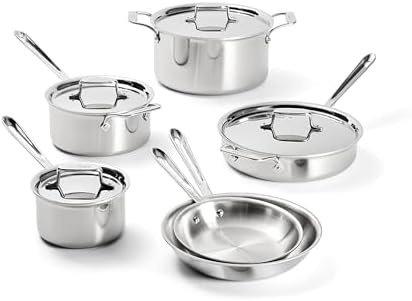
- Complete 10 piece set includes 8 inch and 10 inch Fry Pans, 1.5 quart and 3 quart Sauce Pans with lids, 3 quart Sauté Pa…
- Made in the USA with global components since 1971. At our Canonsburg, Pennsylvania factory, skilled metalcrafters engine…
- D5 Stainless is the original patented five-ply construction that delivers ultimate even heating with its steel core. The…
It’s the go-to choice in professional kitchens and is widely trusted by home chefs who want restaurant-quality performance.
All-Clad carries a lifetime warranty and meets strict FDA food contact standards, making it a standout in the premium cookware category.
Related reading: Comprehensive Guide on Cookware
Le Creuset
Le Creuset is a French cookware institution, founded in 1925 and still manufacturing its iconic enameled cast iron in Fresnoy-le-Grand, France.
Each Dutch oven and skillet is cast individually in sand molds and hand-inspected before leaving the factory.
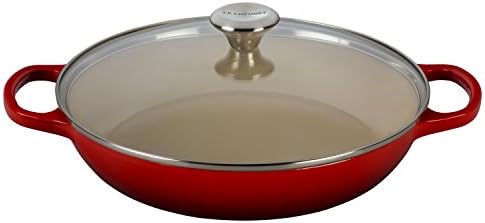
- Even heat distribution and superior heat retention
- Durable, nonreactive sand-colored interior enamel
- Colorful, long-lasting exterior enamel resists chipping and cracking
The enamel coating eliminates the need for seasoning and makes it one of the most low-maintenance cast iron options available.
Le Creuset cookware is lead-free, cadmium-free, and built to last for decades — a true example of luxury cookware done right.
Staub
Also French-made, Staub is another enameled cast iron brand that has carved out a serious reputation among chefs.
Manufactured in Merville, France, Staub Dutch ovens and cocottes are known for their matte black interior enamel, which develops a natural seasoning over time for improved non-stick performance.

- Graphite grey enamelled cast iron 20 cm frying pan with two handles
- Ideal succulent and tender frying and braising of meat, fish and vegetables pans
- Matte black enamel interior helps to develop great flavour, is scratch resistant and easy to clean
Heat retention is exceptional, making them ideal for slow braises and oven-to-table cooking.
Staub is now part of the Zwilling group but continues its French manufacturing tradition without compromise.
Made In Cookware
Made In is a newer American brand that has quickly earned serious credibility.
Their stainless steel cookware is made in the USA, while their carbon steel and other lines are produced in established European factories, all transparently disclosed on their website.
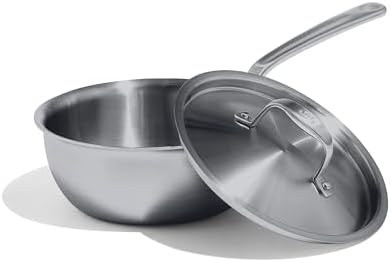
- Total Diameter: 8.2″ | Cooking Surface Diameter: 5″ | Height (with handle): 5.1″ | Depth: 3.5″ | Length (to end of handl…
- Essential for Every Kitchen – The Made In Stainless Clad Sauce Pan is a must-have kitchen tool, offering maximum heat co…
- Superior Quality – Made from 5 layers of premium metal for professional-quality heat distribution
The brand was built specifically for home chefs who want professional-grade tools without paying full restaurant-supply prices.
Their five-ply stainless steel pans offer excellent heat distribution and are compatible with induction cooktops.
Lodge Cast Iron
Lodge has been making cast iron cookware in the United States since 1896, which makes it one of the oldest and most trusted names in the category.

- The Ultimate 2-in-1 Cooker: This cast iron set is a kitchen powerhouse. Use the 3.2 quart deep pot for slow-simmered ste…
- Master the Sourdough Crust: Professional bakers love this lodge Combo Cooker for bread. When used together, the skillet …
- Naturally PFAS-Free: We season our Lodge Cast Iron with 100% natural vegetable oil right at the foundry. You get an easy…
All Lodge skillets, Dutch ovens, and grill pans are cast in their Tennessee foundry from recycled materials, making it a genuinely sustainable cookware option.
Lodge pans come pre-seasoned with 100% vegetable oil, so they’re ready to cook right out of the box. For accessible, durable, American-made cast iron, Lodge remains the benchmark.
Demeyere
Demeyere is a Belgian cookware brand with over a century of engineering expertise behind it.
Their stainless steel cookware features Silvinox surface treatment, which makes the steel more resistant to fingerprints and discoloration over time.
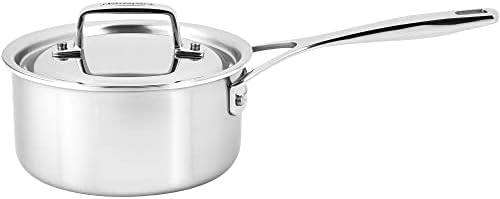
- 5-ply construction ensures outstanding heat conduction and retention
- Flat base stability—pan won’t warp when heated
- Stay-cool, 18/10 stainless-steel riveted handles
Demeyere specializes in induction-compatible cookware and is particularly known for its Atlantis and Industry lines, which use seven-ply construction for superior heat control.
If you cook primarily on induction, Demeyere is arguably the best non-Chinese cookware option in this space.
Cristel
Cristel is a French stainless steel cookware brand best known for its modular, removable handle system — a genuinely clever design that makes both cooking and storage more practical.
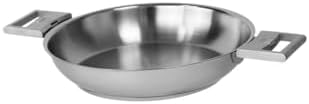
- 100% MADE IN FRANCE – CRISTEL products feature the Label Origine France Guarantee that products are made in France
- COMPACT STORAGE – Because there are no handles, and vessels nest inside each other you can store 23 items in a cookware …
- SAFETY ON THE COOKTOP – Since you don’t need to cook with handle on vessels they never get hot and vessels can never be …
Made in Fesches-le-Châtel, France, their cookware uses a multi-ply construction and is compatible with all heat sources, including induction.
The removable handles also make Cristel pans fully oven-safe at high temperatures. It’s a great pick for cooks who want European-engineered quality with a modern, space-saving approach.
Types of Cookware Commonly Made Outside China
Stainless Steel Cookware
Stainless steel cookware is one of the most widely produced materials outside China, with strong manufacturing traditions in the United States, France, Belgium, and Germany.
Brands like All-Clad and Demeyere have made stainless steel their entire identity, focusing on clad construction that bonds steel with aluminum or copper cores for better heat conductivity.
Stainless steel is non-reactive, dishwasher-safe in most cases, and incredibly durable — which is why it dominates professional kitchens worldwide.
Related reading: Cooking Utensils Not Made in China
Cast Iron Cookware
Cast iron has been manufactured in America and Europe for centuries, and that tradition is very much alive today.
Lodge in Tennessee and Le Creuset in France are the two most prominent examples of high-quality cast iron made outside China.
Cast iron offers unmatched heat retention and can go from stovetop to oven without any issues. Whether seasoned raw or enamel-coated, cast iron is one of the most naturally non-toxic cookware options you can own.
Copper Cookware
Copper cookware is almost exclusively a European product, with France leading the category through brands like Mauviel and De Buyer.
Copper offers the fastest and most responsive heat conductivity of any cookware material, making it a favorite among professional chefs for precise cooking tasks like candy-making or delicate sauces.
Mauviel, based in Normandy, has been making copper cookware since 1830 — a level of craftsmanship that simply doesn’t exist at that level in mass-production settings.
Carbon Steel Cookware
Carbon steel is another category dominated by French manufacturers. De Buyer is the standout name, producing carbon steel pans used in professional kitchens across Europe and beyond.

- CARBON STEEL COUNTRY FRY PAN – With its high sides, the MINERAL B Pro Country Fry Pan is perfect for sauteing, simmering…
- HOW TO SEASON: Handwash with hot soapy water to remove the beeswax, dry thoroughly. Gradually heat to med-hi and apply a…
- OVEN-SAFE HANDLE – This MINERAL B Pro pan features a cast stainless steel handle, which is oven safe and primed for any …
Carbon steel is lighter than cast iron but offers similar heat retention and seasoning benefits. It heats quickly, responds well to temperature changes, and develops a natural non-stick patina over time with proper care.
De Buyer manufactures its pans in the Vosges mountains of France using traditional methods.
Ceramic and Enameled Cookware
Ceramic non-stick cookware is made by several reputable non-Chinese brands, including GreenPan, which manufactures its Thermolon ceramic coating through a process that eliminates PFAS, PTFE, and PFOA.
Enameled cast iron, as seen in Le Creuset and Staub, is another form of ceramic-coated cookware with a centuries-old manufacturing history in France.
Both options offer food-safe, non-toxic cooking surfaces that are far less controversial than conventional non-stick coatings.
Related reading: Is Cookware Made in China Safe?
USA-Made vs European-Made Cookware
Manufacturing Standards Comparison
Both the United States and Europe maintain high manufacturing standards, but the regulatory frameworks differ slightly. In the US, the FTC regulates ‘Made in USA’ labeling claims, requiring that products be ‘all or virtually all’ made domestically.
European manufacturers, meanwhile, operate under EU regulations that are particularly strict around chemical safety, including REACH regulations that restrict hazardous substances.
Both environments produce cookware that is significantly safer and more rigorously regulated than most mass-produced alternatives.
Material Quality and Construction
American brands like All-Clad and Lodge tend to focus on perfecting one or two materials — stainless steel and cast iron, respectively — and building deep expertise in those categories.
European cookware brands tend to show more material diversity, from Mauviel’s copper to Demeyere’s multi-ply stainless steel to De Buyer’s carbon steel. Both approaches yield excellent results.
The construction quality in each case reflects decades or even centuries of manufacturing refinement.
Design Philosophy Differences
American cookware design tends to prioritize durability and function above all else. You’ll notice clean lines, heavy-gauge materials, and a focus on how the pan performs rather than how it looks on a shelf.
European cookware, particularly French, blends function with aesthetic more deliberately — Le Creuset’s color range and Mauviel’s polished copper finish are as much about kitchen design as cooking performance.
Neither approach is wrong; it’s simply a different definition of what great cookware looks like.
Price and Long-Term Value
Both categories sit firmly in the premium price range, though there’s variation within each. Lodge is the most accessible American-made option, with skillets starting well under $50.
All-Clad and Made In sit in the mid-to-upper range. European brands like Le Creuset and Mauviel sit at the top of the pricing spectrum, reflecting handcrafted production and premium materials.
In every case, the long-term value proposition holds up well buy once, maintain properly, and it should outlast far cheaper alternatives.
Which Option Is Better for Home Cooks?
For most home cooks, American-made stainless steel or cast iron is the most practical starting point.
All-Clad or a Lodge cast iron skillet covers the majority of everyday cooking tasks beautifully.
If you have a specific cooking style — like slow braises or high-precision stovetop work then a Le Creuset Dutch oven or a Mauviel copper saucepan might justify the extra investment.
The best cookware is ultimately the one that fits how you actually cook.
Related reading: A Comprehensive Guide to Safe Kitchen
How to Verify Where Cookware Is Made
Reading Product Labels and Packaging
The most straightforward way to check cookware origin is to read the label or packaging before buying. Look for ‘Made in [Country]’ stamped on the bottom of the pan or printed on the box.
Be thorough — some brands manufacture certain product lines domestically while sourcing others overseas. Don’t assume an entire brand’s range is made in one place just because one product is.
Understanding ‘Designed In’ vs ‘Made In’
‘Designed in USA’ and ‘Made in USA’ are not the same thing, and the distinction is important.
A product can be designed in California but manufactured in a third country and still carry design-origin language on its packaging.
The FTC only regulates ‘Made in USA’ claims, not design-origin statements.
When the country of origin matters to you, look specifically for ‘Made in’ language and verify it against the brand’s published manufacturing information.
Country of Origin Regulations
In the United States, the FTC requires that ‘Made in USA’ claims reflect that the product is ‘all or virtually all’ manufactured domestically. This is a reasonably strict standard.
In the EU, similar country-of-origin rules apply under customs regulations. Knowing these standards helps you evaluate claims more critically — a ‘Crafted in France’ statement might carry a different legal weight than ‘Made in France,’ so it’s worth understanding the difference.
Checking Brand Manufacturing Policies
Most reputable non-Chinese cookware brands are transparent about where they manufacture, because it’s part of their value proposition. Check the brand’s official website, look for a ‘Our Story’ or ‘Manufacturing’ page, and read through FAQs.
Brands like Lodge and All-Clad are openly proud of their American manufacturing and make it easy to confirm. If a brand is vague or evasive about where its products are made, that’s worth noting.
Is Cookware Not Made in China Safer?
Food-Safe Manufacturing Standards
Cookware made in the United States and Europe is subject to strict food safety oversight.
In the US, the FDA regulates materials that contact food, setting limits on what substances can be used in cookware construction and coatings. European manufacturers follow similarly stringent EU food contact material regulations.
These frameworks don’t guarantee that every product is perfect, but they do provide a baseline of accountability that makes non-toxic cookware more reliably achievable.
Lead, Cadmium, and Heavy Metal Concerns
Lead and cadmium concerns arise primarily around ceramic glazes and enamel coatings, where poorly regulated manufacturing can introduce these metals into food.
Reputable European and American enameled cookware brands, including Le Creuset and Lodge, explicitly certify their products as lead-free and cadmium-free.
This is one area where manufacturing origin genuinely matters, because the regulatory pressure to test and certify is significantly higher in the US and EU than in some other regions.
Non-Toxic Cookware Materials
The safest cookware materials are generally uncoated stainless steel, seasoned cast iron, enameled cast iron, and ceramic non-stick alternatives.
All of these are well-represented in American and European cookware manufacturing. PFAS-free options like GreenPan’s ceramic coating and Staub’s enameled cast iron give home cooks genuinely non-toxic cooking surfaces that don’t degrade into harmful substances under heat.
This is an area where the cookware category has improved significantly, largely driven by brands committed to cleaner manufacturing.
Importance of Third-Party Testing
Even with strong regulatory frameworks in place, third-party testing adds an important layer of verification.
Look for cookware brands that publish independent test results confirming their products are PFAS-free, lead-free, and food-safe.
Organizations like NSF International and independent lab certifications provide meaningful assurance beyond what a brand claims on its own packaging. The most trustworthy non-Chinese cookware brands don’t just assert safety — they prove it.
Best Non-Chinese Cookware by Material
Best Stainless Steel Cookware
All-Clad D3 and D5 lines represent the gold standard for American-made stainless steel cookware. For European stainless steel, Demeyere’s Atlantis series and Cristel’s multi-ply range are among the finest available.
Both deliver even heat distribution, induction compatibility, and lifetime durability. Made In Cookware’s five-ply stainless is a newer option worth considering for buyers who want premium performance at a slightly more accessible price point.
Best Cast Iron Cookware
Lodge is the best value pick for American-made cast iron — it’s pre-seasoned, durable, and available in a huge range of sizes. For enameled cast iron, Le Creuset and Staub are the definitive choices.
Both are made in France, both are lead-free and cadmium-free, and both will last a lifetime with basic care. If budget allows, a Le Creuset Dutch oven is one of the best single cookware investments a home cook can make.
Frying Pans Not Made in China
When it comes to frying pans, there are strong non-Chinese options across several materials. All-Clad’s stainless steel frying pans are made in Pennsylvania and are built for high-heat searing and browning.
De Buyer’s Mineral B carbon steel frying pan is made in France and is a professional kitchen staple — it seasons naturally, heats fast, and lasts indefinitely.
For a ceramic non-stick option, GreenPan’s frying pans use PFAS-free Thermolon coating, offering a safer alternative to conventional non-stick without compromising convenience.
Cast Iron Cookware Not Made in China
Cast iron made outside China has a long and well-established history. Lodge has been casting iron skillets and Dutch ovens in Tennessee since 1896, using recycled iron and pre-seasoning each piece with vegetable oil.
In France, both Le Creuset and Staub produce enameled cast iron in their own foundries, with each piece individually inspected before sale.
These brands demonstrate that cast iron cookware can be produced to exceptional standards with full manufacturing transparency — no guesswork about materials or coatings involved.
Ceramic Cookware Not Made in China
Ceramic cookware from non-Chinese manufacturers has grown significantly in quality and availability. GreenPan, a Belgian brand, pioneered the ceramic non-stick category with its Thermolon coating — a sol-gel ceramic coating that is PFAS-free, PTFE-free, and PFOA-free.
Their pans are manufactured under strict oversight and represent the most credible ceramic non-stick option on the market.
Le Creuset and Staub also offer ceramic-coated cast iron in the form of their enamel Dutch ovens, combining the heat retention of cast iron with a smooth, food-safe enamel finish.
Is Le Creuset Made in China?
No — Le Creuset’s enameled cast iron is made in France, specifically at its foundry in Fresnoy-le-Grand, where it has been manufactured since the brand was founded in 1925.
Each piece is still individually sand-cast and hand-finished. However, it’s worth noting that some Le Creuset accessories and non-cast-iron products, such as certain bakeware items or kitchen tools, may be manufactured in other countries.
If French manufacturing matters specifically to you, stick to their core enameled cast iron line, which remains entirely French-made.
How to Choose the Best Cookware Not Made in China
Consider Cooking Style and Heat Source
Your cooking style should guide your material choice. If you love slow braises and oven roasting, enameled cast iron from Le Creuset or Staub is hard to beat.
For high-heat searing and everyday stovetop cooking, stainless steel from All-Clad is the most versatile option. If you use an induction cooktop, prioritize cookware explicitly rated for induction — Demeyere and All-Clad both perform exceptionally well on induction surfaces.
Evaluate Material Durability
Cast iron and stainless steel are the most durable cookware materials available, both capable of lasting decades with proper care. Carbon steel is similarly durable but requires regular seasoning to prevent rust.
Ceramic non-stick coatings, while safer than PTFE, do wear over time, typically three to five years under regular use.
For the longest-lasting investment, raw cast iron or multi-ply stainless steel from an American or European manufacturer is your best bet.
Compare Warranty and Brand Reputation
A brand’s warranty tells you a lot about its confidence in its own product. All-Clad and Lodge both offer lifetime warranties on their core cookware lines.
Le Creuset offers a lifetime limited warranty as well. These aren’t marketing gimmicks they reflect brands that expect their cookware to last. Reputation matters too; brands that have been manufacturing for decades have track records you can actually research and verify.
Balance Budget and Long-Term Value
You don’t have to spend a fortune to get great non-Chinese cookware.
Lodge cast iron is genuinely excellent and very affordable. Tramontina, a Brazilian brand, makes good-quality tri-ply stainless steel cookware at a mid-range price point.
If budget allows, stepping up to All-Clad or Le Creuset delivers noticeable improvements in construction quality and longevity. Whatever your budget, the principle is the same: buy the best you can afford once, rather than replacing cheaper options repeatedly.
Prioritize Food Safety Certifications
Before finalizing any cookware purchase, check for food safety certifications and third-party test results. Look for explicit PFAS-free, lead-free, and cadmium-free claims backed by independent verification.
Brands that manufacture in the United States or Europe are generally operating under regulatory frameworks that require this kind of accountability, but the best brands go further and publish their own testing results.
Consumer product safety should be a non-negotiable criterion, regardless of which brand or material you choose.
Conclusion
There’s a wide and genuinely impressive range of cookware manufactured outside China, spanning American foundries, French ateliers, and Belgian engineering facilities.
Brands like All-Clad, Lodge, Le Creuset, Staub, Demeyere, and Made In have built their entire reputations on transparent, high-standard manufacturing.
Whether you prioritize food safety, material durability, or supporting domestic and European industries, the options available to you are better than ever.
Key Buyer Takeaways
Material quality and manufacturing standards matter far more than brand aesthetics alone.
The country where your cookware is made directly influences the regulatory oversight it was built under and that has real implications for food safety, durability, and long-term value.
Supply chain transparency is increasingly something reputable brands are proud to offer, so don’t hesitate to ask where and how your cookware was made before committing to a purchase.
Final Recommendation
Verify country-of-origin labels carefully, and don’t confuse ‘Designed in’ with ‘Made in.’ Prioritize durable, food-safe materials like stainless steel, cast iron, and certified ceramic non-stick.
Choose brands with proven manufacturing standards and meaningful warranties.
Whether you start with a Lodge skillet or invest in an All-Clad set, cookware made in the USA or Europe gives you something worth cooking with and worth keeping for years to come.
About the Author & Reviewer
Sarah Emirone, Author
Sarah researches and writes SafeKitchn’s dinnerware and kitchenware guides, with a focus on material safety, lead content, and manufacturer specifications. She cross-references product data sheets, safety certifications, and regulatory filings (including FDA and Prop 65 records) before publishing, and updates articles when new information becomes available.
James Daniels, Reviewer
James reviews SafeKitchn’s material safety content for scientific accuracy. He holds a B.Sc in inorganic chemistry and works as a materials researcher, with particular focus on the composition and safety behavior of glass, ceramic, and metal used in kitchenware.