

Can you put a plate in the oven? Sometimes, the material decides it, not the brand printed on the bottom. A stoneware dinner plate can usually take 450°F without complaint.
A plain glass plate from a department store can crack the first time it touches a hot rack. Porcelain, tempered glass, stainless steel, and plastic all react differently to dry heat, and that difference matters more than any sticker on the dish.
This breaks down which materials can actually go in the oven, why plates crack even when the label says “oven-safe,” and what brands like Corelle and IKEA rate their own dinnerware for, straight from their product pages, not guesswork.
Written by Sarah Emirone | Reviewed by James Daniels, B.Sc, Inorganic Chemist & Materials Researcher | Updated September 2026 | See How We Test | Filed under: Buying, Care & Product Guides
Is It Safe to Put a Plate in the Oven?
Most dinner plates can go in the oven, but only the ones actually built for it and only below a specific temperature ceiling that depends on what the plate is made of.
A plate that’s never been rated for oven use can shatter at 350°F, while a stoneware plate sits comfortably past 450°F in the same oven. The real question isn’t “can a plate go in the oven” in general. It’s whether this plate, made of this material, can handle this temperature.
What “Oven-Safe” Really Means
Oven-safe means a material can sit in dry oven heat — usually 250°F to 500°F, depending on the piece — without cracking, warping, or leaching anything into the food on it.
That’s a different test than microwave-safe, which checks how a material handles electromagnetic radiation rather than sustained dry heat, and different again from dishwasher-safe, which is about water, detergent, and heated drying cycles.
A plate can pass one of those tests and fail the other two. Plenty do.
Why the Oven-Safe Symbol Isn’t as Reliable as You Think
There’s no single oven-safe symbol that every manufacturer uses. Whirlpool and Maytag, which publish their own tableware symbol guides, say outright that there’s no universally recognized icon for dishwasher safety, and the same gap shows up with oven markings.
Designs vary by company: a square with wavy lines, a small flame, sometimes just the words “oven safe.” Plenty of dinnerware, including some of IKEA’s bestselling everyday plates, carries no oven marking at all because it was never tested for that use.
That’s the trap. A missing symbol doesn’t mean “untested but probably fine.” It means “not rated, don’t use it.”
Three checks beat one: confirm the material first, since stoneware and tempered glass are safer bets than thin glass or anything with a plastic component; search the product’s exact name or article number on the brand’s own site, not a general blog; and if neither gives a clear oven rating, treat the plate as not oven-safe.
Skipping straight to “well, it looks like ceramic” is how plates end up in pieces on the oven floor.
Which Plate Materials Are Actually Oven-Safe
Stoneware, porcelain, and tempered glass are built to handle oven heat. Standard glass, plastic, melamine, paper, and wood are no exceptions, regardless of what a sticker on the packaging claims. Material is the first filter, and it rules out more options than expected.
Ceramic, Stoneware, and Porcelain
Most ceramic dinnerware can go in the oven; the better-fired the clay, the higher the temperature it tolerates. Stoneware typically holds up to 450–536°F; porcelain, denser and fired hotter in production, can handle 500–572°F in well-made pieces.

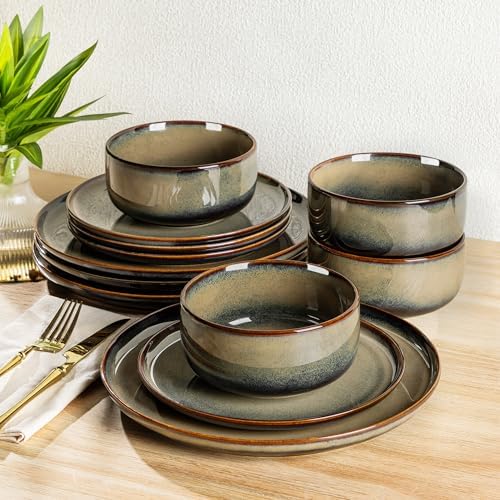
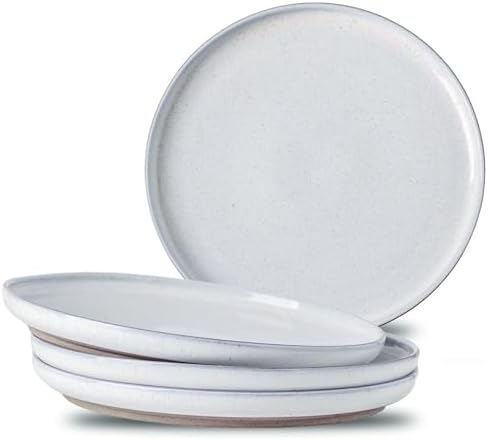
The risk isn’t the heat itself. It’s damaging the piece already has: a hairline crack or chip lets moisture into the clay body, and that trapped moisture expands fast under heat and splits the plate from the inside.
| Material | Typical Oven-Safe Range | Real Risk |
|---|---|---|
| Porcelain | 500–572°F (260–300°C) | Hairline cracks expand under heat |
| Stoneware | 450–536°F (230–280°C) | Heavy decorative glazes can lower the actual limit |
| Tempered/borosilicate glass | Up to ~470°F (243°C) | Only tempered glass — never float glass |
| Standard glass (non-tempered) | Not oven-safe | Can shatter without warning |
| Stainless steel / cast iron | Full conventional oven range | Avoid plastic or wood handles |
Vintage and hand-painted pieces deserve extra caution before they go anywhere near an oven. Older glazes weren’t always made for repeated heat cycling, and some vintage Fire King glaze risks extend beyond cracking into what’s actually in the glaze itself.
Glass Plates: Tempered vs. Everyday Glass
Tempered glass can go in the oven. Everyday glass — the kind in a basic glass dinner plate or a thrifted vintage piece — usually can’t, because it hasn’t been heat-strengthened the same way.
Pyrex built its reputation on bakeware made from glass engineered specifically for oven heat, and tempered glass dinnerware tops out around 470°F before the risk of cracking climbs sharply.
Without that tempering, a glass plate can shatter from heat stress alone, with no warning crack beforehand. It just goes.
Metal Plates and Trays
- Stainless steel and cast iron plates or trays are oven-safe across the full range a home oven reaches.
- Avoid any metal plate with plastic, rubber, or wood components — those parts fail well before the metal does.
- Enamel-coated metal plates are generally oven-safe too, as long as the enamel itself isn’t cracked or chipped.
- Decorative metallic trim on ceramic plates is a different issue from solid metal — it’s a coating, not a structural metal piece, and it can discolor or degrade under sustained oven heat, even though it won’t spark the way it would in a microwave.
Plastic, Melamine, Paper, and Wood (Never Oven-Safe)
Wheat straw and bamboo-fiber plates are a good example of how this works against you: they hold up fine in the microwave, but wheat straw plate heat tolerance drops off fast once dry oven heat is involved, since the material is a wood-fiber and resin blend, not a true ceramic.
- Plastic plates melt, warp, or release chemicals at oven temperatures, even on the lowest setting.
- Melamine looks tough but breaks down under dry heat and isn’t built for it, despite often being dishwasher-safe.
- Paper plates are a fire risk in an oven, full stop — even a “low” setting runs well past their ignition threshold over time.
- Wood plates and boards warp, crack along any glue line, and can scorch even at moderate oven temperatures.
Why Plates Crack in the Oven (Thermal Shock, Explained)
Plates crack in the oven from a fast temperature swing, not from heat on its own. A stoneware plate that handles 450°F without issue can still shatter at 300°F if it goes in cold, straight from the fridge, into an oven that’s already running hot.
The crack isn’t about how much heat the material can take. It’s about how fast that heat arrives.
The Real Cause: Sudden Temperature Change, Not Just Heat
Ceramic and glass expand when heated and contract when cooled, as long as it happens evenly. Thermal shock happens when one part of the plate heats or cools much faster than the rest.
The outer surface of a cold plate placed in a hot oven expands while the inner layers stay cold and rigid; the stress between those two states builds until the material cracks to relieve it. The same thing happens in reverse — a hot plate on a cold counter, or dunked into a dishwasher, fails for the identical reason.
The fix isn’t a tougher plate. It’s a slower temperature change: bring cold dishes to room temperature first, and let the oven preheat fully before the plate goes in, rather than during the climb, when the heating elements run hotter than the set temperature to compensate.
The Test Standard Behind Every “Oven-Safe” Rating
Manufacturers don’t pick their oven-safe number out of nowhere. ASTM C554 is the actual industry test for thermal-shock crazing resistance in glazed ceramic ware — it measures how a glaze holds up against rapid temperature swings before the surface starts to craze.
ASTM C1607, the standard covering microwave-safe certification for ceramicware, leans on it directly: before any ceramic piece is marketed as microwave-safe for reheating, it has to pass a 325°F thermal-shock test under C554 first.
That’s where numbers like Corelle’s 350°F ceiling and Fiesta’s 350°F dinnerware rating actually come from — a pass/fail result against a documented heat-shock benchmark, not a marketing decision.
Every other page covering this answers it the same way — “check the manufacturer’s number” — without saying where that number comes from.
Brand-Specific Oven Safety: Corelle, IKEA, Fiesta, and Pyrex
A brand name alone doesn’t settle this. Most major dinnerware brands sell more than one product line, and those lines don’t share the same oven rating. Knowing you own “Corelle” or “IKEA” dinnerware isn’t enough; knowing which line you own is what actually answers the question.
Is Corelle Dinnerware Oven Safe?
Corelle dinnerware is oven-safe, but the ceiling depends on which line is on the table. The original Vitrelle glass line — the thin, laminated glass most people picture when they hear “Corelle” — is rated for preheated conventional ovens up to 350°F.
Corelle’s Stoneware line, a heavier ceramic body rather than laminated glass, goes higher: up to 400°F.
| Corelle Line | Material | Oven-Safe Limit |
|---|---|---|
| Vitrelle (classic glass) | Three-layer laminated glass | Up to 350°F (177°C) |
| Stoneware | Ceramic stoneware body | Up to 400°F (204°C) |
Cold-to-hot transitions are still the bigger risk than the temperature number itself, even within these limits — Corelle’s own guidance says to let dishes reach room temperature before a hot oven, and to avoid the broiler and stovetop entirely.
If lead content in older Corelle pieces is also on your mind, the brand’s Corelle lead-safety testing covers what’s actually been verified on vintage patterns.
Are IKEA Plates Oven Safe?
Most everyday IKEA plates aren’t oven-safe, and IKEA’s own product listings say so directly.
The same lesson behind IKEA ramekin oven-safe picks applies here: collection name matters more than the IKEA logo. FÄRGKLAR and IKEA 365+ flat dinner plates, two of IKEA’s bestselling everyday lines, are listed on IKEA’s site as “Microwave-safe” and “Dishwasher-safe” only — no oven-safe claim anywhere on the page.
Separate lines built for heat, like GLADELIG stoneware and the IKEA 365+ baking range, carry their own oven rating, reportedly up to around 280°C (536°F).
| IKEA Line | Oven-Safe? | Rated Use |
|---|---|---|
| FÄRGKLAR (flat plates) | No oven-safe claim | Microwave and dishwasher only |
| IKEA 365+ (dinner plates) | No oven-safe claim | Microwave and dishwasher only |
| GLADELIG (stoneware) | Yes | Oven-to-table use |
| IKEA 365+ (baking dishes — separate line) | Yes | Oven-rated bakeware |
The plates most people already own from IKEA were never built or marketed for the oven, even though they’re ceramic and look identical to pieces that are. For IKEA 365+ dinnerware durability questions on a specific pattern, the article number on the base settles it faster than guessing from the design.
What About Fiesta and Pyrex?
Fiesta dinnerware is oven-safe up to 350°F, the same ceiling the manufacturer sets for its glazed stoneware line, while Fiesta’s dedicated bakeware — pie pans, casseroles, ramekins — runs higher, between 400°F and 500°F depending on the piece.
Pyrex earned its reputation the same way: by building specific product lines, mostly tempered and borosilicate glass, around oven use rather than retrofitting glass designed for something else.
Both brands print the rating directly on the listing; the verification step is worth doing before assuming any name-brand plate behaves the same way across its whole catalog.
How to Safely Warm a Plate in the Oven
Yes, you can put a plate in the oven to warm it, as long as the plate is oven-rated and the warming happens gradually rather than all at once.
The biggest mistake isn’t the warming itself — it’s skipping the preheat or starting from a fridge-cold plate, both of which turn a routine warm-up into a thermal-shock event.
Step-by-Step: Warming Plates Without Cracking Them
- Confirm the plate’s material and oven rating first — stoneware, porcelain, and tempered glass are safe bets; thin glass, plastic, or unrated ceramic are not.
- Let a cold or refrigerated plate sit at room temperature for 30 to 45 minutes before it goes near the oven.
- Preheat the oven fully before placing the plate inside — the heating elements run hotter than the display temperature while climbing to the set point.
- Set the oven no higher than the plate’s rated limit — 350°F for most Vitrelle Corelle and Fiesta dinnerware, higher for stoneware and tempered glass.
- Place the plate on the middle rack, away from direct contact with the top or bottom heating elements.
- Turn the oven off and let the plate cool inside it for a few minutes before moving it to a cold countertop or sink.
Mistakes That Cause Plates to Shatter
- Placing a refrigerated or frozen plate directly into a hot oven without letting it acclimate first.
- Using the broiler setting on a plate rated only for standard oven use, the broiler heat runs well past that rating.
- Setting a hot plate straight onto a cold or wet countertop, or into a sink full of water.
- Using a toaster oven for a plate rated for a full-size conventional oven, since the heating elements sit much closer to the dish.
- Putting an empty, unrated plate in the oven “just to warm it up” with no food or liquid to buffer the heat.
Check your own dinnerware against the numbers above before you reach for the oven again. A plate that’s fine at 350°F can still crack at 400°F, or after going in cold — confirming the rating takes seconds and costs less than a broken plate.
Frequently Asked Questions
Can you put a regular plate in the oven?
Only if it’s specifically rated for oven use — thin glass or anything with a plastic component is a real cracking risk otherwise. Stoneware, porcelain, and tempered glass are safe bets; standard glass and plastic are not.
How do you know if a plate is oven safe without a symbol?
Look up the plate’s exact product name or article number on the manufacturer’s own website instead of relying on a missing or unclear symbol. No explicit oven rating on the listing means treat it as not oven-safe.
What happens if you put a non-oven-safe plate in the oven?
The plate can crack, craze, or shatter outright, sometimes with no warning beforehand. Plastic and melamine plates melt or release fumes well before they reach typical oven temperatures.
Can you put a cold plate straight into a hot oven?
No, that’s the single biggest cause of cracked dinnerware, even in plates rated for oven use. Let a refrigerated plate reach room temperature for 30 to 45 minutes first.
Is it safe to put a plate in the oven to warm it?
Yes, as long as the plate is oven-rated and the oven is fully preheated before it goes in. Skipping either of those steps is what turns a routine warm-up into a cracked plate.
Can you put a plate in the oven at 350°F?
Yes, for most oven-rated dinnerware, 350°F is the ceiling for classic Corelle Vitrelle glass and standard Fiesta dinnerware. Stoneware and tempered glass typically tolerate higher temperatures, often past 450°F.
Can you put a plate in a toaster oven or air fryer?
Only if it’s rated for the temperatures those appliances reach, and even then, it’s riskier, since the heating elements sit much closer to the dish. A plate rated for a conventional oven isn’t automatically rated for a toaster oven.
Is Corelle dinnerware oven safe?
Yes, but the limit depends on the line; classic Vitrelle glass tops out at 350°F, while Corelle’s Stoneware line is rated up to 400°F. Both still require gradual temperature changes to avoid thermal shock.
Are IKEA plates oven safe?
Most aren’t. IKEA’s FÄRGKLAR and 365+ flat dinner plates are listed as microwave-safe and dishwasher-safe only, with no oven rating, while separate lines like GLADELIG stoneware are built and rated for oven use.
Can plastic or melamine plates go in the oven?
No, never both melt, warp, or release chemicals at oven temperatures, even on a low setting. Melamine in particular looks durable, but it isn’t built to handle dry heat at all.
About the Author & Reviewer
Sarah Emirone, Author
Sarah researches and writes SafeKitchn’s dinnerware and kitchenware guides, with a focus on material safety, lead content, and manufacturer specifications. She cross-references product data sheets, safety certifications, and regulatory filings (including FDA and Prop 65 records) before publishing, and updates articles when new information becomes available.
James Daniels, Reviewer
James reviews SafeKitchn’s material safety content for scientific accuracy. He holds a B.Sc in inorganic chemistry and works as a materials researcher, with particular focus on the composition and safety behavior of glass, ceramic, and metal used in kitchenware.