

If you’ve ever stood in front of a shelf of Fiestaware and felt slightly overwhelmed, you’re not alone.
The most popular Fiestaware colors, Scarlet, Turquoise, White, and Cobalt Blue, show up everywhere for a reason.
But “popular” means something different depending on why you’re asking. Every day, buyers want colors that ship today and look good together.
Collectors want to know which retired shades are worth real money. This article answers both questions, backed by data. If you’re new to the brand, start with our beginner’s guide to buying Fiestaware before going further.
Find your starting point:
- Buying new Fiestaware? → Jump to What Are the Most Popular Fiestaware Colors in Production Today?
- Hunting vintage or estate sale pieces? → Jump to Rarest and Most Valuable Fiestaware Colors
- Want styling inspiration? → Jump to How to Mix and Match Fiestaware Colors
Written by Sarah Emirone | Reviewed by James Daniels, B.Sc, Inorganic Chemist & Materials Researcher | Updated September 2026 | See How We Test | Filed under: Buying, Care & Product Guides
What Are the Most Popular Fiestaware Colors in Production Today?
Scarlet, Turquoise, and White are the three colors that have consistently outsold everything else in Fiesta’s modern lineup. Ask any retailer who carries the brand, and they’ll point to the same names.
That’s not a coincidence; each one has been in near-continuous production since the modern line restarted in 1986, and each fills a different role in a mixed table setting.


Scarlet, Turquoise, and White: The Perennial Bestsellers
- Scarlet is Fiesta’s signature red-orange — bold without being harsh, and the closest modern equivalent to the original 1936 Red. It anchors a table the way nothing else in the lineup does. In production since 2004 as the Color of the Year, it moved into the permanent lineup and has never left.
- Turquoise has been a fan favorite since it was first added in 1937, retired in 1969, and then brought back in 1988, specifically because collectors kept asking for it. That kind of demand-driven revival doesn’t happen for colors people feel neutral about.
- White launched the modern line in 1986 and has never retired it. It’s the mixer — the plate that makes every other color look more intentional. Most Fiestaware collectors own at least a few White pieces, even if it isn’t their primary color.
Long-Running Fan Favorites: Sunflower, Lapis, Cobalt Blue, and Twilight
Beyond the top three, a second tier of colors has built loyal followings through sheer staying power.
| Color | First Produced | Total Active Years (approx.) | Tone | Pairs Well With |
|---|---|---|---|---|
| Sunflower | 2001 | 25+ years | Warm golden yellow | Scarlet, Turquoise, White |
| Lapis | 2000 | 15+ years (with gaps) | Deep ocean blue | White, Ivory, Sunflower |
| Cobalt Blue | 1986 | 30+ years | Dark classic navy | White, Ivory, Scarlet |
| Twilight | 2008 | 12+ years | Muted slate blue | White, Sage, Ivory |
The production longevity ranking matters here. White, Cobalt Blue, and Turquoise hold the top three spots for total years in production, and that longevity is the most objective measure of sustained popularity that Fiesta has.
Colors get retired when demand drops. These haven’t been retired. That tells you something.
The Fiesta Color of the Year: A Full History from 2004 to 2026
Every year since 2004, Homer Laughlin — now Fiesta Tableware Company — has released one new color as the annual Color of the Year. A color must be retired before a new one enters the permanent lineup.
It’s a deliberate scarcity model, and it works. Collectors track the release calendar the way sneaker buyers track drop dates.
Every Annual Color Since 2004: From Scarlet to Linen
| Year | Color of the Year | Current Status |
|---|---|---|
| 2004 | Scarlet | Active — permanent lineup |
| 2005 | Tangerine | Retired |
| 2006 | Plum | Retired |
| 2007 | Heather | Retired |
| 2008 | Twilight | Retired |
| 2009 | Peacock | Active — permanent lineup |
| 2010 | Flamingo | Retired |
| 2011 | Poppy | Retired |
| 2012 | Lemongrass | Retired |
| 2013 | Marigold | Retired |
| 2014 | Mulberry | Retired |
| 2015 | Turquoise | Active — permanent lineup |
| 2016 | Peony | Retired |
| 2017 | Slate | Retired |
| 2018 | Butterscotch | Retired |
| 2019 | Meadow | Reintroduced 2022 — Active |
| 2020 | Iridescent Pearl Gray | Retired |
| 2021 | Daffodil | Retired |
| 2022 | Claret | Retired |
| 2023 | Jade | Active |
| 2024 | Sky | Active |
| 2025 | Linen | Active |
| 2026 | Lavender | Active — newest release |
For the complete record of every Fiestaware color ever made from 1936 to present, see our full color history.
Why the Color of the Year Tradition Makes Fiestaware So Collectible
The retirement system creates real scarcity, not manufactured urgency. When Poppy retired in 2012, it stopped shipping. Buyers who wanted it had to find it on the secondary market.
Prices on retired Colors of the Year typically climb 30–60% above retail within two to three years of discontinuation, particularly for colors with short production windows.
Flamingo (2010) and Heather (2007) now sell well above their original price on Etsy and eBay. That pattern keeps collectors engaged in a way that a static lineup never could.
The Original Fiestaware Colors: What Launched in 1936 and Why They Still Matter
Fiesta launched at the Pittsburgh Pottery and Glass Exhibit in January 1936 with five colors. The goal was specific: sell cheerful, affordable dinnerware to Depression-era families who had been stuck with drab Victorian tableware for a generation.
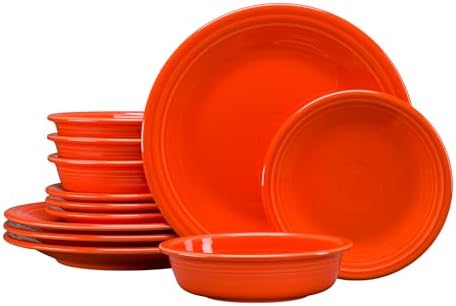
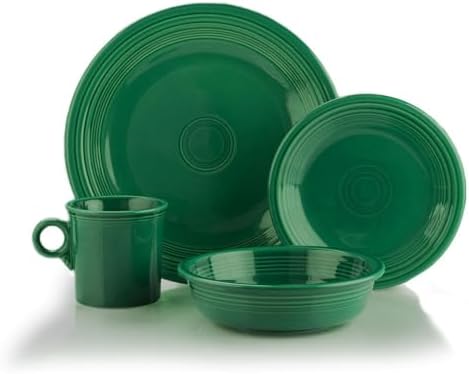
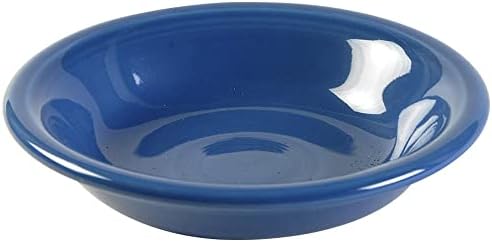
The bold Art Deco palette designer Frederick Hurten Rhead chose wasn’t accidental — it was a deliberate rejection of the gray years.
The First Five: Red, Cobalt Blue, Light Green, Yellow, and Ivory
- Red (the original orange-red, uranium-glazed) was the headline color — the one that drew the most attention and the most controversy decades later. Production ran from 1936 to 1943 and resumed in a non-radioactive form in 1959.
- Cobalt Blue was the second glaze developed and the darkest of the original five. Collectors call it simply “Cobalt” to distinguish it from the lighter blues added later.
- Light Green (sometimes called Original Green) was a warm, medium-toned green — different enough from the later Medium Green that misidentification is common among newer collectors.
- Yellow was the sunniest of the five, reflecting the optimism the brand was explicitly trying to sell. It ran until 1969.
- Ivory was the neutral anchor — the White of its era. It was retired in 1951 when the palette shifted toward pastels.
Turquoise (1937) and the 1950s Pastels: How the Palette Evolved Through Mid-Century Design Trends
Turquoise was added in 1937 as the sixth color, but the bigger shift came in 1951. Three originals — Cobalt Blue, Yellow, and Ivory — were retired.
Four new colors replaced them, all softer, all reflecting the post-war Eames-era interior design movement that favored muted modernity over Depression-era boldness.
| Color | Added | Retired | Design Era Context |
|---|---|---|---|
| Turquoise | 1937 | 1969 | Pre-war; bridged original and mid-century palettes |
| Gray | 1951 | 1959 | Post-war modernism; muted, paired with blonde wood furniture |
| Rose | 1951 | 1959 | 1950s pastels; soft pink aligned with the domestic femininity of the era |
| Chartreuse | 1951 | 1959 | Mid-century modern; yellow-green seen in Saarinen-era interiors |
| Forest Green | 1951 | 1959 | Deep contrast; echoed the era’s love of indoor plants and nature tones |
Rarest and Most Valuable Fiestaware Colors: What Collectors Actually Chase
The most popular colors for everyday use and the most valuable colors for collecting are not the same list. If you’re buying for your kitchen, Scarlet and Turquoise are the right answer.
If you’re buying for investment or you just found a box at an estate sale, the priorities shift completely.
Medium Green (1959–1969): The Holy Grail of Vintage Fiestaware
Medium Green is the rarest color in the entire vintage lineup. Full stop. It was produced for only ten years, from 1959 to 1969 — and during that window, it was only made in a reduced set of pieces.
By the late 1960s, the whole Fiesta line was in decline, and production quantities had dropped significantly. When the line was discontinued in 1969, Medium Green went with it.
A Medium Green dinner plate runs $80–$150, depending on condition. A disc pitcher — one of the most sought-after Fiesta shapes — sells for $500–$900 in good condition.
A full place setting in Medium Green can reach $300 or more. See current eBay sold prices and authentication tips in our Fiestaware Medium Green price and value guide.
The most common mistake: confusing Medium Green with Light Green (Original Green). They’re visibly different — Medium Green is darker, more saturated, and slightly more blue-toned.
But side by side is the only reliable way to confirm it. When in doubt, check the backstamp and the production date.
Radioactive Red (1936–1943): The Uranium-Glazed Original and Its Fascinating History
The original Fiestaware Red got its distinctive orange-red color from uranium oxide in the glaze.
This is real — not an internet myth. The U.S. government seized Homer Laughlin’s uranium supply in 1943 for the Manhattan Project, which is the only reason production stopped.
A reformulated, non-radioactive Red returned in 1959.
The NRC’s current position is that vintage radioactive Red Fiestaware poses minimal risk for display purposes. Daily use, particularly for acidic foods, which can leach glaze, is a different question.
For a full breakdown of whether vintage red Fiestaware is safe to use, the NRC’s guidance is the authoritative source.
The collector value for original Red pieces is strong, but the backstamp and the color’s distinctive warm orange-red hue (more orange than any modern Red) are what distinguish it from later formulations.
Other Highly Collectible Retired Colors: Lilac, Sapphire, Chartreuse, and More
| Color | Production Run | Why Collectible | Approx. Resale Range |
|---|---|---|---|
| Lilac | 1993–1995 | Very short run; limited distribution | $40–$120 per piece |
| Sapphire | 1996–1997 | Bloomingdale’s exclusive; never in general retail | $50–$150 per piece |
| Chartreuse (modern) | 1997–1999 | Short modern run; distinct color with no current equivalent | $25–$80 per piece |
| Sea Mist Green | 1991–2005 | Long run but heavily nostalgic; 1990s country kitchen aesthetic | $15–$50 per piece |
| Periwinkle | 1989–2006 | Longest-running retired color; still affordable but climbing | $10–$40 per piece |
Retailer-Exclusive Fiestaware Colors: The Hidden Gems You Won’t Find Everywhere
Beyond the standard lineup, Fiesta has produced colors available only through specific retail partners. These exclusives never entered the general production run, which makes them rarer by design — and more valuable on the secondary market.
Sapphire (Bloomingdale’s), Chocolate (Macy’s), and Other Department Store Exclusives
| Color | Exclusive Retailer | Production Dates | Collectibility Note |
|---|---|---|---|
| Sapphire | Bloomingdale’s | 1996–1997 | One of the most sought-after exclusives, deep cobalt with a purple undertone |
| Chocolate | Macy’s | 2007 | Short run; warm brown unusual in the Fiesta palette |
| Apricot | Bloomingdale’s | 1986–1998 | Launched with the modern line revival; peach-orange tone |
| Juniper | Select retailers | 2002–2005 | Deep teal-green; limited geographic distribution |
How to Find Retailer-Exclusive Colors on the Secondary Market
- Etsy — search by color name plus “Fiestaware” — individual sellers with estate collections list here regularly, and prices are often more negotiable than eBay.
- eBay completed sales — filter by “sold listings” to see actual transaction prices, not asking prices. This is the most reliable current market data.
- Estate sales (EstateSales.net or local listings) — exclusives turn up here most often because original buyers purchased through department stores decades ago, and the pieces stayed in the family.
- Fiesta Factory Direct — occasionally runs archive sales of discontinued colors; worth checking their outlet section.
- Local antique malls — pricing varies wildly, but rare exclusives sometimes sit unrecognized at standard vintage dinnerware prices.
How to Mix and Match Fiestaware Colors: Proven Combinations That Work
Fiesta’s mix-and-match design was groundbreaking in 1936, the idea that you could deliberately mismatch colors at the table and have it look intentional rather than accidental.
That philosophy is still what makes the brand distinctive. But some combinations work better than others.
Classic Combinations: Citrus Splash, Sunrise, and the Cobalt-Ivory Pairing
- Citrus Splash (Turquoise + Sunflower + Butterscotch + Lemongrass) — a warm, energetic combination that works for casual summer entertaining. The yellow and orange tones read as cohesive; the Turquoise gives it contrast without breaking the mood.
- Sunrise (Daffodil + Scarlet + Sunflower + Poppy) — all warm tones, high contrast. Good for a kitchen that already has neutral cabinetry. Too much of it at once can feel busy; mixing one or two Sunrise colors with White plates is the move.
- Cobalt + Ivory — the quietest pairing in the Fiesta world. Two colors, both vintage-adjacent, both forgiving on a table. Works for formal settings where you want the food to be the visual anchor.
- Twilight + White + Sage — the muted modern palette. For people who like the Fiesta brand but want their table to read more Scandinavian than mid-century American.
- Scarlet + Black + White — graphic and bold. Usually, one accent color with two neutrals works better than three competing colors.
The Color-Mixing Rule Fiesta Fans Swear By (and How to Apply It to Any Palette)
- Pick one anchor color and build around it. The anchor is your most prominent piece — usually the dinner plate. Everything else is accent.
- Use tone contrast, not just color contrast. A light and a dark together read better than two mid-tones of different hues. Cobalt Blue and Sunflower work. Twilight and Lapis — two similarly muted blues — fight each other.
- White and Ivory are not interchangeable. White is cooler; Ivory is warm. They clash when placed next to each other. Pick one neutral and commit to it across your setting.
- Rotate seasonally rather than buying everything at once. Fiesta pieces are affordable individually. Buying a set of Scarlet mugs for fall and Turquoise for summer costs less than a full set in one color — and keeps the table feeling fresh.
- Odd numbers look better than even numbers. Three accent colors on a table read as intentional. Four reads as chaotic. Two reads as paired. Know which effect you want.
Browse 20+ table setting ideas in our Fiestaware mix-and-match inspiration gallery.
How to Identify the Color of Your Fiestaware — Vintage and Modern
Color identification matters more than most people expect. The difference between Light Green and Medium Green is the difference between a $15 plate and a $120 one.
Getting it wrong at an estate sale costs money in both directions. For a deeper look at dating your pieces, see our complete vintage FiestaWare identification guide.
Reading the Bottom Mark: Dating Your Piece by Its Stamp
| Mark Type | Date Range | What It Tells You |
|---|---|---|
| “Fiesta HLC USA” (in-mold, lowercase) | 1936–1969 | Vintage original line; pre-discontinuation |
| No mark / hand-stamped “Genuine Fiesta” | 1960s–1969 | Late vintage; some pieces left unmarked during production decline |
| “FIESTA” (all caps, in-mold) | 1986–present | Modern line; post-revival |
| “Made in USA” + “Lead Free” | 1986–present | Modern line confirms non-toxic glaze |
| Gold or silver anniversary stamps | Various | Collector editions; check year on stamp |
Look-Alike Colors That Confuse Collectors: Medium Green vs. Light Green, Cobalt vs. Lapis
| Color A | Color B | Key Visual Difference | Production Era | Value Difference |
|---|---|---|---|---|
| Medium Green | Light Green (Original Green) | Medium Green is darker, more saturated, blue-toned | Medium Green: 1959–1969 / Light Green: 1936–1951 | Medium Green 4–8× more valuable |
| Cobalt Blue (vintage) | Lapis (modern) | Cobalt is deeper, slightly more purple; Lapis is brighter, more true blue | Cobalt: 1936–1951 / Lapis: 2000–present | Vintage Cobalt 3–5× more valuable |
| Original Red | Modern Scarlet | Original Red is more orange; Scarlet is slightly darker and more red-dominant | Original Red: 1936–1943, 1959–1972 / Scarlet: 2004–present | Original Red 2–4× more valuable |
Ready to Find Your Color?
If you’re buying new, the current Fiesta lineup — including the 2026 Color of the Year, Lavender — is at Fiesta Factory Direct’s Colorama tool. If you’re hunting retired or vintage pieces, Etsy and eBay’s sold listings are the most reliable places to start.
Explore the use of vintage Fiestaware in the Dishwasher ·
Frequently Asked Questions
What Fiestaware colors are available to buy right now in 2025–2026?
The current permanent lineup includes Scarlet, Turquoise, White, Cobalt Blue, Sunflower, Peacock, and Jade, among others. Linen (2025 Color of the Year) and Lavender (2026) are the newest additions. Check Fiesta Factory Direct for the live lineup, since colors rotate annually.
What is the most valuable FiestaWare color ever made?
Medium Green (1959–1969) commands the highest prices across the most pieces. A disc pitcher in good condition sells for $500–$900. Original radioactive Red can also reach significant prices for rare forms like the syrup pitcher or individual salad bowl.
What were the original colors Fiestaware launched with in 1936?
The original five were Red, Cobalt Blue, Light Green, Yellow, and Ivory. Turquoise was added in 1937, bringing the vintage original lineup to six colors.
Is vintage red Fiestaware really radioactive — and is it safe to use?
Yes, the original Red (1936–1943) used uranium oxide glaze and is mildly radioactive. The NRC considers it safe for display. Daily use with acidic foods is not recommended, as acid can interact with the glaze. The reformulated Red introduced in 1959 contains no uranium.
How many Fiestaware colors have been made in total since 1936?
Over 56 distinct colors have been produced across the vintage and modern lines combined, including retailer exclusives and Colors of the Year. Only 13 to 16 colors are available at any given time.
What is the Fiesta Color of the Year, and how often does it change?
One new color is introduced each year, typically announced at the start of the calendar year. A color must be retired before the new one enters the lineup. The tradition started in 2004 with Scarlet.
How can I tell what color my vintage Fiestaware is?
Start with the backstamp — “Fiesta HLC USA” in lowercase indicates a vintage piece made before 1969.
Then compare the glaze color in natural light against a reference chart.
For greens especially, the difference between Light Green, Medium Green, and modern Jade requires side-by-side comparison to call accurately.
Which Fiestaware colors look best together on a table?
Tone contrast works better than color contrast. A dark and a light together — Cobalt Blue with White or Ivory — reads cleaner than two mid-tones competing.
The Citrus Splash combination (Turquoise, Sunflower, Butterscotch, Lemongrass) is one of the most popular multi-color setups for casual tables.
Why is Fiestaware Lilac so expensive and hard to find?
Lilac was produced for only two years, 1993–1995, and had limited distribution. Short production window plus no reissue equals genuine scarcity. Individual pieces sell for $40–$120, depending on form, with serving pieces at the top of that range.
Where is the best place to sell retired or vintage Fiestaware colors?
eBay reaches the largest audience of Fiestaware buyers and lets you set prices based on real sold-listing data. Etsy works well for curated lots or unusual pieces where collectors browse by aesthetic. Local antique dealers move inventory faster but usually at lower prices.
About the Author & Reviewer
Sarah Emirone, Author
Sarah researches and writes SafeKitchn’s dinnerware and kitchenware guides, with a focus on material safety, lead content, and manufacturer specifications. She cross-references product data sheets, safety certifications, and regulatory filings (including FDA and Prop 65 records) before publishing, and updates articles when new information becomes available.
James Daniels, Reviewer
James reviews SafeKitchn’s material safety content for scientific accuracy. He holds a B.Sc in inorganic chemistry and works as a materials researcher, with particular focus on the composition and safety behavior of glass, ceramic, and metal used in kitchenware.