

Some dinnerware fades into the background. Fiestaware dinnerware never has.
Since its debut in 1936, this bold, color-saturated American ceramic line has held its ground on dining tables, in collector cabinets, and inside kitchen nostalgia for nearly a century.
Produced by the Homer Laughlin China Company in Newell, West Virginia, Fiesta earned its place as an icon through vibrant Art Deco design, honest durability, and an endlessly mix-and-match color philosophy that still feels fresh today.
Whether you’re a collector hunting rare retired hues or a home cook looking for reliable everyday tableware, this guide covers everything — materials, safety, colors, identification, and value.
Written by Sarah Emirone | Reviewed by James Daniels, B.Sc, Inorganic Chemist & Materials Researcher | Updated September 2026 | See How We Test | Filed under: Buying, Care & Product Guides
What Is Fiestaware?
Overview of the Fiestaware Brand
Fiestaware is a line of ceramic dinnerware manufactured by the Homer Laughlin China Company, one of the oldest and largest American pottery manufacturers in the country.
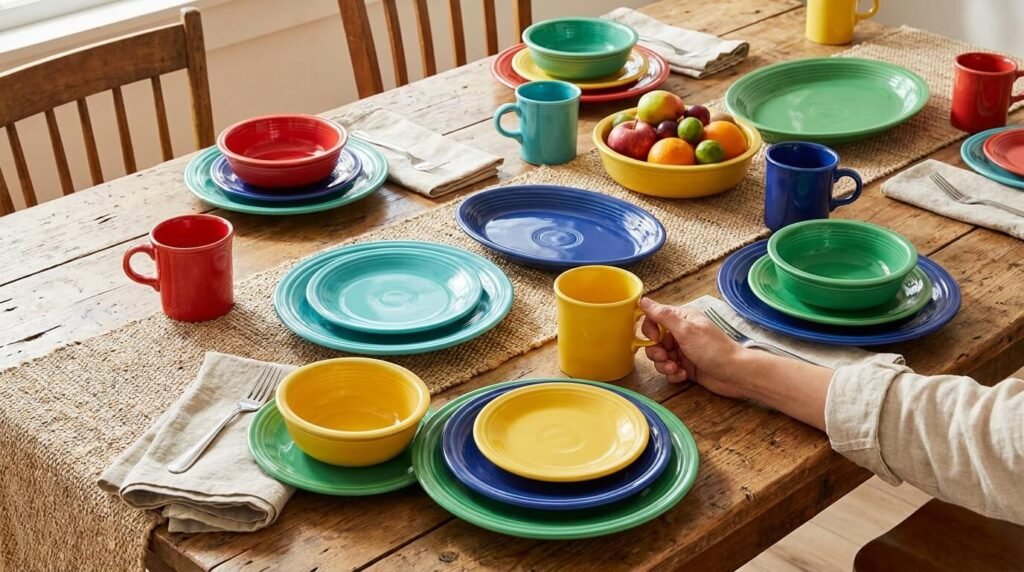
Founded in the late 1800s, Homer Laughlin built its reputation on high-volume, quality domestic ceramics. The Fiesta line launched in 1936 at the Pottery and Glass Show in Pittsburgh and instantly distinguished itself with solid-color vitrified china in bold, cheerful glazes.
Unlike most fine china of the era, Fiesta was designed to be affordable, durable, and accessible, a democratized version of colorful, artful American-made dinnerware for everyday households.
Why Fiestaware Became Popular
The timing was perfect. Fiesta arrived during the tail end of the Depression era, when American households craved color and optimism at the dinner table without a luxury price tag.
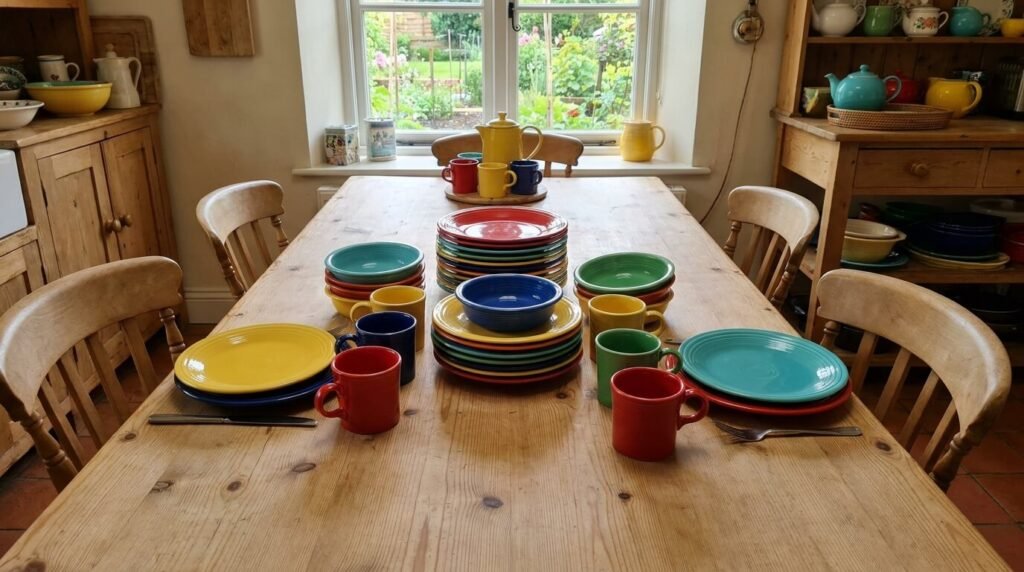
Its Art Deco design, concentric ring detailing, streamlined silhouettes, and bold geometric forms captured the energy of the era instantly. More importantly, the mix-and-match dining philosophy it championed was revolutionary.
Families could combine colors freely, making each table setting personal and playful. That casual dining spirit resonated widely, and Fiesta quickly became one of the best-selling colorful dinnerware lines in U.S. history.
Modern vs Vintage Fiestaware
Fiestaware has two distinct lives. The original production run lasted from 1936 until 1973, when the line was discontinued.
It was relaunched in 1986 with updated formulations and fresh color options.
This is what is sold today. Vintage Fiestaware refers to those pre-1973 pieces, which are highly sought after by collectors for their older glazes, different weights, and ring tone, and historical charm.
Modern Fiesta uses lead-free glaze and contemporary color palettes, while vintage pieces carry collectible appeal but also require some safety awareness, particularly the early red glaze.
What Is Fiestaware Made Of?
Ceramic Construction
Fiestaware is made from vitrified china, a type of ceramic dinnerware produced by firing a refined clay body at very high temperatures.
This vitrification process fuses the clay particles into a dense, non-porous material that resists moisture absorption and holds up to daily use.
Unlike earthenware, which remains porous and fragile, vitrified china is structurally strong and far more resistant to cracking under thermal stress.
The clay body used by Homer Laughlin is carefully formulated for consistent density and weight, giving Fiesta its characteristic heft that many users associate with quality.
To learn more about the Composition of Fiestaware, read our in-depth guide on the material makeup of Fiestaware.
Glazing and Color Technology
The signature characteristic of Fiestaware is its colored glaze. Each piece is coated with a ceramic glaze formulated with metalite oxide pigments that fuse to the surface during kiln firing.
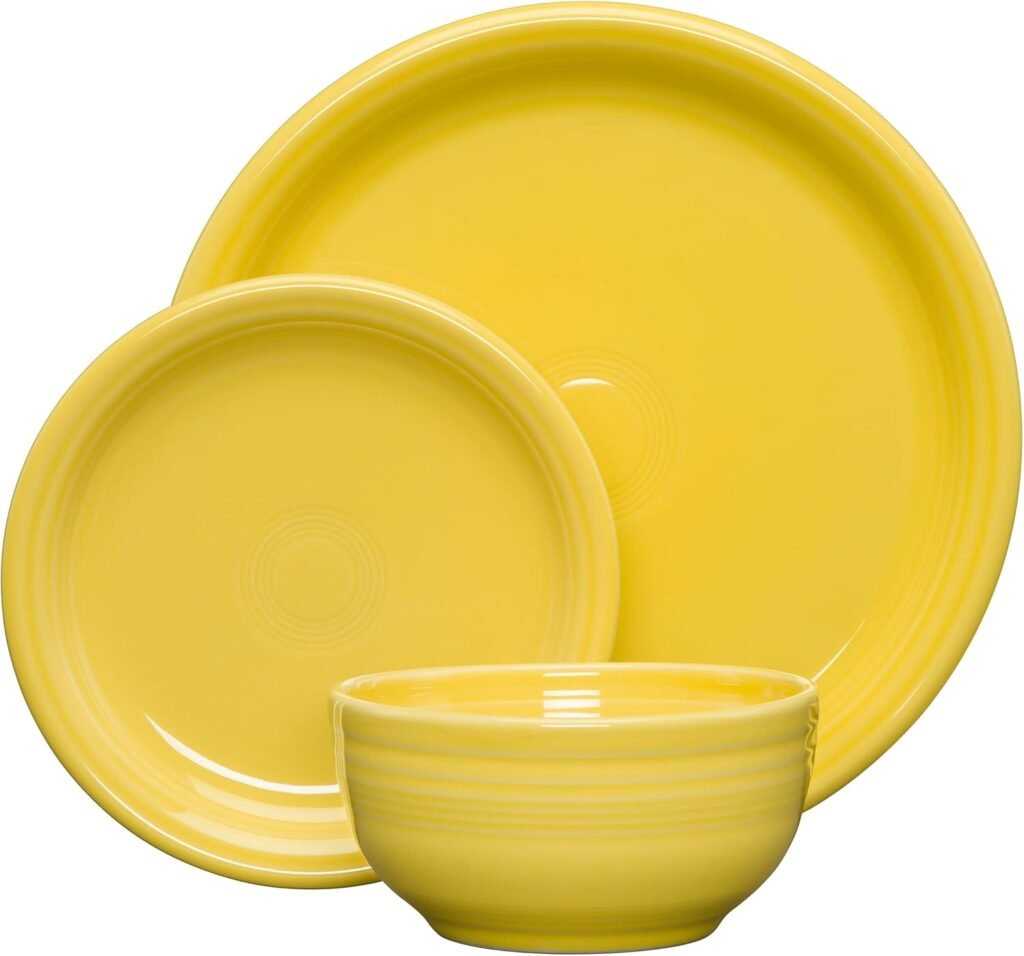
This glaze firing process bonds color deeply into the surface, making it resistant to fading, scratching, and wear over time. The result is the glossy, saturated finish that Fiesta is famous for.
Modern glazes are lead-free and comply with FDA food contact standards. The ceramic color innovation Homer Laughlin developed across decades is a core part of what makes Fiesta visually distinctive among competing dinnerware brands.
Durability and Heat Resistance
Fiesta’s vitrified construction gives it genuine durability that many lighter dinnerware alternatives can’t match. The chip-resistant engineering means edges hold up better under normal household use, such as stacking, washing, and daily handling.
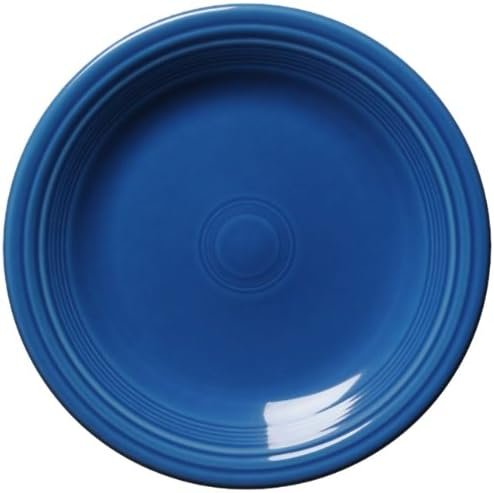
Heat resistance is solid as well. Modern Fiesta can handle dishwasher cycles, microwave use, and moderate oven temperatures without issue. The dense ceramic body absorbs and distributes heat evenly, which makes it practical for oven-to-table dining.
That durability is a big reason why Fiesta remains popular, for family dinnerware pieces bought today can genuinely last decades.
How Fiestaware Differs From Porcelain and Stoneware
Fiestaware sits in a unique category. Porcelain dinnerware is fired at extremely high temperatures from refined kaolin clay, producing a thinner, more translucent, and often more formal product.
Stoneware is denser and earthier, typically associated with rustic tableware aesthetics. Fiesta’s vitrified china formula sits between these two; it has the durability and density of stoneware with a smoother, more refined finish closer to porcelain.
It’s heavier than both Corelle’s tempered glass and standard porcelain, which some users love for the quality feel, though it does make full sets weighty to store and stack.
Is Fiestaware Safe?
Lead-Free and Food-Safe Standards
Modern Fiestaware, anything produced after the 1986 relaunch, is certified as non-toxic dinnerware and manufactured with lead-free glaze that meets FDA food contact standards.
Homer Laughlin has consistently maintained that its current production line is fully food-safe and appropriate for everyday use with all types of food and beverages.
The glazing process is controlled to prevent any harmful chemical migration into food. For anyone buying a new Fiesta from authorized retailers, safety is a non-issue. T
The brand’s commitment to lead-free certification is a direct response to both consumer safety expectations and regulatory requirements.
To learn more about Fiestaware’s commitment to safety, read our guide on: Is Fiestaware Lead and Cadmium Free?
Microwave and Dishwasher Safety
Modern Fiestaware is both microwave-safe and dishwasher-safe dinnerware, which contributes significantly to its everyday practicality.
The vitrified china body withstands repeated dishwasher cycles without degrading glaze color or structural integrity.
In the microwave, Fiesta heats food efficiently without hotspots or uneven thermal stress.
One thing to consider: pieces with metallic decoration, some limited edition or special collections, may not be microwave-safe, so always check the specific item’s care label.
For the standard glaze-only pieces, microwave and dishwasher use is fully supported and poses no concern for the average household.
Oven Safety Considerations
Fiestaware is oven-safe ceramics; the standard line is rated for oven use up to around 350°F (176°C). This makes pieces like the covered casserole genuinely useful for oven-to-table dining, moving directly from cooking to serving.
However, thermal shock is something to be careful about. Don’t transfer a cold Fiesta piece directly into a very hot oven, or place a hot piece onto a cold, wet surface.
Gradual temperature changes are better for the ceramic body over the long term. This isn’t unique to Fiesta; it applies to most ceramic dinnerware and is simply good practice for extending the life of your pieces.
Concerns About Vintage Fiestaware
Vintage Fiesta has one well-documented safety issue worth knowing. The original red-orange glaze used from 1936 to 1944 — and briefly again in the 1950s — contained uranium oxide as a colorant, which produced the distinctive warm tone collectors call Vintage Fiesta Red.
This uranium glaze does emit low levels of radiation. The risk from casual display is considered minimal by most experts, but using these pieces for food service is not recommended.
The radioactive dinnerware concern applies specifically to those early red pieces; other vintage colors like Fiesta Turquoise and Fiesta Cobalt Blue used different pigment formulations and don’t carry the same issue.
Why Fiestaware Is So Popular
Iconic Color Collections
Color is Fiesta’s core identity. From the very beginning, Homer Laughlin understood that dinnerware didn’t have to be white or neutral — it could be a design statement.
The rotating palette of Fiesta colors has given generations of consumers something to get excited about.
Whether it’s the deep richness of Fiesta Cobalt Blue, the vibrant warmth of Fiesta Scarlet, or the sunny brightness of Fiesta Sunflower, the color collections consistently drive both new purchases and collector interest.
Seasonal and limited edition releases keep the line fresh and give existing fans reasons to keep adding to their sets.
Mix-and-Match Table Settings
Few dinnerware brands have built their identity around the mix-and-match culture the way Fiesta has. The concept is simple but powerful: each color is designed to coordinate with every other color in the line, so there’s no wrong combination.
A dinner plate in Cobalt Blue pairs naturally with a bowl in Sunflower and a mug in Scarlet. This approach turned the dining table into a form of personal expression and made Fiesta a natural fit for casual, creative households.
It also means you never have to buy a matching set; you can build your collection piece by piece, color by color, which suits the open stock dinnerware model perfectly.
Durability for Everyday Use
Fiesta has always been designed for real use, not just display. Its chip-resistant vitrified construction means it handles the daily realities of family dining — stacking, loading into dishwashers, reheating leftovers without constant worry about breakage.
For families looking for durable household products that won’t need replacing every few years, Fiesta makes a compelling case. The dense ceramic body also retains heat well, which means food stays warmer longer at the table.
That combination of practical durability and appealing aesthetics is a big reason everyday tableware buyers keep returning to the brand, generation after generation.
American-Made Appeal
At a time when American manufacturing carries real emotional weight for many consumers, the fact that Fiesta is still produced domestically — in Newell, West Virginia — matters.
Homer Laughlin is one of the last major American-made dinnerware manufacturers still operating at scale in the United States. For buyers who prioritize supporting domestic ceramics industry jobs and American craftsmanship, Fiesta delivers on that value.
The brand actively markets its USA-made heritage, and it’s a genuinely differentiating factor in a dinnerware market dominated by overseas production. That authenticity adds to the brand’s long-term consumer trust.
Collectibility and Nostalgia
Fiestaware taps into something emotional beyond function. For many buyers, a piece of Fiesta is a connection to a grandmother’s kitchen, a childhood table, or a specific era of American domestic life.
That kitchen nostalgia is a powerful driver of both new purchases and the vintage collector market.
Retired Fiesta colors, discontinued glazes that are no longer produced, become sought-after by Fiesta collectors who track them through auctions, antique shops, and online markets.
Limited edition Fiesta releases generate the same enthusiasm. The collectible dimension gives Fiesta cultural staying power that purely functional dinnerware simply doesn’t achieve.
Fiestaware Colors and Patterns
Classic Original Colors
The original 1936 Fiesta launch included five colors: red, cobalt blue, yellow, green, and ivory, with turquoise added in 1937. These classics defined the brand’s visual identity and remain the most recognized in Fiestaware history.
Fiesta Cobalt Blue and Fiesta Turquoise are particularly iconic, with the deep, saturated blue tones that photograph beautifully and pair with almost any table setting.
The original yellow and ivory pieces have a warm, vintage feel that appeals strongly to collectors drawn to Depression era dinnerware aesthetics. These foundational colors set the tone for everything that followed.
Retired and Limited Edition Colors
Over the decades, Homer Laughlin has introduced and retired dozens of colors, and that rotating palette is part of what keeps the collector community engaged.
Retired Fiesta colors those no longer in production become increasingly valuable as supply diminishes and demand from completionist collectors grows.
Limited edition Fiesta collections, often tied to seasons, holidays, or retail partnerships, generate their own collector following.
Pieces from these limited runs are typically produced in smaller quantities, which makes them harder to find and more valuable over time. Tracking these releases is a significant part of the Fiesta collector culture.
Most Valuable Vintage Colors
Among vintage Fiesta, the original red — specifically the uranium-glazed red from 1936 to 1944 — is consistently among the most discussed and sought-after colors in the collector market.
Rose (introduced 1951) and medium green (1959–1969) are considered two of the most valuable vintage colors, with medium green in particular commanding premium prices at Fiesta auctions due to its relatively short production window.
Chartreuse, gray, and forest green from the late 1950s and early 1960s are also prized. Condition, rarity, and specific piece type all factor into ceramic appraisal values for these older glazes.
Modern Color Collections
Today’s Fiesta line offers a wide, rotating palette that balances classic appeal with contemporary dining aesthetics. Modern Fiesta collections include rich jewel tones, muted naturals, and vibrant seasonal releases that keep the line visually current.
Colors like Fiesta Scarlet carry forward the brand’s bold red tradition without the uranium glaze concerns of vintage pieces.
The modern palette is designed to coordinate across the entire line, maintaining the mix-and-match table setting philosophy that has defined the brand since 1936.
New colors are introduced and retired regularly, giving collectors and everyday buyers ongoing reasons to engage with the brand.
Vintage Fiestaware Identification Guide
How to Identify Vintage Fiestaware
Identifying genuine vintage Fiestaware starts with understanding its physical characteristics. Pre-1973 Fiesta pieces have a distinctive hand-feel, slightly different weight, a specific ring tone when tapped, and a glaze texture that differs from modern production.
The concentric ring detailing around rims and handles is present in both eras, but the proportions and depth of these rings can help date pieces.
Color is also a reliable indicator: many vintage colors, including the original red, turquoise, ivory, yellow, and cobalt blue, were either discontinued or reformulated, and the vintage versions have a subtly different visual quality compared to their modern counterparts.
Back Stamps and Markings
Fiesta backstamps are one of the most reliable tools for authentication and dating. Early pieces from 1936 onward used an impressed ‘Fiesta’ mark in the clay itself. Later pieces used ink stamps.
The specific style, font, and format of the Fiesta markings evolved over the production years, and collectors use detailed reference guides to date pieces by these stamps.
Post-1986 modern pieces are clearly marked with ‘Fiesta’ and often include ‘HLC USA’ or similar markings indicating Homer Laughlin’s American manufacturing.
Learning to read dinnerware markings accurately is an essential skill for any serious collector or buyer of vintage pieces.
Pre-1986 vs Modern Pieces
The clearest dividing line in Fiestaware history is 1986, when the original line was relaunched after a 13-year break.
Pre-1973 vintage pieces differ from modern ones in several measurable ways: the clay body formula changed, the glaze chemistry was updated (removing lead), and the color palette was refreshed.
Many original colors were not continued in the relaunch. Pre-1986 pieces also tend to feel slightly heavier and have a different bottom texture.
Ringtones, the sound a piece makes when lightly tapped, is often cited by experienced collectors as a subtle but reliable way to distinguish older production from the contemporary line.
Signs of Authentic Fiestaware
Authentic Fiesta identification goes beyond the backstamp. Genuine pieces have a consistent, even glaze with the characteristic glossy finish that Fiesta is known for. The concentric ring design should be clean and well-defined.
Fakes and knockoffs often show uneven glaze application, inconsistent ring depth, or bottom marks that don’t match verified Fiesta stampings.
Fiesta collectors also look at shape consistency; each piece in a given era should match the documented dimensions and profiles.
When in doubt, consulting an experienced collector community or a professional ceramic appraisal service is the best way to verify authenticity before making a significant purchase.
Is Vintage Fiestaware Valuable?
Most Collectible Pieces
Some Fiesta forms are far more collectible than others.
Large serving pieces, such as covered casseroles, pitchers, platters, and carafe sets, tend to command higher prices than standard dinner plates or mugs simply because they were produced in smaller quantities and are harder to find undamaged.
Specialty items like the original disk pitcher, the covered onion soup bowl, and the syrup jug are particularly sought after.
These larger, more complex forms were produced for shorter periods and survived in fewer numbers, making them genuinely rare in the collector marketplace.
A complete set of any vintage serving piece in a rare color can fetch significant prices.
Rare Colors and Patterns
Color rarity drives a substantial portion of vintage Fiesta value. Medium green is often cited as the most valuable vintage color overall, due to its limited production window from 1959 to 1969.
Rose, chartreuse, gray, and forest green from the same era are also highly desirable. The original red (uranium glaze) carries collector value alongside its safety considerations.
Vintage Fiestaware in these colors, especially in excellent condition, regularly appears at Fiesta auctions and antique shows at prices that reflect their scarcity.
Collectors who assembled sets of these colors during the original production period are sitting on genuinely valuable ceramic collectibles.
Factors That Affect Value
Vintage Fiesta value is determined by a combination of factors that experienced collectors and ceramic appraisal professionals weigh carefully.
Color rarity is primarily medium green, and rose commands premiums over more common colors like original yellow. Piece type matters enormously: a covered casserole in a rare color is worth significantly more than a dinner plate in the same color.
Production era plays a role, with very early pieces from the late 1930s carrying additional historical value.
And of course, condition is foundational; any chip, crack, crazing, or significant wear reduces value, sometimes dramatically, regardless of how rare the color or form.
Condition and Market Demand
In the collectible dinnerware market, condition is everything. Mint condition vintage Fiesta, no chips, no cracks, full glaze color with minimal fading or wear, commands the highest prices.
Even minor rim chips, which are common on pieces that were actually used, can reduce value by 30 to 50 percent or more. Crazing the fine network of glaze cracks that sometimes appears on older ceramics is acceptable to some collectors and disqualifying to others.
Market demand fluctuates with broader collector trends, and Fiesta auctions can see significant price variation depending on the time of year, the platform, and what similar pieces have sold for recently.
Fiestaware vs Other Dinnerware Brands
Fiestaware vs Corelle
Fiestaware and Corelle are both popular everyday tableware options, but they’re fundamentally different products.
Corelle is made from tempered glass; it’s significantly lighter than Fiesta’s vitrified china, and it resists breaking in ways ceramic simply can’t. However, Corelle’s design is restrained and neutral, while Fiesta is all about color and personality.
Fiesta is heavier, retains heat better, and offers far more color and style variety. Corelle wins on lightweight convenience and shatter resistance.
Fiesta wins on aesthetics, collectibility, and that satisfying weight that many users associate with quality dining. They serve similar audiences but different preferences.
For a more in-depth review on this, read our guide on: Corelle vs Fiestaware brand collection.
Fiestaware vs Pfaltzgraff
Pfaltzgraff is a former American stoneware brand with a long heritage in rustic, pattern-based tableware. Its aesthetic skews earthier and more traditional compared to Fiesta’s bold, solid-color Art Deco design language.
Both are American-made with strong brand recognition, and both offer durable casual dining products. The key difference is aesthetic philosophy: Pfaltzgraff leans into natural tones and decorative patterns, while Fiesta leans into saturated color and sleek geometry.
For buyers who prefer a warmer, more country-kitchen feel, Pfaltzgraff is a natural fit. For those who want expressive color and mixing flexibility, Fiesta is typically the stronger choice.
Fiestaware vs Stoneware Brands
Generic stoneware brands and Fiesta occupy overlapping but distinct market spaces. Both offer durable ceramic dinnerware suited to everyday household use.
Standard stoneware is often less expensive and available in more muted, naturalistic finishes — ideal for minimalist or rustic dining aesthetics.
Fiesta’s vitrified china is technically denser and more refined than most stoneware, with a smoother surface and more vibrant glaze color options.
It also carries brand heritage and collectible value that generic stoneware can’t replicate. For buyers who want straightforward durability at a lower price point, stoneware works. For those who want durability plus design identity, Fiesta typically wins.
Which Dinnerware Is Better for Everyday Use?
For pure everyday functionality, all three categories — Fiesta, Corelle, and stoneware — are solid choices.
Corelle is the easiest to handle and store due to its lightweight. Stoneware offers the lowest entry price.
Fiesta sits at a premium but delivers a combination of durability, heat retention, color variety, and long-term collectibility that the others can’t fully match.
If you want dinnerware that functions beautifully every day, holds its value, and can be expanded or replaced piece by piece through Fiesta’s open stock model, Fiesta makes a compelling case for being the best overall everyday tableware option for buyers who value both utility and aesthetics equally.
Pros and Cons of Fiestaware
Main Advantages
Fiestaware’s strengths are well established. The vitrified china construction delivers genuine durability, chip-resistant, dishwasher-safe, microwave-safe, and oven-capable.
The color variety is unmatched in the ceramic dinnerware market, with a rotating palette that spans bold jewel tones to softer naturals.
American craftsmanship, every piece made in West Virginia by Homer Laughlin, adds authenticity and supports domestic manufacturing.
The open stock model means replacing broken pieces or expanding a collection is easy and affordable. And the collectible dimension means Fiesta has staying power beyond function: pieces bought today may carry real collector value years from now.
Potential Drawbacks
No dinnerware is perfect for everyone, and Fiesta has real drawbacks worth acknowledging. It’s heavier than tempered glass alternatives like Corelle, which can be a genuine inconvenience when storing full sets or for users who find heavy dishes uncomfortable.
Despite the chip-resistant engineering, ceramic chips are still possible — especially on edges — and a chipped piece can feel like a significant setback in an otherwise pristine set.
Vintage Fiesta carries the well-documented uranium glaze safety concerns for early red pieces, requiring care and knowledge before purchase.
And the premium price point — higher than generic stoneware — means the upfront investment is meaningful for budget-conscious buyers.
How to Care for Fiestaware
Proper Cleaning Methods
Modern Fiestaware handles dishwasher cleaning without issue. Standard dishwasher cycles won’t damage the glaze or diminish color over time.
For hand washing, which many Fiesta owners prefer for vintage or cherished pieces, mild dish soap and a soft cloth or sponge work well.
Avoid abrasive scrubbers that can scratch the glossy finish. For stubborn food residue, soaking briefly in warm soapy water is more effective and gentler than scrubbing.
Vintage pieces, particularly those with older lead-containing glazes, should be hand-washed rather than put through a dishwasher, as the heat and detergent combination may accelerate glaze degradation.
Preventing Chips and Cracks
Chips are the primary wear concern for any ceramic dinnerware, and Fiesta is no exception. The most common cause is pieces knocking against each other during storage or washing.
Stacking plates directly on top of each other without padding, cloth napkins, plate separators, or felt pads increases chip risk significantly.
When loading the dishwasher, give pieces enough space that they don’t knock against each other through the cycle.
Avoid dropping pieces onto hard surfaces, obviously, and be careful loading and unloading from the oven, where handling hot pieces awkwardly is a common cause of damage.
A little care in daily handling goes a long way.
Safe Microwave and Oven Use
For microwave use, standard Fiesta glazed pieces are fully safe. The exception is any piece with metallic accents, which should not be microwaved.
For oven use, preheat the oven with the dish inside rather than placing a cold piece into a hot oven.
Thermal shock is the primary risk. Don’t use Fiesta under a broiler, where temperatures exceed safe limits for the ceramic glaze.
When moving pieces from the oven to the table, use oven mitts and place them on a trivet or towel, never directly onto a cold or wet countertop.
These habits protect the structural integrity of the clay body and extend the piece’s longevity significantly.
Storage and Stacking Tips
Proper storage significantly extends the life of a Fiestaware collection. When stacking plates or bowls, use plate separators, cork pads, or even paper plates between pieces to prevent glaze-on-glaze contact that causes chips and scratches.
Mugs should be stored upright or hung on hooks rather than stacked or nested, as handles are particularly vulnerable to chipping. Larger serving pieces like platters and covered casseroles benefit from individual storage sleeves or cloth wrapping.
Vintage pieces that you’re preserving primarily for collectible value should be stored out of direct sunlight to prevent any long-term glaze fading, in a stable-temperature environment.
Common Myths About Fiestaware
“All Vintage Fiestaware Is Radioactive”
The radioactive concern applies specifically to early Fiesta Red — the original red-orange glaze produced from 1936 to 1944 and briefly in the 1950s — which used uranium oxide as a colorant. It does not apply to all vintage Fiestaware.
Colors like vintage turquoise, cobalt blue, yellow, green, and ivory used entirely different pigment systems and have no radiation association whatsoever.
This myth causes unnecessary alarm and has led many people to avoid perfectly safe vintage pieces. If you’re buying vintage Fiesta in any color other than the original red, radiation is simply not a relevant concern.
“Fiestaware Is Fragile”
This myth likely comes from confusing Fiesta with thinner, more delicate fine china or porcelain.
Fiesta is actually among the more durable casual dinnerware options available — its vitrified china construction is specifically engineered for daily household use.
While no ceramic is indestructible, Fiesta’s chip-resistant design and dense clay body make it far more resilient than the fragile reputation suggests. Generations of families have used Fiesta sets as their everyday tableware for decades.
The weight that some people find inconvenient is actually a reflection of that density and durability, not a design flaw.
“Modern Fiestaware Contains Lead”
Modern Fiestaware — everything produced since the 1986 relaunch — is manufactured with lead-free glaze and certified to FDA food contact standards.
This myth persists largely because of the legitimate concerns around early vintage pieces, where lead was used in glaze formulations before regulations tightened.
Homer Laughlin has been transparent about its current formulations and regularly reinforces the non-toxic, food-safe status of contemporary production.
Buyers purchasing a new Fiesta from authorized retailers today are getting a product that meets all modern consumer product safety requirements.
The lead concern is a historical issue, not a current one.
“Collectors Only Buy Rare Colors”
The Fiesta collector community is far broader than rare-color hunters. Many collectors build complete sets of a single common color, pursue specific piece types across all colors, or focus on particular production eras rather than rarity.
Some collectors are drawn to common vintage colors like the original yellow or cobalt blue simply because of their historical significance.
Others collect modern limited-edition Fiesta releases as they come out. The market supports all of these approaches.
Rare colors like medium green command premium prices, but the collector culture around Fiesta is inclusive and varied, welcoming enthusiasts at every budget and interest level.
Conclusion
Fiestaware dinnerware stands apart because it delivers on multiple levels simultaneously: it’s functional, beautiful, historically significant, and collectible.
Homer Laughlin built something in 1936 that has outlasted trends, survived a 13-year hiatus, and returned stronger. The combination of Art Deco design, vibrant, colorful dinnerware glazes, and honest vitrified construction created a product with genuine staying power.
Whether you encounter it in an antique shop or a modern retailer, Fiesta tells a consistent story: American-made, built to last, and designed to make the dining table a more expressive, colorful place.
Key Takeaways
For buyers, modern Fiestaware is a safe, durable, and versatile choice for everyday tableware. It’s lead-free, dishwasher and microwave safe, and backed by a manufacturing heritage that spans nearly a century.
Vintage buyers should invest time in learning Fiesta identification backstamps, color periods, and glaze characteristics before making significant purchases.
The original uranium-glazed red pieces require care and shouldn’t be used for food. For all other vintage colors, the main considerations are condition, authenticity, and whether the piece aligns with your collecting focus or aesthetic goals.
Final Recommendation
If you’re building a new set, buy from authorized Fiesta retailers and choose colors that genuinely speak to your dining style. The mix-and-match philosophy works best when the colors you select are ones you love individually.
If you’re buying vintage, verify backstamps carefully, know your color periods, and prioritize condition. For collectors, focus on what interests you most — whether that’s rare colors, specific forms, or a complete era rather than chasing value alone.
Fiesta rewards intentional collecting. And for everyday users, it’s simply one of the most enjoyable, durable, and visually satisfying ceramic dinnerware lines ever made in America.
About the Author & Reviewer
Sarah Emirone, Author
Sarah researches and writes SafeKitchn’s dinnerware and kitchenware guides, with a focus on material safety, lead content, and manufacturer specifications. She cross-references product data sheets, safety certifications, and regulatory filings (including FDA and Prop 65 records) before publishing, and updates articles when new information becomes available.
James Daniels, Reviewer
James reviews SafeKitchn’s material safety content for scientific accuracy. He holds a B.Sc in inorganic chemistry and works as a materials researcher, with particular focus on the composition and safety behavior of glass, ceramic, and metal used in kitchenware.