

You’ve stood in the store or scrolled endlessly online trying to choose between Corelle and Fiestaware, and somehow both seem right and neither feels certain.
You’ve read the reviews, compared the prices, and still walked away unsure which one actually fits your home and how you eat every day. Two great brands, two very different dinnerware experiences, and nobody has clearly explained the difference.
Picking the prettier option isn’t the answer; matching the right dinnerware to your specific lifestyle and use case is.
This post breaks down Corelle versus Fiestaware across the differences that actually matter: material, weight, durability, chip resistance, aesthetics, and which one wins for everyday use versus entertaining.
Here’s what most buyers never consider: you’re not choosing between two dinnerware brands, you’re choosing between two completely different philosophies of what a plate should do for your home.
Written by Sarah Emirone | Reviewed by James Daniels, B.Sc, Inorganic Chemist & Materials Researcher | Updated September 2026 | See How We Test | Filed under: Brand & Product Comparisons
Overview of Corelle Dinnerware
What Corelle Is Made Of
Corelle dishes are made from Vitrelle glass — a triple-layer tempered glass that Corning originally developed in the late 1960s. The three layers are bonded under heat and pressure, producing a material that’s far stronger than its thinness would suggest.
It’s not ceramic, not porcelain, and not standard glass. It’s a purpose-built dinnerware material that prioritizes durability and light handling above everything else.
For a deeper look at the plate lineup specifically, the Corelle dinner plates comprehensive guide walks through the full range of sizes and collections.
Corelle’s Lightweight Design
The thinness of Vitrelle glass is what makes Corelle so light. A standard Corelle dinner plate weighs a fraction of what a comparable ceramic or stoneware plate does.
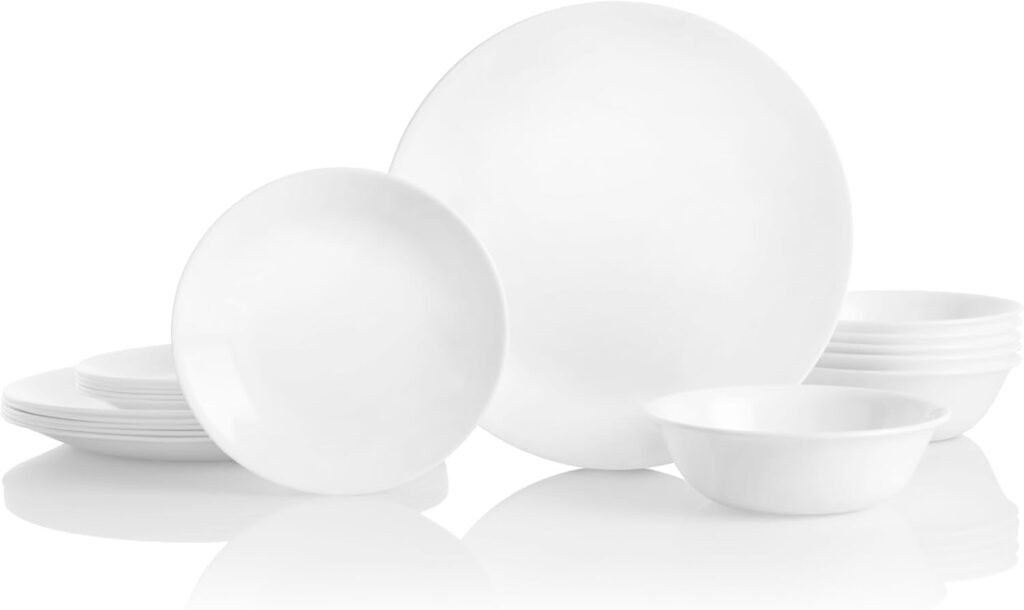
That’s not just a convenience feature; it changes how the whole set feels to use daily. Stacking, unloading the dishwasher, setting the table: all of it is noticeably easier.
The slim profile also makes Corelle exceptionally stackable, so a full service for six takes up very little kitchen cabinet storage space.
Corelle’s Reputation for Everyday Use
Corelle built its brand on being practical for everyday dinnerware use. It’s dishwasher safe, microwave safe, resistant to chipping, and easy to store.
Households with children gravitate toward it because it’s manageable and holds up to routine use without requiring careful handling. Its reputation isn’t built on aesthetics; it’s built on the fact that it works reliably day after day without demanding much from the people using it.
Overview of Fiestaware Dinnerware
What FiestaWare Is Made Of
Fiestaware is ceramic dinnerware, specifically a vitrified china body produced by the Fiesta Tableware Company, which has been manufacturing in West Virginia since 1936.
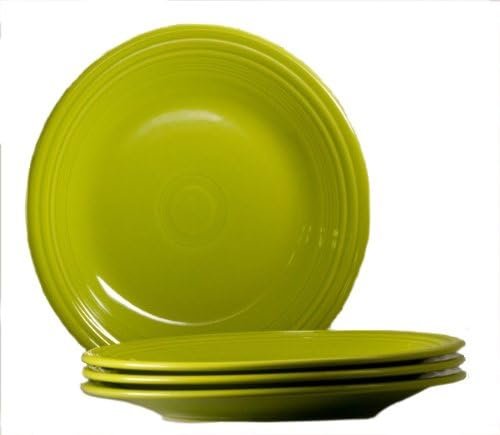
The ceramic construction gives each piece a distinctive density and weight that feels substantial in the hand. The surface is finished with a colorfast ceramic glaze that seals the body and carries Fiestaware’s signature bold colors.
Modern Fiestaware is lead-free and cadmium-free, addressing historical safety concerns that applied to older vintage production.
Fiestaware’s Distinctive Design Style
Nobody picks Fiestaware for subtlety. The brand is defined by its vibrant colors — a palette that has expanded dramatically since its 1936 debut — and its retro style with Art Deco-influenced ring detailing.
The dishes make a visual statement on the table that few other brands match. That aesthetic is a central part of the brand’s identity, not incidental to it.
Mixing and matching colors is practically a Fiestaware tradition, and it gives the table setting a personality that plain white dinnerware simply can’t replicate.
Fiestaware as Decorative and Functional Dinnerware
What makes Fiestaware interesting is that it operates in two markets simultaneously: everyday functional dinnerware and collectible dinnerware.
It’s durable enough to use at every meal, but the color collections, including limited edition patterns and retired colors, attract collectors who buy pieces specifically for display value.
That dual identity means Fiestaware often ends up as both a working dish set and a decorative kitchen feature, particularly when pieces are displayed on open shelving.
At a Glance: Corelle vs Fiestaware
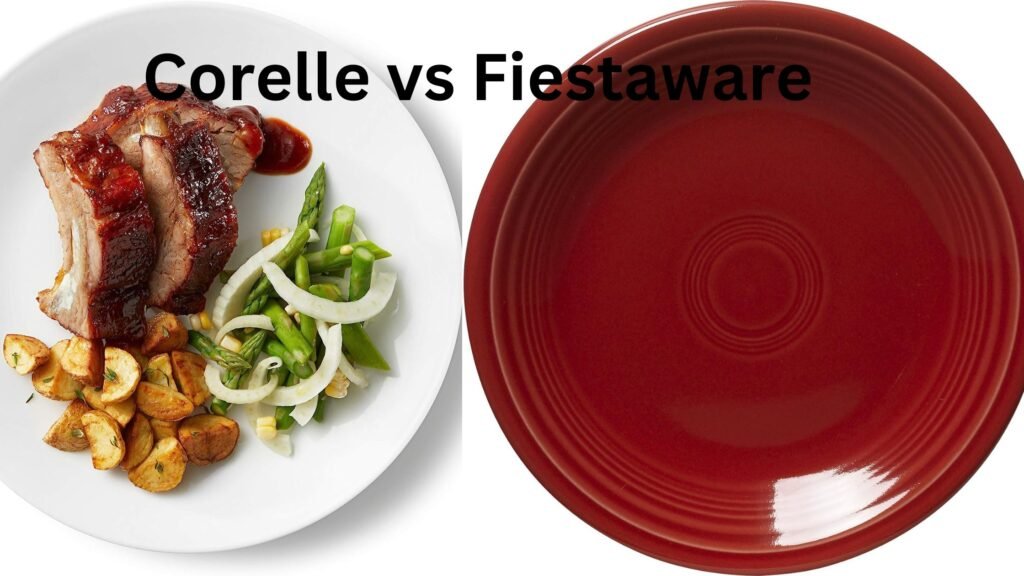
| Corelle | Fiestaware |
|---|---|
| Vitrelle triple-layer glass | Vitrified ceramic |
| Very lightweight | Heavier and substantial |
| Excellent chip resistance | Good but chips at edges over time |
| Minimalist, neutral palette | Bold, vibrant color collections |
| Highly stackable | Takes more cabinet space |
| Microwave & dishwasher safe | Oven, microwave & dishwasher safe |
| Lead-free (modern), cadmium free | Lead-free (modern), cadmium-free |
| Budget to mid-range price | Mid-range to premium price |
| Best for everyday practicality | Best for aesthetics + collecting |
Material Comparison
Tempered Glass vs Ceramic
The material difference between Corelle and Fiestaware is the most fundamental distinction between them. Corelle’s Vitrelle glass is non-porous, doesn’t absorb food residue, and doesn’t chip along edges the way ceramic glazes can.
Fiestaware’s ceramic body has a gloss finish from its ceramic glaze that looks rich and holds color exceptionally well — but ceramic is inherently more susceptible to edge chipping over time.
The dinnerware material choice shapes nearly every other difference between the two brands.
Thickness and Density Differences
Corelle plates are noticeably thinner than Fiestaware. That thinness is engineered into the Vitrelle construction — the three bonded glass layers achieve structural strength without bulk.
Fiestaware’s ceramic body requires more thickness to maintain integrity, which is part of what gives it that satisfying, solid feel. Neither is better in an absolute sense; they serve different preferences.
If you want lightweight dinnerware that stores efficiently, Corelle wins. If you prefer the feel of a substantial plate in hand, Fiestaware is more satisfying.
Heat Resistance and Thermal Performance
Fiestaware has an edge in thermal performance. Its ceramic construction retains heat longer, which helps keep food warm at the table. It’s also oven safe up to higher temperatures than Corelle useful if you want to serve food directly from the oven to the table.
Corelle handles microwave reheating well and has reasonable thermal shock resistance, but it’s not designed for oven-to-table use at high heat.
For households that reheat in the microwave, Corelle is perfectly capable. For those who use the oven as part of serving, Fiestaware is more versatile.
Durability Comparison
Chip Resistance
Chip resistance is one of Corelle’s strongest advantages. The Vitrelle glass edge doesn’t chip the way ceramic glaze does under normal kitchen impacts, dropped forks, scraping against other dishes, and routine dishwasher collisions.
Fiestaware’s ceramic glaze is durable, but the edge is a known vulnerability. Over years of daily use, Fiestaware plates can develop edge chips that expose the ceramic body underneath.
Corelle holds its edges better under everyday conditions, which is a meaningful durability advantage for households that put dishes through heavy daily use.
Breakage Resistance
Here, the comparison gets more complex. Corelle’s break resistance is good; the tempered glass construction handles minor impacts well, but when it does break from a hard drop onto tile or concrete, it tends to shatter.
Fiestaware’s ceramic body can crack or break, too, but ceramic breakage typically produces larger, fewer pieces. Neither material is immune to drops.
The practical difference is that Corelle is more resistant to the everyday minor impacts that gradually chip and crack ceramic, but Fiestaware may break more cleanly in a single significant drop.
Long-Term Wear and Surface Scratches
Corelle’s glass surface can show utensil marks over time — the gray or silver lines left by knives and forks on white dishes. These are metal deposits from cutlery, not actual scratches in the glass, and they’re removable with a mild abrasive cleaner.
Fiestaware’s ceramic glaze is more scratch-resistant against utensils, but can show surface wear in the glaze finish over the years of use. Both brands are durable long-term with reasonable care — the type of wear you see just differs by material.
Weight and Handling Comparison
Lightweight Convenience of Corelle
Corelle’s lightweight design is its most immediately noticeable feature. For households where dishes are handled frequently, daily meals, multiple dishwasher loads a week, and storage in upper cabinets, lighter dishes genuinely reduce the physical effort involved.
It’s particularly appreciated by households that set the table for four or more people regularly, where the cumulative weight of carrying multiple plates matters.
Heavier Feel of Fiestaware
Fiestaware’s weight is part of its appeal for many buyers. Heavy dinnerware reads as substantial and premium in a way that lightweight dishes don’t, even when the lighter dishes are technically more durable.
The heft of a Fiestaware plate contributes to the overall dining experience it feels like a piece of quality tableware. For households that value the sensory aspect of dining, the extra weight isn’t a drawback. It’s part of the product’s character.
Which Is Better for Elderly Users or Children?
Corelle is the more practical choice for households with older adults managing joint pain or reduced grip strength, and for children who are expected to handle their own plates.
Lighter dishes reduce the risk of drops and make everyday handling easier across the board. Fiestaware’s weight, while appealing in a dining context, can be genuinely cumbersome for anyone with limited hand strength or for young children carrying full plates to the table.
Design and Aesthetic Comparison
Corelle’s Minimalist and Modern Look
Corelle’s design identity centers on minimalist design — clean profiles, neutral color palette, and simple patterns that complement rather than compete with the rest of the table setting.
For modern kitchen aesthetics that lean toward Scandinavian design or clean contemporary styling, Corelle plates disappear into the visual environment in the best way.
They’re not trying to be the focal point of the table, which is exactly what some households want from their everyday dishes.
Fiestaware’s Bold Color Collections
Fiestaware’s vibrant colors are what the brand is known for, and they make a real visual impact on any table.
The extensive color range — from classic scarlet and cobalt blue to seasonal and limited edition additions gives households genuine options for color coordination and personal expression.
For anyone who wants their tableware to contribute actively to dining table decor and home decor coordination, Fiestaware offers a level of aesthetic engagement that Corelle simply doesn’t match.
Casual vs Decorative Dining Appeal
Corelle suits casual dining — it’s unpretentious and functional. Fiestaware can do casual dining too, but it also works well for more expressive or decorative table settings where the dishes themselves are part of the meal presentation.
The choice between them often reflects a broader lifestyle preference: do you want your dishes to stay in the background, or do you want them to be part of the visual experience of eating?
Storage and Space Efficiency
Stackability of Corelle
Corelle’s stackability is one of its most practical advantages. The thin, uniform profile of Vitrelle glass means plates nest tightly into compact stacks.
A full service for eight takes up far less vertical space in a kitchen cabinet than the equivalent in ceramic.
For anyone working with limited kitchen cabinet storage — small apartments, RVs, compact homes — this isn’t a minor detail. It’s a real functional benefit that affects how you organize and use your kitchen.
Storage Needs of Fiestaware
Fiestaware’s thicker ceramic construction means it takes up more cabinet space per plate. Stacking is fine, the dishes are structurally solid — but a full Fiestaware set requires more storage space than an equivalent Corelle set, meaningfully.
For households with generous cabinet space, this is a non-issue. For those working with limited storage, the difference is worth factoring into the buying decision before purchasing a full service for six or eight.
Best Option for Small Kitchens and Apartments
Corelle wins for apartment living and space-constrained kitchens. The combination of stackability and space saving in Corelle’s design is genuinely difficult for any ceramic brand to match.
If kitchen cabinet storage is a real constraint in your home, Corelle is the more practical choice by a significant margin.
Everyday Use Comparison
Best for Busy Families
For busy households with children, Corelle’s practical advantages stack up quickly. It’s lighter for kids to handle, chip-resistant for the inevitable bumps and collisions, dishwasher safe for easy cleanup, and microwave safe for reheating leftovers.
Family dining puts dishes through more daily stress than almost any other context, and Corelle is built for exactly that kind of use.
Best for Formal or Decorative Dining
Fiestaware earns its place when aesthetics and meal presentation are priorities. The bold colors and substantial feel elevate a table setting in ways that practical white Vitrelle glass doesn’t.
For households that entertain regularly, enjoy hosting dinner parties, or simply want their dining table to make a visual impression, Fiestaware’s design appeal gives it a meaningful advantage over Corelle’s more functional presentation.
Best for RVs and Travel
Corelle is almost universally preferred for RV and travel use. The lightweight design, compact stackability, and break resistance under the minor impacts of travel make it the clear practical choice.
Fiestaware’s weight and bulk make it less suited to storage-constrained, mobile living situations. Many RV owners specifically choose Corelle service for four sets for their compact storage footprint.
Microwave and Dishwasher Safety
Microwave Performance
Both brands are microwave safe under standard conditions. Corelle handles reheating well, just avoid metallic decorations on any specific pattern.
Fiestaware is similarly microwave safe for modern production; older vintage Fiestaware may have glaze formulations that behave differently.
For the everyday reheating that most households do, both brands perform reliably. Fiestaware’s ceramic construction does retain heat longer after microwaving, which is a minor advantage if you want food to stay warm longer at the table.
Dishwasher Cleaning Convenience
Both Corelle and Fiestaware are dishwasher safe, and both hold up well to regular dishwasher use. Corelle’s non-porous Vitrelle glass surface doesn’t absorb detergent residue and cleans consistently across cycles.
Fiestaware’s ceramic glaze is durable through dishwasher use, though using a gentler cycle with mild detergent can help preserve the colorfast finish over the long term. Neither brand requires handwashing for routine care.
Resistance to Staining and Odors
Corelle has a clear advantage in stain resistance. The non-porous surface of Vitrelle glass means food pigments don’t penetrate the material — tomato sauce, coffee, and strongly colored foods wipe or wash off cleanly.
Fiestaware’s ceramic glaze is also quite stain-resistant when intact, but a chipped or crazed glaze surface can absorb food residue more readily. For households that cook strongly pigmented foods regularly, Corelle’s surface properties are a practical advantage.
Safety and Food Contact Considerations
Non-Porous Surface Benefits
Corelle’s non-porous surface is a hygiene advantage. A surface that doesn’t absorb food residue is inherently easier to sanitize and less likely to harbor bacteria over time.
This is particularly relevant for households with immunocompromised members or young children, where food safety standards matter most.
Fiestaware’s glazed ceramic surface is also non-porous when intact, but the glaze’s integrity depends on the dish remaining chip-free.
Decorative Glaze Considerations
Modern Fiestaware is produced as lead-free and cadmium-free, addressing the concerns that applied to vintage Fiestaware production from earlier decades. The ceramic glaze in current production meets FDA compliance standards for food-safe material.
Consumers specifically concerned about this issue should verify they’re purchasing current production rather than vintage pieces from thrift stores or estate sales, where older glaze formulations may apply.
Modern Manufacturing Standards
Both brands’ current production meets modern food safety requirements. Corelle is BPA-free and produced from Vitrelle glass that has never been associated with heavy metal concerns in its base material.
Fiestaware’s modern production is lead-free and cadmium-free across its current lineup. Buying either brand new from current production gives consumers reasonable confidence in food contact safety under normal use conditions.
Cost and Value Comparison
Price Differences Between Brands
Corelle generally comes in at a lower price point than Fiestaware for equivalent place settings.
A Corelle service for four or six sits firmly in the budget to mid-range category — accessible for most households without significant financial commitment.
Fiestaware occupies a higher price tier, particularly for full sets or specialty colors. The premium reflects the ceramic construction, the manufacturing heritage, and the brand’s positioning as both functional and collectible dinnerware.
Long-Term Durability Value
Both brands can last for many years with normal care. Corelle’s chip resistance means fewer individual pieces need replacing over a set’s lifetime.
Fiestaware’s durability is solid, but edge chipping over the years of daily use can necessitate the replacement of individual pieces.
Corelle’s lower initial price, combined with reasonable longevity, gives it strong value as everyday dinnerware. Fiestaware’s higher price is more justifiable when the aesthetic and collectible dimensions of the purchase matter to the buyer.
Collectible Value of Fiestaware
Fiestaware has genuine collectible value that Corelle doesn’t match. Retired colors, limited edition patterns, and vintage Fiestaware pieces from earlier production eras have active secondary markets.
For buyers who see dinnerware as part of a broader collecting interest or who want dishes that retain or appreciate, Fiestaware is the only one of these two brands that operates in that space.
Best Choice Based on Lifestyle
Best for Minimalist Homes
Corelle’s clean lines, neutral color palette, and minimal visual footprint make it a natural fit for minimalist and modern kitchen aesthetics.
It integrates into a minimalist design environment without drawing attention, which is precisely the point for households that prefer an uncluttered, purposeful kitchen look.
Best for Colorful Table Settings
Fiestaware has no real competition here. If vibrant colors, color coordination across place settings, and a table setting that makes a visual impression are priorities, Fiestaware is built for exactly that.
No other mainstream dinnerware brand offers the same depth of color choice and design expression in its standard lineup.
Best for Large Families
Large families put dinnerware through intensive daily use — multiple meals a day, frequent dishwasher cycles, and daily handling by multiple people, including children.
Corelle’s durability, lightweight design, chip resistance, and storage efficiency all work in its favor for high-volume household use. Buying a service for eight in Corelle is both more affordable and more practical for the storage reality of a large household.
Best for Entertaining Guests
Fiestaware wins with an entertaining presentation. The bold colors and substantial feel create a dining experience that feels considered and intentional in a way that everyday white Corelle doesn’t.
For households that host regularly and want the table setting itself to contribute to the atmosphere, Fiestaware’s visual impact justifies the higher price and additional storage demands.
Common Complaints About Each Brand
Corelle Breakage Characteristics
Corelle’s most common complaint is the way it breaks. Under everyday minor impacts, it performs very well. But when it does break from a significant hard drop on tile or concrete, the tempered glass can shatter into multiple pieces more dramatically than ceramic, breaking cleanly in two.
This catches some buyers off guard who expected a more contained breakage pattern. It’s worth knowing going in, even though the break-resistant construction means this scenario is less frequent than with standard ceramic.
Fiestaware Weight Concerns
The most consistent Fiestaware complaint is weight, particularly from buyers who underestimated how heavy a full set for four or six would be in daily use.
Stacking a full set in the cabinet, carrying multiple plates to the table, and unloading the dishwasher becomes noticeably more physical work than with lighter alternatives. For users who hadn’t considered this before buying, it can become a real usability frustration.
Surface Wear Over Time
Both brands show surface wear over the years of use. Corelle gets utensil marks — the metal transfer lines from cutlery that appear as gray streaks on white plates.
Fiestaware’s ceramic glaze can develop fine surface crazing over time or show edge chips from impacts.
Neither is a dealbreaker, but both require some level of maintenance awareness, periodic cleaning for Corelle’s metal marks, and monitoring for chips in Fiestaware’s glaze.
Common Buying Mistakes to Avoid
Choosing Based Only on Appearance
Both brands are visually appealing in their own way, and it’s easy to let the look of a set drive the entire purchase decision.
But appearance doesn’t tell you how heavy the dishes will be, how much cabinet space they’ll need, or whether they can go in the microwave with the decorations you chose.
Factor in the practical realities — weight, storage, appliance compatibility — before committing to either brand.
Ignoring Storage Space
This one catches Fiestaware buyers most often. Seeing a beautiful set online doesn’t communicate how much cabinet space a full-service for six in thick ceramic actually occupies.
Measure your available storage space and think realistically about how a new set will fit before purchasing. If storage is tight, Corelle’s stackability advantage is significant and worth weighing heavily in the decision.
Buying Without Considering Daily Usage
A dinnerware set that works for your actual daily habits is infinitely more valuable than one that looks perfect. If you microwave food daily, confirm microwave safety. If you have young kids, consider whether lightweight or heavy dishes are more practical.
If you cook with strongly pigmented ingredients, stain resistance matters. Match the set to how you actually live rather than how you’d like to present your kitchen.
Which Dinnerware Brand Is Better?
When Corelle Is the Better Choice
Corelle is the better choice when practicality, lightweight handling, storage efficiency, and everyday durability are the priorities.
It suits households with children, RV owners, apartment dwellers with limited storage, and anyone who wants dishes that handle the demands of daily life without requiring careful treatment.
Its lower price point also makes it accessible for households that don’t want to invest heavily in dinnerware.
When Fiestaware Is the Better Choice
Fiestaware is the better choice when aesthetics, table presentation, and the sensory experience of dining matter.
It suits households that entertain regularly, buyers who want their dishes to contribute to a colorful and expressive kitchen identity, and anyone interested in the collectible dimension of the brand.
Its oven-safe capability and better heat retention also give it a functional edge for households that serve food directly from oven to table.
Choosing Based on Personal Preference
Ultimately, both are well-made brands with genuine strengths. The dinnerware comparison doesn’t have a universal winner — it has the right choice for your household.
If you cook simply and want reliable, lightweight everyday dishes that store compactly, choose Corelle. If your kitchen has personality and you want your dishes to reflect it, Fiestaware is worth the extra investment and cabinet space.
Consumer preference and lifestyle should drive this decision more than any single performance metric.
Conclusion
Corelle and Fiestaware are both excellent brands; they just solve different problems. Corelle excels in lightweight durability, space efficiency, and everyday practicality: it’s the dish set that works hard and stays out of the way.
Fiestaware leads on bold aesthetics, ceramic quality, and table presence: it’s the set that makes your kitchen feel intentional.
Choose Corelle if practicality, weight, and storage are your priorities. Choose Fiestaware if color, design, and dining atmosphere matter most to you.
Either way, knowing what each brand does well makes for a much more confident purchase decision.
About the Author & Reviewer
Sarah Emirone, Author
Sarah researches and writes SafeKitchn’s dinnerware and kitchenware guides, with a focus on material safety, lead content, and manufacturer specifications. She cross-references product data sheets, safety certifications, and regulatory filings (including FDA and Prop 65 records) before publishing, and updates articles when new information becomes available.
James Daniels, Reviewer
James reviews SafeKitchn’s material safety content for scientific accuracy. He holds a B.Sc in inorganic chemistry and works as a materials researcher, with particular focus on the composition and safety behavior of glass, ceramic, and metal used in kitchenware.