

If you’ve recently wondered whether milk glass contains lead, you’re not alone and the answer matters more so your use for milk glass may be regulated based on the right information.
Vintage milk glass, particularly pieces made before 1970, commonly contains measurable amounts of lead. But the risk that lead poses depends on specific factors: the age of the piece, whether it’s scratched, what foods contact it, and how long.
This guide answers the question completely with real test data, a plain explanation of how the regulations work, and a practical framework for both safety-focused owners and collectors.
Written by Sarah Emirone | Reviewed by James Daniels, B.Sc, Inorganic Chemist & Materials Researcher | Updated September 2026 | See How We Test | Filed under: Material Safety & Lead Testing
What Is Milk Glass and What Makes It Opaque?
Milk glass is an opaque white glass that gets its distinctive milky appearance not from the silica base but from additives called opacifiers — blended into the molten glass during manufacturing.
Unlike clear soda-lime glass, which is made from silica, soda ash, and lime alone, milk glass requires an additional substance to scatter light and block transparency.
Understanding which opacifiers were used in which era is the starting point for any honest lead-safety discussion.
The Opacifying Agents Used Through History (Arsenic, Tin Oxide, Bone Ash, Lead)
The specific opacifier used changed across centuries, and each carries a different safety profile:
- Tin oxide was the earliest opacifier, favored by Venetian glassmakers from the 16th century onward; it creates a dense, uniform white and carries no lead risk.
- Bone ash (calcined animal bones) was widely used by American manufacturers for a warmer, creamier tone and is not a lead source.
- Arsenic was added starting in the 1840s to produce a deep white with a pearlescent edge effect — it is toxic, but its primary risk in finished glass is as a manufacturing byproduct, not a leaching agent.
- Flint glass (lead glass) was incorporated into milk glass formulas between roughly 1840 and 1870, producing the highest-lead pieces in the entire milk glass timeline; these ring like crystal when tapped.
- Cryolite (sodium aluminum fluoride) replaced lead in many formulas from the late 19th century onward, and pieces made with it fluoresce under ultraviolet light.
- Fluorite was also used in some transitional formulas and similarly produces UV fluorescence without lead.
How Manufacturing Changed After 1970: Why Modern Milk Glass Is Different
By the late 1960s and into the 1970s, tightening consumer-safety awareness and manufacturing economics pushed major producers away from arsenic- and lead-bearing formulas.
The FDA began enforcing leachable-lead limits on ceramics starting in 1971, and while glass was not directly targeted, the regulatory environment shifted industry norms.
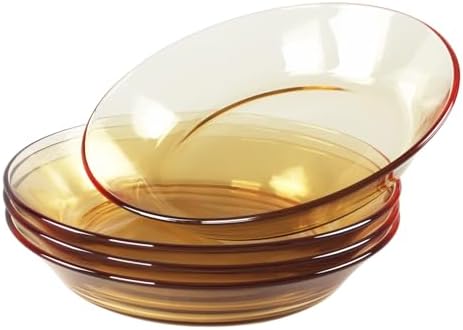
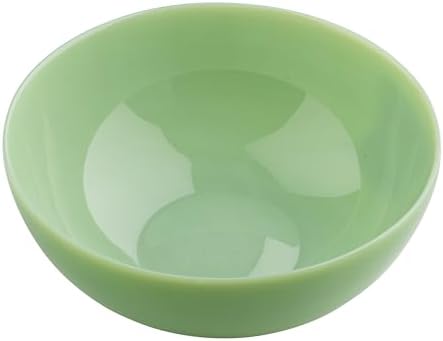

Modern milk glass pieces manufactured after approximately 1980 is generally made with titanium dioxide or other synthetic opacifiers that carry no meaningful lead or arsenic content.
When the brief below refers to “vintage” milk glass, it means pieces produced before 1970; modern reproductions sold today are a different product in terms of chemistry.
Does Vintage Milk Glass Actually Contain Lead?
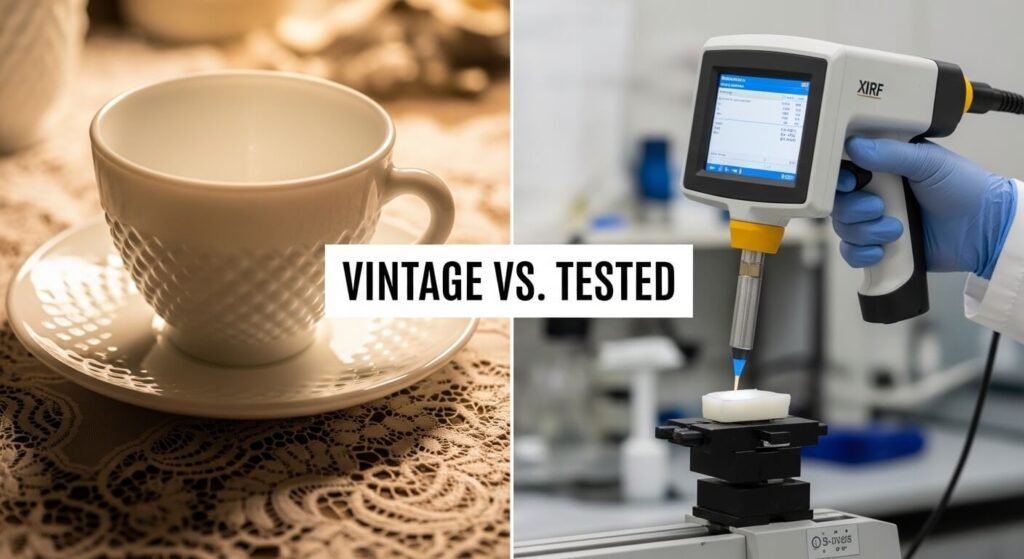
Yes, vintage milk glass frequently contains lead, though the amount and form varies significantly by era, manufacturer, and whether the piece is plain white or carries painted decoration.
Independent XRF testing (the same instrument technology used by the U.S. Consumer Product Safety Commission) has documented lead levels ranging from trace amounts in plain white interiors to tens of thousands of parts per million in painted decorative coatings.
The more important question which most sources skip entirely is not whether lead is present but whether it can get into your food.
Lead in the Glass Matrix vs. Leachable Lead: The Critical Difference
Total lead (measured by XRF): The total amount of lead atoms present in the glass material, regardless of whether they can be released. XRF instruments measure total elemental content.
A result of 893 ppm lead from an XRF test means 893 parts per million of lead exist somewhere in the glass but most of it may be chemically locked into the glass matrix, unable to migrate into food under normal conditions.
Leachable lead (measured by acid extraction): The amount of lead that actually transfers into food or liquid when the glass is in use.
This is what the FDA measures for ceramics — soaking items in 4% acetic acid (similar to vinegar) for 24 hours and testing the solution. No standardized leach testing has been published for vintage milk glass specifically.
Why this matters practically
A vintage Pyrex milk glass bowl testing 893 ppm total lead via XRF is not automatically equivalent in risk to a ceramic mug leaching 2 ppm of lead into tomato soup over 24 hours.
The glass matrix can hold lead in a relatively stable, inert state — particularly when the surface is intact and food contact is brief and non-acidic.
The risk increases sharply when the glass is scratched, when acidic or hot foods are involved, or when contact time extends to hours or days.
The problem, as food safety researcher Tamara Rubin has noted, is that no systematic leach-testing program currently exists for these vintage glass pieces meaning the “probably inert” characterization, while likely accurate for display use, has not been confirmed by food-contact testing.
Real XRF Test Data: What Lead Levels Have Been Found in Milk Glass
The following results come from XRF testing documented by the Lead Safe Mama project, which uses the same instrumentation as the CPSC. For context: 90 ppm is the threshold the CPSC considers unsafe in items manufactured for children.
| Piece | Lead (ppm) | Cadmium (ppm) | Notes |
|---|---|---|---|
| Vintage plain white Pyrex milk glass bowl | 893 | — | Undecorated white interior only |
| Vintage orange Hazel Atlas milk glass mug | 24,100 | 1,546 | Painted exterior coating |
| Anchor Hocking cornflower casserole (milk glass) | 18,600 | 137 | Blue painted pattern on exterior |
| Vintage blue Pyrex glass mugs | 71,800 | — | Blue painted exterior |
| Anchor Hocking Mickey Mouse Club milk glass mug | 75,300 | — | 15,400 ppm arsenic also detected |
| Fenton white milk glass hobnail fan vase | 136 | — | Display piece; undecorated |
The pattern in this data is consistent: plain, undecorated milk glass interiors test far lower than painted or decorated pieces. A plain white vase at 136 ppm is in a different risk category from a painted mug at 24,100 ppm.
Era-by-Era Safety Guide: Which Milk Glass Is Most Likely to Have Lead?
The safest way to assess a specific piece is to identify its approximate manufacturing era. The table below provides a practical framework for collectors, buyers, and owners.
| Era | Lead Risk | Primary Opacifier | Key Identifier |
|---|---|---|---|
| Pre-1840 (Venetian/European origin) | Low–Moderate | Tin oxide, bone ash | Very dense opacity; European hallmarks |
| 1840–1870 (Flint glass era) | High | Lead glass (flint glass) | Rings clearly when tapped; very opaque and heavy |
| 1870–1940 (Transitional American) | Moderate | Arsenic, cryolite, mixed | Iridescent quality; UV fluorescence in cryolite pieces |
| 1940–1980 (Vintage Pyrex/Anchor Hocking era) | Moderate–High (decorated) / Low (plain white) | Arsenic + painted decoration | Decorated exteriors carry the highest risk; plain white interiors lower |
| Post-1980 (Modern) | Low | Titanium dioxide, synthetic opacifiers | No ring tone; labeled lead-free if modern manufacture |
Pre-1840: Venetian-Origin Formula (Arsenic + Tin Oxide, Minimal Lead)
The earliest milk glass produced by Venetian and European makers used tin oxide as the primary opacifier and occasionally bone ash. These pieces predate the widespread use of flint glass in opaque formulas and generally carry lower lead risk.
Arsenic was used as a refining agent to clarify color but was not a deliberate opacifier in the same way. Because pieces from this era are now centuries old, intact examples are typically display-only antiques — food contact risk is a secondary concern to preservation.
1840–1870: Flint Glass Era — The Highest-Lead Milk Glass Period
Between approximately 1840 and 1870, American manufacturers began incorporating flint glass — a lead-containing glass formula — directly into milk glass production.
This was done to achieve a particularly brilliant, deeply white opacity with a glowing edge. Pieces from this era are physically identifiable: they ring with a clear, bell-like tone when tapped with a knuckle, exactly as lead crystal does.
The lead in these pieces is structural embedded throughout the glass body rather than only in a surface coating which means it cannot be simply washed off.
If you own an undecorated white piece from this era that rings audibly, treat it as a display-only item regardless of its condition.
1940s–1980s: Vintage Pyrex & Anchor Hocking — Lead in the Milk Glass Interior
This is the era most people searching this topic are actually concerned about. For a comprehensive examination of every Pyrex pattern and its risk profile, see our full guide on is vintage Pyrex safe to use. The key findings for this era:
- Plain white milk glass interiors (the white body of a Pyrex mixing bowl, for example) commonly test in the low hundreds of ppm — potentially inert, but not confirmed by leach testing.
- Painted exterior decorations are where the extreme lead numbers appear — patterns like cornflower, Gooseberry, and Butterfly Gold consistently test in the tens of thousands of ppm on the painted surface.
- The food-contact distinction matters here: if food only ever touches the undecorated white interior and never the painted exterior, the risk profile is different from serving food directly in a heavily decorated piece.
- Scratched surfaces increase leaching risk from both the interior milk glass and any exterior decoration — once the surface is compromised, the calculus changes.
- Anchor Hocking and Pyrex are the two brands most widely documented in independent XRF testing; Fire King jadeite has generally tested lower than Pyrex milk glass in available data.
For collectors who also own Depression-era colored glass, our guide on lead content in Depression glass applies a similar era-based framework.
How to Test Milk Glass for Lead at Home (and When to Go Professional)
If you want to know whether a specific piece contains lead, there are three practical options, each with different accuracy, cost, and appropriate use cases. Here is how to approach testing in order of increasing accuracy:
- Visual and acoustic identification first: Check the era (see the table above). Tap the piece with a knuckle — a clear ring tone is a strong indicator of lead glass from the 1840–1870 formula. This costs nothing and eliminates the need for a kit in obvious cases.
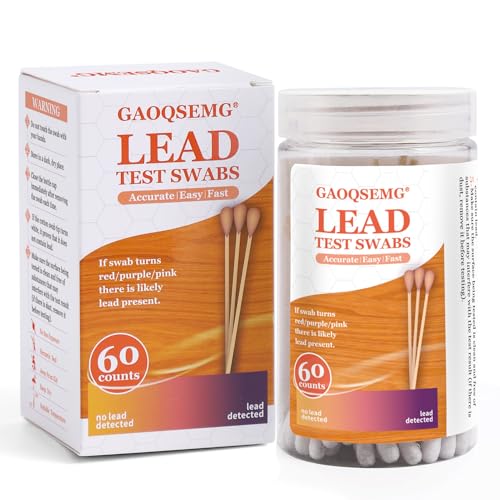
- Lead check swab test (home kit): Apply a 3M LeadCheck swab or similar reactive swab to a small area of the glass surface. A color change indicates detectable surface lead. This tests for surface-accessible lead only — not lead locked in the glass interior.
- XRF professional testing: Contact a certified lead inspector or environmental testing lab. XRF testing provides exact ppm readings for all heavy metals present. This is the appropriate method for high-value pieces, pieces you plan to use daily, or any piece where a definitive answer is needed.

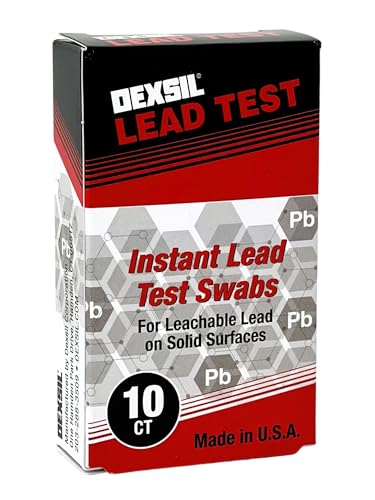
Home Lead Swab Kits: What They Can and Cannot Tell You
Home swab kits are useful but limited. Understanding those limits prevents both false reassurance and unnecessary alarm. For our full tested roundup, see best lead test kits for home use.
- What they detect: Lead that is accessible at the surface — typically paint or coating lead that can be chemically activated by the swab reagent.
- What they miss: Lead embedded deep within the glass matrix that is not surface-accessible; a negative swab result on a 1850s flint glass piece does not confirm the piece is lead-free.
- False positives: Some kits react to other metals (tin, bismuth) and may return positive results on pieces with no meaningful lead hazard.
- False negatives: Plain white milk glass interiors may return negative swab results even while containing hundreds of ppm total lead in the matrix — the lead simply isn’t reachable by the reagent.
- Manufacturer instructions matter: Read the specific kit directions; swab contact time and surface preparation affect result accuracy significantly.
XRF Testing: The Most Accurate Method for High-Value or Suspected Pieces
XRF (X-ray fluorescence) is a non-destructive testing method that directs a beam of X-rays at the object and reads the energy signature of elements present.
It provides exact ppm readings for lead, cadmium, arsenic, mercury, and other heavy metals simultaneously, with no damage to the piece.
Professional XRF instruments cost $30,000–$50,000 new, which is why access typically requires an environmental inspector, a consumer goods testing lab, or occasionally a lead-safety advocacy organization.
Testing takes roughly one to two minutes per component and produces documented, replicable results. For pieces worth more than a few hundred dollars, or for any item used daily for food, professional XRF testing is the only method that provides a defensible answer.
Is Milk Glass Safe to Use for Food and Drinks?
For vintage milk glass made before 1970, the honest answer is: use with caution and not for daily food contact, particularly for decorated pieces.
For modern milk glass manufactured after 1980, the risk is low provided it comes from a reputable manufacturer.
The risk from vintage pieces is not uniformly high a plain white milk glass vase used to hold dried flowers poses no meaningful exposure concern but the risk is real enough that daily food use, especially involving acidic or hot foods in scratched pieces, should be avoided.
When Lead Leaches: Acidic Foods, Hot Liquids, and Scratched Surfaces
Three factors dramatically increase the likelihood that lead migrates from glass into food or drink:
- Acidic foods and beverages — tomato products, citrus juice, vinegar-based dressings, wine, and coffee are all acidic enough to dissolve surface lead at a measurable rate; the FDA’s leach-testing standard uses 4% acetic acid specifically because it simulates these common food contacts.
- Heat — hot liquids accelerate chemical leaching from any surface; pouring boiling water into a vintage milk glass mug presents meaningfully higher risk than using the same mug to store dry items at room temperature.
- Scratched or worn surfaces — the glass matrix is most stable when the surface is smooth and intact; scratches, chips, and cloudiness from dishwasher abrasion all expose subsurface material and increase leach surface area; once a vintage piece is visibly worn, the inert-matrix argument no longer applies with confidence.
What the FDA Regulates (and What It Doesn’t) for Glass and Lead
This table documents the actual federal regulatory landscape — and the significant gap that leaves vintage glass largely outside consumer protection rules:
| Item Category | Federal Lead Limit | Regulatory Body | Notes |
|---|---|---|---|
| Ceramic flatware (plates) | 3 ppm leachable | FDA | Tested in 4% acetic acid, 24 hrs |
| Ceramic small hollowware (bowls) | 2 ppm leachable | FDA | Same test method |
| Ceramic cups and mugs | 0.5 µg/mL leachable | FDA | Strictest ceramics standard |
| Children’s toys and products | 90 ppm total lead in coating | CPSC (CPSIA 2008) | Does not cover dishware |
| Adult glass dishware (vintage) | No federal total-lead limit | — | Legally sold at any total lead level |
| Adult glass dishware (modern, new) | No total-lead standard; leach testing recommended | FDA guidance | Voluntary compliance only |
| Lead crystal glassware | No federal leach standard | — | FDA warns against storing food/drink |
The critical takeaway: There is no federal law limiting total lead content in adult glass dishware.
A vintage milk glass mug testing 24,100 ppm lead is legally sold in the United States today. The only applicable limits govern ceramics via leach testing — and vintage glass is tested under neither standard.
This is why independent testing and consumer education are the only available safeguards for this product category.
Brand-Specific Findings: Pyrex, Anchor Hocking, Fenton, and Fire King
| Brand | Plain White Interior Lead (typical) | Decorated Surface Lead (typical) | Other Metals Detected | Recommendation |
|---|---|---|---|---|
| Vintage Pyrex (1940s–1980s) | 100–900 ppm | 4,900–110,000 ppm | Cadmium in some patterns | Display plain white; retire decorated for food use |
| Anchor Hocking / Fire King | 100–200 ppm (plain) | 18,600–75,300 ppm | Arsenic in some pieces | Same as Pyrex guidance |
| Fenton (white hobnail, undecorated) | ~136 ppm | N/A (undecorated) | Minimal additional metals | Lower risk; display acceptable |
| Hazel Atlas (colored/painted) | Not tested separately | 24,100 ppm (orange) | Cadmium, mercury | Retire for food use |
| Modern Corelle / post-1990 milk glass | Not detected / negligible | Not detected | — | Generally safe for food use |
Decorated Exteriors vs. Plain Milk Glass Interiors: Why Painted Pieces Test Higher
The colored enamels and paints used to produce decorative patterns on vintage kitchenware the cornflower blue on an Anchor Hocking casserole, the orange band on a Hazel Atlas mug were historically formulated with lead-based pigments because lead oxide produces bright, stable, heat-resistant colors in glass enamels.
These decorations were applied to the exterior surface after the glass body was formed and fired at relatively low temperatures to bond them.
The result is a coating that is chemically distinct from the glass body itself and far more surface-accessible than lead in the interior matrix.
This explains why a plain white Pyrex bowl interior tests at 893 ppm while the white floral decoration on the exterior of a different Pyrex piece tests at 110,000 ppm the decoration is essentially a lead-pigment enamel, not glass.
Anchor Hocking’s Response to Lead Testing Results (and What It Means)
In 2023, when a consumer contacted Anchor Hocking directly about XRF test results showing high lead levels in their vintage Fire King pieces, the company’s written response denied any history of lead, cadmium, or arsenic in their products.
Independent testing documented at the time included: a glass measuring cup with blue markings at 36,300 ppm lead; a milk glass casserole with cornflower pattern at 18,600 ppm; and a Mickey Mouse Club milk glass mug at 75,300 ppm lead with 15,400 ppm arsenic.
The gap between the company’s denial and the documented test results is not resolved in available public records.
For current purchasers, this means manufacturer assurances alone are not sufficient due diligence for vintage pieces independent testing remains the only reliable path to confirmed results.
What to Do with Milk Glass You Think Contains Lead
The right response to a piece that may contain lead depends on who will use it and how. Use this decision sequence:
- Determine the era. Use the era table above. Pre-1970 pieces carry meaningful risk; post-1980 pieces from known manufacturers carry low risk.
- Assess condition. Is the surface scratched, chipped, or cloudy? Scratched surfaces elevate leach risk regardless of total-lead level — retire scratched vintage pieces from food use immediately.
- Identify decoration. Painted or colored exterior decoration? Treat as high-risk for any food contact regardless of whether food touches the decoration directly, because chipping and dishwasher use can transfer paint particles.
- Define intended use. Daily food use, occasional use, or display only? Daily food contact in high-risk pieces is not recommended. Occasional dry-food display contact in a low-decorated, intact piece is a lower-risk scenario.
- Test if uncertain. Use a home swab kit as a preliminary screen; commission XRF for any piece used regularly or valued highly.
- Make the decision. The options below clarify when keeping a piece is reasonable.
Display-Only Use: Situations Where Keeping Vintage Milk Glass Is Fine
Not all lead-containing glass needs to be discarded. Display use is a legitimate and lower-risk option when:
- The piece is intact with no chips, scratches, or surface wear — the glass matrix holds lead more stably when undamaged.
- The piece will not contact food, beverages, or a child’s hands — decorative use as a vase for dried flowers, a candle holder, or a shelf display presents no meaningful exposure pathway.
- The piece is not used by children under 6 — young children who mouth objects or touch surfaces and then touch their faces face a different exposure pathway than adults.
- Acidic or wet materials are not stored inside — even for display, do not store vinegary items, wet soil, or acidic solutions in a vintage milk glass container.
For parents concerned about historical exposure from previous daily use, we recommend you consult a pediatrician about blood lead level testing if exposure was frequent or prolonged.
Special Considerations for Children, Pregnant Women, and Infants
The CDC and FDA both state there is no known safe level of lead exposure for humans at any age — but the risk is disproportionately higher for certain groups:
- Children under 6 absorb a significantly higher percentage of ingested lead than adults, and lead interferes with neurological development at blood levels once considered acceptable; any milk glass used to serve food or drink to young children should be retired, regardless of total-lead level.
- Pregnant women face dual risk: lead stored in bone from past exposures can mobilize during pregnancy and cross the placental barrier; adding dietary lead from vintage dishware during pregnancy is an avoidable additional exposure.
- Breastfeeding women similarly face mobilization of stored bone lead, which can transfer to breast milk; using vintage milk glass daily during lactation adds unnecessary dietary lead intake.
- Infants using any vintage milk glass bowl, cup, or dish for food preparation or feeding should be transitioned to confirmed lead-free alternatives immediately — there is no risk threshold low enough to accept for this age group.
Lead-Safe Alternatives: Modern Milk Glass and Glass Options for Daily Use
If you want the aesthetic of milk glass without the lead risk, several options exist:
- Modern Corelle dinnerware — made from Vitrelle tempered glass, lead-free, and sold new with food-safety compliance documentation; the white opaque appearance closely approximates vintage milk glass.
- Post-1990 milk glass reproductions from known US or EU manufacturers — look for pieces explicitly labeled lead-free; avoid unmarked pieces or those imported without documentation.
- Borosilicate glass (clear) — not milk glass aesthetically, but consistently lead-free and food-safe for daily use including acidic foods and microwaving.
- New porcelain or bone china from reputable current manufacturers — meets modern FDA ceramic standards for leachable lead.
For tested, reviewed recommendations with current purchasing links, see our guide to lead-free vintage-style dinnerware alternatives.
For anyone testing their existing collection before deciding what to keep, our full roundup of how to test vintage dishes for lead at home (link above) covers every dish type and the best kit for each situation.
Frequently Asked Questions: Milk Glass and Lead Safety
Can lead leach from intact milk glass into food?
Possibly, but it depends on three factors: whether the glass surface is scratched, what type of food is in contact, and how long. An intact piece used briefly with dry or neutral-pH food presents lower risk than a scratched piece holding acidic food for hours.
No systematic leach-testing program for vintage milk glass currently exists, so “probably low risk in ideal conditions” is the most accurate characterization available.
Does the “ring test” reliably identify lead in milk glass?
It identifies one specific category of lead glass — the 1840–1870 flint glass formula — with reasonable reliability. A clear bell-like ring when the glass is tapped indicates lead-containing crystal glass in the body.
However, many milk glass pieces contain lead only in painted surface decorations and will not ring; the absence of a ring tone does not confirm a piece is lead-free.
Is modern milk glass (post-1980) safe for food?
Generally yes, provided it comes from a US or EU manufacturer with food-safety compliance documentation. Modern opacifiers (titanium dioxide, synthetic compounds) do not contain lead.
The risk in modern milk glass is confined to any painted decoration, which should still be treated with the same caution as vintage decorated pieces if the decoration contacts food directly.
How many ppm of lead is unsafe in glassware?
The CPSC threshold for children’s items is 90 ppm in any coating or paint. There is no federally mandated ppm threshold for total lead in adult glass dishware it is effectively unregulated for total content.
The FDA’s ceramics standard of 0.5 µg/mL is a leachable-lead limit, not a total-content limit, and it applies to ceramics, not glass.
Can I still use vintage milk glass if I only use it for display?
Yes — display use for intact, undecorated pieces is generally a low-risk option.
The exposure pathways that make lead in glass dangerous (ingestion via food, mouthing by children, inhalation of dust from damaged surfaces) are absent in standard decorative display.
Keep pieces away from children who might handle and mouth them, and do not store food or drink in display pieces.
Should I be worried if I’ve been eating off milk glass for years?
If you are an adult with no other known lead exposures and the pieces were primarily undecorated and intact, the cumulative risk is likely low but not zero.
If the pieces were heavily decorated, scratched, or used daily with acidic foods, it is reasonable to ask your doctor for a blood lead level test. Blood lead testing is a standard and inexpensive laboratory test.
Do lead test swabs work accurately on glass?
Partially. Swabs reliably detect surface-accessible lead in painted decorations, but they can miss lead embedded in the glass matrix and sometimes produce false positives from other metals.
Use a swab as a preliminary screen, not a definitive clearance — a negative swab result on a vintage piece does not confirm it is lead-free.
Is Corelle milk glass lead-free?
Yes, Corelle milk glass and Modern Corelle dinnerware (Vitrelle glass) is manufactured to be lead-free and meets current FDA food-safety standards. Corelle has confirmed compliance with lead-free manufacturing for current production.
Vintage Corelle pieces from before approximately 1990, particularly those with decorative painted patterns, should be treated with the same caution as other vintage decorated glass.
About the Author & Reviewer
Sarah Emirone, Author
Sarah researches and writes SafeKitchn’s dinnerware and kitchenware guides, with a focus on material safety, lead content, and manufacturer specifications. She cross-references product data sheets, safety certifications, and regulatory filings (including FDA and Prop 65 records) before publishing, and updates articles when new information becomes available.
James Daniels, Reviewer
James reviews SafeKitchn’s material safety content for scientific accuracy. He holds a B.Sc in inorganic chemistry and works as a materials researcher, with particular focus on the composition and safety behavior of glass, ceramic, and metal used in kitchenware.