

If you collect vintage glassware or have recently inherited a set of colorful Depression-era dishes, you have probably wondered: does depression glass contain lead?
It is a fair question, and one more collectors are asking as awareness around household lead exposure grows.
Depression glass is cherished for its beauty and history, but some pieces produced during the 1920s through 1940s may contain trace heavy metals depending on the glass pigments and manufacturing methods used.
Most base glass is soda-lime composition and lead-free, but painted decorations and certain colored glass pigments tell a more complicated story. Here is what you actually need to know.
Written by Sarah Emirone | Reviewed by James Daniels, B.Sc, Inorganic Chemist & Materials Researcher | Updated September 2026 | See How We Test | Filed under: Material Safety & Lead Testing
What Is Depression Glass?
Definition of Depression Glass
Depression glass refers to mass-produced colored glassware manufactured primarily in the United States between the 1920s and 1940s.
Companies like Hazel-Atlas Glass Company, Anchor Hocking, Jeannette Glass Company, and Federal Glass Company produced these pieces at high volume using automated pressed glass technology.
The result was affordable, thin, translucent glassware in a range of colors that ordinary households could actually buy during tough economic times.
Today, those same pieces are among the most actively traded vintage collectibles in the antique glassware market.
Why It Is Called Depression Glass
The name connects directly to the Great Depression era, when this glassware was at its peak production.
Manufacturers kept costs low and distributed pieces through grocery stores, gas stations, and as promotional glassware inside product packaging, cereal boxes, flour bags, and similar goods.
Families who could afford very little could still accumulate full sets of vintage tableware one piece at a time.
That Depression era economy shaped both the manufacturing approach and the sentimental value collectors attach to these pieces today.
Common Colors and Patterns
Depression glass came in a wide range of colors. Pink depression glass is probably the most recognized, followed closely by green depression glass, amber, cobalt blue, and clear.
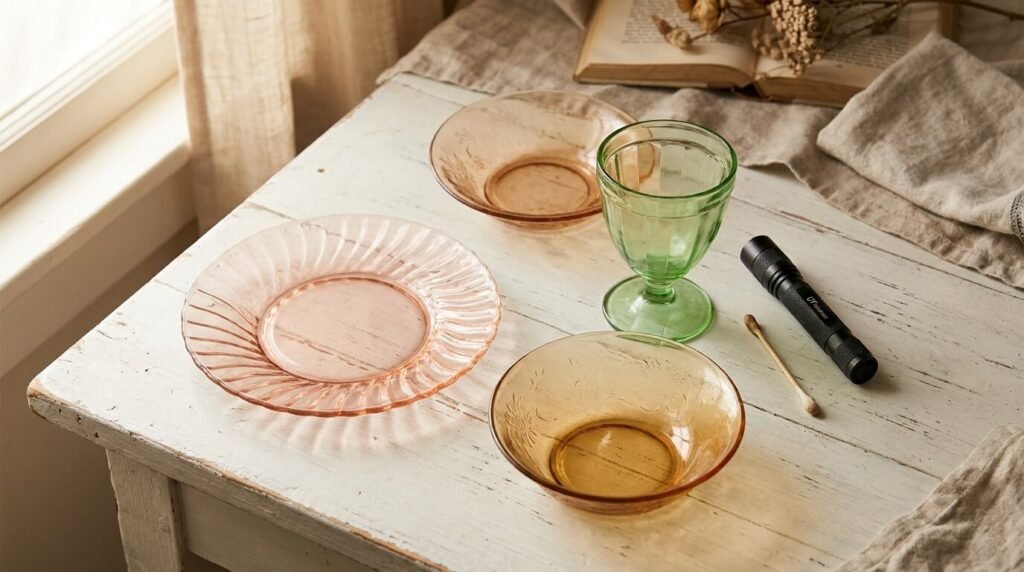
Some rarer colors like red and yellow also exist, but are significantly harder to find. Patterns were equally varied; the Cherry Blossom pattern from Jeannette Glass, the Cameo pattern from Anchor Hocking, and the Princess pattern from Hocking Glass are among the most collected.
Each manufacturer produced dozens of distinct designs, and pattern identification remains central to vintage glass identification and valuation today.
Why Depression Glass Became Collectible
Several things drove Depression glass into serious collectible territory. The historical connection to a defining American era gives pieces genuine cultural weight.
The visual appeal of translucent colored glass catches attention in ways that plain white dishes simply do not. Scarcity of certain patterns and colors drives competitive collecting.
And the price point is historically accessible compared to luxury antique glassware, opening collecting to a broad audience.
Antique glass collecting communities have built extensive documentation around patterns, manufacturers, and authentic Depression glass identification that supports an active vintage glass market.
Does Depression Glass Contain Lead?
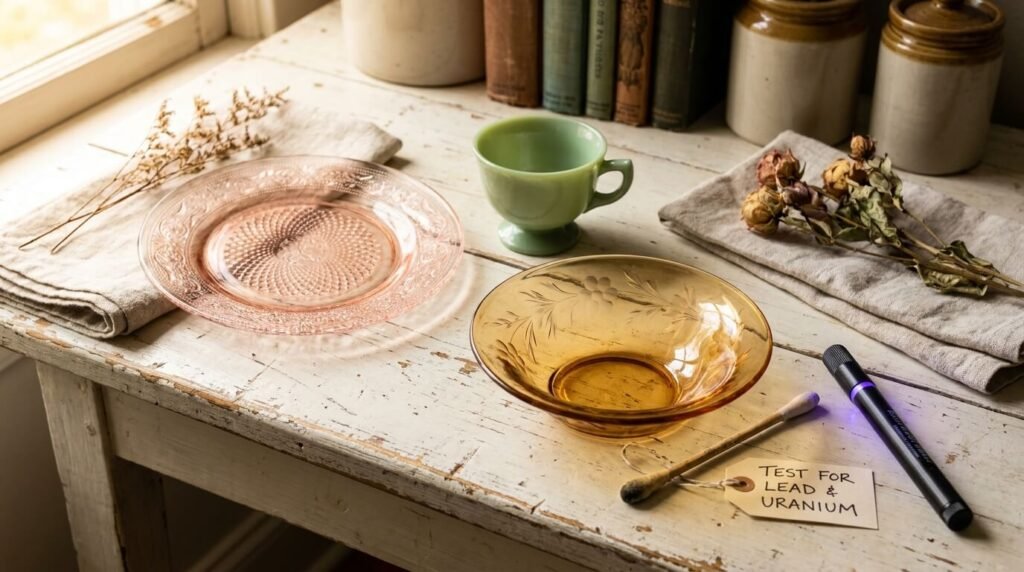
Most Depression glass produced by major American manufacturers is composed of soda-lime glass, which does not contain significant lead content.
The base glass itself, the translucent pink, green, or amber material, was generally not formulated with lead oxide, the way lead crystal is.
However, some pieces with applied painted glass decorations, enameled trim, or specialty finishes may contain lead or cadmium in the surface pigments.
So the honest answer is: the glass itself usually does not, but decorative coatings on certain pieces might. The risk is not uniform across all Depression glass.
Why Lead Was Used in Older Glassware
Lead oxide was historically added to glass to increase brilliance, clarity, and refractive quality properties most associated with lead crystal rather than everyday pressed glassware.
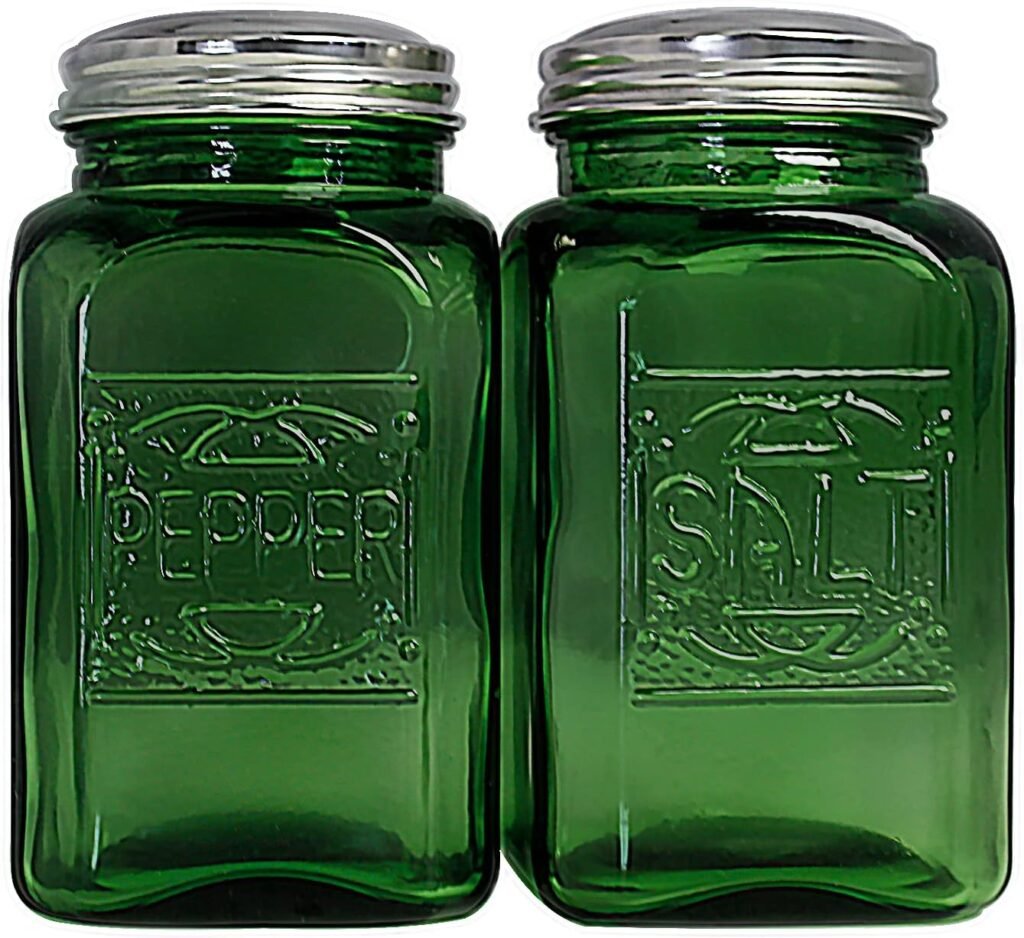
In painted decorations and colored glass pigments, lead-based compounds provided vivid, stable colors that held up through firing. Cadmium in glass produced rich red and orange tones.
Arsenic in glass served as a clarifying agent in the molten batch. These were standard industrial glass manufacturing practices before modern toxicology testing, and FDA food contact standards established the safety benchmarks manufacturers follow today.
Which Types of Depression Glass Are More Likely to Contain Lead?
Pieces with hand-painted glassware decorations or applied enamel finishes carry the most meaningful risk of surface-level lead or cadmium content.
Bright red and orange colored glass from this era sometimes used cadmium or selenium compounds in the glass pigment chemistry. Pieces with gold or metallic trim may also contain heavy metals in the surface coating.
Plain translucent Depression glass in standard colors — pink, green, amber, clear — produced through the pressed glass process by manufacturers like Hazel-Atlas is generally considered lower risk, though XRF analyzer testing on individual pieces gives the most reliable result.
Is All Depression Glass Unsafe?
No. The vintage glassware safety debate among collectors is complicated, not a blanket condemnation.
The majority of plain Depression glass pieces have been used by families for decades without documented harm. The chemical stability of soda-lime glass is generally good.
The concern intensifies with pieces that have heavy decorative surface coatings, are chipped or worn, or are used regularly with acidic foods and beverages.
Occasional display or careful occasional use is very different from using these pieces as daily food-safe glassware. Context, condition, and usage frequency all factor into a realistic safety assessment.
Is Depression Glass Safe to Use Today?
Decorative Use vs Everyday Food Use
There is a meaningful practical difference between displaying Depression glass on a shelf and eating from it daily.
For decorative display collection purposes, the risk is essentially zero — the glass is not in contact with food or drink, so lead leaching is not a factor.
For everyday food use, the calculus changes. Repeated contact with acidic food interaction — tomato-based dishes, citrus juice, vinegar dressings — can accelerate chemical leaching from compromised or decorated glass surfaces.
Collectors who love their pieces but want to be cautious use them for display and keep modern lead-free glass for the kitchen.
Is It Safe to Serve Food or Drinks?
Occasional use for food serving is generally considered low risk for plain, undamaged Depression glass in good condition.
The primary concern is lead leaching from painted or enameled surfaces when exposed to acidic beverages or foods over time. Antique glass pieces should not be used for storing food or drinks for extended periods, microwaving, or serving hot acidic dishes regularly.
For pieces with visible painted decorations or metallic trim, the decorative use recommendation from most consumer safety guidelines is clear: display them, do not dine from them regularly.
When uncertain, food safety testing through an XRF analyzer or acid leach test removes the guesswork.
Can Chipped or Damaged Glass Increase Risk?
Yes, significantly. Surface wear on glass and chips along rims or bases expose the interior structure of the glass and any subsurface pigment layers, increasing the potential for lead leaching and contact with food.
A piece that was relatively stable when intact can become a more meaningful concern once damaged. Glass cloudiness from repeated dishwasher exposure also indicates surface degradation.
For collectible glass pieces showing visible wear, chips, or crazing, the decorative use recommendation applies strongly because the risk of chemical exposure from a damaged piece is meaningfully higher than from an undamaged one.
Best Practices for Safe Use of Vintage Glassware
If you choose to use Depression glass for occasional serving, hand-wash pieces gently rather than running them through a dishwasher, which causes surface degradation over time.
Avoid using them with acidic foods or drinks for extended periods. Do not store food or liquids in them. Keep painted or heavily decorated pieces strictly for display.
For pieces you use regularly and care about testing, home lead test swabs provide a basic surface check, while professional toxicology testing through an XRF analyzer gives a definitive composition analysis.
These precautions let you enjoy vintage tableware without unnecessary exposure risk.
How to Tell Fake Depression Glass
Reproduction Depression glass exists and can be tricky to distinguish from authentic pieces. Genuine Depression glass typically shows slight mold seams from the pressed glass production process and has a thin, somewhat uneven feel.
Authentic pieces often show minor imperfections — small bubbles, slight color variation — consistent with 1920s to 1940s glass manufacturing.
Reproductions tend to have sharper, more uniform color, heavier weight, and overly perfect surfaces.
Check glassmaker marks on the base, compare patterns against documented references, and examine the glass under light for the irregular qualities that characterize genuine Depression era manufacturing.
If the price seems too low for a supposedly rare piece, trust that instinct.
Is Pink Depression Glass Radioactive?
Pink Depression glass is not radioactive. The pink color was achieved through selenium in glass or small amounts of gold chloride, neither of which is radioactive.
Radioactivity in vintage glassware is associated specifically with uranium glass, the yellow-green variety collectors call Vaseline glass, which contains uranium oxide.
Standard pink Depression glass produced by companies like Jeannette Glass Company does not contain uranium and will not fluoresce under a blacklight the way uranium glass does. It is safe to handle and display without any radiation concerns.
Does Green Depression Glass Have Lead in It?
Green Depression glass is where the uranium question becomes most relevant.
A significant portion of green Depression glass, particularly the yellow-green shades, was colored using uranium oxide, making it technically uranium glass or Vaseline glass rather than lead-containing glass.
This uranium glass glows bright green under UV light. The lead content in the base glass itself is generally minimal for pressed soda-lime green glass, but uranium is present in many examples.
The radiation emitted is low-level and considered safe for display and handling by most regulatory standards, though using it as everyday food-safe glassware is not recommended.
Does Pink Depression Glass Glow?
Standard pink Depression glass does not glow under ultraviolet light. Glass fluorescence under a blacklight is the signature of uranium glass, and pink Depression glass is not made with uranium oxide.
If you hold a piece of genuine pink Depression glass under a UV blacklight and it does not glow, that is expected and normal.
Some pink pieces with certain mineral pigments may show a very faint reaction, but the vivid green glow associated with uranium glass is absent.
If a piece described as pink Depression glass glows brightly under UV, it likely contains uranium and may be misidentified or mislabeled.
Does Depression Glass Have Uranium?
Some Depression glass does contain uranium. The yellow-green colored pieces commonly called Vaseline glass were manufactured with uranium oxide as a coloring agent, producing the characteristic glass fluorescence that glows bright green under blacklight testing.
Uranium glass production was common before and during the Depression era, before uranium was restricted for civilian manufacturing during World War II.
The low-level radiation emitted by uranium glass is generally considered safe for display and occasional handling. Using a Geiger counter or radiation detection meter confirms uranium content definitively.
Not all Depression glass contains uranium; only specific green and yellow-green varieties.
Is Depression Glass Valuable?
Yes, Depression glass can be quite valuable depending on color, pattern, manufacturer, and rarity.
Common patterns in pink or green from major manufacturers might sell for a few dollars per piece, while rare colors like red, tangerine, or black in desirable patterns can command hundreds of dollars for a single item.
Cobalt blue glass and certain Anchor Hocking or Jeannette Glass patterns in perfect condition attract strong collector interest.
Rarity, condition, and authentic Depression glass verification all drive pricing. Glassware appraisal through a specialist or active monitoring of auction results gives the most accurate picture of current market value for specific pieces.
Depression Glass vs Other Vintage Glassware
Depression Glass vs Lead Crystal
This is probably the most important distinction for safety purposes. Lead crystal — like pieces from Waterford intentionally contain significant lead oxide, typically 24 percent or more, which gives them brilliance, weight, and that distinctive ring when tapped.
Depression glass, by contrast, is soda-lime glass with no intentional lead content in the base material.
Crystal vs Depression glass is not even a close comparison on lead content. Crystal was designed with lead, and Depression glass generally was not.
If you are concerned about lead exposure, lead crystal used for daily drinking is a greater concern than plain Depression glass.
Depression Glass vs Uranium Glass
Uranium glass and Depression glass overlap; some Depression glass is uranium glass, specifically the yellow-green colored pieces.
The distinction matters because uranium glass glows under UV light due to its uranium oxide content, while most Depression glass does not. Vaseline glass is the informal name for the most recognizable uranium glass variety.
The health considerations also differ: uranium glass raises low-level radiation questions rather than lead leaching questions.
Both categories are generally considered safe for display; neither is recommended as everyday food-safe glassware for regular use with food and drink.
Depression Glass vs Modern Glassware
Modern glassware manufactured to current FDA food contact standards and consumer product safety regulations is produced without lead, cadmium, or other heavy metals in the glass or decoration.
Glassware certification processes verify compliance before products reach consumers. The comparison with vintage Depression glass is straightforward: modern lead-free glass is the safer choice for daily food use, full stop.
That does not diminish the historical and aesthetic value of Depression glass; it simply means the two categories serve different purposes.
Depression glass belongs in a display cabinet or is used occasionally with care; modern glassware belongs on the everyday dinner table.
Which Vintage Glassware Is Considered Safest?
Among vintage glassware categories, plain, undecorated soda-lime Depression glass in good condition, no chips, no painted decoration, no metallic trim, is generally considered the lower-risk option for occasional use.
Milk glass and Monax glass from MacBeth-Evans are opaque but also typically soda-lime based. The highest concern pieces are those with painted or enameled decoration, metallic trim, or vivid red and orange coloring, where cadmium in glass was commonly used as a pigment.
When safety matters most, modern lead-free collectible glass reproductions let you enjoy the aesthetic of Depression era style without the material uncertainty.
Valuable Depression Glass Patterns and Brands
Popular Depression Glass Manufacturers
The major Depression glass manufacturers are well-documented, and their pieces are the most actively collected.
Hazel-Atlas Glass Company produced some of the most widely recognized patterns and is identified by its H-over-A glassmaker mark.
Anchor Hocking is another major producer, particularly known for its Fire-King line alongside Depression glass patterns.
Jeannette Glass Company and Federal Glass Company rounded out the core group of American producers.
MacBeth-Evans Glass specialized in the softer, translucent Monax glass and certain pink patterns. Each manufacturer had distinct production characteristics that helped with vintage glass identification.
Common Collectible Patterns
Pattern identification is central to Depression glass collecting. The Cherry Blossom pattern from Jeannette Glass in pink and green is among the most collected.
The Cameo pattern from Anchor Hocking in green features a dancing girl motif that is immediately recognizable. The Princess pattern offers geometric styling that appeals to collectors drawn to Art Deco glass aesthetics.
The Mayfair pattern from Hocking Glass in pink is another consistent collector favorite.
Each pattern has documented colorways, known reproductions to watch for, and published pricing references that active collectors use to evaluate vintage glassware at estate sales and auctions.
Rare and Valuable Pieces
Rarity drives the top end of Depression glass pricing significantly. Pieces in unusual colors for a given pattern, a pattern normally found in pink appearing in red or black, are considerably more valuable than the same design in common colors.
Cobalt blue glass pieces and tangerine or fired-on colors command premiums. Complete sets in excellent condition, particularly for patterns with many pieces in the full service, attract serious buyers.
Certain limited production runs from specific manufacturers in specific years are documented as rare in collector references, and authentic Depression glass in those categories can reach surprising prices at specialist auctions.
How Collectors Identify Authentic Depression Glass
Authentic Depression glass identification relies on several overlapping methods.
Physical examination for mold seams consistent with pressed glass production, appropriate weight and thickness for the era, and minor imperfections characteristic of 1920s to 1940s manufacturing all help.
Pattern comparison against documented glass pattern books and collector guides confirms design authenticity. Glassmaker marks on the base, where present, narrow down the manufacturer.
For pieces suspected to be reproduction Depression glass, the color tends to be slightly off, the weight heavier, and the surface too uniform compared to genuine antique glassware.
Consulting established collector communities and specialist appraisers resolves difficult cases.
Conclusion
So, does depression glass contain lead? The base glass in most Depression glass, the soda-lime pressed glass produced by Hazel-Atlas, Anchor Hocking, Jeannette, and similar manufacturers, does not contain significant lead.
The real concern sits with painted decorations, enameled finishes, and metallic trims where heavy metals, including lead and cadmium, were used as glass pigments.
Green uranium glass varieties contain uranium rather than lead. The safety picture depends entirely on the specific piece: its color, decoration, condition, and how it is used.
Blanket panic is not warranted, but blanket dismissal of the question is not wise either.
Final Recommendation
If you use Depression glass regularly, test pieces that matter to you, home lead test swabs give a basic surface read, and professional XRF analyzer testing gives a definitive answer.
Switch to modern lead-free glassware for daily dining and cooking, especially for acidic foods and drinks. Preserve Depression glass primarily as collectible decor when you are uncertain about its composition or condition.
A chipped, heavily decorated, or unknown-origin piece belongs on a shelf, not on the dinner table.
Enjoyed responsibly, Depression glass remains a genuinely beautiful connection to American history, just one worth understanding clearly before using.
About the Author & Reviewer
Sarah Emirone, Author
Sarah researches and writes SafeKitchn’s dinnerware and kitchenware guides, with a focus on material safety, lead content, and manufacturer specifications. She cross-references product data sheets, safety certifications, and regulatory filings (including FDA and Prop 65 records) before publishing, and updates articles when new information becomes available.
James Daniels, Reviewer
James reviews SafeKitchn’s material safety content for scientific accuracy. He holds a B.Sc in inorganic chemistry and works as a materials researcher, with particular focus on the composition and safety behavior of glass, ceramic, and metal used in kitchenware.