

Vitrelle glass and opal glass look nearly identical on a table, both white, both smooth, both non-porous. But Vitrelle glass vs opal glass is not a comparison between two similar materials.
They are made through completely different manufacturing processes, perform differently under heat, and break differently when dropped.
Vitrelle is a proprietary three-layer laminated glass-ceramic technology owned exclusively by Corelle. Opal glass is a broad material category used by dozens of brands worldwide.
Understanding the distinction between brand-specific technology versus global material categories is the foundation for every practical comparison that follows.
Written by Sarah Emirone | Reviewed by James Daniels, B.Sc, Inorganic Chemist & Materials Researcher | Updated September 2026 | See How We Test | Filed under: Brand & Product Comparisons
What Is Vitrelle Glass and What Is Opal Glass?
Vitrelle and opal glass are not two names for the same thing. They are structurally and chemically distinct materials that happen to produce a similar white, opaque appearance.
The difference begins at the manufacturing level and carries through to every performance characteristic.
Vitrelle Glass — The Patented Three-Layer Laminate Process
Vitrelle is a proprietary glass-ceramic material developed by Corning and used exclusively in Corelle dinnerware since 1970.
It is manufactured by thermally bonding three layers of glass into a single laminate: a thick, opaque white core layer sandwiched between two thin, clear skin layers.
The core undergoes controlled crystallisation during cooling, transforming from clear glass into a light-diffusing glass-ceramic, which is why Vitrelle is technically classified as a glass-ceramic rather than pure glass.

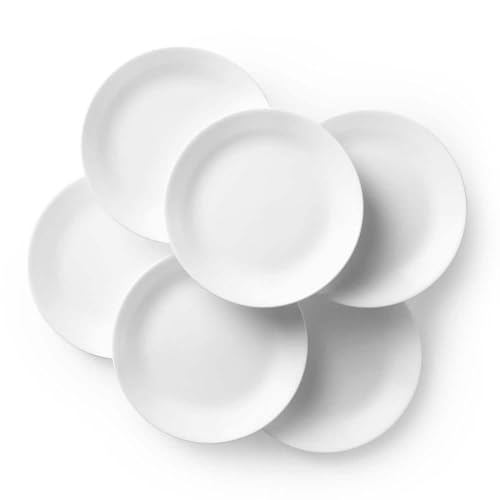


The structural strength of Vitrelle does not come from thickness or simple tempering. It comes from a deliberate mismatch in thermal expansion coefficients between the three glass layers.
Because the outer skin layers have a higher coefficient of thermal expansion than the core, they contract more during cooling but are constrained by the bonded core, leaving the outer surfaces in a state of permanent compression.
As documented by the American Ceramic Society and the Corning Museum of Glass, a surface held in compression resists impact fracture significantly better than a surface in a neutral or tension state.
This is the same principle used in automotive safety glass and is what allows Vitrelle to survive drops that would shatter an equivalent-thickness ceramic plate. For a full deep-dive into the manufacturing science, see our complete guide to what Vitrelle glass is.
Key structural properties:
- Three bonded layers in permanent compression: The outer surfaces are held under compressive stress throughout the life of the product, not just at the moment of manufacture.
- Glass-ceramic core: The crystallised core provides a different refractive index than the skin layers, producing the characteristic opaque white appearance without added pigment.
- Non-porous throughout: The laminated structure has no pores or absorption pathways, making it inherently stain-resistant and hygienic.
Opal Glass — Single-Body Tempered Glass Made White Through Chemistry
Opal glass (also called opalware or milk glass in some markets) is a single-body tempered glass made opaque through the introduction of fluorine compounds or phosphate additives during the glass melting process.
These compounds cause light-scattering micro-crystals to form throughout the glass body as it cools, producing the characteristic white, opalescent appearance. Unlike Vitrelle, opal glass is a monolithic piece — one uniform body of material rather than a laminated assembly.

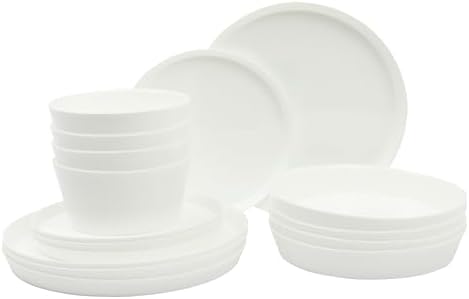


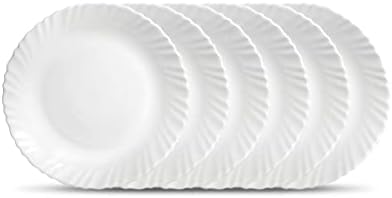

The opacity is chemically created, not structural. As confirmed in historical glass-industry patents, aluminium fluoride (AlF₃) is a common opacifying agent in opal glass — the degree of opacity depends on the quantity of this compound included in the batch.
After forming, opal glass is typically thermally tempered to increase mechanical strength, giving it up to three times greater mechanical resistance than standard non-tempered glass.
Key structural properties:
- Single monolithic body: No internal layer boundaries, which produces a different stress distribution on impact compared to laminated Vitrelle.
- Chemically induced opacity: The white colour results from fluorine- or phosphate-based compounds dispersed through the glass matrix during melting, not from surface coatings or added layers.
- Thermal tempering: The glass body is heated and rapidly cooled after forming, placing the outer surface in compression — similar in principle to Vitrelle but applied to a single layer rather than a laminate.
Vitrelle vs Opal Glass — Full Performance Comparison
The two materials share several surface-level properties: both are non-porous, both are white, both are dishwasher and microwave-safe, but they diverge significantly on weight, oven compatibility, and breakage behaviour.
The table below covers every attribute that matters for a purchase decision.
Side-by-Side Specification Table — All Key Attributes
| Attribute | Vitrelle Glass (Corelle) | Opal Glass (Arcopal, La Opala, Luminarc, etc.) |
|---|---|---|
| Structure | Triple-layer laminated glass-ceramic | Single-body tempered glass |
| Weight | Lightweight — thinner than ceramic, stacks in half the cabinet space | Slightly heavier — closer to standard ceramic weight |
| Chip resistance | High — outer compression layers absorb lateral edge impact | Good — thermally tempered surface resists chipping |
| Break resistance | High — survives 172 cm drop in published testing | Good — up to 3× mechanical resistance vs standard glass |
| Oven safe | ✅ Yes — up to 350°F / 176°C (preheated oven only) | ❌ No — not recommended for conventional oven use |
| Microwave safe | ✅ Yes | ✅ Yes |
| Dishwasher safe | ✅ Yes | ✅ Yes |
| Freezer safe | ✅ Yes | ✅ Yes |
| Bone ash content | None — fully vegan-compatible | None — fully vegan-compatible |
| Pattern application | Glassy ink fused onto skin layer — slightly raised, permanent | Printed or applied under/over glaze depending on brand |
| Recyclable | ❌ No — cannot go through household glass recycling | ❌ No — cannot go through household glass recycling |
| Brand availability | Corelle only | Arcopal, La Opala, Luminarc, IKEA 365+, Cello, and others |
| Price range (typical set) | Mid-range — competitive for the technology | Budget to mid-range — wide variation by brand |
Breakage Behaviour — Why How They Break Matters as Much as Whether They Break
Both materials are engineered to resist breaking, but when they do break, they fail in distinctly different ways, and that difference is a genuine practical consideration, particularly for households with young children or pets.
Vitrelle, as a laminated tempered glass-ceramic, releases stress across multiple bonded layers when it fractures. The result is that a broken Vitrelle plate typically shatters into many small, relatively blunt pieces.
The individual fragments are small enough that locating every piece on a hard floor requires careful inspection, a relevant safety consideration when children or pets are nearby.
Opal glass, as a single-body tempered glass, has a different internal stress distribution.
When it breaks, it tends to fracture into fewer, larger pieces with more defined edges. Individual shards are easier to see and collect, but the edges of those larger pieces can be sharper than Vitrelle’s small fragments.
Practical implications by household type:
- Households with young children or barefoot adults: Vitrelle’s small-shard breakage pattern requires more thorough cleanup after a break — check the surrounding floor area carefully beyond the immediate impact zone.
- Households with pets: Small Vitrelle fragments can be difficult to detect in pet bedding or soft flooring; opal glass’s larger fracture pieces are generally easier to identify and remove.
- Commercial or restaurant environments: Opal glass’s predictable fracture pattern makes post-breakage cleanup more consistent; Vitrelle’s small shards are harder to account for in a busy kitchen setting.
Oven, Microwave, and Dishwasher Safety — Where They Differ Most
Vitrelle and opal glass share microwave and dishwasher compatibility, but they diverge sharply on oven use, and this is the most functionally important difference for buyers who use their dinnerware for reheating and light oven cooking.
Vitrelle Glass — Oven Safe to 350°F, Microwave Safe, Dishwasher Safe
The following limits are confirmed by Corelle’s official product FAQ and care documentation.
| Appliance | Vitrelle Verdict | Condition |
|---|---|---|
| Microwave | ✅ Safe | Do not microwave empty dishes — food must be present to absorb energy |
| Conventional oven | ✅ Safe up to 350°F / 176°C | The Oven must be fully preheated before inserting the dish never cold-to-hot transfer |
| Dishwasher | ✅ Safe | Avoid direct contact with metal utensils or cookware during the cycle |
| Freezer | ✅ Safe | Allow frozen dishes to reach room temperature before microwaving or placing in the oven |
| Broiler /stovetop /toaster oven element | ❌ Not safe | Direct heat sources above the rated temperature will damage or break the glass |
For the full rules around Corelle Vitrelle in the microwave and oven, see our full Corelle microwave safety guide.
Opal Glass — Microwave and Dishwasher Safe, But Not Oven Safe
Most opal glass dinnerware brands, including Arcopal, La Opala, and standard Luminarc opalware lines, are not rated for conventional oven use.
The single-body tempered construction does not provide the same heat tolerance as Vitrelle’s glass-ceramic core, and placing most opal glass in a conventional oven risks thermal cracking.
| Appliance | Opal Glass Verdict | Condition |
|---|---|---|
| Microwave | ✅ Safe | Follow brand-specific guidance on time and power — most brands recommend avoiding very long high-power cycles |
| Conventional oven | ❌ Not recommended | Most opal glass brands explicitly exclude oven use — check your specific brand’s documentation before attempting |
| Dishwasher | ✅ Safe | Standard dishwasher cycles; avoid abrasive cleaning agents that can degrade surface finish over time |
| Freezer | ✅ Safe | Allow to reach room temperature before reheating |
| Broiler/stovetop | ❌ Not safe | No opal glass dinnerware brand recommends direct heat source use |
Which Brands Make Vitrelle vs Which Brands Use Opal Glass?
The brand landscape for these two materials is not symmetrical. Vitrelle is a closed proprietary technology tied to one brand; opal glass is an open material standard produced globally by dozens of manufacturers.
Vitrelle Is a Corelle-Exclusive Technology — What That Means for Buyers
Vitrelle glass is manufactured exclusively for Corelle dinnerware at Corelle’s facility in Oneida, New York. No other brand produces or licenses Vitrelle.
This means that choosing Vitrelle is, by definition, choosing Corelle, including Corelle’s three-year limited chip, crack, and break warranty, its US manufacturing origin, and its specific design aesthetic of thin, lightweight plates with printed or embossed patterns.
There is no generic or off-brand Vitrelle; if a product does not carry the Corelle name and trademark, it does not contain Vitrelle glass.
The Opal Glass Brand Ecosystem — Arcopal, La Opala, Luminarc, IKEA, and More
The most prominent Indian opal glass brand is La Opala — see our dedicated La Opala vs Corelle dinnerware comparison for that specific match-up.
| Brand | Country of Origin | Key Differentiator |
|---|---|---|
| Arcopal (Luminarc) | France | Pioneer of modern opal glass dinnerware (est. 1958); wide European distribution; strong pattern variety |
| La Opala | India | Leading Indian opal glass brand; known for translucency and decorative design range |
| Luminarc (Arc International) | France | Parent company of Arcopal; produces both opal glass and standard glass lines for global retail |
| IKEA 365+ | Sweden | Budget opal glass; designed for everyday household use and IKEA’s retail model |
| Cello | India | Indian brand offering opal glass alongside stainless steel; strong value positioning in South Asian markets |
| Bormioli Rocco | Italy | European opal glass for professional and domestic use; strong in hospitality sector |
| Jointion | China | OEM/wholesale opal glass supplier; produces Corelle-comparable opal glass for commercial buyers |
For a detailed head-to-head between the leading opal glass brand and Corelle, see our Arcopal vs Corelle brand comparison.
Which Should You Choose — Vitrelle Glass or Opal Glass?
Neither material is universally better; the right choice depends on specific priorities. The decision criteria below are designed to give a clear directional answer based on how you actually use dinnerware, not on brand preference.
Choose Vitrelle If…
- You frequently reheat food in a conventional oven and need dinnerware that is rated for up to 350°F — opal glass cannot be safely used in the oven, and Vitrelle can.
- You prioritise the lightest possible dinnerware for daily handling, as Vitrelle plates are notably thinner and lighter than equivalent opal glass pieces.
- You want a US-manufactured product with a published three-year chip, crack, and break warranty backed by a single brand with decades of consumer documentation.
- You need compact cabinet storage — Vitrelle plates stack in approximately half the space of ceramic or opal glass plates of equivalent diameter.
- You have elderly family members or anyone with limited hand strength, as the lighter weight reduces the physical load of daily table-setting and clearing.
Choose Opal Glass If…
- You want access to a wider range of brands, price points, and design aesthetics — the global opal glass market includes everything from budget IKEA sets to ornate Indian fine-dining patterns.
- You prefer a slightly heavier plate feel that more closely resembles traditional ceramic dinnerware — some households find Vitrelle’s lightness feels insubstantial.
- You are sourcing dinnerware for a restaurant or commercial setting where bulk pricing and a wide supplier base matter more than a single brand’s warranty.
- You are shopping in a market where Corelle has limited availability or high import prices, as opal glass brands are manufactured and distributed across Europe, Asia, and the Middle East.
- You value the blunt fracture pattern on breakage — opal glass produces fewer, larger pieces that are generally easier to locate and clean up than Vitrelle’s small-shard breakage pattern.
If neither material fits your needs, our Vitrelle glass vs porcelain comparison covers another common alternative.
Ready to choose? Whether you’re leaning toward Corelle Vitrelle or an opal glass brand, our best microwave-safe dinnerware sets guide covers certified options in both categories across a range of price points.
Frequently Asked Questions — Vitrelle Glass vs Opal Glass
Is Vitrelle glass the same as opal glass?
No, they are made through completely different processes.
Vitrelle is a patented three-layer laminated glass-ceramic manufactured exclusively by Corelle, while opal glass is a single-body tempered glass made white through fluorine or phosphate chemistry, produced by dozens of brands globally.
They look similar but are structurally and chemically distinct.
Which is stronger — Vitrelle or opal glass?
Vitrelle has a documented advantage in chip and break resistance due to its compression-layer architecture, which places the outer surfaces in permanent compressive stress.
Opal glass is rated at up to three times the mechanical strength of standard non-tempered glass through thermal tempering, but Corelle’s published drop testing — surviving a 172 cm drop without chipping — demonstrates Vitrelle’s real-world durability edge.
Can opal glass go in the oven?
Most opal glass dinnerware brands, including Arcopal, La Opala, and standard Luminarc opalware, are not rated for conventional oven use and should not be placed in a hot oven.
Vitrelle (Corelle) is rated for preheated conventional ovens up to 350°F / 176°C. Always check your specific opal glass brand’s care documentation before attempting oven use.
Why is Corelle so much lighter than opal glass dinnerware?
Corelle’s Vitrelle glass is manufactured as a thin three-layer laminate, with two very thin outer skin layers bonded to a relatively thin core.
The total plate thickness is significantly less than a moulded single-body opal glass piece of equivalent diameter, producing the characteristic lightweight feel that Corelle is known for.
Does opal glass contain bone ash?
No, opal glass is 100% glass and contains no bone ash, making it fully vegan-compatible. Vitrelle is also bone ash-free.
Both materials are entirely distinct from bone china, which derives its whiteness and translucency from calcined animal bone in the clay body.
Are both Vitrelle and opal glass microwave safe
Yes, both materials are microwave safe for reheating food. The main difference is that Vitrelle should not be microwaved empty (food must be present to absorb microwave energy), and individual opal glass brands may have specific guidance on maximum power settings or cycle lengths.
Which material is better for a family with young children?
Vitrelle is generally the better choice for households with young children due to its superior chip and break resistance and its lighter weight, which reduces the risk of drops.
However, when Vitrelle does break, it produces many small fragments that require thorough cleanup. Parents should be aware of this failure mode and check the surrounding area carefully after any break.
Can Vitrelle or opal glass be recycled?
Neither Vitrelle nor opal glass can be recycled through household glass recycling programmes.
As confirmed in Corelle Brands’ official FAQ, both Vitrelle and opal/milk glass have unique manufacturing compositions that make them incompatible with standard glass cullet recycling streams.
Corelle does recycle glass that does not become a finished product at the manufacturing level.
What brands make opal glass dinnerware besides Corelle?
Corelle does not make opal glass — Corelle makes Vitrelle glass.
Major opal glass dinnerware brands include Arcopal and Luminarc (both French, from Arc International), La Opala (India), IKEA 365+ (Sweden), Cello (India), Bormioli Rocco (Italy), and various OEM suppliers producing for commercial buyers.
The opal glass market is genuinely global, with strong production hubs in France, India, and China.
About the Author & Reviewer
Sarah Emirone, Author
Sarah researches and writes SafeKitchn’s dinnerware and kitchenware guides, with a focus on material safety, lead content, and manufacturer specifications. She cross-references product data sheets, safety certifications, and regulatory filings (including FDA and Prop 65 records) before publishing, and updates articles when new information becomes available.
James Daniels, Reviewer
James reviews SafeKitchn’s material safety content for scientific accuracy. He holds a B.Sc in inorganic chemistry and works as a materials researcher, with particular focus on the composition and safety behavior of glass, ceramic, and metal used in kitchenware.