

Modern kitchens are shifting toward lightweight, functional, and food-safe tableware, and that shift has brought two brands into the spotlight.
Whether you’re remodeling your kitchen or simply replacing old dishes, you’ve probably come across the Arcopal vs Corelle Dinnerware comparison more than once.
Both brands have earned loyal followings, and for good reason. Arcopal, a French opal glass dinnerware line under Arc International, brings European elegance to everyday meals.
Corelle, an American Vitrelle glass brand rooted in Corning heritage, leads with ultra-lightweight durability. So which one actually belongs in your kitchen?
This article breaks it all down so you can decide with confidence.
Written by Sarah Emirone | Reviewed by James Daniels, B.Sc, Inorganic Chemist & Materials Researcher | Updated September 2026 | See How We Test | Filed under: Brand & Product Comparisons
What Is Arcopal?
Overview of the Arcopal Brand
Arcopal is a French dinnerware brand produced under Arc International, one of the world’s largest glass manufacturers.
Born in France and shaped by decades of European glassware craftsmanship, Arcopal built its reputation around clean, functional design.
You can also see an in-depth review of Arcopal French Dinnerware to understand the full scope of what the brand offers across its various collections.
What Arcopal Is Made Of
Arcopal dishes are made from opal glass — an opaque, milk-white tempered glass that combines the look of porcelain with the strength of glass.
The tempering process heat-strengthens the glass, making it more resistant to everyday kitchen stress, including drops and heat exposure.
This opalware technology is what sets Arcopal apart from standard clear glassware.
Common Features of Arcopal Dinnerware
Arcopal is known for its smooth white finish, lightweight design, and versatility as everyday tableware. The dishes stack neatly, resist staining, and handle regular use well.

Many collections feature classic floral patterns like the Veronica, Scania, and Lotus designs, making them popular with fans of retro and mid-century kitchen aesthetics.
What Is Corelle?
Overview of the Corelle Brand
Corelle was developed by Corning Glass Works and has been a staple in American households for decades.
Originally introduced in the 1970s, Corelle became widely popular for being nearly unbreakable by everyday kitchen standards.
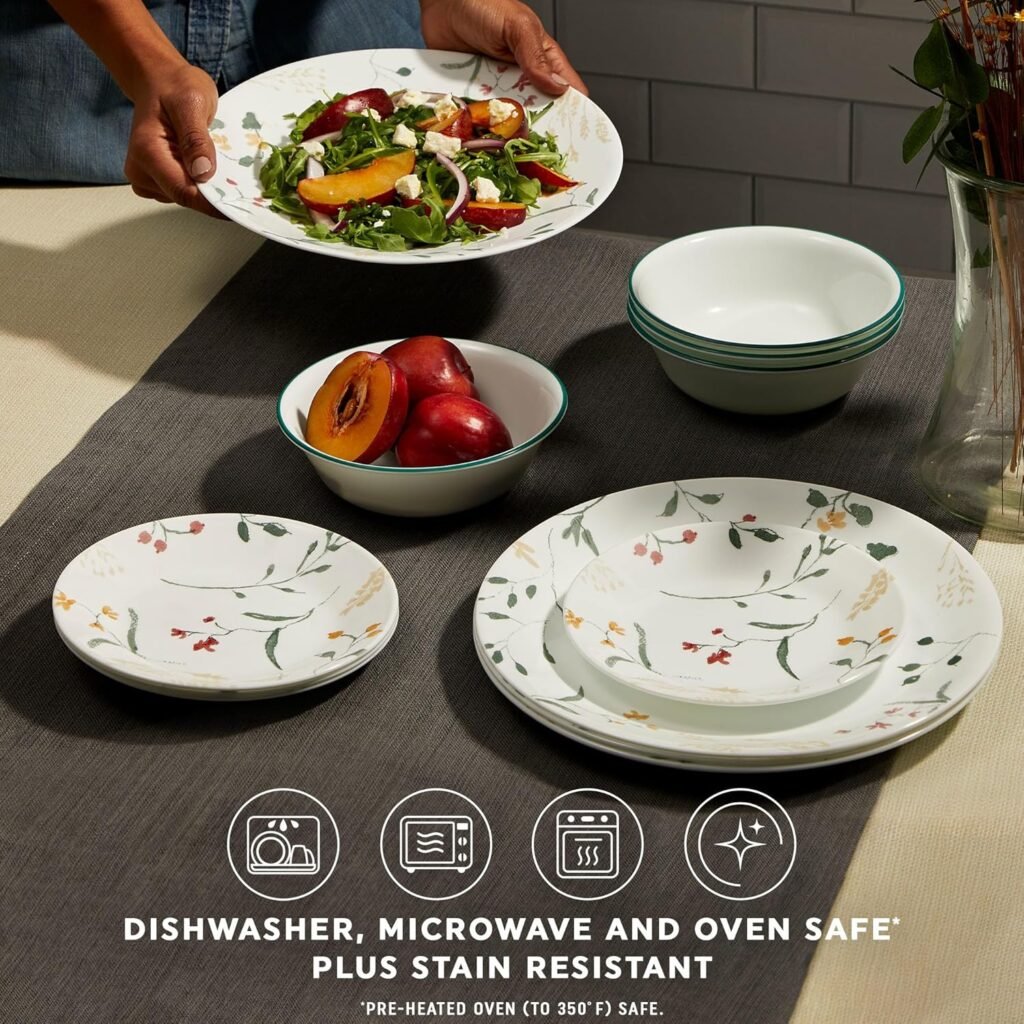
Today, Corelle Brands manages the product line, which continues to expand into modern and stylish collections while maintaining its core promise of durability.
What Corelle Is Made Of
Corelle dishes are engineered with Vitrelle glass — a proprietary triple-layer laminated glass technology patented by Corning. This construction bonds three layers of glass together, creating a plate that is incredibly thin yet impressively strong.
Vitrelle technology is the reason Corelle dishes feel almost paper-thin without sacrificing structural integrity.
Common Features of Corelle Dinnerware
Corelle plates are praised for their thin profile, impressive chip resistance, and stackable design that saves cabinet space. They are feather-light compared to ceramic or stoneware alternatives.
Whether you’re buying for a small apartment or a busy family kitchen, Corelle’s practicality is hard to beat as household dinnerware.
Why is Corelle so Popular?
Corelle’s popularity comes from a combination of factors: its ultra-lightweight feel, impressive chip resistance, wide pattern variety, reasonable price, and easy availability. Corelle also has a strong brand recognition built over decades of household use across American families.
Arcopal vs Corelle: Key Differences
Here’s a quick side-by-side comparison to help you see how both brands stack up at a glance:
| Feature | Arcopal | Corelle |
| Material | Opal glass (tempered) | Vitrelle triple-layer laminated glass |
| Origin | France (Arc International) | USA (Corning Glass Works) |
| Weight | Lightweight | Ultra-lightweight |
| Thickness | Moderate | Very thin |
| Chip Resistance | Good | Excellent |
| Break Resistance | Good | Very good |
| Design Style | European minimalist / floral | Modern patterns / minimalist |
| Microwave Safe | Yes (most lines) | Yes |
| Dishwasher Safe | Yes | Yes |
| Lead-Free | Yes (modern lines) | Yes |
| BPA-Free | Yes | Yes |
| Price Range | Mid-range | Budget to mid-range |
| Stackability | Good | Excellent |
| Vintage Collectibility | High (floral patterns) | High (Spring Blossom, Butterfly Gold) |
Material Technology Comparison
Arcopal uses opal glass — a soda-lime glass that undergoes tempering to become opaque and stronger. Corelle relies on Vitrelle glass, a laminated glass composition engineered with three bonded layers.
Both achieve durability through different manufacturing approaches. Opal glass gives Arcopal its ceramic-like appearance, while Vitrelle gives Corelle its signature thinness and resilience.
Weight and Thickness Comparison
Corelle wins on weight — it’s noticeably thinner and lighter than Arcopal. For someone dealing with limited storage or mobility concerns, that difference matters.
Arcopal is still lightweight compared to ceramic or stoneware, but next to Corelle, it feels slightly more substantial, which some users actually prefer for the perception of quality.
Durability and Break Resistance
Both brands are durable as glass dinnerware goes, but they break differently. Arcopal’s tempered glass tends to shatter into larger pieces if dropped hard.
Corelle’s Vitrelle construction is engineered to resist breaking, though it can shatter into small shards if it does break. For families with young children, Corelle’s general break resistance is a notable advantage.
Chip and Scratch Resistance
Corelle has a slight edge in chip resistance thanks to its laminated glass structure. Arcopal’s opal glass is enhanced for chip resistance but can show edge wear over time with heavy daily use.
Scratch resistance is comparable between the two — neither performs well against metal utensils scraping repeatedly across the surface.
Design and Aesthetic Differences
Arcopal leans into European minimalism with its clean white finish and elegant floral patterns like the Veronica and Lotus collections.
Corelle offers a broader range from plain white and minimalist modern sets to printed patterns like Butterfly Gold and Spring Blossom.
Corelle’s design catalog is larger, but Arcopal’s aesthetic feels more distinctly European and refined.
Which Is Better for Everyday Use?
Ease of Cleaning
Both brands are easy to clean. Their non-porous glass surfaces resist staining and don’t absorb food odors.
Arcopal’s smooth white finish shows stains more visibly if left to sit, while Corelle’s designs can sometimes mask mild discoloration in patterned areas.
Day-to-day, both are low maintenance.
Microwave and Dishwasher Safety
Corelle is fully microwave-safe and dishwasher-safe across all its modern lines. Arcopal is also marketed as microwave-safe dinnerware, though some vintage Arcopal pieces with metallic decorations should not be microwaved.
For dishwasher safety, both perform well, though high-heat dishwasher cycles over many years can dull the glaze on both brands.
Storage and Stackability
Corelle’s thin, uniform profile makes it the better stacker. Plates nest tightly without wasting space, which is ideal for small kitchens. Arcopal stacks well too, but its slightly heavier opal glass construction means stacks can get heavy and harder to manage in quantity.
Suitability for Families and Daily Meals
For active family dining, Corelle’s lightweight design and chip resistance make it a reliable everyday tableware option. Kids find it easier to handle, and parents worry less about breakage.
Arcopal is also family-friendly, but its slightly heavier build and greater break risk make Corelle the more forgiving choice for busy households.
Best Choice for Small Kitchens
Corelle is the better fit for small kitchens due to its stackable, lightweight plates and compact bowls. A full Corelle set takes up far less cabinet space than a comparable Arcopal set.
If storage space is limited, this is a meaningful difference worth considering.
Arcopal vs Corelle Safety Comparison
Lead-Free and Food-Safe Properties
Modern Arcopal and Corelle dishes are both lead-free and certified food-safe. Arc International and Corelle Brands both meet international food safety standards.
However, if you’re buying vintage Arcopal pieces produced before the 1990s, it’s worth checking for lead in decorative glazes, as manufacturing standards were different back then.
BPA-Free Material Comparison
Both brands are BPA-free. Since Arcopal and Corelle are glass-based — not plastic — BPA is not a relevant concern for either brand. This is one of the key advantages glass dinnerware has over plastic alternatives, especially for families focused on food safety.
Heat Resistance and Thermal Shock
Corelle is engineered for thermal shock resistance, making it better suited to sudden temperature changes like moving dishes from the fridge to a warm table.
Arcopal’s tempered glass also resists heat reasonably well, but it’s more sensitive to extreme thermal shock. Neither brand is oven-safe as standard dinnerware.
Are Vintage Pieces Safe to Use?
Vintage Corelle dishes from the 1970s and 1980s are generally considered safe for food use, as Vitrelle glass itself doesn’t contain lead.
Vintage Arcopal pieces with heavy decorative glazes may warrant more caution. If in doubt, reserve older pieces for display rather than daily meals, or test them with a lead-check kit.
Arcopal vs Corelle Durability Test
Resistance to Chipping
Corelle’s Vitrelle glass edges up Arcopal when it comes to chipping. Its laminated construction distributes impact more evenly, reducing the likelihood of edge chips.
Arcopal’s tempered opal glass holds up well but tends to show edge chipping sooner under similar daily conditions.
Resistance to Shattering
When dropped onto hard flooring, both brands can shatter. Corelle tends to shatter into many small pieces. Arcopal’s tempered glass typically breaks into larger fragments.
Neither is unbreakable, but Corelle is generally more resistant to casual drops and light impacts, which is why it markets itself on break resistance.
Long-Term Wear and Tear
Over years of daily use, both brands show wear. Scratches from utensils accumulate on both surfaces. Corelle’s printed patterns can fade after heavy dishwasher use.
Arcopal’s clean white finish holds its appearance slightly better in the long term, though it’s more prone to surface scratches being visible against the white background.
Which Brand Lasts Longer?
Based on general consumer experience, Corelle tends to last longer under active daily use due to its superior chip and impact resistance.
Arcopal performs admirably and can last many years with proper care, but Corelle’s Vitrelle construction gives it a slight edge in overall dining product durability.
Design and Style Comparison
Arcopal’s European Minimalist Style
Arcopal’s tableware aesthetics lean toward clean European design. The milk-white opal glass finish gives dishes a refined, elegant look that works well in both casual and slightly formal table settings.
Retro floral patterns like the Scania and Lotus collections have become genuinely collectible among vintage kitchenware enthusiasts.
Corelle’s Modern and Patterned Collections
Corelle has a much wider design catalog. From clean, solid whites to bold geometric prints and subtle botanicals, Corelle’s range caters to diverse style preferences.
Its Corelle Livingware line stays classic and practical, while the Boutique collection moves toward more stylish, design-forward aesthetics for modern dining tables.
Vintage Collectible Patterns
Both brands have dedicated collector communities. Collectible Corelle patterns like Spring Blossom and Butterfly Gold are widely traded and recognized.
Collectible Arcopal dishes, especially the Veronica and Lotus patterns, draw fans of mid-century modern tableware and retro kitchen décor. Both have real resale value on secondary markets.
Which Brand Fits Modern Dining Better?
Corelle fits modern dining rooms more naturally due to its broader range of contemporary patterns and its ultra-thin, space-efficient profile.
Arcopal suits minimalist or European-inspired kitchen aesthetics better, especially if you prefer a more uniform white look across your table setting.
Price and Value Comparison
Which Brand Is More Affordable?
Corelle generally comes in at a lower price point, especially for starter sets. Arcopal is competitively priced but can trend slightly higher depending on the retailer and collection. Both offer good value relative to ceramic or bone china alternatives.
Long-Term Value for Families
For families, Corelle offers stronger long-term value. Its chip resistance and durability mean fewer replacements over time.
Arcopal also holds up well, but in households with young children or frequent casual use, the durability gap becomes noticeable over a few years.
Replacement Availability
Corelle has excellent replacement availability through major retailers and online platforms. Finding specific discontinued Corelle patterns is possible through Replacements Ltd. and similar services.
Arcopal replacement pieces can be harder to find outside of Europe, particularly for vintage patterns from the Arcopal resale market.
Best Budget-Friendly Option
Corelle takes the edge here. You can often find complete Corelle sets at attractive price points that include plates, bowls, and mugs.
For budget-conscious shoppers who want durable glass dinnerware without sacrificing style, Corelle is typically the stronger everyday tableware investment.
Pros and Cons of Arcopal
Main Advantages
Arcopal’s standout strengths include its elegant European opal glass appearance, solid resistance to everyday staining, and the lightweight design that makes it comfortable to handle.
The variety of retro floral patterns gives it a unique character that’s hard to replicate with modern alternatives. It’s also fully dishwasher-safe and microwave-friendly for most collections.
Potential Drawbacks
Arcopal’s main weaknesses are its relative fragility compared to Corelle when dropped, and the fact that replacement pieces can be harder to source outside Europe.
Some vintage collections may contain decorative glazes that require caution around food safety. It’s also slightly heavier than Corelle, which matters for some users.
Pros and Cons of Corelle
Main Advantages
Corelle’s biggest strengths are its Vitrelle glass durability, feather-light weight, and chip resistance. It stacks efficiently, takes up minimal cabinet space, and holds up impressively under daily family use.
The wide range of patterns and the brand’s availability across major retailers make it one of the most accessible glass dinnerware options on the market.
Potential Drawbacks
Corelle’s thin profile, while practical, can feel less substantial to users who prefer a more traditional plate weight. When Corelle does break, it tends to shatter into many small fragments, which can be a safety concern.
Some printed patterns also fade over the years of frequent dishwasher cycles.
Common Myths About Arcopal and Corelle
“Arcopal and Corelle Are the Same Brand”
This is false. Arcopal is made by Arc International in France, while Corelle is an American brand with roots in Corning Glass Works. They use completely different glass technologies — opal glass versus Vitrelle glass — and have no corporate connection to each other.
“Glass Dinnerware Breaks Easily”
Not quite. Both Arcopal and Corelle are engineered specifically to be more durable than ordinary glass. Tempered and laminated glass constructions make both brands significantly more resistant to everyday kitchen impacts than standard glassware.
They aren’t indestructible, but they’re far sturdier than the myth suggests.
“All Vintage Dishes Contain Lead”
This is an oversimplification. Not all vintage dishes contain lead. The concern is primarily with pieces that used decorative glazes or paints on the surface, which were more common before modern manufacturing standards.
Plain opalware and undecorated Vitrelle pieces from the same era carry far lower risk.
“Lightweight Plates Are Less Durable”
Corelle disproves this completely. Its lightweight Vitrelle plates are among the most durable in the glass dinnerware category.
Lightweight construction and durability are not opposites — in Corelle’s case, they’re the same thing engineered simultaneously through glassware innovation.
Frequently Asked Questions (FAQ)
Is Arcopal Better Than Corelle?
It depends on what matters to you. Arcopal offers superior aesthetics and a refined European feel. Corelle wins on durability, weight, and everyday practicality. Neither is universally better — they serve slightly different priorities.
Which Brand Is More Durable?
Corelle edges out Arcopal in overall durability, particularly in chip resistance and impact resistance. Its Vitrelle triple-layer construction gives it a measurable advantage in withstanding the rigors of daily household use.
Are Arcopal and Corelle Microwave Safe?
Yes, both are microwave-safe dinnerware options for their modern lines. Avoid microwaving any vintage pieces that have metallic decoration, as this applies to both brands.
Does Arcopal Contain Lead?
Modern Arcopal dishes do not contain lead and are certified food-safe. Older vintage pieces with decorative glazes may be worth testing if you plan to use them for food. Arc International’s current manufacturing meets modern safety standards.
Which Dinnerware Is Better for Everyday Use?
Corelle is generally the stronger choice for high-frequency everyday tableware use, especially in busy households. Arcopal is equally suitable for everyday meals but shines more in settings where aesthetics and presentation matter as much as pure practicality.
Conclusion
Both Arcopal and Corelle are excellent glass dinnerware choices; they just serve different priorities.
Arcopal, backed by Arc International’s opal glass technology, delivers elegant European-style dining with a classic aesthetic that holds up beautifully over time.
Corelle, engineered with Corning’s Vitrelle glass, focuses on ultra-light durability and everyday practicality that busy households depend on. If design and style drive your decision, Arcopal is hard to beat.
If you want the lightest, most chip-resistant everyday tableware, Corelle is your answer. Either way, you’re choosing proven glass dinnerware built to last, and that’s a solid starting point for any kitchen.
About the Author & Reviewer
Sarah Emirone, Author
Sarah researches and writes SafeKitchn’s dinnerware and kitchenware guides, with a focus on material safety, lead content, and manufacturer specifications. She cross-references product data sheets, safety certifications, and regulatory filings (including FDA and Prop 65 records) before publishing, and updates articles when new information becomes available.
James Daniels, Reviewer
James reviews SafeKitchn’s material safety content for scientific accuracy. He holds a B.Sc in inorganic chemistry and works as a materials researcher, with particular focus on the composition and safety behavior of glass, ceramic, and metal used in kitchenware.