

More shoppers today are paying close attention to where their kitchen products come from, and dinnerware is no exception. If you’ve ever turned a plate over and checked the back stamp, you’re not alone. So, is Corelle made in the USA?
It’s one of the most common questions buyers ask before purchasing this popular brand. Corelle has been a fixture in American homes for decades, known for its lightweight glass dinnerware and impressive durability.
Understanding where it’s actually made and what that means for quality and food safety helps you make a more confident buying decision.
Let’s get into it.
Written by Sarah Emirone | Reviewed by James Daniels, B.Sc, Inorganic Chemist & Materials Researcher | Updated September 2026 | See How We Test | Filed under: Origin & Manufacturing
What Is Corelle?
Overview of the Corelle Brand
Corelle started as an innovation out of Corning Glass Works, one of America’s most respected names in glass engineering.
Launched in the early 1970s, it quickly became a household staple thanks to its durability and practical design.
Today, Corelle Brands manages the product line, and the brand remains one of the most recognized names in American-made dinnerware across both budget-conscious and everyday buyers.
What Corelle Is Made Of
Corelle dishes are made from Vitrelle glass, a proprietary triple-layer laminated glass technology developed by Corning.
Three thin layers of glass are bonded together under precise conditions, producing a plate that is remarkably thin yet structurally strong.
This glass lamination process is what gives Corelle its signature lightweight feel without sacrificing the durability that families depend on daily.
Why Corelle Became Popular in American Homes
Corelle earned its place in American kitchens through a combination of durability, stackability, and everyday practicality. The dishes resist chipping, stack neatly in tight cabinet spaces, and handle the demands of daily family meals without complaint.
For households looking for reliable everyday dinnerware that doesn’t need constant replacing, Corelle became the obvious go-to choice.
Is Corelle Made in the USA?
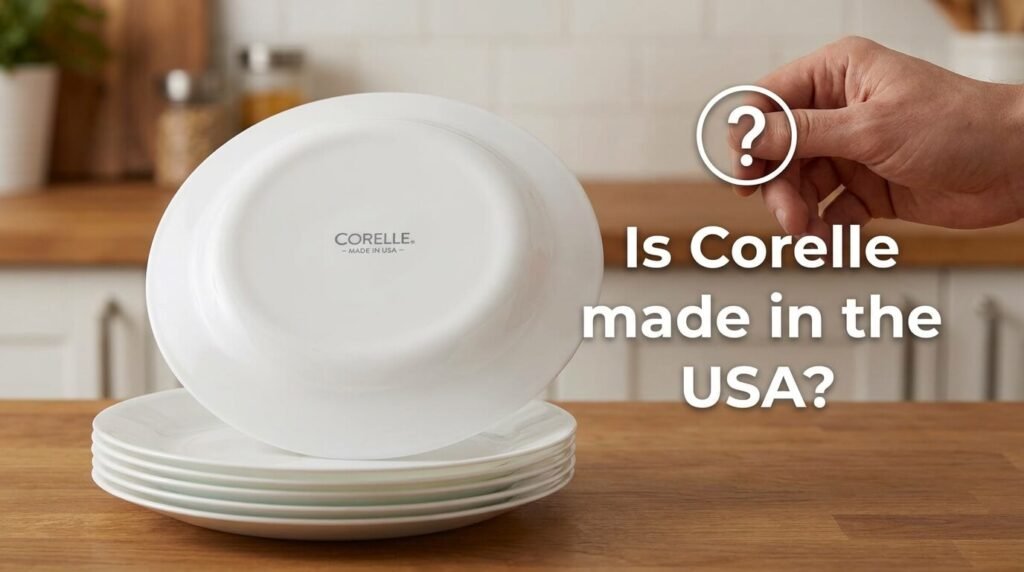
Yes — many Corelle dinnerware products are still manufactured in the United States. The core Vitrelle glass dishes that Corelle is known for have historically been produced domestically, and that connection to American manufacturing remains a genuine part of the brand’s identity.
That said, the full picture is slightly different depending on the specific product line or accessory. For example, Corelle stoneware plates, bowls, and ceramic cups are made in China.
Where Corelle Manufacturing Facilities Are Located
Corelle’s manufacturing roots are firmly planted in the U.S., with Pennsylvania manufacturing facilities historically tied to its production operations.
The brand also has deep historical connections to Corning, New York, where Corning Glass Works pioneered the glass engineering innovations that made Vitrelle possible. U.S.-based manufacturing plants have been central to Corelle’s production for most of its history.
Are All Corelle Products American-Made?
Not necessarily. While the core glass dinnerware plates, bowls, and mugs made from Vitrelle are associated with domestic production, some accessories, packaging components, and newer product lines within the Corelle Brands portfolio may involve globally sourced materials or overseas assembly.
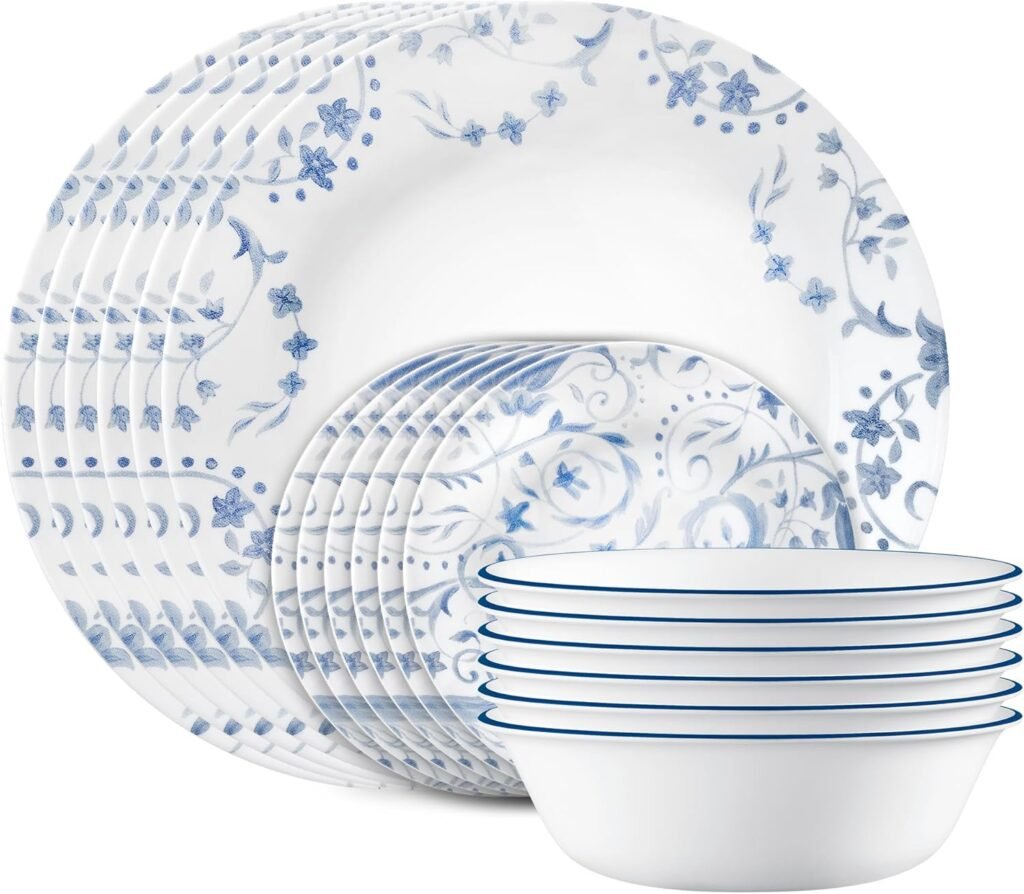
The Made in USA designation applies most reliably to the classic Vitrelle glass dish lines rather than every item sold under the Corelle name.
How to Check Whether Corelle Is Made in the USA
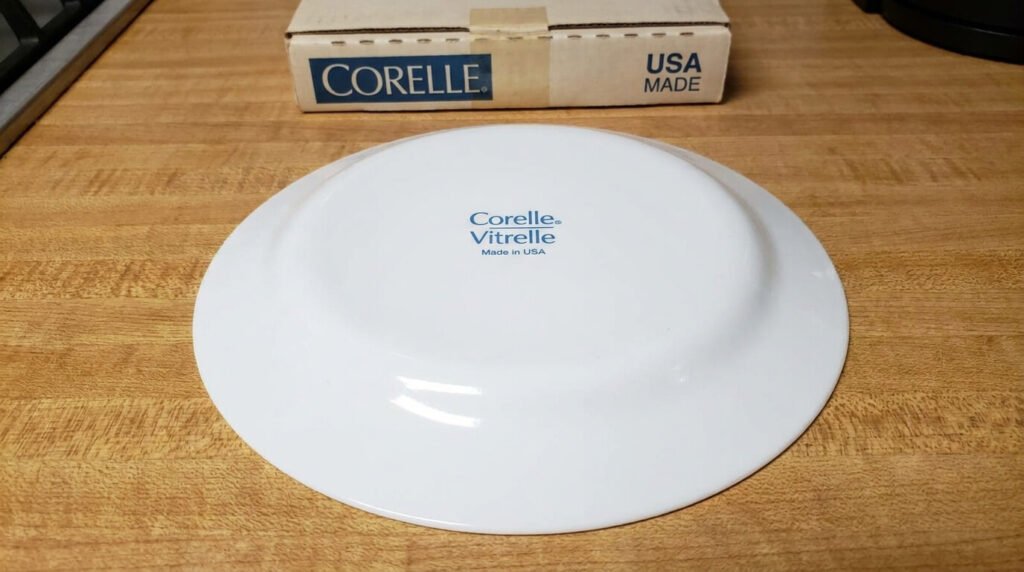
The most reliable way is to check the back stamp on the dish itself. Authentic Corelle pieces produced in the U.S. typically include a ‘Made in USA‘ marking on the underside.
Packaging labels also carry product origin information. When shopping online, checking the product detail page for country of origin information is another practical step before purchasing.
Corelle Manufacturing History
The Origins of Corelle Under Corning
Corelle was born from decades of glassware engineering at Corning Glass Works. Corning had already made a name for itself through innovations like Pyrex and CorningWare, so developing a lightweight laminated glass dinnerware line was a natural next step.
When Corelle launched in 1970, it was marketed as virtually unbreakable, a bold claim that resonated with American families immediately.
Evolution of Vitrelle Glass Technology
Vitrelle glass technology represented a genuine leap in glassware material science. By laminating three thin glass layers together, Corning’s engineers created a material that combined lightness with structural integrity in a way standard tempered glass or soda-lime glass couldn’t match.
The tempering process and precision lamination gave Corelle its chip resistance and thermal shock resistance properties that remain core selling points today.
Transition From Corning to Corelle Brands
Over time, Corning divested its consumer products division, and Corelle eventually came under the management of Corelle Brands.
Later, Instant Brands — better known for the Instant Pot — acquired Corelle Brands, bringing the dinnerware line under a larger household products umbrella.
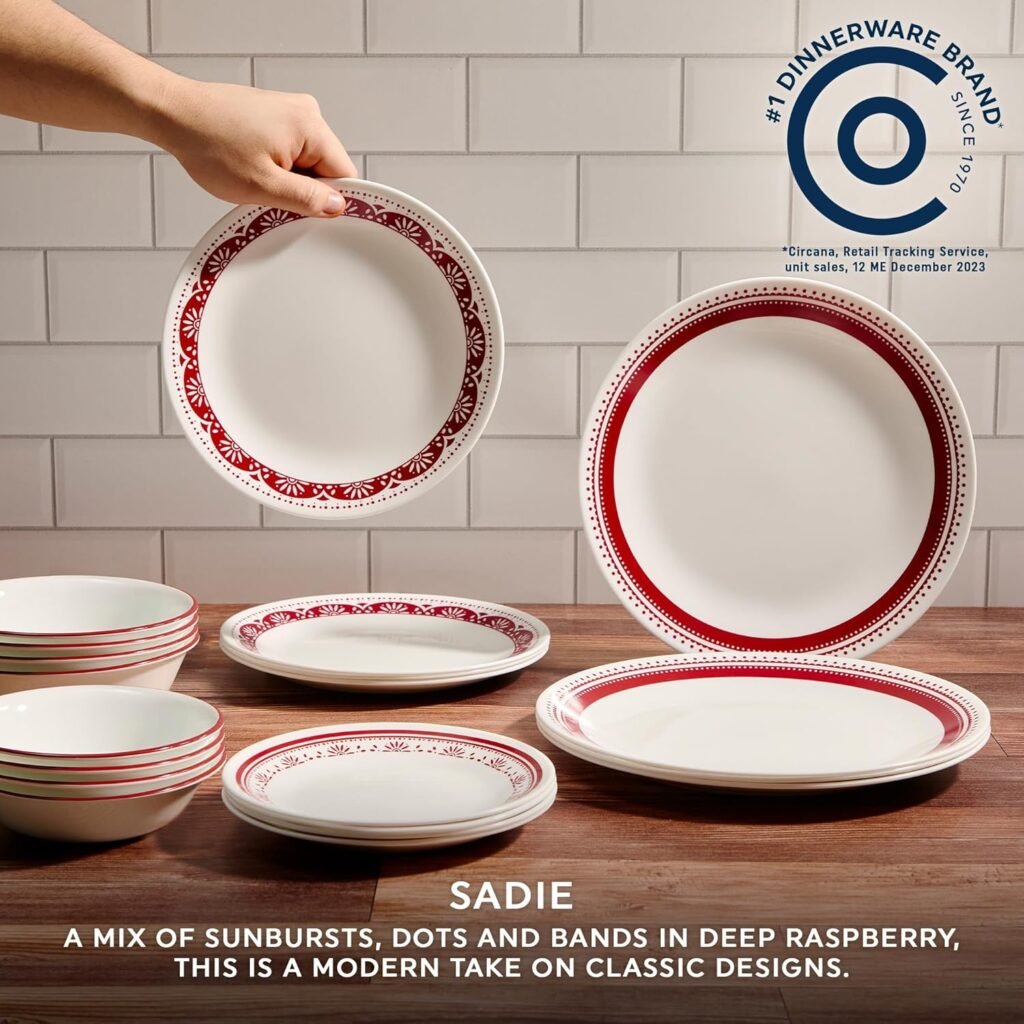
Despite these corporate transitions, the Vitrelle glass manufacturing process and American production heritage remained largely intact.
How Manufacturing Has Changed Over Time
Like most large consumer brands, Corelle has adapted its supply chain and manufacturing operations over the decades.
Factory automation has improved production efficiency, and some sourcing has expanded globally for non-glass components.
However, the core Vitrelle glass dinnerware manufacturing has maintained its U.S. factory production association, even as the broader corporate structure evolved around it.
Why Consumers Prefer USA-Made Dinnerware
Perceived Quality and Durability
American-made dinnerware carries a strong quality association for many consumers. U.S. manufacturing reputation is built on consistent factory quality control, tighter production standards, and materials that meet domestic regulatory benchmarks.
For buyers investing in glass dinnerware, they expect it to last years, and that perception of quality matters, and Corelle’s track record backs it up.
Food Safety and Manufacturing Standards
Products manufactured in the U.S. must meet strict food contact safety standards regulated by agencies like the FDA and FTC.
Dining product safety standards in America are among the most rigorous globally, covering everything from materials testing to lead-free certification. Buying domestic gives consumers greater confidence that their dishes meet those benchmarks consistently.
Supporting American Manufacturing
There’s a growing consumer preference for supporting domestic kitchenware production, both for economic and ethical reasons. Buying American-made dinnerware contributes to U.S. factory jobs, supports local supply chains, and keeps manufacturing expertise within the country.
For buyers who factor product origin into purchasing decisions, Corelle’s domestic production heritage is a meaningful differentiator.
Trust in Established U.S. Brands
Corelle benefits from the kind of consumer trust that takes decades to build. Its Corning origins, long-standing American kitchenware legacy, and consistent product performance have created deep brand loyalty across generations.
That trust is directly tied to its American manufacturing heritage and the quality benchmarks it has maintained throughout its history.
Is Corelle Safe and High Quality?
Lead-Free and Food-Safe Standards
Modern Corelle dishes are lead-free and certified as food-safe dishes. The Vitrelle glass material does not contain lead or cadmium, and the brand meets FDA food contact safety requirements.
This is one area where Corelle’s American manufacturing gives buyers genuine peace of mind. Product label transparency and regulatory compliance are both reliable for current production lines.
Microwave and Dishwasher Safety
Corelle is fully microwave-safe and dishwasher-safe across its standard dinnerware lines. The Vitrelle glass construction handles microwave-safe dish use without releasing harmful substances, and the material holds up well through repeated dishwasher cycles.
Some decorative patterns may show wear over many years of high-heat dishwasher use, but the glass itself remains structurally sound.
Chip and Break Resistance
Corelle’s chip resistance is one of its most marketed features, and it genuinely delivers. The triple-layer Vitrelle construction distributes impact force more effectively than standard glass, reducing edge chipping under normal use.
Break resistance is also strong, though Corelle can shatter if dropped from a significant height onto hard flooring. When it does break, tempered glass shatter patterns mean smaller fragments.
Everyday Use Durability
For everyday dinnerware use, Corelle is hard to beat. It handles daily stacking, washing, and meal service without significant wear for years.
Scratch resistance from metal utensils is the most common long-term concern, but overall dining product durability across Corelle’s Livingware and other lines is consistently strong compared to ceramic or imported alternatives.
How Corelle Compares to Imported Dinnerware
Here’s a quick comparison of Corelle against common imported dinnerware alternatives:
| Feature | Corelle | Cheap Ceramic | Melamine |
| Material | Vitrelle glass | Fired clay | Plastic resin |
| Origin | USA (core lines) | Varies (often imported) | Often imported |
| Weight | Ultra-lightweight | Heavy | Lightweight |
| Chip Resistance | Excellent | Poor to moderate | Good |
| Microwave Safe | Yes | Most | No |
| Dishwasher Safe | Yes | Most | Low heat only |
| Food Safety | Lead-free, FDA compliant | Varies by source | BPA concerns vary |
| Durability | Very high | Moderate | Moderate |
| Price | Budget to mid-range | Budget | Budget |
Corelle vs Cheap Ceramic Dinnerware
Cheap imported ceramic dinnerware often sacrifices food safety, consistency, and durability for a low price. Glazes on low-cost ceramics from unregulated sources can contain lead or cadmium.
Corelle’s Vitrelle glass construction sidesteps these concerns entirely, and its chip resistance far outperforms budget ceramic alternatives that chip easily under daily household use.
Corelle vs Arcopal
Both Corelle and Arcopal are glass dinnerware brands with strong reputations, but they use different technologies and come from different manufacturing traditions.
For a detailed breakdown of how they perform across durability, design, and value, see an in-depth review of Arcopal vs Corelle dinnerware.
Each brand has genuine strengths depending on what you prioritize in your kitchen.
Corelle vs Melamine Plates
Melamine plates are lightweight and break-resistant, but they come with a significant limitation: they are not microwave-safe and can release harmful chemicals when heated.
Corelle’s Vitrelle glass is fully microwave-safe and chemically inert during heating, making it a safer everyday choice.
For a thorough breakdown of how they differ, a complete guide on Melamine vs Corelle covers the key distinctions in practical detail.
Benefits of Vitrelle Glass Construction
Vitrelle glass sets Corelle apart from virtually all imported alternatives. The triple-layer laminated glass engineering produces dishes that are simultaneously thinner, lighter, and stronger than standard options.
Benefits of Vitrelle glass construction include superior chip resistance, reliable thermal shock resistance, microwave compatibility, and a non-porous surface that resists staining and odor absorption over time.
How to Identify Authentic Corelle Products
Understanding Corelle Back Stamps
Genuine Corelle dishes carry a back stamp on the underside that includes the Corelle brand name, pattern name, and often the country of manufacture.
The Corelle back stamp has evolved over the decades, so vintage pieces carry older stamp formats. Familiarizing yourself with authentic stamp styles helps distinguish genuine Corelle from low-quality imitations in secondhand markets.
Made in USA Labels and Markings
For buyers specifically seeking American-made dinnerware, checking for a ‘Made in USA’ marking under the plate is the most direct method.
Per the FTC Made in USA standard guidelines, this label requires that all or virtually all of the product be made domestically. Corelle’s core Vitrelle glass lines have historically carried this marking, though it’s always worth checking individual pieces.
Vintage vs Modern Corelle Identification
Vintage Corelle pieces from the 1970s and 1980s are identifiable by their classic patterns like Spring Blossom and Butterfly Gold, and by older back-stamp formats that include Corning branding.
Modern Corelle uses updated Corelle Brands stamps. Both generations are genuine products, but vintage pieces were exclusively U.S.-manufactured, while modern lines may involve broader sourcing depending on the specific item.
Signs of Counterfeit or Low-Quality Dinnerware
Be cautious of suspiciously cheap ‘Corelle-style’ glass dishes from unknown sellers.
Signs of low-quality imitations include uneven plate thickness, rough or blurry back stamp printing, absence of any country of origin marking, and a heavier feel than genuine Vitrelle plates.
Authentic Corelle dishes have a distinctively thin, uniform profile that counterfeits rarely replicate accurately.
Conclusion
So, is Corelle made in the USA? For the most part, yes, particularly the core Vitrelle glass dinnerware lines that made the brand famous.
Corelle’s American manufacturing heritage runs deep, stretching back to its Corning Glass Works origins and decades of domestic production.
While some accessories and newer product lines may involve global sourcing, the lightweight glass dishes most people associate with Corelle remain strongly tied to U.S. factory production.
If American-made dinnerware matters to you, Corelle remains one of the most trustworthy options on the market, backed by real engineering, genuine food safety standards, and a legacy built right here at home.
About the Author & Reviewer
Sarah Emirone, Author
Sarah researches and writes SafeKitchn’s dinnerware and kitchenware guides, with a focus on material safety, lead content, and manufacturer specifications. She cross-references product data sheets, safety certifications, and regulatory filings (including FDA and Prop 65 records) before publishing, and updates articles when new information becomes available.
James Daniels, Reviewer
James reviews SafeKitchn’s material safety content for scientific accuracy. He holds a B.Sc in inorganic chemistry and works as a materials researcher, with particular focus on the composition and safety behavior of glass, ceramic, and metal used in kitchenware.