

Pillivuyt Porcelain France has been made in the same town — Mehun-sur-Yèvre, in the Berry region — since 1854.
That’s not marketing copy; it’s a verifiable fact about one of the few porcelain manufacturers anywhere in the world that still develops its own clay compound on-site, fires everything at 1400°C, and produces 100% of its output in France.
If you’re trying to figure out whether Pillivuyt is worth the price, why it’s different from Apilco (and why that comparison has a surprising answer), or what “Pillienium” actually means, this article covers all of it with specific numbers and named sources.
Written by Sarah Emirone | Reviewed by James Daniels, B.Sc, Inorganic Chemist & Materials Researcher | Updated September 2026 | See How We Test | Filed under: Buying, Care & Product Guides
What Is Pillivuyt Porcelain? (And Why It’s Different from Most Porcelain Brands)
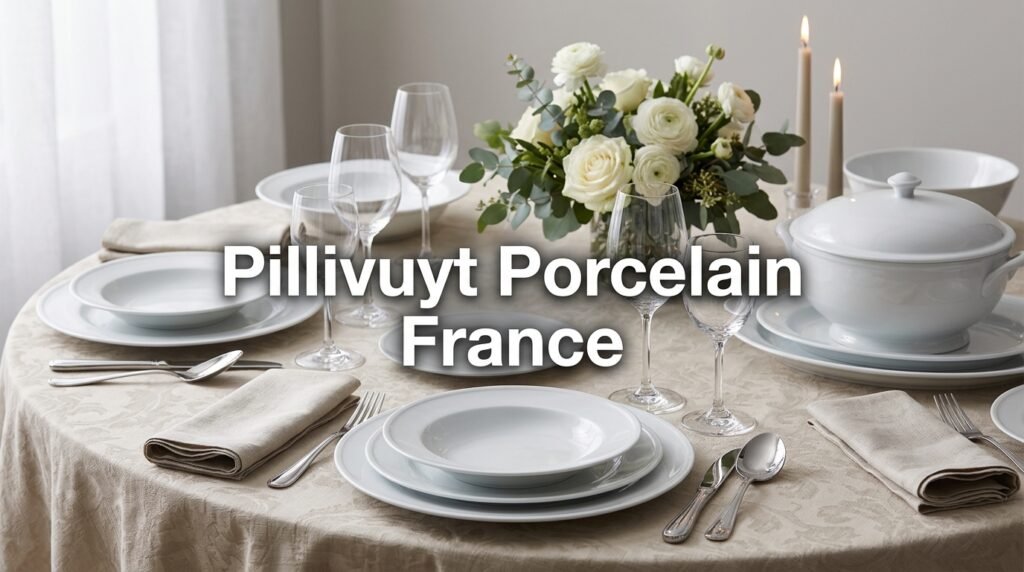
Pillivuyt is one of the oldest continuously operating porcelain manufacturers in France, founded in 1818 and producing 100% of its pieces at a single factory in Mehun-sur-Yèvre.
In 2009, the French government recognized it as a Living Heritage Company (Entreprise du Patrimoine Vivant, or EPV) — a designation awarded to businesses that preserve rare artisanal and industrial skills.
The porcelain is used by professional chefs and home cooks alike. A piece made in 1926 was reported by a Pillivuyt customer as still in daily use in 2025 — microwaved, oven-baked, dishwashered, and moved overseas three times, without a crack or mark.
For a broader look at where Pillivuyt sits among French porcelain makers, see our guide to the best French porcelain brands, including Limoges, Apilco, and Revol.
Where Pillivuyt Is Made and Who Makes It
Every Pillivuyt piece is made at the Mehun-sur-Yèvre factory in Berry, France. The brand sources 75% of its raw materials from France and 100% from Europe.
No production is subcontracted to other countries — an issue Nancy Pollard, who ran La Cuisine cooking store in Alexandria, Virginia, for 47 years, specifically flagged: “Parts get farmed out to low-bidder factories in other countries, then shipped to the manufacturer, where it is then put together and stamped Made in France.
Pillivuyt is an exception.” The factory has been at the same site since 1854, when Charles Pillivuyt moved operations from the original Foëcy location.
The Short History: Swiss Founders, a Family Split, and Why Apilco Exists
The founding Pillivuyt brothers — Charles and Jean Louis — were Swiss, not French. They bought a brick factory in Foëcy in 1818 and shifted to porcelain production after recognizing the proximity to Limoges, where kaolin deposits had recently been discovered.
Kaolin is the mineral that makes porcelain possible; Europeans had been trying to replicate Chinese porcelain for centuries, and the Limoges deposits were the key ingredient.


The business stayed in the Pillivuyt family for over 127 years. Then came a family dispute. A descendant named Albert Pillivuyt founded a second factory and named it Apilco, derived from his own name: Albert Pillivuyt et Compagnie. Apilco was bought in 1980 by the Deshoulieres Group, which also owns Porcelaine de Sologne and Deshoulieres.
So when buyers compare “Pillivuyt vs Apilco,” they’re comparing the original family factory against a branch that split from it and was later acquired by a separate company.
That history doesn’t automatically make one better than the other — but it changes how you understand the comparison.
How Pillivuyt Porcelain Is Made: The Manufacturing Process That Explains the Durability
Pillivuyt’s durability comes from a specific, documented manufacturing process. The factory starts with hand-made plaster prototypes built against precise computer models. The casting and firing process involves more than 10 steps over several days to weeks.
The Two-Firing Process and What It Produces
- Raw pieces are first fired at 979°C (1795°F) — an initial bisque firing that hardens the clay body.
- Glaze is applied to the bisque piece.
- The glazed piece is fired a second time at 1400°C (2552°F) — higher than most competitors fire their porcelain.
- This second firing at 1400°C is what makes the piece non-porous: the glass-like glaze fuses completely with the clay body, leaving no micro-openings where food, bacteria, or liquids can enter.
- Decorated pieces go through a third firing, which traps pigments under the glaze and makes them permanent — impervious to fading, color change, or migration into food.
- Quality control happens at every stage; pieces that don’t meet specification are sold as “Seconds” through select retailers at a reduced price with no impact on functional performance.
The 1400°C firing temperature is the number that matters most. Lower-quality porcelain is fired at lower temperatures, particularly when lead and cadmium are present in the clay mixture, because those elements burn at lower temperature thresholds.
Firing at 1400°C is what produces the Mohs 7 hardness Pillivuyt cites for its porcelain, placing it close to quartz on the hardness scale.
What Is Pillienium? The Proprietary Compound That Changed the Formula
Pillienium: Pillivuyt’s proprietary porcelain paste, developed in 2005 and recognized with an Innovation Award.
It is a reformulated clay compound that produces pieces with thinner walls and higher mechanical strength than standard porcelain paste allows, enabling better heat distribution and enhanced thermal shock resistance.
Why thinner walls matter for baking: heat passes through thinner ceramic more uniformly, which is why Pillivuyt bakeware produces even crusting without overdone edges.
Thicker-walled competitors tend to build heat unevenly, heavier at the base and slower at the top.
Pillivuyt’s soufflé dishes and gratin dishes are cited repeatedly by professional testers (including Nancy Pollard’s 47-year kitchen retail experience) as producing more consistent results than competitors, precisely because of the wall thickness and heat distribution.
Pillienium also improves thermal shock resistance. Thinner ceramic walls expand and contract more uniformly under rapid temperature change, which is part of why Pillivuyt can credibly claim safe freezer-to-oven transfers that would crack thicker porcelain.
Hardness, Porosity, and What Makes the Surface Non-Stick
- Pillivuyt scores 7 on the Mohs hardness scale — close to quartz, far above most earthenware and many ceramics, which score in the 4–6 range.
- The 1400°C second firing fuses the glaze into a non-porous surface with no micro-openings — the mechanism behind the original non-stick bakeware claim that predates Teflon-coated cookware.
- The non-porous surface means baked-on food releases after a brief soak in warm water; it doesn’t bond to the surface the way it does with more porous materials.
- Metal utensils can be used safely — the Mohs 7 surface resists scratching from steel knives and serving spoons, whereas softer ceramics would show permanent marks.
Is Pillivuyt Porcelain Lead and Cadmium Free?
The accurate answer is more specific than the flat “lead and cadmium free” label that retail listings use — and understanding it is actually more reassuring, not less.
What “Lead and Cadmium Free” Actually Means for Pillivuyt
Pillivuyt’s own FAQ page states: “trace amounts of lead and cadmium are naturally occurring in the porcelain clay, as well as in the pigments used for Pillivuyt decors.
Thanks to Pillivuyt’s high firing temperatures, the hardened glaze prevents any possible migration of lead and cadmium. The results of these food contact safety tests confirm that lead and cadmium are not detectable.”
So the actual claim is: lead and cadmium are present in trace amounts in the raw clay and pigments, but Pillivuyt’s 1400°C firing temperature locks them permanently under the glaze.
Food contact testing confirms neither is detectable in migration tests. Pillivuyt products comply with California Proposition 65 standards.
California Proposition 65: One of the strictest consumer safety laws in the United States. It requires businesses to warn Californians before exposing them to chemicals that cause cancer, birth defects, or reproductive harm, including lead and cadmium.
Prop 65 compliance means the product has been tested and the levels of regulated chemicals fall below the thresholds at which a warning is required. This is a higher bar than simple “lead-free” label claims, which are often unverified.
The firing temperature is the mechanism that makes this safe. Lower-quality ceramics fired at 900–1100°C may not fully lock heavy metals under the glaze, which is why buying premium-fired porcelain from a verified manufacturer matters for pieces you use daily for food contact.
Decorated Pieces: The Third Firing and What It Does
Decorated Pillivuyt pieces — those with painted patterns, colors, or designs — undergo a third firing at high temperature after the pigments are applied. This third firing traps the pigments under the outer glaze layer rather than leaving them on the surface.
The food contact testing that shows lead and cadmium as “not detectable” applies to decorated pieces as well as plain white pieces — the third firing is what makes this possible.
The practical implication: you do not need to treat decorated Pillivuyt differently from plain white Pillivuyt for safety purposes. The Prop 65 compliance applies to the full product range, not only to undecorated pieces.
For how Pillivuyt’s safety profile compares across dinnerware materials, see our safest dinnerware materials by lead, cadmium, and chemical risk.
Pillivuyt Oven, Freezer, Microwave, and Dishwasher Safety
Pillivuyt handles all standard kitchen temperature environments safely. The temperature range is -30°C to +350°C (-22°F to 662°F), per F&H Group’s published product documentation, citing Pillivuyt factory specifications.
Temperature Range: What Pillivuyt Can and Can’t Do
| Use Case | Safe? | Notes |
|---|---|---|
| Oven (conventional, up to 550°F / 288°C) | ✓ Yes | Standard oven safe for all pieces |
| Oven (broiler) | ✓ Yes | Safe under broiler per Pillivuyt specifications |
| Freezer | ✓ Yes | Leave 1 inch headspace for liquid-filled pieces |
| Freezer → Oven (direct transfer) | ✓ Yes | Thermal shock resistant; Pillienium construction enables this |
| Microwave | ✓ Yes | All pieces are microwave safe; no metal decoration pieces only |
| Dishwasher | ✓ Yes | All standard pieces; metallic/gold-trimmed pieces: hand wash |
| Stovetop / direct flame | ✗ No | Standard pieces are NOT stovetop safe |
The One Exception: Dishes Designed for Direct Heat
Two Pillivuyt lines are specifically engineered for stovetop use — the Toulouse Flame-Proof Casseroles and the Ulysses Collection.
These pieces are designed for use over gas and electric stovetops and are made with a different porcelain construction than the standard range.
Every other Pillivuyt piece — including soufflé dishes, gratin dishes, dinner plates, and ramekins should not be used over direct heat. The oven-to-table capability is oven, not stovetop.
Pillivuyt Collections: Which One Is Right for You?
Pillivuyt makes both dinnerware and bakeware across multiple collections. The full range shares the same manufacturing quality and the same white porcelain — what differs between collections is the surface design, edge treatment, and shape profile.
Dinnerware Collections at a Glance
For a detailed look at the most popular dinnerware line, see the table below:
| Collection | Defining Design | Best For | Mix-and-Match Compatible? |
|---|---|---|---|
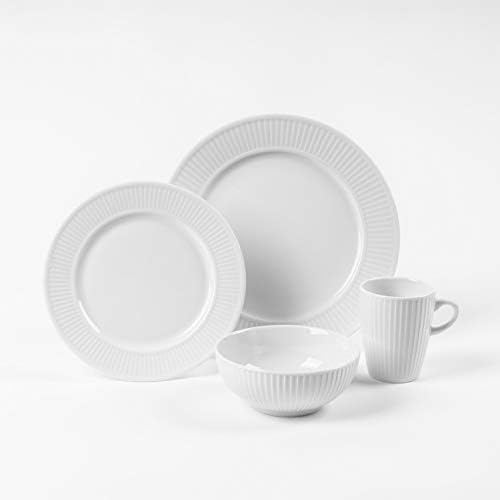
| Plisse | Parallel pleats/fluting running up the sides | Formal dinners, distinctive presentation, soufflé dishes | Yes — pairs with Sancerre and Eventail |
| Sancerre | Clean rim with minimal detailing; classic bistro profile | Everyday use, restaurant settings, simple elegance | Yes — highly versatile |
| Eventail | Fan-shaped raised relief pattern | Statement pieces, creative food presentation | Yes with white Pillivuyt pieces |
| Collection Générale | Classic utilitarian shapes, no surface decoration | Kitchen workhorses, baking, professional use | Yes — the most versatile line |
| Grand Siècle | Formal, refined edge detailing | High-end entertaining, heirloom gifting | Yes with other formal Pillivuyt lines |
Bakeware and Oven-to-Table Pieces
- Soufflé dishes: the Plisse and Collection Générale lines include soufflé dishes in multiple sizes; the uniform thin walls from Pillienium construction mean even heat rise without hot spots that collapse delicate soufflés.
- Gratin and roasting dishes: available in round, oval, and rectangular profiles; the non-porous surface releases food after soaking without scrubbing — tested over years of regular use per Au Bon Goût Boutique’s 47-year kitchen retail experience.
- Tart dishes: the freezer-to-oven capability is particularly useful for tarts and quiches — pastry can be frozen raw in the dish and transferred directly to the oven, reducing dough shrinkage.
- Ramekins: sold individually and in sets; size-for-size compatible across collections; the pleated Plisse ramekins are among Pillivuyt’s most recognized pieces.
- Platters and serving pieces: oven-to-table capable, so food stays at serving temperature longer than it would on room-temperature plates.
Can You Mix and Match Pillivuyt Collections?
Yes, and this is one of Pillivuyt’s practical advantages. Borough Kitchen, a UK retailer with a direct sourcing relationship with Pillivuyt, confirms: “The Plisse and Sancerre ranges in dinnerware are of the same high quality and finish, with a slightly different design.
The beauty of Pillivuyt is that mixing and matching different ranges and pieces still allows for a cohesive look.” The consistent white porcelain across all collections is what makes these pieces from different lines look intentionally coordinated rather than mismatched.
Is Pillivuyt Porcelain Worth the Price?
Yes, for anyone who uses porcelain for oven cooking or daily dining. The cost-per-use calculation works out in Pillivuyt’s favor even at a higher upfront price, because the pieces don’t need replacing.
The Cost-Per-Use Case for Heirloom Porcelain
Pillivuyt can be used for oven baking, microwaving, and is suitable for dishwashing, while remaining “in an impeccable state without any cracks or marks.”A
Pillivuyt soufflé dish purchased for $45 and used twice weekly for 10 years costs $0.04 per use. A $12 ceramic dish from a discount brand that cracks or chips after two years costs $0.06 per use and requires replacement. The premium isn’t just aesthetic. It’s structural.
Where to Buy Pillivuyt in the United States:
- pillivuytshop.com — the U.S. direct retail site; full collection available, ships domestically.
- Williams Sonoma — carries Pillivuyt dinnerware; good for in-store viewing before buying.
- Amusespot (amusespot.com) — independent U.S. retailer with a broad Pillivuyt selection, including bakeware and ramekins.
- Borough Kitchen (boroughkitchen.com) — UK-based, direct sourcing relationship with Pillivuyt; worth considering for pieces not available in the U.S. market.
- Seconds program — Borough Kitchen and pillivuytshop.com periodically offer Pillivuyt “Seconds” — factory pieces with minor aesthetic imperfections (dust specks in the glaze, for example) at a reduced price. The functionality and durability of Seconds are identical to first-quality pieces.
How to Care for Pillivuyt Porcelain
Daily Care: Dishwasher, Microwave, and Storage
- All standard Pillivuyt pieces are dishwasher safe — the 1400°C glaze resists detergent damage and doesn’t absorb water or odors over repeated cycles.
- Pieces with metallic or gold decoration must be hand-washed — dishwasher detergent strips precious metal accents over time; this is the one firm care exception.
- Metal utensils are safe on Pillivuyt’s surface; the Mohs 7 hardness resists scratching from steel serving spoons, knives, and spatulas.
- When stacking, use cloth or silicone pads between pieces if you’re stacking decorative items you want to keep pristine; for everyday pieces, stacking without padding is fine.
- Do not use Pillivuyt on the stovetop (except Toulouse Flame-Proof and Ulysses Collection pieces); the direct heat from a gas or electric burner will crack standard porcelain.
Vintage Pillivuyt: Reading the Marks and Dating Your Pieces
Pillivuyt pieces are always marked — the brand name appears on the base of every piece. The mark is your guarantee of genuine French production.
- Authentic marks always include the Pillivuyt name; some marks add symbols, numbers, or country designations that help date the piece.
- Production codes and mark styles changed over the decades — a two-digit number may indicate the year of manufacture (e.g., “54” = 1954).
- For vintage pieces where the design or mark is unclear, the Porcelain Museum in Mehun-sur-Yèvre is the reference resource — they specialize in the history of the Berry region’s porcelain industry and Pillivuyt’s archival pieces.
- Vintage Pillivuyt in good condition is functional — it was made to the same standards as current production. If you’ve inherited pieces and want to use them, the age is not a safety concern for plain and undecorated pieces.
Ready to start your Pillivuyt collection or add a specific piece? The Collection Générale is the best starting point for bakeware beginners; Sancerre or Plisse for dinnerware.
Frequently Asked Questions About Pillivuyt Porcelain France
Is Pillivuyt porcelain made in France?
Yes, 100% of Pillivuyt pieces are made at the factory in Mehun-sur-Yèvre, Berry, France. No production is outsourced or subcontracted to other countries. Raw materials are 75% sourced from France and 100% from Europe.
Is Pillivuyt porcelain lead-free and safe for food?
Lead and cadmium occur in trace amounts naturally in porcelain clay and pigments. Pillivuyt’s firing process at 1400°C locks both permanently under the glaze; food contact testing confirms neither is detectable in migration tests.
All Pillivuyt pieces — including decorated lines comply with California Proposition 65 standards.
What temperature is Pillivuyt porcelain oven safe to?
Pillivuyt is oven safe up to at least 550°F (288°C) and broiler safe per brand specifications. The F&H Group’s documentation of Pillivuyt factory specifications cites a temperature range of -30°C to +350°C (-22°F to 662°F) for standard pieces.
Can Pillivuyt go directly from freezer to oven?
Yes — Pillivuyt is thermal shock resistant and can transfer directly from freezer to oven without cracking. The Pillienium compound’s thinner wall construction handles the temperature differential safely. Leave 1 inch of headspace in any container filled with liquid before freezing.
Is Pillivuyt porcelain dishwasher safe?
Yes, all standard pieces are dishwasher safe. Pieces with metallic or gold decoration must be hand-washed, as dishwasher detergent removes precious metal accents over time.
What is Pillienium porcelain?
Pillienium is Pillivuyt’s proprietary porcelain paste, developed in 2005 and recognized with an Innovation Award.
It produces pieces with thinner, stronger walls than traditional porcelain paste, resulting in more even heat distribution during baking and better thermal shock resistance.
What are the most popular Pillivuyt collections?
Plisse (the pleated line, Pillivuyt’s most recognized design), Sancerre (clean bistro profile, excellent for everyday use), and Collection Générale (utilitarian bakeware shapes) are the three most-purchased lines. All three are mix-and-match compatible with each other.
Is Pillivuyt porcelain safe to use on the stovetop?
Standard Pillivuyt pieces are not stovetop safe — direct burner heat will crack them. The Toulouse Flame-Proof Casseroles and the Ulysses Collection are the two specific lines designed and tested for stovetop use over gas and electric burners.
About the Author & Reviewer
Sarah Emirone, Author
Sarah researches and writes SafeKitchn’s dinnerware and kitchenware guides, with a focus on material safety, lead content, and manufacturer specifications. She cross-references product data sheets, safety certifications, and regulatory filings (including FDA and Prop 65 records) before publishing, and updates articles when new information becomes available.
James Daniels, Reviewer
James reviews SafeKitchn’s material safety content for scientific accuracy. He holds a B.Sc in inorganic chemistry and works as a materials researcher, with particular focus on the composition and safety behavior of glass, ceramic, and metal used in kitchenware.