

A high sided dish is a plate or bowl with a raised wall built into one or both sides, designed so someone can push food against that wall and scoop it onto a fork or spoon without chasing it around the plate.
Most people search for high-sided dishes after a parent, spouse, or patient starts struggling to eat independently, due to a tremor, a stroke, arthritis, or the loss of use in one hand.
The category looks simple from the outside, but the wrong choice (wrong height, wrong material, wrong shape) can undo the whole point of buying one.
Written by Sarah Emirone | Reviewed by James Daniels, B.Sc, Inorganic Chemist & Materials Researcher | Updated September 2026 | See How We Test | Filed under: Accessible & Adaptive Dining
What Is a High-Sided Dish, and Who Does It Help
A high-sided dish solves one specific problem: food sliding off the plate before it reaches the fork or spoon. The raised wall, usually between 1.25 and 2 inches tall, acts as a backstop.
A person scoops toward it instead of trying to corner food on a flat surface, which takes far less coordination and far less grip strength.
Conditions and Situations: High-Sided Dishes Help With
- People with Parkinson’s disease often lose fine motor control before anything else, and a raised wall compensates for hands that won’t hold steady.
- Stroke survivors frequently regain use of only one hand, and a high-sided dish lets that hand do the work of two.
- People with arthritis in the fingers or wrist struggle to grip a fork tightly enough to spear food, so pushing against a wall does the job instead.
- People recovering from surgery or living with general muscle weakness benefit from the reduced effort a raised edge provides.
- Caregivers feeding someone with dementia use these dishes to cut down on spills and mealtime frustration, which matters as much for dignity as for cleanup.
How a High-Sided Dish Differs From a Regular Plate
High-sided dish: a plate or bowl manufactured with an integrated raised wall around part or all of its circumference, built specifically to support one-handed scooping.
A regular plate is flat or has a shallow rim meant to contain sauce, not to be pushed against with force.
Adaptive dishes are also almost always weighted or fitted with a non-skid base, because the scooping motion that makes them useful would otherwise send a lightweight plate sliding across the table.
Standard vs. Cutout-Edge High-Sided Dishes
The two designs solve slightly different problems, and picking the wrong one is the single most common mistake buyers make.
A standard dish keeps the same wall height all the way around. A cutout-edge dish tapers the wall down on one section, from about 1.25 inches to as low as 0.5 inches, to make room for a utensil to slide underneath.
Standard High-Sided Dish: Best For
- Anyone using a fork or spoon primarily to push food, since the full-height wall gives consistent resistance no matter where they scoop.
- People with a strong single-hand grip who don’t need extra clearance to angle a utensil.
- Caregiver-assisted feeding, where the caregiver controls the angle of approach and doesn’t need the tapered opening.
Cutout-Edge High-Sided Dish: Best For
- People with limited wrist rotation who need a lower entry point to get the utensil under the food.
- Users of built-up-handle or angled utensils often can’t clear a full 1.25-inch wall on approach.
- Anyone transitioning off a plate guard, since the cutout mimics the open access a plate guard allows, while still keeping the backstop on the rest of the plate.
High-Sided Dish Materials Compared: Melamine vs. Polypropylene vs. Polycarbonate
Material matters more than most buying guides admit, because it decides whether the dish survives a normal kitchen routine.


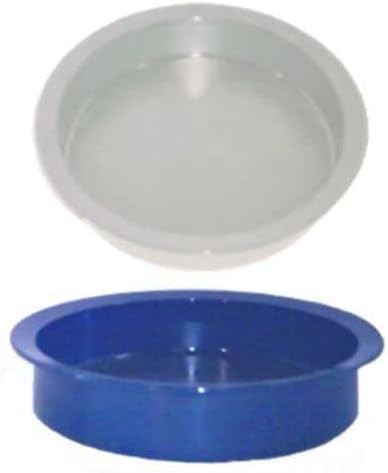
Melamine dishes are dishwasher-safe but not microwave-safe.
Polypropylene and polycarbonate dishes are rated for freezer, microwave, and dishwasher use, which makes them a better fit for anyone reheating meals or batch-prepping food for a caregiving situation.
Which Material Is Microwave, Freezer, and Dishwasher Safe
| Material | Microwave-Safe | Freezer-Safe | Dishwasher-Safe | Common In |
|---|---|---|---|---|
| Melamine | No | No | Yes | GripWare, North Coast Medical dishes |
| Polypropylene | Yes | Yes | Yes (top rack) | Rehabmart divided the dishes |
| Polycarbonate | Yes | Yes | Yes | AliMed Scoop Dish |
If reheating matters to your routine, melamine is the wrong material, full stop. It’s a durable, low-cost choice for cold or room-temperature meals only.
Material Safety Considerations to Check Before Buying
- Some melamine and polycarbonate dishes list a California Prop 65 warning for chemicals such as Cumene or DEHP, disclosed on the manufacturer’s page.
- A Prop 65 warning doesn’t mean a product is illegal or unsafe to sell — it means the manufacturer is disclosing a legally required exposure notice, and it’s worth reading before buying dishware for someone medically vulnerable.
| Brand / Product | Material | Prop 65 Warning Disclosed? | What It Names |
|---|---|---|---|
| Performance Health High-Sided Dish | Melamine | Yes | Cumene |
| AliMed Scoop Dish | Polycarbonate | Yes | DEHP (phthalate) |
| Rehabmart High-Sided Divided Dish | Polypropylene | Not listed | — |
This isn’t a reason to avoid a product outright. It’s a reason to check the product page yourself instead of trusting a roundup article that never mentions it.
See our guide on using slip plates for the elderly if the chemical disclosure changes your decision.
High-Sided Dish vs. Plate Guard vs. Scoop Plate: What’s the Difference
A high-sided dish and a scoop plate are the same thing under two different names. A plate guard is a separate, removable attachment that clips onto the rim of a plate the person already owns.
| Feature | High-Sided Dish (Scoop Plate) | Plate Guard |
|---|---|---|
| Design | Wall built into the plate itself | Clip-on ring added to an existing plate |
| Portability | Fixed to one dish | Moves between plates |
| Access for utensils | Depends on standard vs. cutout style | Always open on the unguarded side |
| Best for | Long-term daily use | Occasional use or restaurant/travel meals |
| Typical cost | $10–$20 | $8–$15 |
When to Choose a Plate Guard Instead
Choose a plate guard when the person still wants to use their own dinnerware, or when the need for support is occasional rather than constant, such as a dinner out, a short-term recovery period, or a caregiver who feeds multiple people and doesn’t want to keep specialized plates for each one.
Read our full guide on dining aids for Parkinson’s disease before deciding between the two.
When to Choose a Built-In High-Sided Dish Instead
Choose a high-sided dish when the need is daily and long-term, since a built-in wall won’t slip or shift the way a clip-on guard can after repeated dishwasher cycles.
It’s also the better option for anyone who needs the wall on every side of the plate rather than just one.
How to Choose the Right High-Sided Dish by Condition
The right dish depends on which specific motor challenge someone has, not just the general label “adaptive.” Parkinson’s, stroke, and arthritis each call for a different combination of wall height, base weight, and material.
Best Features for Parkinson’s and Tremors
- A weighted base matters more here than almost anywhere else, since added weight helps dampen the plate’s movement when a hand shakes against it.
- A non-skid rubber foot keeps the dish from traveling across the table during a stronger tremor episode.
- A full standard-height wall gives more resistance to push against than a low cutout edge does.
- Pairing the dish with adaptive utensils for hand tremors compounds the benefit — a 2019 study published in Occupational Therapy in Health Care had participants with essential tremor or Parkinson’s tremor test a standard spoon against three adapted options, and participants rated a weighted spoon and a sensor-based stabilizing spoon (Liftware Steady) as their top two choices, with no statistically significant difference between those two.
Best Features for Stroke Recovery and One-Handed Eating
- A cutout-edge design usually works better here, since one-handed users need the utensil to slide under the food without fighting the wall on the way in.
- A suction or non-skid base is close to mandatory, because the person can’t hold the plate steady with a second hand.
- A lightweight material like polypropylene is easier to manage for someone still rebuilding hand strength.
Best Features for Arthritis and Limited Grip Strength
- A standard-height wall reduces reliance on a tight pincer grip, since the person is pushing against the wall rather than stabbing at food.
- A wider dish diameter (9 to 10 inches) means less repositioning, which matters when every hand movement causes joint pain.
- A dishwasher-safe, lightweight material cuts down on the physical effort of cleanup, not just eating.
Size, Dimensions, and Capacity Standards
Most high-sided dishes cluster around a 7.75-inch diameter, but the range runs from about 7.75 inches up to 10 inches for divided or family-style versions, and wall height varies more than most buyers expect.
Typical Diameter and Side-Height Ranges
| Brand / Product | Diameter | Side Height | Style | Material | Microwave-Safe |
|---|---|---|---|---|---|
| GripWare High-Sided Dish | 7.75 in | 1.25 in (standard) or tapers to 0.5 in (cutout) | Standard / Cutout | Melamine | No |
| North Coast Medical High-Sided Dish | 7.75 in | 1.25 in, tapers to 0.5 in on cutout | Standard / Cutout | Melamine | No |
| Performance Health High-Sided Dish | 7.75 in | 1.75 in, full circumference | Standard | Melamine | No |
| AliMed Scoop Dish | 8.67 in | 1.33–2 in | Standard | Polycarbonate | Yes |
| Rehabmart High-Sided Divided Dish | 10 in | 1.75 in outer wall, 0.89 in inner dividers | Divided | Polypropylene | Yes |
The half-inch difference between a 1.25-inch and a 1.75-inch wall sounds minor until you’re scooping against it — a taller wall gives more resistance, but a weaker push may need the cutout access more.
Divided and Compartment Dish Options
- A three-compartment divided dish keeps foods separate, which matters for anyone eating pureed meals where textures shouldn’t mix.
- Divided dishes with a lid double as travel or delivery containers, useful for caregivers preparing meals in advance.
- The inner divider walls are almost always shorter than the outer wall, typically under an inch, so they organize food rather than trap it the way the outer wall does.
Is a High-Sided Dish FSA, HSA, or Medicare Eligible?
Adaptive dinnerware is reimbursable through an FSA, HSA, or HRA in most cases, but it isn’t automatic; some plan administrators require documentation before they’ll approve it.
Adaptive equipment is broadly listed as an eligible expense category, though it’s excluded from a Dependent Care FSA or a Limited-Purpose FSA.
What You Need for FSA/HSA Reimbursement
- Confirm your plan covers adaptive equipment, since administrators vary even within the same FSA/HSA/HRA category.
- Ask a physician or occupational therapist for a Letter of Medical Necessity (LMN) if your administrator requires one.
- Make sure the LMN states the condition, explains how the dish treats or accommodates it, and specifies how long it’s needed.
- Keep the itemized receipt with the LMN, since audits ask for both together.
- Submit through your plan’s standard claim process with the receipt and LMN attached.
- Request a new LMN for a replacement dish in a plan year; most administrators won’t accept the old one.
Why Medicare Usually Doesn’t Cover Adaptive Dishware
Medicare Part B covers durable medical equipment like wheelchairs and hospital beds, but adaptive dishware generally doesn’t meet that category’s definition, since Medicare’s DME rules focus on equipment tied directly to treating an illness or injury rather than everyday self-care items.
If cost is the deciding factor, an FSA or HSA is a more realistic path to reimbursement than Medicare.
How to Choose the Right High-Sided Dish: Step-by-Step Checklist
Read our occupational therapy tips for independent eating alongside this checklist if you’re choosing equipment for someone else.
- Identify the condition — Parkinson’s, stroke, arthritis, or general weakness — since that determines wall style first.
- Decide between standard and cutout-edge based on how the person approaches the plate with a utensil.
- Match the material to actual use: melamine for cold meals only, polypropylene or polycarbonate if reheating is part of the routine.
- Check the diameter against hand reach and typical portion size — up for arthritis or larger portions, down for smaller hands or single servings.
- Confirm the base has a non-skid foot or suction ring, especially for tremor-related conditions.
- Verify FSA/HSA eligibility with the plan administrator before purchase if reimbursement matters.
- Order one dish first rather than a set — the right wall height depends on trial with the specific person using it.
Ready to compare specific models? The dishes named throughout this guide, GripWare, Performance Health, AliMed, and Rehabmart, each fit a different combination of condition, material need, and budget.
Match the row in the size and material tables above to your situation, then confirm reimbursement eligibility before you order.
Frequently Asked Questions
What is a high sided dish used for? It’s used to help someone scoop food onto a fork or spoon by pushing against a raised wall instead of chasing food across a flat plate. It’s most common for people with Parkinson’s, stroke recovery, arthritis, or general hand weakness. Caregivers also use them to reduce spills during assisted feeding.
Are high sided dishes microwave safe? It depends on the material: melamine dishes are not microwave-safe, while polypropylene and polycarbonate dishes are. Check the product listing for the specific material before reheating food on it. Most melamine adaptive dishes state this restriction directly on the packaging.
What’s the difference between a scoop plate and a plate guard? A scoop plate and a high-sided dish are the same product with two different names. A plate guard is a separate clip-on ring added to a plate the person already owns. Plate guards suit occasional or short-term use; built-in scoop plates suit daily long-term use.
Do high sided dishes help with Parkinson’s tremors? Yes, especially when paired with a weighted base and a non-skid foot that reduce how much the plate moves during a tremor. A 2019 study found participants with essential or Parkinson’s tremor preferred a weighted spoon and a sensor-stabilizing spoon over a standard one. The plate’s wall gives the hand something stable to push against, which matters as much as the utensil itself.
Is adaptive dinnerware FSA or HSA eligible? Yes, adaptive equipment is generally eligible under an FSA, HSA, or HRA, though some administrators require a Letter of Medical Necessity. It is not eligible under a Dependent Care FSA or Limited-Purpose FSA. Confirm your specific plan’s documentation requirements before purchasing.
What size is a standard high sided dish? Most standard high-sided dishes measure 7.75 inches in diameter with a wall height between 1.25 and 1.75 inches. Divided or family-style versions run closer to 10 inches. Pick a larger diameter for bigger portions or for users who need more surface area to scoop against.
Can high sided dishes go in the dishwasher? Yes, nearly every high-sided dish on the market is dishwasher-safe, regardless of material. Some polypropylene versions specify top-rack only. Melamine, polypropylene, and polycarbonate all tolerate standard dishwasher cycles.
Do high sided dishes work well for children with disabilities like cerebral palsy? Yes, the same scooping mechanics that help adults with Parkinson’s or stroke recovery apply to children with cerebral palsy or other motor-coordination conditions. Look for a smaller diameter sized to a child’s hand reach and a lighter material like polypropylene. A cutout-edge design is often easier for a child still building fine motor control.
About the Author & Reviewer
Sarah Emirone, Author
Sarah researches and writes SafeKitchn’s dinnerware and kitchenware guides, with a focus on material safety, lead content, and manufacturer specifications. She cross-references product data sheets, safety certifications, and regulatory filings (including FDA and Prop 65 records) before publishing, and updates articles when new information becomes available.
James Daniels, Reviewer
James reviews SafeKitchn’s material safety content for scientific accuracy. He holds a B.Sc in inorganic chemistry and works as a materials researcher, with particular focus on the composition and safety behavior of glass, ceramic, and metal used in kitchenware.