

Parkinson’s disease dining aids only work if they match the actual problem in front of you.
A weighted spoon helps someone whose hand shakes. It does nothing for someone whose real issue is a medication dose wearing off mid-meal, or a swallow that’s become unsafe.
This guide sorts dining aids by what’s causing the difficulty: tremor, rigidity, medication timing, or swallowing risk, so you can skip the products that don’t apply and go straight to what does.
Written by Sarah Emirone | Reviewed by James Daniels, B.Sc, Inorganic Chemist & Materials Researcher | Updated September 2026 | See How We Test | Filed under: Accessible & Adaptive Dining
How Parkinson’s Affects Eating and Which Dining Aids Actually Help
Before picking a product, it helps to know how Parkinson’s symptoms progress by stage, because the eating problem you have today may not be the one you have in a year.
Parkinson’s interferes with mealtime through three distinct mechanisms, and each one calls for a different fix.
The Three Mealtime Challenges — Tremor, Rigidity, and Slowness
Tremor is involuntary shaking, usually worse at rest and often more pronounced in one hand. It’s the symptom most dining aids are built around, and the one people picture first.
Rigidity is muscle stiffness that limits the range of motion reaching for a cup, rotating a wrist to scoop food, or bringing a fork to the mouth becomes physically harder, independent of any shaking.
Bradykinesia, or slowness of movement, stretches out every step of eating. Meals take longer, food cools, and fatigue sets in before the plate is finished.
Why the Right Aid Depends on Your Symptom, Not Just Your Diagnosis
Two people with the same Parkinson’s diagnosis can need opposite solutions. Someone with dominant tremor and no rigidity does well with a weighted or stabilizing utensil.
Someone whose main problem is rigidity gets more out of built-up handles that reduce the grip force required, not weight that counteracts shake.
Buying based on the diagnosis label instead of the symptom is the most common reason a dining aid ends up in a drawer unused.
Weighted and Built-Up Handle Utensils
How Weighted Utensils Work
Weighted utensils add mass, typically around half a pound to the handle, which increases inertia and makes small involuntary movements less able to throw the utensil off course. They don’t stop a tremor.

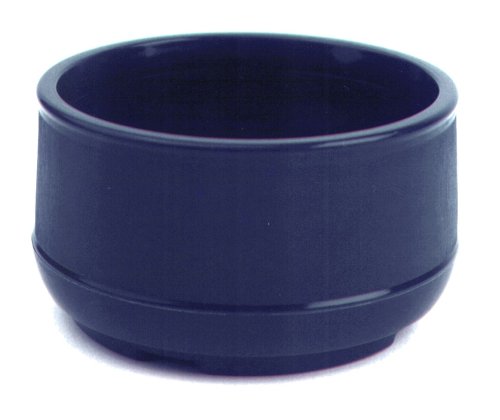
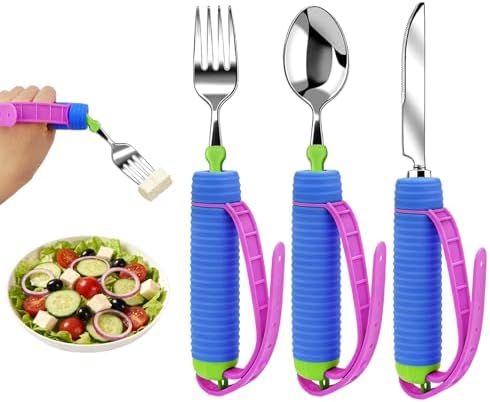


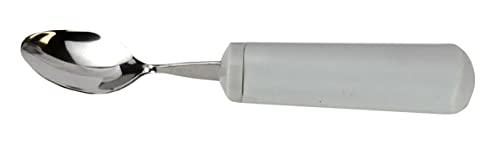

They make the tremor’s effect on the spoon or fork smaller.
Weighted vs. Built-Up Handle vs. Swivel Utensils
| Utensil type | Best for | How it works | Limitation |
|---|---|---|---|
| Weighted | Moderate tremor | Added mass reduces the visible effect of shaking | Can feel heavy or tiring for a weak grip |
| Built-up handle | Rigidity, limited grip strength | Wider handle needs less finger force to hold securely | Doesn’t address tremor directly |
| Swivel | Tremor affecting wrist rotation | Head stays level as the wrist moves, reducing spills | Mechanical part can wear out over time |
Weighted and built-up utensils are the cheapest entry point, usually $10 to $30 for a full set, and a reasonable first thing to try before spending on electronics. For a full breakdown by brand and price, see this full weighted utensil buying guide.
Related: How to Use Scoop Plates for the Elderly
Smart Stabilizing Spoons: Liftware vs. Gyenno
Liftware and Gyenno are the two electronic stabilizing spoons most often recommended, and their marketing numbers get repeated everywhere without anyone checking where the numbers came from.
That distinction matters more than the products themselves.
What the Published Data Actually Shows
Liftware’s stabilization claim is backed by a published, peer-reviewed pilot study of 15 patients with essential tremor, which measured 73% tremor suppression across holding, eating, and transferring tasks, with statistically significant improvement in eating (p = 0.001) and transferring (p = 0.001) on the Fahn-Tolosa-Marin Tremor Rating Scale.
Gyenno advertises an 85% reduction in shake. A peer-reviewed review of tremor-suppression devices found no published clinical data behind that 85% figure, which comes from the manufacturer’s own site.
Both devices help in practice. Only one has independently verified evidence behind its number, worth knowing before paying $150 to $200 for either.
Liftware Steady vs. Gyenno Bravo — Feature Comparison
| Feature | Liftware Steady | Gyenno Bravo Twist |
|---|---|---|
| Claimed tremor reduction | 70% (manufacturer), 73% (published pilot study) | 85% (manufacturer claim, unpublished) |
| Evidence type | Peer-reviewed pilot study, n=15, statistically significant | Manufacturer claim only |
| Battery life | Approximately 1 hour per charge | Up to 180 minutes per charge |
| FDA status | Registered with the FDA in 2016 for ET and PD tremor | Not FDA-registered |
| Data tracking | No app-based tremor logging | App logs tremor data over time |
| Price range | $150–$195 | $130–$180 |
If independently verified results matter more to you than a bigger advertised number, Liftware is the stronger choice on the evidence alone.
Plates, Bowls, and Cups for Tremor and Reduced Coordination
Plate Guards and Scoop Plates
- Plate guards clip onto the rim of a regular plate and create a wall to push food against, so a fork or spoon has something to scoop toward instead of chasing food across an open plate.
- Scoop plates and bowls are molded with one high, sloped side built in, which does the same job without needing a separate attachment.
- Suction-base plates and bowls anchor to the table or tray, which stops the entire plate from sliding when someone with rigidity has to press down to load a utensil.
- Three-compartment plates keep foods separated, which matters for someone with bradykinesia who eats slowly enough that mixed foods lose texture and appeal before the meal is finished.
Adaptive Cups — Nosey Cups, Two-Handle, Weighted
- Nosey cups have a cutout at the rim shaped to clear the nose, so someone can drink without tilting the head back, a position that raises aspiration risk for anyone with swallowing difficulty.
- Two-handled cups spread grip force across both hands, which helps with rigidity-related weakness more than a single-handled mug does.
- Weighted cups and mugs use the same added-mass principle as weighted utensils to steady a shaking hand during drinking.
- Spill-proof lids reduce the anxiety of drinking in public, which is a real factor people with visible tremors often report avoiding restaurants specifically because of spilling, not because of the food itself.
When Eating Problems Become a Swallowing Safety Issue (Dysphagia)
If chewing and swallowing themselves have become difficult, rather than just handling utensils, start with this Parkinson’s dysphagia diet, because at this point the fix is food texture, not better cutlery.
Over 80% of people with Parkinson’s will develop dysphagia at some point in the disease course, according to Parkinson’s Australia, and it’s a different category of problem than tremor.
Dysphagia can lead to aspiration pneumonia, when food or liquid enters the airway instead of the esophagus, so recognizing it early is a safety issue, not a comfort one.
Recognizing the Warning Signs
- Coughing or throat-clearing during or right after meals, especially with thin liquids like water or coffee.
- A wet, gurgly voice quality after swallowing, which can indicate liquid sitting near the vocal cords.
- Food pocketing in the cheeks, or noticeably longer chewing time than in the past.
- Unintentional weight loss or reduced appetite that isn’t explained by anything else going on.
- Avoiding certain foods or textures that the person used to eat without issue.
The IDDSI Texture Framework, Explained
| IDDSI level | Description | Who it’s typically for |
|---|---|---|
| Level 7 – Regular | Normal food texture, no restriction | No swallowing difficulty |
| Level 6 – Soft & Bite-Sized | Soft, tender pieces that break apart easily with a fork | Mild chewing difficulty |
| Level 5 – Minced & Moist | Small, moist pieces, no chewing required to break down further | Moderate dysphagia |
| Level 4 – Pureed | Smooth, no lumps, holds its shape on a spoon | Significant swallowing risk |
| Level 3 – Liquidised | Thick, smooth liquid consistency, drinkable through a wide straw | Severe swallowing risk |
The International Dysphagia Diet Standardisation Initiative built these levels specifically so a texture recommendation from a speech pathologist means the same thing regardless of where the food was prepared.
A dining aid can support someone at any of these levels: a nosey cup for thickened liquids, a small-bowled spoon for pureed food, but the texture level itself is set by a speech-language pathologist after a swallowing assessment, not chosen from a product page.
Timing Dining Aids and Meals Around Parkinson’s Medication
Before assuming a new spoon will fix a difficult meal, it’s worth checking this levodopa and protein timing, because sometimes the dining aid isn’t the problem, the timing of the last medication dose is.
Why Protein and Levodopa Compete for Absorption
Levodopa and dietary protein share the same transport system in the small intestine, so a high-protein meal can reduce how much levodopa reaches the brain.
A study of 1,037 Parkinson’s patients found 5.9% overall, and 12.4% of those with motor fluctuations, linked symptom changes directly to protein timing relative to their dose.
After five years on levodopa, roughly 40% of patients experience some motor fluctuation, per research summarized by Jankovic. This isn’t a reason to eat less protein; it’s a reason to think about when it’s eaten.
A Practical Meal-and-Medication Timing Framework
- Track it for one week. Write down when each levodopa dose is taken, what’s eaten within an hour before or after, and how the next hour of movement feels.
- If a dose seems to work more slowly or weakly after high-protein meals, try shifting that dose to 30 minutes before eating or 60 minutes after, rather than with the meal.
- If nausea shows up on an empty stomach, pair the dose with a small low-protein snack instead — crackers, toast, or applesauce — rather than skipping the spacing altogether.
- If motor fluctuations are frequent, ask a doctor or dietitian about spreading protein evenly across the day instead of concentrating it at dinner, which is a different strategy than restricting protein.
- Bring the week’s notes to the next appointment. Adjusting a medication schedule without a doctor involved is not recommended — the goal of tracking is to give the care team something specific to work with.
Choosing the right dining aid matters less than getting this timing right first. A stabilizing spoon can’t compensate for a dose that isn’t being absorbed.
Kitchen and Dining-Out Adaptations Beyond Utensils
Prep and Cutting Safety
- Adaptive cutting boards have raised edges and a non-slip backing, which keeps food from sliding during cutting when grip or tremor makes control less precise.
- Electric knives reduce the force and steady hand control that manual cutting demands, and are worth trying before assuming meat and firm vegetables are off the table.
- The pot stands with suction feet that stick to the counter and free up a hand during pouring or mixing, which matters most for rigidity rather than tremor.
- Pipe insulation from a hardware store, cut into short tubes, can build up the handle of an existing knife or peeler cheaply, without buying a new adaptive version.
Dining Out With Parkinson’s
- Bring a personal adaptive utensil set in a small case rather than relying on what a restaurant provides — most restaurants won’t stock weighted or stabilizing cutlery.
- Time the reservation around medication effectiveness, aiming to eat during an “on” window rather than right before a dose is due.
- Ask for water or drinks in a cup with a handle if a nosey cup isn’t practical to bring along, since most restaurants have at least one mug-style option.
- Choose menu items that don’t require heavy cutting, which reduces reliance on utensils that the restaurant won’t have.
When to Bring in an Occupational Therapist
Signs It’s Time for a Professional Assessment
- Weight loss that isn’t explained by anything else, especially over a few months.
- Repeated spilling or dropped utensils despite trying two or three adaptive products already.
- New coughing, throat-clearing, or voice changes during meals point toward swallowing rather than motor issues.
- A sense that mealtimes have become something to avoid rather than something to look forward to, for the patient or for whoever eats with them.
What an OT Evaluation Involves
- An observed meal, watching grip, reach, posture, and pacing with the person’s actual food and current utensils.
- Testing a small number of adaptive tools during the session itself, rather than guessing from a catalog.
- A referral to a speech-language pathologist if any swallowing signs show up during the observed meal.
- A written recommendation covering specific products, hand positioning, and — if needed — texture modification, shared with the person’s neurologist.
If mealtimes have become a source of stress rather than connection, an occupational therapist can build a plan around your specific symptoms in a single session. Most insurance plans cover an initial evaluation with a physician referral.
Ask your neurologist for one at your next appointment, rather than waiting for the problem to get worse.
Frequently Asked Questions
What utensils are best for Parkinson’s patients?
It depends on whether tremor or rigidity is the dominant symptom. Weighted utensils work best for tremor, while built-up handles work best for rigidity and reduced grip strength.
Someone with both often needs one of each rather than a single product.
Do weighted utensils really help with Parkinson’s tremors?
Yes, for moderate tremor, the added mass increases inertia and reduces how much the utensil moves off course. They don’t eliminate the tremor itself. For more severe tremor, an electronic stabilizing spoon like Liftware typically does more.
What is the best cup for someone with Parkinson’s?
A two-handled cup is the best general-purpose option for tremor and grip weakness. A nosey cup is better, specifically for anyone who also has swallowing difficulty, since it avoids tilting the head back to drink.
What is dysphagia, and how does it relate to Parkinson’s?
Dysphagia is difficulty swallowing safely, and it affects over 80% of people with Parkinson’s at some point in the disease course.
It’s caused by the same motor changes that affect the limbs, but it affects the throat and requires a speech-language pathologist for proper management.
Should you take Parkinson’s medication before or after eating?
If high-protein meals seem to reduce how well levodopa works, take the dose 30 minutes before eating or 60 minutes after, rather than with the meal.
If nausea is the bigger problem, a small low-protein snack alongside the dose is a safer adjustment. Any change to the dosing schedule should go through a doctor first.
What is the difference between Liftware and Gyenno spoons?
Liftware’s 73% tremor reduction figure comes from a published, peer-reviewed pilot study with statistically significant results.
Gyenno’s 85% claim is not backed by published clinical data, according to an independent device review. Both work in practice for many users, but only one has verified evidence behind its numbers.
How do you know when someone with Parkinson’s needs a texture-modified diet?
Coughing during meals, a wet or gurgly voice after swallowing, and unexplained weight loss are the clearest signals.
A speech-language pathologist assigns the specific texture level using the IDDSI framework after a formal swallowing assessment. Waiting until choking happens is not the right time to start looking.
About the Author & Reviewer
Sarah Emirone, Author
Sarah researches and writes SafeKitchn’s dinnerware and kitchenware guides, with a focus on material safety, lead content, and manufacturer specifications. She cross-references product data sheets, safety certifications, and regulatory filings (including FDA and Prop 65 records) before publishing, and updates articles when new information becomes available.
James Daniels, Reviewer
James reviews SafeKitchn’s material safety content for scientific accuracy. He holds a B.Sc in inorganic chemistry and works as a materials researcher, with particular focus on the composition and safety behavior of glass, ceramic, and metal used in kitchenware.