

If you’ve ever shopped for dishes and found yourself wondering whether to search for “dinnerware” or a “dinner set,” you’re not alone.
The difference between dinnerware and dinner set is something that trips up a lot of buyers, and honestly, it makes sense that both terms get used loosely and sometimes interchangeably in stores and online listings.
But they don’t mean the same thing, and knowing the distinction can save you from buying more or less than what you actually need.
Dinnerware is the broad category that covers all the dishes and tableware used for serving and eating food. A dinner set, on the other hand, is a coordinated, matching collection within that category.
Think of it this way: all dinner sets are dinnerware, but not all dinnerware comes packaged as a set. Understanding this difference helps you make smarter decisions when shopping for your kitchen and table.
Written by Sarah Emirone | Reviewed by James Daniels, B.Sc, Inorganic Chemist & Materials Researcher | Updated September 2026 | See How We Test | Filed under: Buying, Care & Product Guides
What Is Dinnerware?
Definition of Dinnerware
Dinnerware refers to the general category of dishes and tableware used for serving and eating meals. It’s a broad umbrella term that includes everything from everyday plates and bowls to formal serving dishes.
Whether you’re grabbing a single mug or an entire collection, if it’s used at the dinner table, it falls under the dinnerware category. Brands like Corelle have built entire product lines within this space, offering pieces both individually and as coordinated collections.
Common Types of Dinnerware
The dinnerware category includes a wide range of items. Plates are the most obvious dinner plates for main courses, salad plates for starters, and dessert plates for sweet finishes.
Bowls are equally essential, covering soup bowls, cereal bowls, and serving bowls. Then there are cups, mugs, and saucers for beverages, plus larger serving platters for family-style meals.
Each of these pieces can be purchased individually as open stock or as part of a coordinated dining collection.
Materials Used in Dinnerware
Dinnerware comes in several materials, each with its own strengths. Porcelain and bone china are prized for their elegance and smooth finish, making them popular for formal dining.
Stoneware is heavier and more rustic, great for everyday use because of its durability. Ceramic dinnerware is a broad category that includes both porcelain and stoneware.
Glass dinnerware, like Arcopal’s opal glass line, is non-porous and easy to clean. Melamine is a lightweight, virtually unbreakable option ideal for casual and outdoor use.
Everyday Uses of Dinnerware
Dinnerware serves a practical purpose every single day. For casual meals, simple stoneware or durable glass plates do the job without any fuss.
For formal dining occasions, fine porcelain or bone china elevates the table setting. Serving dishes and platters make shared meals easier to manage.
The beauty of dinnerware as a category is that it’s flexible; you can build a collection that works across different dining situations, mixing pieces based on your actual lifestyle rather than a fixed package.
What Is a Dinner Set?
Definition of a Dinner Set
A dinner set is a coordinated collection of matching dinnerware pieces sold together as a unit.
Unlike individual dinnerware pieces, a dinner set is pre-curated, so everything shares the same design, pattern, and finish.
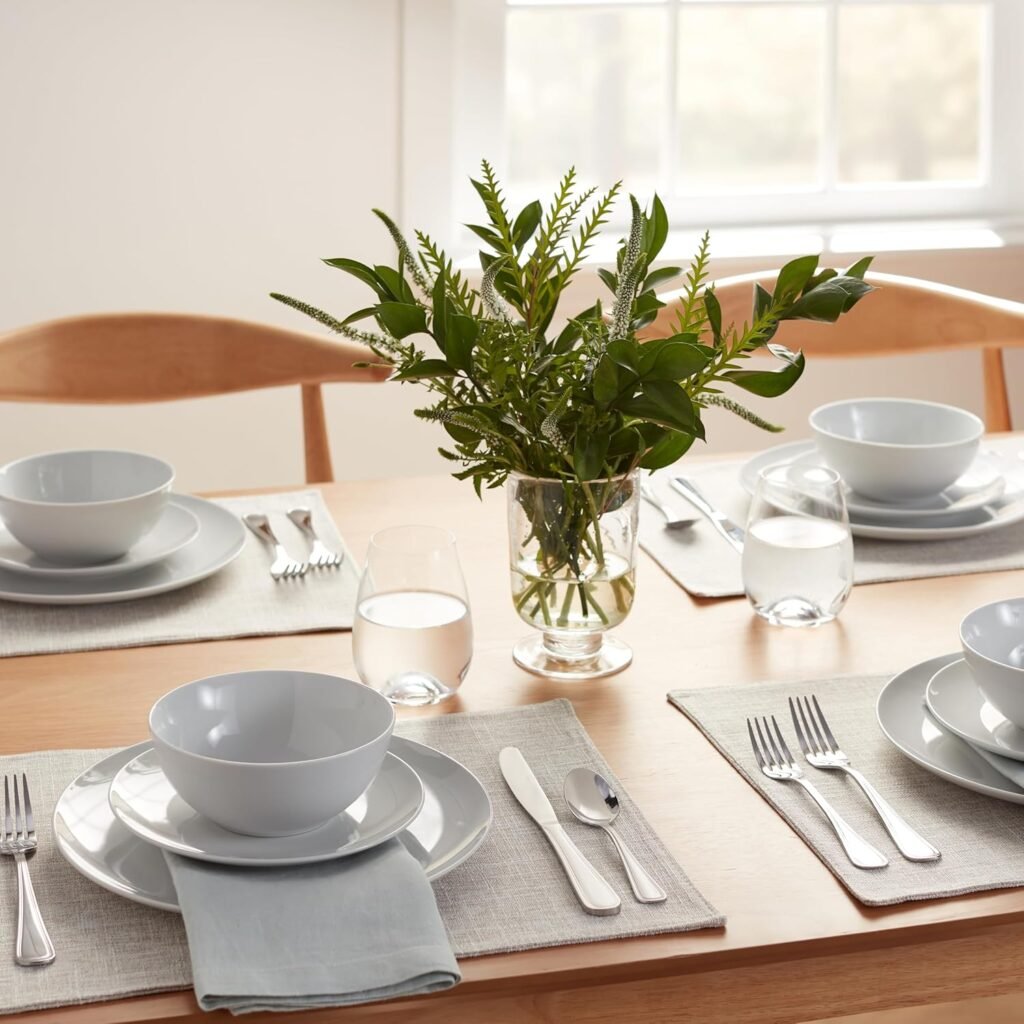
Brands like Corelle and Arcopal are well known for packaging their pieces into cohesive dinner sets that make it easy to set a complete, uniform table. The key idea here is coordination; every piece in the set is designed to look good together.
What Is Typically Included in a Dinner Set?
A standard dinner set usually contains dinner plates for main courses, salad plates or side plates, bowls for soups or cereals, and cups or mugs for beverages.
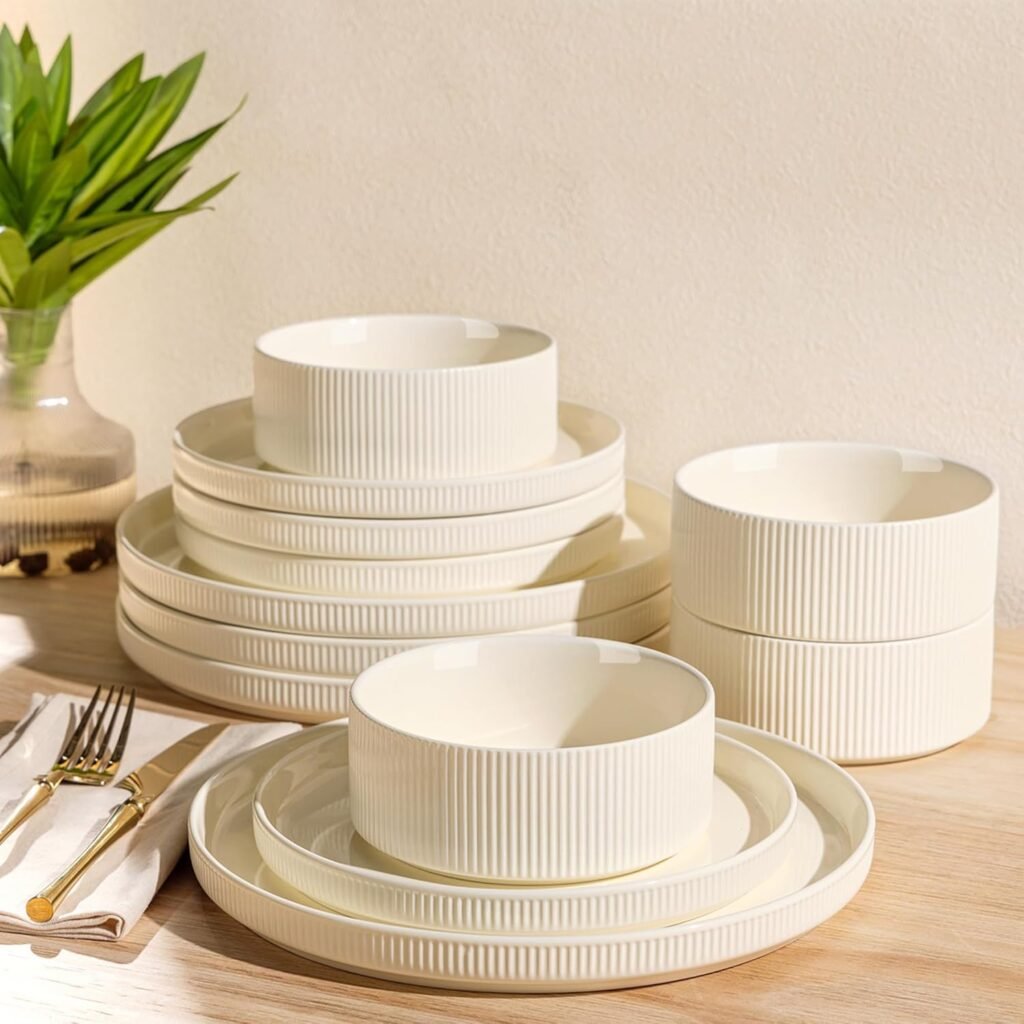
Some sets also include saucers. The exact combination depends on the brand and the set size.
A basic set might cover just the essentials — plates and bowls, while a more comprehensive dining collection could add serving pieces, platters, and additional specialty items for a fully equipped table.
Different Sizes of Dinner Sets
Dinner sets come in several configurations based on household size and dining needs. A 4-piece place setting covers one person with a dinner plate, salad plate, bowl, and cup.
A 16-piece dinner set is one of the most common retail options, typically serving four people with the same four-piece arrangement per person.
Larger households or those who entertain regularly might opt for 32-piece sets or family dinner sets. Formal dining sets can also include specialty pieces not found in everyday sets.
Purpose of Buying a Dinner Set
The main appeal of a dinner set is convenience and visual consistency. Instead of hunting for individual pieces that complement each other, a dinner set gives you a complete, ready-to-use table arrangement in one purchase.
The matching aesthetics make table settings look intentional and put-together.
For people who want a cohesive dining experience without the hassle of mixing and matching, a dinner set is often the most practical and cost-effective starting point for furnishing a kitchen.
Difference Between Dinnerware and Dinner Set
Category vs. Collection
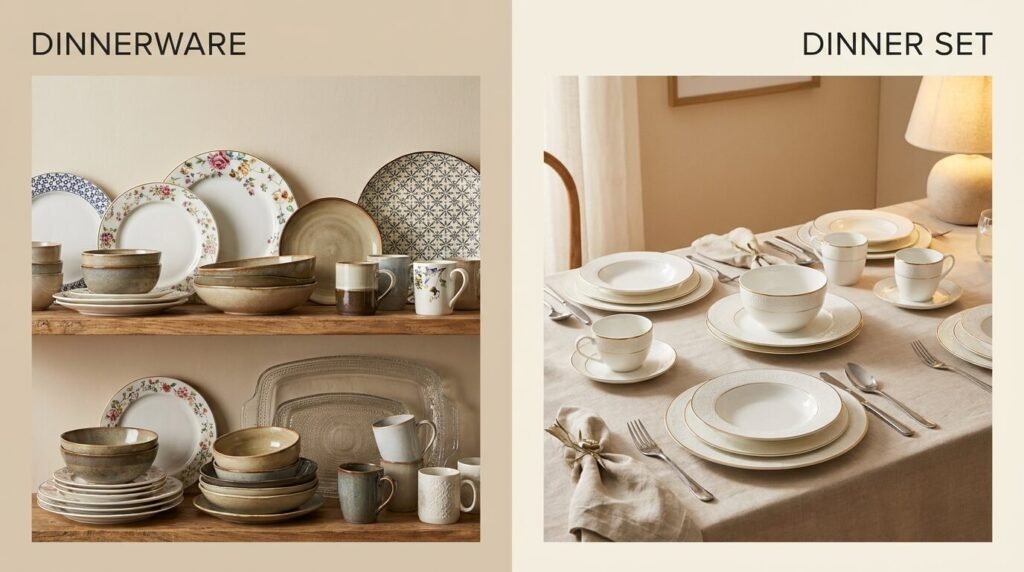
The most fundamental difference is this: dinnerware is a product category, while a dinner set is a specific product within that category.
Dinnerware categorizes all dishes and tableware used for meals. A dinner set is a defined, curated collection that consists of matching pieces.
Shopping for dinnerware gives you access to everything from a single bowl to an entire brand’s product line.
Shopping for a dinner set means you’re buying a pre-selected, coordinated group of pieces designed to work together as a complete table arrangement.
Individual Pieces vs. Coordinated Sets
Dinnerware can be purchased as individual open-stock pieces, which is useful when you need to replace a broken item or build a custom collection at your own pace.
A dinner set, by contrast, is sold as a closed, packaged unit; you get everything included in the set, nothing more, nothing less. This distinction matters when you’re replacing damaged items.
With individual dinnerware pieces, it’s easier to find exact replacements, whereas dinner sets are designed as complete units and may not always be available in single-piece replacements.
Flexibility and Customization Differences
Dinnerware offers far more flexibility than a dinner set. You can mix stoneware bowls with porcelain plates, add a glass dinnerware serving platter, or combine pieces from different brands to create a look that’s uniquely yours.
A dinner set trades this flexibility for consistency and ease. If you want a uniform look without any decision fatigue, a dinner set delivers that.
But if you prefer to curate your table based on your evolving taste, individual dinnerware pieces give you the freedom to do exactly that.
Cost and Value Comparison
Dinner sets are often more cost-effective than building an equivalent collection piece by piece. Buying a 16-piece set from Corelle, for example, is typically less expensive than purchasing each of those 16 pieces individually.
However, if you only need specific items, say, a few extra bowls or a set of mugs, buying individual dinnerware pieces is the smarter spend.
Luxury brands like Lenox or Noritake also offer dinner sets at a premium, where the value comes as much from the brand and craftsmanship as from the convenience of the set format.
Everyday Dining vs. Formal Table Setup
Casual, everyday dining usually calls for durable, practical dinnerware, stoneware plates, simple bowls, and dishwasher-safe pieces that can handle daily use.
Formal dining, on the other hand, often relies on complete dinner sets, particularly fine china or porcelain dinner sets, where a matching table setting is part of the overall dining experience.
Brands like Lenox and Villeroy & Boch cater specifically to this formal dining market with full coordinated sets designed to impress at special occasions and structured meals.
Dinnerware vs. Dinner Set: Which Is Better?
Best for Everyday Use
For daily use, individual dinnerware pieces or smaller coordinated sets tend to work best.
Durable options like Corelle’s Vitrelle glass dinnerware are lightweight, microwave-safe, and dishwasher-safe — exactly what you need when dishes are going through heavy daily use.
You can also see an in-depth review of dinnerware sets to find out which options hold up best for regular everyday meals.
Everyday tableware doesn’t need to be fancy; it needs to be functional, durable, and easy to maintain.
Best for Families
Families are best served by a complete dinner set, specifically a 16-piece or larger set that covers everyone at the table.
Family dinner sets from brands like Corelle are designed with this in mind: durable enough to survive busy households, stackable for easy kitchen organization, and available in enough pieces to serve four or more people without running short.
A coordinated dining set also makes mealtime feel more organized and intentional, even when it’s just a casual weeknight dinner.
Best for Formal Dining
When it comes to formal dining, a complete, matching dinner set is almost always the right choice.
Porcelain dinner sets or fine china collections from brands like Noritake, Lenox, or Villeroy & Boch provide the elegant, uniform table setting that formal occasions call for.
These sets often include specialty pieces like charger plates, soup tureens, and saucers that you wouldn’t typically find in casual dinnerware collections.
The visual harmony of a coordinated formal dinner set is a big part of what makes the dining experience feel elevated.
Best for Budget Buyers
Budget-conscious buyers generally get more value from a dinner set than from building a collection piece by piece.
Entry-level dinner sets from brands like Corelle or Arcopal offer solid quality at an accessible price point, and the bundled format means you’re paying less per piece than you would buying individually.
If budget is a priority, look for 16-piece sets that cover four place settings — they give you the most practical value without unnecessary extras you might not use regularly.
Best for Mixing and Matching Styles
If you enjoy a more eclectic, personalized table, individual dinnerware pieces are the way to go. Buying open-stock tableware lets you pair rustic stoneware bowls with minimalist porcelain plates, or add a glass dinnerware serving platter to a ceramic collection.
Scandinavian-inspired brands like IKEA and contemporary tableware lines make it easy to mix different textures and styles cohesively.
This approach takes more effort than buying a pre-packaged dinner set, but the result is a table setting that feels genuinely personal.
Types of Dinnerware and Dinner Sets
Porcelain Dinner Sets
Porcelain dinner sets are among the most popular choices for both everyday use and formal dining. Porcelain is fired at high temperatures, giving it a smooth, dense surface that resists staining and is easy to clean.
Brands like Noritake have built their reputation on high-quality porcelain dinnerware that balances elegance with practicality.
A porcelain dinner set typically feels refined without being fragile, making it a versatile choice across different dining occasions.
Stoneware Dinnerware
Stoneware dinnerware has a heavier, more rustic character compared to porcelain. It’s made from denser clay fired at high temperatures, which makes it very durable and resistant to chipping.
Brands like Pfaltzgraff have become synonymous with stoneware’s earthy, farmhouse aesthetic. Stoneware is a great fit for casual dining and everyday meals, and it pairs naturally with rustic or contemporary kitchen decor.
It’s also typically microwave and dishwasher-safe, adding to its everyday practicality.
Glass Dinnerware Collections
Glass dinnerware is non-porous, hygienic, and visually clean. Arcopal’s opal glass line is one of the most recognized in this category, lightweight, durable, and with a milky-white finish that looks elegant on any table.
Corelle also uses a proprietary Vitrelle glass technology that makes their dishes surprisingly lightweight and resistant to chips and cracks.
Glass dinnerware collections work well in both casual and semi-formal settings, and they’re generally microwave and dishwasher-safe.
Melamine Dinner Sets
Melamine dinner sets are the go-to for outdoor dining, casual family meals, and situations where breakage is a real concern.
Made from a lightweight, durable plastic-based material, melamine dishes are virtually unbreakable and come in a wide range of colors and patterns.
They’re not microwave safe, but they handle dishwasher cleaning well. For households with young children or anyone who eats outdoors frequently, a melamine dinner set is a sensible, low-maintenance option.
Luxury vs. Casual Dinnerware
Luxury dinnerware, think Lenox fine china, Versace Home designer tableware, or Royal Doulton collectible pieces, is crafted for formal occasions and curated presentation.
These pieces are often hand-decorated, made from premium porcelain or bone china, and designed to be displayed as much as used. Casual dinnerware, by contrast, prioritizes durability and everyday functionality over aesthetics.
The choice between luxury and casual comes down to how and where you dine most often, and whether your tableware needs to impress or simply perform.
How to Choose the Right Dinnerware or Dinner Set
Consider Material Durability
Material is the first thing to think about when choosing dinnerware. If you need dishes that can handle heavy daily use, stoneware and tempered glass dinnerware are reliable choices.
For formal occasions where appearance matters more than heavy-duty durability, porcelain or bone china is a better fit.
Melamine is the most durable option in terms of breakage resistance, but it has limitations around heat. Always match the material to how you actually plan to use the dishes, not just how they look in the store.
Evaluate Microwave and Dishwasher Safety
Practicality matters as much as aesthetics. Before buying any dinnerware or dinner set, check whether it’s microwave-safe and dishwasher-safe.
Most stoneware, porcelain, and glass dinnerware options are compatible with both, but some fine china and hand-decorated pieces require hand washing and are not safe for microwave use.
Corelle is a brand frequently cited for its microwave and dishwasher-safe certifications across its full product range, making it one of the more convenient everyday options available.
Match Dining Style and Kitchen Decor
Your dinnerware should complement the way you dine and the look of your dining space. Rustic stoneware fits naturally in farmhouse or earthy-toned kitchens.
Minimalist porcelain works in contemporary or Scandinavian-inspired spaces. A formal porcelain dinner set suits dining rooms set up for entertaining.
Consider the coordinated dining aesthetics, you’re working toward the tableware you choose should feel like a natural extension of your kitchen and table decor, not something that clashes with everything else.
Choose Based on Household Size
Place setting capacity should directly inform your purchase. A single person or a couple can get by with a 4-piece or 8-piece dinner set. A 16-piece set best serves a family of four.
Larger households or those who frequently entertain guests should consider 32-piece sets or supplementing a dinner set with additional individual dinnerware pieces.
Buying the right amount upfront means you’re not scrambling to find matching pieces later, especially important with coordinated dinner sets that may get discontinued over time.
Consider Storage Space and Stackability
Before purchasing, think about where the dishes will actually live in your kitchen.
Stackable dinnerware, like many of Corelle’s lines, is specifically designed for compact storage, a big advantage in smaller kitchens.
Heavier stoneware takes up more cabinet space and may not stack as neatly. If kitchen organization is a priority, look for lightweight, low-profile tableware that stacks cleanly without taking over your shelving.
The best dinnerware is the kind that works well both on the table and off it.
Conclusion
At its core, the difference between dinnerware and a dinner set comes down to scope. Dinnerware is the broad category that includes every dish, plate, bowl, cup, and serving piece used at the table.
A dinner set is a specific, coordinated collection within that category — a pre-matched group of pieces designed to work together.
Understanding this distinction helps you shop with clarity and purpose, whether you’re outfitting a kitchen from scratch or replacing a few worn-out pieces.
Key Takeaways
The right choice depends entirely on your lifestyle, dining habits, and budget. If you want convenience, visual consistency, and complete table coverage in one purchase, a coordinated dinner set is your best bet.
If you prefer flexibility, mixing materials, building gradually, or replacing individual pieces, shopping for open-stock dinnerware gives you that control.
Consider material durability, microwave and dishwasher safety, and how many people you’re regularly feeding before making a decision.
Final Recommendation
For most households, starting with a quality dinner set and supplementing with individual dinnerware pieces over time is the most practical approach.
Choose a set that fits your current household size, matches your kitchen’s style, and is made from a material that suits your daily routine.
If you value aesthetic consistency, coordinated dinner sets from brands like Corelle, Noritake, or Arcopal deliver that beautifully.
And when you need flexibility or want to personalize your table, individual dinnerware pieces are always there to fill the gaps.
About the Author & Reviewer
Sarah Emirone, Author
Sarah researches and writes SafeKitchn’s dinnerware and kitchenware guides, with a focus on material safety, lead content, and manufacturer specifications. She cross-references product data sheets, safety certifications, and regulatory filings (including FDA and Prop 65 records) before publishing, and updates articles when new information becomes available.
James Daniels, Reviewer
James reviews SafeKitchn’s material safety content for scientific accuracy. He holds a B.Sc in inorganic chemistry and works as a materials researcher, with particular focus on the composition and safety behavior of glass, ceramic, and metal used in kitchenware.