

Borosilicate glass vs stainless steel isn’t a question with one answer.
Glass wins on taste and chemical purity. Stainless Steel wins on impact resistance and insulation.
Which one you should buy depends on what you’re putting it in: a water bottle, a food container, a saucepan, or a lab flask, and that’s the part people don’t pay attention to.
This guide walks through the real differences, the actual leaching data behind the “is stainless steel safe” question, and a decision framework built around how you’ll actually use the product.
Written by Sarah Emirone | Reviewed by James Daniels, B.Sc, Inorganic Chemist & Materials Researcher | Updated September 2026 | See How We Test | Filed under: Brand & Product Comparisons
What Are Borosilicate Glass and Stainless Steel?
Borosilicate glass is silica glass with boron trioxide added during melting, which is what gives it its low thermal expansion. Stainless steel is an iron alloy with chromium (and usually nickel) added to resist corrosion.

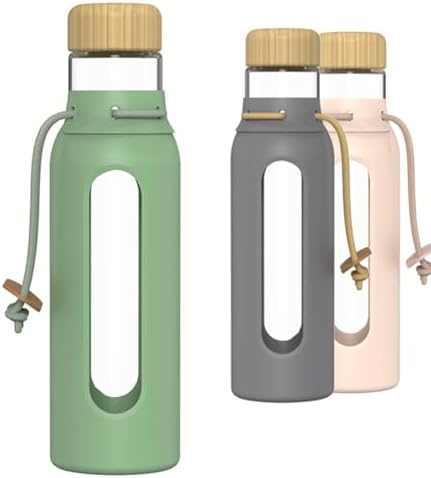
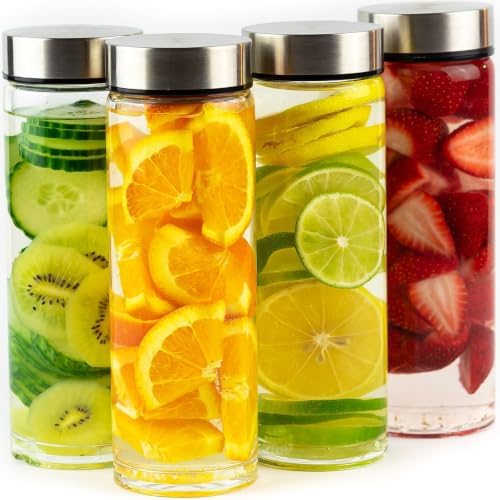

Both are considered food-safe, but they get there through different chemistry, and that difference shows up everywhere from freezer safety to how your coffee tastes.
What Makes Borosilicate Glass Different From Regular Glass
Borosilicate glass contains roughly 13% boric oxide alongside silica, sodium oxide, and aluminum oxide. That boron content drops its coefficient of thermal expansion to about 3.3 × 10⁻⁶ per Kelvin, close to a third of ordinary soda-lime glass.
In practice, that means borosilicate can handle a temperature swing of around 330°F without cracking, while standard glass starts failing at swings closer to 100°F.
This is why lab flasks, Pyrex-style bakeware, and quality glass water bottles are made from it instead of the glass used in a drinking cup from a supermarket.
What Makes Stainless Steel Food-Safe (304 vs 316 vs 201)
304 stainless steel — also labeled 18/8 or 18/10 — contains 18–20% chromium and 8–12% nickel, and it’s the grade used in most food-contact cookware and bottles.

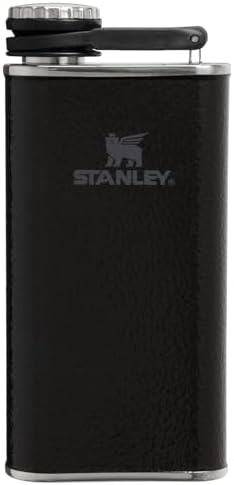

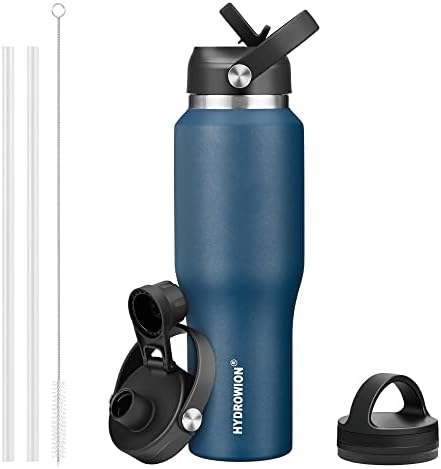
316 adds molybdenum for better corrosion resistance and shows up in marine and lab equipment. 201 is a cheaper, lower-nickel grade that shows up in budget products and is more prone to rust and metal transfer over time.
If a listing doesn’t specify the grade, assume it’s not 304 or 316.
Related: Complete Guide to the Types of Borosilicate Glass
Related: Is Borosilicate glass the same as Crystal?
Borosilicate Glass vs Stainless Steel: Full Comparison Table
| Factor | Borosilicate Glass | Stainless Steel (304/316) |
|---|---|---|
| Chemical inertness | Completely inert, zero leaching | Inert under normal use, measurable leaching under acidic/long-cook conditions |
| Thermal shock resistance | Handles ~330°F swings, freezer-to-oven safe | Not applicable — steel doesn’t crack from heat |
| Insulation | Poor without an added sleeve or a double wall | Excellent with double-wall vacuum construction (8–12 hrs hot, 24 hrs cold) |
| Breakage | Shatters on hard drops | Dents but doesn’t break |
| Taste transfer | None, ever | Rare, usually from low-grade steel or acidic liquids |
| Transparency | Full — see contents without opening | None |
| Weight | Lighter per volume, but bulkier for insulated versions | Heavier, especially double-wall |
| Typical cost | Lower upfront | Higher upfront, longer service life |
Steel wins on durability and insulation. Glass wins on purity and visibility. Neither wins across the board, which is why the next section matters more than the table does.
Safety and Health: Does Either Material Leach Chemicals?
Borosilicate glass does not leach anything into food or drink under normal use. Stainless steel does so in specific, measurable amounts, under specific conditions.
That’s the honest answer, and it’s more useful than the blanket “steel is totally inert” claim you’ll find on most comparison pages.
What the Nickel and Chromium Leaching Studies Actually Found
A 2013 study published in the Journal of Agricultural and Food Chemistry (Kamerud et al.) cooked tomato sauce in new 304 and 316 stainless steel for periods ranging from 2 to 20 hours, across ten repeated cooking cycles. The numbers are specific enough to actually plan around:
| Condition | Leaching Result |
|---|---|
| First cook cycle, new pan, 20-hour simmer | The highest nickel and chromium release was measured in the study |
| Cooking time 2–20 hours | Leaching increases with cook time |
| Cycles 1–6 | Leaching drops with each repeated cook |
| Cycle 6 onward | Release stabilizes but never fully stops |
| Root cause | A protective chromium-oxide layer builds up with use and slows further release |
Other research backs this up. A separate leaching study on 201-grade steel found nickel concentrations up to 0.52 mg/kg in yams cooked in old cookware, with acidic foods like tomato and citrus producing the highest transfer.
None of this makes stainless steel dangerous for typical use. A home cook simmering pasta sauce for 30 minutes isn’t replicating a 20-hour lab trial.
But if you’re cooking long, acidic dishes regularly, or you have a diagnosed nickel sensitivity, the material and the cooking method both matter.
The practical fix is simple: season a new stainless steel pan by simmering a batch of tomato sauce for a couple of hours, discard it, and repeat that two or three times before regular use.
It won’t eliminate leaching, but it measurably reduces it.
Why Borosilicate Glass Is Considered Chemically Inert
Chemical inertness means a material doesn’t react with what touches it. Borosilicate glass qualifies because its structure is a rigid silica-boron network with no loose ions available to migrate into liquid or food.
That’s why it doesn’t pick up flavors, doesn’t require seasoning, and shows the same performance on day one and year ten. The only safety concern with glass isn’t chemical, it’s physical.
A chip or hairline crack can harbor bacteria and should be treated as a reason to replace the piece.
Thermal Performance: Heat Resistance, Shock, and Insulation
Borosilicate glass survives extreme temperature changes without cracking. Stainless steel keeps drinks hot or cold for hours. Those are two different jobs, and conflating them is where most buyers get confused.
Thermal Shock Resistance — Freezer-to-Oven Comparison
Borosilicate glass can go from a freezer at 0°F directly into a 300°F oven without shattering, because its low expansion rate means the glass doesn’t stress unevenly as it heats.
Regular soda-lime glass can’t do this reliably; the same jump can crack a cheap glass container in seconds. Stainless steel doesn’t face this problem at all, since metal doesn’t crack from thermal stress the way glass does, but it also isn’t the material choice people reach for when they specifically want to watch a dish bake.
Insulation and Temperature Retention — Why Steel Wins for Hot/Cold Drinks
- A double-wall vacuum stainless steel bottle keeps a hot drink hot for roughly 8 to 12 hours and a cold drink cold for up to 24 hours.
- A single-wall borosilicate glass bottle offers close to none of that — a hot drink drops to room temperature within 20 to 30 minutes.
- Insulated glass sleeves and silicone jackets help slightly, but they don’t approach vacuum-sealed steel performance.
- If temperature retention is the priority, this category isn’t closed. Steel wins.
Durability and Breakage Resistance
Stainless steel survives drops. Glass, even borosilicate, doesn’t always.
Drop Test and Impact Resistance
- Borosilicate glass resists thermal cracking exceptionally well, but a hard drop onto tile or concrete can still shatter it.
- Silicone sleeves reduce breakage risk but don’t eliminate it — they cushion impact, they don’t make glass unbreakable.
- Stainless steel bottles and containers routinely survive drops from counter height or higher without structural damage.
- For anyone who regularly drops or knocks bottles around — gyms, job sites, kids’ lunch bags — steel is the safer physical choice regardless of what wins on taste.
Dents, Scratches, and Long-Term Wear on Stainless Steel
- Steel doesn’t shatter, but it does dent, and a bad dent can compromise the vacuum seal on insulated bottles.
- Scratches on the interior can strip the passive oxide layer, temporarily increasing metal transfer until it re-forms.
- Exterior finish (brushed vs. powder-coated) affects how visible wear becomes over time, though it doesn’t change food safety.
- Well-maintained 304 steel realistically lasts 7 to 10+ years of daily use, which is longer than most glass products survive without a chip or break.
Choosing by Use Case: Bottles, Cookware, Storage, and Lab Equipment
Water Bottles and Drinkware
For daily water at a desk or bedside, glass is the better pick; it’s the only material with zero taste transfer and full transparency, so you can see exactly what’s inside and how clean it is.
For commuting, gym use, or travel, steel’s insulation and drop resistance matter more than taste purity. There’s also a third option that most users skip entirely: hybrid bottles with a borosilicate glass body and a stainless steel lid or cap.
The glass stays in contact with your drink, where purity actually matters, while the steel handles the structural, high-wear parts like the threading and closure.
Look for hybrids where the cap doesn’t extend down into the drinking cavity; that’s the detail that determines whether you’re actually getting glass-level purity or just glass with a steel accent.
Food Storage Containers
Glass containers let you see contents at a glance and never retain smells from last week’s curry. Steel containers are lighter, don’t break if dropped from a shelf, and stack more efficiently in a bag or cooler.
For freezer-to-microwave routines, glass is the more practical choice since most stainless steel isn’t microwave-safe at all. For packed lunches that get tossed around, steel holds up better.
Cookware
Borosilicate glass bakeware is excellent for oven use, casseroles, baked pasta, and roasted vegetables because you can watch browning happen without opening the oven door. It’s not built for stovetop cooking.
Stainless steel is the stovetop standard, but the leaching data above matters most here: new stainless pans, long acidic simmers (think all-day marinara), and unseasoned surfaces are the exact conditions where nickel and chromium transfer measurably increase.
Laboratory and Industrial Equipment
Labs default to borosilicate glass for one main reason: visibility. A chemist running a reaction needs to watch color changes, crystallization, and boiling behavior in real time, and glass is the only material that allows that without opening the vessel.
Glass also resists a wider range of acids and alkalis than stainless steel, which corrodes under sustained harsh chemical exposure. Stainless steel earns its place where throughput matters more than observation.
It transfers heat faster, doesn’t break under mechanical stress, and in wiped-film still comparisons, steel units process more than double the volume of an equivalent glass unit per run.
Sustainability and Cost Comparison
Recyclability and Lifecycle Footprint
- Both materials are highly recyclable — steel at around an 85% recycling rate, glass at close to 100% with no quality loss.
- Steel production is energy-intensive to mine and process, but a single steel bottle used for a decade replaces many single-use or short-lived alternatives.
- Glass manufacturing runs furnaces at 1,400–1,600°C, and broken glass typically goes to landfill rather than recycling.
- Over a multi-year period, a durable steel product used continuously often has a lower total footprint than several glass replacements bought after breakage.
Upfront Cost vs Long-Term Value
| Feature | Borosilicate Glass | Stainless Steel |
|---|---|---|
| Typical upfront cost | Lower | Higher |
| Replacement frequency | Higher (breakage risk) | Lower |
| 5-year cost if used daily | Can exceed steel if replaced after breaks | Usually lower once amortized |
| Best for | Occasional, careful, low-impact use | Frequent, high-impact, long-term use |
Which One Should You Buy?
- Do you cook or store acidic food for long periods (hours, not minutes)? Choose glass or season new stainless steel thoroughly before regular use.
- Do you have a diagnosed nickel sensitivity? Choose glass, or confirm 18/0 (nickel-free) stainless steel specifically.
- Do you drop or knock your bottle/container around daily? Choose stainless steel — the breakage risk with glass isn’t worth it.
- Do you need drinks to stay hot or cold for 6+ hours? Choose double-wall vacuum stainless steel; glass can’t compete here.
- Do you need to watch the contents while cooking, reacting, or storing? Choose glass — it’s the only option with full visibility.
- Do you want both? Look for a hybrid product — glass body, steel cap — and confirm the steel doesn’t contact the liquid.
Frequently Asked Questions
Is glass or stainless steel better for health?
Neither poses a meaningful health risk under normal use. Glass is chemically inert with zero leaching, while quality 304/316 stainless steel leaches only trace amounts that stay well within safety guidelines outside of extreme cooking conditions.
Does stainless steel leach chemicals into food?
Yes, in measurable but generally small amounts, especially with new pans, long acidic cooking, and repeated use before an oxide layer forms. A 2013 JAFC study measured this directly and found that leaching stabilizes after about six cooking cycles.
Can borosilicate glass go from the freezer to the oven?
Yes. Its low thermal expansion lets it handle temperature swings of roughly 330°F without cracking, which regular soda-lime glass can’t do.
Which is more durable, glass or stainless steel?
Stainless steel is more durable against drops and impacts, while borosilicate glass is more durable against thermal stress. Pick based on which failure mode you’re more likely to encounter.
Does stainless steel affect the taste of water?
Quality 304 steel shouldn’t affect taste at all. A metallic taste usually points to lower-grade steel, a worn interior coating, or acidic contents rather than the material class itself.
Is borosilicate glass toxic?
No. It’s non-porous, chemically stable, and doesn’t leach boron or any other compound into food or drink under normal use.
Which is more eco-friendly, glass or stainless steel?
Both recycle well, but a long-lived steel product often beats glass on lifecycle footprint simply because it doesn’t break and needs replacing.
Can you put boiling water in a borosilicate glass bottle?
Yes, borosilicate glass is rated for this specifically, unlike standard glass bottles, which can crack under sudden heat.
What grade of stainless steel is safest for food?
304 (18/8) is the standard for food contact and balances safety with cost. 316 adds better corrosion resistance for harsher environments, and 201 should generally be avoided for food use.
Why do laboratories use borosilicate glass instead of stainless steel?
Visibility is the main reason chemists need to observe reactions in progress. Glass also resists a broader range of corrosive chemicals than stainless steel.
Is stainless steel or glass better for cooking acidic foods?
Glass has no leaching risk at all with acidic foods. Stainless steel is fine for typical short cooks but shows measurably higher metal transfer during long, acidic simmers in new or unseasoned pans.
How long do stainless steel bottles keep drinks hot compared to glass?
A double-wall vacuum steel bottle holds heat for 8 to 12 hours. An uninsulated glass bottle loses most of its heat within 20 to 30 minutes.
About the Author & Reviewer
Sarah Emirone, Author
Sarah researches and writes SafeKitchn’s dinnerware and kitchenware guides, with a focus on material safety, lead content, and manufacturer specifications. She cross-references product data sheets, safety certifications, and regulatory filings (including FDA and Prop 65 records) before publishing, and updates articles when new information becomes available.
James Daniels, Reviewer
James reviews SafeKitchn’s material safety content for scientific accuracy. He holds a B.Sc in inorganic chemistry and works as a materials researcher, with particular focus on the composition and safety behavior of glass, ceramic, and metal used in kitchenware.