

Can you put borosilicate glass on the stove? Sometimes, the answer changes completely depending on which stove you own.
Borosilicate resists thermal shock far better than ordinary glass, which is why it shows up in lab beakers, teapots, and bakeware alike.
But the material being heat-resistant and a specific item being safe on your burner are two different questions.
Gas, electric, and induction stoves each treat glass differently, and the product in your hand matters as much as what it’s made of. Here’s how to actually check, instead of guessing.
Written by Sarah Emirone | Reviewed by James Daniels, B.Sc, Inorganic Chemist & Materials Researcher | Updated September 2026 | See How We Test | Filed under: Buying, Care & Product Guides
The Short Answer: It Depends on Your Stove Type
Borosilicate glass can go on some stoves and not others, and the split is sharp enough that a blanket “yes” or “no” is the wrong answer either way.
Gas stoves work, but only with a heat diffuser and low heat, because an open flame heats unevenly, and that unevenness is what cracks glass.
Electric coil and ceramic glass-top stoves are the safest match, since they spread heat more evenly across the base.
Induction stoves don’t work at all, regardless of glass quality, because induction needs a magnetic base and glass has none.
| Stove Type | Safe? | Conditions | Risk Level |
|---|---|---|---|
| Gas (open flame) | Conditional | Use a heat diffuser, low-to-medium heat only | Moderate — uneven heating risk |
| Electric coil | Yes, with care | Flat-bottomed cookware, low-to-medium heat | Low |
| Ceramic glass-top | Yes | Even heat distribution, no diffuser typically needed | Low |
| Induction | No | Glass isn’t magnetic — the stove won’t turn on regardless of the cookware | None (won’t function) |
Why “Borosilicate Glass” Isn’t a Single Answer
The confusion around this topic isn’t really about heat resistance. It’s about mixing up the material with the product built from it.
Borosilicate Is a Material, Not a Product Design
Borosilicate glass is a glass formula made with boron trioxide added to silica, which gives it a low coefficient of thermal expansion — roughly 3 × 10⁻⁶ per Kelvin, about a third that of ordinary soda-lime glass.
That property lets it survive a temperature swing of around 166°C without cracking, which is why it’s the standard material for lab equipment, bakeware, and stovetop kettles alike.

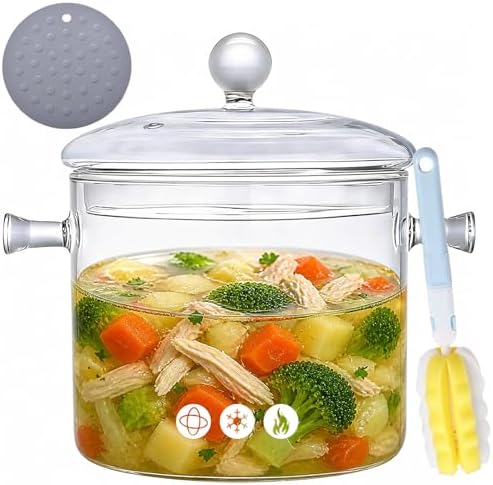

But that number describes the glass, not the item. Two products made from identical borosilicate glass can have wildly different stovetop safety depending on how thick the walls are, how flat the base sits, and whether the manufacturer engineered it for direct flame in the first place.
The material sets the ceiling. The product design decides whether you can actually reach it.
Why Lab Beakers Are Built Differently Than Kitchen Glassware
A 600 mL Pyrex-brand lab beaker is built with thick, heavy walls and a flat, reinforced base specifically so it can sit on a hot plate or over a Bunsen burner without incident.
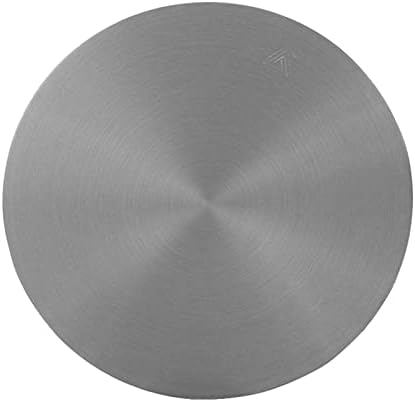


That’s not an accident, it’s the entire design brief. A decorative borosilicate teapot or a thin glass storage jar is made from the same glass chemistry, but nobody engineered it to take direct flame contact.
The walls are thinner for aesthetics and pouring comfort, not thermal performance under a burner.
This is the actual reason a chemistry beaker can handle a hot plate all day while a glass teapot might crack the first time it touches a gas ring: same glass, different job.
Can You Put Borosilicate Glass on a Gas Stove?
Yes, but only with a heat diffuser, and skipping that step is the most common way borosilicate cookware cracks on a stovetop.
The Risk of Open-Flame Heating
A gas burner concentrates heat in one ring shape rather than spreading it evenly across the base of a pot.
That creates a hot zone directly above the flame while the rest of the glass stays cooler, and the temperature gap between those two zones is what generates internal stress.
Borosilicate resists this better than tempered soda-lime glass, but “resists better” isn’t the same as “immune to.” Push it hard enough, a high flame, an empty pot, cold glass dropped onto a hot burner, and even good borosilicate can fail.
How to Use a Heat Diffuser Safely
- Place a flat metal heat diffuser directly over the gas burner before turning on the flame.
- Set the flame to low or medium — never high — and let it stabilize for a few seconds before placing the glass cookware on top.
- Make sure there’s liquid or food inside the cookware; never heat an empty glass pot or dish.
- Increase heat gradually rather than jumping straight to a high setting, giving the glass time to expand evenly.
- Avoid placing a cold or refrigerated glass item directly onto the hot diffuser — let it come closer to room temperature first.
Anyone doing this regularly should first learn how to use a heat diffuser on a gas stove, since the technique applies to more than just borosilicate.
Can You Use Borosilicate Glass on an Induction Stove?
No. This one isn’t conditional induction cooktops simply won’t recognize glass cookware, borosilicate or otherwise, no matter how well it handles heat.
Why Glass Won’t Heat on Induction (Magnetic Requirement)
Induction cooking works by passing an electromagnetic current through the base of the pot, which only happens if that base is made of a magnetic material like cast iron or magnetic stainless steel.
Glass has no magnetic properties at all. Set a borosilicate pot on an induction cooktop, and the stove’s sensors simply won’t detect it — the burner won’t even turn on.
This has nothing to do with how heat-resistant the glass is. It’s a physics mismatch, not a safety concern.
Induction-Compatible Glass Cookware Workarounds
- Some manufacturers sell borosilicate glass cookware with a bonded magnetic steel disc fused to the base, which makes the whole piece induction-compatible while keeping the glass body.
- A separate induction interface disc — a flat magnetic plate that sits between the cooktop and the glass cookware — lets non-magnetic pots work on induction burners, functioning similarly to a heat diffuser.
- Checking the product listing or base of the item for an induction symbol (usually a coil icon) confirms compatibility before you buy, rather than guessing.
If you’re shopping specifically for this setup, this breakdown of induction-compatible glass cookware adapters covers which options actually hold up under daily use.
Is Borosilicate Glass Safe on Electric and Ceramic Glass-Top Stoves?
Yes, and this is the stove type of borosilicate glass cookware that handles best, assuming the cookware itself has a flat bottom.
Why Electric/Ceramic Is the Safer Match
Electric coil burners and ceramic glass-top stoves both distribute heat across a broader, flatter surface than a gas flame does, which means less of the uneven heating that causes thermal stress in glass.
A flat-bottomed borosilicate pot sitting on a ceramic glass-top stove makes full, even contact with the heating surface below it, so the temperature climbs more uniformly through the glass.
That’s a meaningfully lower-risk setup than an open flame licking one concentrated ring on the base of a pot.
Precautions to Take Anyway
- Stick to low or medium heat settings rather than the stove’s highest setting, since electric elements can still develop hot spots over time.
- Use cookware with a genuinely flat, unwarped base — a warped bottom loses contact with the heating surface and creates the same uneven-heating problem gas stoves cause.
- Never move the glass straight from a refrigerator or freezer onto a hot electric burner; let it approach room temperature first.
- Avoid abrasive scouring pads on the base, since scratches can weaken the glass over repeated heating cycles.
Is Pyrex the Same as Borosilicate Glass?
Sometimes, the year your Pyrex was made matters more than the brand name does. Vintage Pyrex was borosilicate. Most modern Pyrex sold in the US isn’t.
Vintage Pyrex vs. Modern Pyrex
| Feature | Vintage Pyrex (pre-1998) | Modern US Pyrex (post-1998) |
|---|---|---|
| Glass type | Borosilicate | Tempered soda-lime glass |
| Thermal shock resistance | High — handles ~166°C temperature swings | Lower — more prone to cracking under sudden temperature change |
| Stovetop use | Closer to safe with precautions | Not recommended, even with a diffuser |
| Where it’s still true | N/A | European Pyrex (Pyrex International) is still made from borosilicate glass |
Corning introduced Pyrex as a borosilicate product back in 1915, and it stayed that way for decades before the US manufacturer switched to tempered soda-lime glass in the late 1990s.
European Pyrex, made under a different license, kept the original borosilicate formula, which is why a Pyrex dish bought in France behaves differently on a stovetop than one bought in the US.
This single manufacturing split explains most of the conflicting advice you’ll find online about whether “Pyrex is safe on the stove.”
How to Tell What Your Pyrex Is Made Of
- Check the country of manufacture printed on the base — Pyrex marked as made in the US after the late 1990s is almost certainly tempered soda-lime glass.
- Look for a date code or manufacturer stamp; genuinely vintage pieces (pre-1998) are more likely to be borosilicate.
- European-market Pyrex, sold under Pyrex International, remains borosilicate regardless of the manufacture date.
- When in doubt, contact the manufacturer directly or check their published materials page — guessing based on appearance alone isn’t reliable, since both types look nearly identical.
How to Tell If Your Specific Item Is Stovetop-Safe
Before assuming any borosilicate item is stovetop-ready, it’s worth working through a quick guide to choosing a stovetop-safe borosilicate teapot or dish, since labeling and shape tell you more than the glass type alone.
Checking Manufacturer Labeling
- Look for an explicit “stovetop safe” or “flame safe” mark stamped on the base or printed on the packaging — the absence of this mark is itself informative.
- Check the manufacturer’s stated maximum temperature differential; borosilicate cookware rated for direct heat usually lists a specific figure, while decorative pieces often don’t mention one at all.
- Examine the base for flatness and thickness — a genuinely stovetop-rated piece tends to have a noticeably heavier, flatter bottom than a teapot or storage jar made for oven or countertop use only.
- If the packaging or website is silent on stovetop use, treat that silence as a “no” rather than assuming the borosilicate label alone covers it.
Rules That Apply No Matter What
- Never heat an empty glass pot or dish, since food or liquid inside helps absorb and distribute heat evenly.
- Increase heat gradually instead of starting on high, giving the glass time to expand without shock.
- Avoid drastic temperature jumps, like pulling a dish from the freezer and setting it straight onto a hot burner.
- Use wood or silicone utensils instead of metal, since metal utensils can scratch the surface and create weak points.
- Skip direct high-heat searing in glass cookware altogether — borosilicate is built for simmering and gentle cooking, not aggressive frying.
Long-term durability also comes down to how the cookware is cleaned and stored between uses.
Get the Right Cookware for Your Stove
If you’re shopping instead of troubleshooting what’s already in your cabinet, start with this list of best stovetop-safe glass cookware sets rather than assuming any borosilicate product labeled “cookware” will work on your particular burner.
Match the cookware to your stove type first — gas needs a diffuser-friendly flat base, induction needs a magnetic disc bonded to the glass, and ceramic or electric stoves are the most forgiving of the three.
Buying with your specific stove in mind avoids the return-and-reorder cycle that a lot of glass cookware shoppers get stuck in.
Frequently Asked Questions
Is borosilicate glass safe for cooking?
Yes. It’s non-reactive, doesn’t leach chemicals into food, and handles temperature changes better than standard glass. That’s why it’s used in bakeware, teapots, and lab equipment alike.
What temperature can borosilicate glass withstand?
Most borosilicate cookware handles up to around 572°F (300°C) and can survive a temperature swing of roughly 166°C without cracking. Exact limits vary by manufacturer and product thickness.
Can you put a glass teapot directly on a flame?
Only if the manufacturer explicitly labels it flame-safe or stovetop-safe. Most borosilicate teapots are designed for boiling water via an electric kettle base or stovetop with a diffuser, not bare open flame.
Is borosilicate glass microwave safe?
Yes. Borosilicate doesn’t absorb microwave energy, so it heats safely without the risk that metal-rimmed glassware carries.
Can you boil water directly in borosilicate glass?
Yes, as long as the specific item is rated for stovetop or direct-heat use and you follow standard precautions like gradual heating. Decorative or storage-only borosilicate items aren’t built for this, even though the glass itself could handle it.
What glass cookware brands are stovetop-safe?
Brands like Visions and certain Borosil product lines are explicitly engineered for direct flame use. Standard Pyrex-brand bakeware, by contrast, is generally rated for oven use rather than stovetop cooking.
Can you use a heat diffuser with any glass cookware?
Yes, and it’s recommended for nearly all glass cookware on gas stoves, not just borosilicate. A diffuser spreads the flame’s heat evenly across the base, which is the main risk factor for glass-on-gas.
Why does glass crack when moved from cold to hot suddenly?
The outer layer of the glass heats and expands faster than the inner layer, creating internal stress that the glass can’t absorb.
Borosilicate resists this better than standard glass because of its lower thermal expansion rate, but sudden extreme swings can still crack it.
About the Author & Reviewer
Sarah Emirone, Author
Sarah researches and writes SafeKitchn’s dinnerware and kitchenware guides, with a focus on material safety, lead content, and manufacturer specifications. She cross-references product data sheets, safety certifications, and regulatory filings (including FDA and Prop 65 records) before publishing, and updates articles when new information becomes available.
James Daniels, Reviewer
James reviews SafeKitchn’s material safety content for scientific accuracy. He holds a B.Sc in inorganic chemistry and works as a materials researcher, with particular focus on the composition and safety behavior of glass, ceramic, and metal used in kitchenware.