

Most guides answer “Is Luminarc glass lead free?” with a flat yes and stop there.
The real answer is more specific and more useful. Plain, undecorated Luminarc glass made from soda-lime glass is lead-free.
But decorated, colored, or enameled pieces carry a different risk, one that comes from the paint on the glass rather than the glass itself.
There’s also a manufacturing location variable that no other guide mentions, and a meaningful gap between what “lead-free” on a label means versus what an independent test actually confirms.
This article covers all of it, with named sources and specific numbers.
Written by Sarah Emirone | Reviewed by James Daniels, B.Sc, Inorganic Chemist & Materials Researcher | Updated September 2026 | See How We Test | Filed under: Material Safety & Lead Testing
Is Luminarc Glass Lead Free?
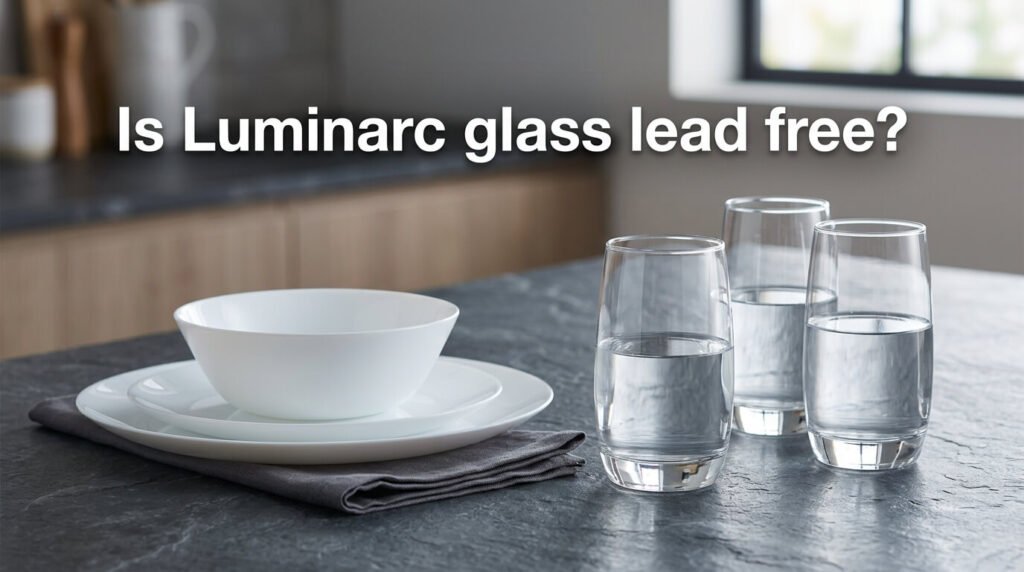
For plain, clear, undecorated Luminarc glass, yes — it is lead-free. The base material is soda-lime silicate glass, which contains no added lead.
Modern Luminarc production in France operates under EU food contact material regulations, and independent testing of soda-lime glass across 16 EU manufacturing sites found lead and cadmium releases below the limit of quantification for all 16 samples, according to the Glass for Europe industry position paper (2019).
That’s not a marketing claim, it’s a measurement.
Plain Clear Luminarc Glass: Yes, Lead Free
Plain, clear Luminarc is safe for everyday food and beverage use. Here’s why:
- The base glass is soda-lime silicate — silicon dioxide, sodium oxide, and calcium oxide — none of which contain lead or require lead as a processing agent.
- Luminarc’s France-manufactured products operate under EU Directive 84/500/EEC and additional French DGCCRF requirements, which set migration limits for lead, cadmium, and several other metals in food contact materials.
- Luminarc customer service confirmed to a researcher at ireadlabelsforyou.com that new collections are marked “0% lead and cadmium” on packaging — though see the later section on what that claim actually means and what it doesn’t.
- Tamara Rubin (tamararubin.com), who tests consumer products for heavy metals using XRF spectrometry, has confirmed that Luminarc drinking glasses are lead-free in her testing.
What Luminarc Glass Is Made Of (and Why That Matters for Safety)
Soda-lime silicate glass: The most common glass formulation in the world, accounting for roughly 90% of all glass production.
The composition is approximately 70–74% silicon dioxide (SiO₂), 12–16% sodium oxide (Na₂O), and 10–15% calcium oxide (CaO), with small amounts of magnesium and aluminium oxide. Lead is not a component of this formulation.
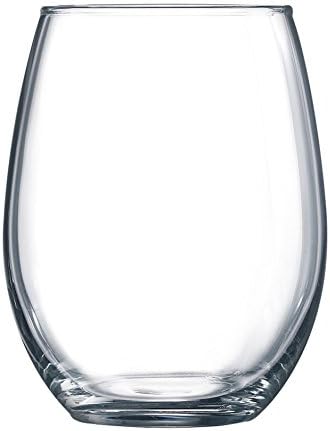
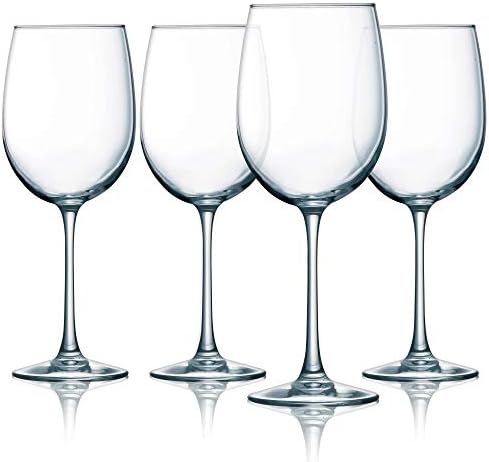
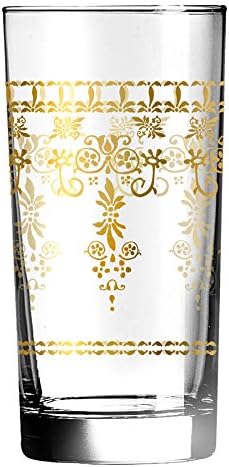
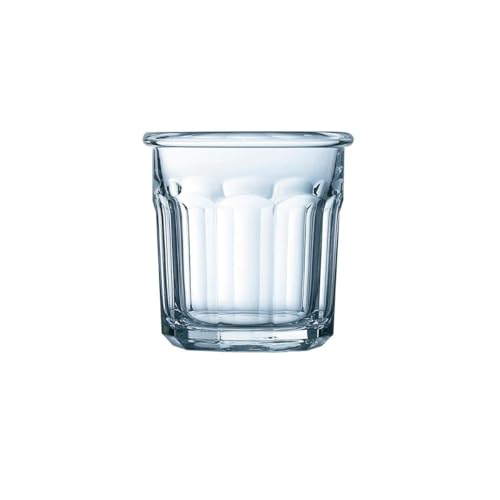


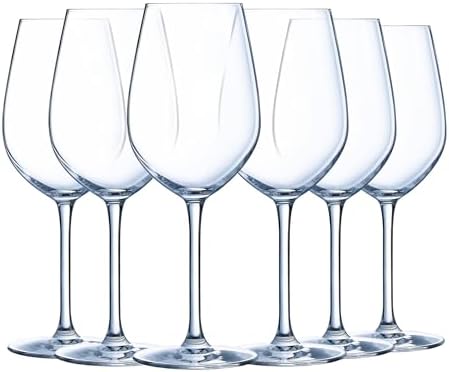
This is worth knowing because the safety of any glass product starts with its base material. Soda-lime glass is chemically stable, does not react with food or beverages under normal use conditions, and does not leach heavy metals from the glass matrix itself.
The tempering process Luminarc uses, heating to approximately 620–650°C before rapid cooling, doesn’t change the chemical composition; it changes the mechanical stress profile to improve break resistance.
The lead risk in glassware, when it exists, almost always comes from somewhere else entirely: the decorative enamel painted onto the glass surface.
Related: Is Luminarc brand Glass or Plastic?
Related: Luminarc vs Visions Cookware
Decorated, Colored, and Painted Luminarc Glass: A Different Risk
The glass itself isn’t the problem. The paint is. And this is the distinction that every competing article misses entirely.
The Science Behind Decorated Glassware and Lead
Dr. Andrew Turner of the University of Plymouth published peer-reviewed research in Science of the Total Environment (2017) testing 72 decorated drinkware products — tumblers, beer glasses, wine glasses, shot glasses, jars — both new and secondhand. The findings were significant:
- 52 of 72 products (about 70%) tested positive for lead, detected across all recorded colors, including gold leaf.
- Lead concentrations ranged from approximately 40 to 400,000 ppm, with a median of 63,000 ppm.
- The U.S. Office of Environmental Health Hazard Assessment considers concentrations above 200 ppm in the lip area unsafe.
- California’s Proposition 65 requires a warning label when the painted surface contains more than 600 ppm lead — Turner’s highest reading was more than 660 times that threshold.
- 51 of 72 products tested positive for cadmium, with the highest concentration of 70,000 ppm found in red enamel.
- Testing showed that weak acids — vinegar, carbonated drinks, citrus juice — stripped lead and cadmium from decorated surfaces and released them into the liquid.
- 13 of 14 glasses with painted decorations near the rim released more lead than California considers safe under simulated use conditions.
Consumer Reports covered this study directly, citing food safety expert Tunde Akinleye: “Exposure can definitely occur and the Turner study finding suggests leachable levels can be concerning. This is an avoidable source.”
This research doesn’t name Luminarc specifically. But it applies to any decorated glass product — including decorated Luminarc pieces — because the risk mechanism is the enamel pigment, not the brand.
Which Luminarc Pieces Carry a Higher Risk
| Piece Type | Lead Risk Level | Reason | Recommendation |
|---|---|---|---|
| Plain, clear Luminarc (no decoration) | Very low | Soda-lime glass contains no added lead; Glass for Europe testing shows releases below detection limits | Safe for all daily use |
| Luminarc with printed/painted exterior patterns away from rim | Low–moderate | Enamel may contain metallic pigments; exterior-only contact reduces direct exposure | Monitor for paint wear; avoid if patterns crack or flake |
| Luminarc with enamel decoration at or near the lip area | Higher | Direct contact between possibly lead-containing enamel and lips or beverage | Test before regular use; avoid for children |
| Red or orange decorated Luminarc pieces | Higher | Cadmium sulfide pigments have historically been used in red and orange enamel | Test before use; Turner found the highest cadmium readings in red enamel specifically |
| Luminarc crystal (labeled as lead-free crystal) | Very low | Modern Luminarc crystal uses potassium and titanium oxide rather than lead oxide for clarity | Safe; verify the “crystal” is labeled as lead-free, not traditional leaded crystal |
Is Vintage Luminarc Glass Safe?
For vintage Luminarc pieces — particularly anything produced before the 1970s — the risk is higher than for modern production, but it’s concentrated in decorated pieces, not plain ones.
Pre-1970s Luminarc: What the Collector Risk Actually Is
Vintage clear, undecorated Luminarc glass made from soda-lime is still low-risk.
The concern with older pieces is the same as with any vintage decorated glassware: enamel pigments used before modern heavy metal restrictions contained lead and cadmium more commonly than today’s formulations.
Arc International (Luminarc’s parent company, founded in 1948) produced some leaded crystal products under sister brand Cristal d’Arques, and some vintage Luminarc pieces produced before the 1970s may contain trace amounts of lead in decorative elements or colored glass.
Safe-use guidelines for vintage Luminarc pieces:
- Plain, clear, undecorated vintage pieces are low-risk — test if concerned, but the glass matrix itself doesn’t contain added lead.
- Decorated vintage pieces should be tested before regular use, particularly if patterns are near the rim.
- Don’t store acidic liquids (wine, juice, citrus drinks, vinegar-based sauces) in decorated vintage pieces for extended periods — acids accelerate metal release from enamel.
- Pieces showing chipped, flaking, or worn paint should not be used for food or beverage contact, regardless of age.
- If you use vintage Luminarc primarily for display, the risk is negligible.
How to Identify Vintage Luminarc vs Modern Production
- Check the base of the piece for a maker’s mark — vintage pieces typically read “Luminarc France” or “J.G. Durand” (the original company name before the Arc International rebrand).
- Look for a production code stamped or molded into the glass base — a two-digit number often indicates the year of manufacture (e.g., “68” = 1968).
- Note the weight: older Luminarc pieces are sometimes heavier than modern production due to different glass formulations.
- Check the pattern: popular collectible vintage lines include the Rainbow Iridescent Cognac Brandy Glass, Domino Black Stem, and Diamond France — all identifiable by distinct design characteristics documented in collector resources.
- Modern Luminarc production typically carries a simple “Luminarc” mark without “France,” and often includes the country of manufacture on the base.
Does Manufacturing Location Affect Lead Safety in Luminarc Glass?
Yes, not necessarily in the glass itself, but in the regulatory oversight applied during production. And it’s a variable no other guide addresses.
France vs China vs UAE: What Changes and What Doesn’t
Arc International has manufacturing sites in France, China, Russia, the UAE, and the United States. The oversight framework differs by location.
| Manufacturing Location | Regulatory Framework | Lead/Cadmium Requirements | Additional Requirements | How to Check |
|---|---|---|---|---|
| France | EU Directive 84/500/EEC + French DGCCRF | EU migration limits for lead and cadmium | France adds limits for aluminum, cobalt, and arsenic beyond the EU baseline | Base stamp: “Luminarc France” or “Made in France” |
| United States | FDA food contact regulations + California Prop 65 | FDA import alert standards; Prop 65 surface/leachate thresholds | Prop 65 warning required above 600 ppm surface / 200 ppm leachate | Base stamp: “Made in USA” |
| China | Export compliance to the destination market | Variable — depends on which market standards the batch was manufactured for | No additional domestic requirements equivalent to EU or FDA | Base stamp: “Made in China” |
| UAE | Local standards + export compliance | Variable | No additional requirements equivalent to French DGCCRF | Base stamp: “Made in UAE” |
If you want the most regulated version of any Luminarc piece, look for “Made in France” on the base. France-manufactured pieces are subject to both EU baseline requirements and additional French national standards, the most comprehensive oversight in Arc International’s production network.
“Lead Free” on the Label vs Independently Tested: Understanding the Difference
When Luminarc’s packaging or customer service says “0% lead and cadmium,” this almost always means lead and cadmium were not intentionally added to the formulation.
It does not mean the finished product was independently tested for heavy metal migration below regulatory thresholds.
This is a documented distinction. Food safety researcher Irina at ireadlabelsforyou.com, who contacted Luminarc customer service directly, explains it clearly: “When customer service reps or website descriptions say that their products contain 0% lead or 100% lead-free, they often mean that lead is not added intentionally.
It is best to ask if the products were tested for heavy metal contamination, and if they can show their test reports.”
For plain, clear soda-lime glass, this gap matters less — the Glass for Europe 2019 testing of 16 EU production sites found lead and cadmium below the limit of quantification in all 16 samples, which is the closest thing to independent third-party confirmation that plain soda-lime glass is genuinely lead-free by measurement, not just by declaration.
For decorated pieces, the gap matters more. What to ask or look for:
- Ask the manufacturer for third-party test reports specifically for the decorated product line, not the plain glass.
- Check whether the packaging carries a verified certification such as EN 1388 (European standard for glass and crystal articles — release of lead and cadmium).
- For the highest assurance, purchase an XRF lead test swab kit — available for $10–$30 — and test the decorated areas directly.
- A laboratory XRF test costs approximately $50–$100 per sample and confirms results to ppm accuracy, but destroys or requires a piece sample.
Is Luminarc Glass Cadmium Free?
For plain, clear Luminarc glass, yes. For decorated pieces — particularly red and orange enamel — the cadmium question deserves separate attention because the Turner study found cadmium in 70% of decorated products tested, with the highest concentrations specifically in red enamel.
Cadmium in Glassware: Why It’s Relevant Alongside Lead
Dr. Turner’s Science of the Total Environment research found cadmium in 51 of 72 decorated glassware products, with concentrations ranging from approximately 300 to 70,000 ppm. The U.S. safety limit for cadmium in the lip area is 800 ppm. Turner’s highest reading — 70,000 ppm in red enamel — was nearly 88 times that limit.
Cadmium risk by piece type:
- Plain, clear Luminarc: negligible — soda-lime glass does not use cadmium-based pigments in the glass matrix.
- Red or orange decorated Luminarc pieces: higher risk — cadmium sulfide (CdS) and cadmium sulfoselenide have historically been used to achieve red and orange enamel colors; these are the pigments Turner found at the highest concentrations.
- Blue, green, or purple decorated pieces: moderate — other metallic pigments may be used; Turner found cadmium across “all colours apart from gold leaf.”
- Gold leaf decoration: lead risk, but not cadmium — Turner found lead in gold leaf, but cadmium was absent in that color specifically.
What Luminarc’s “0% Lead and Cadmium” Label Actually Means
Luminarc’s new collections carry “0% lead and cadmium” labeling, which Luminarc customer service has confirmed means those metals are not intentionally added. For plain glass, this aligns with what independent testing of EU soda-lime glass production shows.
For decorated pieces, this claim refers to the glass base — not necessarily to the enamel pigments applied to the exterior. The label and the enamel are separate parts of the product, governed by separate manufacturing decisions.
How to Test Your Luminarc Glass for Lead at Home
For a full guide to testing methods across all dinnerware and glassware types, see our ” How to Test Any Glassware or Dinnerware for Lead at Home.
Home Lead Test Methods: What Works and What Doesn’t
- Lead test swabs (3M or equivalent): Wipe the swab across the area of concern — painted rim, decorated exterior, lip contact zone. A color change indicates detectable lead. Cost: $10–$30 for a pack. Accuracy: detects lead above approximately 200–600 ppm, depending on the kit; some kits miss lower concentrations.
- Vinegar soak test: Soak the piece in distilled white vinegar for 24 hours, then test the vinegar with a lead test strip. Cost: under $10. Accuracy: lower than swab tests; useful as a secondary check. Note: acidic vinegar does accelerate lead release, so this test also simulates real-world use with acidic beverages.
- Professional XRF testing: A handheld XRF spectrometer scans the surface and returns results in ppm within seconds. Cost: $50–$100 per lab sample, or free at some local health department programs. Accuracy: the most reliable method available for consumer products.
| Method | Accuracy | Cost | Best For |
|---|---|---|---|
| Lead test swabs | Moderate — detects above ~200 ppm | $10–$30 | Quick check on decorated rim areas |
| Vinegar soak + strip | Lower — useful as secondary check | Under $10 | Simulating acidic beverage use; secondary confirmation |
| Professional XRF lab | High returns ppm results | $50–$100/sample | Definitive testing; pieces you’ll use daily or give to children |
Practical Rules for Safe Use of Any Glassware
- Never store acidic beverages — wine, juice, citrus drinks, vinegar-based liquids — in decorated glasses for extended periods, because acids dissolve lead and cadmium from enamel faster than neutral liquids.
- Avoid putting decorated glasses through the dishwasher repeatedly if you plan to keep using them — dishwasher detergent is alkaline and abrasive, and accelerates enamel wear over time.
- For children’s use, choose plain, undecorated glass or stainless steel — the precautionary principle applies here more than anywhere else, because no safe blood lead level has been established for children.
- If a decorated piece shows any flaking, chipping, or worn areas in the paint, stop using it for food or beverage contact.
- Plain, clear Luminarc without any decoration can be used without concern.
For a broader ranking of material safety beyond glass, see our safest dinnerware materials by lead and cadmium risk.
Safest Lead-Free Glass Alternatives to Compare with Luminarc
Plain, clear Luminarc competes well on safety with other major glassware brands. The differentiation comes in decorated lines, vintage pieces, and country of manufacture.
How Luminarc Compares to Duralex, Libbey, and Borosilicate Options
If you’re also evaluating Corelle, see our Corelle dinnerware lead and cadmium safety guide.
| Brand | Glass Type | Lead-Free (plain)? | Independently Tested? | Best For |
|---|---|---|---|---|
| Luminarc (clear, undecorated) | Soda-lime, tempered | Yes | EU Glass for Europe data supports this | Every day use, family dining |
| Duralex | Soda-lime, tempered | Yes | French manufacture; same EU regulatory framework | Families, children — very durable |
| Libbey (clear) | Soda-lime | Yes | Tamara Rubin has tested specific lines as lead-free | Budget glassware for general use |
| Borosilicate glass (Pyrex, Hario) | Borosilicate | Yes | Well-established, chemically stable formulation | Hot liquids, lab-grade safety margin |
| Arcoroc (modern, clear) | Soda-lime | Yes (modern) | Old Arcoroc tested at ~256 ppm per tamararubin.com; modern production is below 90 ppm | Commercial and foodservice use |
When to Choose Luminarc vs When to Choose Something Else
Luminarc clear glass is a good choice when:
- You want affordable, durable, lead-free everyday glassware with a broad design selection.
- You’re replacing clear glasses without decorative elements.
- You’re buying for general adult household use.
Luminarc isn’t the best choice when:
- You want decorated pieces and need documented heavy-metal testing of the specific decoration — Luminarc doesn’t appear to publish third-party enamel test data publicly.
- You’re buying for children — plain Duralex tempered glass is the better call here; it’s made in France, undecorated by design, and very hard to break.
- You have vintage decorated pieces — test them first.
For a head-to-head comparison on safety and performance, see our Luminarc vs Corelle: safety, durability, and price compared.
If you’re shopping for plain, clear Luminarc glassware, you can buy with confidence. If you’re assessing a decorated piece — especially an older one, or one with red or orange enamel — the Turner data gives you reason to test before regular use rather than assume.
Frequently Asked Questions About Luminarc Glass and Lead
Is Luminarc glass safe for everyday use?
Plain, clear, undecorated Luminarc glass is safe for everyday food and beverage use. It’s made from soda-lime silicate glass, which contains no added lead, and EU manufacturing oversight confirms releases below detectable limits.
Decorated pieces warrant more caution — particularly any with painted designs near the rim.
Is Luminarc the same as Arcoroc?
No — both are brands owned by Arc International, but they’re separate product lines. Arcoroc focuses on commercial and foodservice glassware; Luminarc is the consumer tableware brand.
Modern clear versions of both are lead-free, but older Arcoroc pieces have tested at approximately 256 ppm lead per Tamara Rubin’s XRF testing, while modern production tests below 90 ppm.
Is Luminarc glass microwave safe?
Yes, plain Luminarc tempered glass is microwave safe. The soda-lime glass formulation is heat-stable under microwave conditions. Pieces with metallic painted decorations should not go in the microwave, because metal-based pigments can arc or heat unevenly.
Can I use Luminarc glasses for children?
Plain, clear Luminarc is safe for children’s use from a lead and cadmium standpoint.
Decorated pieces, particularly those with rim-area designs or red/orange enamel, should be tested or avoided for children’s regular use, because no safe blood lead level has been established for children.
Is Luminarc crystal lead-free?
Modern Luminarc crystal is lead-free — it uses potassium oxide and titanium oxide rather than lead oxide to achieve clarity and light refraction.
Traditional leaded crystal (which Luminarc’s sister brand Cristal d’Arques Paris produced historically) does contain lead. Check that any Luminarc crystal piece is explicitly labeled “lead-free crystal” rather than simply “crystal.”
What is the safest material for drinking glasses?
Borosilicate glass and plain soda-lime glass are the safest materials for drinking glasses, neither of which contains added lead or cadmium in the glass matrix.
Avoid leaded crystal, decorated glassware with rim-area enamel, and any vintage glassware with heavy painted decoration until tested.
Does old Arcoroc glass contain lead?
Some older Arcoroc pieces have tested positive for lead at levels above U.S. safety limits. Tamara Rubin’s XRF testing found approximately 256 ppm lead in some vintage Arcoroc products.
Modern Arcoroc clear glass production tests below 90 ppm. The risk, as with Luminarc, is concentrated in decorated pieces rather than plain, clear glass.
How can I tell if a glass contains lead without a test kit?
You can’t reliably determine lead content without testing. The “tap test” (lead glass sounds dull, lead-free sounds crisp) is not accurate enough for safety decisions; it differentiates leaded crystal from soda-lime glass, but not decorated glassware with lead-containing enamel from non-decorated glass. Use a lead test swab on any piece you’re concerned about.
Is Luminarc glassware made in France or China?
Both. Arc International manufactures Luminarc at sites in France, China, the UAE, Russia, and the United States. France-manufactured pieces carry stronger regulatory oversight under EU Directive 84/500/EEC plus additional French DGCCRF requirements.
Check the base of the piece — it will typically state the country of manufacture.
About the Author & Reviewer
Sarah Emirone, Author
Sarah researches and writes SafeKitchn’s dinnerware and kitchenware guides, with a focus on material safety, lead content, and manufacturer specifications. She cross-references product data sheets, safety certifications, and regulatory filings (including FDA and Prop 65 records) before publishing, and updates articles when new information becomes available.
James Daniels, Reviewer
James reviews SafeKitchn’s material safety content for scientific accuracy. He holds a B.Sc in inorganic chemistry and works as a materials researcher, with particular focus on the composition and safety behavior of glass, ceramic, and metal used in kitchenware.