

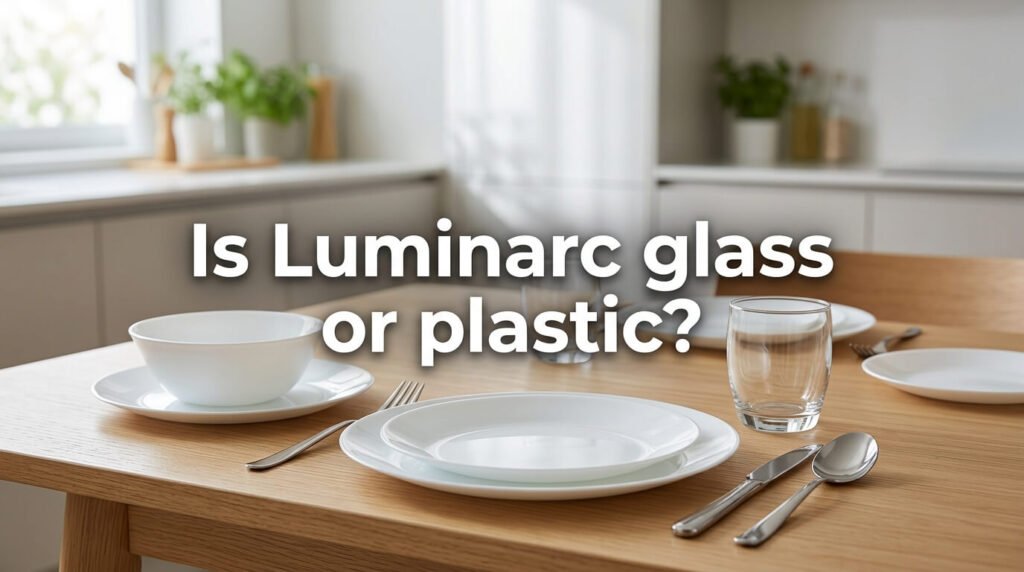
Luminarc is glass. Full stop. But if you’re asking because you have a white, opaque Luminarc plate that looks and feels nothing like glass, that confusion is completely reasonable, and it points to something most people skip over.
Is Luminarc glass or plastic is one of the most searched questions about the brand, and the answer requires more than one word, because Luminarc uses at least four different glass formulations across its product lines.
Some look clear. Some look white and solid like ceramic. A few accessories genuinely are plastic.
This article maps all of it. For a broader look at how glass dinnerware compares to ceramic and porcelain, see our complete dinnerware materials guide: glass, ceramic, porcelain, and more.
Written by Sarah Emirone | Reviewed by James Daniels, B.Sc, Inorganic Chemist & Materials Researcher | Updated September 2026 | See How We Test | Filed under: Buying, Care & Product Guides
What Is Luminarc Made Of?
Luminarc products are made from soda-lime glass — the same base material as most glass tableware worldwide, but processed differently depending on the product line.
When the brand launched in 1948 under Arc International in Arques, France, it used annealed soda-lime glass. Over the following decades, the lineup expanded into tempered glass, opal glass, and proprietary formulations.
The glass composition is roughly 50% sand, 30% recycled scrap glass, 15% soda, and 5% lime and minerals. No plastic enters the glass-making process for any Luminarc dinnerware, drinkware, or bakeware line.
The Four Glass Types Luminarc Uses — and How to Know Which One You Have
| Glass Type | Description | Appearance | Key Property | Found In | Microwave Safe? | Oven Safe? |
|---|---|---|---|---|---|---|
| Annealed soda-lime | Original 1948 formulation; slowly cooled after forming | Clear | Standard strength; less break-resistant | Early vintage pieces; now rare | Yes | No |
| Tempered soda-lime | Heated then rapidly cooled; 5–6× stronger than annealed | Clear | Thermal shock resistance up to 135°C / 275°F differential | Most current dinnerware, tumblers, salad sets | Yes | No (most lines) |
| Opal glass | Tempered glass with mineral additives (tin oxide, fluorides) that create opacity | Milky white/opaque | Non-porous; lightweight; 3× stronger than regular glass | Arcopal heritage lines; Smart Cuisine bakeware | Yes | Yes (Smart Cuisine only) |
| Proprietary formulations (Zenix, Kwarx, Diamax) | Enhanced glass developed for professional and premium use | Ultra-clear to crystal-like | Superior clarity, extra impact resistance | Commercial lines; premium stemware; Arcoroc professional range | Yes | No |
If your product says “tempered glass” anywhere on the packaging or bottom stamp, it falls into the second category — the most common across the current Luminarc lineup and the most practical for daily kitchen use.
For a deeper look at how the tempering process works, see tempered glass dinnerware: how it’s made and why it’s stronger.
What Parts of Luminarc Products Are Actually Plastic
- Storage container lids are made from BPA-free plastic — this is the most common source of confusion for people who buy Luminarc food storage sets and find one component that clearly isn’t glass.
- Some clip and seal mechanisms on Luminarc storage ranges use food-grade plastic for the locking hardware, while the container body remains glass.
- All Luminarc dinnerware, bowls, plates, drinking glasses, and bakeware are glass — the plastic components are limited to supplementary accessories that don’t contact food directly during use.
Related: Is Luminarc Glassware Lead Free?
Related: Luminarc vs Visions Cookware
Why Does Luminarc Look Like Plastic? The Opal Glass Explanation
White Luminarc dinnerware is opal glass — a glass formulation, not a plastic or ceramic one. The milky-white opacity comes from mineral additives introduced during the glass-making process.

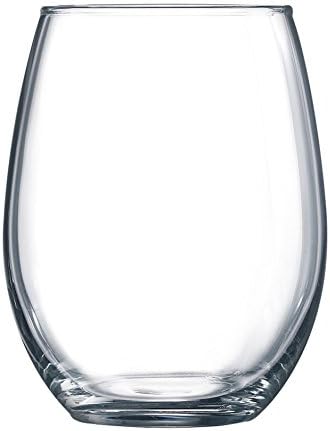
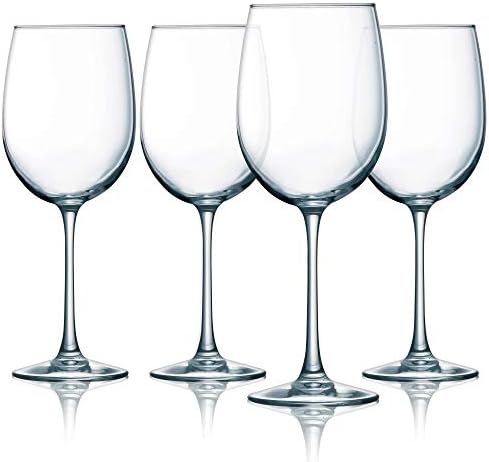


Tin oxide and fluoride compounds scatter light as it passes through the glass, producing the white opaque appearance. The result looks more like porcelain or plastic than traditional clear glass, which is exactly why the “is it glass?” question comes up so often.
Opal Glass vs. Clear Tempered Glass: The Key Differences
| Property | Opal Glass | Clear Tempered Glass |
|---|---|---|
| Appearance | Milky white, fully opaque | Transparent |
| Composition | Soda-lime glass + tin oxide/fluoride additives | Pure soda-lime glass |
| Translucency | None — light does not pass through | Full |
| Weight | Lighter than equivalent clear glass | Standard glass weight |
| Strength | 3× stronger than regular glass | 5–6× stronger than annealed glass |
| Microwave safe? | Yes | Yes |
| Oven safe? | Yes (Smart Cuisine bakeware line) / No (standard dinnerware) | No (most lines) |
| Common Luminarc products | White dinnerware sets, Arcopal-heritage plates and bowls | Tumblers, salad sets, most clear dinnerware |
For the full breakdown of opal glass properties and which brands use it, see our complete guide to opal glass dinnerware.
How to Confirm Your Luminarc Product Is Glass — Not Plastic or Ceramic
- Tap the rim gently — glass produces a clear ringing tone that sustains briefly; plastic makes a dull thud with no resonance; ceramic rings too but with a shorter decay.
- Check the weight — glass is heavier than plastic at equivalent volume; a Luminarc dinner plate weighs noticeably more than a polypropylene plate of the same diameter.
- Feel the surface temperature — glass feels cool to the touch at room temperature; plastic is closer to ambient air temperature and doesn’t have the same thermal draw.
- Check the bottom stamp — look for “Luminarc,” “Arc International,” or a country of manufacture (France, Spain, UAE, China); most pieces also carry a dishwasher-safe symbol and a microwave-safe symbol pressed into the glass, not printed on a label.
Is Luminarc Microwave Safe?
All Luminarc products made from tempered glass — including opal glass — are microwave safe.
The thermal shock resistance of 135°C / 275°F means the glass handles the temperature differential between cold food and microwave heat without stress fractures. Going straight from the fridge to the microwave is fine.
The caveat is that conventional oven use is not the same as microwave use. Most Luminarc dinnerware lines are not rated for the dry radiant heat of a conventional oven, only for microwave radiation and the wet heat of a dishwasher.
Microwave, Dishwasher, Freezer, and Oven: The Full Safety Reference by Product Type
| Product Category | Microwave | Oven | Dishwasher | Freezer | Temperature Limit | Notes |
|---|---|---|---|---|---|---|
| Tempered glass dinnerware (plates, bowls) | ✓ | ✗ | ✓ | ✓ | 135°C / 275°F differential | No direct oven use; microwave only |
| Opal glass dinnerware | ✓ | ✗ | ✓ | ✓ | 135°C / 275°F differential | Same limits as tempered; looks different, behaves the same |
| Smart Cuisine bakeware line | ✓ | ✓ | ✓ | ✓ | Oven-rated; check product packaging | Only Luminarc line rated for conventional oven |
| Drinking glasses / tumblers | ✓ | ✗ | ✓ | ✓ | 135°C / 275°F differential | Never use on stovetop |
| Storage containers (glass body) | ✓ | ✗ | ✓ | ✓ | 135°C / 275°F differential | Remove plastic lid before microwaving |
| Storage container lids (plastic) | ✗ | ✗ | ✓ (top rack) | ✓ | BPA-free PP; not heat-rated | Always remove before microwave use |
The One Rule That Prevents Most Luminarc Breakage
Luminarc tempered glass doesn’t break because of heat. It breaks because of uneven heat — specifically, when one part of the glass expands or contracts faster than the rest.
That’s thermal shock, and the 135°C / 275°F figure is the maximum temperature differential the glass tolerates between its hottest and coldest points at any moment.
Safe temperature transitions that feel risky but aren’t: fridge to microwave (the food warms gradually, not the glass surface suddenly); freezer to room temperature (slow, even change); repeated dishwasher cycles (controlled heat throughout).
Dangerous transitions that cause most breakage:
- Pouring cold liquid into a glass that just came out of the microwave — the inner surface cools instantly while the outer surface stays hot.
- Placing a hot glass directly on a cold, wet countertop — the base cools sharply while the sides stay warm.
- Running cold tap water over a glass that just held hot liquid.
- Any stovetop use — Luminarc glass is never rated for direct flame or electric burner contact.
Keep temperature changes gradual, and Luminarc tempered glass handles daily kitchen use without problems.
Luminarc, Arcopal, and Arcoroc: What’s the Difference?
All three are brands under Arc International, a French glassware company founded in 1825 in Arques, France.
They are not the same product — they target different markets and use different glass formulations in some cases, but they come from the same factories and the same parent company.
The confusion between them is one of the main reasons people search “is Luminarc glass or plastic” in the first place: someone with an Arcopal plate (white, opaque, genuinely glass) doesn’t recognise it as glass because no one has explained what opal glass is.
For the full brand history and product range, see our Arc International brand family guide: Luminarc, Arcoroc, and Arcopal.
Arc International Brand Family: Who Makes What
| Brand | Founded | Target Market | Glass Type | Key Products | Still in Production? |
|---|---|---|---|---|---|
| Luminarc | 1948 | Consumer household | Tempered soda-lime; opal glass | Dinnerware sets, tumblers, storage | Yes |
| Arcoroc | 1960s | Professional/commercial (restaurants, catering) | Tempered; Zenix; Diamax | Restaurant glasses, stackable tumblers, hotel tableware | Yes |
| Arcopal | 1958 | Consumer household — white dinnerware | Opal glass (tempered) | White opaque plates, bowls, and dinnerware sets | Discontinued 2000; relaunched 2016 |
| Cristal d’Arques Paris | 1950s | Prestige / gift | Crystal-style glass | Stemware, decanters, decorative pieces | Yes |
| Chef & Sommelier | 1990s | Professional / sommelier | Kwarx ultra-clear glass | Wine glasses, stemware for restaurants | Yes |
If you have a piece marked “Arcopal” — particularly white opaque dinnerware — it’s opal glass made in the same Arc International factories as Luminarc, and it has identical safety properties. The brand name is different; the material and manufacturing standards are the same.
Where Is Luminarc Made?
Arc International’s primary factory is in Arques, in northern France, where the company has operated since 1825 — making it one of the oldest continuously operating glass manufacturers in the world.
“Made in France” on the bottom of a Luminarc piece indicates the Arques factory. The company now also manufactures in Spain, China, the UAE, and the United States.
All manufacturing locations produce to Arc International’s glass standards; the country of manufacture doesn’t affect the glass type or safety rating.
Luminarc vs. Corelle vs. Duralex: Which Is the Right Glass for Your Kitchen?
Corelle edges out Luminarc on chip and break resistance for everyday dinnerware. Its Vitrelle triple-layer glass construction is thinner and lighter while absorbing impact differently than soda-lime tempered glass.
Duralex edges out Luminarc for drinking glasses specifically, with a track record in French bistros and school canteens since 1945 that speaks to commercial-grade durability.
Luminarc wins on variety, price-to-quality ratio for complete dinnerware sets, and availability across global markets. For a household that wants a full matched set at a reasonable price, Luminarc is the practical choice. For maximum break resistance at any cost, Corelle.
Side-by-Side: Luminarc vs. Corelle vs. Duralex Across Key Dimensions
| Property | Luminarc | Corelle | Duralex |
|---|---|---|---|
| Material | Tempered soda-lime glass/opal glass | Vitrelle (triple-layer glass-ceramic laminate) | Tempered soda-lime glass |
| Glass type | Tempered / opal / proprietary | Proprietary glass-ceramic | Tempered |
| Microwave safe | Yes | Yes | Yes |
| Oven safe | No (most lines) | No | No |
| Dishwasher safe | Yes | Yes | Yes |
| Break resistance | High (5–6× annealed) | Very high — chip-resistant edges | High — bistro-tested |
| Weight | Medium | Very light | Medium-light |
| Price range | $20–$80 per set | $30–$100 per set | $15–$60 per set |
| Best for | Full dinnerware sets; variety of styles | Families; high daily use; chip-prone environments | Drinking glasses; school/café use |
| Origin | France (primary) / Spain / China / UAE / USA | USA | France |
For a deeper head-to-head on everyday durability and value, see our Luminarc vs Corelle full dinnerware comparison.
Is Luminarc Lead-Free and Food Safe?
Yes. Luminarc uses food-grade soda-lime glass that meets international food contact standards. The glass surface is non-porous — bacteria can’t penetrate or accumulate the way they can in crazed ceramic glaze or scratched plastic.
The non-porous surface also means no chemical leaching at food contact temperatures, which is a real concern with plastic alternatives under repeated microwave heat.
Soda-lime glass used in Luminarc products contains no lead; this is confirmed across Arc International’s published product documentation.
Frequently Asked Questions
Is Luminarc glass or plastic?
Luminarc is glass — specifically soda-lime glass in tempered, opal, or proprietary formulations depending on the product line. The only plastic components in the Luminarc range are supplementary accessories like storage container lids, which are BPA-free polypropylene.
Why does my Luminarc dinnerware look white and opaque like plastic?
White Luminarc dinnerware is opal glass — a glass formulation where mineral additives (tin oxide and fluoride compounds) scatter light and create an opaque white appearance. It’s 100% glass, not plastic or ceramic, and has identical microwave and dishwasher safety properties to clear tempered Luminarc glass.
Can Luminarc go in the microwave?
Yes — all Luminarc tempered and opal glass products are microwave safe. The glass withstands temperature differentials up to 135°C / 275°F, which covers standard microwave reheating. Remove any plastic lids from storage containers before microwaving.
Is Luminarc oven safe?
Most Luminarc lines are not oven safe — the exception is the Smart Cuisine bakeware range, which is specifically rated for conventional oven use. Standard Luminarc dinnerware, tumblers, and storage containers are not suitable for oven temperatures.
What is the difference between Luminarc and Arcopal?
Both are brands under Arc International, the French glassware company based in Arques, France. Luminarc is the consumer household brand; Arcopal is the opal glass dinnerware line launched in 1958, discontinued in 2000, and relaunched in 2016. Both use the same opal glass for white dinnerware and carry the same safety properties.
Is Luminarc made in France?
Arc International’s primary factory is in Arques, France, and pieces marked “Made in France” come from that facility. The company also manufactures in Spain, China, the UAE, and the USA. The country of manufacture doesn’t change the glass type or safety rating.
Why did my Luminarc glass break in the microwave?
Luminarc tempered glass breaks from thermal shock, a sudden, uneven temperature differential across the glass surface, not from microwave radiation itself.
The most common cause is pouring cold liquid into a glass that just came out of the microwave, or placing a hot glass on a cold, wet surface. Going from the fridge to the microwave is safe because the temperature change is gradual.
About the Author & Reviewer
Sarah Emirone, Author
Sarah researches and writes SafeKitchn’s dinnerware and kitchenware guides, with a focus on material safety, lead content, and manufacturer specifications. She cross-references product data sheets, safety certifications, and regulatory filings (including FDA and Prop 65 records) before publishing, and updates articles when new information becomes available.
James Daniels, Reviewer
James reviews SafeKitchn’s material safety content for scientific accuracy. He holds a B.Sc in inorganic chemistry and works as a materials researcher, with particular focus on the composition and safety behavior of glass, ceramic, and metal used in kitchenware.