

Dishes that don’t get hot in the microwave exist, but “microwave-safe” isn’t the label to trust for finding them.
That label only promises the dish won’t crack, melt, or leach chemicals; it says nothing about whether you’ll need oven mitts to pull it out.
The dishes that actually stay cool share two things: a material that resists absorbing microwave energy on its own, and a wall thick enough to slow down heat coming off the food.
Get both right and a bowl of reheated soup stays comfortable to hold. Get either wrong and even a “safe” dish will burn your fingers.
Written by Sarah Emirone | Reviewed by James Daniels, B.Sc, Inorganic Chemist & Materials Researcher | Updated September 2026 | See How We Test | Filed under: Microwave & Appliance Specs
Why Some Dishes Get Hot in the Microwave, and Others Don’t
Some dishes stay cool because the material barely interacts with microwave energy at all, while others heat up because they’re either absorbing that energy directly or soaking up heat from the food sitting in them.
Both things can happen at once, and most heating complaints come from people assuming it’s one cause when it’s actually the other.
How Microwaves Actually Heat Food
A microwave oven runs at roughly 2.45 GHz, which sets water, fat, and sugar molecules in the food spinning back and forth. That spinning creates friction, and friction makes heat.
Dry, dense materials, such as glass and most fired ceramics, don’t have those polar molecules lined up the same way, so in theory, the microwaves should pass through them and go straight for the food. In theory;
The Three Real Causes of a Hot Dish
- The material itself absorbs microwave energy. Moisture trapped in a porous clay body, mineral-heavy glazes, or glass with impurities will pull in some of that 2.45 GHz energy directly, and that’s the one thing switching to a better material actually fixes.
- Heat transfers from the food by simple conduction. Boiling soup, hot oil, or dense casseroles will warm the dish they’re sitting in no matter what that dish is made of — this is physics, not a manufacturing flaw, and no material on the market makes it disappear.
- Metallic decoration causes localized heating or sparking. Gold rims, silver trim, and some metallic glazes will heat unevenly or throw sparks, independent of the base material underneath.
Here’s the part almost nobody says out loud: only the first cause is something a material swap can solve.
If you buy the best borosilicate bowl on the market and fill it with five minutes’ worth of simmering broth, it will still feel warm in your hand, not because the glass failed, but because heat moved from liquid to glass the same way it would move from liquid to your skin.
Material choice buys you a dish that isn’t fighting you on top of the food. It doesn’t buy you a dish immune to hot soup.
For the full picture on choosing dinnerware around this trade-off, see the complete guide to microwave safety of Corelle Mugs.
Does “Microwave-Safe” Mean It Won’t Get Hot?
No. “Microwave-safe” is a durability and chemical-safety claim, not a temperature claim, and conflating the two is the single biggest reason people end up disappointed with a dish they bought specifically to stay cool.
What “Microwave-Safe” Actually Certifies
Microwave-safe means the dish won’t crack, warp, melt, or release harmful chemicals under normal microwave use. It says nothing about surface temperature after heating.
A dish can pass every microwave-safe requirement and still come out hot enough to need a towel; that’s not a contradiction, it’s just two different questions being answered by one label.
Can a Dish Get Hot With No Metal on It At All?
Yes, and this trips people up constantly. A plain white ceramic mug with no trim, no decal, and no visible metal can still come out of the microwave too hot to hold, usually because the clay body retained moisture during firing or the glaze itself has a mineral composition that absorbs energy.
The absence of metal rules out sparking, not heating; those are separate failure modes with separate causes.
The Materials That Genuinely Stay Cool
Four materials consistently perform well for cool-touch microwaving, and the differences between them come down to density, moisture content, and structure rather than brand marketing.
| Material | Cool-Touch Performance | Physical Reason |
|---|---|---|
| Borosilicate glass | Excellent | Low thermal expansion, very low moisture content, minimal dielectric loss |
| Tempered soda-lime glass | Good to very good | Dense, non-porous structure with low impurity content after tempering |
| Laminated glass (Vitrelle) | Very good | Multi-layer bonded structure adds strength without adding moisture-retaining pores |
| High-fired porcelain | Good, if plain | Fired above 1,200°C with very low water absorption |
| Porous stoneware/earthenware | Poor to fair | Lower firing temperatures leave microscopic pores that hold moisture |
| Melamine | Not applicable | Resin composition isn’t rated for microwave use at all |
Borosilicate Glass (Pyrex-Style)
Borosilicate glass is the strongest performer here, and it’s been proving that since Pyrex introduced it in 1915.
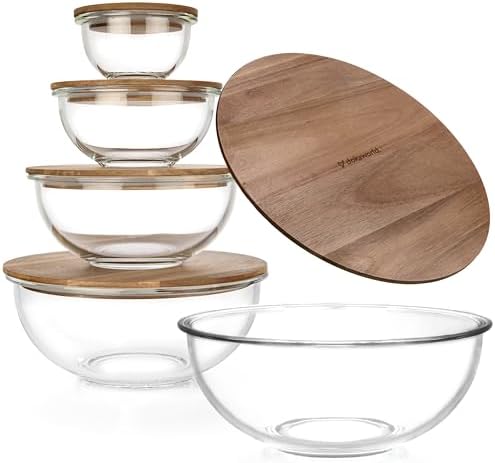
- SPACE-SAVING STACKABLE glass mixing bowls set with New Updated Acacia Lids will save space in your kitchen. The round gl…
- Glass bowls set includes 5 DIFFERENT SIZES: 0.2 QT, 0.5 QT, 1.1 QT, 2.1 QT, 3.75 QT
- ULTRA DURABLE clear glass bowls are made of BOROSILICATE GLASS, up to 5 times stronger than ordinary glass. Our glass ne…
Its low thermal expansion rate means it resists both cracking from temperature swings and absorbing microwave energy directly, which is why it’s the standard choice for lab glassware and kitchenware.
If you’re deciding between this and other glass options, borosilicate glass vs. tempered glass compared breaks down where each one actually wins.
Tempered Soda-Lime Glass
Tempered soda-lime glass, the Duralex and Anchor Hocking style of dinnerware, performs well because tempering compresses the glass structure and removes the internal flaws that would otherwise trap heat-absorbing impurities.

- 12 Piece Tempered Opal Glass Dinnerware Set White Solid Traditional Round Dishwasher Safe
- Design/Look : Traditional. Material : Glass. Pattern : Solid. Care instruction : Dishwasher Safe. Season or holiday : Al…
- Product Size: 16.0 In. L X 11.3 In. W X 3.5 In. H.
Duralex has claimed a 2.5x strength increase from its tempering process since inventing it in 1945, and that density is part of why the material also handles fridge-to-microwave transitions without much drama.
Laminated Glass (Corelle Vitrelle)
Corelle’s Vitrelle is a three-layer laminated glass, and one Amazon reviewer summed up the practical result well: unlike fired pottery, these dishes don’t get hot in the microwave, just the food does.

- SPACE SAVING AND LIGHTWEIGHT: Half the space and half the weight of traditional ceramics – Corelle Vitrelle is ultra sli…
- BUILT TO LAST: Our unique, three-layer tempered glass is resistant to chips & cracks and 3x more durable than traditiona…
- STACKABLE: Vitrelle’s slim profile means it stacks neatly in your cupboard and in your dishwasher.
The layering adds impact resistance without adding the pores that make earthenware and some stoneware absorb heat, which is why Vitrelle shows up in nearly every “best microwave dinnerware” list, ours included.
For the full safety picture beyond temperature, see the full Corelle Vitrelle safety and care guide.
High-Fired Porcelain vs. Porous Stoneware
| Factor | High-Fired Porcelain | Porous Stoneware/Earthenware |
|---|---|---|
| Firing temperature | Above 1,200°C | Typically 900–1,150°C |
| Water absorption | Under 0.5% | Can exceed 3–5% |
| Microwave heat retention | Low, if undecorated | Moderate to high |
| Best for | Daily microwave reheating | Serving, not repeated microwave use |
Porcelain wins this comparison, and it isn’t close. The lower firing temperature that gives stoneware its rustic, handmade look also leaves it more porous, and that trapped moisture is exactly what heats up fastest under microwave energy.
Materials to Avoid for Cool-Touch Microwaving
Two categories consistently cause problems: melamine, which shouldn’t go in a microwave regardless of temperature concerns, and decorated or handmade ceramics, where the decoration itself is the failure point.
Why Melamine Isn’t a Microwave Material at All
For the full breakdown of melamine’s microwave safety issues: melamine resin isn’t rated for microwave use, period, and that has nothing to do with whether it stays cool.
Under heat, especially with acidic foods like tomato sauce or citrus juice, melamine can leach the compound it’s named after into your food.
The temperature question is irrelevant here; melamine simply doesn’t belong in the microwave, cool-touch or not.
Decorated, Metallic-Trimmed, or Handmade Pieces
- Gold or silver rims will spark and heat unevenly regardless of the base material’s quality.
- Dark or mineral-heavy glazes retain more heat than light, plain glazes, even on the same clay body.
- Handmade or artisan pottery varies piece to piece, so one mug in a set can behave completely differently from another.
- Vintage or antique ceramics predate modern firing standards and often carry more trapped moisture than current production runs.
How to Test Any Dish for Real Cool-Touch Performance
You don’t need a lab to find out if a dish will run hot — a one-minute test at home tells you almost everything.
The Empty-Dish-and-Water-Mug Test
- Place the empty dish you want to test in the microwave next to a separate mug filled with water.
- Microwave both together for one minute on full power.
- Carefully touch the dish. If it’s cool or just barely warm, it’s genuinely microwave-friendly.
- If the dish is noticeably hot while the water mug did most of the heating, that dish is absorbing microwave energy directly and will run hot even with no food in it.
What the Results Actually Tell You
- A cool result means the material passes the “does it absorb energy” test, but it still won’t guarantee comfort with boiling liquids inside it.
- A hot result on an empty dish is worse than a hot result with food in it, because it confirms the material itself is the problem, not just the meal you’re reheating.
- Testing each piece in a set matters for handmade or imported ceramics, since consistency between individual pieces isn’t guaranteed the way it is with mass-produced glass.
Reducing Heat Even With a Good Dish
Even the best material benefits from a few habits that cut down on unnecessary heat buildup.
Short Bursts and Food Placement
- Heat food in 30–60 second intervals instead of running one long cycle, since shorter bursts give heat less time to transfer into the dish.
- Arrange food in a ring shape with an open center when possible, which promotes more even heating and reduces hot spots against the dish walls.
- Let food rest a minute before eating rather than eating straight out of the microwave, since a lot of the dish’s warmth builds up in that final stretch of cooking.
- Avoid running an empty dish in the microwave for testing longer than a minute, since prolonged exposure with nothing to absorb the energy can stress the material over time.
Why Mug Handles Get Hot Even on Good Mugs
The handle on an otherwise cool-touch mug can still come out hot, and that’s usually not about the material at all.
Microwaves create standing waves inside the cavity, meaning some spots in the oven carry more energy than others at any given moment, and a handle sitting at a hot spot will pick up more heat than the body of the mug.
Handles are also typically thinner where they join the mug wall, so that thinner cross-section heats and cools faster than the thicker main body, a geometry problem, not a materials failure.
Looking for a specific set rather than a materials lecture? The comparisons above point to what actually stays cool, borosilicate for reheating soups and sauces, Vitrelle for everyday durability, and high-fired porcelain if you want the ceramic look without the heat retention.
Frequently Asked Questions
Is it normal for a microwave-safe dish to get hot?
Yes, and it doesn’t mean the dish is defective. “Microwave-safe” only certifies that it won’t crack or leach chemicals — heat retention depends on the material’s density and moisture content, plus how hot the food itself is.
Does Corelle Vitrelle get hot in the microwave?
Generally no, thanks to its laminated glass structure, which resists absorbing microwave energy better than most ceramics. It can still warm up from contact with very hot liquids, the same as any dish would.
Why does my plate get hot but my food stays cold?
That’s usually a sign the plate itself is absorbing microwave energy directly, often due to trapped moisture in the clay or a mineral-heavy glaze.
Switch to a plain, high-fired porcelain or glass plate and food should heat more evenly while the plate stays cooler.
Is borosilicate glass the best option for cool-touch dishes?
For most everyday reheating, yes, its low moisture content and thermal stability make it the strongest performer of the common materials. It still isn’t immune to warming from prolonged contact with boiling liquids.
Can melamine go in the microwave at all?
No. Melamine resin isn’t rated for microwave use, and heating it — especially with acidic foods — risks leaching the compound into your meal regardless of temperature concerns.
Why does my mug get hot even without metal trim?
Metal isn’t the only cause of heating; trapped moisture in the clay body or a heat-retaining glaze can do it without any metal present. Standing waves inside the microwave cavity can also concentrate energy at specific spots on the mug.
How do I test if a dish will get hot before using it?
Microwave the empty dish next to a mug of water for one minute, then touch the dish carefully. If it’s noticeably hot while the water did most of the heating, the dish is absorbing microwave energy directly.
Are handmade or artisan ceramic dishes safe for daily microwaving?
They’re more unpredictable than mass-produced glass or porcelain, since firing and glaze consistency can vary piece to piece. Test each individual piece rather than assuming the whole set behaves the same way.
What’s the difference between microwave-safe and cool-touch?
Microwave-safe means the dish won’t crack, melt, or leach chemicals during normal use. Cool-touch is a separate, unofficial quality describing how much the dish itself heats. A dish can be fully microwave-safe without being cool-touch.
Do lids or covers make dishes get hotter in the microwave?
Not directly a cover, mainly traps steam and helps food heat more evenly, which can actually reduce hot spots on the dish itself. Just make sure the cover is vented or loosely fitted so pressure doesn’t build up inside.
About the Author & Reviewer
Sarah Emirone, Author
Sarah researches and writes SafeKitchn’s dinnerware and kitchenware guides, with a focus on material safety, lead content, and manufacturer specifications. She cross-references product data sheets, safety certifications, and regulatory filings (including FDA and Prop 65 records) before publishing, and updates articles when new information becomes available.
James Daniels, Reviewer
James reviews SafeKitchn’s material safety content for scientific accuracy. He holds a B.Sc in inorganic chemistry and works as a materials researcher, with particular focus on the composition and safety behavior of glass, ceramic, and metal used in kitchenware.