

If you’ve ever stood in a kitchen store comparing Corelle vs Pyrex, you’re not alone. Both are iconic American kitchenware brands with deep roots in glass innovation, both are trusted in millions of homes, and both carry the legacy of Corning Glass Works.
Yet despite being cut from similar cloth, they serve very different purposes. Corelle is lightweight glass dinnerware designed for everyday dining, while Pyrex is heat-resistant glass cookware and bakeware built for the oven and kitchen.
The confusion between them is understandable, but knowing the differences can save you from a cracked dish or a disappointing meal.
This article breaks down everything you need to know.
Written by Sarah Emirone | Reviewed by James Daniels, B.Sc, Inorganic Chemist & Materials Researcher | Updated September 2026 | See How We Test | Filed under: Brand & Product Comparisons
Corelle vs Pyrex: Quick Comparison Table
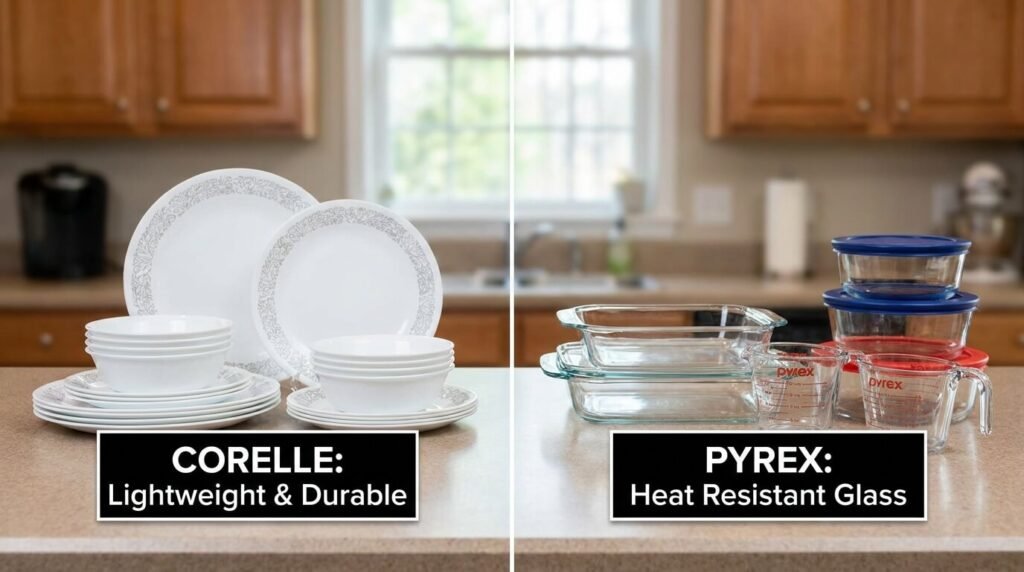
Before diving into the details, here’s a side-by-side look at how these two brands stack up across the most important categories.
| Feature | Corelle | Pyrex |
| Primary Use | Everyday dinnerware | Cookware & bakeware |
| Material | Vitrelle (triple-layer laminated glass) | Tempered soda-lime or borosilicate glass |
| Weight | Very lightweight | Heavier |
| Oven Safe? | No (not designed for oven use) | Yes (up to 425°F–450°F) |
| Microwave Safe? | Yes | Yes |
| Dishwasher Safe? | Yes | Yes |
| Freezer Safe? | Yes (for storage) | Yes (avoid thermal shock) |
| Chip Resistance | Excellent | Moderate |
| Thermal Shock Resistance | Low | High (borosilicate) / Moderate (soda-lime) |
| Break Pattern | Breaks into large pieces | Can shatter into small shards |
| Stackability | Highly stackable | Moderate |
| Design/Aesthetics | Minimalist, patterned sets | Functional, clear glass |
| Vintage Collectibility | Some collectible patterns | Highly collectible |
| Best For | Daily dining, families | Baking, meal prep, food storage |
What Is Corelle?
Overview of the Corelle Brand
Corelle was introduced in 1970 by Corning Glass Works, the same company that pioneered borosilicate glass and eventually Pyrex.
It quickly became one of the most popular dinnerware lines in American households, largely because of its remarkably thin profile and chip-resistant construction.
Today, Corelle Brands manages the product line, which has expanded globally.
Whether you grew up with the Butterfly Gold or Spring Blossom patterns or you’ve picked up a modern set recently, Corelle has remained a go-to for families who want durable, lightweight dinnerware that holds up to daily use without the weight or fragility of traditional ceramic plates.
What Corelle Is Made Of
Corelle dishes are made from Vitrelle glass, a proprietary triple-layer laminated glass technology developed by Corning. The construction bonds two outer layers of glass with a softer glass core in between.
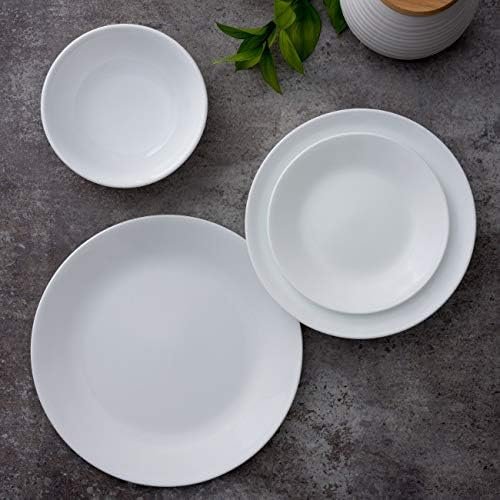
This three-layer system is what gives Corelle its signature thinness while still providing impressive strength. Vitrelle is not the same as standard tempered glass.
The lamination process is engineered specifically to resist chipping and breaking under everyday conditions. It’s also why Corelle dishes are so light — you’re getting a structurally sound product without the added mass of thicker glass or ceramics.
Common Corelle Products
Corelle’s lineup focuses on everyday tableware. The core range includes dinner plates, salad plates, soup and cereal bowls, mugs, and full dinner sets. Most products are sold as coordinated sets, making them practical for stocking an entire kitchen at once.
Some collections include serving bowls and platters as well. Corelle’s Livingware line is its most recognized, offering a wide variety of patterns from classic vintage designs to clean, modern styles.
The dishes are stackable, which is a genuine advantage in smaller kitchens where cabinet space is tight.
What Is Pyrex?
Overview of the Pyrex Brand
Pyrex has been around since 1915, making it one of the oldest glass kitchenware brands in history.
Originally developed by Corning Glass Works using borosilicate glass, Pyrex was initially marketed for scientific and baking applications, both of which demanded heat resistance above everything else.
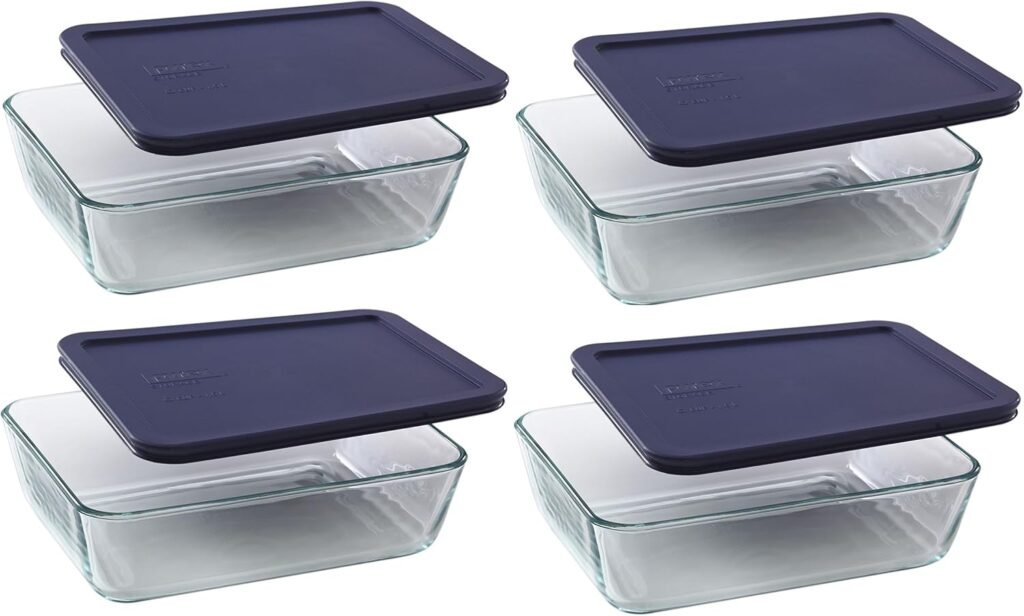
The brand grew into a staple of American baking culture and eventually expanded into food storage containers and mixing bowls. Today, Pyrex is synonymous with oven-safe bakeware and glass food storage.
Its casserole dishes and measuring cups are kitchen classics, recognized by home cooks and professional bakers alike.
What Pyrex Is Made Of
This is where things get a little complicated. Historically, Pyrex was made from borosilicate glass, a material with an exceptionally low coefficient of thermal expansion, making it highly resistant to thermal shock.
However, in North America, most modern Pyrex products are manufactured from tempered soda-lime glass, which is cheaper to produce but less resistant to sudden temperature changes.
Pyrex products sold in Europe and some other regions may still use borosilicate glass. This soda-lime glass transition is an important detail for anyone comparing heat performance, because it affects how the glass handles moving between extreme temperatures.
Common Pyrex Products
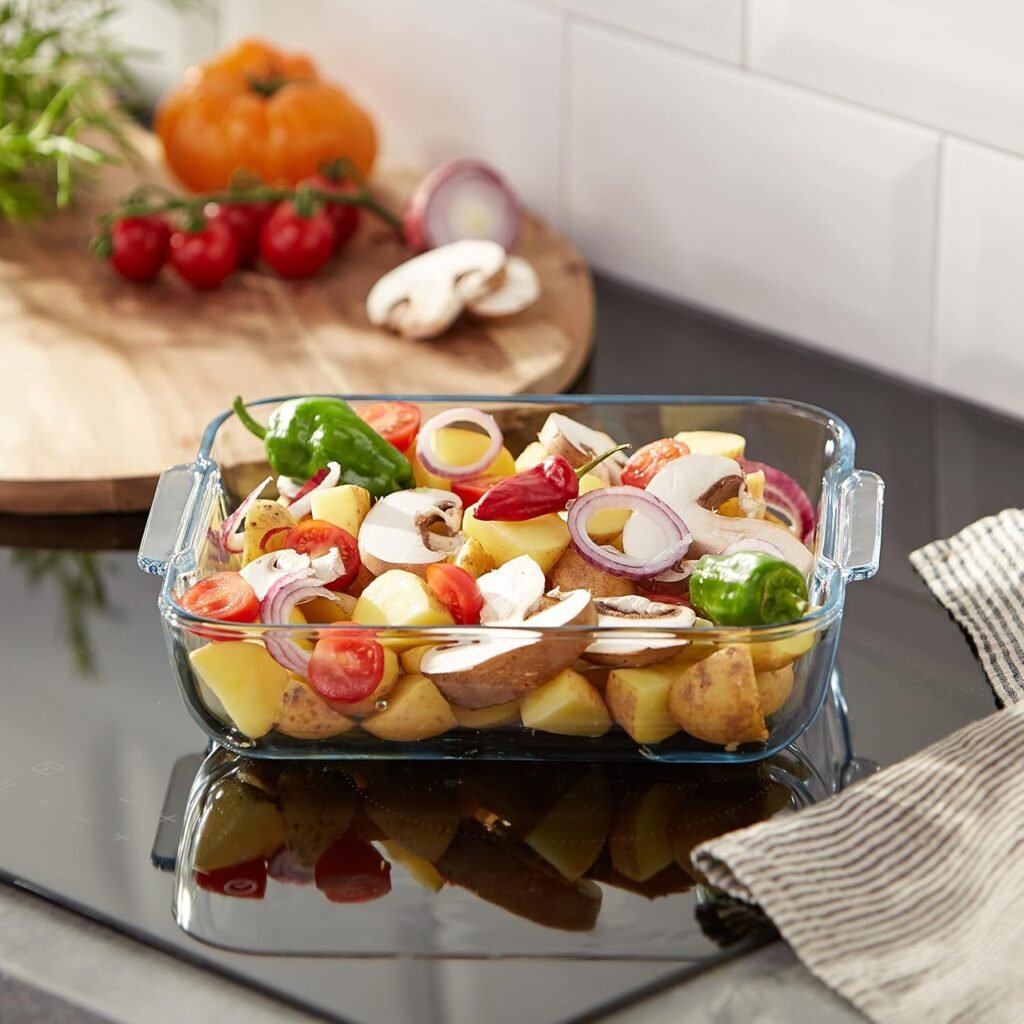
Pyrex covers a wide range of kitchen glassware. Its most iconic products include glass baking dishes and casserole dishes, measuring cups with clearly marked volume gradations, food storage containers with snap-on lids, and mixing bowls.
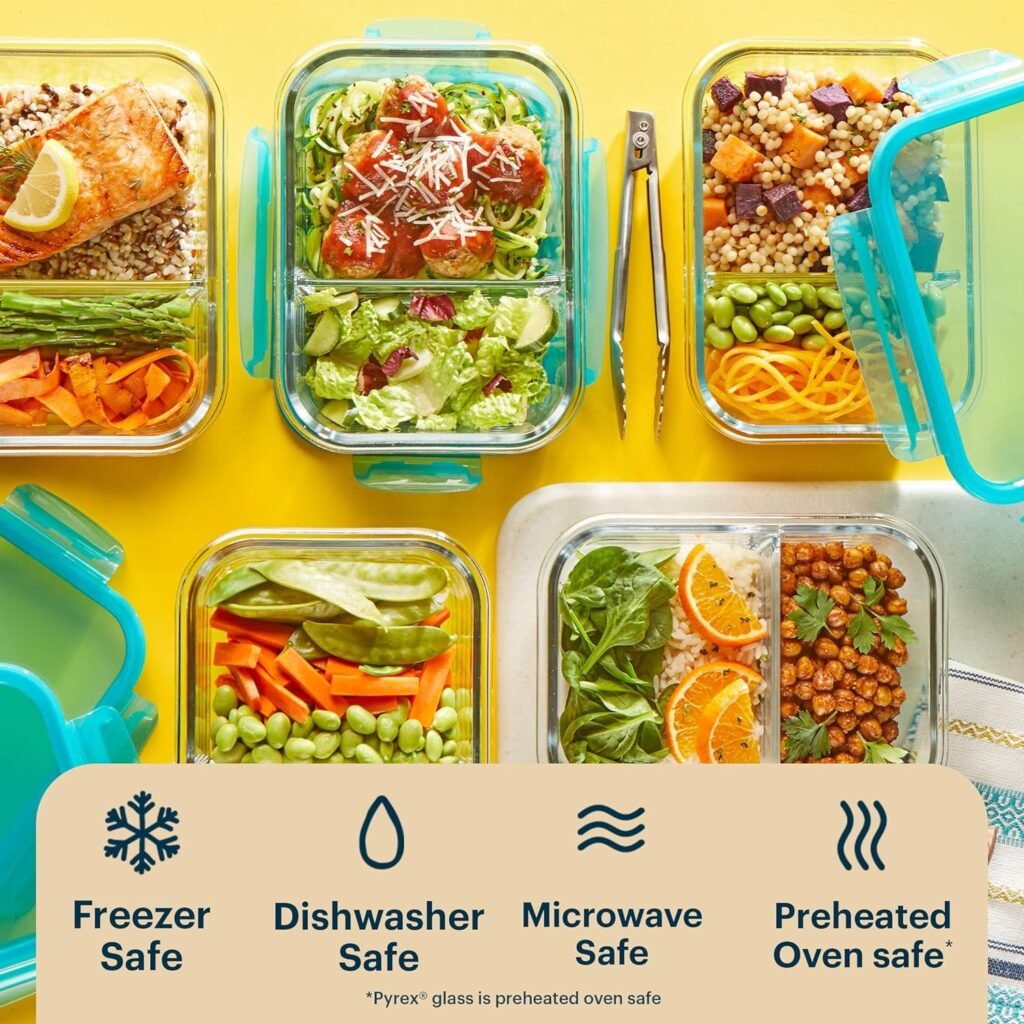
Pyrex bakeware sets are popular gifts and kitchen essentials, often sold as multi-piece collections. The Pyrex measuring cup is arguably one of the most universally recognized kitchen tools ever made.
More recently, Pyrex has expanded its storage line, which competes directly with plastic alternatives by offering a glass food storage option that is both microwave-safe and oven-safe.
Related: OCUISINE VS PYREX COMPARISON
Corelle vs Pyrex: Key Differences
Dinnerware vs Cookware Purpose
The most fundamental difference between Corelle and Pyrex is what they’re actually designed for. Corelle is everyday tableware plates, bowls, and mugs you use to eat from at the dining table.
Pyrex is kitchen glassware engineered for cooking, baking, and food storage. You wouldn’t bake a casserole in a Corelle plate, and you wouldn’t set a Pyrex baking dish as your everyday dinner plate.
The two brands address completely different functional needs, which is why directly comparing their “durability” or “quality” without context misses the point. Each is excellent within its intended category.
Material Technology Comparison
Corelle uses Vitrelle glass — a triple-layer laminated glass that prioritizes lightness, chip resistance, and thin construction. Pyrex uses tempered soda-lime glass (in North America) or borosilicate glass (in some international markets).
Tempered glass is heat-strengthened through a thermal process to increase strength, but its thermal shock resistance depends heavily on the glass composition.
Vitrelle is engineered through glass lamination rather than tempering alone, giving it different structural properties.
In short, Vitrelle is optimized for impact and chip resistance in a dining context, while tempered glass is optimized for heat tolerance in a cooking or baking context.
Weight and Thickness Differences
Corelle dishes are noticeably thinner and lighter than most glass or ceramic alternatives. A standard Corelle dinner plate weighs roughly half of what a comparable ceramic plate weighs.
Pyrex products, being thicker glass bakeware and storage containers, are considerably heavier. This weight difference matters in practical use.
Corelle’s lightweight design makes it easier to handle for children, elderly users, or anyone setting a full table. Pyrex’s heavier construction is a trade-off for heat tolerance and structural integrity under high baking temperatures.
Neither weight is inherently better; it simply reflects different engineering priorities.
Heat Resistance Comparison
Pyrex is the clear winner when it comes to heat resistance. Its baking dishes are rated oven-safe, typically up to around 425°F to 450°F, and the glass is engineered to withstand sustained high temperatures.
Corelle dinnerware, on the other hand, is not designed for oven use. Vitrelle glass can handle microwave temperatures and warm food, but placing Corelle in a conventional oven is not recommended and can cause breakage.
For any task involving oven roasting, baking, or reheating in an oven, Pyrex is the appropriate choice. Corelle’s heat tolerance is limited to microwave-safe use.
Breakage and Shattering Behavior
Both Corelle and Pyrex can break, but the way they break differs. Corelle, due to its laminated Vitrelle construction, tends to break into larger pieces rather than tiny shards, which makes cleanup safer.
Pyrex, particularly modern tempered soda-lime glass versions, can shatter more dramatically under certain stress conditions — especially thermal shock.
Vintage borosilicate Pyrex was more resistant to this. The glass shatter pattern of modern Pyrex has been a point of consumer concern over the years, particularly when dishes are moved from the freezer to the oven or placed on a cold, wet surface straight from the heat.
Which Is More Durable?
Corelle Chip Resistance
Chip resistance is one of Corelle’s strongest selling points. The Vitrelle triple-layer glass construction is specifically engineered to resist edge damage that typically affects ceramic plates over time.
Regular daily use, including stacking, dishwashing, and the occasional bump against a hard surface, is where Corelle performs exceptionally well.
Chips along the rim or base, which are common with ceramic dinnerware, are far less frequent with Corelle.
This makes it particularly well-suited for family kitchens, households with children, or anyone who wants long-lasting everyday tableware without replacing dishes every few years.
Pyrex Thermal Resistance
Pyrex’s durability story centers on thermal resistance. It’s built to go from refrigerator to oven, to handle sustained baking temperatures, and to survive repeated use in high-heat environments.
While modern soda-lime glass Pyrex isn’t as thermally resistant as the original borosilicate glass versions, it still significantly outperforms standard glass in oven settings.
Glassware heat tolerance is Pyrex’s primary durability metric, not impact resistance. It’s designed to last through hundreds of baking cycles, and with proper use (avoiding sudden extreme temperature changes), a Pyrex baking dish can realistically last decades.
Impact Resistance Comparison
When it comes to drop impact, neither brand is indestructible. Corelle’s thin Vitrelle construction means it can crack or break if dropped on a hard floor from a height, though it tends to survive minor bumps and everyday handling better than ceramic.
Pyrex baking dishes are thicker and heavier, but that doesn’t make them more drop-resistant. In fact, thicker glass can be more brittle under certain impact conditions.
The key takeaway is that Corelle handles routine daily impact better, while Pyrex handles thermal stress better. These are different types of durability suited to different use cases.
Long-Term Everyday Durability
For long-term everyday use as dinnerware, Corelle holds up remarkably well. Its resistance to chipping, lightweight design, and dishwasher compatibility make it one of the most practical long-term dinnerware options available.
For baking and food storage, Pyrex is the durable option of choice. The real question is what you’re using the products for daily. Many households own both Corelle for the dining table and Pyrex for the kitchen and oven.
Together, they cover almost every practical need in a home kitchen without much overlap.
Corelle vs Pyrex Safety Comparison
Lead-Free and Food-Safe Standards
Both Corelle and Pyrex are designed to meet food contact safety standards. Modern Corelle products are marketed as lead-free and cadmium-free, which is important given that older vintage dinnerware sometimes contained lead in decorative glazes.
Similarly, Pyrex glass itself is food-safe by composition. The FDA regulates glassware standards for products sold in the U.S., and both brands comply with those requirements.
If you’re purchasing vintage Corelle or vintage Pyrex, it’s worth being aware that older decorative patterns may have used materials that wouldn’t meet current standards, a consideration particularly relevant for collectors.
Microwave and Dishwasher Safety
Both Corelle and Pyrex are certified as microwave-safe dishes and dishwasher-safe glassware. Corelle handles microwave reheating well, and its smooth Vitrelle surface resists staining and odor absorption over time in the dishwasher.
Pyrex glass containers and bakeware are equally safe in the microwave and dishwasher, though it’s always worth checking lids separately — plastic Pyrex lids are microwave-safe for warming but not for high-heat applications.
For everyday convenience in modern kitchens, both brands are compatible with the appliances most households rely on daily.
Oven Safety Differences
This is one of the most important safety distinctions between the two. Pyrex bakeware is oven-safe and engineered for that environment. Corelle dinnerware is not oven-safe and should never be placed in a conventional oven.
This distinction matters beyond just performance; putting Corelle in the oven creates a real safety risk of breakage or shattering. If you’re looking for glass bakeware to go from prep to oven to table, Pyrex is the right tool.
Corelle’s role ends at the microwave. Understanding these oven safety differences prevents accidents and helps you get the right product for the right job.
Thermal Shock Resistance
Thermal shock resistance is a key differentiator and a safety factor. Pyrex, especially original borosilicate versions, was engineered to handle dramatic temperature changes.
Modern soda-lime glass Pyrex has reduced thermal shock resistance compared to older versions, so the best practice is to avoid moving it directly from the freezer to a hot oven.
Corelle’s Vitrelle glass has low thermal shock resistance and is not rated for temperature extremes — taking it from a refrigerator to a microwave for reheating is fine, but dramatic swings should be avoided.
Following manufacturer guidelines for both brands is the safest approach.
Best Uses for Corelle and Pyrex
Best for Everyday Dining
Corelle wins for everyday dining; it’s not a close contest. Its lightweight construction, chip-resistant Vitrelle glass, and easy stackability make it practical for daily meal service.
Breakfast, lunch, dinner, Corelle handles it all without adding unnecessary weight to your cabinet or your dishwasher load. It’s also gentle enough for kids to handle.
If you’re stocking a kitchen primarily for daily meals and want dishes that will stay looking good through years of regular use, Corelle is the smarter choice.
It’s also worth exploring an in-depth review of Corelle vs CorningWare if you’re deciding between glass dinnerware and glass-ceramic cookware.
Best for Baking and Cooking
Pyrex is purpose-built for baking and cooking. Its oven-safe glass bakeware handles casseroles, roasts, pies, lasagna, and everything in between.
The glass distributes heat evenly, allows you to monitor browning without opening the oven, and goes straight from oven to table for serving — a feature sometimes called oven-to-table service.
If you compare Pyrex vs CorningWare, you’ll find both are designed for the oven, but Pyrex offers more variety in storage and bakeware, while CorningWare has stronger stovetop compatibility.
For straightforward oven baking, Pyrex remains a reliable, affordable standard.
Best for Food Storage
For glass food storage, Pyrex storage containers are the practical choice. They’re oven-safe, microwave-safe, and offer an excellent alternative to plastic containers for meal prep and leftovers.
The glass doesn’t absorb odors or stains, which is a common complaint with plastic.
Corelle doesn’t produce dedicated food storage containers in the same way, while you can cover a Corelle bowl with a wrap and refrigerate it, it’s not designed for the storage role the way Pyrex’s lidded containers are.
For anyone building a meal prep setup or transitioning away from plastic, Pyrex storage is a natural fit.
Best for Small Kitchens and Stackability
If cabinet space is tight, Corelle has a real advantage. Its thin, lightweight Vitrelle construction makes it the most stackable everyday dinnerware option available.
A full set of Corelle plates takes up noticeably less cabinet space than ceramic or stoneware alternatives of the same count.
Pyrex products stack reasonably well within their own categories, nesting bowls fit inside each other, and baking dishes can often be stacked — but they take up more space overall, given their thicker glass.
For studio apartments, small kitchens, or RV living, Corelle’s compact stackability is a genuine practical advantage.
Corelle vs Pyrex Design and Aesthetics
Corelle’s Lightweight Minimalist Style
Corelle dinnerware leans toward minimalist aesthetics with clean lines and a slim profile. Modern collections offer simple, solid colors, subtle patterns, and contemporary designs that fit well in modern kitchen setups.
The thinness of Vitrelle glass gives Corelle dishes a refined, almost porcelain-like appearance, despite being far more durable.
Tableware aesthetics are a real consideration for many buyers, and Corelle delivers a clean, presentable table setting without the visual heaviness of thicker ceramics.
It manages to look polished while being entirely practical, a balance that helps explain its sustained popularity across generations of home cooks.
Pyrex’s Functional Kitchen Design
Pyrex leans heavily into functional kitchen design. Clear glass baking dishes and storage containers show what’s inside, which is genuinely useful. You can see leftovers, check browning in the oven, or assess ingredient levels without opening a container.
The aesthetic is clean and utilitarian rather than decorative.
Modern Pyrex collections include some colored lids and patterned surfaces, but the core product design is built around transparency and function.
For kitchen utility products, that clarity-first approach has real practical value. Pyrex looks like what it is: honest, well-made glass cookware that does its job without pretending to be decorative china.
Vintage Patterns and Collectibility
Both brands have passionate collector communities, but Pyrex collectors are particularly active.
Vintage Pyrex patterns like the Gooseberry, Friendship, and nesting bowl sets from the 1950s through 1970s are sought after at estate sales, antique markets, and online auctions.
Vintage Corelle patterns like Butterfly Gold and Spring Blossom also attract nostalgia-driven collectors. These kitchen nostalgia pieces represent a specific mid-century American aesthetic that’s genuinely hard to replicate.
Collectible glassware from both brands can command surprising prices on the secondary market, particularly for complete sets in good condition.
Modern Product Collections
Both brands continue to release modern collections that update the classic designs for contemporary kitchens. Corelle’s newer lines include sleeker, more minimalist patterns alongside updated versions of classic styles.
Pyrex has expanded beyond basic bakeware into more lifestyle-oriented storage and prep products. Consumer dining trends toward minimalism, meal prepping, and reducing plastic use have both brands well-positioned.
Modern kitchen design tends to favor the clean, uncluttered look, and both Corelle and Pyrex fit naturally into that aesthetic. Corelle on the table, Pyrex in the oven, and the fridge.
Pros and Cons of Corelle
Main Advantages
Corelle’s main strengths are its lightweight design, chip resistance, and stackability. The Vitrelle glass construction is genuinely thinner and lighter than almost any competing dinnerware material, making it easy to handle and kind to cabinet space.
Its chip resistance means it holds up better through daily use and dishwashing cycles compared to standard ceramic plates. The stackability of Corelle dishes is also a real practical benefit for storage.
Beyond that, Corelle is microwave-safe, dishwasher-safe, and available in a wide enough range of patterns and styles to suit most household aesthetics, from traditional to modern.
Potential Drawbacks
The main limitations of Corelle center on its lack of oven compatibility and its shattering behavior under extreme impact. Unlike Pyrex, Corelle cannot go in a conventional oven, which limits its versatility as a cooking vessel.
And while Corelle resists chips and minor impacts well, a serious drop onto a hard floor can cause it to break — sometimes in a way that creates sharp fragments.
It’s also worth noting that very old vintage Corelle patterns may contain decorative elements with materials that don’t meet modern food safety standards. For oven use or high-heat cooking applications, Corelle simply isn’t the right tool.
Pros and Cons of Pyrex
Main Advantages
Pyrex’s core strengths lie in its oven-safe performance, heat resistance, and versatile cookware functionality.
It genuinely excels in the oven casseroles, roasting dishes, and baking pans, all of which benefit from Pyrex’s ability to distribute heat evenly and withstand sustained high temperatures.
The glass is also non-reactive, meaning it won’t affect the flavor of food the way some metals or plastics can. Its versatility extends from oven to microwave to dishwasher, and the food storage containers are a durable, odor-resistant alternative to plastic.
For any kitchen task involving heat, Pyrex is the dependable glass option that has earned its reputation over more than a century.
Potential Drawbacks
Pyrex’s downsides are its weight and the risk of thermal shock breakage. Modern Pyrex, made from tempered soda-lime glass rather than the original borosilicate glass, is more susceptible to thermal shock than many consumers expect.
Moving a Pyrex dish from a cold freezer directly to a hot oven, or placing a hot dish on a cold or wet surface, can cause it to crack or shatter.
The heavier weight of glass bakeware compared to Corelle dinnerware is also a practical consideration for some users. And while Pyrex is great in the oven and for storage, it doesn’t serve as elegant everyday tableware the way Corelle does.
Conclusion
So, which is better, Corelle or Pyrex? The honest answer is: it depends on what you need. Corelle is optimized for lightweight dining and tableware.
It’s the right choice for everyday plates, bowls, and mugs that hold up through daily use, stack efficiently, and look good on the table. Pyrex is designed for cooking, baking, and heat-resistant kitchen tasks.
It’s the right choice when you’re putting something in the oven, storing prepped meals, or measuring ingredients.
Most well-equipped kitchens benefit from having both. They’re not competitors, they’re complements. Choose Corelle for the table, and Pyrex for the kitchen.
About the Author & Reviewer
Sarah Emirone, Author
Sarah researches and writes SafeKitchn’s dinnerware and kitchenware guides, with a focus on material safety, lead content, and manufacturer specifications. She cross-references product data sheets, safety certifications, and regulatory filings (including FDA and Prop 65 records) before publishing, and updates articles when new information becomes available.
James Daniels, Reviewer
James reviews SafeKitchn’s material safety content for scientific accuracy. He holds a B.Sc in inorganic chemistry and works as a materials researcher, with particular focus on the composition and safety behavior of glass, ceramic, and metal used in kitchenware.