

If you’ve found a Chinbull heat resistant opal glassware piece at a thrift store or on eBay, or you’re sourcing sets for a hospitality operation, this guide gives you the complete picture.
Chinbull is not a single manufacturer; it’s a brand name applied across multiple Chinese opal glass product lines. That distinction changes how you evaluate safety, temperature limits, and buying decisions.
This article covers what opal glass is made from, what it can safely handle, how to assess vintage vs. current pieces, and where to source in bulk.
| If you’re a… | Jump to |
|---|---|
| Retail buyer / secondhand shopper | Sections 2, 3, 4, 6 |
| Wholesale / B2B buyer | Sections 2, 5, 8 |
Written by Sarah Emirone | Reviewed by James Daniels, B.Sc, Inorganic Chemist & Materials Researcher | Updated September 2026 | See How We Test | Filed under: Buying, Care & Product Guides
What Is Chinbull Opal Glassware?
Chinbull opal glassware is a category of tempered, opaque white glass tableware manufactured in China, primarily sourced from Yiwu and Guangzhou wholesale markets and sold under the “Chinbull” (慧升达 / 白玉) brand name.
It is neither porcelain nor bone china, despite sometimes being marketed as “white jade porcelain.” It is glass throughout, made heat-resistant through a thermal tempering process during manufacturing.
What Opal Glass Is Made From and Why It Looks White
Two terms define this material:
Opal glass: A tempered soda-lime or borosilicate glass base with opacifying agents — typically fluorite (calcium fluoride), cryolite (sodium aluminum fluoride), or titanium dioxide — added during the melt phase.
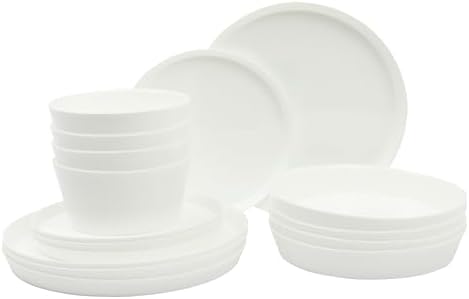

These compounds scatter light internally, producing the characteristic opaque milky-white appearance. The glass is then annealed and thermally tempered to enhance shock resistance.
Opacity standard: High-quality opal glass achieves 85–95% light diffusion, measured at a 550nm wavelength under ISO 9050 standards. Pieces that fall below this range may appear semi-translucent and typically indicate lower-grade production.
Unlike bone china, which achieves whiteness through bone ash in a clay matrix, opal glass contains no bone material, no clay, and no organic compounds. It is 100% glass, making it non-porous and non-absorbent.
Chinbull as a Brand: What “White Jade Porcelain” Actually Means
“Chinbull” appears as a brand name across several unrelated Chinese manufacturers on Alibaba, Yiwugo, and International Homeware platforms.
The Chinese term 白玉 (báiyù), meaning “white jade,” is used interchangeably with “white jade glass” and “opal glassware” in product listings — it refers to the material, not a porcelain product.
When Yiwugo listings describe Chinbull as “white jade glass porcelain (OPAL glassware),” this is a direct translation artifact: the product is opal glass.
Pieces sold secondhand in the US under the Chinbull name are typically earlier production runs from the 1980s through 2000s, distributed to Western markets through wholesale channels. Current production continues under the same brand name but with updated manufacturing specifications.
Heat Resistance: What Chinbull Opal Glassware Can and Cannot Handle
Before exploring Chinbull specifically, our heat-resistant glass dinnerware buyer’s guide covers the full spectrum of heat-resistant options across all brands and materials.
For Chinbull opal glass specifically: current-production pieces are microwave and oven safe within defined temperature limits, but those limits vary by product type — and vintage pieces require additional evaluation before assuming the same specifications apply.
Temperature Limits by Use Type: Microwave, Oven, Freezer, and Stovetop
| Use Type | Safe Temperature Range | Conditions | Notes |
|---|---|---|---|
| Microwave | Up to 100°C / 212°F | Microwave-safe pieces only; check label | Standard dinnerware plates and bowls; not all pieces are rated equally |
| Conventional oven (casseroles) | Up to 350°C / 662°F | Casserole-grade opal glass only; preheat the oven before placing | Standard flat plates are NOT rated to 350°C — this limit applies to purpose-made casserole pieces |
| Freezer to room temp | −20°C to +20°C | Allow to reach room temperature before heating | Do not place a frozen piece directly into the microwave |
| Dishwasher | Up to 70°C wash cycle | Most pieces are rated dishwasher-safe | Long-term dishwasher use accelerates surface wear; see the care section |
| Stovetop / direct flame | Not safe | No opal glass piece is stovetop rated | Direct flame causes uneven heating and thermal fracture |
| Freezer to oven (direct) | Not safe | Exceeds safe thermal differential | Always allow temperature equilibration first |
Critical distinction: The 350°C oven rating cited by multiple sources applies to casserole-grade opal glass pieces manufactured specifically for oven use.
Standard Chinbull dinnerware plates and bowls are not rated to this temperature; they are rated for microwave reheating, not sustained oven cooking. Check the underside of the piece for an oven-safe symbol before placing any Chinbull piece in a conventional oven.
Thermal Shock: The Real Risk and How to Avoid It
Commercial-grade opal glass is rated to withstand a thermal differential of ≥150°C — meaning it can transition from boiling water to a freezer environment without fracturing.
This rating reduces breakage by approximately 70% compared to standard glass in commercial dishwasher environments. For home use, the practical rules are:
- Never transfer a piece directly from the freezer to the microwave — allow at least 15–20 minutes at room temperature first, as the internal temperature differential across the glass body can exceed the safe threshold even on a short microwave cycle.
- Never pour boiling liquid into a cold Chinbull bowl — pre-warm the vessel with warm (not hot) water for 30 seconds before adding very hot food or liquid.
- Cracked pieces must be discarded, not used — a crack compromises the tempered structure of the entire piece; continued use with heat can cause sudden fracture even below the rated temperature.
- Pieces with visible surface cloudiness or scratching have reduced thermal shock resistance — the surface abrasion from long-term use changes the stress distribution in the glass.
Vintage Chinbull vs. Current Production: Why the Distinction Matters
Most people who search specifically for “Chinbull” are looking at secondhand pieces — the floral-patterned bowls, scalloped-edge platters (13.5″×9.5″), and tea sets that appear regularly on eBay and in thrift stores.
These are vintage production pieces, and their safety profile is not identical to current-production opal glass that meets 2020s manufacturing standards.
Secondhand opal glass buyers should also read our broader vintage glassware safety: what to check before using secondhand pieces.
How to Identify Whether Your Chinbull Piece Is Vintage or Recent
- Stamp format on the base: Vintage Chinbull pieces typically carry a simple “Chinbull” text stamp or a stylized logo with no country-of-origin text; newer pieces carry “Made in China” alongside the brand name and often a microwave/dishwasher-safe symbol.
- Scalloped or petal edges on bowls and platters are a consistent indicator of earlier production runs (pre-2000s); current production is predominantly smooth-edged.
- Floral decoration style: Hand-applied floral decals with visible texture under the finger indicate older pieces; current production uses fired-on decal transfers with a smoother surface.
- Weight: Vintage Chinbull pieces are slightly heavier than current-production equivalents due to differences in glass composition and tempering methods.
- Brand name variants: “Huishunda” (慧升达) is a related brand name that appears on some pieces sold through International Homeware distribution — these are from the same manufacturer family as Chinbull and carry the same product profile.
Is It Safe to Use Older Chinbull Pieces in the Microwave or Oven?
Use this evaluation sequence before placing any vintage Chinbull piece in a microwave:
- Inspect for surface cracks under strong direct light, including hairline cracks not visible in normal lighting — discard any cracked piece regardless of age.
- Check interior surface condition — run a fingertip across the inside surface; if you feel roughness, pitting, or scratching, the piece should not be used for microwave heating.
- Examine floral decoration for flaking or lifting — any enamel that is peeling or lifting from the surface indicates compromised adhesion; do not microwave decorated pieces showing this condition.
- Perform a room-temperature water test first — fill the piece with cold tap water and microwave on low for 30 seconds; if the piece becomes significantly hotter than the water, the glass has likely absorbed minerals over time and is no longer uniformly safe for microwave use.
- Default to display or cold-food use for any vintage piece that cannot be confidently evaluated — the heat resistance of a 30-year-old piece cannot be assumed to match current-production specifications.
Is Chinbull Opal Glassware Food Safe and Lead-Free?
Current-production Chinbull opal glass is manufactured as a lead-free, BPA-free, non-porous material and is food-safe for normal use.
The glass matrix itself does not contain lead or cadmium. However, “food safe glass body” and “food safe decorated surface” are two different evaluations, and the distinction matters for vintage pieces with colored enamel decoration.
Technical Safety Standards: ISO 4531, ASTM, and What “Export Inspection Free” Means
| Standard | What It Measures | Threshold | Who Requires It |
|---|---|---|---|
| ISO 9050 | Opacity uniformity (light diffusion at 550nm) | 85–95% diffusion | Quality-focused manufacturers; not universally required |
| ISO 4531 / ASTM C738 | Leachable lead from decorated surfaces | ≤0.8 mg/dm² (ISO) | EU food-contact regulations are; voluntary in many markets |
| ASTM C927 | Leachable lead from the rim and lip of drinking vessels | ≤0.5 µg/mL | US glassware guidance |
| Thermal shock differential | Temperature change resistance without fracture | ≥150°C differential | Commercial/hospitality grade standard |
| “Export Inspection Free” (出口免检) | Chinese export classification — simplified customs processing | N/A — not a safety standard | Chinese customs authority |
The “Export Inspection Free” misconception: This label appears on multiple Chinbull product listings on Yiwugo and similar platforms and is frequently misunderstood by international buyers as equivalent to FDA or CE food-contact approval. It is not.
“Export Inspection Free” (出口免检) is a Chinese customs classification that allows certain established exporters to bypass routine customs inspection — it indicates the exporting company’s track record, not independent product safety testing.
B2B buyers should request ISO 4531 test reports and leachable-lead declarations separately.
Decorated Floral Pieces vs. Plain White: Safety Differences
- Plain white opal glass pieces — plates, bowls, and mugs with no colored decoration — carry the lowest risk profile; the glass body is lead-free, and the non-porous surface does not absorb food compounds or leach into food under normal use conditions.
- Vintage floral-decorated pieces should be evaluated for enamel condition before microwave use; older colored enamels (particularly warm colors — orange, red, yellow) were historically formulated with lead-based pigments, and scratched or worn enamel surfaces can increase leach risk when heated.
- Current-production decorated pieces from reputable suppliers using ISO 4531-compliant enamel formulas carry a much lower risk than vintage equivalents, but buyers should request the supplier’s enamel safety test documentation before using heavily decorated pieces for hot food service.
- Never microwave any piece — Chinbull or otherwise — where the interior decorated surface shows flaking, scratching, or color change, as surface degradation accelerates chemical transfer from decoration layers into food.
Chinbull Opal Glassware Product Range: Sizes, Sets, and Patterns
Chinbull opal glassware is produced across multiple product lines. The table below reflects documented product configurations from Yiwugo, eBay, and Alibaba listings.
| Category | Configuration | Documented Sizes / Dimensions | Pattern Options |
|---|---|---|---|
| Flat plates (centrifugal series) | Individual pieces | 7.5″, 8.5″, 9.5″, 10.5″ | Plain white; floral decal |
| Bowls (standard set) | 7-piece set: 6 small + 1 soup bowl | Small: 11.3cm diameter × 5.5cm H; Soup: 20.2cm × 6cm | Plain white |
| Serving platters | Individual pieces | 13.5″ × 9.5″ (documented eBay vintage) | White floral |
| Bowls (individual) | Individual pieces | 8″ scalloped edge | Floral |
| Tea set | 12-piece set (cups + saucers) | Cup dimensions not published; saucer standard | Green floral, plain white |
Dinner Plates and Flat Plates: Available Sizes and Formats
| Size | Diameter | Series | Use Case |
|---|---|---|---|
| 7.5 inch | ~19cm | Centrifugal / standard | Side plate, dessert plate |
| 8.5 inch | ~21.5cm | Centrifugal / standard | Starter plate, small main |
| 9.5 inch | ~24cm | Centrifugal / standard | Standard dinner plate |
| 10.5 inch | ~26.5cm | Centrifugal / standard | Large dinner plate, serving |
Centrifugal series plates are described in Yiwugo listings as available in mixed-batch orders (5-case minimum), microwave-safe, with a “quality transparent” finish that does not fade over time. The 5-case minimum refers to the export carton quantity, not the piece count.
Bowl Sets and Tea Sets: Documented Configurations
| Set Type | Pieces | Dimensions | Notes |
|---|---|---|---|
| Meal set (Bao series) | 7 pieces | 6× small bowl (11.3×5.5cm) + 1× soup bowl (20.2×6cm) | Color box packaging; mixed batch available |
| Tea set | 12 pieces | Cups + saucers (dimensions not published) | Green floral pattern; shipped with USPS Ground in the US secondhand market |
| Individual scalloped bowl | 1 piece | 8″ diameter | Scalloped edge; floral decoration; vintage production |
| Serving platter | 1 piece | 13.5″ × 9.5″ | White floral; vintage production; documented on eBay |
Care and Maintenance: How to Get the Longest Life from Opal Glass
For the extended version covering all opal glass brands, see our complete opal glassware care and maintenance guide. For Chinbull pieces specifically, follow this sequence:
- Allow pieces to reach room temperature before exposing to heat or cold — this single step prevents the majority of thermal shock fractures.
- Hand-wash decorated pieces with mild dish soap and a soft sponge; avoid abrasive scrubbers that scratch enamel and degrade the glass surface over time.
- Use a dishwasher for plain white pieces if needed, but limit cycles — the high heat and alkaline detergents in dishwashers gradually etch the glass surface, reducing both thermal shock resistance and food safety over years of repeated use.
- Store plates and bowls with cloth or silicone separators between stacked pieces; direct glass-on-glass stacking causes microscopic surface scratches that accumulate into visible damage and reduced structural integrity.
- Replace any piece that shows chipping, cloudiness, or hairline cracking immediately — chipped opal glass cannot be safely repaired, and a chip at the rim creates a stress concentration point that increases fracture risk under heat.
Dishwasher Use: What Is and Isn’t Safe for Opal Glass Long-Term
- Short-term dishwasher use (occasional cycles, gentle program, low-temperature setting) is safe for most current-production Chinbull plain white pieces and will not immediately affect the glass.
- Long-term daily dishwasher use gradually etches the surface through repeated exposure to high-alkaline detergent at 60–70°C, producing the cloudy or milky surface discoloration sometimes seen on heavily used opal glass — this is surface etching, not dirt, and it cannot be reversed.
- Decorated pieces should not be regularly dishwashed — the thermal and chemical stress of dishwasher cycles accelerates enamel degradation, particularly on older floral designs where the decoration layer is less robustly bonded.
- Check for “dishwasher safe” marking on the base before placing any vintage Chinbull piece in a dishwasher — pieces manufactured before the late 1990s may not carry this rating.
Storage, Stacking, and Preventing Thermal Shock in Daily Use
- Place felt, cloth, or silicone mat separators between stacked plates and bowls to prevent the micro-abrasion that accumulates from direct ceramic-on-glass or glass-on-glass stacking.
- Do not store opal glass immediately adjacent to a heat source (next to a toaster, above the oven, or directly under a kitchen spotlight) — sustained ambient heat cycling accelerates stress fatigue over time.
- When moving pieces from the refrigerator to the table, allow at least 10 minutes at room temperature before adding hot food or placing the piece in a microwave.
- Discard any piece that produces a dull thud rather than a light ring when tapped — a healthy opal glass piece produces a faint resonant tone; a dull sound indicates internal stress fractures not visible to the naked eye.
Opal Glass vs. Bone China vs. Ceramic: How Chinbull Compares
For a detailed head-to-head breakdown, see our full guide on opal glass vs bone china: full material comparison. The five-dimensional comparison below positions Chinbull opal glass against the two materials it most commonly replaces.
| Dimension | Chinbull Opal Glass | Bone China | Standard Ceramic |
|---|---|---|---|
| Impact resistance | High — tempered glass withstands everyday knocks | Moderate — strong for its weight but brittle on hard surfaces | Low–Moderate — varies by firing density |
| Thermal shock resistance | High — ≥150°C differential rated | Low–Moderate — sudden temperature changes risk cracking | Moderate — depends on firing temperature |
| Heat retention | Low — cools faster than ceramic | High — retains heat well, comfortable to handle | Moderate–High |
| Microwave safe | Yes (plain pieces; check decorated) | Yes (most modern bone china) | Usually yes — check for metallic trim |
| Price (per piece, commercial) | $0.50–$1.33 wholesale | $3–$15+ per piece | $0.80–$3 per piece |
| Lead/cadmium risk | Low (glass body); check enamel decoration | Very low (modern; bone ash is inert) | Variable — check glaze formulation |
| Weight | Light–Medium | Very light | Medium–Heavy |
Which Material Is Best for Which Use Case?
| Use Case | Best Material | Reason |
|---|---|---|
| Daily family use with children | Opal glass | Highest impact + thermal shock resistance |
| Hotel /restaurant service | Opal glass | Cost efficiency, durability, dishwasher tolerance |
| Fine dining / special occasions | Bone china | Elegance, heat retention, perceived premium quality |
| Outdoor /casual entertaining | Opal glass | Drop resistance, weather tolerance |
| High-heat oven cooking | Casserole-grade opal glass | Rated to 350°C; ceramic and bone china not reliably rated this high |
| Aesthetics-first, low-use display | Bone china or ceramic | Richer appearance; lower daily-use risk |
Break Resistance: What “Heat Resistant” Actually Means vs. Impact Resistance
“Heat resistant” describes a material’s ability to withstand temperature changes without fracturing it does not describe what happens when a piece is dropped.
These are separate properties governed by different physical mechanisms. Chinbull opal glass has high thermal shock resistance because its tempering process distributes internal stress evenly across the glass body.
Impact resistance — drop resistance — depends on glass thickness, edge geometry, and the surface it strikes. A Chinbull plate dropped onto tile from counter height can and does break; the tempering helps it survive kitchen heat, not falls.
For the full data on opal glass drop-resistance vs. thermal resistance, see whether opal glass is breakable: impact vs. thermal resistance explained.
Buying Chinbull Opal Glassware in Bulk: Wholesale and B2B Guide
Chinbull-branded and Chinbull-type opal glassware is available through three primary wholesale sourcing channels, each with different price structures, MOQ requirements, and OEM flexibility.
“Chinbull” appears on multiple wholesale platforms as both a brand name and a generic product category label confirm the specific manufacturer before committing to a bulk order, as quality and certifications vary between suppliers using the same brand name.
Sourcing Platforms, MOQ Ranges, and Price Benchmarks
| Platform | Typical Price/Piece | Sample MOQ | Bulk MOQ | OEM Available | Notes |
|---|---|---|---|---|---|
| Alibaba (multiple suppliers) | $0.50–$1.33 | 20,000–25,000,000 pcs | 20,000,000+ pcs | Yes (select suppliers) | Verify ISO 4531 cert before ordering |
| Yiwugo | $0.40–$0.90 | 5 cases | Variable by supplier | Limited | “Export inspection free” label standard; not a safety cert |
| Accio (aggregator) | $1.30–$1.33 (16-pc set) | 2 pcs (Shulopal sample) | Varies | Yes | Best for sample testing before bulk; 4.3 review average |
| eBay (secondhand) | $8–$40/piece (retail) | 1 piece | N/A | No | Vintage pieces; evaluate individually for safety |
| International Homeware (ihwbd.com) | Wholesale pricing | Contact required | Contact required | Limited | Chinbull / Huishunda brand distributor |
B2B buyers comparing multiple brands should see our best heat-resistant dinnerware sets from Chinese manufacturers with verified supplier data.
What to Ask for Before Placing a Wholesale Order: Certification Checklist
- ISO 4531 or ASTM C738 test report for leachable lead and cadmium from decorated surfaces — request the actual laboratory report, not a self-declaration from the supplier.
- ISO 9050 opacity uniformity certificate confirming the glass achieves 85–95% light diffusion at 550nm — this confirms product consistency across the batch.
- Thermal shock test certificate confirming the pieces meet the ≥150°C differential standard — essential for hotel and restaurant use, where pieces go through commercial dishwashers repeatedly.
- BPA-free and cadmium-free material declaration from the glass body manufacturer — separate from the enamel decoration certification.
- Sample order first — Shulopal (Guangzhou) offers samples from MOQ 2 pieces; always test at least one carton from any new supplier before placing a volume order, checking for opacity consistency, edge quality, and oven/microwave marking accuracy.
Where to Buy Chinbull Opal Glassware: Retail and Wholesale Options
- eBay is the primary source for vintage Chinbull pieces in the US — search “Chinbull opal glassware” for floral platters, scalloped bowls, and tea sets; apply the vintage safety evaluation checklist in Section 3 before using any piece for food.
- Amazon carries current-production opal glass sets from Chinese manufacturers, some under the Chinbull brand name and some under related brand names; check seller specifications for microwave and dishwasher certifications before purchasing.
- Alibaba (alibaba.com) is the primary B2B platform for bulk orders; search “opal glassware Chinbull” or “heat-resistant opal glass dinnerware set” — filter by verified suppliers and request ISO documentation before ordering.
- Yiwugo (en.yiwugo.com) lists Chinbull products directly from the Yiwu wholesale market; suitable for smaller initial orders before scaling to Alibaba volume.
- International Homeware (ihwbd.com) is a dedicated Chinbull and Huishunda distributor with curated product listings and wholesale pricing for trade buyers.
Frequently Asked Questions: Chinbull Opal Glassware
What is the maximum safe temperature for Chinbull opal glassware in an oven?
For casserole-grade opal glass pieces specifically designed for oven use, the documented limit is 350°C (662°F). Standard dinnerware plates and bowls are not rated to this temperature — they are rated for microwave reheating, not sustained oven cooking.
Always check the underside of the piece for an oven-safe symbol before placing any Chinbull piece in a conventional oven.
Can Chinbull opal glass go in the microwave?
Yes, current-production plain white Chinbull pieces marked microwave-safe can be used for reheating. Avoid microwaving vintage pieces with visible surface wear, scratching, or flaking enamel decoration, and always allow the piece to reach room temperature before microwaving from cold.
Is Chinbull glassware dishwasher safe?
Current-production pieces marked dishwasher-safe can be used in a dishwasher on a standard cycle. Long-term daily dishwasher use gradually etches the glass surface, reducing thermal shock resistance over time.
Hand—washing extends the lifespan of any opal glass piece, particularly decorated ones.
Is Chinbull opal glass lead-free?
The glass body of current-production Chinbull opal glassware is lead-free and BPA-free.
Vintage pieces with colored enamel decoration should be evaluated for enamel condition before use with hot food — older warm-color enamels (orange, red, yellow) may contain lead-based pigments that can leach from scratched or worn surfaces when heated.
What should I do if my Chinbull glass develops a crack?
Discard it immediately and do not attempt to repair it. A crack compromises the tempered stress distribution across the entire piece, meaning it can fracture suddenly under heat or pressure well below the piece’s rated temperature — even during a normal microwave cycle.
Is vintage Chinbull glassware from eBay safe to use?
It depends on the piece’s condition. Inspect for hairline cracks under direct light, check for interior surface scratching, and examine enamel decoration for flaking before using any vintage piece for heated food.
Plain white pieces in excellent condition carry a lower risk profile than heavily decorated or surface-worn pieces.
Can I microwave Chinbull glass with a floral pattern?
Only if the piece is a current production, carries a microwave-safe label, and the enamel is fully intact with no scratching, flaking, or color change.
Vintage decorated pieces should not be microwaved — older enamel formulas and reduced adhesion in aged pieces increase the risk of enamel transfer into food under microwave heat.
What is the minimum order quantity for Chinbull opal glassware wholesale?
It varies by platform and supplier. Shulopal (Guangzhou) offers sample orders from as low as 2 pieces via Accio. Yiwugo Chinbull listings typically start at 5 cases. Alibaba bulk orders range from 20,000 to 25,000,000 pieces, depending on the supplier.
Always place a sample order before committing to volume.
About the Author & Reviewer
Sarah Emirone, Author
Sarah researches and writes SafeKitchn’s dinnerware and kitchenware guides, with a focus on material safety, lead content, and manufacturer specifications. She cross-references product data sheets, safety certifications, and regulatory filings (including FDA and Prop 65 records) before publishing, and updates articles when new information becomes available.
James Daniels, Reviewer
James reviews SafeKitchn’s material safety content for scientific accuracy. He holds a B.Sc in inorganic chemistry and works as a materials researcher, with particular focus on the composition and safety behavior of glass, ceramic, and metal used in kitchenware.