

Can Duralex bowls go in the oven? Standard Lys, stackable, and mixing bowls – NO.
Duralex’s own customer support has said directly that these are microwave-safe but not recommended for oven use.
The Ovenchef line is the exception: it’s built and rated specifically for the oven, up to 300°C/572°F. So the real question isn’t whether “Duralex” goes in the oven. It’s which Duralex you’re holding.
This guide walks through how to tell what each line is actually made of, and why the temperature numbers floating around the internet don’t agree with each other.
Written by Sarah Emirone | Reviewed by James Daniels, B.Sc, Inorganic Chemist & Materials Researcher | Updated September 2026 | See How We Test | Filed under: Buying, Care & Product Guides
The Short Answer: It Depends on Which Duralex Line You Have
Most Duralex glassware in kitchens today falls into one of two categories, and they behave very differently once an oven is involved.
Standard Duralex Bowls (Lys, Stackable, Mixing)
If you own the clear stackable prep bowls, the Lys mixing set, or a standard glass measuring bowl, the answer is no.
Duralex Lys Stackable bowls are microwave safe; oven use not recommended. That’s not a competitor’s guess; it’s the manufacturer, in writing, answering the exact question this page is about.
These bowls handle the freezer and the microwave fine. The oven is where the manufacturer draws the line.
The Duralex Ovenchef Line
Ovenchef is a different animal. Duralex markets it explicitly for cooking in the oven, alongside the microwave, freezer, and dishwasher.


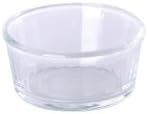
It covers roasters, casseroles, and ramekins, the shapes you’d expect for baking, not mixing. If you’re shopping for something to actually cook in, this is the collection to look for by name.
Everything else in this guide explains why that distinction matters as much as it does. See our Pfaltzgraff oven-safety breakdown for the same per-collection pattern in a different brand.
What Duralex Bowls Are Actually Made Of
The material isn’t the same across both lines, and that’s part of why one goes in the oven and the other doesn’t.
Standard Duralex: Tempered Soda-Lime Glass
Standard Duralex glassware, the Lys range, and the everyday stackable bowls are made from tempered soda-lime glass: sand, soda ash, and limestone, heated and cooled rapidly during manufacturing to add strength.
Tempering makes it far more impact-resistant than untreated glass, which is why Duralex bowls survive drops that would shatter an ordinary drinking glass.
But tempering soda-lime glass doesn’t give it the same tolerance for sustained oven heat that a purpose-built formulation would.
Ovenchef: Reinforced Glass Built for Oven Use
Ovenchef pieces use a reinforced tempered glass formulation, and at least one manufacturer-facing source describes it as borosilicate tempered glass, a different composition from the standard line’s soda-lime base.
That’s the material difference behind the temperature gap in the next section. For the deeper mechanics of why composition changes heat tolerance, see borosilicate glass vs. regular glass.
Duralex Oven Temperature Limits, By Collection
The numbers you’ll find for “Duralex oven temperature” vary wildly across the internet, and most of that variation comes down to which collection and which kind of limit is actually being described.
Standard Bowls: A Thermal Shock Limit, Not an Oven Rating
Duralex states that its standard products shouldn’t be exposed to a sudden temperature change of more than 130°C (roughly 266°F).
That figure describes thermal shock tolerance, how much of a temperature swing the glass can survive — not a green light for sustained oven use.
A bowl can technically survive a 130°C jump and still not be something the manufacturer wants inside your oven for twenty minutes at 350°F. That’s the gap between “won’t shatter immediately” and “designed for this.”
Ovenchef: Full Temperature Range
| Spec | Value |
|---|---|
| Operating temperature range | -20°C to 300°C (-4°F to 572°F) |
| Thermal shock resistance | 200°C / 392°F differential |
| Dishwasher safe | Yes |
| Microwave safe | Yes |
| Freezer safe | Yes |
Ovenchef is rated for both the sustained heat of baking and the shock of moving between temperature extremes.
That combination is exactly what standard Duralex bowls lack, and it’s the entire reason the two lines exist as separate products rather than one general-purpose collection.
How to Tell Which Duralex Bowls You Own
Before you put anything in the oven, check the piece itself rather than guessing from memory.
Check the Base Marking and Collection Name
- Flip the bowl over and look for a molded name on the base — “Ovenchef” will usually appear directly on the piece or on its original packaging.
- If the base just says “Duralex” with no collection name, treat it as a standard bowl unless you can confirm otherwise from the original product listing.
- Roasters, oval casseroles, and ramekins sold under the Ovenchef name are shaped for baking; stackable prep bowls and Lys sets are shaped for mixing and storage, which is a useful visual cue on top of the marking.
- If you bought the set secondhand or the marking has worn off, look up the original product line by shape and size on Duralex’s site rather than assuming.
Check the Lid, If It Has One
Some Lys bowls come with a plastic lid, and the lid, not the glass, sets the real temperature ceiling.
One documented Lys Square lidded bowl is rated safe only from -4°F to 158°F, a much narrower range than the glass alone could handle, because plastic softens and warps well before glass does.
If your bowl has a plastic lid, that lid is the limiting factor, full stop, regardless of what the glass underneath could theoretically survive.
For everyday plates and dishes beyond bowls, checking whether your other plates are oven-safe follows the same logic — check the specific piece, not the brand as a whole.
Why Published Duralex Oven Temperatures Don’t Agree
Search around, and you’ll find “Duralex oven safe” answered with 266°F, 300°C, 350°F, and 400°F — sometimes in the same article. That’s not four different facts. It’s one confusion showing up in four ways.
The Thermal Shock vs. Static Oven Temperature Confusion
Thermal shock resistance measures how big a temperature change the glass can survive without cracking.
A static oven rating measures whether the glass holds up under sustained heat at a given temperature, regardless of how it got there.
These are two different properties, and Duralex publishes numbers for both — 130°C thermal shock for standard products, 300°C operating range, and 200°C thermal shock for Ovenchef.
Treat the 130°C figure as an oven ceiling, the way several competing guides do, and you’ll end up with a number that doesn’t match what Duralex actually says about oven use for that line, which is: don’t.
What the Manufacturer Actually Confirms
- Duralex USA’s response to a direct customer question: the Lys Stackable bowls are microwave safe; oven use is not recommended.
- Duralex’s own product pages state standard glassware shouldn’t see a sudden temperature change above 130°C, framed as a handling limit, not an invitation to bake with it.
- Ovenchef is the only line Duralex markets by name for oven use, with a stated 300°C/572°F operating range and 200°C/392°F thermal shock resistance.
- No official Duralex source states a static “oven-safe temperature” for standard bowls, because the manufacturer’s position is that they aren’t intended for the oven at all.
Can You Use Duralex Bowls as a Double Boiler or From Freezer to Oven?
These two questions get asked together often, and they have different answers because they involve different kinds of heat exposure.
Double Boiler Use
A double boiler setup, glass bowl over a pot of simmering water, keeps the glass in contact with steam and hot water, not direct flame or oven air, and it doesn’t typically expose the glass to a temperature change anywhere near the 130°C thermal shock threshold.
Standard Duralex bowls handle this reasonably well for tasks like melting chocolate, since the heat exposure is gradual and well below what causes thermal shock. It’s a different use case from oven baking, not a workaround for it.
Freezer-to-Oven Transitions
- Don’t move a bowl straight from the freezer into a hot oven, regardless of which Duralex line it’s from — that’s the largest possible temperature swing you can create.
- For Ovenchef pieces, Duralex’s own marketing describes freezer-to-oven and freezer-to-microwave transitions as safe, but a gradual approach still reduces risk.
- For standard bowls, skip the oven step entirely — freezer to microwave is the documented safe path, not freezer to oven.
- Let any bowl sit at room temperature for a few minutes before introducing it to significant heat, since a smaller starting temperature gap always lowers the risk of cracking.
Duralex vs. Pyrex for Oven Use
For the full Duralex vs. Pyrex comparison, the short version below covers what matters for oven decisions specifically.
Temperature and Material Comparison
| Property | Standard Duralex | Duralex Ovenchef | Pyrex (US, current) |
|---|---|---|---|
| Base material | Tempered soda-lime glass | Reinforced tempered glass | Tempered soda-lime glass |
| Oven use | Not recommended | Rated for oven use | Rated for oven use |
| Max operating temp | Not published for oven use | 300°C / 572°F | Around 425°F per manufacturer guidance |
| Thermal shock resistance | 130°C / 266°F | 200°C / 392°F | Lower than borosilicate-era Pyrex |
| Best for | Mixing, prep, storage | Roasting, baking, and casseroles | General baking |
Which to Choose for Regular Baking
For everyday baking, current US Pyrex and Duralex Ovenchef both cover the job, and neither is a clear upgrade over the other for typical oven temperatures.
If you already own a set of standard Duralex mixing bowls, don’t stretch them into an oven role buy or borrow something actually rated for it instead of testing the manufacturer’s limit with your own dinner.
Check Your Bowl Before You Bake
Flip your bowl over right now and look for “Ovenchef” on the base. If it’s not there, that bowl belongs in the fridge, freezer, or microwave, not the oven, no matter how sturdy it feels in your hand.
FAQ
Is Duralex glass tempered or borosilicate?
Standard Duralex glassware is tempered soda-lime glass. The Ovenchef line uses a reinforced formulation that at least one manufacturer-facing source describes as borosilicate tempered glass.
Can Duralex bowls go from freezer to oven?
For Ovenchef pieces, yes, Duralex markets freezer-to-oven transitions as safe for that line. For standard bowls, no; freezer-to-microwave is the documented safe path instead.
Can you use Duralex bowls as a double boiler?
Yes, standard Duralex bowls handle double boiler use well, since the heat from simmering water is gradual and stays well below the glass’s thermal shock threshold.
This is different from direct oven exposure, which the manufacturer doesn’t recommend for that line.
Is Duralex Ovenchef the same as regular Duralex?
No. Ovenchef is a separate collection built specifically for oven use, rated to 300°C/572°F, while standard Duralex bowls are rated only for the microwave, freezer, and dishwasher.
Can Duralex glass explode in the oven?
Any glass, tempered or not, can crack or shatter under thermal shock if it’s pushed past its rated limits. That’s the specific risk Duralex is flagging when it says standard bowls aren’t recommended for oven use.
Are Duralex bowls microwave safe?
Yes, both standard and Ovenchef Duralex bowls are microwave safe. Microwave safety and oven safety are separate ratings, which is exactly where the confusion around “can Duralex go in the oven” usually starts.
What’s the difference between Duralex and Pyrex for oven use?
Standard Duralex isn’t rated for oven use at all, while the current US Pyrex is. Duralex’s Ovenchef line closes that gap and is rated similarly to Pyrex for regular baking temperatures.
Related: Duralex vs Luminarc
About the Author & Reviewer
Sarah Emirone, Author
Sarah researches and writes SafeKitchn’s dinnerware and kitchenware guides, with a focus on material safety, lead content, and manufacturer specifications. She cross-references product data sheets, safety certifications, and regulatory filings (including FDA and Prop 65 records) before publishing, and updates articles when new information becomes available.
James Daniels, Reviewer
James reviews SafeKitchn’s material safety content for scientific accuracy. He holds a B.Sc in inorganic chemistry and works as a materials researcher, with particular focus on the composition and safety behavior of glass, ceramic, and metal used in kitchenware.