

Most people searching for Arcoroc vs Luminarc expect a rivalry. Two French glassware companies, each doing their own thing, are competing for shelf space.
The actual answer is simpler and stranger: same company. Both brands are owned by Arc International, a glassmaker founded in Arques, France, in 1825. Luminarc was created in 1948 for home consumers.
Arcoroc came ten years later, in 1958, built specifically for bars, hotels, and restaurants. They share manufacturing heritage, parent company, and in many cases, the same glass facilities, but they target completely different buyers.
That’s the comparison. Everything else flows from it.
Written by Sarah Emirone | Reviewed by James Daniels, B.Sc, Inorganic Chemist & Materials Researcher | Updated September 2026 | See How We Test | Filed under: Brand & Product Comparisons
Are Arcoroc and Luminarc the same company?
Yes. Both are product lines under Arc International, which also owns Arcopal, Chef & Sommelier, and Cristal d’Arques. They are not competing brands — they are market segments of the same manufacturer.
Arc International: the single manufacturer behind both brands
Arc International was founded in Arques, Pas-de-Calais, in 1825. By 1980, the Arques site produced 250,000 tonnes of glass per year. Today, the group makes more than 4.3 million items per day across sites in France, the United States (Millville, New Jersey), China, and the UAE.
Luminarc and Arcoroc are its two largest brands — built for entirely different purposes from day one. Luminarc went to retail. Arcoroc went to foodservice. That split has never changed.
The full Arc International brand family: when each was founded and what it targets
| Brand | Founded | Primary market | Key product type |
|---|---|---|---|
| Luminarc | 1948 | Home consumers worldwide | Everyday glassware, dinnerware, storage |
| Arcopal | 1958 | Home consumers (vintage/opal aesthetic) | Opaque opal glass dinnerware |
| Arcoroc | 1958 | Hospitality: bars, hotels, restaurants, institutions | Commercial-grade tempered glassware and tableware |
| Cristal d’Arques Paris | 1968 | Premium retail and gifting | Crystal stemware |
| Chef & Sommelier | 2008 | High-end hospitality and wine enthusiasts | Fine dining glassware, upscale barware |
For a closer look at the premium end of the range, Chef & Sommelier glassware covers how it sits above Arcoroc in the professional hierarchy.
What each brand is actually for: commercial vs consumer market positioning
The single question that resolves this comparison: where will the glassware be used? Home kitchen or commercial kitchen. That answer determines which brand is right.
Arcoroc: designed for bars, hotels, restaurants, and institutions since 1958
The Arcoroc commercial glassware guide covers specific collections, but the defining characteristics of the Arcoroc line are durability under professional conditions and suitability for high-volume washing cycles.
Arcoroc glassware is sold primarily through foodservice distributors — WebstaurantStore, KaTom, GoFoodservice — and typically in cases of 12 or 24 rather than individual pieces.
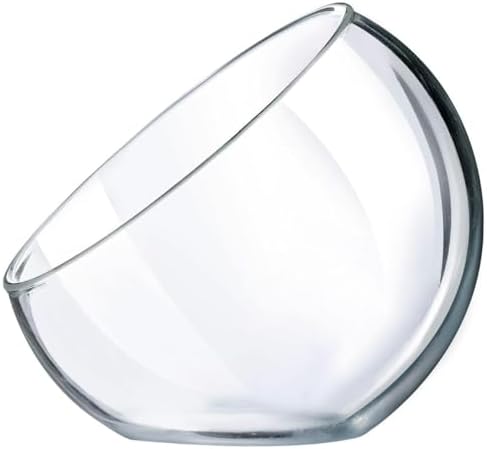
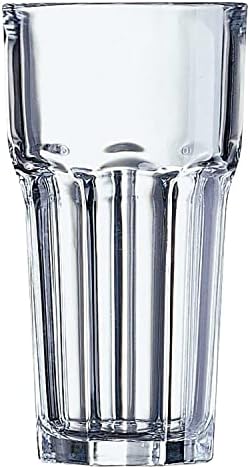
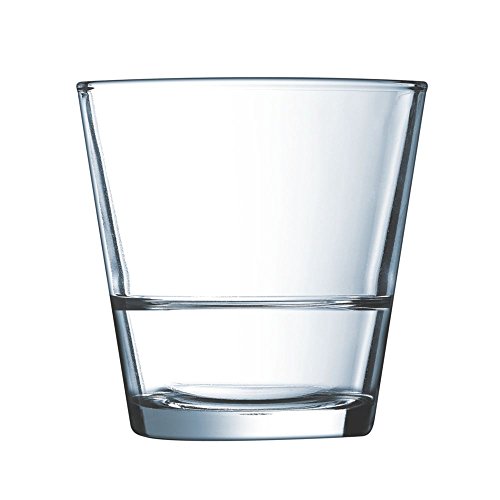


The collections reflect the commercial context. The Domaine range is a banquet and reception staple. The Cabernet stemware is one of the most used restaurant wine glasses in the UK and the US.
The Broadway and Urbane tumbler ranges are stackable for bar storage. These aren’t designed to look attractive on a domestic shelf — they’re designed to survive 200 covers a night and come out of the glasswasher still clear.
Arcoroc also carries TAA, HubZone, and Buy American Act compliance on applicable US-made products — a procurement specification set that doesn’t apply to consumer glassware at all.
Luminarc: designed for home consumers and everyday use since 1948
The Luminarc glassware full review goes into product detail, but the short version: Luminarc is Arc’s volume consumer brand, present in 160 countries and sold through Amazon, supermarkets, and homeware retailers.
Average price across the full product range is around $22.85 per item, with sets starting at $5.49.

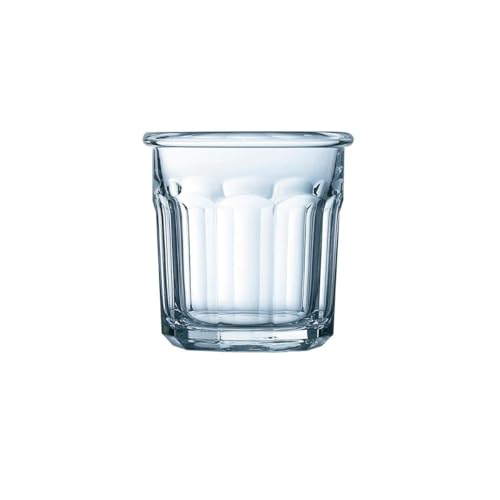

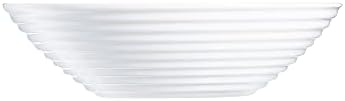


Where Arcoroc leans utilitarian, Luminarc leans decorative. Collections like New Amelia and Quadro are designed to look good on a set table, with patterns, colours, and contemporary shapes.
The Working Glass Cooler — thick-walled, ten-sided, iconic in French kitchens since 1978 — appears in both ranges because it works at home and in a café. The rest of each range diverges sharply by aesthetic intent.
Luminarc also makes bakeware, food storage, and jugs — product categories Arcoroc doesn’t cover because bars and restaurants don’t need them. For a direct product comparison, the Luminarc vs Corelle comparison sets Luminarc against its closest consumer rival.
Related: Duralex vs Luminarc
Durability and material technology: where Arcoroc and Luminarc actually differ
Both brands use tempered glass. But Arcoroc’s professional collections go further with a proprietary material called Kwarx — and that’s a real technical gap between the two lines.
Tempered glass vs Kwarx vs standard glass: what each material means in practice
| Property | Standard glass | Tempered glass | Kwarx (Arcoroc professional) |
|---|---|---|---|
| Impact resistance | Baseline | ~5x stronger than standard | Superior — rated for commercial service |
| Wash cycle rating | Home use only | Commercial capable | 2,000+ industrial cycles rated (IWA 8/AFNOR certified) |
| Clarity retention | Clouds over time | Moderate | Maintained after thousands of washes |
| Rim treatment | Standard edge | Standard edge | Cold-cut sheer rim — thinner, more elegant |
| Lead-free | Varies | Yes (current production) | Yes |
| Available in | Many brands | Luminarc, Arcoroc standard | Arcoroc Cabernet, Mineral, professional collections |
Kwarx is Arc Cardinal’s name for a lead-free crystal-enhanced glass formulation mineral additives to annealed glass that improve shock resistance without the weight of traditional crystal.
The sheer rim is cold-cut rather than fire-polished, giving it a finer edge. EasyEquipment, which supplies Arcoroc to UK venues, cites one client reporting 90% fewer breakages after switching — and Arcoroc’s material documentation references the IWA 8/AFNOR “High Transparency – Purity certified glass” label on qualifying products.
Luminarc uses tempered glass and opal glass for dinnerware. But Kwarx isn’t in the Luminarc range. The top-end Arcoroc Cabernet Kwarx wine glass and a standard Luminarc tumbler are two different tiers of glass technology from the same parent company.
Commercial wash cycle ratings: what 2,000 dishwasher cycles actually means
A home dishwasher runs at 55–65°C. A commercial glasswasher runs hotter, faster, repeated hundreds of times a week. The 2,000-cycle rating on Arcoroc’s Kwarx collections is a commercial washer rating.
A restaurant running 50 covers per night and washing glasses twice per service could hit that number in under two years.
For home use, neither brand’s tempered glass will fail from dishwasher cycles in any realistic timeframe. The rating matters for procurement buyers calculating annual replacement costs — the 2,000-cycle figure tells them directly how many cases they need to budget.
Design and aesthetics: utilitarian professional vs consumer-led styling
Design is the most obvious visible difference between the two lines. Same manufacturer. Very different visual priorities.
Arcoroc design language: stackability, clarity, professional silhouettes
- Stackability is built into most Arcoroc tumblers — the Urbane, Stack Up, and Broadway ranges stack for bar storage, which matters when a venue keeps 200 glasses behind a single counter.
- Clarity over decoration — Arcoroc glassware is almost entirely clear without patterns, because the job is to show the drink, not express a table aesthetic.
- Classic professional silhouettes — the Cabernet wine glass, Domaine water glass, and pub tulip have been in restaurant service for decades without redesigning.
Luminarc design language: patterns, colours, and consumer-facing collections
- Pattern variety is core to Luminarc’s range — New Amelia, Lyrique, and other collections feature printed designs and coloured glass that Arcoroc doesn’t offer.
- Contemporary shapes for the home table — the Quadro square plate range and coloured tumbler sets are designed to photograph well and feel current.
- Storage and serving pieces extend the range — jugs, food containers, and bakeware carry the Luminarc brand; Arcoroc sticks to drinkware and service pieces.
Safety: lead-free, cadmium-free, and microwave/dishwasher compatibility
Current production of both Arcoroc and Luminarc is lead-free and cadmium-free. But there’s a specific caveat for vintage Arcoroc pieces that no competitor article mentions.
Lead and cadmium status for the current production of both brands
Current Arcoroc and Luminarc products meet FDA food contact standards and are manufactured without lead or cadmium as additives.
Luminarc’s production also incorporates 30% recycled scrap glass, and Arc International has publicly committed to 100% environmentally friendly dinnerware by 2050.
Older and vintage Arcoroc pieces are a different matter. Testing documented by Tamara Rubin, a researcher who specialises in lead testing consumer products, found some older Arcoroc glass with lead.
Current FDA standards set the threshold for lead in glass at under 90 ppm for food contact surfaces. Current production Arcoroc falls under that threshold.
Vintage pieces, particularly those marked “ARCOROC USA” from the Millville, New Jersey facility before modern formulation changes, may not.
Current production from either brand bought through normal retail or foodservice channels is clean. Vintage Arcoroc from online marketplaces or second-hand sources is worth testing if you’re concerned.
Microwave, oven, freezer, and dishwasher compatibility by brand
| Feature | Luminarc (glassware) | Luminarc (opal dinnerware) | Arcoroc (standard tempered) | Arcoroc (Kwarx collections) |
|---|---|---|---|---|
| Microwave safe | Yes | Yes | Check the specific product | Check specific product |
| Oven safe | Bakeware line only | Not standard | No — tempered glass, not borosilicate | No |
| Freezer safe | Yes | Yes | Yes | Yes |
| Dishwasher safe | Yes | Yes | Yes — designed for commercial washers | Yes — 2,000 cycle rated |
| Thermal shock resistance | 135°C variation | 135°C variation | 135°C variation | Commercial rated |
Price and where to buy: retail vs foodservice channels
Arcoroc costs more per unit at retail. But retail isn’t its primary channel.
Per-unit pricing, set pricing, and channel comparison for both brands
| Brand | Typical per-unit (consumer sets) | Typical per-unit (commercial/case) | Where to buy | Minimum quantity |
|---|---|---|---|---|
| Luminarc | $5–$18 per piece | N/A — consumer channel | Amazon, supermarkets, homeware retailers | Single item/sets |
| Arcoroc (standard tempered) | $8–$15 per piece (if available retail) | $2–$6 per piece in commercial case pricing | WebstaurantStore, KaTom, GoFoodservice, EasyEquipment (UK) | Usually 12 or 24/case |
| Arcoroc (Kwarx collections) | $12–$22 per piece retail equivalent | $5–$10 per piece commercial case | Same foodservice distributors | 12 or 24/case |
The gap narrows at commercial case quantities. Arcoroc makes financial sense for venues, but looks expensive when you’re trying to buy four wine glasses from Amazon.
Can you buy Arcoroc for home use, and should you?
- You can buy Arcoroc for home use — it’s available through foodservice distributors who sell to the public, and through some retail channels, but you’ll usually need to buy a case of 12 or 24.
- The design is more utilitarian than Luminarc — if you want clear, durable, professional-looking glasses without patterns or colour, Arcoroc works well at home; if you want something decorative, Luminarc is the right line.
- Kwarx Arcoroc is genuinely worth it for wine glasses — the Cabernet Kwarx collection in particular gives you commercial-grade durability with a sheer rim that many home wine enthusiasts prefer over generic stemware.
- For everything else at home, Luminarc is the simpler path — sold in consumer quantities, through consumer channels, at consumer prices.
For the broadest view of options in this category, the best tempered glass dinnerware for home use covers alternatives beyond the Arc International family.
Where Arcoroc and Luminarc are manufactured
Neither brand is exclusively French-made, despite the French heritage. Arc International operates across four countries.
Arc International manufacturing sites: country, facility, and what’s made there
| Site | Country | Facility | Brands produced |
|---|---|---|---|
| Arques, Pas-de-Calais | France | World’s largest glass production plant + R&D headquarters | All five brands, flagship production |
| Millville, New Jersey | USA | Durand Glass Manufacturing Company (DGMC) — operational since 1979 | Arcoroc (US-made, TAA/Buy American compliant lines); some Luminarc |
| China | China | Production subsidiary — operational since 2003 | Primarily Luminarc consumer lines |
| UAE | United Arab Emirates | Production subsidiary — operational since 2004 | Regional distribution focus |
What “made in France” means for Arc brands — and when it applies
“Made in France” means the product was made at the Arques facility, accurate when it appears, but it doesn’t apply to all Arc production. Luminarc products for Asian and Middle Eastern markets are often made in China or the UAE.
Arcoroc products under TAA or Buy American compliance come from the Millville, New Jersey, facility and carry a “made in USA” designation.
“Arc International” or “Arc France” on packaging doesn’t automatically mean the piece was made in Arques. If country of origin matters for procurement compliance or personal preference, check the specific product’s manufacturing declaration rather than the brand heritage.
Frequently asked questions: Arcoroc vs Luminarc
Are Arcoroc and Luminarc made by the same company?
Yes, both are owned by Arc International, a French glassmaker founded in Arques in 1825. Luminarc (1948) is the consumer brand; Arcoroc (1958) is the commercial hospitality brand. Same parent company, different markets.
What is Kwarx glass, and how does it differ from regular tempered glass?
Kwarx is Arc Cardinal’s lead-free crystal-enhanced glass formulation used in Arcoroc’s Cabernet and Mineral professional collections. It delivers a cold-cut sheer rim and clarity rated for 2,000+ commercial dishwasher cycles — performance standard tempered glass, including most of the Luminarc range, isn’t certified to match.
Which is more durable for daily use — Arcoroc or Luminarc?
For home daily use, both are durable, and both use tempered glass; the difference won’t be noticeable in a domestic kitchen. For commercial use with industrial glasswashers running hundreds of cycles weekly, Arcoroc’s Kwarx collections are specifically rated and tested for that environment. Luminarc is not.
Is Luminarc glassware lead-free and safe for everyday food use?
Current Luminarc production is lead-free, cadmium-free, and meets FDA food contact standards. Luminarc’s dinnerware also incorporates 30% recycled glass.
Both current Arcoroc and Luminarc lines are food-safe; the lead concern applies specifically to vintage Arcoroc pieces, where testing has found levels around 256 ppm in older stock.
Can I buy Arcoroc glasses for home use, or is it only for restaurants?
You can buy Arcoroc for home use through foodservice distributors, but it typically comes in cases of 12 or 24. The Cabernet Kwarx wine glass is genuinely worth considering for home use if you want commercial-grade durability. For everything else — dinnerware, varied styles, consumer quantities — Luminarc is the more practical choice.
Is Luminarc microwave safe?
Luminarc glassware and opal glass dinnerware are microwave safe. Luminarc’s bakeware line also handles oven temperatures. Arcoroc’s commercial glassware is not generally designed for microwave use — it’s built for serving, not reheating.
Where are Arcoroc and Luminarc products manufactured?
Arc International has four production sites: the main plant in Arques, France; a US facility (Durand Glass Manufacturing Company) in Millville, New Jersey, operational since 1979; a China site since 2003; and a UAE facility since 2004.
Products marked “made in USA” come from Millville; products carrying a French origin are from Arques. Not all Arc products are French-made — it depends on the specific item and destination market.
What other brands does Arc International make besides Arcoroc and Luminarc?
Arc International has five brands: Luminarc (consumer, 1948), Arcopal (opal glass dinnerware, 1958), Arcoroc (commercial hospitality, 1958), Cristal d’Arques Paris (crystal stemware, 1968), and Chef & Sommelier (fine dining and wine enthusiast glassware, 2008).
Chef & Sommelier sits above Arcoroc; it targets fine dining, not volume foodservice.
About the Author & Reviewer
Sarah Emirone, Author
Sarah researches and writes SafeKitchn’s dinnerware and kitchenware guides, with a focus on material safety, lead content, and manufacturer specifications. She cross-references product data sheets, safety certifications, and regulatory filings (including FDA and Prop 65 records) before publishing, and updates articles when new information becomes available.
James Daniels, Reviewer
James reviews SafeKitchn’s material safety content for scientific accuracy. He holds a B.Sc in inorganic chemistry and works as a materials researcher, with particular focus on the composition and safety behavior of glass, ceramic, and metal used in kitchenware.