

Apilco pasta bowls show up in Parisian bistros, hotel restaurants across Europe, and home kitchens where people want porcelain that holds up to real use.
They’re made in France, priced at $25–$40 per bowl, and marketed with words like “timeless” and “elegant.”
But the more useful thing to know is that every design decision, weight, rim geometry, bowl depth, and glaze chemistry, was made for commercial restaurant service first. That changes what you’re actually buying.
This guide covers what the bowls are made of, how the two main collections differ, what the specs mean in practice, and whether the price holds up.
Written by Sarah Emirone | Reviewed by James Daniels, B.Sc, Inorganic Chemist & Materials Researcher | Updated September 2026 | See How We Test | Filed under: Buying, Care & Product Guides
What Are Apilco Pasta Bowls? The Commercial Porcelain Background
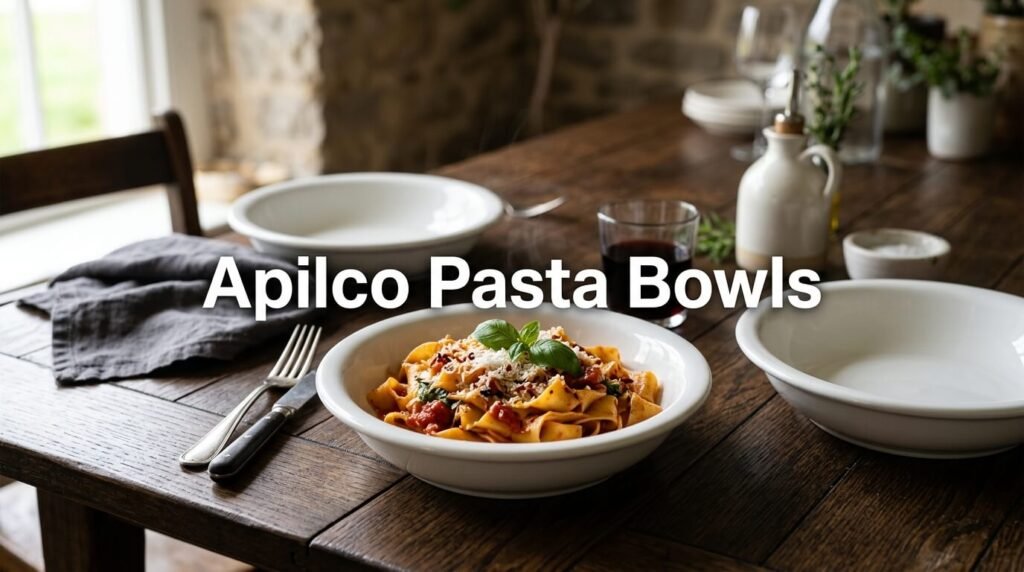
Apilco pasta bowls are hard porcelain, not stoneware, not earthenware, not bone china — fired at 1400°C (2552°F) and manufactured in Chauvigny, France, by the Deshoulières Group.
Every design specification was written for commercial service conditions: hotel kitchens, restaurant pass stations, high-volume environments where dishes are handled and washed dozens of times daily.
For a broader look at what commercial-grade specification means for home buyers, see our guide to commercial-grade porcelain for home kitchens.
Apilco’s Actual Origin Story: The Pillivuyt Connection and the 1935 Acquisition
The Deshoulières family began porcelain manufacturing in 1826. Ferdinand Deshoulières started fine kitchenware production in 1906, which is why some sources give that as Apilco’s founding date, though it’s the Deshoulières start, not the Apilco brand’s origin.
The Apilco trademark was created by Albert Pillivuyt, a descendant of Jean Louis Richard Pillivuyt, who founded the original Pillivuyt factory in 1818.
The Deshoulières family bought the trademark from Albert Pillivuyt in 1935. The Deshoulières Group acquired the full operation in 1980.


Today, the group holds three brands: Deshoulières, Porcelaine de Sologne, and Apilco.
Williams-Sonoma is the largest US retailer. The brand’s professional kitchen supply lineage, not fine dining, explains why the bowls are heavier than home porcelain and why the oven-safe spec exceeds most domestic ratings.
Related: Pillivuyt Bakeware Guide
Hard Porcelain Fired at 1400°C: What That Means for a Pasta Bowl
Firing at 1400°C causes full vitrification — kaolin, clay, feldspar, and quartz fuse into a glassy, non-porous structure. For a pasta bowl, that has specific practical consequences:
- The surface has near-zero porosity, so the bowl does not absorb flavours or odours between uses. Last Tuesday’s bolognese won’t ghost into Saturday’s ramen.
- Apilco’s glaze is free of lead and cadmium and is Prop 65 compliant, which the brand documents explicitly.
- The bowls are heavier than comparable home-use porcelain by deliberate design — the additional construction thickness builds stronger rim and edge impact resistance for commercial environments where incidental impacts happen constantly.
- Rim geometry is engineered for stacking under commercial storage conditions, distributing stacking weight evenly so a column of bowls doesn’t chip at the contact points.
- The hard glaze resists scratching from metal utensils and survives commercial dishwasher cycles, which run at higher temperatures and with stronger detergents than home machines.
- None of this is decorative. It’s commercial specification that happens to translate well into a home kitchen running at a fraction of the tested intensity.
Apilco Pasta Bowl Collections: Tuileries vs Tradition — Specs and Differences
Both the Tuileries and Tradition collections use the same hard porcelain body fired at the same temperature. The differences are in rim profile, silhouette, and range breadth, not in material quality.
Exact Dimensions and Capacity: What You Actually Get
| Collection | Piece | Diameter | Capacity | Oven Safe | Notes |
|---|---|---|---|---|---|
| Tuileries | Pasta / Soup Bowl | 8¾” | 6.5 oz | 570°F | Replacements Ltd data (SOPA8); streamlined silhouette |
| Tradition | Soup / Pasta Bowl | 9″ | 8 oz | 570°F | Williams-Sonoma confirmed; wider rim |
| Tradition | Bouillon Bowl | 5¼” | 13.5 oz | 570°F | 2¾” high; broth-format |
| Tradition | Cereal Bowl | 6½” | 16 oz | 570°F | Deeper well; higher capacity |
The 570°F oven-safe rating is confirmed on the Tradition collection via Williams-Sonoma. That exceeds most home porcelain (typically 450–500°F) because the spec was written for hotel kitchen conditions.
Tuileries vs Tradition: Which Collection Works for What
| Feature | Tuileries | Tradition |
|---|---|---|
| Silhouette | Streamlined, minimal rim, contemporary profile | Wider structured rim, classic restaurant profile |
| Bowl diameter | 8¾” | 9″ |
| Capacity (pasta bowl) | 6.5 oz | 8 oz |
| Design purpose | Contemporary bistro presentation | Classic hotel/restaurant service |
| Available pieces | Pasta bowls, cereal bowls, salad serving bowls, plates | Full dinnerware range including bouillon, mugs, espresso |
| Retail channel | Williams-Sonoma, specialty retailers | Williams-Sonoma, wider retail |
| Best for | Home dinner parties, contemporary settings | Institutional buyers, restaurant replacement stock |
Tuileries has a slightly smaller capacity — 6.5 oz vs 8 oz on the pasta bowl. Tradition’s wider rim gives more room for plating garnishes.
Apilco Pasta Bowl Performance: Oven, Microwave, Dishwasher, and Freezer
Apilco pasta bowls are safe across all four: oven, microwave, dishwasher, and freezer. The ratings exceed typical home porcelain because the specs were built for commercial use; running them at home means operating well within their tested range.
Full Appliance Compatibility Reference
| Appliance | Safe? | Spec | Notes |
|---|---|---|---|
| Oven | ✓ Yes | 570°F (299°C) | Confirmed on Tradition via Williams-Sonoma; standard white pieces |
| Microwave | ✓ Yes | No stated limit | Avoid any metallic-decorated pieces |
| Freezer | ✓ Yes | Freezer safe | Thermal shock resistant; no resting period before oven transfer |
| Dishwasher | ✓ Yes | Commercial grade | Tested under commercial wash conditions; home dishwasher creates less glaze stress |
| Broiler | Unconfirmed | — | Not specified in retailer documentation |
| Direct stovetop | ✗ No | — | Hard porcelain is not designed for direct heat contact |
Why the Bowl Shape Affects Performance — Not Just Presentation
The wide, shallow form of Apilco’s pasta bowl wasn’t designed for aesthetics. It was designed for open dining rooms.
In a restaurant, a bowl sits on a table for several minutes. A narrow, deep bowl loses heat rapidly at the open top. A wide shallow bowl has greater surface area relative to volume — it loses heat more evenly, so pasta at the rim stays warm longer. That’s counterintuitive, but it’s how restaurant porcelain shapes are developed.
The width lets a cook toss sauce through the pasta directly in the bowl at the pass station. A narrow bowl forces pasta into a pile that doesn’t distribute evenly. The rim width creates a defined landing area for tongs, keeping the table clean during service.
The depth-to-width ratio determines sauce behaviour. Too deep relative to the width and sauce pools at the centre, coating only the bottom layer.
Apilco’s ratio keeps the sauce distributed across the full volume as the pasta is served. None of this is visible when you pick up the bowl — but it’s why it performs differently from a home-use bowl of the same diameter.
What Apilco Pasta Bowls Are Actually Good For (Beyond Pasta)
The form and oven rating make these bowls practical beyond pasta:
- Risotto: Shallow depth keeps rice at an even temperature longer than a mug-style bowl, and the wide surface lets steam escape so risotto doesn’t continue cooking in its own heat after plating.
- Ramen: The 8–9″ diameter accommodates full broth volume with noodles and toppings without stacking — a narrow bowl makes ramen difficult to eat.
- Large salads: The wide base lets you toss dressing through greens directly in the bowl — the same sauce-distribution logic that applies to pasta works here.
- Grain bowls and poke bowls: Width fits toppings arranged side by side rather than stacked.
- Individual baked gratins: The 570°F oven rating makes these usable as shallow single-serving baking vessels for gratins or baked eggs.
- Chunky soups and stews: Wider diameter handles large ingredients better than a narrow bowl, where the spoon hits the sides on every stroke.
- Brunch presentations: Shakshuka, eggs Benedict — dishes that need both depth for sauce and width for components.
Pasta Bowl vs Soup Bowl: When the Shape Matters and When It Doesn’t
| Dimension | Pasta Bowl | Soup Bowl |
|---|---|---|
| Diameter | 8¾”–9″ | Typically 7–8″ |
| Depth | Shallow (wide-to-deep ratio ~3:1) | Deeper (narrower opening) |
| Liquid containment | Moderate — not for broth-heavy dishes | Better — narrower opening |
| Sauce distribution | Excellent — width allows tossing, even coating | Limited — pools in narrow base |
| Heat retention | Better — even loss across a wide surface | Variable — faster at narrow opening |
| Stackability | High — commercial rim geometry | Standard |
| Best for | Pasta, grain bowls, risotto, baked dishes | Broth soups, bisques |
If the dish has more solids than liquid, the pasta bowl works better. If it’s primarily broth, use a soup bowl.
How to Care for Apilco Porcelain Bowls Without Accelerating Wear
- Dishwasher cycling is fine — glaze tested under commercial conditions means home dishwasher heat and detergent are well within tolerance.
- Avoid stacking with non-porcelain items — rougher stoneware or earthenware bases can abrade the bottom glaze over time.
- Don’t use abrasive scourers on the interior — the hard glaze resists metal utensils, but repeated abrasive pad contact dulls the finish over the years.
- Check rims periodically — a chip exposing the unglazed body beneath can harbour bacteria with extended use.
- Hand-wash decorated versions — Tres Grande (blue band) and Beaded Hemstitch patterns are finished over the white base; dishwasher cycling shortens their pattern life.
Apilco vs Pillivuyt Pasta Bowls: The Real Differences
For the full brand comparison across all product categories, see our deep-dive on Pillivuyt vs Apilco: which French porcelain is better.
The comparison is often framed as two competing French porcelain brands. That framing misses the point.
Pillivuyt’s real strength is bakeware — gratin dishes, soufflé molds, ramekins — where its multi-step firing and lighter construction give it an edge for oven-to-table cooking.
Apilco’s strength is dinnerware built to commercial durability standards, where heavier construction and chip-resistant rim geometry matter more than visual refinement. For pasta bowls specifically, the question is: commercial construction or refined construction?
Side-by-Side: Apilco vs Pillivuyt for Pasta Bowls Specifically
| Feature | Apilco | Pillivuyt |
|---|---|---|
| Design purpose | Commercial restaurant/hotel dinnerware | Fine home tableware and bakeware |
| Construction weight | Heavier — commercial handling spec | Lighter — home use aesthetic |
| Chip resistance | Higher — rim built for commercial impact | Good for home use |
| Oven rating | 570°F (Tradition) | 550°F (standard pieces) |
| Firing approach | High-fire hard porcelain, 1400°C | Multi-step firing, second stage at 2552°F |
| Commercial stackability | Engineered for high-density stacking | Standard stacking |
| Aesthetic | Clean, professional, bistro | Refined, classic French |
| Price range (pasta bowl) | $25–$40 per bowl | $35–$55 per bowl |
| Best for | Durability-first home cooks; hospitality buyers | Visual refinement; bakeware performance |
Is Apilco Worth the Price? The Honest Calculation
If $25–$40 per pasta bowl feels high, here’s the actual comparison.
Apilco sits below Pillivuyt but above standard home porcelain, and the case for the price is the same one restaurants make: fewer replacements over time, consistent performance under harder conditions than you’ll ever create at home.
If you’re running these bowls in a home kitchen, you’re using them at a fraction of their tested capacity. A commercial dishwasher runs hotter with stronger chemicals.
A restaurant handles each piece dozens of times per day; you’ll handle it a few times per week. The commercial spec doesn’t mean you’re buying more than you need — it means the bowl won’t show its age the way a home-spec porcelain piece would.
Using pasta bowls for home use is where Apilco sits relative to alternatives across the full price range.
Buy Apilco pasta bowls if:
- You cook pasta, risotto, or grain bowls regularly and want a bowl built to last through heavy use.
- You want a one-bowl format that handles everyday meals and dinner party presentation without switching pieces.
- You’re buying for a small restaurant or café and want restaurant-spec stock through mainstream retail.
- You’re buying a gift — these are the kind of bowls someone keeps for twenty years.
Don’t buy them if:
- You primarily serve broth-heavy soups, where a narrower, deeper bowl contains liquid better.
- You want decorative colour — the coloured versions used in French cafés are largely trade-only.
- Budget is the primary constraint; solid home porcelain at $10–$15 per bowl serves fine if you’re not running them hard.
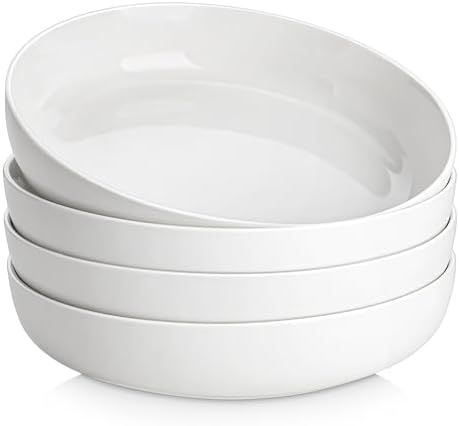
The Tuileries collection is available at Williams-Sonoma in sets of four. Our French porcelain pasta bowl comparison guide covers Apilco alongside Pillivuyt, Revol, and Bernardaud.
Frequently Asked Questions About Apilco Pasta Bowls
Are Apilco pasta bowls dishwasher safe?
Yes, all standard white pieces from both Tuileries and Tradition are dishwasher safe. The glaze was tested under commercial wash conditions (higher temperature, stronger detergent than a home machine), so home cycling creates less stress on the finish, not more.
Hand-wash the Tres Grande (blue band) and Beaded Hemstitch decorative versions to protect the pattern finish.
What is the capacity of an Apilco pasta bowl?
The Tuileries pasta bowl holds 6.5 oz at 8¾” diameter (Replacements Ltd data). The Tradition soup/pasta bowl holds 8 oz at 9″ diameter (Williams-Sonoma confirmed specs).
Both are shallower than a standard soup bowl — designed for pasta and solid-dominant dishes, not broth-heavy soups.
Where are Apilco pasta bowls made?
In France, at the Deshoulières Group’s factory in Chauvigny, in the Vienne region, approximately 23km from Poitiers. All plain white pieces are made in France; the brand does not offshore production for its core white range.
Are Apilco pasta bowls oven safe?
Yes. The Tradition collection is oven safe to 570°F (299°C), confirmed through Williams-Sonoma product specs — higher than most home porcelain (typically 450–500°F) because the spec was written for hotel kitchen use.
The Tuileries collection uses the same porcelain body; verify current oven ratings with the retailer for specific pieces before baking.
What is the difference between Apilco Tuileries and Tradition?
Same hard porcelain body, same firing temperature. Tuileries has a streamlined, minimal rim and 6.5 oz pasta bowl capacity; Tradition has a wider, structured rim and 8 oz capacity.
Tradition offers a fuller range, including bouillon bowls, mugs, and espresso cups; Tuileries covers the core table pieces.
Can you use Apilco pasta bowls for soup?
Yes, for chunky soups and stews, the wide diameter handles large ingredients better than a narrow bowl. For broth-heavy soups like bisque or consommé, a deeper narrow soup bowl contains liquid better; the pasta bowl is designed for dishes with more solid than liquid content.
How does Apilco compare to Pillivuyt for pasta bowls?
Apilco is heavier, built to commercial specs, and priced lower ($25–$40 vs $35–$55). Pillivuyt is lighter, more refined aesthetically, and the stronger choice for bakeware. For pasta bowls: Apilco wins on durability and price; Pillivuyt wins on visual refinement.
Are Apilco pasta bowls microwave safe?
Yes. All standard white Apilco pieces are microwave safe. Avoid any pieces with metallic decoration in the microwave — standard microwave caution that applies to all porcelain, not an Apilco-specific limitation.
Why are Apilco pasta bowls so expensive?
The price reflects commercial-grade construction: heavier porcelain, engineered rim geometry for stacking and impact resistance, glaze tested under commercial dishwasher conditions, and a 570°F oven rating built for hotel kitchens.
In a home kitchen, you’re running that spec at a fraction of its tested intensity, which is why the bowls last.
How do I know if my Apilco bowl is genuine?
Genuine pieces are marked on the base with an impressed or printed Apilco logo that includes “Porcelain France” or similar provenance text. Pieces bought through Williams-Sonoma or Replacements Ltd are authentic.
For secondhand purchases, check the base mark — Apilco has used consistent marking through its modern production period.
About the Author & Reviewer
Sarah Emirone, Author
Sarah researches and writes SafeKitchn’s dinnerware and kitchenware guides, with a focus on material safety, lead content, and manufacturer specifications. She cross-references product data sheets, safety certifications, and regulatory filings (including FDA and Prop 65 records) before publishing, and updates articles when new information becomes available.
James Daniels, Reviewer
James reviews SafeKitchn’s material safety content for scientific accuracy. He holds a B.Sc in inorganic chemistry and works as a materials researcher, with particular focus on the composition and safety behavior of glass, ceramic, and metal used in kitchenware.