

More people are reading the fine print on their kitchen products than ever before, and for good reason.
Questions about toxic substances in everyday tableware have moved from niche health forums into mainstream conversation. One question that comes up regularly is: Does Pfaltzgraff dinnerware contain lead?
It’s a fair thing to ask. Pfaltzgraff is one of America’s most recognised stoneware brands, found in millions of homes across the country.
And because ceramic dishes involve glazes, firing processes, and pigments, the lead question isn’t unreasonable. The answer depends largely on when the piece was made, and that distinction matters more than most people realise.
Written by Sarah Emirone | Reviewed by James Daniels, B.Sc, Inorganic Chemist & Materials Researcher | Updated September 2026 | See How We Test | Filed under: Material Safety & Lead Testing
What Is Pfaltzgraff Dinnerware?
History of the Pfaltzgraff Brand
Pfaltzgraff is one of the oldest pottery companies in the United States, with roots stretching back to 1811 in York, Pennsylvania. What began as a small regional pottery operation grew steadily into a nationally recognised dinnerware brand.
By the mid-20th century, Pfaltzgraff had become a fixture in American homes, known particularly for its casual, earthy stoneware designs.
The brand’s longevity and heritage are part of its appeal, but that same long history means its manufacturing practices have evolved considerably over the decades, especially regarding glaze composition and food safety standards.
What Materials Are Used in Pfaltzgraff Dinnerware?
Most Pfaltzgraff products are made from stoneware — a dense, durable ceramic material fired at high temperatures.
Stoneware clay produces dishes that are heavier and more chip-resistant than earthenware, and the high firing temperature creates a naturally hard, non-porous body.
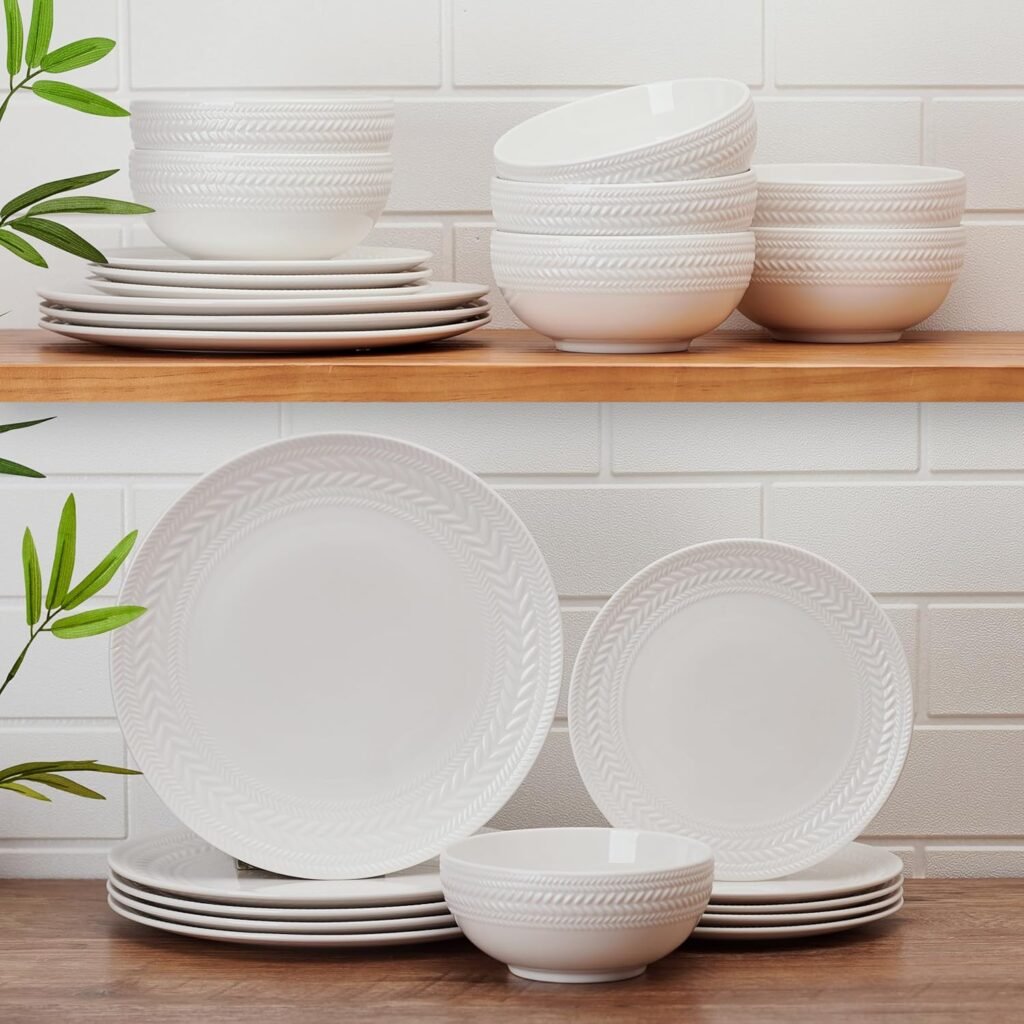
The outer surface is finished with a ceramic glaze that seals the clay, provides colour and texture, and protects the dish during everyday use.
Glaze composition is where lead concerns historically originated in ceramic dinnerware; lead compounds were once used to create smooth, glossy surfaces before safer alternatives became standard.
Types of Pfaltzgraff Products
Pfaltzgraff produces a wide range of everyday and casual dining products.
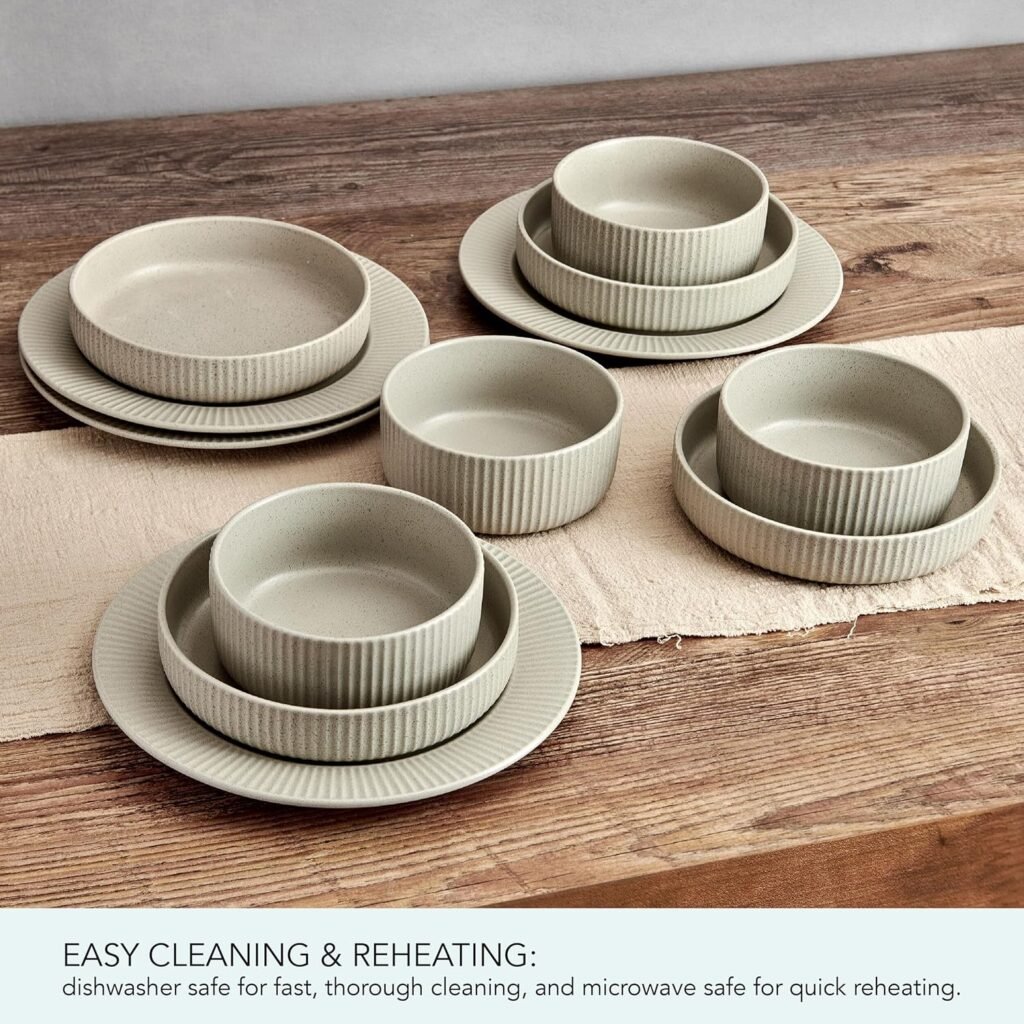
Their core range includes dinner plates, salad plates, soup bowls, cereal bowls, and mug sets, typically sold as coordinated dinnerware sets.
They also produce serving dishes, bakeware, and accessories designed to complement their main collections.
Popular patterns like Yorktowne, Village, and Pistoulet have been in production across multiple decades, which is why some households own a mix of vintage and modern pieces from the same pattern family, a combination that can create unintended safety inconsistencies.
Why Material Composition Matters for Food Safety
For ceramic dinnerware, the glaze is the part that contacts your food. If the glaze contains heavy metals — particularly lead or cadmium — those compounds can migrate into food or drink under certain conditions, including acidic foods, high heat, and surface damage.
This is what makes glaze composition the central food contact safety concern for stoneware and ceramic products. Modern manufacturers use extensively tested, FDA-compliant glaze formulations that avoid these risks.
But understanding whether a specific piece meets current standards requires knowing when and how it was made.
Does Pfaltzgraff Dinnerware Actually Contain Lead?
Modern Pfaltzgraff dinnerware is manufactured to comply with current FDA food safety regulations, which set strict limits on lead leaching from ceramic surfaces.
The company has publicly stated that its current products meet applicable food-safe standards. For pieces purchased new from reputable retailers today, lead content in the glaze is not a practical concern under normal use.
The situation is more complicated for vintage or older Pfaltzgraff collections, where older glaze formulations may have been used before tighter regulatory standards were in place.
Why Lead Was Historically Used in Ceramics
Lead was widely used in ceramic glazes for centuries because it worked exceptionally well. Lead oxide lowered the melting temperature of glaze, made surfaces smoother and glossier, enhanced colour vibrancy, and improved the overall durability of the finished coating.
For manufacturers, it was a practical and cost-effective material. The health implications of lead leaching into food weren’t fully understood or regulated until the latter half of the 20th century, which means many older ceramic products, including vintage dinnerware from respected brands, were produced with glaze formulations that wouldn’t pass today’s standards.
Are Modern Pfaltzgraff Dishes Lead-Free?
Contemporary Pfaltzgraff stoneware dinnerware is produced using glaze formulations that comply with FDA regulations governing lead content in food-contact ceramics.
These regulations set maximum allowable limits for lead leaching, not just lead presence, meaning the finished product is tested for what actually migrates into food under simulated use conditions.
While “lead-free” as an absolute claim requires direct manufacturer confirmation per product line, modern Pfaltzgraff dishes are designed and tested as food-safe ceramics for everyday household use, including contact with hot foods and common acidic items like tomato-based sauces.
Can Older or Vintage Pfaltzgraff Dishes Contain Lead?
This is where genuine caution is warranted. Pfaltzgraff pieces produced before the 1990s, when US regulations around lead in ceramics were tightened significantly, may have been made with glaze compositions that included lead compounds.
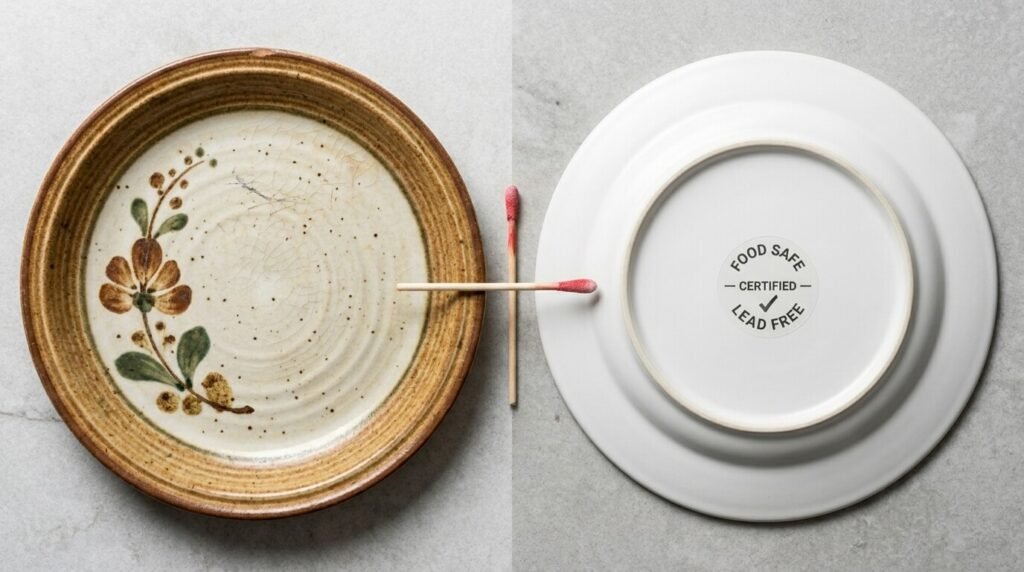
Decorative finishes and hand-painted details on older pieces are particularly worth scrutinising, since pigments used in decorative ceramics historically contained both lead and cadmium.
Vintage dinnerware from any brand, including Pfaltzgraff, should be treated with more caution than modern production pieces, especially for regular daily food use.
Why Are People Concerned About Lead in Dinnerware?
What Is Lead and Why Is It Harmful?
Lead is a naturally occurring heavy metal that has no safe level of exposure for humans, according to public health authorities, including the WHO and the CDC.
Its toxicity affects multiple organ systems, with the neurological system being particularly vulnerable — especially in children and developing foetuses.
Lead poisoning from chronic low-level exposure can cause developmental delays, learning difficulties, and behavioural problems in children, and cardiovascular and kidney issues in adults.
The cumulative nature of lead exposure — it builds up in the body over time — makes even small regular doses from everyday sources like dinnerware a legitimate health concern.
How Lead Can Leach Into Food
Lead leaching from ceramic dishes doesn’t happen uniformly — specific conditions accelerate it. Acidic foods and drinks are the biggest trigger: tomatoes, citrus, vinegar-based dressings, and wine all draw lead from susceptible glazes more readily than neutral or alkaline foods.
Heat compounds this effect — storing acidic food in a lead-containing ceramic vessel, or microwaving acidic dishes in compromised ceramics, increases migration.
Damaged glazes — cracked, chipped, or heavily scratched surfaces — also leach more readily because the protective glaze layer is no longer intact and the underlying ceramic body is exposed.
Which Types of Dinnerware Are Most Associated With Lead?
Vintage ceramics produced before modern regulations are the highest-risk category, regardless of brand. Imported pottery from regions without stringent manufacturing oversight is another concern, not because all imported dinnerware is unsafe, but because regulatory enforcement varies significantly by country.
Hand-painted dinnerware deserves specific attention: decorative paint applied over glaze and fired at lower temperatures has historically been a common source of lead and cadmium in ceramic products.
Bright colours — particularly reds, oranges, and yellows — were most commonly associated with lead and cadmium pigments in older manufacturing eras.
Is Pfaltzgraff Dinnerware Safe for Everyday Use?
FDA and Food-Safe Compliance Standards
The FDA sets specific action levels for lead leaching from ceramic dinnerware, measured in micrograms of lead per millilitre under standardised test conditions.
These limits vary by product type: flatware, like dinner plates, has different thresholds than cups, mugs, and pitchers. Modern Pfaltzgraff products are manufactured to meet these FDA compliance thresholds.
The standards don’t require zero lead in the material itself; they regulate how much migrates into food during use, which is the practical measure of consumer safety for food-contact ceramics.
Microwave and Dishwasher Safety
Contemporary Pfaltzgraff stoneware is generally microwave-safe and dishwasher-safe, and both claims are reflected in product specifications.
Microwave-safe stoneware handles normal heating without cracking or releasing compounds into food. Dishwasher safety means the glaze maintains its integrity through repeated washing cycles without significant surface degradation.
Both properties are relevant to long-term food safety — a glaze that deteriorates rapidly in the dishwasher creates surface conditions that can increase leaching risk over time, even in products that tested safely when new.
Can Scratched or Chipped Dishes Become Unsafe?
Yes — surface integrity matters for ceramic food safety. A chip or crack in the glaze exposes the underlying clay body, which is more porous and potentially more reactive than the sealed glaze surface.
For modern Pfaltzgraff stoneware, where the glaze itself is food-safe, chipping is primarily a hygiene concern — bacteria can accumulate in crevices.
For older pieces where glaze composition is less certain, physical damage raises the stakes further. The general guidance from food safety experts is consistent: chipped or heavily scratched ceramic dishes should be retired from food use.
Is Modern Pfaltzgraff Safe for Families and Children?
For modern Pfaltzgraff stoneware dinnerware purchased from reputable retailers, everyday family use, including use by children, is supported by the product’s FDA-compliant food safety credentials.
The combination of durable stoneware construction, compliant glaze composition, and microwave and dishwasher compatibility makes the current Pfaltzgraff collections a practical choice for household dining.
The caution applies specifically to vintage pieces, visibly damaged dishes, or pieces from unknown production eras, not to modern production stoneware used as intended.
How to Identify Potential Lead Risks in Pfaltzgraff Dishes
Identifying Vintage vs Modern Pfaltzgraff
Dating a Pfaltzgraff piece helps assess its likely safety profile. Check the bottom of the dish for maker’s marks, date codes, or pattern names. Pfaltzgraff has used various marking systems over the decades.
Pattern names like Yorktowne and Village have been produced across multiple eras — pieces from the 1970s and 1980s are vintage dinnerware by today’s standards, while the same pattern reissued in recent years carries modern manufacturing standards.
If the base marking is unclear, Pfaltzgraff’s customer service or collector reference guides can help date a piece.
Warning Signs of Unsafe Dinnerware
Several visual indicators suggest a ceramic dish may warrant extra caution. Worn or faded decorative paint, especially on older pieces with bright colours, suggests degraded surface coatings that may have used lead or cadmium pigments.
Crazing, the fine network of cracks that develops in aged ceramic glaze, isn’t automatically a safety issue but indicates glaze deterioration that increases surface exposure.
Chips, deep scratches, and areas where the glaze has flaked away are clear signals that the protective surface is compromised and the piece should be assessed carefully before continued food use.
Can You Test Pfaltzgraff Dishes for Lead at Home?
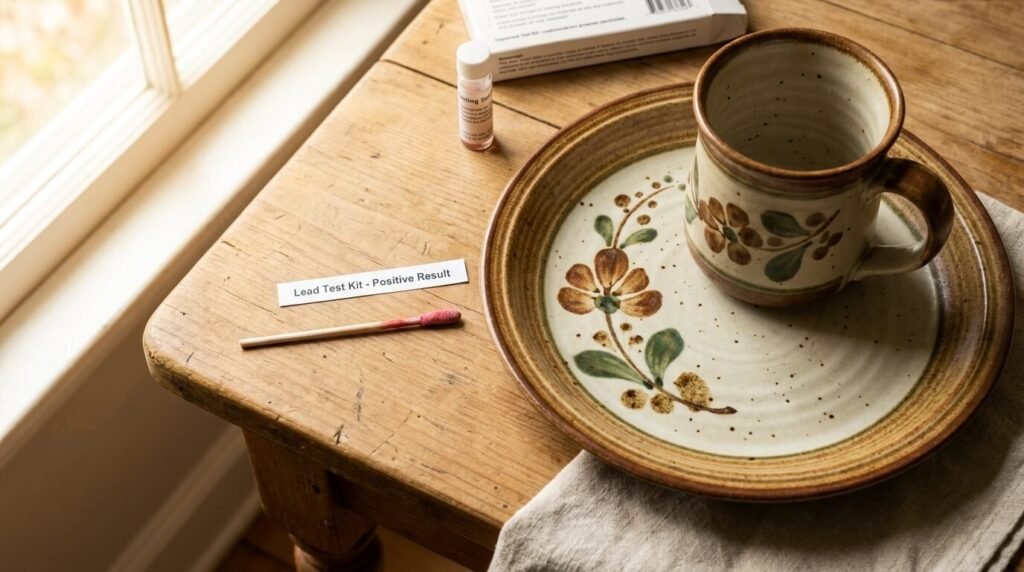
Consumer lead test kits for dinnerware are available at hardware stores and online. They use a chemical swab that changes colour in the presence of lead on surfaces.
These kits can detect surface lead but have real limitations: they don’t measure leaching levels or indicate how much lead might migrate into food.
A positive result is informative; a negative result isn’t a guarantee of safety. For older or valuable pieces where certainty matters, professional laboratory testing using XRF testing or leach testing methods provides far more reliable and actionable results than consumer kits.
Understanding Manufacturer Labels and Safety Claims
Product labelling on modern Pfaltzgraff dinnerware typically states microwave-safe, dishwasher-safe, and oven-safe where applicable.
Food-safe compliance isn’t always explicitly stated on the dish itself, but is communicated through FDA compliance at the manufacturing level.
If you’re purchasing vintage Pfaltzgraff from a secondhand source, don’t rely on labels alone; original packaging may not accompany older pieces, and labelling standards have changed significantly.
Cross-referencing purchase sources with collector communities or directly contacting Pfaltzgraff for pattern-specific safety information is a practical approach.
Pfaltzgraff vs Other Dinnerware Brands
Pfaltzgraff vs Corelle
Corelle dishes are made from Vitrelle glass, a laminated tempered glass material rather than ceramic or stoneware.
Glass doesn’t involve lead-containing glazes in its production, making the lead concern structurally different from ceramic dinnerware.
Both modern Pfaltzgraff stoneware and Corelle are considered food-safe for everyday use, but the material difference means Corelle sidesteps the glaze-composition question entirely.
For consumers specifically concerned about lead in ceramic glazes, glass-based dinnerware like Corelle offers a straightforward alternative.
Pfaltzgraff vs FiestaWare
FiestaWare has its own notable lead history. Vintage Fiestaware produced between 1936 and 1972 used uranium oxide in some glazes and lead-containing formulations in its famously bright colours.
Modern Fiesta, produced by Homer Laughlin China, has reformulated its glazes to meet current lead-free dinnerware standards.
The comparison with Pfaltzgraff is instructive: both brands have vintage lines that carry higher scrutiny and modern lines that comply with current safety regulations.
Neither brand’s current production is considered a lead risk under normal use conditions.
Pfaltzgraff vs Stoneware Alternatives
Comparing Pfaltzgraff to other stoneware brands like Le Creuset, Denby, or Heath Ceramics reveals that the safety question is less about the brand and more about the glaze formulation and manufacturing standards applied.
Premium stoneware brands generally use rigorously tested, compliant glazes. The key differentiator between stoneware options is less about lead risk in modern products and more about durability, chip resistance, design range, and price point factors, where Pfaltzgraff competes effectively as an accessible, everyday stoneware option.
Ceramic vs Glass Dinnerware Safety
The core safety distinction between ceramic and glass dinnerware is the glaze. Glass dinnerware doesn’t require a separate glaze coating the way ceramic does; the surface itself is the material. This eliminates the glaze-composition variable.
Ceramic and stoneware dishes depend on their glaze for food-contact safety, making glaze formulation the critical factor.
Both material types can be safe for everyday use; the question is whether the specific product’s glaze meets current food contact safety standards, which modern products from reputable brands are manufactured to do.
Which Dinnerware Materials Are Considered Safest?
For consumers prioritising minimal chemical risk, glass-based dinnerware, including tempered glass and borosilicate glass, is generally considered the lowest-risk material category because it involves no glaze and no plastic components.
Stainless steel is similarly low-risk for the same reason. Among ceramic options, modern stoneware and porcelain from manufacturers with documented FDA compliance represent the safest choices.
The material alone doesn’t guarantee safety; manufacturing standards and glaze composition are what actually determine whether a ceramic dish is food-safe for long-term daily use.
Lead in Vintage and Antique Dinnerware
Why Older Dinnerware May Contain Lead
Before the 1970s and 1980s, the use of lead compounds in ceramic glazes was common across the industry, including in American-made products.
Regulatory frameworks tightening lead limits in ceramics weren’t fully in place until the late 1980s and 1990s in the US, and even later in some international markets.
This means that vintage dinnerware produced before these regulations — regardless of brand — may have been manufactured with glaze formulations that contained lead levels that would fail today’s standards. The older the piece, the greater the uncertainty.
Decorative Glazes and Hand-Painted Designs
Decorative elements on older ceramic dinnerware are frequently the highest-risk component.
Hand-painted designs applied over the base glaze and fired at lower temperatures than the primary glaze often used pigments containing lead or cadmium, particularly for reds, oranges, and yellows.
These overglaze decorations are less thoroughly sealed into the ceramic surface than the base glaze, making them more susceptible to wear and leaching.
Decorative ceramics intended primarily as display pieces were sometimes produced with less stringent food-safety standards than everyday tableware.
Are Collectible Pfaltzgraff Pieces Safe to Eat From?
Collectible and vintage Pfaltzgraff pieces are a known quantity in collector communities, but food safety is a separate question from collectibility.
A piece that’s desirable and valuable as a collectible may still carry lead risk if it’s from a pre-regulation era with decorative glazes.
Using antique pottery regularly for food service, particularly with acidic foods or heat exposure, isn’t recommended without testing.
Display use carries no food-contact risk; it’s the regular eating-and-drinking use that creates ongoing exposure potential.
Should Vintage Dinnerware Be Used or Displayed Only?
The practical guidance for vintage Pfaltzgraff and other vintage dinnerware is to display rather than use for food service unless you’ve had pieces tested and confirmed safe.
This doesn’t mean all vintage pieces are dangerous; it means the uncertainty is real enough to warrant caution.
For pieces with sentimental or decorative value that you want to keep, displaying them in a cabinet rather than using them daily is a sensible and cost-effective risk-reduction strategy that doesn’t require you to part with the collection.
How Dinnerware Safety Standards Work
FDA Lead Regulations for Ceramics
The FDA regulates lead in ceramic dinnerware through action levels maximum allowable amounts of lead that can leach from a dish surface into a 4% acetic acid solution (simulating acidic food) under standardised test conditions.
The limits differ by product type: flatware, cups and mugs, pitchers, and small hollowware all have different thresholds.
Products exceeding these limits cannot be legally sold for food use in the US. These FDA compliance standards have been progressively tightened since the late 1980s, which is the regulatory inflection point for assessing vintage versus modern dinnerware safety.
California Prop 65 and Dinnerware
California Proposition 65 requires businesses to warn consumers before knowingly exposing them to chemicals listed as causing cancer or reproductive harm — including lead and cadmium.
A Proposition 65 warning on dinnerware doesn’t necessarily mean a product is unsafe at federal standards; it means California’s exposure thresholds, which are more stringent than FDA action levels, may be exceeded.
Consumers in California or purchasing from California-based retailers may encounter Prop 65 warnings on ceramic products that otherwise meet FDA requirements nationally.
International Food-Contact Standards
Beyond FDA regulations, dinnerware sold in international markets must comply with the standards of those markets — the EU’s EN 1388 standard, for example, governs lead and cadmium release from ceramic articles in Europe.
International standards often differ in their specific limits and testing methodologies.
For consumers, what matters practically is whether a product sold in their market was manufactured to comply with that market’s applicable regulations, which reputable brands selling through legitimate retail channels are required to do.
How Manufacturers Test for Lead Leaching
Lead leaching is assessed through leach testing — immersing the ceramic dish in an acidic test solution under controlled conditions and then measuring the lead concentration in the solution.
Laboratory testing using certified facilities provides the most reliable results. Manufacturers may conduct this testing in-house or through third-party labs as part of their quality assurance processes.
XRF testing — X-ray fluorescence — is another method used to detect heavy metals in materials non-destructively, though it measures presence rather than leaching rate, making it a screening tool rather than a definitive food-safety assessment.
Benefits of Modern Pfaltzgraff Dinnerware
Durable Stoneware Construction
Pfaltzgraff’s stoneware construction gives its dishes genuine durability for everyday use. High-temperature kiln firing produces a dense, chip-resistant ceramic body that handles the demands of regular household dining.
The durable dinnerware design means pieces hold up well to stacking, dishwasher cycles, and the general wear of daily family use, a practical advantage over thinner porcelain or earthenware alternatives in the same price bracket.
Decorative and Traditional Designs
Pfaltzgraff’s design heritage, earth tones, folk-art motifs, and farmhouse-style aesthetics have maintained consistent popularity across generations. The rustic dinnerware look suits casual dining environments and traditional table settings.
With patterns spanning from classic neutral stoneware to more decorative designs, Pfaltzgraff offers a range that accommodates different style preferences while maintaining the brand’s characteristic warm, approachable aesthetic.
Heat Retention and Everyday Functionality
Stoneware’s thermal mass means Pfaltzgraff dishes retain heat longer than thinner ceramic or glass alternatives, a practical benefit for serving hot meals.
The oven-safe construction of most Pfaltzgraff stoneware also allows dishes to move from oven to table, reducing the need for separate serving pieces.
These functional characteristics, combined with microwave-safe and dishwasher-safe ratings, make modern Pfaltzgraff a genuinely versatile everyday dinnerware choice.
Wide Variety of Collections and Styles
Pfaltzgraff has produced a broad range of dinnerware collections over its history, with patterns suited to different aesthetics and budgets.
This variety means consumers can find both complete dinnerware sets and individual replacement pieces across many patterns.
The brand’s long production history also supports an active secondary market for collectors seeking to complete vintage sets, though, as discussed, vintage pieces warrant more careful assessment than modern production items.
Common Myths About Lead in Dinnerware
“All Ceramic Dishes Contain Lead”
This isn’t accurate. Modern ceramic dinnerware from reputable manufacturers is formulated and tested to comply with FDA food safety standards that strictly limit lead leaching.
Lead was widely used historically, but current ceramic manufacturing uses alternative glaze formulations that achieve similar surface properties without lead compounds.
The concern is legitimate for vintage ceramics, not a blanket characteristic of all ceramic dishes regardless of age and origin.
“Modern Dinnerware Is Completely Chemical-Free”
Not quite. “Chemical-free” isn’t a meaningful category, as ceramics are made from chemical compounds by definition.
What modern food-safe dinnerware offers is compliance with regulations that limit harmful chemical migration into food to levels considered safe for long-term human exposure.
That’s meaningfully different from being free of all chemical content, and understanding that distinction helps consumers evaluate safety claims more accurately.
“Lead Is Only Found in Imported Products”
Lead in dinnerware has no geographic loyalty; it was used in ceramic manufacturing across the US, Europe, and beyond for centuries.
American-made vintage dinnerware, including early Pfaltzgraff, can contain lead just as imported pottery can.
While some imported pottery from regions with less regulatory oversight warrants extra scrutiny today, assuming domestic origin automatically means safety isn’t supported by the historical record of how lead was used in ceramics globally.
“If a Dish Looks Fine, It Must Be Safe”
Visual inspection tells you very little about lead content. A dish with lead in its glaze can look perfectly smooth, intact, and pristine. Conversely, a dish with surface crazing may be entirely lead-free.
The chemistry of glaze composition isn’t visible to the naked eye. For vintage dinnerware, appearance is not a reliable safety indicator. Laboratory testing or XRF analysis is the only reliable way to determine whether lead is present at meaningful levels in a ceramic dish.
Conclusion
So, does Pfaltzgraff dinnerware contain lead? For modern Pfaltzgraff stoneware, the answer is reassuring: current production meets FDA food safety standards and is designed for safe everyday use.
The concern is real but targeted: vintage pieces, particularly those produced before the 1990s or featuring decorative glazes, carry genuine uncertainty that warrants caution.
Knowing which category your dishes fall into is the most practical first step toward making an informed decision about using them.
Key Takeaways
Check the manufacturing era of your Pfaltzgraff pieces before assuming they share the same safety profile. Inspect glaze condition regularly — chips, cracks, and crazing are signals to act on.
Avoid using heavily worn or vintage pieces with decorative paint for regular food service, particularly with acidic foods or heat. Modern Pfaltzgraff, purchased from reputable retailers and used as directed, is a safe everyday dinnerware option for families.
Final Recommendation
Purchase Pfaltzgraff from reputable retailers and keep the original packaging where possible for product specification reference. Follow the manufacturer’s care instructions to maintain glaze integrity over time.
If you own vintage pieces and want confidence about their safety, invest in proper laboratory testing rather than relying on visual inspection or consumer kits alone.
And when in doubt about an older piece, display it rather than eat from it. It’s a simple, sensible way to enjoy the collection without the risk.
About the Author & Reviewer
Sarah Emirone, Author
Sarah researches and writes SafeKitchn’s dinnerware and kitchenware guides, with a focus on material safety, lead content, and manufacturer specifications. She cross-references product data sheets, safety certifications, and regulatory filings (including FDA and Prop 65 records) before publishing, and updates articles when new information becomes available.
James Daniels, Reviewer
James reviews SafeKitchn’s material safety content for scientific accuracy. He holds a B.Sc in inorganic chemistry and works as a materials researcher, with particular focus on the composition and safety behavior of glass, ceramic, and metal used in kitchenware.