

Tempered opal glass is a milky-white glass used in dinnerware and bakeware, made by adding opacifying compounds to molten glass and then heat-treating it for strength.
That’s the quick answer. The longer answer, the one most product pages skip, is that “tempered opal glass” isn’t one fixed material with one set of rules.
Strength, oven safety, and even how it breaks all shift depending on who made it and how thick it is.
If you’ve seen the term on a dinnerware set and want to know what you’re actually buying, this covers the composition, the safety questions people actually search for, and where the material beats or loses to porcelain, ceramic, and Vitrelle.
Written by Sarah Emirone | Reviewed by James Daniels, B.Sc, Inorganic Chemist & Materials Researcher | Updated September 2026 | See How We Test | Filed under: Buying, Care & Product Guides
What Is Tempered Opal Glass, Exactly?
Tempered opal glass is regular glass — silica, soda ash, and limestone — with opacifying agents added during melting, then strengthened through a heat-and-cool process called tempering.
The opacifiers are what make it white instead of clear. The tempering is what makes it hold up to daily use. Both steps have to happen for the material to earn the name.
What Opal Glass Is Made Of
Opal glass is a single-body glass made opaque by fluoride or phosphate compounds — commonly aluminum fluoride — introduced during the melt.
As the molten glass cools, these compounds form tiny light-scattering crystals throughout the material, which is what produces the soft, milky look instead of the sharp transparency of ordinary glass.
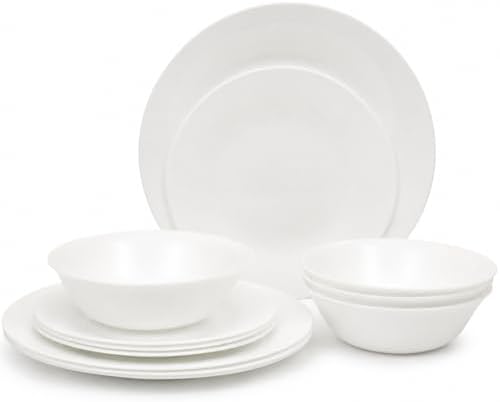


Some manufacturers use bone ash or tin dioxide instead, which is closer to how traditional milk glass gets its color. Either way, the opacity comes from the chemistry of the batch, not from a coating or paint layer on top.
Why Opal Glass Looks Milky White
The white comes from light bouncing off millions of microscopic crystals suspended inside the glass, not off a surface layer. That’s the detail people miss when comparing opal glass to painted or glazed ceramic.
There’s no glaze to chip or wear off here; the opacity goes all the way through the piece, which is also why opal glass doesn’t get patchy or thin-looking after years of dishwasher cycles, the way a painted surface can.
How the Tempering Process Works
Tempering is what turns opacified glass, which would otherwise break the way regular glass does, into something that survives a kitchen. The process is mechanical, not chemical, and it follows the same basic sequence across manufacturers.
- The formed glass piece is heated to roughly 620°C (1,150°F), close to its softening point.
- High-pressure air is blasted across both surfaces to cool the outside rapidly while the core stays hot.
- As the core cools and contracts afterward, it pulls the already-hardened outer layers into permanent compression.
- The result is a glass “shell” under compression and a core under tension — the two forces that give tempered glass its added strength.
How Much Stronger Tempered Opal Glass Really Is
Every manufacturer quotes a strength multiplier, and the numbers don’t agree. That’s not a red flag, it reflects differences in wall thickness and tempering equipment, not a hidden flaw. Here’s what’s actually being claimed across major sources:
| Source / Brand | Claimed strength vs. untempered glass | Thermal shock tolerance | Source type |
|---|---|---|---|
| SafeKitchn (industry overview) | 4–5x stronger | Not specified | Independent editorial |
| SHULOPAL | Up to 5x stronger | 110–135°C swing | Manufacturer |
| Garbo Glass | 3x mechanical resistance | 135°C swing | Manufacturer |
| Arc Customised Glass | Up to 5x stronger | Not specified | Manufacturer |
| Standard (untempered) opal glass | 3x stronger, baseline comparison | ~80°C swing | Industry baseline |
The honest takeaway: expect somewhere between 3x and 5x the strength of ordinary glass, and treat any single brand’s number as a marketing figure rather than a lab-verified constant across the whole category.
Is Tempered Opal Glass Safe to Use?
Yes, tempered opal glass is generally food-safe, non-toxic, and free of the lead and BPA concerns that come up with older ceramics and plastics.
The material is chemically inert, meaning it doesn’t react with acidic, alkaline, or oily foods, and it won’t leach anything into what you’re eating or drinking.
Is It Lead-Free and Non-Toxic?
Reputable tempered opal glass is lead-free, cadmium-free, and BPA-free, and several manufacturers publish this explicitly on their care pages.
The bigger safety variable isn’t the base material; it’s decoration. Metallic trims, gold rims, or hand-painted accents on top of the glass can introduce heavy metals or cause sparking in a microwave, so a plain, undecorated piece from a known brand is the safer default if you’re buying for daily use around kids.
What Happens When It Breaks
Tempered opal glass tends to break into fewer, larger pieces with more defined edges than laminated glass like Vitrelle, which shatters into many small, blunt fragments instead.
That’s a real trade-off, not a minor detail. Vitrelle’s small-shard pattern means more cleanup after a drop, but opal glass’s larger pieces, while easier to spot on the floor, can carry a sharper edge, so sweep carefully rather than assuming “tempered” means “harmless if it breaks.”
Oven, Microwave, and Dishwasher Safety
Here’s the contradiction nobody addresses directly: some brands say tempered opal glass is oven-safe to 250°C, and others state flatly that it can’t go in the oven at all.
Both are true for their own products. Oven safety on this material is a construction variable, not a fixed property of “opal glass” as a category.
Oven Safety: Why the Answer Depends on the Brand
| Brand / Type | Oven-Safe? | Why |
|---|---|---|
| Arc Customised Glass (“culinary opal”) | Yes, up to 250°C | Thicker single-body construction engineered specifically for oven-to-table use |
| SHULOPAL | Yes | Integral molding with a tempering process rated for high-temp cooking |
| LaGlint (standard opal glass line) | No | Thinner single-body glass not rated for direct oven heat |
| Corelle Vitrelle (for comparison) | Yes, with restrictions | Laminated glass-ceramic core tolerates oven heat differently from single-body opal glass |
| Generic unbranded opal glass dinnerware | Assume no unless labeled | No published tempering spec to verify heat rating |
The rule of thumb: check the base of the piece for an oven-safe mark, or check the manufacturer’s own spec sheet, not the retailer’s product description, which often copies generic category language.
For a full breakdown by manufacturer, see oven-safe ratings by dinnerware brand.
Microwave Safety and Thermal Shock Risks
- Tempered opal glass is microwave-safe in the vast majority of cases, because its non-porous structure doesn’t absorb moisture the way some ceramics do.
- The real risk isn’t the microwave itself — it’s temperature swings. Pulling a piece straight from the freezer into a hot microwave can crack it even though the material is tempered.
- Metallic decoration is the other failure point: gold or silver trim will spark in a microwave regardless of how strong the glass underneath is.
- Uneven heating in thick or oversized pieces can create localized stress that cracks the glass, so smaller, evenly-shaped pieces are the safer bet for daily reheating.
Dishwasher Safety and Cleaning Tips
- Nearly all tempered opal glass is dishwasher-safe, since the non-porous surface resists staining and odor absorption from repeated cycles.
- Hand-washing with a soft sponge is still worth doing for decorated pieces, since abrasive dishwasher detergent can dull painted patterns over time even if it doesn’t damage the glass itself.
- Avoid stacking pieces while still hot from the dishwasher’s dry cycle — thermal stress compounds when pieces are pressed against each other.
- Skip harsh abrasive scrubbers on any piece with printed or decal patterns, even though the base glass itself can handle regular detergent.
Tempered Opal Glass vs. Other Dinnerware Materials
Opal glass gets compared to porcelain, ceramic, and Vitrelle constantly, and each comparison turns on a different trade-off weight, oven flexibility, or breakage pattern.
Tempered Opal Glass vs. Porcelain
| Factor | Tempered Opal Glass | Porcelain | Winner |
|---|---|---|---|
| Weight | Lighter, easier to stack | Denser, heavier feel | Opal glass |
| Oven use | Brand-dependent, often restricted | Generally oven-safe | Porcelain |
| Thermal shock resistance | Strong, 110–135°C tolerance | Prone to cracking under extreme swings | Opal glass |
| Design variety | Limited, mostly plain white | Wide range of colors and patterns | Porcelain |
| Everyday durability | High resistance to chips and drops | Chip-resistant, but breaks more easily if dropped | Opal glass |
For families prioritizing daily durability over formal design options, opal glass is the better everyday choice.
Tempered Opal Glass vs. Ceramic
| Factor | Tempered Opal Glass | Ceramic |
|---|---|---|
| Surface | Non-porous glass, no glaze needed | Often glazed; quality of glaze affects safety |
| Weight | Lighter | Heavier |
| Oven/microwave/dishwasher | Generally compatible, check the brand | Generally compatible, check brand |
| Chip resistance | Strong edge resistance from tempering | Good but glaze can chip over time |
| Lead risk | None, since there’s no decorative glaze | Depends entirely on glaze quality |
Ceramic isn’t inferior here, it’s just more variable, since safety depends on glaze quality rather than the base material. Opal glass removes that variable entirely by skipping the glaze.
Tempered Opal Glass vs. Vitrelle (Corelle) Glass
Vitrelle is a patented three-layer laminated glass-ceramic made exclusively by Corelle, while tempered opal glass is a single-body glass produced by dozens of manufacturers worldwide.
That structural difference explains almost every practical difference between them. Opal glass vs. Vitrelle glass compared goes deeper, but the short version: Vitrelle’s layered construction gives it a documented edge in drop resistance.
Corelle has published surviving a 172 cm drop without chipping, and it breaks into smaller, blunter pieces that are safer around bare feet.
Opal glass, on the other hand, is the open-market option: more brands, more price points, and when the right product is chosen, genuine oven compatibility that most standard Vitrelle lines don’t match.
Is Tempered Opal Glass Worth Buying?
For most households, doing daily meals, yes. The combination of low weight, strong chip resistance, and dishwasher/microwave compatibility covers what a typical kitchen needs.
Where it gets shakier is oven use and formal presentation, where porcelain still has the edge.
Best Suited For
- Households with kids or frequent breakage risk, since the material resists chips better than ceramic under everyday bumps.
- Anyone who wants lead-free dinnerware without relying on the quality of a painted glaze.
- Small kitchens, since opal glass is lighter and stacks more compactly than porcelain or stoneware.
- Buyers who mainly microwave and reheat rather than bake directly in the serving dish.
How to Spot Genuinely Tempered Opal Glass Before Buying
- Check the base of the piece for a maker’s mark or stamped safety rating — unmarked pieces from unknown sellers are the ones most likely to cut corners on tempering.
- Look up the manufacturer’s own care page rather than trusting the retailer’s product description, since retailers often copy generic category text that doesn’t match the actual product line.
- Ask specifically for CE compliance or food-contact safety certification if buying from an overseas manufacturer with no established track record.
- Cross-check the oven-safety claim against the brand’s spec sheet before assuming a “culinary” or “bakeware” label applies to the whole product line.
- If a listing makes no mention of tempering at all — just “opal glass” — assume it’s untempered until the seller confirms otherwise.
Still weighing whether tempered opal glass fits your kitchen? The comparisons above cover the trade-offs that actually matter: weight, oven flexibility, and how it breaks so you can match the material to how you actually cook and serve, not just how it looks on a shelf.
Frequently Asked Questions
Is tempered opal glass the same as milk glass?
They’re related but not identical. Milk glass is an older, broader term for opaque white glass, while tempered opal glass specifically refers to opal glass that has gone through the heat-tempering process for added strength. Not all milk glass is tempered.
Can tempered opal glass go in the oven?
Only if the specific product is rated for it. Some brands like Arc’s culinary opal line are built for oven use up to 250°C, while many standard opal glass dinnerware lines are not. Check the base of the piece before assuming either way.
Is tempered opal glass microwave safe?
Yes, in most cases, since its non-porous structure heats evenly and doesn’t absorb moisture. Avoid sudden temperature swings, like going straight from the freezer to the microwave, since that’s the main cause of cracking.
Does tempered opal glass contain lead or BPA?
Reputable tempered opal glass is lead-free and BPA-free, since the opacity comes from the glass chemistry rather than a painted glaze. The main risk comes from decorative metallic trim, not the base material.
How do you clean tempered opal glass dinnerware?
Most pieces are dishwasher-safe, but hand-washing decorated pieces preserves printed patterns longer. Avoid abrasive scrubbers on anything with a decal or painted design.
Why did my tempered opal glass dinnerware crack?
The most common cause is thermal shock from a sudden temperature change, like placing a hot dish directly into cold water.
Uneven heating in the microwave and stacking pieces while still hot from the dishwasher can also cause hairline cracks.
Is tempered opal glass more durable than porcelain?
For everyday chip and drop resistance, yes, tempered opal glass generally outperforms porcelain in daily use. Porcelain still wins on oven flexibility and design variety.
What’s the difference between opal glass and Arcopal?
Arcopal is a specific brand name for opal glass dinnerware first introduced in 1958, not a separate material. It’s tempered opal glass under a proprietary product name.
Is tempered opal glass dishwasher safe?
Yes, the vast majority of tempered opal glass products are rated dishwasher-safe. Check for a specific care label if the piece has metallic or hand-painted decoration.
How long does tempered opal glass dinnerware last?
With normal use and no oven misuse, quality tempered opal glass commonly lasts a decade or more without chipping or losing its pattern.
Longevity depends more on avoiding thermal shock than on the number of dishwasher cycles it goes through.
About the Author & Reviewer
Sarah Emirone, Author
Sarah researches and writes SafeKitchn’s dinnerware and kitchenware guides, with a focus on material safety, lead content, and manufacturer specifications. She cross-references product data sheets, safety certifications, and regulatory filings (including FDA and Prop 65 records) before publishing, and updates articles when new information becomes available.
James Daniels, Reviewer
James reviews SafeKitchn’s material safety content for scientific accuracy. He holds a B.Sc in inorganic chemistry and works as a materials researcher, with particular focus on the composition and safety behavior of glass, ceramic, and metal used in kitchenware.