

Is Pfaltzgraff silverware good quality? Read enough reviews, and you’ll find a five-star “sturdy, washes clean, great weight” sitting right next to a one-star “bends if you push through ice cream, feels like fake silverware.”
Both reviewers are telling the truth. The reviews aren’t contradictory so much as they’re describing a material property Pfaltzgraff states plainly on its own site but never connects back to the complaints: most of its current flatware is 18/0 stainless steel, a grade with zero nickel.
Here’s what that actually means for durability, and where the rest of the split-review story comes from.
Written by Sarah Emirone | Reviewed by James Daniels, B.Sc, Inorganic Chemist & Materials Researcher | Updated September 2026 | See How We Test | Filed under: Buying, Care & Product Guides
Why Pfaltzgraff Flatware Reviews Are So Split
The split comes from two separate causes stacking on top of each other: a material grade that’s inherently softer than premium flatware, and manufacturing that’s changed enough over the decades that “the same pattern” isn’t really the same product anymore.
The 18/0 Stainless Steel Answer Hiding in Plain Sight
Pfaltzgraff’s own general FAQ spells out what the numbers mean: the first number is chromium content, which gives stainless steel its corrosion resistance, and the second is nickel content, which adds hardness and a brighter polish.
18/0 means 18% chromium and 0% nickel. 18/10, the grade most premium flatware uses, has 10% nickel added on top of that same chromium base.
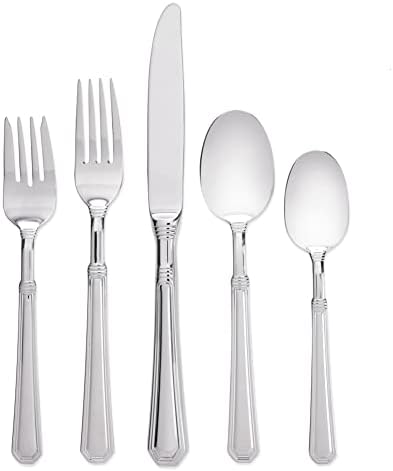
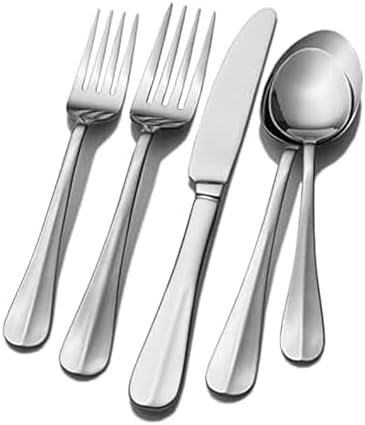


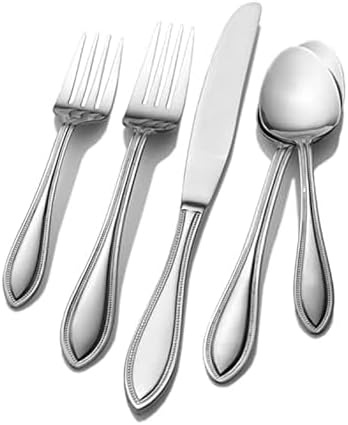
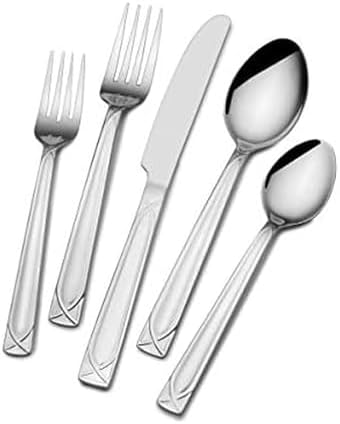
Nearly every current Pfaltzgraff collection, Simplicity, Garland Frost, American Bead, and Vienna, is listed on Pfaltzgraff’s own product pages as 18/0.
Zero nickel means a softer metal that bends more easily under pressure, dulls faster, and shows water spots after air-drying instead of wiping dry, exactly the complaints that show up across dozens of reviews.
This isn’t inconsistent manufacturing. It’s the baseline behavior of the grade Pfaltzgraff chose for most of its current lineup, and no comparison article connects the two.
Same Pattern Name, Different Manufacturing Run
A pattern named “Garland Frost” bought in 2015 and a set with the same name bought today aren’t necessarily the same product.
You might find the new set with noticeably thinner metal, shallower embossing on the handles, and a “Made in China” stamp that the original set never carried.
It does happen because someone who bought a product line in 2012 and another person who bought in 2024 might be describing two different products, but wearing the same name collection.
To avoid this confusion, read our guide on how to date vintage Pfaltzgraff by backstamp. The country-of-origin marking and embossing depth are the most reliable clues to which era you’re actually looking at.
Who Actually Makes Pfaltzgraff Silverware Now
Pfaltzgraff hasn’t been an independent company since 2005, and that ownership change is the root cause behind both the material grade and the manufacturing shift.
Lifetime Brands Ownership Since 2005
Lifetime Brands acquired Pfaltzgraff in 2005 and folded it into a portfolio that also includes Farberware, KitchenAid-licensed products, Wallace, Towle, and Hoffritz.
That matters for a specific reason: Pfaltzgraff’s warranty language and replacement process now run through Lifetime Brands’ general Warranty Department in Medford, Massachusetts, not a Pfaltzgraff-specific operation.
The brand name on the box doesn’t mean a dedicated Pfaltzgraff factory controls quality the way it did when the company was independent; it means Lifetime Brands applies the Pfaltzgraff name to products manufactured through its broader supply chain.
For other kitchenware brands owned by Lifetime Brands, several share overlapping manufacturing and sourcing decisions with Pfaltzgraff.
Is Pfaltzgraff Still Made in the USA?
No. Pfaltzgraff moved all production to China in 2005, the same year Lifetime Brands took ownership, closing the original York County, Pennsylvania, facility where the company had operated since 1811.
Product listings and packaging now carry “Designed in the USA. Made in China,” and Lifetime Brands also closed all 67 Pfaltzgraff retail stores as part of the same transition.
The 200-plus-year Pennsylvania pottery history is real, but it describes the company’s origin, not where anything currently on shelves gets made.
Is Pfaltzgraff Flatware the Same Quality as Pfaltzgraff Dinnerware?
No, and treating them as one verdict is where a lot of buying advice goes wrong. Pfaltzgraff’s ceramic dinnerware has a documented reputation problem that its stainless flatware doesn’t share to the same degree.
| Factor | Flatware | Dinnerware |
|---|---|---|
| Material | Stainless steel, mostly 18/0 | Stoneware and porcelain ceramic |
| Independent complaint reputation | Mixed, price-appropriate | Roughly 2.0/5 on complaint-tracking sites |
| Common issue | Bending, dulling, water spots | Crazing, cracking, and thinner bodies than older stock |
| Manufacturing consistency | Varies by production run | Varies by production run |
Why Ceramic Complaints Don’t Predict Flatware Quality
Pfaltzgraff’s dinnerware complaints run deeper than flatware’s, and they’re a different failure mode entirely.
Independent complaint trackers put dinnerware satisfaction around 2.0 out of 5, with recurring reports of crazing (networks of fine cracks in the glaze) and plates cracking within months of purchase.
One pattern, Winterberry, generated multiple reports of plates cracking within eight months of normal use. That’s a ceramic-specific problem tied to firing temperature and glaze quality, and it has nothing to do with whether a stainless fork bends.
A shopper who reads “Pfaltzgraff dishes crack constantly” and assumes the flatware shares that flaw is importing a complaint from an entirely different product category.
For a full review of Pfaltzgraff dinnerware quality, the ceramic issues are real, but they don’t transfer to the silverware drawer.
What Each Product Line Is Actually Made Of
Flatware and dinnerware don’t share a factory, a material, or a failure pattern, which is exactly why lumping “Pfaltzgraff quality” into one number misses the point.
Stainless flatware fails through bending, dulling, and surface spotting, all traceable to alloy grade. Ceramic dinnerware fails through cracking and crazing, traceable to glaze and firing quality.
Judging one from reviews of the other is like judging a car’s tires from reviews of its stereo.
How Pfaltzgraff Flatware Compares by Collection
Not every Pfaltzgraff flatware line performs the same, even within the shared 18/0 baseline — design and handle construction still shift how a set feels and holds up.
| Collection | Material | Reported Strengths | Reported Weaknesses |
|---|---|---|---|
| Simplicity | 18/0 stainless | Good weight for the price, dishwasher-safe finish holds up | Some reports of bending under heavy pressure |
| Sapphire Bay | 18/10 stainless | Higher nickel grade, more corrosion resistance | Occasional quality-consistency complaints despite the better grade |
| Garland Frost | 18/0 stainless | Distinctive swirl pattern, praised design | Thin steak knife blades and plastic handles draw the most criticism |
| American Bead | 18/0 stainless | Detailed embossed border, well-reviewed for the price | Standard 18/0 bending risk under hard use |
Simplicity and Sapphire Bay
Simplicity is Pfaltzgraff’s basic 18/0 everyday set, and reviewers consistently note decent weight and a finish that survives regular dishwasher cycles without spotting badly, solid performance for a set that typically retails well under $50.
Sapphire Bay stands out because it’s actually 18/10, the higher grade, which should outperform most of Pfaltzgraff’s lineup on corrosion resistance and hardness; reviewer feedback backs that up more often than not, though a few buyers still reported inconsistent quality even in this better grade, reinforcing that manufacturing-run variation affects every collection, not just the 18/0 ones.
Garland Frost and American Bead
Garland Frost gets consistent praise for its swirl-pattern design, but its steak knives draw the sharpest criticism in the entire lineup, with thin plastic handles and blades reviewers describe as flimsier than anything else in Pfaltzgraff’s catalog, a notable drop from the quality of the fork and spoon pieces in the same set.
American Bead performs closer to Simplicity: a teardrop handle with an embossed bead border that holds up reasonably well for its price point, with the standard 18/0 caveat that it’s not built for genuinely rough use.
Is Pfaltzgraff Silverware Worth the Money?
Yes, if you’re buying it for what it actually is: an affordable, 18/0-grade everyday set, not a premium flatware replacement. It’s not worth it if you expect 18/10-level durability at 18/0 pricing.
When Pfaltzgraff Makes Sense
- You want a matching, presentable set for under $50 to $80 for daily meals without heavy resistance-cutting tasks like carving through frozen food.
- You’re setting up a first apartment or replacing mismatched hand-me-down flatware and prioritizing appearance and price over decades-long durability.
- You already own Pfaltzgraff dinnerware in a matching pattern and want visual consistency more than you need flatware that outlasts every other set you own.
- You’re comfortable hand-drying pieces after washing, since 18/0 shows water spots more readily than higher-nickel grades.
When to Consider 18/10 Alternatives Instead
For the full comparison of Oneida vs. Pfaltzgraff flatware, Oneida’s mid-range lines lean more consistently 18/10 across their catalog rather than mixing grades by collection the way Pfaltzgraff does.
- You regularly cut through hard or frozen foods and need flatware that resists bending under real pressure.
- You want a set that air-dries without visible water spotting, which 18/10’s higher nickel content handles better.
- You’re buying for a household with kids or frequent guests where flatware gets rougher daily treatment than careful hand-washing.
- You’d rather pay more once for a set explicitly labeled 18/10 across the board than gamble on which Pfaltzgraff collection you’re getting.
Already own a set and think it might be from an older, sturdier manufacturing run? Check the back of a fork handle for a country-of-origin stamp.
A set without “Made in China” is very likely pre-2005 stock, and it’s worth holding onto rather than replacing piece by piece with newer production.
For the best flatware brands for the price, Pfaltzgraff’s 18/10 Sapphire Bay line is worth comparing directly against Oneida before deciding.
Frequently Asked Questions
Is Pfaltzgraff a good brand?
For flatware specifically, yes, within its price bracket — most collections are 18/0 stainless, which performs well for light-to-moderate daily use but bends more easily than premium 18/10 grades.
Its ceramic dinnerware carries a separate and notably worse reputation, so “good brand” depends heavily on which product category you mean.
Does Pfaltzgraff flatware bend easily?
Some collections do, particularly under hard pressure like cutting frozen food, because most current lines are 18/0 stainless with no nickel content added for hardness. Sapphire Bay, Pfaltzgraff’s 18/10 line, resists bending better than the rest of the catalog.
Is Pfaltzgraff flatware dishwasher safe?
Yes, all current Pfaltzgraff flatware sets are labeled dishwasher safe. Air-drying afterward can leave visible water spots on 18/0 pieces, so towel-drying keeps the finish looking better longer.
Does Pfaltzgraff offer a warranty on flatware?
Yes, through Lifetime Brands’ general Warranty Department, which repairs or replaces defective items due to materials or workmanship at no charge.
The warranty doesn’t cover normal wear or damage from improper use, and one Home Depot reviewer specifically praised the warranty team’s responsiveness after a defective set.
Is 18/0 or 18/10 stainless steel better?
18/10 is the better grade overall, since its 10% nickel content adds hardness, corrosion resistance, and a brighter polish that 18/0 lacks entirely.
18/0 isn’t defective, just softer; it’s the standard choice for affordable, casual flatware rather than heavy daily use.
What is the best Pfaltzgraff flatware pattern?
Sapphire Bay stands out because it’s 18/10 rather than Pfaltzgraff’s more common 18/0 grade, giving it a real durability edge over the rest of the lineup.
Simplicity and American Bead are solid 18/0 runner-ups if Sapphire Bay’s design doesn’t match your dinnerware.
About the Author & Reviewer
Sarah Emirone, Author
Sarah researches and writes SafeKitchn’s dinnerware and kitchenware guides, with a focus on material safety, lead content, and manufacturer specifications. She cross-references product data sheets, safety certifications, and regulatory filings (including FDA and Prop 65 records) before publishing, and updates articles when new information becomes available.
James Daniels, Reviewer
James reviews SafeKitchn’s material safety content for scientific accuracy. He holds a B.Sc in inorganic chemistry and works as a materials researcher, with particular focus on the composition and safety behavior of glass, ceramic, and metal used in kitchenware.