

If you’re asking, ” Is Pfaltzgraff made in the USA?”, the short answer is no, not anymore.
Pfaltzgraff dinnerware was manufactured in York County, Pennsylvania, from 1811 until 2005, when the company was sold to Lifetime Brands, and production moved overseas.
If you own a piece with a “Pfaltzgraff USA” backstamp, you’re holding something from before that sale. If your piece just says “Pfaltzgraff” with a country name like China, Thailand, or Indonesia underneath, it’s part of the current import lineup.
The two eras look similar on a shelf but come from completely different supply chains, and that difference matters for both collector value and food safety, which is what the rest of this guide actually sorts out.
Written by Sarah Emirone | Reviewed by James Daniels, B.Sc, Inorganic Chemist & Materials Researcher | Updated September 2026 | See How We Test | Filed under: Origin & Manufacturing
Where Pfaltzgraff Dinnerware Is Made Today
Pfaltzgraff dinnerware sold today is made overseas, not in the United States. Lifetime Brands, the company that owns Pfaltzgraff, sources its dinnerware production from factories in Asia rather than running a domestic plant.
There’s no current US manufacturing facility producing Pfaltzgraff stoneware for retail.
Current manufacturing countries
- China is the primary production source for most current Pfaltzgraff dinnerware lines, including patterns like Winterberry.
- Thailand has also been used for Pfaltzgraff production runs, particularly for some stoneware pieces.
- Indonesia rounds out the third country where Pfaltzgraff products have been manufactured since the brand went fully offshore.
Who owns Pfaltzgraff now?
Pfaltzgraff is owned by Lifetime Brands, Inc., a home products company that also owns Farberware, KitchenAid-licensed kitchen tools, and several other tableware and houseware brands.
Lifetime Brands acquired the Pfaltzgraff Co. in 2005 and folded it into its existing portfolio of brands, which is why Pfaltzgraff dinnerware today shares supply chains and sourcing decisions with sibling brands rather than running its own independent factory network the way it did for nearly two centuries.
When and Why Pfaltzgraff Left the USA
Pfaltzgraff stopped manufacturing in the United States in 2005, the same year Lifetime Brands bought the company. The shift wasn’t gradual — it followed the sale directly, and within a few years, the brand had also closed its retail outlet stores across the country.
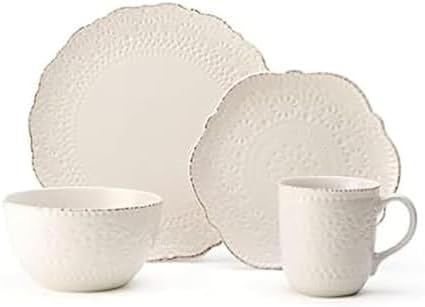


Understanding the timeline matters because it’s the dividing line collectors and everyday owners use to sort their dishes into “old” and “new” categories.
The 2005 Lifetime Brands acquisition
Lifetime Brands purchased the Pfaltzgraff Co. in 2005, ending what had been the longest continuously running family-owned pottery company in the United States.
The company had been founded by the Pfaltzgraff family in the early 1800s on a homestead in York County, Pennsylvania, and stayed in family hands through multiple generations before the sale.
Once the acquisition closed, Lifetime Brands made the decision to move dinnerware production to factories overseas rather than continue operating the Pennsylvania plant, a sourcing model that matched how it already ran several of its other home-products brands.
Closure of the York, PA, factory and outlet stores
The original Pfaltzgraff factory in York County, Pennsylvania, closed following the move to offshore production.
Within a few years of the 2005 sale, the brand had also shut down its network of outlet stores nationwide and ended its in-person second-hand sales presence.
The factory closure is the reason secondary-market sources — Etsy, eBay, estate sales, Replacements.com — are now the only places to find genuine USA-made Pfaltzgraff pieces, since nothing currently shipping from the brand comes from that original facility.
Related: Is Pfaltzgraff Silverware Good Quality?
How to Identify USA-Made vs. Imported Pfaltzgraff
You can identify USA-made Pfaltzgraff by checking the backstamp on the bottom of the piece for the words “Pfaltzgraff USA” — that mark only appears on pieces made before the 2005 production shift. Here’s the process to work through when you’re checking a piece:
- Flip the piece over and look for any text or symbol pressed, stamped, or printed into the base.
- Read the wording carefully — note whether it says “USA,” names a specific country, or has no country reference at all.
- Check for the castle motif, a small illustrated building that appears alongside the Pfaltzgraff name on many older marks.
- Compare the weight and glaze texture against what’s described below, since stamps can wear down or go unread on heavily used pieces.
- Cross-reference the pattern name, if visible, against known production years for that specific line.
Reading the backstamp — “Pfaltzgraff USA” vs. country-named marks
| Backstamp wording | What does it tell you | Approximate era |
|---|---|---|
| “Pfaltzgraff USA” | Made domestically in York, PA | Before 2005, most common 1960s–2005 |
| “Pfaltzgraff” with no country listed | Transitional period, requires further checking | Often late 1990s–mid-2000s |
| “Pfaltzgraff” + “China” | Imported, current-era production | 2005–present |
| “Pfaltzgraff” + “Thailand” | Imported, current-era production | 2005–present |
| “Pfaltzgraff” + “Indonesia” | Imported, current-era production | 2005–present |
| Castle mark with no other text | Mid-century domestic production | Roughly 1960s |
What the castle mark means and when it was used
The castle mark is a small illustrated building stamped or molded into the base of Pfaltzgraff pieces, and it represents the Pfalz region castle, from which the family name comes.
This mark was used heavily during the brand’s mid-20th-century domestic production, often alongside or instead of written text, and its presence is one of the more reliable visual cues that a piece predates the offshore shift, though it isn’t a guarantee on its own, since some patterns continued using stylized versions of the castle logo on imported pieces too.
Weight, glaze, and feel differences between eras
| Characteristic | USA-made (pre-2005) | Imported (2005–present) |
|---|---|---|
| Weight | Noticeably heavier, thick stoneware body | Lighter, thinner body |
| Glaze | More color variation from piece to piece | More uniform, mass-produced finish |
| Edge finish | Slightly rougher, hand-finished feel | Smoother, machine-consistent edges |
| Stamp method | Often impressed into wet clay before glazing | More often printed or stamped on dry clay |
If you’re also checking a piece for authenticating vintage Fiestaware by backstamp, the same weight-and-glaze comparison applies to older American stoneware, which almost always runs heavier than its modern import counterpart.
Is USA-Made Pfaltzgraff Safer Than Imported Pfaltzgraff?
USA-made and imported Pfaltzgraff aren’t automatically different in safety; what actually determines risk is the production era and pattern, not the country listed on the stamp.
Some vintage USA-made pieces from before the 1970s carry lead levels far above current safety limits, while plenty of current imported pieces test within FDA compliance.
The country of origin tells you when a piece was likely made, which then points you toward whether it’s worth testing — it isn’t a safety verdict by itself.
What FDA lead-leaching standards actually measure
The FDA doesn’t set a flat limit on how much lead can exist in a ceramic glaze; it sets limits on how much lead is allowed to migrate, or leach, into food under standardized test conditions, measured in micrograms of lead per milliliter.
This is a different measurement than the surface-level ppm figure most home XRF testers report, and the two numbers get conflated constantly in dinnerware safety discussions.
A dish can show a measurable surface ppm reading with an XRF instrument and still fall well within the FDA’s migration limits, because surface presence and food-contact leaching aren’t the same test.
The leaching limits also vary by product type — flatware, like dinner plates, has a different threshold than cups, mugs, and pitchers, since the latter hold liquids in prolonged contact with the glazed surface.
Documented lead/cadmium findings by era and pattern
| Era/pattern | Documented finding | Source type |
|---|---|---|
| USA-made, pattern unspecified, tested 2014 | 60 ppm lead via XRF (within American and European safety thresholds) | Independent lead-testing blog |
| USA-made Christmas pattern with holly berries | 17,400 ppm lead, 780 ppm cadmium via XRF (both well above safe thresholds) | Independent lead-testing blog |
| Pre-1970s patterns generally | Higher lead/cadmium risk due to looser glaze regulations of that era | Multiple safety-focused sources |
| Current China-made production | The manufacturer states compliance with FDA migration standards; independent verification varies by pattern | Manufacturer statement, third-party reporting |
The spread between that 60 ppm reading and the 17,400 ppm reading — both on pieces stamped “Made in USA” — is the clearest evidence that the USA stamp alone tells you nothing about safety.
Bright reds, oranges, and yellows in decorative overglaze designs are the most common carriers of higher lead and cadmium content, regardless of which country produced the piece, because those pigments historically relied on lead and cadmium compounds to achieve saturated color.
If you’re checking a piece with bold decorative trim, that’s the detail to test first, not the country stamp. The same logic applies if you’re researching lead content in vintage Corelle Livingware, where pattern and era matter more than the brand name alone.
Which Pfaltzgraff Patterns Were Made in the USA
The patterns most associated with Pfaltzgraff’s American manufacturing era — Yorktowne, Village, and Heritage — each ran domestic production for years before the brand shifted offshore, though their exact timelines differ by pattern.
Before mixing vintage and current pieces in everyday use, it’s also worth checking whether a plate is oven-safe, since heat tolerance can vary between eras the same way glaze composition does.
Yorktowne, Village, and Heritage production timelines
| Pattern | Introduced | USA production years | Current status |
|---|---|---|---|
| Yorktowne | 1967 | 1967–2007 | Discontinued in USA-made form; reissued versions are imported |
| Village | 1976 | 1976–2005 | No longer in USA-made production |
| Heritage | 1963 | 1963–2005 | Still produced today, but as an imported line |
| Folk Art | Mid-20th century | Through 2005 | Discontinued, vintage pieces only |
| Tea Rose | Late 20th century | Through 2005 | Discontinued, vintage pieces only |
Yorktowne is the clearest example of how messy the 2005 cutoff actually is at the pattern level: collector documentation shows USA production continuing for that specific pattern until around 2007, two years past the broader company-wide shift, which means a Yorktowne piece stamped USA could plausibly date from right up against that later cutoff rather than the earlier 2005 date most general histories cite.
Patterns introduced after 2005 (import-only)
- Winterberry was introduced after the offshore shift and has never had a USA-made production run.
- Pistoulet entered the lineup as part of the current imported catalog.
- Any pattern launched under Lifetime Brands’ ownership exists only as an import, since the company never reopened domestic dinnerware manufacturing after the 2005 acquisition.
If you’re also tracking Duralex’s own lead-safety testing results for comparison across brands, the same pattern-versus-era logic applies there too — a brand’s country of origin shifts over time, and the production date matters more than the label alone.
Before buying or testing a piece, it helps to know your full range of options if you decide a dish isn’t worth keeping in food rotation.
Melamine dinnerware as a lead-free alternative is one route worth checking if you’d rather sidestep the lead question on everyday pieces while still keeping your vintage Pfaltzgraff for display.
Frequently Asked Questions
Is Pfaltzgraff made in the USA or China?
Current Pfaltzgraff dinnerware is made in China, Thailand, or Indonesia, not the USA. Pieces made before 2005 were produced in York County, Pennsylvania. The backstamp on the piece tells you which era it’s from.
When did Pfaltzgraff stop manufacturing in the United States?
Pfaltzgraff stopped US manufacturing in 2005, the same year Lifetime Brands acquired the company. Yorktowne pattern production continued domestically until around 2007, according to collector records. Every pattern launched after that point has been import-only.
Does Pfaltzgraff contain lead?
Some Pfaltzgraff pieces contain lead, particularly older patterns with bright decorative overglaze in reds, oranges, and yellows. Documented testing has found readings ranging from 60 ppm to over 17,000 ppm on different USA-made pieces.
Current production is manufactured to meet FDA migration standards, though independent verification varies by pattern.
How can I tell if my Pfaltzgraff is made in the USA?
Check the backstamp on the bottom for the words “Pfaltzgraff USA,” which only appears on pre-2005 pieces. A country name like China, Thailand, or Indonesia indicates current production. Weight and glaze texture can also help when a stamp is worn or unclear.
Who owns Pfaltzgraff today?
Lifetime Brands, Inc. owns Pfaltzgraff, having acquired the company in 2005. Lifetime Brands also owns Farberware and several other home-products brands. Pfaltzgraff dinnerware production is sourced through Lifetime Brands’ overseas manufacturing network.
Is vintage Pfaltzgraff worth more than new Pfaltzgraff?
Pieces with the “Pfaltzgraff USA” backstamp generally command higher prices among collectors than current imported equivalents. The premium is most pronounced for discontinued patterns and complete sets in excellent condition.
Common patterns in worn condition show a smaller value gap.
Is Pfaltzgraff Yorktowne still made?
Yorktowne is still produced today, but only as an imported pattern. USA-made Yorktowne production ran from 1967 to around 2007. Pieces stamped “USA” predate that cutoff and are no longer in production.
Where was the original Pfaltzgraff factory located?
The original Pfaltzgraff factory was located in York County, Pennsylvania. The Pfaltzgraff family began producing pottery there in the early 1800s on a homestead, later building a dedicated factory in 1894.
The facility closed following the 2005 sale to Lifetime Brands.
Is all Pfaltzgraff pottery made overseas now?
All current Pfaltzgraff dinnerware in production is made overseas, primarily in China, Thailand, and Indonesia. No domestic factory has reopened since the original Pennsylvania plant closed in 2005. Only secondary-market and vintage pieces represent USA-made production.
About the Author & Reviewer
Sarah Emirone, Author
Sarah researches and writes SafeKitchn’s dinnerware and kitchenware guides, with a focus on material safety, lead content, and manufacturer specifications. She cross-references product data sheets, safety certifications, and regulatory filings (including FDA and Prop 65 records) before publishing, and updates articles when new information becomes available.
James Daniels, Reviewer
James reviews SafeKitchn’s material safety content for scientific accuracy. He holds a B.Sc in inorganic chemistry and works as a materials researcher, with particular focus on the composition and safety behavior of glass, ceramic, and metal used in kitchenware.