

Is Luminarc oven safe? Some of it, and some of it flatly is not and the difference isn’t about quality, it’s about what material you’re actually holding.
Luminarc sells two physically different products under one brand name. Their tempered glass tableware, the clear bowls, plates, and drinking glasses sold under names like Working Glass and Cosmos, is not rated for oven use and can crack or shatter from heat.
Their Cuisine, Vitro and Vitroflam cookware line, by contrast, is made from tempered glass and vitroceramic and is built specifically for the oven, the stovetop, and direct flame.
If you don’t know which one is in your cupboard, the next section tells you how to check in under a minute.
Written by Sarah Emirone | Reviewed by James Daniels, B.Sc, Inorganic Chemist & Materials Researcher | Updated September 2026 | See How We Test | Filed under: Buying, Care & Product Guides
Why There’s No Single Answer — Luminarc Makes Two Different Materials
The reason Amazon Q&A threads and forums give contradictory answers to “Is Luminarc oven safe?” isn’t bad information; it’s that people are answering about different products with the same brand name stamped on the box.
Tempered Soda-Lime Glass (Standard Tableware)
Tempered glass is regular soda-lime glass heated to roughly 650°C and then rapidly cooled, a process that puts the surface under compression and makes it far more resistant to impact than untreated glass.
This is what most Luminarc dinner plates, salad bowls, tumblers, and stackable storage bowls are made from. It’s strong against drops. It is not built to handle the kind of direct, sustained, dry heat an oven produces, and it has a low tolerance for rapid temperature swings.
Vitro/Vitroflam Vitroceramic (Cookware)
Vitroceramic is a different material entirely, a glass-ceramic hybrid rather than treated glass.
Luminarc’s own product listings for the Vitro and Vitroflam lines state the cookware can handle a working range from -35°C to 800°C and tolerate thermal shocks of up to 450°C, which is why the same dish can go from the freezer to a hot oven to a stovetop burner without cracking.
This is the line built for cooking. The tableware line is not.
How to Tell Which Luminarc Product You Have
You don’t need a lab test for this. Three checks settle it almost every time.
Check the Base Markings and Stamps
- Flip the dish over and look at the underside or the handle base.
- Look for the words “Vitro,” “Vitroflam,” or “Vitroceramic” — any of these confirms it’s the oven-rated cookware line.
- Look for a “France” or “Made in France” stamp with no Vitro wording — this usually points to standard tableware, not cookware.
- Check for a printed oven symbol (a small icon of an oven) near the base. If it’s absent, treat the piece as not oven safe.
Check the Collection Name on the Box or Listing
- If the original packaging or product listing says “casserole,” “saucepan,” “cookware,” or “Vitro Blooming,” it’s the cookware line and is built for the oven.
- If it says “tumbler,” “salad bowl,” “stackable,” or “dinnerware set,” it’s the tableware line and should stay out of the oven.
- Tableware sets are usually sold as multi-piece dinner sets (plates, bowls, glasses together); Vitro cookware is sold as individual pots, pans, or casserole dishes, often with a lid and a handle.
- If you bought it secondhand and have neither box nor markings, treat it as tableware and don’t risk the oven — the cost of a $15 piece of bakeware is lower than the cost of a shattered casserole and a ruined dinner.
Luminarc Tempered Glass Tableware: Oven Safety Explained
Standard Luminarc tableware is not designed for oven use, and putting it in even a moderate oven risks cracking it. This isn’t a quality flaw — it’s the same reason you wouldn’t put a drinking glass in an oven. The glass simply wasn’t engineered for that kind of heat exposure.
Why Tempered Glass Fails in the Oven
Tempered glass gets its strength from a layer of surface compression created during manufacturing. That compression is what makes it resist drops and impacts.
But ovens don’t test impact resistance; they test thermal tolerance, and that’s a different property entirely. When tempered tableware heats unevenly, which happens constantly in a standard oven, the surface and core expand at different rates.
The stress that made the glass strong against a fall becomes the exact stress that cracks it under heat. A bowl that survives being dropped on tile can still fail in a 350°F oven, because the two situations stress the glass in completely different ways.
What the Manufacturer Actually Allows
| Use Case | Tempered Glass Tableware |
|---|---|
| Conventional oven | Not rated — avoid |
| Microwave | Generally safe (check for metallic trim or decoration first) |
| Dishwasher | Safe |
| Freezer storage | Safe |
| Stovetop / direct flame | Not rated — avoid |
| Broiler | Not rated — avoid |
Some Amazon listings for specific stackable bowl sets do print an oven-safe rating up to 425°F, which shows that not every tempered piece is identical; manufacturing tolerances vary by collection and by year.
Without a printed rating or oven symbol on your specific piece, the safer assumption is no.
For everyday dinnerware decisions, the same logic applies across brands. See our general oven-safe plate guidelines for how to read these ratings on any tableware, not just Luminarc.
Luminarc Vitro/Vitroflam Cookware: Oven Safety Explained
If your piece is marked Vitro or Vitroflam, it’s built for the oven, and the manufacturer’s own ratings back that up with real numbers rather than vague reassurance.
Maximum Temperature and Thermal Shock Rating
| Property | Vitro/Vitroflam Rating |
|---|---|
| Cold tolerance | Down to -35°C (-31°F), freezer safe |
| Heat tolerance | Up to 800°C (1,472°F) |
| Thermal shock resistance | Withstands swings of up to 450°C without cracking |
| Oven use | Rated safe, including preheated ovens |
| Microwave | Safe |
| Dishwasher | Safe |
That 450°C thermal-shock figure is the number that matters most in daily use.
It means a Vitro casserole dish can go straight from the freezer into a hot oven, or off the stovetop onto a cold countertop, without the temperature swing causing a crack that something tempered tableware can’t do.
Stovetop and Direct-Flame Use
Vitroceramic is one of the few glass-based cookware materials rated for direct stovetop and flame contact, not just oven baking.
Luminarc recommends preheating the cookware on low heat for about two minutes before cooking, then cooking at low to moderate heat for even distribution.


Vitroceramic holds heat for a long time, so recipes that call for a long simmer often need less active burner time than you’d expect. This crossover between oven, stovetop, and table is the entire reason the line exists: one dish that goes from prep to cooking to serving without a swap.
For a deeper look at how this compares to other heat-resistant glass cookware, see our guide to borosilicate glass bakeware.
Luminarc Cuisine Carine Oven Dish Collection
From our explanation above of tempered glass, we have already explained why they fail in the oven, but the Luminarc Cuisine Carine oven dish collection tells a different story. So, what changed, you might ask?
The Luminarc Cuisine oven dish is made up of culinary opal, a durable and innovative material. The dishes are multi-purpose and can be used from oven to table.
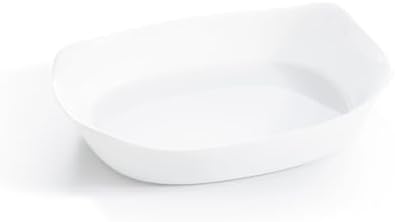
- THE OVEN PLATES FOR TODAY USES: The Smart Kitchen Carine oven dishes are designed to make your kitchen life easier. Idea…
- LIGHTWEIGHT AND VERY RESISTANT: No more afraid of clumsiness, opal offers extreme resistance to shocks and chips. In add…
- OPALE FOR HEALTHY KITCHEN: Culinary opal is a colourful glass developed by Luminarc. This is particularly healthy and hy…
They are ideal for cooking and roasting up to 250 °C. They are lightweight, extra-strong, and hygienic dishes that also feature a simple and trendy design.
If you had told me that someday, tempered glass bowls could sit in the oven, I would have disagreed with you, but here we are today!
What Happens If You Put Non-Oven-Safe Luminarc in the Oven
Putting tempered tableware in the oven doesn’t always end in disaster on the first try, but the risk is real, and it gets worse with repeated use of the same pattern we cover in our Pfaltzgraff oven safety guide for ceramic dinnerware with similar limitations.
Why Thermal Shock Causes Breakage
The mechanism is called thermal shock, and it’s worth understanding because it explains why the failure can feel random. Glass expands when heated and contracts when cooled, and tempered glass is only forgiving of that expansion up to a point.
If one part of a dish, say, the bottom touching a hot oven rack, heats faster than the rim sitting in cooler air above it, the two regions try to expand at different rates simultaneously.
That mismatch creates internal stress that the glass’s surface compression wasn’t designed to absorb the way it absorbs an impact.
Sometimes the dish survives one trip through the oven and fails on the third or fourth, because microscopic stress fractures accumulate with each thermal cycle, even when no crack is visible.
How to Avoid This Mistake
- Check the base for a Vitro, Vitroflam, or oven-symbol marking before any dish goes near the oven, every time, not just the first time you use it.
- Never move a piece of Luminarc tableware directly from the fridge or freezer into a hot oven, even briefly.
- Don’t set a cold tempered glass dish on a hot stovetop or directly onto a hot oven rack.
- If you’re unsure and have no markings to check, use a labeled oven-safe baking dish instead and keep the Luminarc piece for serving or storage.
- Watch for small surface scratches or chips on tempered glass — damaged tempered glass is more likely to fail under thermal stress than an undamaged piece.
Luminarc vs Other Oven-Safe Glass Brands
If you’re shopping specifically for oven-safe glass bakeware rather than trying to identify what you already own, it helps to see how Luminarc Vitro stacks up against the two brands most people compare it to.
Our Duralex vs Pyrex oven safety comparison covers the same question from the other direction.
Comparison Table
| Brand | Material | Max Oven Temp | Thermal Shock Tolerance | Stovetop Safe |
|---|---|---|---|---|
| Luminarc Vitro/Vitroflam | Vitroceramic | ~800°C ceiling, 450°C shock-rated | Up to 450°C swing | Yes |
| Pyrex (modern US) | Tempered soda-lime glass | ~425°F (218°C) | Low — avoid sudden swings | No |
| Duralex | Tempered soda-lime glass | ~425°F (218°C) | Low — avoid sudden swings | No |
| Luminarc tableware | Tempered soda-lime glass | Not rated | Low | No |
Which to Choose for Baking
- If you want one dish that handles stovetop, oven, and direct flame, Vitro/Vitroflam is the only option on this table built for that — Pyrex and Duralex are oven-only.
- If you just need a basic oven-safe casserole dish and don’t need stovetop capability, modern Pyrex and Duralex perform similarly to each other and cost less than Vitro cookware.
- Standard Luminarc tableware doesn’t compete in this category at all — it was never built for heat, and comparing it to Pyrex on oven safety is comparing it to the wrong product.
Already own Luminarc Vitro cookware and want to get the most out of it? Check the base for the Vitro or Vitroflam stamp, preheat it gently before your first high-heat use, and it’ll outlast most other glass bakeware in your kitchen.
FAQ
Is Luminarc microwave safe but not oven safe?
Yes, for most of the tableware line. Microwaves heat food rather than the dish itself, so the thermal stress is much lower than an oven, which is why tempered Luminarc tableware is commonly microwave safe even though it isn’t oven safe.
Can Luminarc go from the freezer straight to the oven?
Only the Vitro/Vitroflam cookware line, which is rated for thermal shocks up to 450°C. Standard tempered tableware should never go straight from the freezer into a hot oven; that exact temperature swing is what causes most thermal-shock cracks.
Is Luminarc Vitro the same as regular Luminarc?
No. They’re made from different materials — Vitro is vitroceramic cookware rated for direct heat, while regular Luminarc tableware is tempered soda-lime glass rated for serving and storage. Check the base markings to tell them apart.
Is Luminarc cookware safe under the broiler?
Vitro/Vitroflam cookware’s high heat tolerance makes it more broiler-tolerant than standard glass bakeware, but Luminarc doesn’t market it as a dedicated broiler product. If broiler use matters to you, confirm on the specific product listing before relying on it for that purpose.
Does Luminarc contain lead?
Modern Luminarc glassware is manufactured to current food-safety standards and isn’t flagged for lead in the way some older vintage dinnerware lines are.
If lead content in glassware and dinnerware is a concern for you generally, our Corelle Livingware lead content breakdown explains how to check any brand, not just Luminarc.
How long does Luminarc Vitro cookware last?
With normal use and the preheating step followed, Vitro cookware is built to handle years of regular oven and stovetop rotation. Its vitroceramic composition resists the gradual weakening that some tempered glass shows over repeated heat cycles.
The lid and handle hardware will typically wear out before the vitroceramic body does.
Is Luminarc as oven-safe as Pyrex?
Standard Luminarc tableware is not oven-safe at all, so it doesn’t compare to Pyrex on this point. Luminarc’s Vitro/Vitroflam cookware line actually exceeds modern Pyrex’s thermal-shock tolerance and adds stovetop capability that Pyrex doesn’t have.
What should I do if my Luminarc dish has already cracked in the oven?
Let it cool completely before touching it, since a cracked piece under thermal stress can fail further if disturbed while still hot. Don’t try to reuse a cracked dish for cooking; discard it, since a compromised tempered-glass structure can fail unpredictably on a future use.
About the Author & Reviewer
Sarah Emirone, Author
Sarah researches and writes SafeKitchn’s dinnerware and kitchenware guides, with a focus on material safety, lead content, and manufacturer specifications. She cross-references product data sheets, safety certifications, and regulatory filings (including FDA and Prop 65 records) before publishing, and updates articles when new information becomes available.
James Daniels, Reviewer
James reviews SafeKitchn’s material safety content for scientific accuracy. He holds a B.Sc in inorganic chemistry and works as a materials researcher, with particular focus on the composition and safety behavior of glass, ceramic, and metal used in kitchenware.