Borosilicate glass is widely trusted in kitchens, laboratories, and everyday drinkware because of its impressive heat resistance and chemical stability.
Products like Pyrex built their reputation on it. But the dangers of borosilicate glass are real, and they catch a lot of people off guard. The biggest misconception is that this material is somehow unbreakable or immune to failure; it isn’t.
While it handles heat far better than standard soda-lime glass, it still cracks, shatters, and fails under the right conditions. This guide walks through the actual risks so you can use borosilicate glass safely and know exactly when to be cautious.
What Is Borosilicate Glass?
Composition of Borosilicate Glass
Borosilicate glass is made primarily from silica, silicon dioxide, combined with boron trioxide, which typically makes up around 12 to 15 percent of the glass composition.
It’s this addition of boron trioxide that changes the material’s behavior under heat.
The glass composition results in a structure that expands far less when heated than ordinary glass does, which is why it became the standard material for laboratory glassware like beakers and flasks, and eventually found its way into consumer cookware and drinkware.
Why Borosilicate Glass Is Heat Resistant
The key property that sets borosilicate glass apart is its low thermal expansion. When heat is applied, the material expands only a fraction as much as soda-lime glass.
This matters because glass breakage from heat is almost always caused by uneven expansion — one part heats up and expands while another part stays cool, creating internal stress that eventually cracks the glass.
With low thermal expansion, that stress builds up much more slowly and at much higher temperature differentials, giving borosilicate glass its well-earned reputation for thermal durability.
Common Uses of Borosilicate Glass
You’ll find borosilicate glass across a wide range of applications. In the kitchen, it’s used in oven-safe glass bakeware, glass cookware, measuring jugs, coffee carafes, French press brewers, and glass bottles.
In the lab, it’s the material of choice for beakers, test tubes, flasks, and other scientific equipment that need to withstand chemical exposure and heat simultaneously.
Drinkware, from everyday mugs to double-wall glass tumblers, also frequently uses borosilicate for its ability to handle both hot and cold beverages without stress.
For a full breakdown of the material’s properties and applications, the borosilicate glass complete guide covers everything in detail.
Is Borosilicate Glass Dangerous?
Understanding the Real Risks
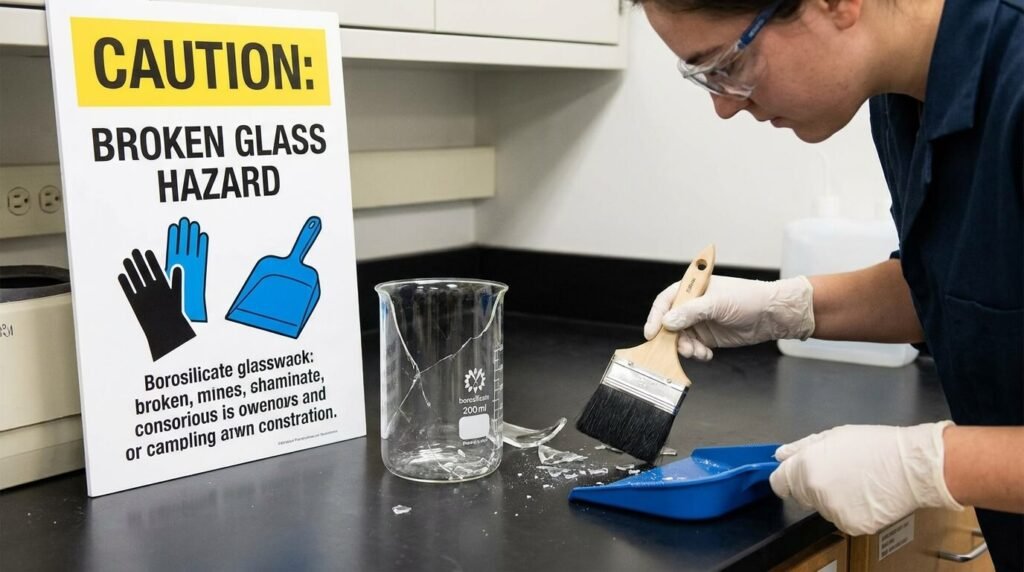
Borosilicate glass is durable, but durable and indestructible are very different things. The real risks come from glass breakage scenarios that users don’t anticipate, impact damage from dropping, stress fractures that develop invisibly over time, and sudden shattering from thermal shock at extreme temperature differentials.
When borosilicate glass breaks, it produces sharp glass shards that can cause serious laceration injuries.
Consumer safety incidents involving glass cookware and drinkware, including product recalls, are well-documented and underscore that this material requires mindful handling.
Difference Between Heat Resistance and Impact Resistance
This is one of the most important distinctions to understand. Borosilicate glass is thermally strong but physically fragile. Its ability to resist thermal shock has absolutely nothing to do with how it handles a hard knock against a countertop or a drop onto a tile floor.
Glass brittleness is an inherent material property — glass doesn’t bend or deform under mechanical stress, it fractures.
Borosilicate glass is no more impact-resistant than other glass types, and in some comparisons, it actually performs worse than tempered glass under direct physical impact.
Why Some Consumers Worry About Borosilicate Glass
Consumer complaints about borosilicate products — particularly glass cookware and bakeware — often involve unexpected cracking or shattering incidents that seemed to come out of nowhere.
A dish pulled from the oven and set on a cool countertop, a baking dish exposed to a cold splash of water while still hot, or a glass container that simply gave way after years of repeated heating cycles.
These incidents are real, they result in product failure, and they’re why understanding the actual limitations of this material matters before you reach for it in the kitchen.
Can Borosilicate Glass Break or Shatter?
Impact Damage Risks
Yes — borosilicate glass breaks from impact damage just like any other glass. Dropping a borosilicate dish onto a hard floor, striking it against a faucet while washing, or knocking it against another piece of cookware all carry the same fracture risk as any glass product.
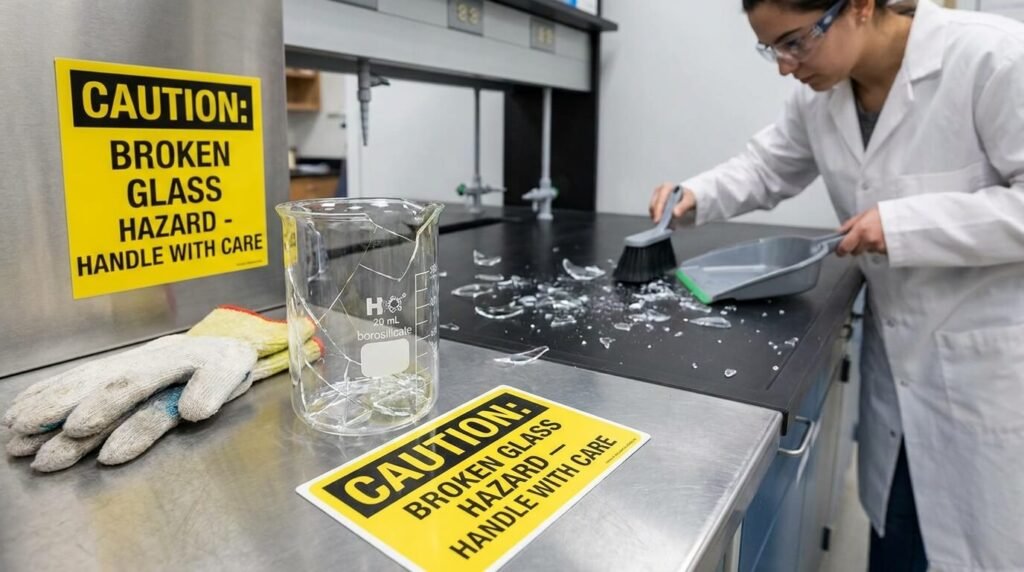
The material provides no meaningful advantage over other glass types when it comes to resisting physical force.
Sharp glass shards from a broken borosilicate item are just as dangerous as those from any broken glass, and they can cause significant laceration injuries if handled carelessly during cleanup.
Stress Fractures and Weak Points
A subtler risk comes from microfractures tiny, invisible cracks that develop in the glass surface from repeated use, minor impacts, or surface scratches.
These microfractures don’t cause immediate breakage, but they weaken the structural integrity of the glass over time.
As glass fatigue accumulates, these small cracks can propagate under heat or mechanical stress, eventually leading to a stress fracture or full breakage.
This is why a piece of borosilicate glassware that has been used for years may suddenly fail during what seems like completely normal use — the structural weakness had been building invisibly for a long time.
Sudden Shattering Incidents
One of the more alarming failure modes is what’s sometimes called explosive breakage — a sudden, violent shattering with no obvious prior warning.
This typically occurs when internal stress in the glass reaches a critical point. It can happen when pre-existing microfractures meet a heat stress event, or when manufacturing variability in the glass has created internal tension that only releases under certain conditions.
The result scatters glass fragments across a wide area and creates a genuine kitchen accident risk, particularly if hot food or liquid is involved, adding a burn hazard on top of the laceration risk from the shards.
Thermal Shock Risks
What Is Thermal Shock?
Thermal shock is what happens when different parts of a glass object experience rapid, uneven temperature changes at the same time. One section expands or contracts faster than the rest, creating internal stress that the glass can’t absorb.
If that stress exceeds the fracture toughness of the material, the glass cracks.
Borosilicate glass is significantly better at resisting thermal shock than soda-lime glass — its low thermal expansion means it takes a much larger temperature differential to build up the same level of stress, but it has limits, and those limits can be exceeded.
Extreme Temperature Transitions
The classic dangerous scenario is a freezer-to-oven transition, taking a cold glass container directly from the freezer and placing it into a preheated oven. Even borosilicate glass can crack under this kind of sudden temperature change.
Similarly, adding cold water to a hot glass dish, placing a hot item on a cold, wet surface, or exposing bakeware to cold drafts while still oven-hot all create rapid temperature differentials that stress the glass.
The material handles gradual temperature changes well; it’s the speed and magnitude of the transition that cause problems.
Why Thermal Shock Can Still Happen
Even borosilicate glass has thermal expansion limits. When the temperature differential is large enough, particularly combined with surface scratches, edge chipping, or existing microfractures that already compromise the structural integrity, thermal shock cracking becomes a real possibility.
Overheating is another factor: exposing borosilicate glass to temperatures beyond its rated limit weakens the material and makes it more vulnerable to thermal stress failures.
Understanding that heat resistance has a ceiling is essential to using any glass cookware safely.
Common Causes of Borosilicate Glass Failure
Manufacturing Defects
Not all borosilicate glass is made to the same standard.
Manufacturing defects, inconsistencies in the glass composition, imperfections introduced during the annealing process (the controlled cooling phase that relieves internal stress), or variations from manufacturing variability can create weak points that aren’t visible from the outside.
Products with poor quality control may carry internal stress from day one, and these compromised pieces are more likely to fail unexpectedly.
This is one reason why brand reputation and product testing matter when buying glass cookware or laboratory glassware.
Surface Scratches and Chips
Surface scratches and edge chipping are more than cosmetic issues; they represent genuine structural weakness. Scratches from abrasive cleaners, steel wool, metal utensils, or dishwasher damage act as stress concentration points on the glass surface.
When heat or mechanical stress is applied, these surface flaws are where cracks initiate and propagate.
A deeply scratched piece of borosilicate glassware is meaningfully weaker than an undamaged one, and a chip on the rim of a bowl or dish is often the starting point for a more serious fracture during subsequent use.
Uneven Heating
Uneven heating creates hot spot formation — areas of the glass that heat up faster or more intensely than the surrounding material. This localized stress concentration is a leading cause of cracking in glass cookware.
In a microwave oven, food that isn’t distributed evenly can heat one section of the glass much more than another.
On a stovetop burner, placing a glass dish directly over a flame source creates extreme uneven heating that most borosilicate cookware isn’t designed to withstand.
The stress from a hot spot can fracture the glass even if the overall temperature is well within the product’s rated range.
Improper Usage
A significant share of borosilicate glass failures comes down to improper usage exceeding the manufacturer’s temperature recommendations, using oven-safe products on the stovetop or under a broiler, placing hot glassware on cold or wet surfaces, or stacking glassware unsafely during storage.
These aren’t material failures; they’re usage failures. Most manufacturers provide clear care instructions precisely because these are known failure triggers. Ignoring or being unaware of those guidelines significantly increases the risk of glass breakage and the kitchen safety hazards that come with it.
Borosilicate Glass vs Tempered Glass Safety
Heat Resistance Comparison
Borosilicate glass outperforms tempered glass in thermal durability for most cooking applications.
Its low thermal expansion means it handles the temperature transitions of oven baking and the gradual heat changes involved better than tempered glass, which is engineered primarily for mechanical strength rather than thermal resistance.
For applications involving sustained heat exposure, like bakeware or laboratory equipment, borosilicate is the more appropriate material. Tempered glass is better suited for applications where impact resistance matters more than heat cycling.
Breakage Behavior
The two materials behave very differently when they break. Borosilicate glass tends to fracture into larger, sharper shards — similar to ordinary glass.
Tempered glass, by contrast, is designed to break into small, relatively blunt granules through a process called explosive breakage, which significantly reduces the risk of severe laceration injuries.
This is a meaningful consumer safety distinction. If kitchen safety around breakage patterns is a primary concern, tempered glass’s controlled fragmentation behavior is a genuine advantage over borosilicate in that specific regard.
Which Material Is Safer for Kitchen Use?
The honest answer is that it depends on what you’re doing. For oven baking, borosilicate glass is typically safer because of its thermal durability and resistance to the heat stress involved in baking applications.
For situations involving frequent physical handling, dropping risk, or environments with heavy use, tempered glass’s breakage behavior may reduce injury severity when breakage does occur.
The best kitchen safety practice is to use each material within the application it was designed for, and to replace any glassware that shows signs of damage, regardless of which material it’s made from.
Risks in Cookware and Bakeware Use
Oven Safety Concerns
Borosilicate glass bakeware is oven-safe, but that doesn’t mean it’s safe under all oven conditions. Direct flame exposure or broiler use are the main oven safety concerns.
Most borosilicate bakeware is not rated for the concentrated, intense radiant heat produced by a broiler element.
Placing glass bakeware under a broiler or in direct contact with a heating element can cause heat stress that leads to cracking or shattering.
Following the manufacturer’s stated temperature limits and keeping bakeware away from direct heat sources are the key precautions here.
Stovetop Usage Risks
Many consumers don’t realize that most borosilicate glass cookware products are not designed for stovetop use, particularly on gas stoves with open flame.
Direct flame exposure creates a severe hot spot at the bottom of the vessel, while the sides and upper portions remain cooler classic conditions for uneven heating and fracture.
Even on electric or induction cooktops, glass cookware that isn’t specifically rated for stovetop use should not be used there.
This is one of the most common improper usage scenarios that leads to serious kitchen accidents with glass cookware.
Microwave Safety Limitations
Borosilicate glass is generally microwave safe as a material, but there are important limitations.
Any glass container with metal components, lids with metal clasps, containers with metallic trim, or glass with embedded metal elements should never go in the microwave.
Beyond that, uneven heating from certain food configurations can create hot spot formation that stresses the glass, particularly in containers that have been scratched or chipped.
Microwave safety applies to intact, undamaged borosilicate glass without any metal components, not to all glass cookware universally.
Risks in Drinkware and Food Storage
Cracking From Sudden Temperature Changes
Borosilicate drinkware handles hot and cold beverages well under normal use, but sudden temperature changes still create risk.
Pouring boiling water into a cold glass that’s just come out of the refrigerator, or adding ice water to a glass that’s been sitting in the sun, are both scenarios that can cause thermal shock cracking.
The transition speed matters as much as the temperature difference. Letting glassware come closer to room temperature before introducing an extreme temperature beverage is a simple precaution that significantly reduces this risk.
Damage From Repeated Heating Cycles
Repeated exposure to heating and cooling cycles, running the same glass container through the dishwasher day after day, heating it in the microwave, letting it cool, and repeating, creates cumulative glass fatigue over time.
Each cycle contributes incrementally to microfracture development and structural weakness.
A borosilicate container that has handled years of heavy daily use is not in the same condition as a new one, even if it looks undamaged on the surface.
This is why regular inspection matters: long-term material fatigue isn’t always visible until a piece actually fails.
Lid and Seal Pressure Issues
Glass food storage containers with airtight lids introduce an additional risk: pressure build-up.
When a sealed glass container is heated in the microwave or by storing warm food before sealing, the contents expand and can create vacuum seal stress on the lid and the glass.
If the lid creates a tight seal and the container is then reheated, the pressure differential can stress the glass structure.
Some lids are designed to vent; others aren’t. Using containers according to their design and avoiding microwaving with lids fully sealed reduces this risk meaningfully.
Chemical and Health Safety Considerations
Non-Reactive Food Surface
One of the genuine advantages of borosilicate glass as a food contact safety material is its chemical resistance. Unlike some plastics, borosilicate glass doesn’t leach chemicals into food or beverages, even when heated.
The non-reactive glass surface doesn’t interact with acidic foods, oils, or hot liquids in any way that affects food safety.
This chemical stability is part of why it became the standard for laboratory glassware.
It simply doesn’t react with most substances it comes into contact with, making it a reliable and safe material for food storage and cooking applications.
BPA-Free and Plastic-Free Advantages
Borosilicate glass is naturally BPA-free and plastic-free, which makes it an attractive alternative to plastic food containers and drinkware.
There’s no risk of plastic chemical migration, no concerns about plasticizers or phthalates, and no degradation of the material over time from heat exposure in the way that many plastic containers experience.
For consumers looking to reduce chemical exposure from their kitchenware, particularly for hot food storage or reheating, borosilicate glass offers a clean material science answer with a strong food contact safety record.
Are There Toxic Risks?
For intact borosilicate glassware in normal use, there are no meaningful toxic risks. The material is FDA-compliant as a food contact material and meets safety standards for chemical stability.
The only chemical concern worth mentioning is glass dust from damaged or broken glass. Very fine glass particles are a respiratory irritant and an eye injury hazard if a piece shatters in a way that disperses airborne particles.
This is primarily a laboratory safety and safe disposal concern rather than an everyday household risk, but it’s worth noting when handling broken borosilicate items.
Common Misunderstandings About Borosilicate Glass
“Borosilicate Glass Is Unbreakable”
This is the most persistent and most dangerous misconception.
Borosilicate glass is not unbreakable — not even close. It’s more thermally resistant than standard glass, but it shatters under sufficient impact damage, breaks from thermal shock at extreme temperature differentials, and fails from accumulated stress fractures over time.
Treating it as indestructible leads directly to the kind of improper usage that causes it to fail. Understanding its actual durability limitations is the first step toward using it safely.
“Heat-Resistant Means Shockproof”
Thermal resistance and shock resistance are completely different properties. Borosilicate glass’s ability to withstand heat has nothing to do with its ability to handle physical impact.
A piece of borosilicate drinkware that handles a hot espresso without issue will still shatter if knocked off a countertop.
These are independent characteristics, and conflating them creates a false sense of security that increases kitchen accident risk.
Heat-resistant means it handles temperature changes well, nothing more.
“All Glass Cookware Is Borosilicate”
Not all glass cookware is made from borosilicate glass. Some products, particularly lower-cost options, use soda-lime glass instead, which has significantly worse thermal durability.
Interestingly, this has also affected some well-known brands: certain Pyrex products sold in North America shifted from borosilicate to tempered soda-lime glass years ago, which has confused consumers who assumed all Pyrex products were the same material.
Always check product specifications rather than assuming glass cookware material based on brand name alone.
Warning Signs That Borosilicate Glass Is Unsafe to Use
Visible Cracks and Chips
Any visible crack, no matter how small, is a signal to stop using that piece immediately.
A crack that seems minor is already a structural weakness indicator; it will propagate further under heat or stress, and the timing of that failure is unpredictable.
Edge chipping on bowls, plates, or bakeware creates the same concern. Once the glass surface has been compromised at the rim or edge, the resistance to further fracture at that point drops significantly.
There is no safe way to continue using cracked or chipped borosilicate glassware.
Cloudiness or Surface Damage
Cloudiness or surface haziness in borosilicate glass is a sign of material wear — often from repeated dishwasher damage or cleaning with abrasive cleaners that have scratched the glass surface over time.
While cloudiness itself isn’t an immediate fracture risk, it’s an indicator that the surface has been worn down and that the glass has undergone more stress than is visually obvious.
Deeply scratched or pitted glass is more vulnerable to crack initiation under thermal or mechanical stress than a smooth, undamaged surface.
Loose Handles or Structural Instability
For glass cookware with attached handles, casserole dishes, saucepots, or similar items, any looseness, wobble, or instability in the handle joint is a serious cookware safety issue.
A handle that isn’t fully secure creates mechanical stress at the joint every time the piece is lifted or moved, and if that joint fails while the dish is hot and full, the consequences can be severe.
If a handle shows any sign of coming loose, treat the item as unsafe to use with heat.
How to Safely Use Borosilicate Glass
Avoid Sudden Temperature Changes
The single most effective precaution is avoiding dramatic temperature transitions. Let frozen glass containers thaw to room temperature before putting them in a warm oven.
Don’t place a hot baking dish on a cold countertop or into cold water immediately after taking it out of the oven.
Don’t pour boiling liquid into a cold glass container. Gradual temperature transitions, whether warming up or cooling down, give the material time to expand or contract evenly, dramatically reducing thermal shock risk.
Handle Carefully to Prevent Impact Damage
Mindful physical handling goes a long way. Safe handling means keeping glass away from hard edges, setting pieces down gently rather than dropping them onto surfaces, and being especially careful in wet conditions where grip is reduced.
In the kitchen, avoid hard impacts against faucets or other cookware. In storage, stackability risk is real.
Stacking heavy pots or pans on top of glass bakeware or stacking glassware without protection between pieces increases the chance of chips that compromise the glass’s structural integrity over time.
Follow Manufacturer Temperature Guidelines
Every borosilicate glass product has stated temperature limitations in its care instructions; follow them.
These aren’t conservative guidelines; they’re the actual safe operating range for the material.
Using a product beyond its rated temperature, under a broiler when it’s rated for conventional oven use only, or on a flame when it’s designed for oven use only, all move the product outside of what it was designed and tested to handle.
The manufacturer’s temperature guidelines exist because product testing identified where failure risk increases significantly.
Inspect Glassware Regularly
Make a habit of inspecting borosilicate glassware before each use — especially pieces that are used frequently or have been in service for years. Look for any new chips, cracks, cloudiness, or surface scratches.
Check handle security on any cookware pieces. Replace damaged pieces promptly rather than continuing to use them.
The cost of replacing a piece of glass bakeware is trivial compared to the risk of a kitchen accident from a piece that fails during cooking.
A quick visual check before use is the simplest, most effective form of safety inspection available.
Best Uses for Borosilicate Glass
Oven Baking Applications
Borosilicate glass genuinely excels at oven baking. Controlled heat cooking — casseroles, baked dishes, bread, and roasted items — is exactly what oven-safe glass bakeware is designed for.
The material distributes heat reasonably evenly, handles the temperature range of conventional baking well, and allows you to monitor what’s cooking through the transparent sides.
For baking applications that stay within the product’s rated temperature range and avoid direct heat sources like broilers, borosilicate glass bakeware is a reliable, practical choice.
Hot and Cold Beverage Use
Temperature-resistant drinkware is one of the best applications for borosilicate glass. A glass that handles both hot espresso and cold water without stress is genuinely useful in daily life.
Double-wall glass tumblers made from borosilicate provide insulated glass performance — keeping hot drinks hot and cold drinks cold — while avoiding the thermal shock risk that single-wall glass would face from extreme temperature contents.
For everyday beverage use within normal temperature ranges, borosilicate drinkware is safe and well-suited to the task.
Scientific and Laboratory Applications
Borosilicate glass remains the standard material for laboratory glassware because of its combined chemical resistance and thermal durability.
Beakers, flasks, test tubes, and other scientific equipment need to handle chemical exposure, heating on burners, and sterilization processes without degrading or reacting with their contents.
The material’s chemical-resistant surface and ability to withstand laboratory heating protocols make it the appropriate choice for these environments, provided laboratory safety protocols, including proper handling procedures and personal protective equipment, are followed.
Who Should Avoid Borosilicate Glass?
Homes With Frequent Heavy Handling
If your household involves frequent dropping, rough handling, or an environment where glass cookware is regularly knocked around, borosilicate glass may not be the right material for you.
High-impact usage concerns are real; the material offers no meaningful protection against physical force, and repeated minor impacts accumulate as glass fatigue over time.
Households with young children, high-traffic kitchens, or anyone who regularly handles cookware quickly and without particular care may find that the glass breakage risk is simply too high for practical everyday use.
Users Expecting Unbreakable Cookware
If you’re buying borosilicate glass cookware or drinkware under the assumption that it won’t break, you’re going to be disappointed — and potentially injured.
Understanding material limitations before purchase is the responsible approach.
Borosilicate glass is not engineered for impact resistance, and if what you need is cookware that can survive being dropped or knocked over regularly, this isn’t the right material for your needs.
Stainless steel containers or silicone cookware would serve that use case far better.
Commercial High-Impact Environments
In commercial kitchens, catering operations, or other high-volume food service settings where durability demands are intense and the pace of use is fast, borosilicate glass is generally not the appropriate material for high-wear applications.
Restaurant tableware takes constant impacts, stacking, and rapid temperature cycles that accelerate glass fatigue and increase product failure risk significantly.
For commercial high-impact environments, restaurant-grade stainless steel, ceramic, or purpose-built commercial tableware materials offer far better durability under those conditions.
Alternatives to Borosilicate Glass
Tempered Glass
Tempered glass uses a different strengthening technology — rapid heating and cooling during manufacturing that creates a compressive stress layer on the surface.
This makes it significantly more resistant to physical impact than borosilicate glass, and when it does break, it shatters into smaller, blunter fragments rather than large, sharp shards, reducing laceration injury risk.
The trade-off is lower thermal durability compared to borosilicate. Tempered glass is a reasonable alternative for applications where impact resistance matters more than heat resistance.
If you want a side-by-side look at both sides of borosilicate glass before choosing an alternative, the pros and cons of borosilicate glass are a useful reference.
Stainless Steel Containers
For users who need impact-resistant alternatives that can handle rough treatment, stainless steel containers are an excellent choice.
Stainless steel doesn’t break, doesn’t chip, and handles both heat and cold without any risk of glass breakage. It’s dishwasher safe, durable, and well-suited to situations where the physical fragility of glass creates practical problems.
The main trade-offs are that stainless steel isn’t transparent (you can’t see contents), and it isn’t microwave safe. For food storage and transport, it’s a highly practical alternative to glass.
Ceramic and Stoneware Cookware
Ceramic and stoneware cookware offer heat-retaining alternatives to glass bakeware, and they handle oven cooking particularly well.
Stoneware is generally more impact-resistant than glass cookware, which chips and cracks, but it’s less prone to sudden shattering than glass.
Ceramic cookware also distributes heat more evenly in many cooking applications.
The main consideration is weight; ceramic and stoneware pieces are considerably heavier than borosilicate glass, and they don’t have the visual transparency that makes glass bakeware useful for monitoring food as it cooks.
Conclusion
Borosilicate glass is a genuinely valuable material — heat-resistant, chemically stable, and well-suited to both kitchen and laboratory applications.
But the dangers of borosilicate glass are equally real: impact damage, thermal shock at extreme temperature differentials, manufacturing defects, and accumulated stress fractures all represent legitimate failure risks that can result in sharp glass shards and serious injury.
Proper handling and temperature management aren’t optional safety extras; they’re the difference between a material that serves you reliably for years and one that fails unexpectedly at the worst moment.
Inspect your glassware regularly, follow manufacturer guidelines without exception, and replace any piece that shows visible damage.