

No. Fiesta’s own factory FAQ doesn’t say “lead and cadmium free” — it says “lead safe.”
Those are two different claims, and most Fiestaware lovers asking: Is Fiestaware dinnerware lead and cadmium free, think they are the same thing.
“Lead safe” means leachable lead is below the FDA’s legal action level. “Lead free” means none is detectable at all.
Fiesta uses the first term, and independent lab testing on current pieces backs up that some modern colors have tested positive for trace cadmium.
None of this means your dishes are dangerous. It means the real answer has more nuance than a yes-or-no headline gives it.
Written by Sarah Emirone | Reviewed by James Daniels, B.Sc, Inorganic Chemist & Materials Researcher | Updated September 2026 | See How We Test | Filed under: Material Safety & Lead Testing
Lead Safe” Is Not the Same as “Lead and Cadmium Free”
Fiesta does not market its dinnerware as lead and cadmium free. It markets it as “lead safe,” and that word choice is deliberate.
The two phrases sound interchangeable. They aren’t, and the gap between them is the whole reason this question keeps generating contradictory answers across the internet.
What Fiesta’s Official Statement Actually Says
Fiesta Tableware’s own customer FAQ page states plainly that Fiesta Dinnerware is “lead safe,” and points customers to a separate official document, their Statement Regarding Lead and Cadmium in Fiesta Tableware, for the full explanation. Not “lead-free.” Not “cadmium-free.” Lead safe.
A separate Fiesta blog FAQ adds a number to that claim: the company states its dinnerware averages cadmium release of less than 0.02 parts per million, against a California Prop 65 safe-harbor range of 0.084 to 3.164 ppm.
That figure confirms cadmium release is something Fiesta tracks and discloses — not something the product has zero of.
“Lead-Safe” vs. “Lead-Free”: The Regulatory Difference
These two terms get used as synonyms, and that mix-up is where most of the confusion around this topic comes from.
- Lead-free means a product contains no detectable lead at all — zero parts per million.
- Lead-safe means a product may contain some lead, but the amount that can leach into food stays under the regulatory action level.
- The same distinction applies to cadmium, and Fiesta’s language consistently uses “safe,” not “free.”
- A product can be legitimately marketed as lead-safe while still containing trace, non-leaching lead or cadmium in the glaze.
If you’ve seen a post flatly claim Fiestaware is “lead and cadmium free,” that’s common shorthand, not the brand’s actual position.
Is Modern Fiestaware (Made After 1986) Safe to Use?


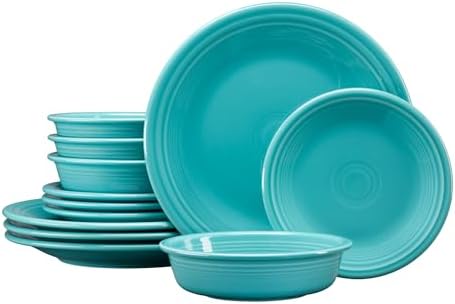
Yes, by every applicable U.S. safety standard, current-production Fiestaware is safe for daily use. But “safe” here means something specific: leachable lead and cadmium test below the legal action thresholds, not that the glaze contains zero trace metal in every color.
FDA Leachable Lead and Cadmium Limits Explained
The FDA doesn’t test how much lead or cadmium sits in a glaze. It tests how much can leach out into food, using a 24-hour soak in 4% acetic acid — simulating contact with something acidic, like tomato sauce or citrus.
| Ceramic Category | FDA Leachable Lead Action Level |
|---|---|
| Flatware (plates, saucers) | 3.0 ppm |
| Small hollowware (mugs, cups) | 2.0 ppm |
| Large hollowware (bowls, pitchers) | 1.0 ppm |
| Cadmium | Separate, category-based limits under CPG Sec. 545.400 |
A product can say “lead-free” on the label and still be mislabeled if any extractable lead shows up in this test — true “lead-free” claims require zero extractable lead. That’s why Fiesta’s own language stays at “lead safe.”
What Independent XRF Testing Has Found in Current Production
This is the piece almost no article puts in front of readers with actual numbers, the difference between trusting marketing copy and looking at test results.
Tamara Rubin of Lead Safe Mama, an independent childhood lead-poisoning prevention advocate who XRF-tests consumer goods and publishes results, has tested multiple current-production Fiestaware pieces. Her findings, by piece:
| Piece (approximate production era) | Lead (Pb) | Cadmium (Cd) | Other |
|---|---|---|---|
| Yellow plate, c. 2014 | Non-detect | Non-detect | Arsenic: non-detect |
| Purple bowl, newer production | Non-detect | 67 ppm | — |
| Tangerine orange bowl, newer production | Non-detect | 227 ppm | — |
| Orange/yellow pitchers, c. 2012 | 52 ppm (yellow) | 240 ppm (orange) | — |
| Dark blue bowl, modern | Non-detect | — | Arsenic: 50 ppm |
| White teacup, modern | 40 ppm | — | — |
XRF measures what metal is physically present in the glaze, not leachability, the metric that actually determines legal compliance.
A reading of 227 ppm cadmium by XRF doesn’t mean 227 ppm is leaching into your soup.
Rubin’s own assessment of a newer yellow plate gave it a “B+”: safe to eat off of, generally a good choice, even while flagging that some colors test positive for trace cadmium. Current Fiesta is not zero-metal, and by the leaching standard that governs food safety, it’s compliant.
Which Modern Colors Have Tested With Trace Cadmium or Arsenic
- Tangerine orange has been tested with cadmium readings around 227 ppm by XRF in at least one independent sample.
- Purple has shown cadmium readings around 67 ppm, a trace level typically considered safe by leaching standards.
- Orange-toned pitcher glazes have tested with cadmium near 240 ppm, alongside lead readings in paired yellow pieces.
- Dark blue glaze has shown trace arsenic (around 50 ppm) in one tested bowl, while testing lead-free.
- White and plain glazes generally test at or near non-detect for both lead and cadmium.
See the full Fiestaware color and production timeline to match a specific piece to its likely era before deciding how much weight to put on any of this.
Is Vintage Fiestaware Safe to Eat Off Of?
It depends on the year and the color, and here’s exactly what it depends on. Fiestaware made before 1986 falls into a genuinely different risk category than current production, and lumping “vintage” together as one block hides the real picture.
Fiestaware Production Timeline: 1936 to Today
- 1936–1943 — Original Fiestaware launches, including the first Fiesta Red, colored with natural uranium oxide.
- 1943 — Uranium gets diverted to the Manhattan Project; Fiesta Red goes out of production.
- 1959 — Fiesta Red returns, using depleted uranium instead of natural uranium — less radioactive, but still uranium-glazed.
- 1972 — Use of uranium in Fiesta glazes ends completely.
- 1973 — The original Fiestaware line is discontinued.
- 1986 — The modern Fiesta line relaunches, reformulated to be lead-free under current FDA standards.
- 2004 — Scarlet, the modern red, replaces the original red with a uranium-free, cadmium-formulated glaze.
- Present — Production continues in Newell, West Virginia, with ongoing FDA-compliant glaze testing.
How to Identify Vintage vs. Modern Pieces (Backstamps and Markings)
- Most Fiesta hollowware — mugs, bowls, pitchers — carries an impressed backstamp molded into the piece.
- Flatware, like plates, uses an ink stamp applied before glazing, hard to spot under darker colors.
- Pieces made before 1973 are far more likely to have a missing or worn stamp than current production.
- A genuine “Lead Free” stamp on the bottom is a marketing addition added to modern production; its absence doesn’t confirm a pre-1986 piece, but its presence is a useful signal.
- Collectors’ references like The Collector’s Encyclopedia of Fiesta are the standard tool for dating unmarked pieces.
Lead and Cadmium Levels in Pre-1986 Glazes
| Era | Lead Status | Cadmium Status | Primary Concern |
|---|---|---|---|
| 1936–1943 original red | Lead present in some glazes | Cadmium is present in some colors | Uranium oxide colorant, not just heavy metals |
| 1943–1959 (no red) | Varies by color | Varies by color | Lower concern; red wasn’t made |
| 1959–1972 reissued red | Lead present | Cadmium pigments used after uranium phase-out | Depleted uranium plus heavy-metal overlap |
| 1972–1986 pre-relaunch | Higher lead common | Cadmium use in vivid colors | No FDA lead-free reformulation yet |
| 1986–present | FDA-compliant, lead-safe | Trace cadmium in specific colors | Reformulated glazes, ongoing testing |
Is “Radioactive Red” Fiestaware Actually Dangerous?
Mostly no, for normal handling and display — but eating acidic food off it daily is the one real exception worth taking seriously. Vintage Fiesta Red is genuinely radioactive.
That’s not internet exaggeration, and it’s a different concern from the cadmium question above, with a different mechanism and dose.
Why Fiesta Red Contains Uranium Oxide
The original 1936 Fiesta Red got its color from uranium oxide mixed into the glaze by weight. Researchers estimate that uranium made up as much as 14% of the glaze on some pieces, with a single plate containing roughly 4.5 grams of uranium.
Oak Ridge Associated Universities, which catalogs radioactive consumer items, has tested red Fiesta plates and confirmed they emit detectable beta and gamma radiation, and that acidic food eaten off them can pick up trace alpha radiation, too.
Uranium-238 has a half-life of 4.5 billion years, so a 1940s red plate is, for all practical purposes, exactly as radioactive today as it was the day it left the factory.
How to Identify Radioactive Red vs. Modern Scarlet
| Feature | Vintage Fiesta Red (1936–1972) | Modern Scarlet (2004–present) |
|---|---|---|
| Colorant | Uranium oxide (natural, then depleted) | Cadmium pigment, no uranium |
| Radioactivity | Detectable on a Geiger counter | None |
| Production years | 1936–1943 and 1959–1972 | 2004 to present |
| Visual tone | More orange-leaning red | Truer, deeper red |
| Backstamp era | Pre-1973 marks | Modern “Lead Free” markings |
| Food-contact risk | Leaches trace radioactive particles with acid | Standard FDA-compliant glaze |
Should You Eat Off Vintage Red Fiestaware?
The EPA’s general guidance on uranium-glazed ceramics is to avoid using them for food or drink.
Oak Ridge’s modeling found that someone eating exclusively off red Fiesta for a year would pick up roughly 40 millirem of added radiation under the NRC’s public exposure limit of 100 millirem per year, but not nothing.
Daily acidic foods — tomato sauce, citrus, vinegar dressings — are the specific risk, since acid pulls trace uranium out of the glaze.
A red plate sitting on a shelf, or holding a dry snack occasionally, carries none of that risk essentially. Daily dinner use with acidic meals is a scenario worth avoiding.
FDA vs. California Prop 65: Why the Same Plate Can Pass One Standard and Trigger a Warning Under Another
A piece of Fiestaware can be fully FDA-compliant and still carry a California Prop 65 warning that’s not a contradiction, just two standards measuring two different things.
| Standard | Applies To | Lead Threshold | What Triggers a Warning |
|---|---|---|---|
| FDA CPG 545.450 | All US-sold ceramic dinnerware | 1.0–3.0 ppm leachable, by category | Leachable lead above the federal action level |
| California Prop 65 | Products sold in California | 0.226 ppm leachable | Any detectable lead/cadmium above California’s far stricter safe-harbor level |
FDA Action Levels
The FDA’s thresholds were set decades ago, scaled by how much food-contact surface a piece has. Flatware gets a looser limit than a deep bowl. These are enforcement triggers for adulterated products, not a health-based “exact safe dose” line.
California Prop 65’s Stricter Leachable Limit
California’s Prop 65 sets its leachable lead limit at 0.226 ppm, roughly four to thirteen times stricter than the FDA’s category-based levels, depending on piece type.
That gap explains a question a lot of Fiestaware owners have asked on retailer sites: how can the same plate be “lead safe” by the manufacturer’s claim and still ship with a Prop 65 warning sticker in California?
Both things are true at once. The plate passes the federal test. It just doesn’t clear California’s much lower bar for “no warning required,” which is why nearly every glazed ceramic product sold there carries some form of that label.
Is Fiestaware Safe for Daily Use, Pregnant Women, and Kids?
Yes, for current production used as intended, with one carve-out for vintage red and ivory pieces.
- Modern Fiestaware, made from 1986 to the present, is appropriate for daily use by anyone, including pregnant women and children, based on its FDA-compliant leachable lead and cadmium status.
- No FDA or CDC guidance singles out pregnant women as needing to avoid current-production Fiestaware specifically — the broader advice to avoid unknown vintage or imported ceramics applies more widely than to this brand.
- Vintage red or ivory pieces made before 1972 are the one category worth keeping off a child’s daily place setting, given the documented uranium content.
- Chipped or cracked pieces, vintage or modern, deserve retirement from food use, since damaged glaze exposes more surface area to leaching.
- If a family heirloom set’s exact production year is unknown, treating it as display-only until identified is the more cautious default.
What to Do If You Have Inherited or Vintage Fiestaware
- Check the backstamp or ink stamp to estimate the production era.
- Cross-reference the color against known uranium-era colors — red and ivory before 1972 are the pieces to flag.
- Set aside confirmed pre-1972 red or ivory pieces for display rather than food use.
- For colors and eras outside that window, normal use is reasonable based on current safety data.
- For certainty, get the specific piece tested rather than guessing from color alone.
Safe-to-Use Checklist by Color and Era
- Pre-1943 red or ivory — display only; confirmed uranium-glazed era.
- 1959–1972 reissued red — display only; depleted uranium glaze, still radioactive.
- Any pre-1986 color other than red/ivory — lower concern, but higher lead than modern production, so occasional rather than daily use is the more conservative call.
- 1986–present, any color — suitable for regular daily use.
- 2004–present Scarlet — modern cadmium-based red, no uranium, suitable for daily use.
How to Test Your Own Pieces at Home
- Start with an at-home lead test swab, sold at most hardware stores — these catch surface lead but won’t detect cadmium or measure leachability.
- For a fuller picture, send a piece to a lab that offers XRF testing, which identifies which metals are present and at what concentration.
- Treat any home swab or XRF result as a presence indicator, not a leachability verdict — only the FDA’s acetic-acid leach test replicates actual food contact risk.
- If a positive result on an old piece worries you, the simplest fix is reassigning that piece to display use and keeping confirmed-modern pieces for food.
Get a step-by-step guide to testing dishware for lead at home before sending anything to a lab — it covers which at-home tests are worth the money.
If you’re staring at a cabinet full of mixed vintage and modern Fiesta and don’t want to sort it piece by piece, check the backstamp era against the full FiestaWare color and production timeline, then set aside anything red or ivory from before 1972.
Frequently Asked Questions
Is Fiestaware safe to eat off of?
Current production, made from 1986 to present, is safe for everyday food use under FDA leachable lead and cadmium standards. Vintage red or ivory pieces from before 1972 are the exception, due to uranium in the glaze.
Everything else from the vintage line sits between those two, lower risk than the uranium colors but higher lead than modern production.
When did Fiestaware stop using lead?
Fiesta reformulated its glazes to be lead-free starting with the brand’s 1986 relaunch. Production before that date used glazes with higher lead content by the standards in place at the time. The 1986 relaunch is the dividing line most identification guides use.
Does Fiesta still use cadmium in any colors?
Yes, in trace amounts in specific colors, while staying within FDA and Prop 65 leachable limits. How to identify radioactive red Fiestaware covers a related but separate concern — cadmium pigment and uranium colorant showed up at different points in Fiesta’s history.
Independent XRF testing has found cadmium readings as high as 240 ppm in some modern orange and purple glazes, well within compliance for leachability.
Is Fiestaware made in the USA?
Yes. Production happens at the Fiesta Tableware Company facility in Newell, West Virginia. That’s part of why FDA testing applies directly to the brand, unlike imported ceramics that sometimes slip through with less oversight.
Is it safe to microwave Fiestaware?
Yes, current production is rated microwave-safe by the manufacturer. This covers heat tolerance and structure, not lead or cadmium leaching, which is governed by the food-contact standards above.
How do I know if my FiestaWare is radioactive red?
Check the color against red or ivory, and the backstamp against the 1936–1943 or 1959–1972 windows. A Geiger counter is the only way to confirm it directly, since color alone can’t distinguish vintage red from modern Scarlet with certainty.
Is Fiestaware safer than Corelle or other ceramic brands?
Modern Fiestaware and modern Corelle’s plain white lines both meet current FDA leachable lead and cadmium standards.
Decorated or patterned Corelle pieces have tested with higher lead and cadmium in independent sampling than plain styles from either brand.
See a full comparison of lead-free dinnerware brands for how the two stack up by pattern rather than brand name.
Can chipped or cracked Fiestaware leach more lead or cadmium?
Yes. Damage exposes more raw surface area to food and liquid, increasing the chance of leaching, whether the piece is vintage or modern. A chipped piece from any era is worth retiring from food use, even if the color and date would otherwise be safe.
About the Author & Reviewer
Sarah Emirone, Author
Sarah researches and writes SafeKitchn’s dinnerware and kitchenware guides, with a focus on material safety, lead content, and manufacturer specifications. She cross-references product data sheets, safety certifications, and regulatory filings (including FDA and Prop 65 records) before publishing, and updates articles when new information becomes available.
James Daniels, Reviewer
James reviews SafeKitchn’s material safety content for scientific accuracy. He holds a B.Sc in inorganic chemistry and works as a materials researcher, with particular focus on the composition and safety behavior of glass, ceramic, and metal used in kitchenware.