

A well-equipped kitchen begins with choosing the right cookware, and today’s home cooks and professional chefs alike are turning to one elegant and practical option.
From stovetop simmering to elegant table presentations, the tools you cook with directly shape your culinary experience.
China glass kitchen cookware has emerged as a popular choice for those seeking a perfect balance between aesthetics, durability, and functionality.
Known for its sleek transparency, heat resistance, and non-reactive properties, this versatile cookware category is gaining significant attention in modern kitchens worldwide.
But what exactly makes China’s glass cookware stand out from stainless steel, cast iron, or ceramic alternatives?
In this guide, we explore everything you need to know, from its unique composition and key benefits to care tips and top product recommendations, a vetted brand comparison, a full certification breakdown, and a practical factory-sourcing guide — helping you make a confident, informed decision for your kitchen.
Written by Sarah Emirone | Reviewed by James Daniels, B.Sc, Inorganic Chemist & Materials Researcher | Updated September 2026 | See How We Test | Filed under: Buying, Care & Product Guides
What is Glass Kitchen Cookware, and why does it come from China?
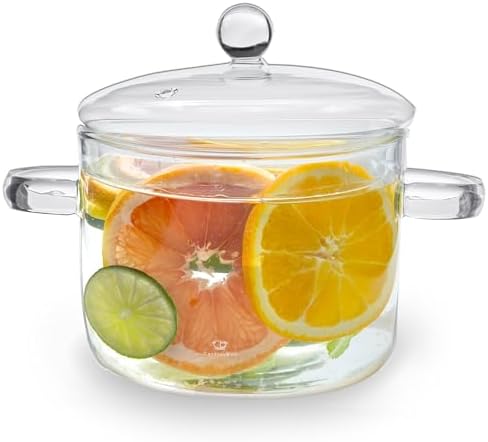
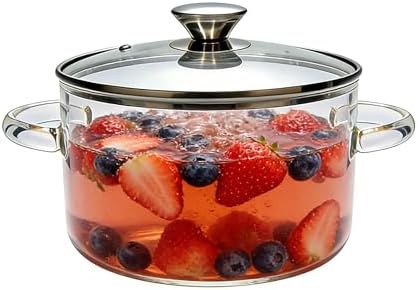
Glass kitchen cookware refers to pots, pans, saucepans, and baking dishes made from heat-treated glass rather than metal or ceramic.
The defining variable is not “glass” as a single material — it is which type of glass, and that distinction determines everything about performance and safety.
The two types of glass used: Borosilicate vs Soda-lime
The table below covers the six dimensions that matter most for cooking use.
| Dimension | Borosilicate glass | Soda-lime glass |
|---|---|---|
| Composition | Silica + 13–15% boron trioxide | Silica + sodium carbonate + lime |
| Thermal expansion | Very low (~3.3 × 10⁻⁶/°C) | Higher (~9 × 10⁻⁶/°C) — more than twice borosilicate |
| Thermal shock resistance | Withstands swings of up to 170°C without cracking | More susceptible to sudden temperature changes |
| Chemical stability | Resists leaching in acidic and alkaline foods; satisfies FDA and EU migration limits | Generally food-safe, but surface can degrade over time under repeated thermal stress |
| Lead /cadmium content | Zero by manufacturing standard | Typically zero in modern products; risk in vintage or unverified imported items |
| Price point | Higher — used in premium and lab-grade cookware | Lower — used in most mass-market glass bakeware |
For a deeper breakdown of material properties, see our complete borosilicate glass cookware guide.
Why China dominates global glass cookware production
China is the world’s largest producer of glass cookware by volume, accounting for the vast majority of products sold under both Chinese and Western brand names.


The concentration is geographic: Jiangmen (Guangdong Province) alone lists over 10,000 glass cookware suppliers on Made-in-China.com, followed by Foshan (6,500+), Zhongshan (5,500+), and Jinhua in Zhejiang (3,100+).
This scale is driven by vertically integrated supply chains, proximity to raw silica and boron sources, and decades of export-oriented manufacturing investment.
Many European and American brands, including those sold at major US retailers, are manufactured in these same clusters under OEM agreements.
Is China-made glass cookware safe? What the science says
The direct answer: yes, modern borosilicate glass cookware from certified Chinese manufacturers is among the safest cookware materials available.
The qualification matters; “modern” and “certified” are not decorative words. Here is what the research actually shows.
Lead, cadmium, and BPA: what leaches and what doesn’t
A 2021 study by Ortiz et al. found that cooking rice in glass cookware produced no detectable leaching of chromium or nickel.
A separate analysis published in the Journal of the Nigerian Society of Physical Sciences tested glass pots boiling water across pH 3–7 and found no potentially toxic metals (PTMs) at any level.
Borosilicate glass releases sodium into acidic foods at a rate approximately 50 times slower than lead crystal — and it contains no lead or cadmium by its manufacturing standard.
Its main ingredients, silica and boron trioxide, carry GRAS (Generally Recognized as Safe) status under FDA classification, and the material satisfies both FDA and EU food-contact migration limits without product-specific approval.
Key points to understand:
- BPA is not a risk in glass cookware — BPA is a chemical found in certain plastics, not in glass of any type.
- Lead is not present in borosilicate glass; the boron network locks the molecular structure and prevents leaching even under prolonged exposure to acidic foods.
- Soda-lime glass is also lead-free in modern production, but some vintage or unverified imported items with decorative glazes may contain lead or cadmium in the glaze layer — not in the glass body itself.
- The real risk is not the glass material; it is thermal shock failure, which can cause shattering. This is a physical safety issue, not a chemical one.
What certifications actually prove safety (FDA, LFGB, SGS, CIQ)
For a complete explanation of how to read and verify certification documents, see our glass cookware safety certifications explained guide.
| Certification | Issuer | What it tests | Required for | How to verify |
|---|---|---|---|---|
| FDA (21 CFR 174–179) | US Food & Drug Administration | Food-contact safety; migration limits for regulated substances | US market | Manufacturer’s Declaration of Conformity; no product-level registry |
| LFGB | German Federal Institute for Risk Assessment (BfR) | Stricter migration limits than FDA; heavy metals, sensory tests, overall migration | EU / German market | Test report from accredited lab (e.g. SGS, TÜV, Intertek) |
| SGS | SGS Group (third-party lab) | Variable — covers heavy metals, REACH, RoHS depending on scope | Global; buyer-specified | Batch-specific test report with SGS job number, verifiable at sgs.com |
| CIQ | China Inspection and Quarantine | Export inspection for food-contact products leaving China | Chinese export regulation | CIQ stamp on export documentation |
LFGB is a meaningfully stricter standard than the FDA. It imposes lower permitted migration limits for heavy metals and requires both overall migration and specific substance testing.
When a supplier holds both FDA and LFGB certification, the LFGB documentation is the stronger evidence of safety compliance.



The Made-in-China.com platform lists more LFGB-certified glass cookware products (10,224) than FDA-certified ones (9,798) — reflecting how strongly the Chinese export industry has aligned with EU requirements.
The one marking that tells you which glass type you have
Many listings describe glass cookware as “heat-resistant” without specifying which type of glass it is. Here is a reliable three-step identification method:
- Check the product label for “borosilicate” or “high borosilicate” (also written as “HB glass” or “3.3 glass”) — if neither term appears, assume soda-lime until proven otherwise.
- Look for ISO 3585 compliance — this is the international standard for borosilicate glass 3.3 and confirms the thermal expansion coefficient is at or below 3.3 × 10⁻⁶/°C.
- For Pyrex specifically: products labelled “PYREX” (all caps) are borosilicate glass; products labelled “pyrex” (lowercase) sold in the US are soda-lime glass. European Pyrex remains borosilicate.
Best China glass kitchen cookware brands for consumers
The best Chinese glass cookware brands for consumers are those that clearly state their glass type, hold third-party safety certifications, and have documented post-sale support.
The following comparison is based on publicly available certification data and verified product specifications.
Best overall: brands with full borosilicate + third-party certification
| Brand | Glass type | Key certifications | Price range (set) | Notable strengths |
|---|---|---|---|---|
| Visions (Arc International) | Glass-ceramic (Pyroceram) | FDA, LFGB | $40–$120 | Stovetop-safe; non-porous; French manufacturing with Chinese distribution |
| Simax (Kavalierglass) | Borosilicate 3.3 | LFGB, ISO 3585 | $25–$90 | Czech-manufactured; widely distributed; strong thermal shock rating |
| Uiifan | Borosilicate | FDA | $20–$55 | Budget-accessible; wooden-handle design; strong Amazon reviews |
| Hario (Japan, China-made lines) | Borosilicate | FDA, LFGB | $30–$100 | Lab-grade borosilicate heritage; clear certification documentation |
Best budget: certified soda-lime glass options
If borosilicate is outside your budget, soda-lime glass cookware from certified manufacturers is a safe and practical alternative, with the caveat that it requires more careful handling around temperature changes.
- Pyrex (US, soda-lime) — carries FDA approval and has a long domestic track record; avoid sudden stovetop-to-fridge transfers.
- Anchor Hocking — US brand, largely China-manufactured; FDA-compliant; strong for oven baking use cases.
- Generic “tempered glass” sets with LFGB documentation — acceptable if the test report is batch-specific and issued by a recognized lab; reject any listing that offers only a brand logo as certification evidence.
Brands to avoid and why (red flags in product listings)
Apply extra scrutiny — or walk away entirely — when a listing shows any of the following:
- No glass type stated — a product described only as “glass” or “heat-resistant glass” with no specification of borosilicate or soda-lime is a transparency failure.
- Certification logos with no supporting documentation — FDA and SGS logos on product images are not proof of certification; always request the actual test report with a batch/job number.
- “Crystal glass” cookware at low prices — crystal glass may contain lead; it is not appropriate for cooking use.
- No manufacturer name or factory address — legitimate suppliers have traceable registration; anonymous listings on wholesale platforms are high-risk for quality inconsistency.
- Claims of induction compatibility for glass — standard glass and borosilicate glass are not magnetic and will not work on induction cooktops; any claim to the contrary is false.
Glass cookware vs stainless steel, non-stick, and ceramic: which wins for your kitchen?
Glass cookware is not the best material for every cooking task, but it is the best material for a specific and valuable set of tasks.
Understanding where each material wins prevents the most common buying mistake: purchasing glass cookware, expecting it to replace a full pan set.
For a complete breakdown across all materials, see our cookware material comparison: glass, ceramic, steel, and non-stick.
Head-to-head comparison across 6 dimensions
| Dimension | Glass | Stainless steel | Non-stick (PTFE) | Ceramic |
|---|---|---|---|---|
| Chemical safety | ★★★★★ — inert, no leaching | ★★★★ — trace nickel possible | ★★★ — degrades at high heat | ★★★★ — generally inert |
| Heat distribution | ★★★ — uneven on stovetop | ★★★★★ — excellent with clad construction | ★★★★ — good | ★★★★ — good |
| Thermal shock risk | ★★ — soda-lime; ★★★★ — borosilicate | ★★★★★ — no risk | ★★★★★ — no risk | ★★★ — moderate |
| Transparency/ monitoring | ★★★★★ — see food while cooking | ✗ — opaque | ✗ — opaque | ✗ — opaque |
| Durability | ★★★ — breakable | ★★★★★ — near-indestructible | ★★★ — coating degrades | ★★★★ — chips over time |
| Induction compatible | ✗ | ★★★★★ | ★★★ (magnetic base only) | ★★★ (some) |
Which cooking tasks does glass excel at (and where it fails)
Glass cookware is the right choice for:
- Simmering soups, stocks, and sauces — the non-porous surface absorbs no flavours, and you can monitor liquid levels and colour through the pot wall.
- Oven baking and roasting — particularly for dishes that go from oven to table, since glass is an effective serving vessel.
- Reheating in the microwave — glass is microwave-safe and does not interact with radiation the way some metals do.
- Food storage — glass does not absorb odours or stains, making it superior to plastic for leftovers.
Glass cookware performs poorly for:
- High-heat searing and frying — glass distributes heat unevenly and cannot handle the rapid temperature extremes required for a proper sear.
- Induction cooking — standard glass has no magnetic properties and will not couple with an induction hob.
- Wok-style stir-frying requires rapid heat changes and high flame contact that glass cannot safely absorb.
How to use China glass cookware safely: stovetop, oven, and microwave
Borosilicate glass cookware is safe across a wide range of cooking environments, but the safe envelope is not unlimited. Understanding compatibility by heat source prevents both poor results and breakage.
Compatibility guide: gas, electric, induction, microwave, oven
| Heat source | Borosilicate glass | Soda-lime / tempered glass | Notes |
|---|---|---|---|
| Gas stovetop | ✓ with care | ⚠ avoid direct high flame | Use a heat diffuser; keep flame below base diameter |
| Electric coil stovetop | ✓ | ⚠ use low–medium heat only | Ensure flat base makes full contact |
| Ceramic / halogen cooktop | ✓ | ✓ | Most compatible stovetop type for glass |
| Induction cooktop | ✗ | ✗ | Glass is non-magnetic; not compatible without a separate iron disc adapter |
| Conventional oven | ✓ up to 260°C (500°F) | ✓ up to ~230°C (450°F) | Always preheat oven before inserting cold glass |
| Microwave | ✓ | ✓ | One of the safest microwave materials available |
| Freezer | ✓ | ⚠ allow to reach room temp first | Never transfer frozen glass directly to heat |
| Dishwasher | ✓ | ✓ | Use gentle cycle; avoid abrasive detergents |
How to prevent thermal shock and cracking: 7 care rules
Thermal shock — the mechanical stress caused by a rapid temperature differential across the glass — is the primary cause of glass cookware failure. These seven rules eliminate most of the risk:
- Never place cold glass on a hot burner. Allow glass pots to reach room temperature before applying heat, or start on the lowest setting and increase gradually.
- Never transfer glass directly from the freezer to the stovetop or oven. Allow at least 10–15 minutes at room temperature first.
- Always preheat the oven before placing glass bakeware inside; placing glass in a cold oven that then heats is lower-risk than placing it in an already-hot oven.
- Use a heat diffuser on gas burners to eliminate direct flame contact with the glass base.
- Do not place a hot glass pot on a cold, wet, or metal surface. Use a trivet or wooden board.
- Retire chipped or scratched glass cookware immediately. Surface damage concentrates thermal stress and dramatically increases crack risk.
- Avoid abrasive cleaning pads — they create micro-scratches that become stress points over time. Use a soft sponge and, for staining, a white vinegar soak.
For a full reference on long-term maintenance, see glass cookware care and maintenance tips.
Sourcing China glass cookware in bulk: a factory buyer’s guide
China is not a single source for glass cookware; it is six distinct manufacturing clusters, each with different specializations, quality tiers, and price structures.
Understanding the geography before approaching suppliers will save significant time in shortlisting.
Top 5 factory regions in China and what they specialize in
| City / Province | Primary specialism | Products known for | Quality tier | Supplier count (MIC) |
|---|---|---|---|---|
| Jiangmen, Guangdong | High-volume consumer glass cookware and tableware | Glass pots, bowls, storage sets — broad SKU range | Budget to mid | ~10,020 |
| Foshan, Guangdong | Ceramic-glass hybrids; decorative glassware | Serving dishes, glass-ceramic hybrids | Mid to premium | ~6,541 |
| Zhongshan, Guangdong | Glass lighting and cookware components | Cookware parts, glass lids, handles | Budget to mid | ~5,560 |
| Jinhua, Zhejiang | Export-focused cookware and kitchenware sets | Complete cookware sets for Western markets | Mid | ~3,152 |
| Shanxi Province | Borosilicate and laboratory-grade glass | High borosilicate cookware, scientific glass | Premium | Smaller; specialist |
Supplier counts from the Made-in-China platform data (2025). Jiangmen and Foshan in Guangdong are the correct starting points for most consumer cookware orders.
Shanxi is the correct starting point if your specification requires certified borosilicate glass 3.3 or ISO 3585 compliance.
How to vet a Chinese glass cookware supplier: 8-step checklist
For a detailed walkthrough of each step with document templates, see how to vet a Chinese cookware supplier.
- Verify business registration on China’s National Enterprise Credit Information Publicity System (gsxt.gov.cn) using the supplier’s Unified Social Credit Code.
- Confirm Audited Supplier status on the sourcing platform (Made-in-China, Alibaba) — this indicates a paid third-party factory audit, not just self-declaration.
- Request batch-specific certification documents for FDA, LFGB, or SGS as applicable to your target market — batch-specific means the test report references the actual product SKU and production date, not a generic material certificate.
- Order physical samples before committing to an MOQ — test for thermal shock resistance by moving a filled pot from a 200°C oven to a room-temperature surface.
- Confirm glass type in writing — require the supplier to state “borosilicate glass 3.3” or “soda-lime glass” in the pro-forma invoice; vague terms like “high-quality glass” are not acceptable for compliance documentation.
- Clarify OEM/ODM terms and IP ownership — establish in writing who owns the mould tooling after the initial mould fee is paid.
- Use a trade assurance or escrow payment mechanism for first orders — this provides recourse if product quality deviates from approved samples.
- Commission a pre-shipment inspection (PSI) through an independent quality control firm (SGS, Bureau Veritas, QIMA) before the final balance is released.
OEM and ODM: what customization is possible and at what MOQ
Most established Chinese glass cookware factories offer both OEM (you provide the design; they manufacture) and ODM (they provide existing designs that you brand). The practical difference for buyers is tooling cost and lead time.
For OEM orders with custom moulds, expect:
- Mould costs: RMB 8,000–50,000 depending on complexity; this is typically a one-time cost amortized over production runs.
- Minimum order quantities: 500–2,000 units per SKU for standard borosilicate items; higher for custom shapes requiring new tooling.
- Lead time: 45–90 days for first production run, including sample approval; 30–45 days for repeat orders.
- Customization options: logo engraving or printing on glass, custom packaging, handle colour and material, lid design, and set composition.
For ODM orders using the factory’s existing designs, MOQs are lower (200–500 units in many cases) and lead times are shorter since no new tooling is required.
China glass kitchen cookware — your questions answered
Is glass cookware from China safe to use every day?
Yes, provided it is certified borosilicate or modern soda-lime glass with third-party safety documentation (FDA, LFGB, or SGS). Borosilicate glass is chemically inert, leaches no heavy metals, and carries GRAS status under FDA classification.
The qualification is certification: uncertified products from unverified sources carry quality risks that certified products do not.
How can I tell if my glass cookware is borosilicate or soda-lime?
Look for the words “borosilicate,” “high borosilicate,” or “3.3 glass” on the product label or in the specification sheet. If those terms are absent, assume soda-lime. For Pyrex: “PYREX” (all caps) is borosilicate; “pyrex” (lowercase, US market) is soda-lime.
Does borosilicate glass contain lead or cadmium?
No. Borosilicate glass contains no lead, cadmium, or BPA by its manufacturing standard — these substances are not present in the glass composition.
The only glass cookware associated with lead risk is vintage crystal glassware and certain decorative glazed items, neither of which is sold as functional cookware by reputable manufacturers.
Can I use Chinese glass cookware on a gas stovetop?
Yes, with a heat diffuser placed between the burner and the glass base. Direct high-flame contact with gas creates uneven heating that can stress the glass, particularly soda-lime glass.
Borosilicate glass is more tolerant, but a diffuser is still the best practice for gas for any glass cookware.
What is the minimum order quantity for glass cookware from a Chinese factory?
For ODM orders using existing factory designs, MOQs typically start at 200–500 units per SKU. For OEM orders with custom moulds, expect 500–2,000 units, plus a one-time mould fee.
Some factories offer sample orders of 10–50 units at a premium unit price before committing to full production runs.
Which Chinese cities are the main hubs for glass cookware production?
Jiangmen and Foshan in Guangdong Province are the largest hubs by supplier volume, together accounting for over 16,000 listed suppliers.
Shanxi Province is the specialist hub for borosilicate and lab-grade glass. Jinhua in Zhejiang is strong for export-focused complete cookware sets targeting Western retail markets.
Is LFGB a stronger safety standard than the FDA for glass cookware?
Yes. LFGB (the German food-contact materials law, aligned to EU Regulation 10/2011) imposes lower permitted migration limits for heavy metals and requires broader substance testing than the FDA’s 21 CFR framework.
When a supplier holds both certifications, LFGB documentation is the stronger safety evidence, and the reason is that more Chinese export-market glass cookware carries LFGB certification than FDA.
Why does glass cookware crack, and how can I stop it?
Glass cookware cracks due to thermal shock, the stress created when one part of the glass expands or contracts faster than another.
Prevention is simple: never move glass directly between extreme temperatures (frozen to hot; hot to cold surface), always start heat on a low setting, and retire any chipped or scratched pieces since surface damage concentrates thermal stress.
Is Pyrex still made from borosilicate glass?
In the US, Pyrex cookware sold by Corelle Brands has been made from tempered soda-lime glass since 1998, not borosilicate. European Pyrex, manufactured by Arc International in France, remains borosilicate.
The distinction is visible in the capitalization: “PYREX” (all caps) = borosilicate; “pyrex” (lowercase) = soda-lime.
What’s the price difference between OEM and stock glass cookware from China?
Stock (ODM) orders are typically 20–40% cheaper per unit than OEM orders because no new tooling is required and production can begin immediately.
OEM orders carry a one-time mould cost of RMB 8,000–50,000 but produce lower per-unit costs at scale and give you proprietary product designs that cannot be replicated by other buyers from the same factory.
About the Author & Reviewer
Sarah Emirone, Author
Sarah researches and writes SafeKitchn’s dinnerware and kitchenware guides, with a focus on material safety, lead content, and manufacturer specifications. She cross-references product data sheets, safety certifications, and regulatory filings (including FDA and Prop 65 records) before publishing, and updates articles when new information becomes available.
James Daniels, Reviewer
James reviews SafeKitchn’s material safety content for scientific accuracy. He holds a B.Sc in inorganic chemistry and works as a materials researcher, with particular focus on the composition and safety behavior of glass, ceramic, and metal used in kitchenware.