

If you’re searching for unbreakable dishes like Corelle, you’re likely trying to solve one of two problems: you want to know whether Corelle itself lives up to its reputation, or you need something that performs better for your specific situation, kids, elderly parents, camping, or daily high-volume use.
This guide covers both. It separates what “unbreakable” actually means from what manufacturers claim, explains the safety limitations that most buying guides skip entirely, and gives you a clear material recommendation based on your use case, not a list of everything and a shrug.
Written by Sarah Emirone | Reviewed by James Daniels, B.Sc, Inorganic Chemist & Materials Researcher | Updated September 2026 | See How We Test | Filed under: Buying, Care & Product Guides
What “Unbreakable” Actually Means — and Why Corelle Is a Good Place to Start
The word “unbreakable” appears on packaging, in reviews, and across dozens of buying guides, but no dinnerware is truly unbreakable.
What manufacturers mean, and what you should look for, is break-resistant: a material that can survive drops and daily use far better than standard ceramic or porcelain.
Corelle is the most well-known name in this category, and for good reason. Its Vitrelle glass technology set a benchmark when it launched in 1970, which most alternatives still struggle to match in terms of the combination of weight, durability, and microwave safety.
How Corelle’s Vitrelle Glass Works
Vitrelle is a proprietary three-layer laminated glass developed by Corning. Two outer layers of glass sandwich a middle layer of a different glass composition, and the three are thermally fused.
This lamination process is what gives Vitrelle its unusual combination of properties: it is roughly half the weight of standard ceramic at the same plate size, chip-resistant at the edges, and rated for microwave, dishwasher, and oven use up to 350°F.
The non-porous surface does not absorb food odors, stain under normal use, or leach chemicals into food. Post-2005 Corelle collections are certified lead-free and meet FDA and California Prop 65 standards.
Corelle backs the material with a three-year limited warranty against chips and breakage under normal use.
The Real Limitation: Break-Resistant Is Not Shatterproof
Corelle breaks — and when it does, it breaks into fine, scalpel-sharp glass fragments. This is the most important fact most buying guides omit.
Because Vitrelle is a tempered and laminated glass, it does not crack the way ceramic gradually does. When it fails (typically from a direct edge impact on a hard floor, or from rapid thermal shock such as placing a hot plate on a wet, cold surface), it can shatter into dozens of very small, very sharp pieces.
Consumer communities have documented this consistently, and it is the reason some households with young children specifically choose not to use Corelle.
By contrast, melamine bends or scratches without fragmenting, and stainless steel dents. If the consequence of a drop shattering into dangerous shards is a concern in your household, Corelle is not the safest option despite its reputation for durability.
The Four Main Materials Used in Unbreakable Dinnerware
There is no single best material for break-resistant dinnerware; there is a best material for your situation.
The four options that dominate this category are Vitrelle glass, melamine, wheat straw fiber, and stainless steel. Each has a defined set of strengths and a hard limit that buyers frequently discover after purchase.

- 18 piece set includes 6 dinner plates, 6 appetizer/snack plates, 6 soup/cereal bowls
- In go-with-everything classic white, this is the dinnerware set that takes you from everyday meals to casual get-togethe…
- Nothing-else-like-it, triple-layer-strong glass plates and bowls highly resist chips and cracks
Vitrelle Glass (Corelle and Similar)
- Microwave, dishwasher, and oven-safe (up to 350°F), making it the most versatile material in the category.
- Lightweight — approximately half the weight of ceramic of equivalent size, which matters for elderly users and for stacking large sets in small cupboards.
- Non-porous and non-leaching — does not absorb food flavors or release chemicals under normal food contact conditions.
- Long lifespan — consumer reports of 15–20 years of daily use without breakage are common.
- Shard risk on impact — when it does break, Vitrelle fragments into sharp pieces rather than large chunks; this is the primary drawback versus other materials in this category.
- Not truly drop-proof — a hard drop on tile or stone flooring can cause breakage, particularly at the plate edge.
- Best for: Indoor daily household use for adults; households where microwave and oven use is frequent.
Melamine — and the Microwave Safety Problem Everyone Gets Wrong

- Complete Dinnerware for Everyday & Entertaining: This 12-piece set includes four dinner plates, four salad plates, and f…
- Crafted from Durable, Break-Resistant Melamine: Enjoy the elegant look of ceramic with the lightweight durability of mel…
- Vibrant Patterns that Mix & Match Beautifully: Designed to coordinate with the full Portofino collection, each piece can…
Melamine is the most widely sold “unbreakable” alternative to Corelle, and it is also the most frequently misrepresented one. For melamine dinnerware safety explained, the core fact is this: never microwave melamine — even if the set is labeled microwave-safe.
Here is why. Melamine is a thermosetting plastic resin. The US Food and Drug Administration (FDA) established two TDI values for melamine during 2008: first 0.63 mg/kg bw/day, then revised to 0.063 mg/kg bw/day for foods other than infant formula. The FDA maintains zero tolerance for melamine in infant formula.
The World Health Organization established a TDI of 0.2 mg/kg body weight/day for melamine in December 2008(The WHO explicitly stated this is not a “safe” level but rather a “tolerable” level for unavoidable contamination).
This was set by international experts convened in Ottawa, Canada, and is lower than previous TDI values suggested by some national authorities (e.g., the EU’s 0.5 mg). For a 50 kg person, this equals 10 mg melamine per day.
Research confirms that melamine migration increases significantly above 160°F (70–71°C) and is accelerated by acidic foods. A typical microwave cycle can easily bring food well above this threshold.
Despite this, many melamine sets sold on Amazon and in major retailers carry a “microwave safe” label. This label refers to the dish not warping in the microwave, not to the dish being safe for heating food in the microwave.
These are different claims, and the distinction is consistently lost in product listings.
- Truly shatterproof — will not fragment when dropped; bends or scratches under impact.
- Dishwasher safe (top rack only for most sets), but not safe for microwave use with food.
- Not suitable for hot foods above 160°F — heat accelerates chemical leaching regardless of microwave use.
- Not oven-safe under any circumstances.
- Best for: Outdoor dining, picnics, poolside use, and any setting where the dish will not be heated.
Wheat Straw Fiber
- Made from a natural byproduct of wheat harvesting, combined with food-grade polypropylene, marketed as BPA-free and non-toxic.
- Lightweight and shatterproof — will not break or fragment on impact; a strong choice for households with very young children.
- Microwave and dishwasher safe for most sets, though maximum heat tolerance is typically around 248°F — lower than Vitrelle.
- Scratches more easily than glass or stainless steel over time, and surface scratches can harbor bacteria if not cleaned thoroughly.
- Shorter lifespan than Vitrelle glass under daily indoor use — surface degradation typically appears within 2–4 years of regular use.
- Best for: Families with toddlers, camping and RV use, and settings where a fully shatterproof material is the primary requirement.
Stainless Steel
- Virtually indestructible under normal use — will dent under extreme impact but will not crack, chip, shatter, or leach chemicals.
- No chemical concerns — food-grade stainless steel is non-reactive, non-porous, and rated safe for all food temperatures.
- Not microwave-safe — stainless steel cannot be used in a microwave under any circumstances.
- Heavier than other options, which can be a drawback for elderly users; also conducts heat, so plates and bowls can become hot when used with hot foods.
- Best for: Camping, outdoor dining, institutional settings, and use cases where microwave access is not required.
Material Comparison at a Glance
Side-by-Side Feature Comparison
| Feature | Vitrelle Glass (Corelle) | Melamine | Wheat Straw | Stainless Steel |
|---|---|---|---|---|
| Drop-proof | No (shard risk) | Yes | Yes | Yes (dents) |
| Microwave safe | ✅ Yes | ⚠️ No (despite labels) | ✅ Yes (up to 248°F) | ❌ No |
| Dishwasher safe | ✅ Yes | ✅ Top rack | ✅ Yes | ✅ Yes |
| Oven safe | ✅ Up to 350°F | ❌ No | ❌ No | ❌ Not applicable |
| Chemical safety (heated) | ✅ Safe | ⚠️ Leaches above 160°F | ✅ Safe | ✅ Safe |
| Typical lifespan | 15–20+ years | 3–7 years | 2–4 years | 20+ years |
| Weight | Light | Medium | Very light | Heavy |
| Best use setting | Indoor daily | Outdoor /cold foods | Kids / outdoor | Camping / outdoor |
Which Material Is Safest for the Microwave?
| Material | Microwave Safety | Notes |
|---|---|---|
| Vitrelle Glass (Corelle) | ✅ Safe | Rated for microwave use; non-leaching |
| Wheat Straw Fiber | ✅ Safe (with limits) | Max ~248°F; avoid extended high-power cycles |
| Melamine | ⚠️ Not safe for food heating | Leaches cyanuric acid above 160°F regardless of labeling |
| Stainless Steel | ❌ Never microwave | Causes arcing and a potential fire hazard |
Best Unbreakable Dish Options by Use Case
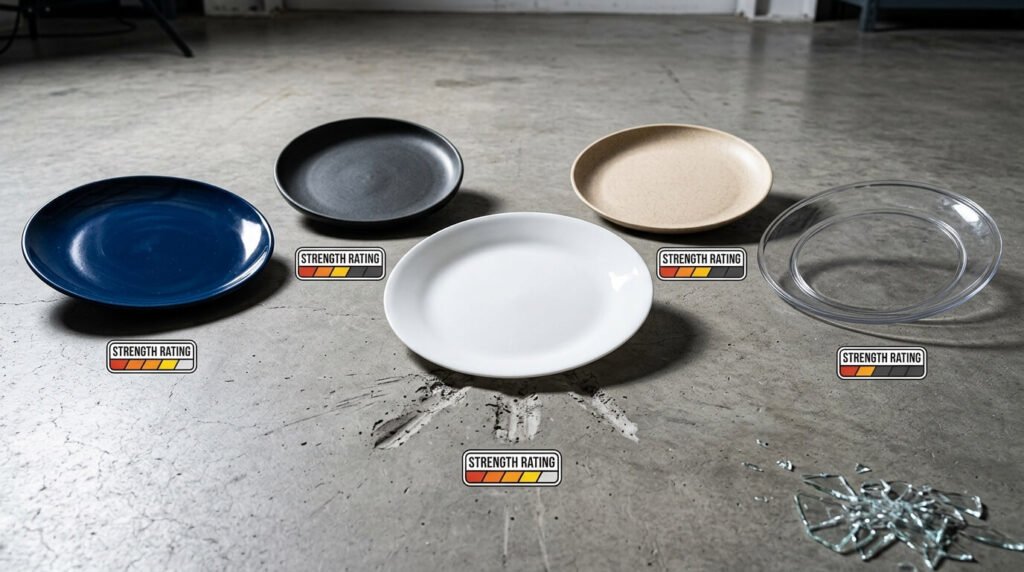
Choosing the right material depends on who is using the dishes, where, and how. The four most common situations each have a clear recommendation.
For Families With Young Children


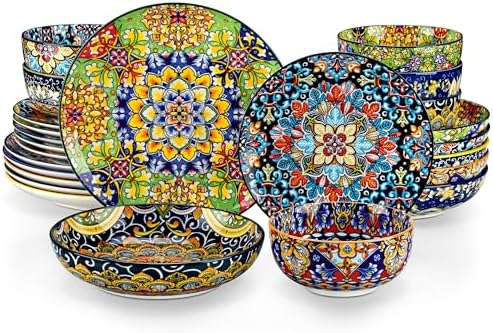
The priority for households with toddlers and young children is a material that does not shatter into sharp fragments on impact.
For this reason, wheat straw fiber or melamine is the safer choice over Corelle. Corelle, when dropped on hard flooring, can produce fine glass shards that are difficult to collect and dangerous to bare feet. Here are the top options ranked for child safety:
- Wheat straw fiber sets (e.g., Homienly, DINETHICS, Teivio) — shatterproof, BPA-free, microwave-safe, lightweight, and available in bright colors that suit children’s settings. The top choice for households where the microwave will also be used.
- Melamine sets (e.g., TP Melamine, Certified International) — shatterproof and highly durable, but must be kept out of the microwave; suitable if you consistently heat food in pots and transfer to plates, or serve room-temperature foods.
- Corelle Vitrelle — acceptable for older children (school age and above) in supervised settings, where the risk of drops on hard floors is lower than with toddlers.
For Elderly Adults or Anyone With Limited Grip
For dinnerware for the elderly and those with limited grip, the key requirements are lightweight, a secure non-slip feel in the hand, and a material that does not produce dangerous shards if dropped.
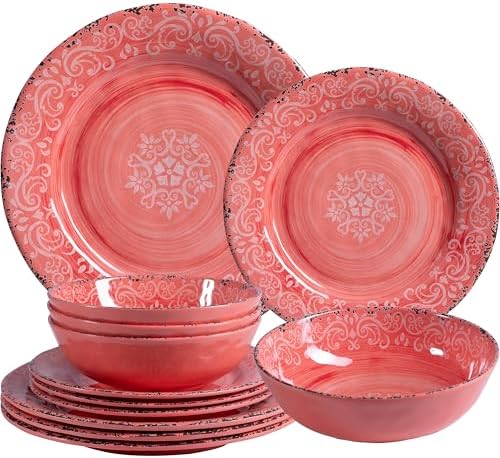


Stainless steel is too heavy. Heavy ceramic is entirely unsuitable. Here are the three best options:
- Corelle Vitrelle — the lightest option in this category and the one most commonly recommended by occupational therapists for aging adults; its low weight significantly reduces wrist and grip fatigue during meals and washing up. The shard-on-impact risk is real but manageable with non-slip mats and care.
- Wheat straw fiber — slightly heavier than Corelle but fully shatterproof; the better choice if the person using it frequently drops items or has very limited grip strength.
- Melamine with rubberized base — some melamine sets include a non-slip rubberized base ring, which improves stability on smooth surfaces; suitable for table use but not for reheating.
For Camping, RVs, and Outdoor Use
For the best camping dinnerware sets, weight, packability, and true shatterproof performance matter more than microwave compatibility.
Corelle is not ideal here; it is relatively fragile in pack conditions and produces dangerous shards if broken in a camp setting where bare feet and limited cleanup tools are the norm.
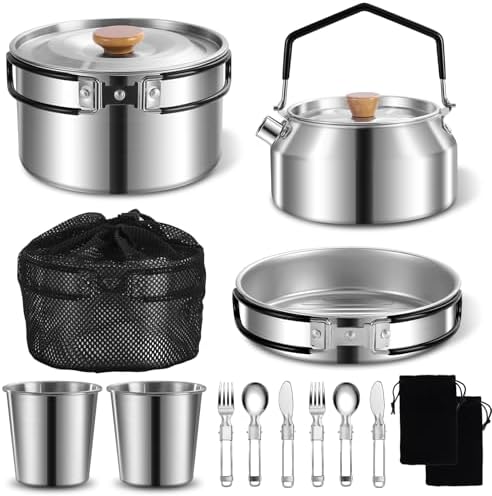
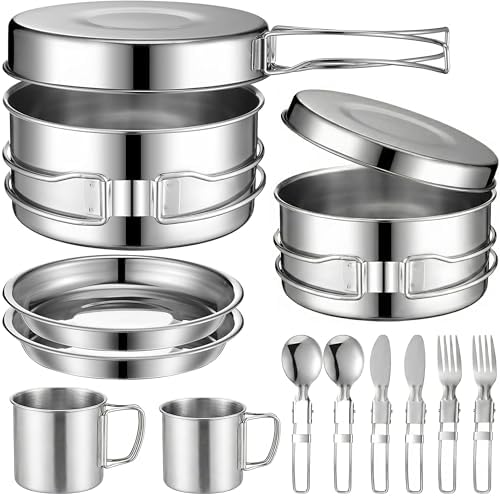
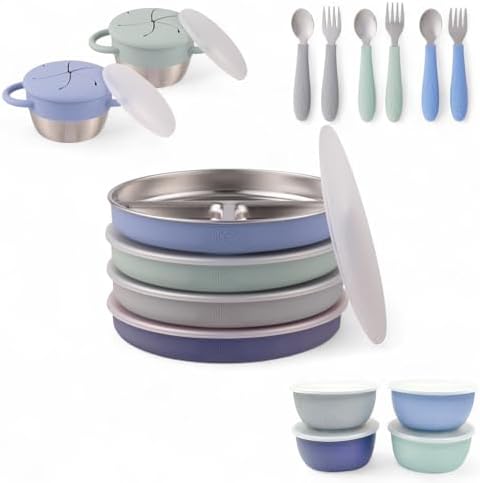
- Stainless steel (e.g., MSR Alpine, Stanley Wildfare, CAMPINGMOON) — virtually indestructible, easy to clean with minimal water, odor-resistant, and durable across seasons; the best choice for car camping and backpacking where a microwave is not available.
- Wheat straw fiber (e.g., DINETHICS, Homienly, CSYY sets) — lighter than stainless steel, shatterproof, microwave-safe for RV use, and available in full sets with bowls and cups; the best choice for RV travel where a microwave is available.
- Melamine — acceptable for picnic and poolside use where food is not heated in the dish; avoid for camping, where hot meals are directly heated in the dish.
For Everyday Indoor Home Use
For adults in a standard home setting with a dishwasher and microwave, the non-toxic dinnerware guide consistently points to the same conclusion: post-2005 Corelle Vitrelle is the best balance of durability, safety, microwave versatility, and long-term value.
At approximately $40–$65 for an 18-piece set serving six, it is priced below comparable alternatives.
- Corelle Vitrelle — the clear first choice for indoor adult households; handles all cooking methods, lasts 15–20+ years, and takes up minimal cupboard space due to its stackability.
- IKEA Oftast (see Corelle Alternatives below) — a budget tempered glass option worth considering for price-conscious buyers.
- Duralex (see Corelle Alternatives below) — a French-made tempered glass set rated 2.5× stronger than standard glass; the premium indoor option.
The Lead Safety Question — What You Need to Know About Older Corelle Dishes
The short answer on Corelle and lead: post-2005 Corelle collections are certified lead-free; pre-2005 decorated collections may not be.
Pre-2005 vs Post-2005 Corelle Collections
Vitrelle glass itself — the base material — has never contained lead or cadmium.
The concern applies specifically to the decorated patterns on older Corelle pieces. Decorative glazes and inks used before stricter FDA and California Prop 65 standards were widely adopted sometimes contained detectable levels of lead.
Independent testing of vintage Corelle pieces (particularly those with red, orange, and bright-colored patterns common in the 1970s through 1990s) has confirmed elevated lead readings in the decorative layer, not in the glass itself, but on the food-contact surface where the pattern is applied.
Corelle’s post-2005 collections are produced under more stringent standards and have consistently passed lead-free certification. Plain white Corelle (Winter Frost White) has never carried a documented lead concern.
How to Identify a Safe Corelle Collection
- Check the manufacture date on the back of the plate — most Corelle pieces include a date stamp or collection name that can be cross-referenced against production timelines.
- Choose post-2005 collections, or any currently sold collection with an FDA/Prop 65-certified lead-free designation.
- Avoid vintage decorated Corelle with bright red, orange, or heavily patterned rims if the manufacture date is unknown.
- For the safest option without any investigation required, choose Winter Frost White (the undecorated plain white collection) or any Corelle collection currently sold new with a lead-free certification on the packaging.
- Consult the lead-free dishes test done at home if you are replacing a collection and want independently verified options across multiple brands.
Corelle Alternatives Worth Considering
Corelle is the benchmark, but it is not the only option in the tempered or laminated glass category, and for some buyers, a different brand will be a better fit on price, weight preference, or design.
IKEA Oftast — The Budget Tempered Glass Option
IKEA’s Oftast line is the most frequently cited Corelle alternative in consumer discussions, and for good reason. The plates are made from standard tempered glass rather than Vitrelle’s three-layer laminate, which means they are slightly heavier and less chip-resistant at the edges.
However, they are microwave and dishwasher-safe, non-porous, and priced well under a dollar per plate new making them the most affordable glass dinnerware option available in most markets.
The design is plain white only, which suits buyers who want a clean aesthetic without Corelle’s pattern licensing costs.
The trade-off of IKEA Oftast versus Corelle is durability: Oftast will chip at the edges more readily than Vitrelle and has no manufacturer’s warranty against breakage.
Duralex — The French Tempered Glass Alternative
Duralex is a French manufacturer with a long history in tempered glassware. Its dinnerware is rated at 2.5 times the strength of standard glass, and the brand markets specifically on thermal shock resistance — a property that makes it well-suited for serving hot foods and for households that move dishes frequently between the refrigerator and the table.
Duralex is lead-free, cadmium-free, and BPA-free. It is heavier than Corelle Vitrelle but lighter than most ceramics.
The design range is limited (primarily clear and amber glass), which makes it a better fit for buyers who prioritize durability and material safety over pattern variety.
Pricing is higher than IKEA Oftast but in a similar range to mid-tier Corelle sets. For the best dinnerware sets for everyday use, Duralex represents the premium tempered glass option.
Anchor Hocking — USA-Made Tempered Glass
Anchor Hocking produces tempered glass dinnerware manufactured in the United States, which is relevant to buyers who specifically want domestic production.
The glass is lead-free and cadmium-free, microwave and dishwasher-safe, and priced comparably to Corelle.
Anchor Hocking dinnerware is heavier than Vitrelle and lacks the three-layer lamination that gives Corelle its edge-chip resistance, but it is a well-regarded, non-toxic option for buyers who want an American-made alternative.
Design options are limited compared to Corelle’s full pattern catalog but include several clean, modern styles suited to everyday use.
Looking for the right set for your household? Use the use-case guide above to identify your material, then check the comparison table to confirm microwave and oven compatibility before you buy. If you are replacing older decorated Corelle, cross-reference your collection against current lead-free certifications before continuing to use the pieces for hot food.
Frequently Asked Questions
Q: What unbreakable dishes are completely dishwasher and microwave-safe?
Corelle Vitrelle and wheat straw fiber sets are both dishwasher and microwave-safe. Vitrelle handles higher microwave temperatures and is also oven-safe, making it the more versatile of the two.
Melamine and stainless steel are not safe for microwave use under any circumstances.
Q: What is the difference between Corelle and CorningWare?
These are distinct products despite sharing the Corning brand history. Corelle is made from Vitrelle laminated glass and is designed for serving, microwaving, and oven use up to 350°F.
CorningWare is made from Pyroceram glass-ceramic and is designed for stovetop and high-temperature oven use. They are not interchangeable, and CorningWare is not marketed as break-resistant dinnerware in the same category as Corelle.
For a detailed comparison, read: CorningWare vs Corelle.
Q: How long do Corelle dishes typically last?
Under normal indoor household use, Corelle Vitrelle dishes commonly last 15–20 years or longer. Consumer accounts of sets remaining chip-free and intact after 20+ years of daily use are not unusual.
The primary causes of early breakage are hard floor drops (particularly on tile or stone) and rapid thermal shock from temperature extremes.
Q: Are wheat straw plates safe for toddlers?
Wheat straw fiber plates made from food-grade polypropylene are BPA-free, non-toxic, and shatterproof, making them one of the safest options for toddlers.
Verify that any set is certified BPA-free and gluten-free (relevant for households managing celiac disease, as trace wheat fiber can be present in lower-quality sets).
Avoid using damaged or heavily scratched wheat straw plates, as surface scratches can harbor bacteria.
Q: What breaks more dangerously — Corelle or ceramic?
Corelle produces finer, sharper fragments on breakage than standard ceramic. Standard ceramic typically breaks into a small number of larger pieces that are easier to collect.
Corelle’s Vitrelle glass, when it fails, can produce many small, very sharp shards that scatter across a wider area and are harder to see and collect completely.
For households where breakage risk is high, toddlers, and elderly adults with limited stability, fully shatterproof materials (wheat straw, melamine, stainless steel) eliminate this risk.
About the Author & Reviewer
Sarah Emirone, Author
Sarah researches and writes SafeKitchn’s dinnerware and kitchenware guides, with a focus on material safety, lead content, and manufacturer specifications. She cross-references product data sheets, safety certifications, and regulatory filings (including FDA and Prop 65 records) before publishing, and updates articles when new information becomes available.
James Daniels, Reviewer
James reviews SafeKitchn’s material safety content for scientific accuracy. He holds a B.Sc in inorganic chemistry and works as a materials researcher, with particular focus on the composition and safety behavior of glass, ceramic, and metal used in kitchenware.