

If you’ve spent any time hunting through thrift stores or browsing vintage kitchenware online, you know how easy it is to mix up brands from the same era. So is Gemco the same as Corelle?
It’s a fair question; both names show up often in conversations about retro kitchen glassware, and both were popular household staples during the mid-20th century. But the short answer is no.
Gemco and Corelle are completely separate brands with different histories, different product focuses, and different materials. This article breaks down exactly what sets them apart, so you can shop, collect, or simply satisfy your curiosity with confidence.
Written by Sarah Emirone | Reviewed by James Daniels, B.Sc, Inorganic Chemist & Materials Researcher | Updated September 2026 | See How We Test | Filed under: Buying, Care & Product Guides
What Is Gemco?
Overview of the Gemco Brand
Gemco was an American kitchenware brand that became a recognizable name in households from the 1950s through the 1980s. Known for practical, everyday glass and kitchen accessories, Gemco carved out its place in the mid-century kitchen.
The brand specialized in serving ware, storage solutions, and glass accessories that fit neatly into the retro kitchen décor of the time.
While it never achieved the same level of name recognition as some of its contemporaries, vintage kitchenware collectors today actively seek out Gemco pieces for their nostalgic charm.
Products Commonly Made by Gemco
Gemco manufactured a wide range of kitchen accessories and serving ware. Some of the most commonly found Gemco products include:
- Glass carafes and coffee carafes are used for everyday beverage service
- Syrup dispensers popular on breakfast tables
- Oil and vinegar cruet sets for dining tables
- Spice rack jars designed for organized kitchen storage
- Glass pitchers and serving accessories
- Kitchen storage containers and glass lids
These products reflect Gemco’s focus on functional kitchen glassware rather than dinnerware sets, which is one of the clearest distinctions between Gemco and Corelle.
Materials Used in Gemco Products
Gemco products were typically constructed from a combination of glass, plastic, and metal components. The glass used in Gemco pieces was standard consumer glassware, functional and practical, but not the engineered, laminated glass associated with Corelle dinnerware.
Plastic components appeared frequently in lids, handles, and caps, while metal was used in racks and dispenser parts.
This mix of materials made Gemco products well-suited for everyday household utility, though they don’t share the specialized glass engineering that defines Corelle.
What Is Corelle?
Overview of the Corelle Brand
Corelle is a dinnerware brand developed by Corning Glass Works, the same company behind Pyrex and CorningWare.
Launched in 1970, Corelle quickly became a household staple thanks to its lightweight tempered glass dishes that were far more durable than traditional ceramic dinnerware.
Corning’s deep background in glass technology gave Corelle a distinct edge in the market, and it remains one of the most recognized glass dinnerware brands today.
Currently managed under the Instant Brands umbrella, Corelle continues to produce everyday dinnerware sets sold in homes worldwide.
What Makes Corelle Different?
What truly sets Corelle apart is its proprietary Vitrelle glass technology. Vitrelle is a triple-layer laminated glass material that gives Corelle dishes their signature strength and lightness.
This glass lamination process bonds three layers of glass together, resulting in plates and bowls that resist breaking and chipping far better than standard ceramic dinnerware.
The tempering process used during manufacturing further strengthens the material, giving Corelle dishes strong glassware durability that holds up well to daily use.
It’s this engineered construction, not just the glass itself, that makes Corelle genuinely different from other kitchenware brands of its era.
Common Corelle Products
Corelle’s product lineup focuses entirely on dinnerware and table settings. Common Corelle products include:
- Dinner plates and tempered dinner plates in a range of sizes
- Lightweight glass bowls for cereal, soup, and serving
- Complete dinnerware sets are sold as coordinated collections
- Mugs and cups designed to match plate patterns
All of these fall under Corelle’s Livingware and Boutique dinnerware product lines, which feature the distinctive Corelle patterns that collectors know well, such as the iconic Butterfly Gold and Spring Blossom designs.
Is Gemco the Same Company as Corelle?
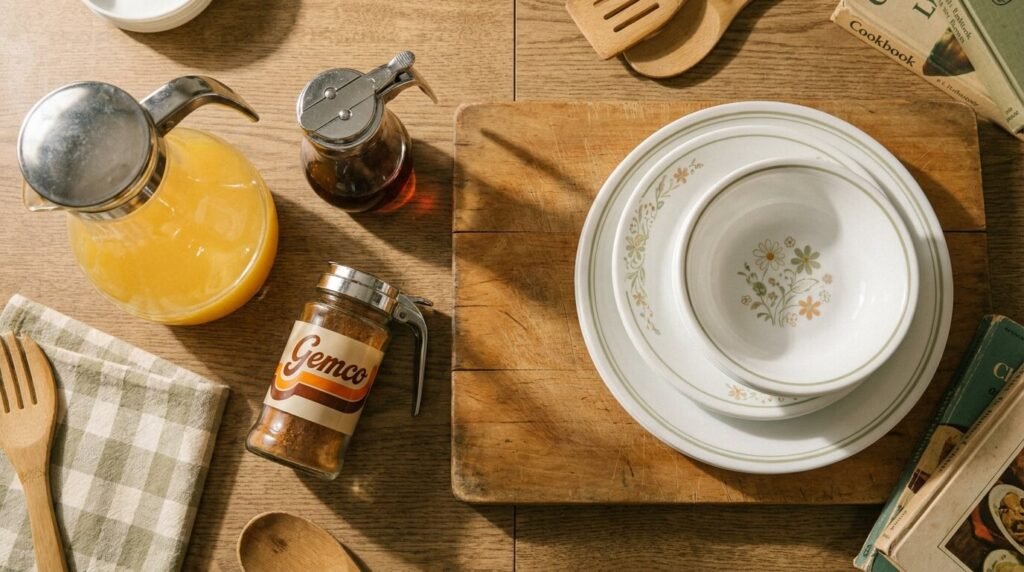
No — Gemco and Corelle are not the same company, and they never were. They are two entirely separate brands with no shared corporate ownership or manufacturing history.
Though both were popular household names during overlapping decades, they operated independently and served different segments of the kitchenware market.
Gemco focused on glassware accessories and serving products, while Corelle built its identity around engineered glass dinnerware.
Ownership and Manufacturing Differences
Corelle was developed and manufactured by Corning Glass Works, a company with deep roots in American glass industry innovation going back to the 19th century.
Corning’s consumer product division produced not just Corelle but also Pyrex and CorningWare — all of which share Corning’s heritage in advanced glass engineering.
Gemco, on the other hand, was a separate housewares company with no connection to Corning. Gemco manufactured and distributed its products independently, with a focus on kitchen accessories rather than engineered dinnerware.
Did Gemco Ever Produce Corelle Products?
No. Gemco never produced Corelle products. Corelle dishes were manufactured exclusively by Corning and later by Corelle Brands.
The Vitrelle glass technology at the core of Corelle dinnerware was patented by Corning and was never licensed to or used by Gemco.
If you come across a piece labeled as Gemco that someone claims is Corelle, it’s worth double-checking the markings, as the two brands have distinct logos and product identities.
Why People Confuse Gemco and Corelle
The confusion between Gemco and Corelle makes sense when you look at the context. Both brands were widely sold in American households during the 1960s through the 1980s.
Both were associated with glass kitchen products, and both carry a strong retro collectible appeal today. When people find older glass kitchen items at estate sales or thrift stores without clear labeling, it’s easy to group them mentally.
The overlap in era, aesthetics, and material — glass — is enough to blur the lines for anyone who isn’t actively collecting or researching vintage kitchenware brands.
Gemco vs Corelle: Key Differences
Product Categories Comparison
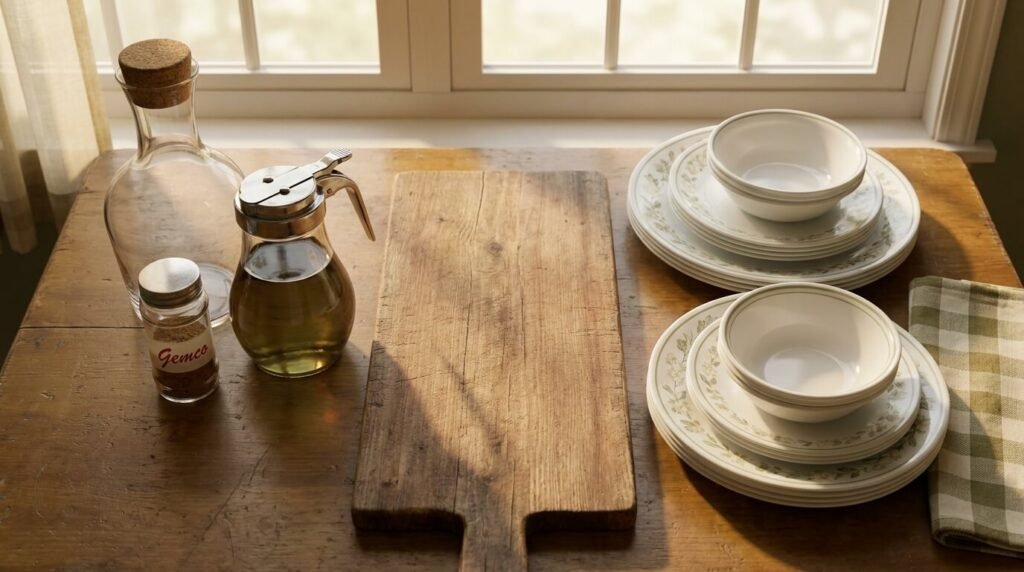
The clearest difference between Gemco and Corelle lies in what they actually made. Corelle produced dinnerware — plates, bowls, mugs, and sets designed for eating meals.
Gemco produced kitchen accessories and serving ware — carafes, dispensers, storage containers, and spice jars. These are fundamentally different product categories.
Corelle belongs in a kitchen product comparison alongside ceramic dinnerware brands like stoneware or porcelain. Gemco belongs alongside kitchen gadget and accessory brands.
Material and Construction Differences
Corelle dishes are made from Vitrelle glass — a triple-layer laminated glass engineered specifically for durability and lightness. This is a trademarked material developed through Corning’s glass-ceramic technology research.
Gemco products used standard soda-lime glass common to most consumer glassware, paired with plastic and metal components.
There’s no lamination, no proprietary tempering process, and no special glass engineering involved in Gemco’s manufacturing. The material gap between the two brands is significant.
Durability Comparison
Corelle dishes are well-known for their break resistance and chip resistance — two properties that come directly from the Vitrelle glass construction and the tempering process used in production.
Corelle plates are lightweight yet surprisingly tough, and they tend to shatter into large, relatively safe pieces rather than scattering into dangerous shards. G
emco products, while functional, don’t offer the same engineered durability. Standard glass carafes and containers are more susceptible to breaking under impact.
Collectibility and Vintage Appeal
Both brands attract vintage kitchenware collectors, but in different ways.
Corelle collectibles are driven largely by pattern demand — specific Corelle patterns like Butterfly Gold and Spring Blossom command steady interest in resale markets, including platforms like eBay and specialty services like Replacements Ltd.
Gemco collectibles appeal more to mid-century modern kitchen enthusiasts who appreciate the retro kitchen décor aesthetic of the brand’s serving pieces and glass accessories.
Everyday Use vs Decorative Value
Corelle dinnerware is still actively manufactured and sold for everyday use, meaning both vintage and new pieces serve a practical dining purpose. Gemco, as a discontinued brand, sits more in the decorative and collectible category.
Vintage Gemco pieces are often used as display items or conversation pieces in retro-styled kitchens rather than for daily utility.
Are Gemco and Corelle Collectible?
Vintage Gemco Collectibles
Gemco collectibles occupy a niche but genuine corner of the vintage housewares market. Glass carafes, syrup dispensers, and spice rack sets from the Gemco era are found in antique shops, estate sales, and online marketplaces.
Collectors drawn to mid-century kitchenware and retro dining culture seek these pieces for their design aesthetic and kitchen nostalgia value.
Vintage advertising featuring the Gemco brand also surfaces occasionally, appealing to collectors of vintage branding and packaging.
Vintage Corelle Patterns
Corelle collectors are a dedicated group. The brand’s many discontinued Corelle patterns are actively traded, with some generating significant resale interest.
Patterns like Butterfly Gold, Spring Blossom, and Old Town Blue are among the most recognizable. Corelle Collectors often build full sets by hunting individual pieces through thrift stores, online listings, and dinnerware replacement services.
The visual identity of each pattern gives Corelle a strong collectibility framework that Gemco doesn’t quite match in scale.
Which Brand Has Higher Collector Demand?
Generally, Corelle holds stronger and more organized collector demand. The sheer number of Corelle patterns, combined with the brand’s long manufacturing history and large existing user base, creates a robust secondary market.
Gemco collectibles are valued but operate in a smaller niche. If you’re measuring resale value and collector community size, Corelle tends to win.
That said, rare Gemco pieces in excellent condition can still command solid prices among the right buyers.
How to Identify Authentic Pieces
Glassware authentication starts with the markings. Genuine Corelle pieces are marked with the Corelle name and often include the pattern name on the back.
Vitrelle glass has a distinctive, lightweight, semi-translucent quality that’s easy to recognize once you’re familiar with it.
Gemco products typically carry the Gemco name stamped or etched on the glass or printed on labels. For both brands, using vintage product logos and kitchenware catalogs as references helps confirm authenticity, particularly for pieces found without original packaging.
Safety and Material Considerations
Are Vintage Gemco Products Food Safe?
For vintage Gemco glassware, the primary safety consideration is condition rather than material. Standard glass used in Gemco products doesn’t carry the same lead concerns associated with some vintage ceramic dinnerware.
However, any vintage glassware with cracks, chips, or etching should be retired from food use, as damaged surfaces can harbor bacteria or leach materials into food.
Plastic components on older Gemco pieces may also have degraded over time, which is worth examining before using them with food or beverages.
Corelle Lead and Safety Discussions
Corelle has faced questions in recent years regarding lead and cadmium in the decorative patterns on older dishes, particularly pieces manufactured before the 1990s.
This is a broader issue with vintage decorated dishware generally — the pigments used in older pattern printing sometimes contained materials now considered unsafe.
Corelle’s current product line is manufactured to meet modern safety standards. If you’re using vintage Corelle regularly, it’s worth researching the specific pattern and production year, or limiting decorative vintage pieces to display use.
Glass vs Plastic Kitchenware Safety
From a material standpoint, glass kitchenware, whether Corelle’s Vitrelle or standard consumer glass, is generally considered safer for food contact than many plastics, particularly older plastics that may contain BPA or other chemicals.
Tempered glass safety is well-established: even when Corelle dishes break, they tend to fracture into larger, less hazardous pieces compared to ordinary glass.
For everyday dining, Corelle’s microwave-safe and dishwasher-safe certifications make it a practical and reliable choice.
Best Practices for Using Vintage Kitchenware
Whether you’re using vintage Gemco or Corelle pieces, a few practices apply across the board. Always inspect pieces carefully for chips, cracks, or crazing before use.
Avoid using damaged glassware with hot liquids or food. Research the specific product and production era before regular food use.
When in doubt, reserve vintage pieces for display rather than daily meals. For collectors, proper storage away from humidity and direct sunlight preserves both the condition and value of vintage kitchen collectibles.
Conclusion
Gemco and Corelle are not the same brand. They were separate companies with different ownership, different manufacturing approaches, and different product categories.
Corelle was built by Corning Glass Works around the innovative Vitrelle glass technology, producing engineered dinnerware designed for durability and daily use.
Gemco was an independent kitchenware brand focused on glass accessories, serving ware, and storage products.
The confusion between them is understandable given their overlapping popularity during the mid-century era, but they represent distinct chapters in American kitchenware history.
Key Buyer and Collector Takeaways
Here’s what to keep in mind as a buyer or collector. Gemco’s strengths lie in retro kitchen accessories — carafes, dispensers, and decorative serving pieces that bring mid-century charm to a kitchen.
Corelle’s strengths lie in durable, everyday glass dinnerware with strong pattern collectibility and a still-active product line.
Neither brand is a substitute for the other because they never competed in the same product space to begin with.
Final Recommendation
Before purchasing any vintage kitchenware piece, take a moment to verify the brand markings and research the item’s production history. Authentication guides, collector communities, and vintage catalog references are all useful tools.
Whether you’re drawn to Gemco’s retro serving accessories or Corelle’s iconic dinnerware patterns, knowing exactly what you’re buying protects both your investment and your peace of mind.
When in doubt, let the markings guide you. Both brands had distinct identities worth understanding on their own terms.
About the Author & Reviewer
Sarah Emirone, Author
Sarah researches and writes SafeKitchn’s dinnerware and kitchenware guides, with a focus on material safety, lead content, and manufacturer specifications. She cross-references product data sheets, safety certifications, and regulatory filings (including FDA and Prop 65 records) before publishing, and updates articles when new information becomes available.
James Daniels, Reviewer
James reviews SafeKitchn’s material safety content for scientific accuracy. He holds a B.Sc in inorganic chemistry and works as a materials researcher, with particular focus on the composition and safety behavior of glass, ceramic, and metal used in kitchenware.