

When it comes to maintaining a kosher kitchen, every detail matters, from the food you prepare to the very dishes you use. For those who observe Jewish dietary laws, even the most elegant tableware can raise important questions.
Bone china, one of the world’s most prized and delicate porcelain types, is cherished for its luminous finish and fine craftsmanship. But its name alone hints at a potential concern: it contains bone ash.
So, is bone china kosher? This question touches on foundational principles of kashrut, including the prohibition against mixing meat and dairy and the status of non-kosher animal-derived materials.
Understanding the answer requires a closer look at how bone china is made, what Jewish law says about bitul (nullification), and how leading rabbinic authorities have ruled on this nuanced issue.
| Question | Short Answer | Section |
|---|---|---|
| Is new bone china permitted to use? | Yes — unconditionally | Section 2 |
| Can non-kosher china be kashered? | Generally no; narrow exceptions exist | Section 3 |
| Does bone china require tevilat keilim? | Yes, with a bracha | Section 4 |
Written by Sarah Emirone | Reviewed by James Daniels, B.Sc, Inorganic Chemist & Materials Researcher | Updated September 2026 | See How We Test | Filed under: Kosher Kitchen
What Is Bone China Actually Made From?
Bone china is a vitreous ceramic composed of approximately 50% bone ash, 25% china clay (kaolin), and 25% feldspathic stone.
The bone ash component — not the clay — is what gives bone china its characteristic translucency and whiteness, and it is the component that raises kashrut questions.
Understanding what happens to the bone before it becomes part of a finished dish is the foundation for every halachic ruling that follows.
The Role of Bone Ash: What It Is and How Much Is Used
Two terms matter here:
Bone ash: Calcined animal bone that has been heated to approximately 1,000°C, burning off all organic material (collagen, gelatin, marrow) and leaving behind a calcium phosphate compound — roughly 80% tricalcium phosphate (Ca₃(PO₄)₂).
At this temperature, the biological identity of the bone is chemically destroyed.
Bone char: A closely related form of activated carbon made from almost completely incinerated bones, used specifically in some bone china formulas and in sugar refining.
The OU Kosher Halacha Yomis (published May 2021 and reconfirmed November 2023) refers specifically to bone char and states that since the bones are burnt, “there is no kashrus concern.”
The practical takeaway: by the time bone ash is incorporated into a ceramic body and fired again in a kiln at over 1,200°C, there is no trace of the original biological material. What remains is a mineral compound with no flavor, no organic content, and no halachic status as food.
Which Animal Bones Are Used — and Does the Source Matter Halachically?
Most bone china manufacturers use cattle bones as their primary raw material, sourced from slaughterhouses.
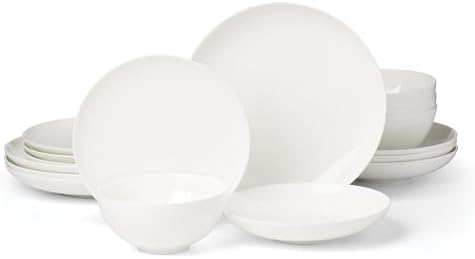
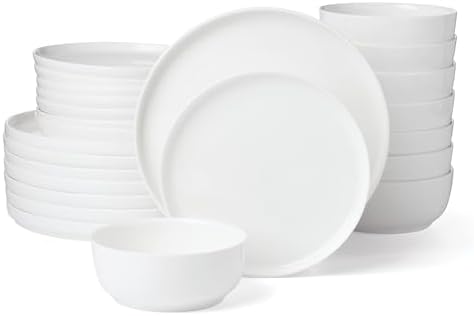
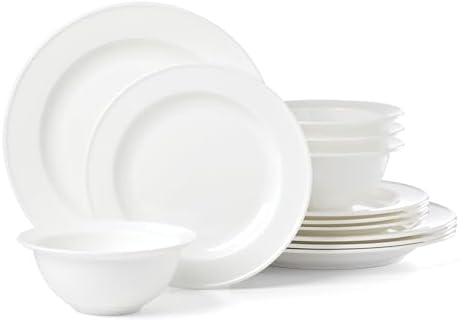
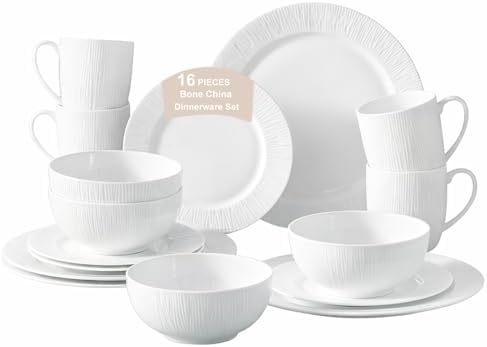
This differs significantly from the halal debate, where Islamic scholars disagree about whether the source animal must have been slaughtered according to Shariah law, with the majority permitting its use based on the istihalah (transformation) doctrine.
Jewish law resolves the question differently and more permissively: the animal source is irrelevant to the kosher determination because the halachic concern is whether the material can transmit prohibited taste (taam), and fully incinerated bone ash cannot.
The OU ruling explicitly states that even if the bones had not been burnt at all, it would still not be a kashrus concern, citing Sefer Panim Me’iros (3:33).
Read Also: Understanding Kosher China and Koshering Glass
Is New Bone China Kosher to Use?
Yes, new bone china is halachically permissible to use, and this position is held by the OU, Shabbos House, and the major Ashkenazic poskim without meaningful dissent.
The question is not a matter of rabbinic debate in the same way that, say, the status of certain vegetables is. The ruling is settled, and the sources are clear.
The Taam Principle: Why Bone Ash Does Not Transmit Prohibited Taste
The entire halachic framework rests on a single concept: taam (taste). Prohibited food is forbidden not only when eaten directly, but when it transmits its taste into something else — a pot, a liquid, another food.
This is why a non-kosher stew renders the pot non-kosher. The question for bone china, then, is whether the non-kosher animal bone can transmit taam into food through the finished dish.
The answer is no, on two independent grounds:
Ground 1 — Complete incineration: The Shulchan Aruch (YD 99:1) establishes that dried-out, marrowless bones do not impart taam. Bone ash has gone far beyond merely dried and marrowless — it has been chemically transformed at 1,000°C.
The OU Halacha Yomis states directly: “Since the bones were burnt, there is no kashrus concern.”
Ground 2 — Even without incineration, bones used as utensils are permitted: Sefer Panim Me’iros (3:33) writes that one may make cooking utensils — spoons, ladles — from the bones of non-kosher animals, provided the bones are dried and contain no marrow.
The Rambam (Hilchos Maachalos Assuros 4:18) writes that one may not eat bones from a non-kosher animal, but using them as utensils is not included in that prohibition. Bone china is a utensil made (in part) from processed bone, and it satisfies both conditions with ease.
The OU’s Official Ruling and Why It Settles the Question for Most Ashkenazim
The Orthodox Union Kosher Halacha Yomis — one of the most widely cited and institutionally authoritative daily halacha publications — addressed bone china directly in two separate rulings (May 3, 2021, and November 15, 2023), reaching the same conclusion both times: no kashrus concern.
Because the OU ruling cites the Shulchan Aruch, the Rambam, and Panim Me’iros in a consistent chain, and because no significant Ashkenazic posek has published a dissenting opinion in the responsa literature, this question is functionally settled for most communities.
Sephardic Jews should follow their own posek’s guidance, though the sources apply equally to Sephardic halacha.
Can You Kasher Bone China That Was Used with Non-Kosher Food?
Generally, no — and this is the question that most people asking “is bone china kosher?” actually need answered, but rarely find addressed separately.
The permissibility of new bone china (settled above) has no bearing on the kashering question. These are independent halachic issues.
For a complete overview of the kashering process across all materials, see our guide on how to kasher a kitchen from scratch.
Why China Is Classified as Cheres (Earthenware) and What That Means for Kashering
China dishes are made from clay and are therefore classified as klei cheres (earthenware vessels) under halacha.
This classification carries a specific and severe consequence: the Gemara (Pesachim 30b) states that earthenware utensils cannot be kashered with hagalah (immersion in boiling water), because boiling water alone cannot purge the absorbed taste that has penetrated deeply into the porous material.
Leviticus 6:21 draws the same distinction — the Torah commands that an earthenware vessel used for a sacrifice be broken, while a metal vessel may be scoured and rinsed. The principle is that cheres absorbs deeply and cannot expel what it has absorbed.
This means that virtually every standard kashering method, boiling water (hagalah), soaking, and even the self-cleaning oven cycle, is halachically insufficient for china.
The OU Halacha Yomis specifically notes that while a self-cleaning oven reaches temperatures that would qualify as libun (fire-based kashering), Chazal prohibited this method for earthenware because of concern that the owner might remove the piece prematurely before it reaches the required temperature.
The Three Options: Kiln Libun, Rav Moshe’s Exception, and the 12-Month Misconception
| Method | Conditions Required | Halachic Basis | Practical Availability |
|---|---|---|---|
| Potter’s kiln (libun gamur) | Access to a functioning ceramic kiln; pieces must survive re-firing | Shulchan Aruch OC 451:1 — kiln heat is sufficiently extreme and uninterruptible | Rare; not all pieces survive; must be arranged with a kiln operator |
| Rav Moshe’s exception (three hagolos + 12 months) | (1) Piece unused for 12+ months; (2) great financial or personal necessity; (3) baal teshuva household specifically; (4) performed in three separate pots of boiling water | Iggerot Moshe YD 2:46, combining Chacham Tzvi + Baal Ha’Itur leniencies | Available but narrow — Rav Moshe himself calls it a she’at hadechak (time of need) ruling, not a standard heter |
| 12-month disuse alone | Piece not used for 12 months | Chacham Tzvi siman 75 — taste dissipates after 12 months | This is a common misconception. The OU explicitly states: the Chacham Tzvi ruling does NOT mean unused china becomes kosher after 12 months without any kashering. The 12 months only works in combination with Rav Moshe’s other conditions. |
Critical warning: Do not use the “put it away for a year” shortcut. The OU Kosher Halacha Yomis addresses this misconception directly: “This is a misconception which is based on a misunderstanding of a ruling of the Chacham Tzvi.” Extended disuse alone does not kasher china.
Does Bone China Require Tevilat Keilim (Ritual Immersion)?
Yes, bone china purchased from a non-Jewish manufacturer requires tevilat keilim (immersion in a mikvah) before its first use.
This is the question that every competing article on bone china and kashrut fails to address, yet it applies to every observant Jew who buys a new set of bone china dishes.
The obligation to tovel (immerse) vessels purchased from non-Jews is derived from Bamidbar (Numbers) 31:23 and is confirmed in the Talmud (Avodah Zarah 75b).
For the full tevilat keilim rules covering every material type, see our complete guide to tevilat keilim for new dishes.
What Tevilat Keilim Requires and How China Is Categorized
| Material | Tevila Required? | Bracha Recited? | Authority |
|---|---|---|---|
| Metal (gold, silver, copper, iron, tin, lead, stainless steel) | Yes — d’oraisa (biblical) | Yes | Bamidbar 31:23; Shulchan Aruch YD 120:1 |
| Glass (including Pyrex, Duralex, Corelle) | Yes — d’rabanan (rabbinic) | Yes | Talmud Avodah Zarah 75b; STAR-K |
| China/porcelain /bone china | Yes — d’rabanan (rabbinic) | Yes (most poskim) | STAR-K Tevilat Keilim Guide; OU Kosher Primer |
| Hard plastic (Melmac/melamine) | Disputed — d’rabanan | No bracha (safek) | Iggerot Moshe; Conservative/Orthodox diverge |
| Disposable aluminum pans (single use) | No | No | Rav Moshe Feinstein — durability required |
| Wood, stone, unglazed earthenware | No | No | Standard poskim |
China is treated similarly to glass — a d’rabbinic obligation with a bracha. According to STAR-K, vessels require tevila with a bracha when they have direct contact with food during preparation or mealtime and are made from metal or glass.
China occupies the same practical category as glass in most poskim’s rulings.
How to Tovel China: Practical Steps Before First Use
- Ensure the vessel is clean and label-free before immersion — remove any adhesive residue from manufacturer’s stickers, as foreign substances invalidate the tevila.
- Go to a mikvah that is kosher for tevilat keilim — a mikvah valid for women (tevilat nashim) is required; some men’s mikvaot are not suitable. You may also use the ocean or a year-round flowing river.
- Hold the dish loosely so that water reaches all surfaces; do not grip it tightly, which would block water contact.
- Recite the bracha before immersing: Baruch Atah Hashem Elokeinu Melech ha’olam asher kid’shanu b’mitzvotav v’tzivanu al tevilat keilim.
- Immerse the vessel fully — it does not need to remain submerged for any extended period; a single complete submersion suffices.
- If you accidentally use a vessel before toveling, the food is permitted after the fact, but the vessel must still be toveled before any further use.
Bone China for Passover, Meat, and Dairy: Practical Guidance
Bone china that is new, has been toveled, and is designated for kosher use follows the same practical rules as any other dishware. Two scenarios require specific guidance: Passover use and meat/dairy designation.
Bone China on Passover: Can It Be Used and What Extra Stringencies Apply?
Passover has stricter absorption rules than the rest of the year. See our kosher for Passover kitchen preparation guide for the full picture on transitioning a kitchen.
- New bone china that has never been used for chametz may be used for Passover after toveling — no additional kashering is required.
- Bone china used year-round for kosher food (but not chametz) can generally be used for Passover; a posek should be consulted if any doubt exists about previous contact with chametz.
- Bone china used for chametz hot foods cannot be kashered for Passover use — the cheres classification means the chametz taste is permanently absorbed, and the kiln libun option is the only theoretical path, which is impractical for most households.
- A rabbi should be consulted before using any year-round china for Passover if there is uncertainty about previous chametz use — this is not a case where general rules can safely substitute for individual guidance.
Meat vs. Dairy Sets: What Keeping Two Sets of Bone China Looks Like in Practice
- Once a bone china dish has been used for hot meat or hot dairy, it acquires that status permanently — it may not thereafter be used for the other category.
- Designation should be done before first use — decide and mark meat and dairy sets before any food contact; use different patterns, colors, or physical marks to prevent confusion.
- If a meat dish was accidentally used for dairy (or vice versa) with hot food, the dish is no longer usable for either category without consulting a posek — the question is more complex than simply re-immersing it.
- Practical marking: color-coded stickers, different patterns, different storage locations, or physically distinct sets all serve as valid reminders; any system that prevents confusion is acceptable.
For the full rules governing separate utensils, storage, and waiting times, see our complete guide to meat and dairy separation in a kosher kitchen.
What to Do with Inherited Non-Kosher Bone China
Inherited china is the scenario that generates the most questions and the most confusion.
The governing principle is: non-kosher absorbed taste makes china unusable in a kosher kitchen, and the standard kashering paths are closed for earthenware. What remains are narrow, conditional exceptions.
Newly observant households transitioning their kitchens have many related questions — our kosher kitchen guide for baalei teshuva covers the full process.
- Identify when the china was last used — 12 months of disuse is a prerequisite for Rav Moshe’s exception (see below), though it is not sufficient on its own.
- Assess the nature of previous use — was it used for hot non-kosher food, or only for room-temperature items? Hot food use causes deeper absorption and requires stricter treatment.
- Determine whether great necessity exists — financial, sentimental, or practical hardship is a required condition for the leniencies that exist; casually wanting to keep the dishes does not meet the bar.
- Consult a posek before acting — the rulings here are not self-service; their application requires a rabbi to evaluate the specific situation.
The Baal Teshuva Exception: Rav Moshe’s Ruling and Its Conditions
Rav Moshe Feinstein zt”l (Iggerot Moshe YD 2:46) permitted a specific class of baalei teshuva (newly observant Jews) to kasher non-kosher china dishes by combining two minority leniencies: the Chacham Tzvi’s position that taste dissipates after 12 months of disuse, and the Baal Ha’Itur’s 12th-century ruling that cheres can be kashered with three separate hagalot (immersions in boiling water).
Rav Moshe acknowledged that most poskim reject both positions individually, but argued that combining them, alongside the unique circumstances of a baal teshuva making a major life transition, created sufficient grounds for leniency.
He explicitly framed this as a she’at hadechak (time of great need), not a standard ruling. Neither the Chacham Tzvi nor the Baal Ha’Itur alone is sufficient justification; only their combination, under rabbinic supervision, and only in the baal teshuva context.
Decision Framework: A Step-by-Step Guide for Inherited China Situations
- Branch A — China unused for 12+ months, household is becoming observant: Rav Moshe’s exception may be applicable. Contact a posek, explain the circumstances, and ask whether performing three hagolos under supervision is appropriate. Do not proceed without explicit rabbinic authorization.
- Branch B — China used within the past 12 months: The 12-month prerequisite is not met. Standard halacha applies: the china cannot be kashered. Options are: display only (no food use), give to a non-Jew, or accept the loss. Consult a rabbi if the pieces have significant monetary or sentimental value.
- Branch C — China of exceptional financial or sentimental value, but not urgently needed for food use: Consider kiln libun — returning the pieces to a potter’s kiln at temperatures sufficient for libun gamur. Not all pieces survive, and access to a suitable kiln must be arranged, but this is the one halachically valid kashering path that the Shulchan Aruch unambiguously permits for cheres (Shulchan Aruch OC 451:1). Consult a posek before proceeding.
- Branch D — China with uncertain use history: Treat as non-kosher. Assume hot non-kosher food contact unless you have reliable information otherwise. Follow Branch A or B depending on how long the pieces have been unused.
In all cases involving significant monetary value or sentimental importance, a posek should be consulted. This framework orients the conversation; it does not replace rabbinic guidance for individual situations.
Kosher-Safe Alternatives: Fine Dinnerware That Doesn’t Raise These Questions
For tested recommendations across a range of budgets, see our full roundup of best kosher-safe fine dinnerware sets. If you prefer to sidestep the bone china questions entirely, several excellent options exist:
- Fine porcelain (non-bone): Brands like Villeroy & Boch and Rosenthal produce high-quality porcelain without bone ash — the same kashrut rules for toveling and kashering apply, but the composition question disappears.
- Corelle (Vitrelle glass): Classified as glass for tevilat keilim purposes (bracha required); extremely durable, chip-resistant, and widely available in elegant patterns suitable for Shabbos and Yom Tov use. Read our guide on: Is Corelle Glass Kosher?
- Melamine / hard plastic: Requires tevila without a bracha according to most Ashkenazic poskim; not suitable for hot food use (poses health concerns at high temperatures), but acceptable for room-temperature serving.
- Stainless steel: Requires tevila with a bracha; fully kasher-able with hagalah; practical for everyday use.
Frequently Asked Questions: Bone China and Kashrut
Is new bone china halachically permitted to use?
Yes, without qualification. The OU Kosher Halacha Yomis has addressed this directly in rulings published in 2021 and 2023, citing the Shulchan Aruch (YD 99:1) and Sefer Panim Me’iros (3:33).
Bone ash is completely incinerated and chemically transformed — it cannot transmit taam and poses no kashrus concern.
Can you kasher China that was used with non-kosher food?
Generally, no — china is classified as cheres (earthenware) and cannot be kashered by hagalah (boiling water) under standard halacha.
The only valid method is kiln libun (Shulchan Aruch OC 451:1), and a narrow exception for baalei teshuva exists under specific conditions per Iggerot Moshe YD 2:46.
Does bone china need to be immersed in a mikvah before first use?
Yes, China purchased from a non-Jewish manufacturer require tevilat keilim with a bracha before first use. This applies regardless of whether the china contains bone ash; all china is categorized alongside glass for this purpose under most poskim’s rulings.
Can bone china be used on Passover?
New bone china that has never been used for chametz may be used for Passover after toveling. Any bone china previously used for hot chametz food cannot be kashered for Passover — the cheres classification makes this effectively impossible without kiln libun.
What happens if you accidentally use meat bone china for dairy?
The dish loses its usable status and may not be used for either category without consulting a posek. Do not attempt to re-kasher it yourself — the question requires individual rabbinic evaluation.
I heard you can put china away for a year and then use it — is that true?
No, this is a direct misconception of the Chacham Tzvi’s ruling. The OU Kosher Halacha Yomis explicitly addresses this: extended disuse alone does not render non-kosher china kosher.
The 12-month period is one of several combined conditions in Rav Moshe’s narrow exception, not a standalone solution.
My family became more observant and wants to kasher our bone china — is there a way?
Possibly, under Rav Moshe Feinstein’s ruling in Iggerot Moshe YD 2:46 — but only if the dishes have been unused for at least 12 months, the household is undergoing a genuine baal teshuva transition, and the process is performed under rabbinic supervision with three hagolos. Consult a posek before attempting this.
Are there specific bone china brands recommended for kosher households?
No major brand certifies its bone china as kosher, because the permissibility of new bone china does not require certification; the ruling applies universally.
Any new bone china from any manufacturer is permissible; the relevant obligations are toveling before first use and designating for meat or dairy before any food contact.
About the Author & Reviewer
Sarah Emirone, Author
Sarah researches and writes SafeKitchn’s dinnerware and kitchenware guides, with a focus on material safety, lead content, and manufacturer specifications. She cross-references product data sheets, safety certifications, and regulatory filings (including FDA and Prop 65 records) before publishing, and updates articles when new information becomes available.
James Daniels, Reviewer
James reviews SafeKitchn’s material safety content for scientific accuracy. He holds a B.Sc in inorganic chemistry and works as a materials researcher, with particular focus on the composition and safety behavior of glass, ceramic, and metal used in kitchenware.